
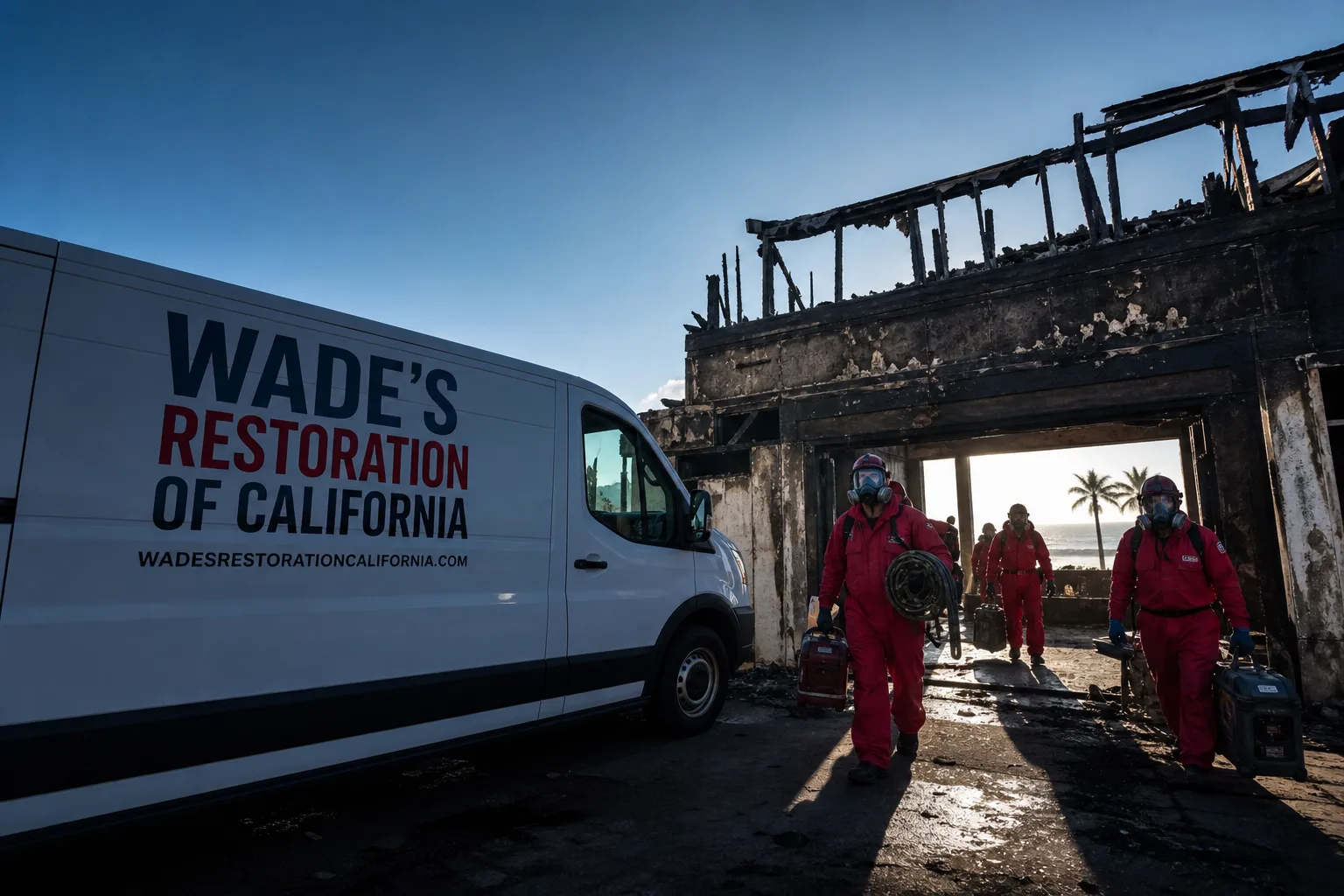
Fast, Reliable Storm & Disaster Restoration Across Santa Monica
When a storm rips through Santa Monica, you need someone who understands this city’s specific problems, not a crew driving in from somewhere inland with a generic playbook. Storm damage in Santa Monica means salt-laden air already eating at your flashing, a marine layer that keeps everything damp, and older homes with plaster walls that drink water like a sponge. We’re Wade’s Restoration of California, and we’ve been handling storm and disaster restoration here long enough to know what works and what doesn’t. Call (855) 915-0646 and you’ll get Wade or one of his crew on the line, not a call center.
Why Wade’s Restoration of California Is Santa Monica’s Preferred Storm & Disaster Restoration Company
Wade Ferris started this company in 2007 with a simple rule: put your name on the truck and answer your own phone. That’s still how we work in Santa Monica. When you call after a storm blows out a window on Wilshire Boulevard or floods a basement in Ocean Park, you talk to a real person who knows the difference between a 1920s Craftsman on a narrow lot and a post-war stucco apartment block. We’re IICRC-certified and RIA-affiliated, and our crews show up in uniform, background-checked, with equipment that actually works. Storm & Disaster Restoration is what we do every day, not a side line.
We publish our name, our license number, and our address. Wade answers calls himself at two in the morning. We take moisture readings every single day and hand you the log when the job wraps, which almost nobody else does. And every water, fire, and mold job carries the 90-Day Done Right Promise in writing. If it’s not done right, Wade makes it right. No fine print, no arguments.
Our Storm & Disaster Restoration Services in Santa Monica
Storm Damage Cleanup
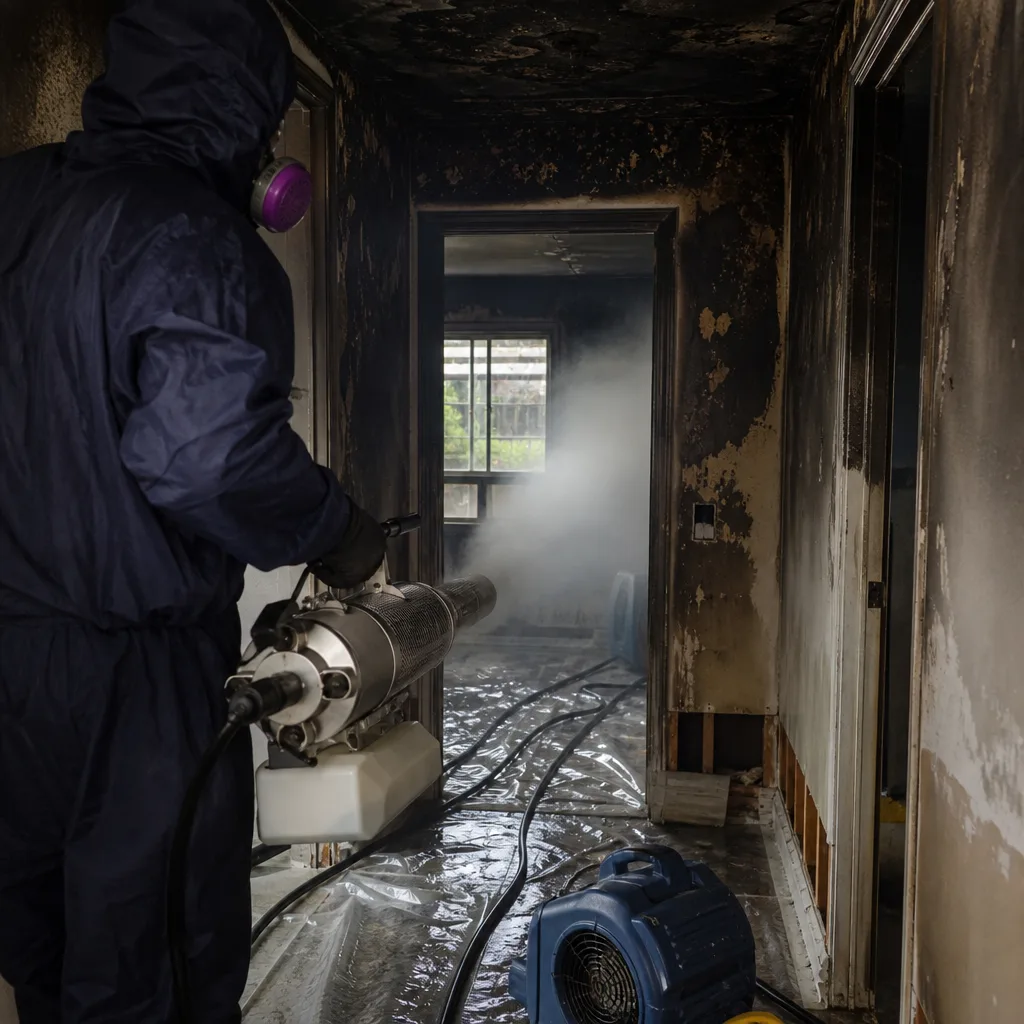
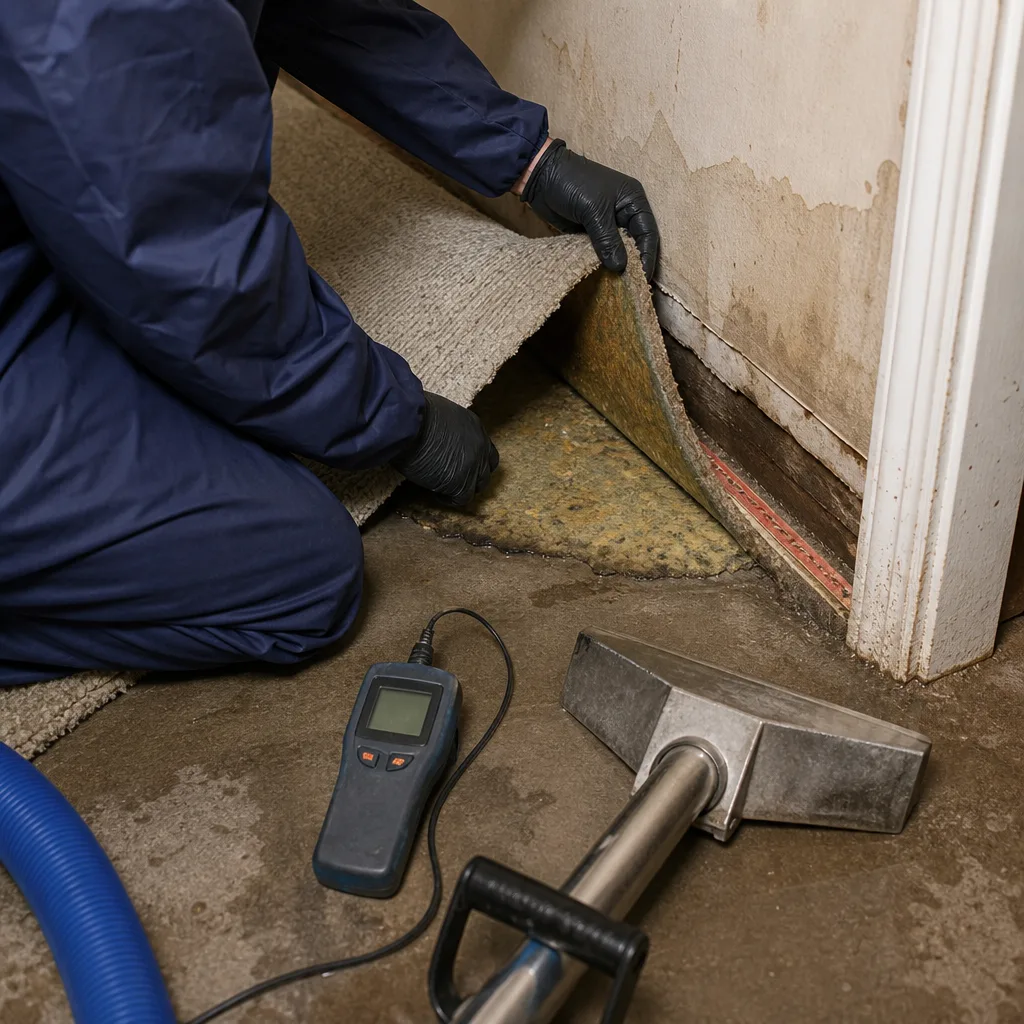
Santa Monica storms rarely arrive as gentle rain. When wind drives water sideways into stucco walls and under clay-tile roofs, the damage spreads fast. We handle the full cleanup: water extraction, structural drying, debris removal, and content protection. On a 1920s bungalow north of Montana Avenue in 90402, we’ve pulled saturated horsehair plaster and saved original baseboards that other companies would have ripped out. That’s the difference between restoration and demolition.
Flood Damage Restoration
Flooding in Santa Monica is not the same as flooding in Culver City. West of Lincoln Boulevard, the water table sits close to grade. During heavy El Niño years, foundation cracks become groundwater inlets. We assess sump conditions before we ever place a dehumidifier, because drying a slab that’s actively pulling moisture from below is a losing game. Our flood restoration work includes extraction, dehumidification with Dri-Eaz equipment, and salt-air corrosion documentation that your insurer will actually accept.
Emergency Board-Up
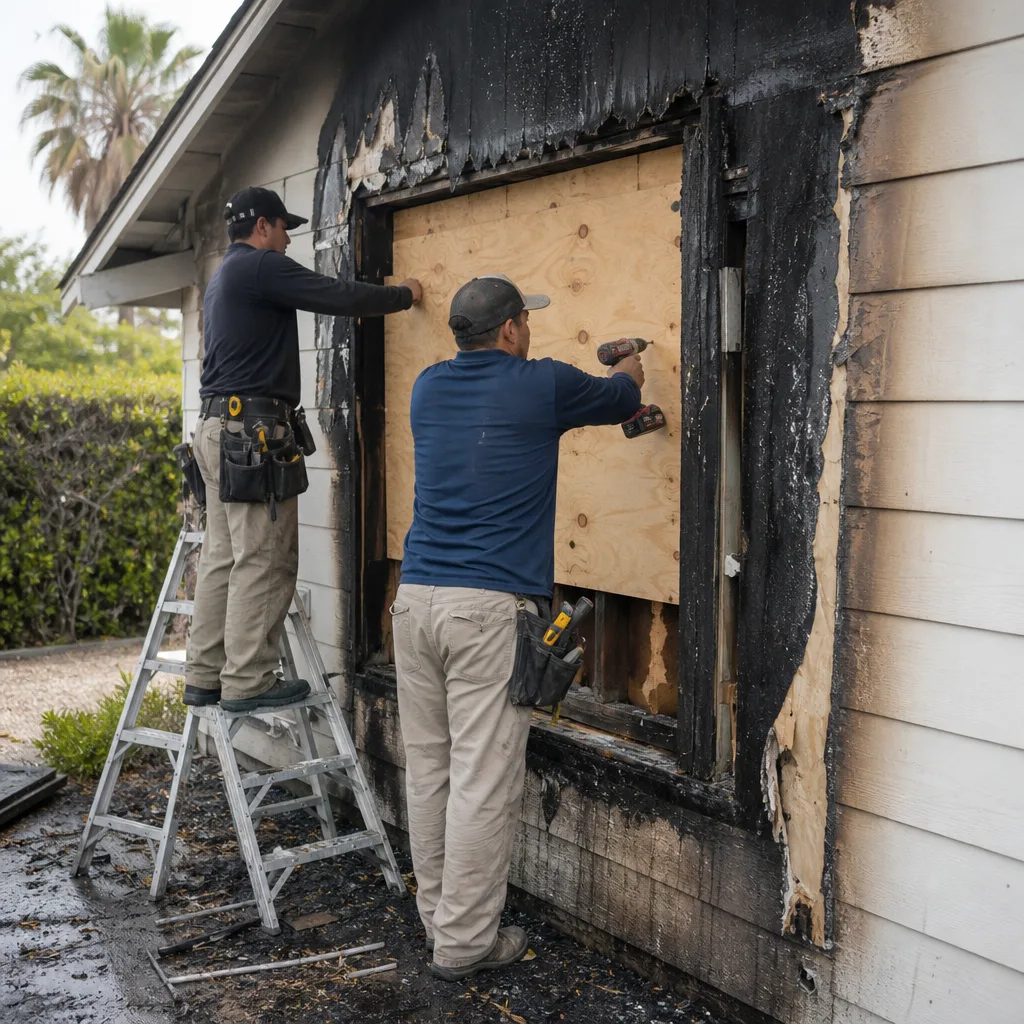
After a storm blows out windows or a branch punches through a wall, your home is open to weather, animals, and lookie-loos. We board up fast, using materials that match Santa Monica’s older housing stock without causing further damage to original framing or stucco. Whether it’s a shattered window in 90403 or a compromised door on a commercial storefront near the ocean, we secure the property within hours, not days.
Roof Tarping
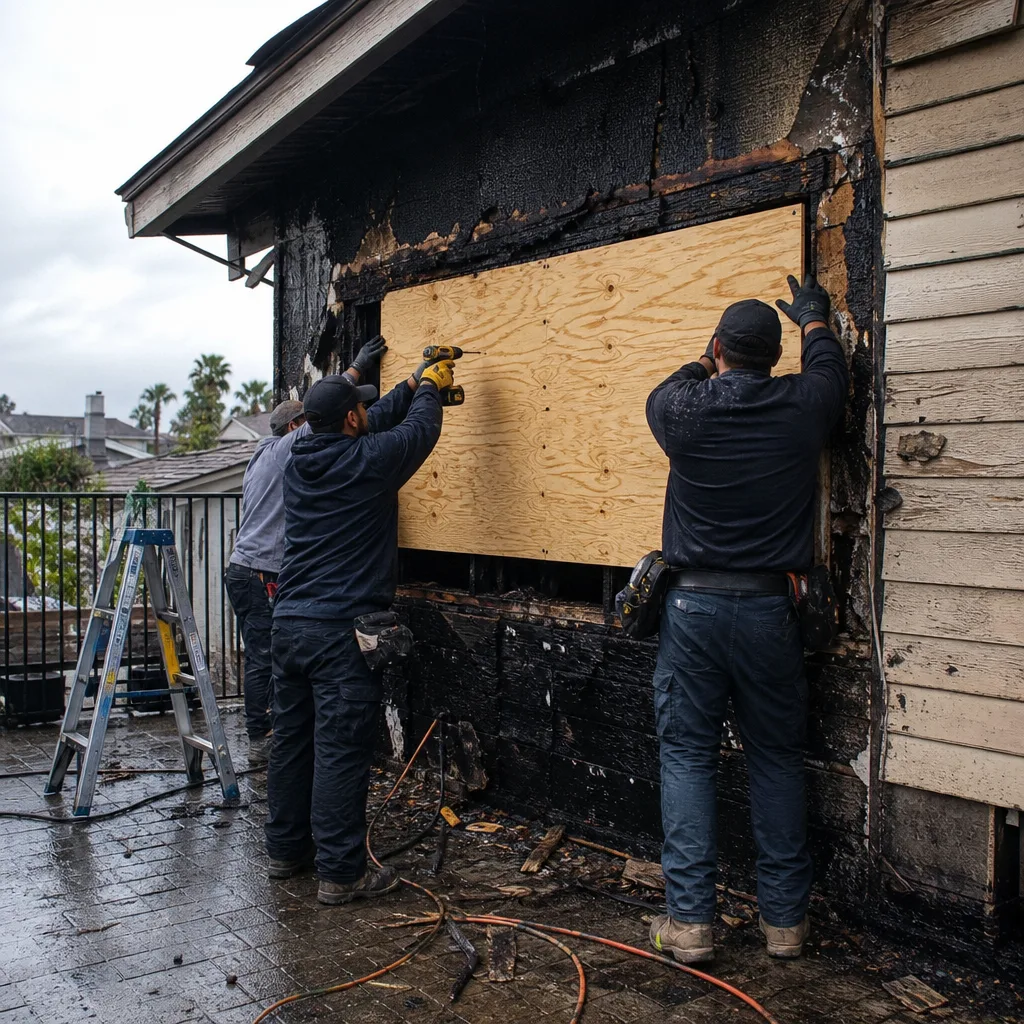
Roof tarping in Santa Monica is trickier than it looks. The city’s 1920s and 1930s homes often carry original clay tile, which is brittle and expensive to replace. You can’t just nail a tarp down and call it done. We use weighted, anchored tarping methods that hold against coastal wind without cracking tiles or pulling loose mortar. For flat-roof apartments in the Wilshire corridor, we seal and protect built-up membrane repairs so a small leak doesn’t become a ceiling collapse.
What happens when you call
- 1
A real person answersNo phone trees - you reach a local pro.
- 2
You get an upfront price rangeHonest numbers before anyone is dispatched.
- 3
A background-checked tech heads outLicensed & insured, dispatched right away.
- 4
You approve before work beginsNothing starts until you say go.
Trusted Brands We Service in Santa Monica
We run Dri-Eaz dehumidifiers, XPOWER air movers, and Injectidry systems on Santa Monica jobs because this climate demands equipment that can handle 80 to 95 percent ambient humidity without quitting. The marine layer off the Pacific means standard drying times don’t apply here. Homes in 90401, 90402, and the Ocean Park neighborhood need longer equipment runs and daily moisture monitoring. We stock our trucks for this city’s specific needs, so we’re not spending the first day waiting on parts while your studs stay wet.
Common Storm & Disaster Restoration Problems We See in Santa Monica Homes
- Premature equipment removal. Inland crews pull dehumidifiers once standard drying targets are hit, but Santa Monica’s morning marine layer refeeds wall cavities and extends drying timelines. We’ve seen secondary mold start in homes where equipment was pulled too early. Your home needs ocean-climate-adjusted drying protocols, not Los Angeles assumptions.
- Salt-air corrosion misclassified as water damage. Coastal air here accelerates corrosion on structural fasteners, supply lines, and HVAC components. What looks like isolated water damage often has underlying salt corrosion that requires separate documentation for your insurer. If that’s not flagged, your claim gets denied.
- Groundwater intrusion west of Lincoln Boulevard. The water table in Ocean Park and surrounding blocks sits within a few feet of grade. A foundation crack that’s harmless in dry years becomes a flooding point during El Niño events. Inland crews don’t check for this. We do, before any drying equipment goes down.
- Horsehair plaster and original materials. Santa Monica’s 1920s Spanish Colonial Revival and Craftsman homes built before the 1940s often have horsehair plaster walls and original clay-tile roofs. These materials need different handling than modern drywall and asphalt shingle. One wrong move means permanent loss.
Pricing for Storm & Disaster Restoration in Santa Monica, CA
Storm damage cleanup in Santa Monica typically runs $1,800 to $4,600, depending on square footage and how long water has been sitting. Flood damage restoration with extraction and drying ranges from $2,800 to $7,200 for a single-story home, and more for two-story properties or homes with compromised foundations. Emergency board-up runs $350 to $900 per opening, and roof tarping runs $500 to $1,400 depending on roof pitch, tile type, and access. Salt-air corrosion documentation and sump assessment add $250 to $600, which is cheap insurance when your adjuster needs proof. Call (855) 915-0646 for an exact quote. Estimates are free, and there’s no trip charge inside our county.
We Also Serve Cities Near Santa Monica
We work throughout Santa Monica and the surrounding west side, including Venice, Century City, Culver City, and Beverly Hills. If you’re in one of those areas and dealing with storm damage, call us. We know the local housing stock, the local insurers, and the local weather patterns.
Serving Santa Monica, CA - Our Local Coverage Area
We’re based in the Santa Monica area and know this community well. Use the map below to see our service coverage - if you’re nearby, we can almost certainly help.
FAQs - Storm & Disaster Restoration in Santa Monica
The marine layer keeps Santa Monica’s ambient humidity at 80 to 95 percent most mornings year-round, which means dehumidifiers work harder and structural drying takes longer than standard IICRC S500 targets. We plan for extended equipment runs here, typically three to five days longer than a comparable inland job.
Because salt-laden coastal air accelerates corrosion on fasteners, supply lines, and HVAC components. When water damage and salt corrosion are mixed together in one claim, insurers often deny coverage. We document corrosion separately with photo evidence and moisture logs, which gives your adjuster a clear picture and keeps your claim moving.
Yes. In Ocean Park and other blocks west of Lincoln, the water table sits within a few feet of grade. If you have a foundation crack or compromised slab, groundwater will keep feeding moisture into your home while drying equipment runs. We assess sump conditions first, then place equipment accordingly.
Yes. We use anchor-weighted tarping methods that hold against coastal wind without nailing through tile or cracking brittle clay. Our crews have worked on original 1920s tile roofs north of Montana Avenue and along the Wilshire corridor, and we know how to protect these roofs without destroying them.
We stage debris removal in phases and use hand crews for tight access, not dump trucks that block alleys or violate local access rules. Santa Monica’s narrow lots and shared alleys require a different approach than wide suburban driveways, and our crews are used to it.
Dealing with storm damage in Santa Monica means fighting ocean humidity, salt air, high water tables, and old materials all at once. That’s not a job for a generic restoration crew. Call (855) 915-0646 and talk to Wade or one of his people. We’ll show up, assess the damage honestly, and give you a written scope before any work starts.
Written by Wade Ferris, Owner at Wade’s Restoration of California, serving Santa Monica and the surrounding west side since 2007.