
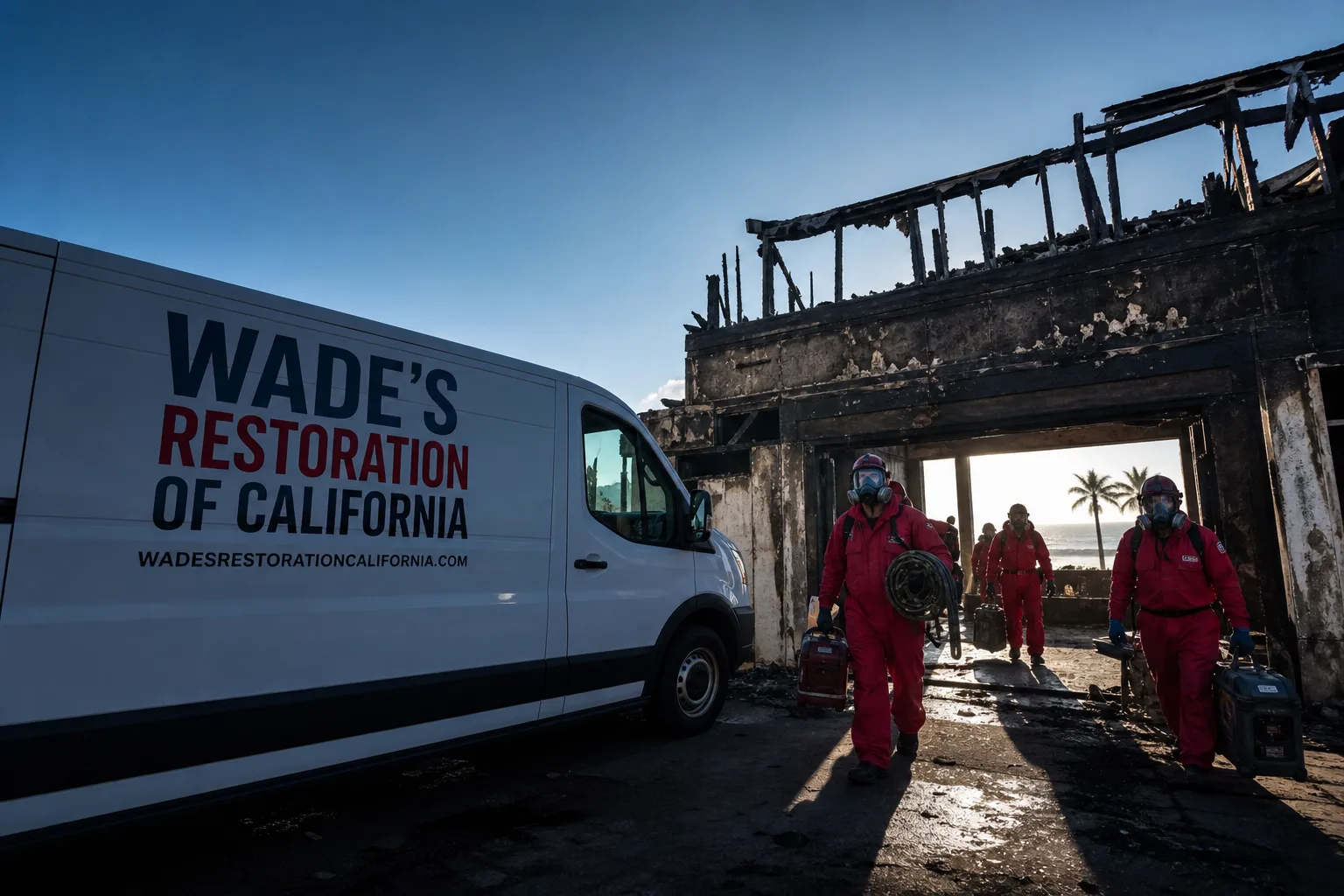
Fast, Reliable Storm & Disaster Restoration Across Beverly Hills
When a storm rips through Beverly Hills, the first 60 minutes determine whether you’re dealing with a contained cleanup or a full-blown catastrophe inside your home. Storm damage restoration across Beverly Hills typically runs $1,800-$12,400 depending on whether you need emergency tarping, water extraction from a Flats estate, or full structural drying of a hillside mid-century modern. Wade Ferris and our Storm & Disaster Restoration team answer the phone ourselves, 24 hours a day, and we can have a crew on the road to your home within the hour. Call (855) 915-0646 the moment you see water where it shouldn’t be or a tree limb through a window. We work directly with the Beverly Hills Building & Safety Division so your claim keeps moving while other outfits stall out at the permit counter.
Why Wade’s Restoration of California Is Beverly Hills’s Preferred Storm & Disaster Restoration Company
We’ve spent 29 years learning how Beverly Hills homes fail during storms, and that knowledge changes everything about how we respond. The people who call us from 90210 and 90212 are not calling a call center. They’re calling Wade, who answers his own phone and will be the one walking your property with a moisture meter, not a project manager reading from a script. Around the Flats and Trousdale, word travels fast. Our customers tell their neighbors about the crew that showed up in under an hour, documented every wet surface with Dri-Eaz sensors, and handed them a moisture log at the end rather than a vague invoice. Ask anyone on your street. The houses here are too irreplaceable to trust to whoever picks up first on a Google ad.
Beverly Hills operates its own Building & Safety Division, completely separate from the City of Los Angeles, and that’s the single biggest reason local expertise matters here. A restoration company based in the Valley or downtown LA doesn’t know that a simple roof tarp on a 1930s Spanish Colonial Revival can trigger a Title 24 scrutiny review. We do. We’ve handled enough of these to know exactly what gets flagged and what gets fast-tracked.
Our Storm & Disaster Restoration Services in Beverly Hills
We provide a full range of storm and disaster restoration services in Beverly Hills, including Beverly Hills-specific flood, wind, and structural work. Here’s what we handle most often, and how it plays out in this city’s housing stock.
Storm Damage Cleanup
Storm cleanup in Beverly Hills means more than hauling wet debris out of a flooded basement. It means understanding that the flooring in a 1920s Flats estate might be original quarter-sawn oak over lime-and-sand plaster walls, and that aggressive drying will crack both. We extract standing water first, then map the moisture migration with our Phoenix and Dri-Eaz equipment before we move a single piece of furniture. Cleanup in a Trousdale Estates mid-century with white oak floors and floor-to-ceiling glass requires a different drying plan than a Mediterranean villa with terracotta tile and adobe-style walls. We adjust in real time because we’ve worked both.
Flood Damage Restoration
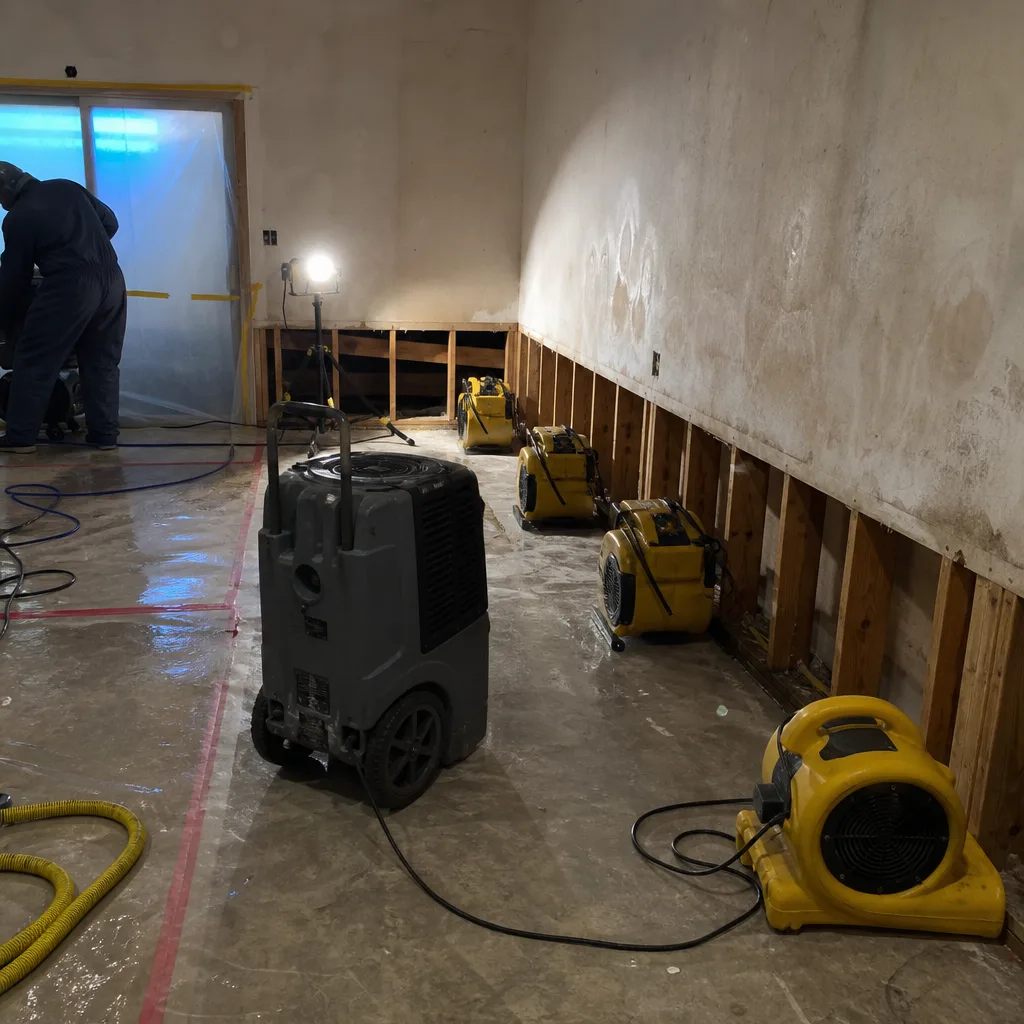
Atmospheric river events hit Beverly Hills hard in January and February, when the aged clay-tile roofs on Flats estates can’t keep up with sustained rainfall. Water pours through the original tile and into ceilings, attics, and wall cavities. We arrive with truck-mounted extraction units, submersible pumps, and enough air movers to get a 4,000-square-foot estate drying within hours. Then we take moisture readings every single day and give you the full log when the job is done. Almost nobody in this trade does that. We do it because you deserve to know what was wet, what dried, and what we’re still watching.
Emergency Board-Up
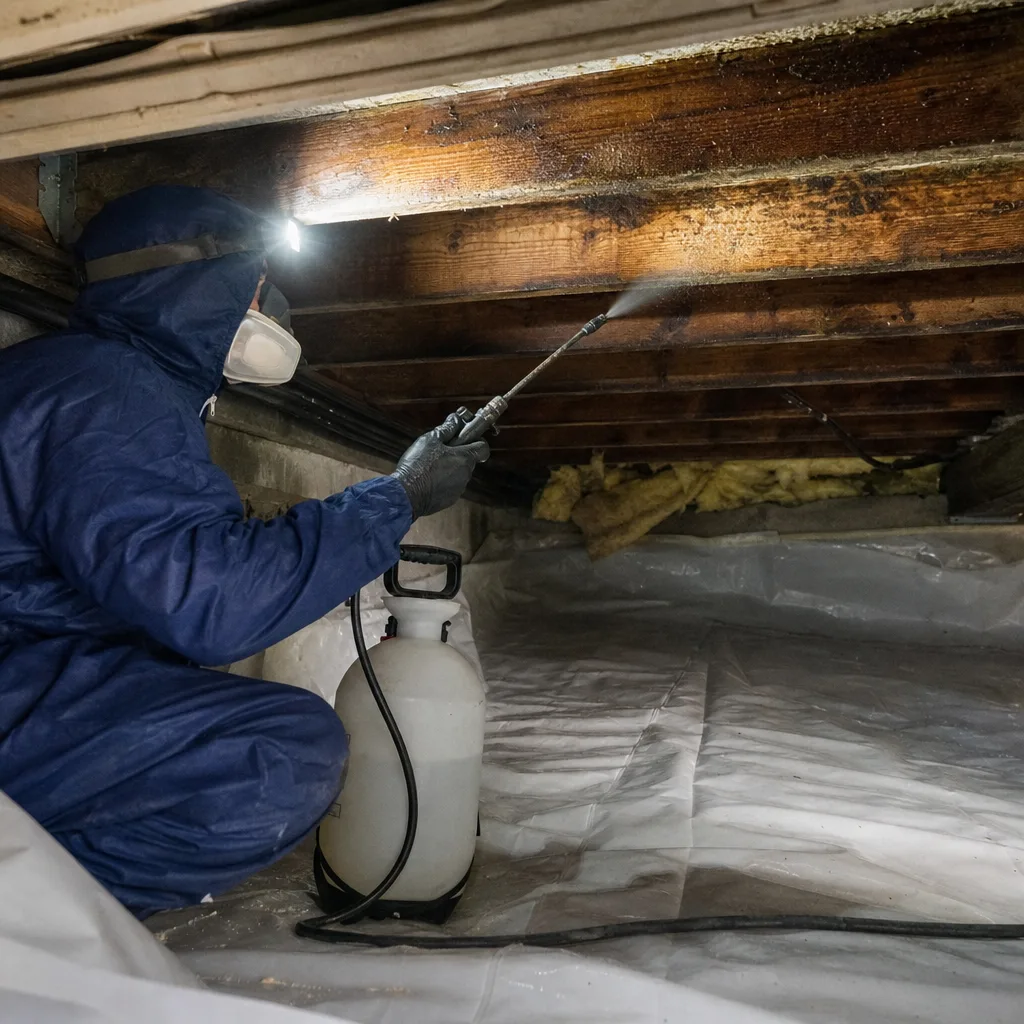
After a Santa Ana wind event sends a mature Canary Island palm through a dining room window in 90212, you need the opening sealed before the next rain rolls in or someone gets hurt. We board up with 3/4-inch plywood, heavy-gauge screws, and weather-resistant barriers that hold until permanent repairs are scheduled. On a hillside property in the Wildland-Urban Interface, we also assess whether smoke and ash infiltration requires immediate air scrubbing. Board-up in Beverly Hills often runs into the city’s permit requirements, so we document everything photographically and file the paperwork the same day.
Roof Tarping
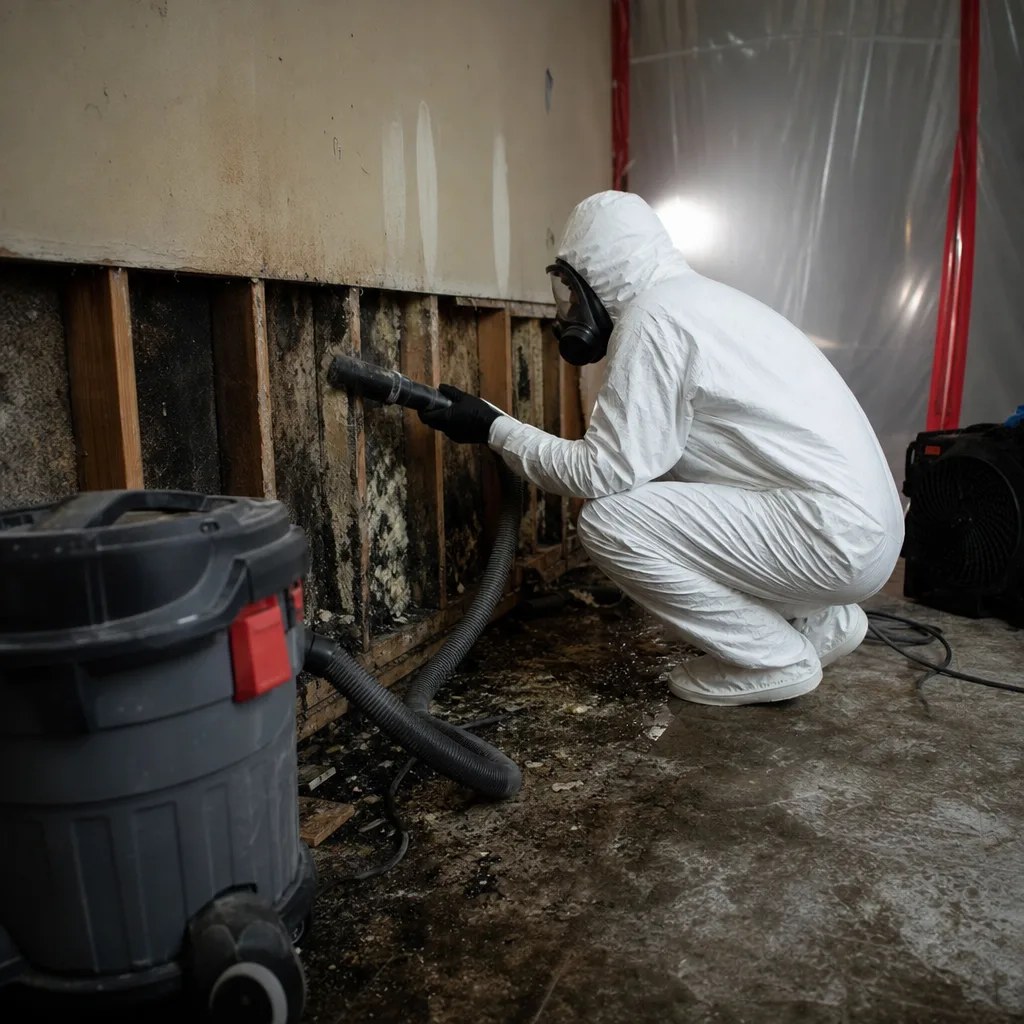
Wind-damaged tile roofs are common across the Flats, where original Spanish clay tiles from the 1930s and 1940s crack under falling eucalyptus branches. We tarp the exposed section with reinforced polyethylene and nail it down tight within hours of your call. For flat-roof mid-century moderns in Trousdale, we use a different approach: adhesion-based tarping systems that won’t puncture an original roof membrane. We’ve salvaged more Trousdale roofs with a well-placed tarp than most companies have ever touched. The key is doing it before the next atmospheric river arrives, and we don’t wait for a permit review before protecting your home from further water entry.
What happens when you call
- 1
A real person answersNo phone trees - you reach a local pro.
- 2
You get an upfront price rangeHonest numbers before anyone is dispatched.
- 3
A background-checked tech heads outLicensed & insured, dispatched right away.
- 4
You approve before work beginsNothing starts until you say go.
Trusted Brands We Service in Beverly Hills
Wade’s Restoration of California brings professional-grade equipment from Dri-Eaz, Phoenix, and XPOWER to every Beverly Hills storm job. You won’t see us hauling consumer-grade box fans into a flooded 90212 estate. We stock parts and materials locally so tarping, board-up, and extraction can start the same day. Our team holds IICRC and RIA credentials, which means the drying plan we execute in your home follows the same standards the insurance adjuster expects. We’re not cutting corners on a city that runs on details.
Common Storm & Disaster Restoration Problems We See in Beverly Hills Homes
- Aged clay-tile roofs on Flats estates. The original tiles look beautiful until a January atmospheric river sends water through every hairline crack. We see concentrated water-intrusion claims in 90211 and 90212 every winter, and the damage is always worse when tarping was delayed by a day or two.
- Root-cracked sewer laterals beneath prestige landscaping. Those mature ficus trees and Canary Island palms lining Santa Monica Blvd look great until their roots crack a vitrified-clay sewer line. When stormwater overwhelms the system, sewage backs up through original hardwood floors and turns a clean-water cleanup into a Category 3 biohazard inside rooms finished with six-figure millwork.
- Flat roofs on Trousdale mid-century moderns. Flat roofs have no slope to shed water, so every seam and flashing point is a potential entry during heavy rain. Ponding water seeps through the membrane and saturates the structure below, often before anyone notices. We tarp these roofs with adhesive systems that protect the original membrane while we set up drying inside.
- Smoke and ash infiltration in the hillside WUI zone. North of Sunset, homes sit in the Wildland-Urban Interface. After a significant Santa Ana wind event in the Coldwater or Benedict Canyon corridor, smoke and ash infiltrate through every gap in the building envelope. That’s not a cosmetic issue; it’s a respiratory hazard and a restoration category most storm companies never even address.
Pricing for Storm & Disaster Restoration in Beverly Hills, CA
Here’s what you can expect to pay for storm and disaster restoration in Beverly Hills. These are real numbers from jobs we’ve done in this city, not theoretical ranges pulled from a pricing calculator.
- Emergency roof tarping: $450-$1,800 depending on roof size, pitch, and access. A steep tile roof on a 1930s Spanish Colonial in the Flats runs higher than a low-slope flat roof in Trousdale.
- Emergency board-up: $300-$1,200 per opening, depending on window or door size and whether the opening is at grade or upper-floor. Security hardware and weather sealing add to the cost.
- Flood water extraction and drying: $1,500-$8,000 for a typical Beverly Hills estate, based on square footage, number of affected rooms, and whether the water reached original plaster or hardwood. A 90210 hillside home drying from an atmospheric river event typically runs $3,000-$7,500.
- Full storm damage cleanup including debris removal: $2,500-$12,400 depending on the scope. Tree limb removal, saturated drywall removal, and structural drying all factor in.
What affects your price here in Beverly Hills more than anywhere else is the permit and inspection path. Because the city runs its own Building & Safety Division under current Title 24 standards, even minor wind-damage repairs to tile roofs can require a local inspection that surrounding cities don’t impose. That adds time and cost that we account for honestly in our written scope. Estimates are free. Call (855) 915-0646 and Wade will walk the property with you and tell you exactly what you’re facing.
We Also Serve Cities Near Beverly Hills
If your home is in Beverly Hills or just over the border, we cover Century City, West Hollywood, Culver City, and Hollywood too. The same crew, the same equipment, and the same direct line to Wade. Scheduling works the same day whether your property is in the Flats or just north of the Hills into the canyon corridors.
Serving Beverly Hills, CA - Our Local Coverage Area
We’re based in the Beverly Hills area and know this community well. Use the map below to see our service coverage - if you’re nearby, we can almost certainly help.
FAQs - Storm & Disaster Restoration in Beverly Hills
You can start tarping immediately. Beverly Hills does not require a permit for temporary emergency tarping or board-up when the work is protecting the property from active water intrusion. What triggers a review is permanent repair work, like replacing clay tiles or repairing a damaged roof membrane. We tarp first, document the condition with photos and moisture readings, and then file the necessary paperwork with the Building & Safety Division so the permanent repair keeps moving. Call (855) 915-0646 if you’re staring at a hole in your roof right now.
We dry it slowly, with continuous moisture monitoring and lower-velocity air movement than a standard drying plan. Original lime-and-sand plaster from the 1920s absorbs water deeply and releases it slowly. Cranking commercial air movers at full blast will force the surface to dry faster than the substrate, and that differential causes cracking. We map the moisture gradient daily with Dri-Eaz sensors, adjust airflow room by room, and give you the full log at the end. On a 1930s Spanish Colonial in the Flats, our crew arrives within the hour after water intrusion, tarps the exposed roof section, then documents the plaster moisture levels before any demolition so we don’t trigger a permit stop-order by opening walls too soon.
That’s a Category 3 biohazard, and it requires full sewage cleanup plus removal of any porous material the water touched. Original hardwood floors, carpet, drywall, and most importantly, the underlying subfloor all have to be assessed and often removed. In a Beverly Hills Flats estate where the original floors are 90 years old and the millwork is irreplaceable, that means careful containment, air scrubbing with HEPA filtration, and a documented drying plan before anything gets demolished. We also work directly with your insurance adjuster so the biohazard scope is documented properly from the start. Call (855) 915-0646 immediately if you smell sewage or see efflorescence pushing up through your floors.
Yes. Flat roofs in Beverly Hills hillside moderns require adhesive-based tarping systems rather than nailed-down tarps, which would puncture the original membrane and create a new leak. We use reinforced polyethylene with a pressure-sensitive adhesive edge that seals to the existing roof surface. The tarp holds against Santa Ana winds and the next atmospheric river, and it peels off clean when the permanent repair is scheduled. We’ve used this system on dozens of Trousdale Estates homes with flat roofs and large glass expanses.
It depends on what the storm brought in. If the damage includes smoke and ash infiltration from a wildfire event in the Coldwater or Benedict Canyon corridors, yes, you should plan to be out of the house while we set up HEPA air scrubbers and remove contaminated materials. If the damage is limited to water intrusion from rain or a burst pipe, you can usually stay in the house while we dry the affected areas, though we may ask you to avoid the rooms where air movers and dehumidifiers are running. We’ll tell you straight what’s safe and what’s not. Call (855) 915-0646 and we’ll talk through your specific situation.
If your Beverly Hills home just took a hit from a storm, don’t wait. Water moves fast through original plaster, old-growth framing, and imported finishes. Call (855) 915-0646 now. Wade answers his own phone, and he’ll be on the road before the next band of rain reaches the 90210 hills.
Written by Wade Ferris, Owner at Wade’s Restoration of California, serving Beverly Hills since 2007.