
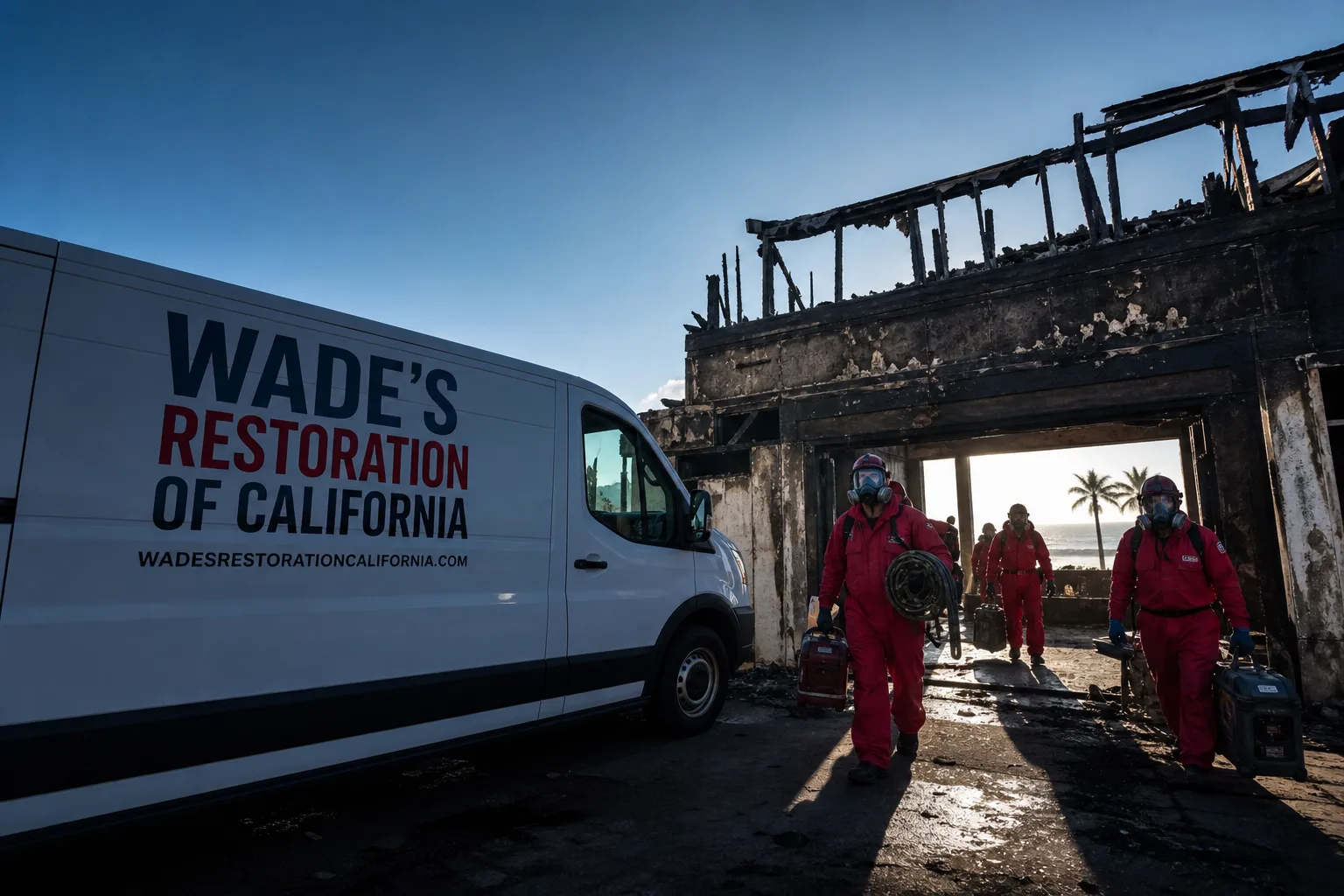
Fast, Reliable Storm & Disaster Restoration Across Culver City
Storm damage in Culver City doesn’t look like it does in Van Nuys or Pasadena. Here, the marine layer rolls in most mornings, plaster walls hold water like a sponge, and the Ballona Creek channel can turn a heavy rain into a crawl-space flood before you’ve finished your coffee. We’re Wade’s Restoration, and we’ve spent years pulling wet plaster, rotted subfloor, and wind-torn roofs apart in the 90230, 90231, 90232, and 90233 ZIP codes. When a storm hits, call (855) 915-0646 and Wade Ferris answers. Not a call center. The owner. He can have a crew running extraction in Culver City inside the hour, and he’ll hand you a written scope before any work starts.
Why Wade’s Restoration of California Is Culver City’s Preferred Storm & Disaster Restoration Company
Most restoration companies treat Culver City storm work like any other water job. That’s a mistake. The older Spanish Colonial Revival cottages near Culver Crest and the Craftsman bungalows around Blair Hills have lath-and-plaster walls that hide moisture for weeks. A crew that doesn’t know this will set drying equipment, pack up after three days, and leave mold festering inside the wall cavities. We don’t do that here.
Wade Ferris founded this company in 2007 and put his name on the truck. He’s IICRC-certified and his team follows RIA protocols, but what matters more in Culver City is that he’s the guy who shows up. When customers on Higuera Street or along Washington Boulevard call about storm damage, they get Wade’s cell number. At 2 a.m. during a Ballona Creek surge, that matters.
Our reputation in Culver City is built on the jobs where we found what other crews missed. The hidden saturation behind a plaster wall. The galvanized drain coupling that cracked during a flash flood. The crawl space under a hillside home that kept re-molding because nobody addressed the ventilation. We document everything with moisture readings, and we hand you the full log at the end. Nobody else in the trade does that here.
Storm & Disaster Restoration is our core work. But in Culver City, it’s never just a water job. It’s plaster saturation, flood-pulse corrosion, and chronically humid crawl spaces all at once. We plan for that from the first call.
Our Storm & Disaster Restoration Services in Culver City
Storm Damage Cleanup
When a storm blows through Culver City, it leaves more than puddles. Wind tears branches down onto cars and roofs along tree-lined streets near Veterans Memorial Park. Debris clogs drains and sends water where it shouldn’t go. Our crew handles the full cleanup: downed tree removal from structures, gutter and drain clearing, saturated material removal, and structural drying. We work fast because in this city, every hour of standing water pushes moisture deeper into plaster and subfloor.
Flood Damage Restoration
Flooding in Culver City comes in two flavors. The first is the Ballona Creek flash-flood pattern: heavy rain overwhelms the channel on the city’s northern edge, and water pushes into crawl spaces and raised foundations near Venice Boulevard. The second is the slower kind: saturated soils around hillside homes in Culver Crest and Blair Hills force groundwater up through foundation cracks. Both require the same aggressive approach: extraction within the hour, Injectidry vacuum panels and Dri-Eaz desiccant dehumidifiers on the plaster walls, and daily moisture readings until the structure is actually dry. We don’t trust timers. We trust readings.
Emergency Board-Up
A storm punches a window out or rips a door off, and suddenly your home on a quiet street in the 90230 ZIP is open to everything: rain, wind, animals, people. We board up fast. Plywood, fasteners, and a crew that knows how to secure a damaged opening without doing more harm to the framing. In Culver City, where 1920s and 1930s homes often have fragile original trim, that’s the difference between a simple board-up and a repair bill for torn-out molding. We call it securing, not demolishing.
Roof Tarping
Culver City’s older roofs take a beating from wind-driven rain off the Pacific. Spanish Revival tile roofs are sturdy but brittle: one good branch impact and you’ve got cracked tiles letting water into the attic. Craftsman composition shingles lift in high wind. We tarp fast so the next storm doesn’t turn a small roof breach into a ceiling collapse. Our tarps are anchored properly, not just thrown over and weighed down. That matters when the marine layer keeps everything damp for days.
What happens when you call
- 1
A real person answersNo phone trees - you reach a local pro.
- 2
You get an upfront price rangeHonest numbers before anyone is dispatched.
- 3
A background-checked tech heads outLicensed & insured, dispatched right away.
- 4
You approve before work beginsNothing starts until you say go.
Trusted Brands We Service in Culver City
Homeowners across Culver City call us for restoration work on homes of every era and style. Spanish Colonial Revivals near Culver Crest. Craftsman bungalows in the flats. The converted industrial spaces along the Hayden Tract, where water or fire damage threatens expensive creative-office buildouts and production equipment. We stock the materials and equipment that work best for these specific properties: Dri-Eaz desiccant dehumidifiers, Injectidry vacuum panels for plaster walls, XPOWER air movers for fast surface drying, and B-Air filtration units that pull mold spores out of the air. Our IICRC-certified team works on all of it. And if you’re wondering whether your specific storm damage is something we handle, call (855) 915-0646 and ask Wade yourself.
Common Storm & Disaster Restoration Problems We See in Culver City Homes
- Hidden plaster saturation after a storm. The original lath-and-plaster walls in 1920s-1950s Spanish Revival and Craftsman homes wick water upward from flooded crawl spaces and hide it for weeks. Surface walls look fine while mold colonizes the keys and scratch coat behind them. We find it with moisture meters, not by looking.
- Corroded galvanized drain connections under raised foundations. The salt air and persistent humidity accelerate corrosion on old galvanized cleanouts and cast-iron couplings under Culver City homes. During a flash-flood surge from Ballona Creek, those corroded joints fail at the threads and admit water under the house.
- Hillside crawl spaces that never dry out. Homes in Culver Crest and Blair Hills sit on hillside cuts with minimal subfloor ventilation. Storm-driven humidity gets trapped in those enclosed spaces, causing repeated mold blooms even after visible standing water is removed. Standard drying won’t fix it. The space needs ventilation addressed and the drying protocol adjusted for coastal humidity.
- Wind-damaged roofs on Spanish Revival tile. A branch impact cracks tiles, and the marine layer’s morning damp keeps the underlayment wet. Water seeps into the attic for days or weeks before staining shows on the ceiling. Fast tarping, then proper tile replacement, keeps it from becoming a full re-roof plus interior restoration.
Pricing for Storm & Disaster Restoration in Culver City, CA
We Also Serve Cities Near Culver City
Our crews work throughout Culver City and the surrounding communities. If you’re in Ladera Heights, Century City, Venice, or Beverly Hills, we can typically reach you just as fast. The same marine-layer moisture, the same older housing stock, the same need for a restoration crew that understands coastal properties. Call the same number, talk to the same owner.
Serving Culver City, CA - Our Local Coverage Area
We’re based in the Culver City area and know this community well. Use the map below to see our service coverage - if you’re nearby, we can almost certainly help.
FAQs - Storm & Disaster Restoration in Culver City
Why does drying take longer in Culver City after a storm compared to Inglewood or Palms?
Culver City sits roughly four miles from the Pacific in the coastal fog belt, so ambient humidity runs higher than Inglewood or Palms most days. That means the air itself holds more water, which slows evaporation from wet plaster, subfloor, and framing. A drying job that takes three days in Palms might take five or six in the 90232 ZIP code. We account for that in our initial scope and set equipment accordingly. Call (855) 915-0646 and Wade will explain what that means for your specific property.
What should I do if water from Ballona Creek floods into my crawl space?
Cut the power to anything in the crawl space, then call us. Don’t go down there yourself. The water carries debris, sewage, and whatever else the channel picked up. We extract first, then assess the extent of saturation. In homes near the channel, the older galvanized drain connections often fail at the couplings during these surges, so we inspect the plumbing while we’re down there. The goal is to dry the space and fix what let the water in, not just mop up.
Can storm damage to my Spanish Revival home’s plaster walls go unnoticed until it’s too late?
Yes, and in Culver City it happens more than you’d think. Plaster hides moisture migration for weeks after a storm. The water wicks upward from a flooded crawl space or a slow roof leak, and the surface stays looking fine while mold grows inside the keys and scratch coat. By the time you see staining or smell something musty, the damage is well established. That’s why we take moisture readings in the walls themselves, not just the air, and why we hand you the full log when we’re done.
Should I be worried about wind damage to my garage door even if it looks fine after a storm?
Yes. On coast-adjacent streets across Culver City, wind-driven rain and salt air stress the hinges, rollers, tracks, and springs on garage doors long before anything visibly fails. A door can be slightly out of track after a storm and still open and close, but the strain on the hardware is real and it gets worse. Galvanized and coated springs and stainless hardware make a difference out here. If your door sounds different after a storm, call us. A quick check is cheaper than a collapsed track or a snapped spring.
How do you handle storm cleanup when my property sits on a hill with limited ventilation under the house?
Homes in Culver Crest and Blair Hills sit on hillside cuts with minimal subfloor ventilation, which means storm-driven humidity gets trapped in enclosed crawl spaces and causes repeated mold blooms. We approach those jobs differently from a flat-lot home: we assess the ventilation first, then bring in desiccant dehumidifiers and centrifugal air movers sized for the space, not just the square footage. If the ventilation is inadequate, we address that as part of the scope. Drying a space with no airflow is like trying to dry a closed jar. You can’t.
Call Wade’s Restoration of California in Culver City
When a storm hits Culver City, call (855) 915-0646. You’ll talk to Wade Ferris, the owner, not an answering service. He answers his own phone, and he can have a crew running extraction inside the hour. Every water, fire, and mold restoration job carries the 90-Day Done Right Promise in writing: if it’s not done right, he makes it right. Free estimates, free second opinions on any written estimate, no trip charge inside the county, and a permanent Senior & Veteran 10% discount. Wade’s been doing this since 2007, and he’ll run into you again at the hardware store on a Saturday. That’s the oldest accountability mechanism there is.
Written by Wade Ferris, Owner at Wade’s Restoration of California, serving Culver City and the surrounding communities since 2007.