
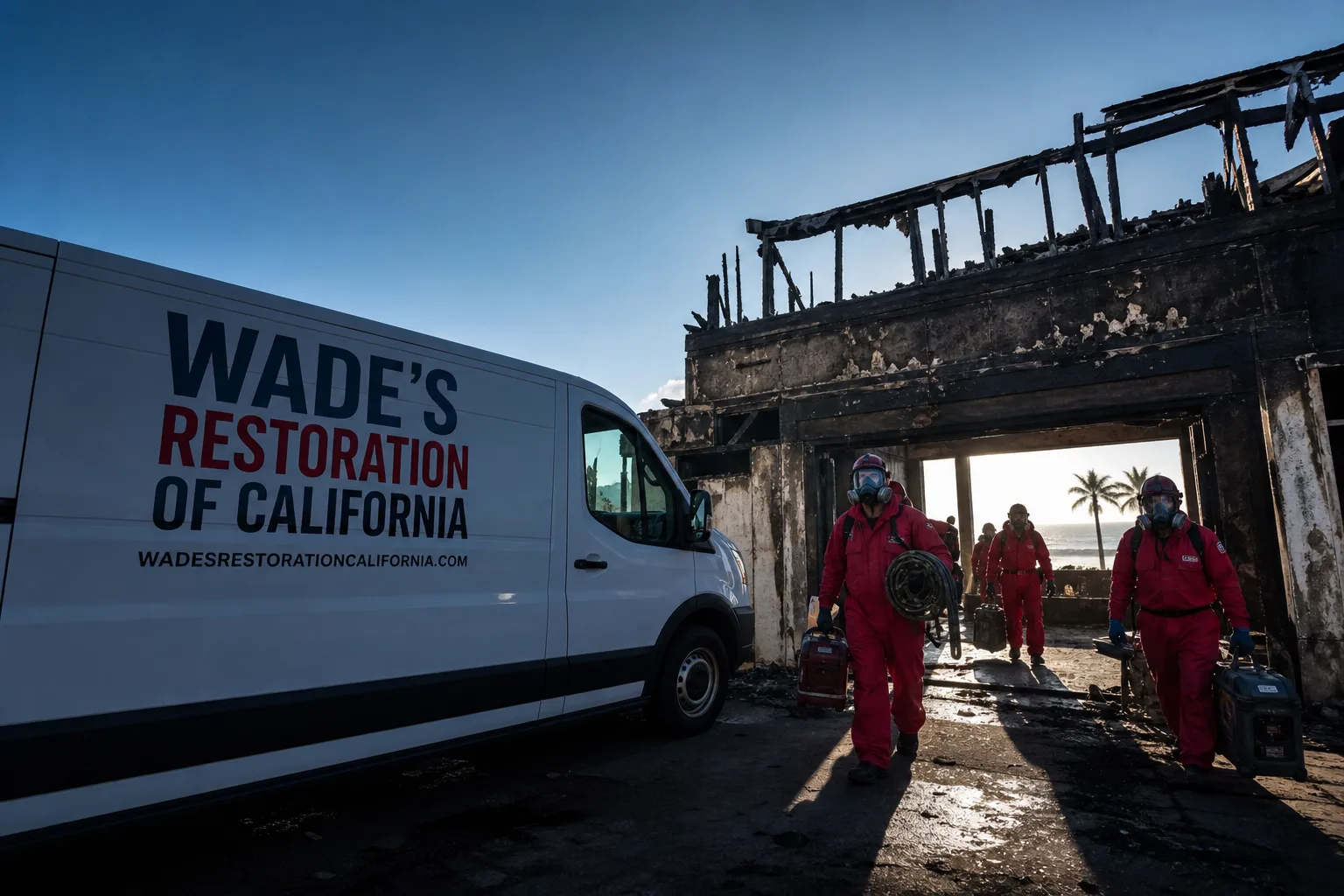
Mold Remediation in Mountain View Takes Longer Here - and There’s a Reason for That
Mold remediation in Mountain View costs between $1,800 and $6,500 for a typical single-room job, and between $4,000 and $14,000 when slab leaks or crawl space contamination are involved. Most Mountain View homes we treat are 1950s-60s slab-on-grade ranches, and the bay mud under those slabs changes everything about how we dry them. If you’re seeing mold along baseboards, smelling must in a hallway, or your Rex Manor home has a hot water slab leak, call Wade’s Restoration at (855) 915-0646 - we answer live, 24/7, and we’ll tell you straight what you’re dealing with.
Here’s what nobody tells you about mold in Mountain View: it’s not just the leak. It’s the ground under your house. The North Bayshore district sits on former tidal marshland and bay fill with a high water table, and that saturated ground doesn’t drain. When a slab leak soaks the soil beneath a 1960s ranch, standard drying math stops working. You can’t pull moisture out of mud that’s connected to a shallow water table a few feet down. That’s why mold jobs here run slower and need more equipment than identical homes two miles inland in Sunnyvale. We plan for that on day one.
Mold Inspection & Testing, Crawl Space Treatment, and Moisture Control - the Mountain View Playbook
Wade Ferris founded Wade’s Restoration in 2007, and he’s built the company around one thing: doing mold work in Bay Area slab-ranch country the way it actually needs to be done, not the way a national franchise’s 3-day protocol says it should be done. Here in Mountain View, that means three services matter more than anywhere else we work. Mold Remediation here starts with real inspection and testing - not a guy with a moisture meter guessing. Then it’s about drying the slab and the bay mud beneath it, not just the drywall. And for the older ranches in Cuesta Park and Waverly Park, crawl space treatment is where the real fight happens, because the marine layer seeps humidity into those vented crawl spaces all year long.
Fast, Reliable Mold Remediation Across Mountain View
We cover all four Mountain View ZIP codes - 94040, 94041, 94042, and 94043 - with crews that know the difference between a Rex Manor slab leak and a Whisman Station condo shared-wall problem. When you call, you get a live person. Not a call center. Often, it’s Wade himself. He heads out from our Bay Area office, and in most Mountain View neighborhoods, we’re on site within the hour for water-driven mold emergencies. For slower-burning problems - the musty hallway, the mystery allergy flare-ups - we’ll schedule a full mold inspection and air sampling within one to two days.
You don’t need a crew you’ve never met showing up with a script. You need someone who knows that Stevens Creek floods in El Niño winters, that the marine layer pushes moisture into wall cavities east of the freeway, and that the original copper and galvanized supply lines under Waverly Park ranches have been corroding for sixty years. That’s us.
Why Mountain View Homeowners Call Wade’s Restoration First
People around here have been burned by the big national outfits - the ones who quote one price on the phone and a different one at the door. Wade’s Restoration is different, and it’s not a marketing gimmick. Wade Ferris publishes his name and address. He answers his own phone. When he says his crew will be at your Rex Manor home on Tuesday, he means Tuesday. When he says the drying timeline for your North Bayshore condo needs to be extended because of bay fill, he’ll show you the moisture logs to prove it. He takes moisture readings every single day and hands you the full log at the end of the job. Almost nobody in this trade does that.
Every mold job we do in Mountain View carries the 90-Day Done Right Promise in writing. If it’s not done right, we make it right. That’s not a sales line. It’s stamped on the contract. And since Wade deals with your insurance adjuster directly, you’re never stuck in the middle relaying messages between two sides. Call (855) 915-0646 and ask for Wade. He’ll pick up.
Our Mold Remediation Services in Mountain View
Mold Inspection & Testing
Every mold job in Mountain View should start with real testing, not guesswork. We run air sampling inside and outside, compare spore counts lab-to-lab, and identify the species involved - because Stachybotrys in a Waverly Park bedroom closet demands a different approach than common Aspergillus on a bathroom ceiling. If you’ve smelled must for weeks but can’t see anything, odds are it’s coming from a slab leak or a crawl space you’ve never been in. We find it. We document it. We show you the lab report.
Mold Removal
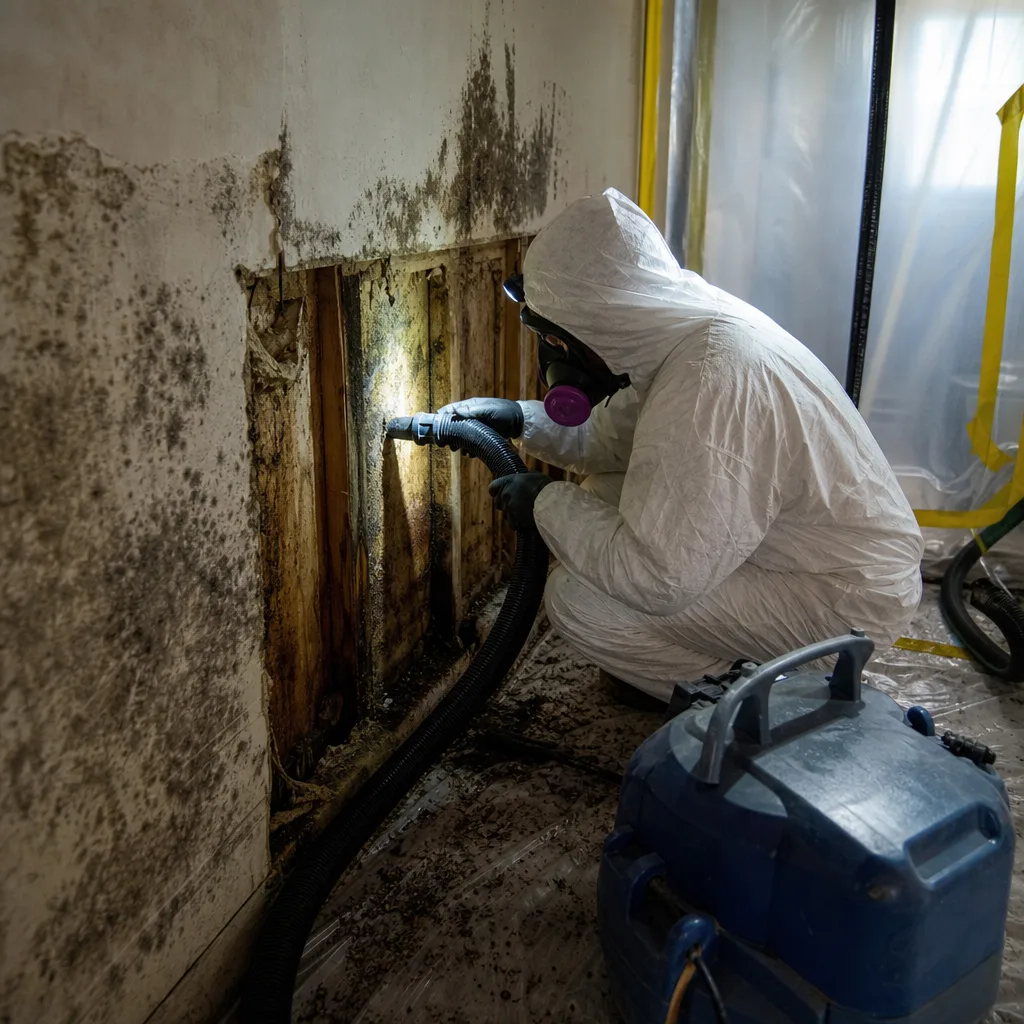
Containment first, removal second, disposal third. For ranch homes in Cuesta Park and Rex Manor with mold running behind baseboards, we seal the room, run negative air with XPOWER scrubbers, cut out the affected drywall and insulation, and treat the framing. In Mountain View’s 1950s-60s stock, that almost always means coordinating asbestos testing on the original floor tile, drywall, or popcorn ceiling before we open the wall. If it comes back positive, Wade lines up the abatement crews and keeps the job moving instead of leaving you with a stop-work order and an exposed wall.
Black Mold Remediation
Black mold - Stachybotrys chartarum - shows up where water has been sitting. In Mountain View, that’s often under a slab that’s been leaking for months, or behind a shared wall in a Whisman Station condo where a neighbor’s leak crossed the property line. We contain it, remove it, and verify clearance with post-remediation air sampling. If your doctor has flagged mold as a health concern and you need documentation, we provide the sampling data and lab results your insurer and your allergist both want to see.
Air Quality Restoration
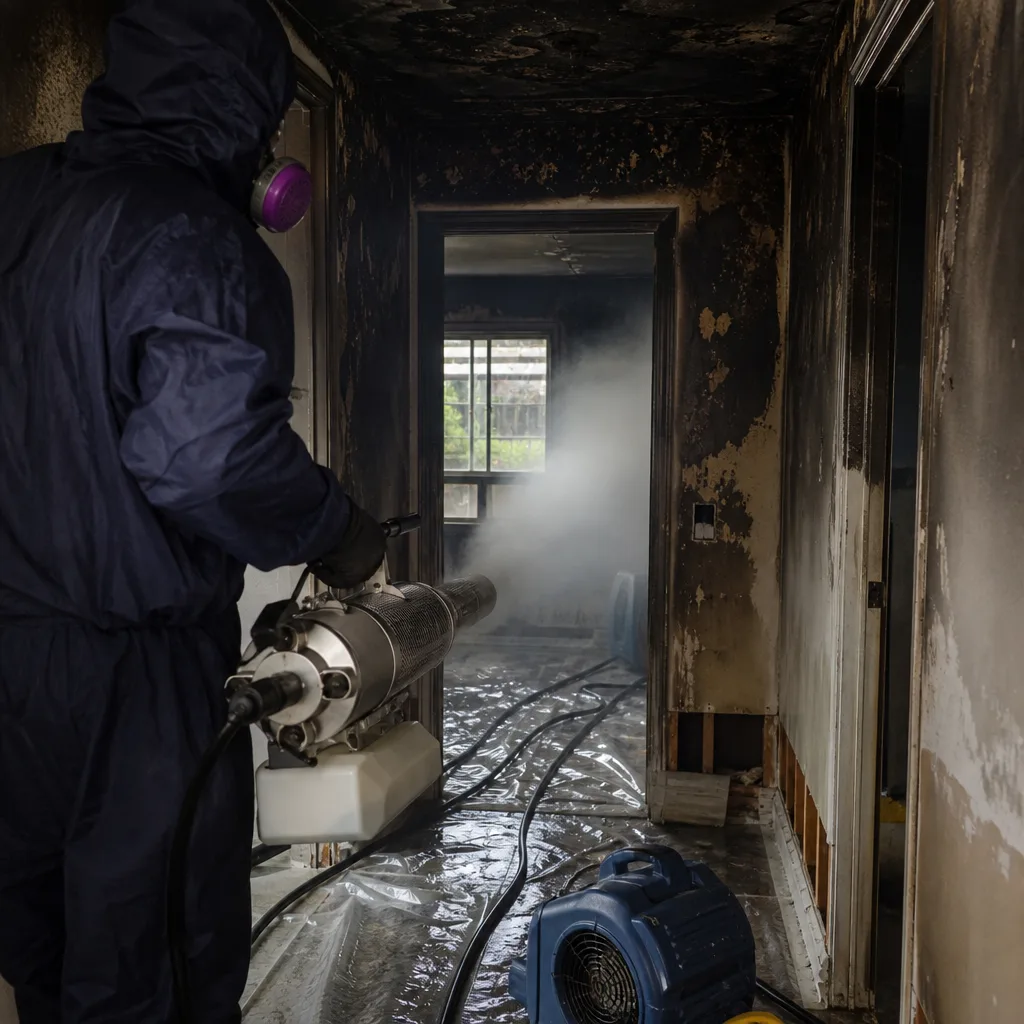
After the mold is gone and the moisture source is fixed, the air needs to be cleaned. We run HEPA air scrubbers during and after the job, then take post-remediation air samples to confirm indoor spore counts are below outdoor baseline. For Mountain View homes along the El Camino corridor or near the 101/85 interchange, outdoor air already carries particulate load; indoor air should still test cleaner than the yard outside. We’ll show you the numbers.
What happens when you call
- 1
A real person answersNo phone trees - you reach a local pro.
- 2
You get an upfront price rangeHonest numbers before anyone is dispatched.
- 3
A background-checked tech heads outLicensed & insured, dispatched right away.
- 4
You approve before work beginsNothing starts until you say go.
Why Mold Jobs in Mountain View’s Older Homes Run Slower - and Why We Plan For It
Here’s what we see in the field, over and over, in the core residential belt of Mountain View. The houses in Rex Manor, Cuesta Park, and Waverly Park are mostly single-story, slab-on-grade ranches built in the 1950s and 60s. Their original copper or galvanized supply lines run directly through the concrete slab. Those lines corrode. When one springs a leak, the water doesn’t pool on the floor - it saturates the soil beneath the slab. Then the marine layer keeps ambient humidity high, so nothing dries naturally. Mold grows behind baseboards, under flooring, inside wall cavities. You might not see it for months. By the time you smell it, it’s established.
Now add the wildcard: asbestos. A lot of Mountain View’s original ranch floor tile, duct insulation, and popcorn ceiling material tests positive. We can’t open a wall or pull up a floor without testing first. If we skip that step, the job stops mid-demolition. We don’t skip it. And when tests come back positive, we bring in the abatement contractor, sequence the work, and keep you informed at every step. That’s not a delay - that’s doing it right. It’s also a big part of why national chains hate working Mountain View. We don’t hate it. We just plan for it.
A Real Job, in a Real Mountain View House
In a Waverly Park ranch, our crew traced persistent mustiness to a slab leak from original galvanized supply lines. After the plumber rerouted, we ran Dri-Eaz dehumidifiers and Injectidry mats for three extra days because the saturated bay mud under the slab just wouldn’t release the moisture. Post-remediation air sampling with XPOWER air scrubbers showed mold spore counts dropped below outdoor baseline, and we coordinated asbestos abatement for the original vinyl floor tile before replacing it. The whole job took eleven days. A standard protocol job on a raised-foundation home in Sunnyvale would have taken six. That’s Mountain View.
Trusted Brands We Use in Mountain View
We run professional-grade equipment and hold IICRC, RIA, and IFA credentials, because this city demands it. Dri-Eaz dehumidifiers, Injectidry drying mats, and XPOWER air scrubbers are standard on our Mountain View trucks - not rental specials. When a North Bayshore tech-campus job needs a dehumidifier array scaled up for 40,000 square feet of floor plate, we already have the equipment staged. We also maintain local parts stock for repair-phase work, so a Waverly Park job isn’t waiting a week on a back-ordered fan motor.
Common Mold Remediation Problems We See in Mountain View Homes
- Slab leaks that never dry on schedule. The bay mud under North Bayshore and low-lying ranch neighborhoods stays saturated, which means standard 3-day drying protocols fail. Wood baseplates stay damp, and mold returns behind the baseboard within months. We extend drying and verify with daily moisture readings until the slab stabilizes.
- Asbestos discoveries mid-job. 1950s-60s ranch homes in Cuesta Park and Rex Manor frequently have asbestos in floor tile, drywall compound, and duct insulation. Opening walls without testing triggers stop-work orders. We test first, every time.
- Crawl space humidity without an obvious leak. The year-round marine layer pushes moisture into vented crawl spaces under the older ranches. Even without a discrete loss event, that humidity seeds surface mold on floor joists and subflooring. We treat it with crawl space encapsulation, vapor barriers, and mechanical dehumidification where warranted.
- Shared-wall moisture in Whisman Station condos. Attached condos and townhomes in that 1980s-90s stock share wall assemblies and sometimes plumbing risers. When a neighbor’s unit leaks, moisture can migrate through party walls and show up as mold on your side. Those jobs require HOA coordination, inter-unit documentation, and sometimes access through someone else’s unit.
Pricing for Mold Remediation in Mountain View, CA
Here are honest dollar numbers for Mountain View’s market. A typical crawl space mold treatment on a 1,200-1,600 sq ft ranch runs $1,800-$4,200, including containment, surface treatment, and a moisture-control plan. Full mold removal with drywall replacement and post-remediation air sampling in a single affected room typically runs $3,500-$6,500. If we’re dealing with a slab leak, slab penetration, and asbestos abatement coordination, a full-scope job lands between $7,000 and $14,000. Those are real numbers from real Mountain View jobs, not a national call-center quote.
What drives price up? Asbestos testing and abatement coordination. Extended drying timelines on bay-fill slabs. HOA insurance coordination on Whisman Station condos. What drives price down? Catching the mold before the moisture source saturates the slab. Smaller containment zones. Not needing structural dry-out. Every estimate is free, and Wade gives you a written scope before any work begins. No trip charge inside Mountain View. Call (855) 915-0646 for a straight answer.
We Also Serve Cities Near Mountain View
Our crews regularly work in Los Altos, Los Altos Hills, Sunnyvale, and Stanford - same equipment, same 90-Day Done Right Promise, same live answer when you call. If you’re in one of those communities, check out our Mountain View service page for details on the broader area we cover.
Serving Mountain View, CA - Our Local Coverage Area
We’re based in the Mountain View area and know this community well. Use the map below to see our service coverage - if you’re nearby, we can almost certainly help.
FAQs - Mold Remediation in Mountain View
The North Bayshore district sits on former tidal marsh and bay fill, meaning saturated soil keeps concrete slabs cool and damp regardless of indoor HVAC, and IICRC drying timelines simply don’t hold. A 3-day residential protocol job in inland Sunnyvale becomes a 7-day job on the bay side of Highway 101, because the slab won’t dry from below until we run extended dehumidification and verify stability with daily moisture logs. That’s not a failure - it’s the physics of building on mud. Call (855) 915-0646 and we’ll explain what that means for your specific building.
The marine layer pushes high humidity into crawl spaces and wall cavities in the older ranch stock year-round, so mold can establish even without a visible leak. In Waverly Park specifically, the original 1950s-60s ranches have vented crawl spaces that pull moist air in all summer, condensing on cool joists and subflooring. We address this with vapor barriers, encapsulation, and mechanical dehumidification, not just surface treatment - and we provide moisture readings so you can see the before-and-after.
First, kill the water at the main or at the leaking supply line, then call a plumber and us - the order depends on who answers faster. A hot water slab leak accelerates mold growth because heat plus moisture equals fast colonization. The slab and the bay mud beneath it need extended drying with Dri-Eaz and Injectidry equipment, and any wall or baseboard mold needs containment and removal before drying starts. Call (855) 915-0646 right away.
It does, if the moisture source involves shared walls, common plumbing risers, or building envelope issues like a roof leak from a common area. Your HOA’s insurance likely covers building components; your unit policy covers interior surfaces. Wade deals with the adjuster on both sides and documents everything with moisture logs and photo evidence, so you’re not stuck mediating between your HOA, your insurer, and a remediation crew. For shared-wall mold migration from a neighboring unit, you may need access through their unit, which the HOA coordinates.
Because the original copper and galvanized supply lines run through the slab and corrode over 60-70 years, leaking water directly into the soil beneath your floor. The slab doesn’t crack visibly; the water just saturates the fill and wicks up through the concrete, feeding mold under flooring and behind baseboards. In Mountain View, the high water table in the old bay-fill districts makes this worse, because the soil can’t absorb more water. By the time you smell it or notice baseboard staining, the mold colony under the floor has been active for months. The fix is rerouting the supply line, drying the slab with drying mats, and removing the affected flooring and baseboard - all sequenced with asbestos testing first if the flooring is original.
Call Wade’s Restoration for Mold Remediation in Mountain View, CA
If you’ve got mold, a slab leak, or just a musty smell you can’t place, call (855) 915-0646. Wade answers his own phone. He’ll ask the right questions, tell you what he thinks over the phone, and schedule a free inspection with a written scope before any work starts. No trip charge inside Mountain View. Free second opinion on any written estimate. And a Senior & Veteran 10% discount on every job, because that’s just how it works around here. One call brings Wade. He’ll be there himself.
Written by Wade Ferris, Owner at Wade’s Restoration of California, serving Mountain View since 2007.