
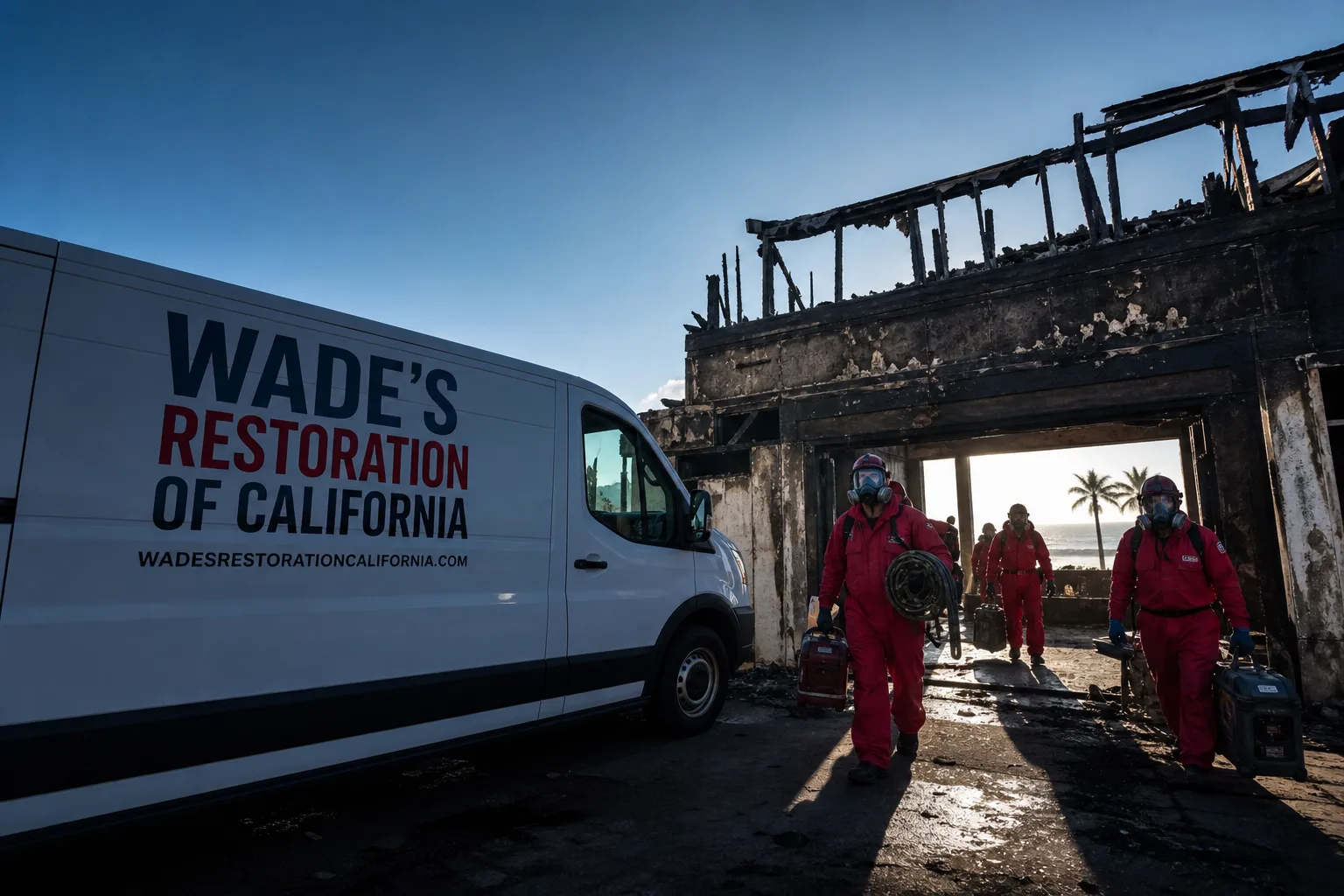
Fast, Reliable Storm & Disaster Restoration Across Mountain View
Storm damage in Mountain View rarely waits for business hours, and neither do we. If a eucalyptus limb just went through your roof in Waverly Park or sheet-flow water is pushing under your slab in Rex Manor, call (855) 915-0646 right now. A live person answers. Wade Ferris, the owner, has been doing this since 2007 and he’ll tell you straight what needs to happen next.
Here’s the short version: storm and flood restoration in Mountain View typically costs $1,800-$8,500 depending on how far water traveled and what it soaked. Emergency board-up runs $450-$1,200. Roof tarping is usually $350-$900. We reach most Mountain View addresses within 60-90 minutes because our Bay Area dispatch office coordinates crews locally, and we know which roads flood first when Stevens Creek overtops.
Why Wade’s Restoration of California Is Mountain View’s Preferred Storm & Disaster Restoration Company
When a storm hits Mountain View, the difference between a 3-day dryout and a 12-day structural drying job comes down to whether the crew understands local ground conditions. We do. Wade’s Restoration has worked the slab-on-grade ranch homes around Cuesta Park, the condo and townhome clusters near Whisman Station, and the big-floor-plate commercial buildings on the North Bayshore side of Highway 101. That range matters because the same storm damages each of them very differently.
Mountain View homeowners tend to check out who they’re letting through the door. Fair enough. Wade Ferris publishes his name, address, and license number. He answers his own phone. You’ll see him at the job, not just a crew you’ve never met. Reviews from Mountain View customers consistently mention the same things: the owner showed up, the moisture readings were documented daily, and the adjuster got direct calls instead of a homeowner stuck relaying messages between two sides.
We’re IICRC-certified and RIA-affiliated, and every water, fire, and storm restoration job is covered by the 90-Day Done Right Promise, in writing. If it’s not done right, Wade makes it right. One call brings him back.
If you’re checking credentials, we’ve been at this for over 29 years across our service area, and since 2007 as Wade’s Restoration. Our crews run Dri-Eaz and Phoenix professional-grade drying equipment, and we carry no trip charge inside our own county. That’s real money saved before anyone rolls a truck.
Our Storm & Disaster Restoration Services in Mountain View
Here’s what we handle in Mountain View after a storm, and how local conditions change the work. Call (855) 915-0646 for a free estimate on any of these.
Flood Damage Restoration
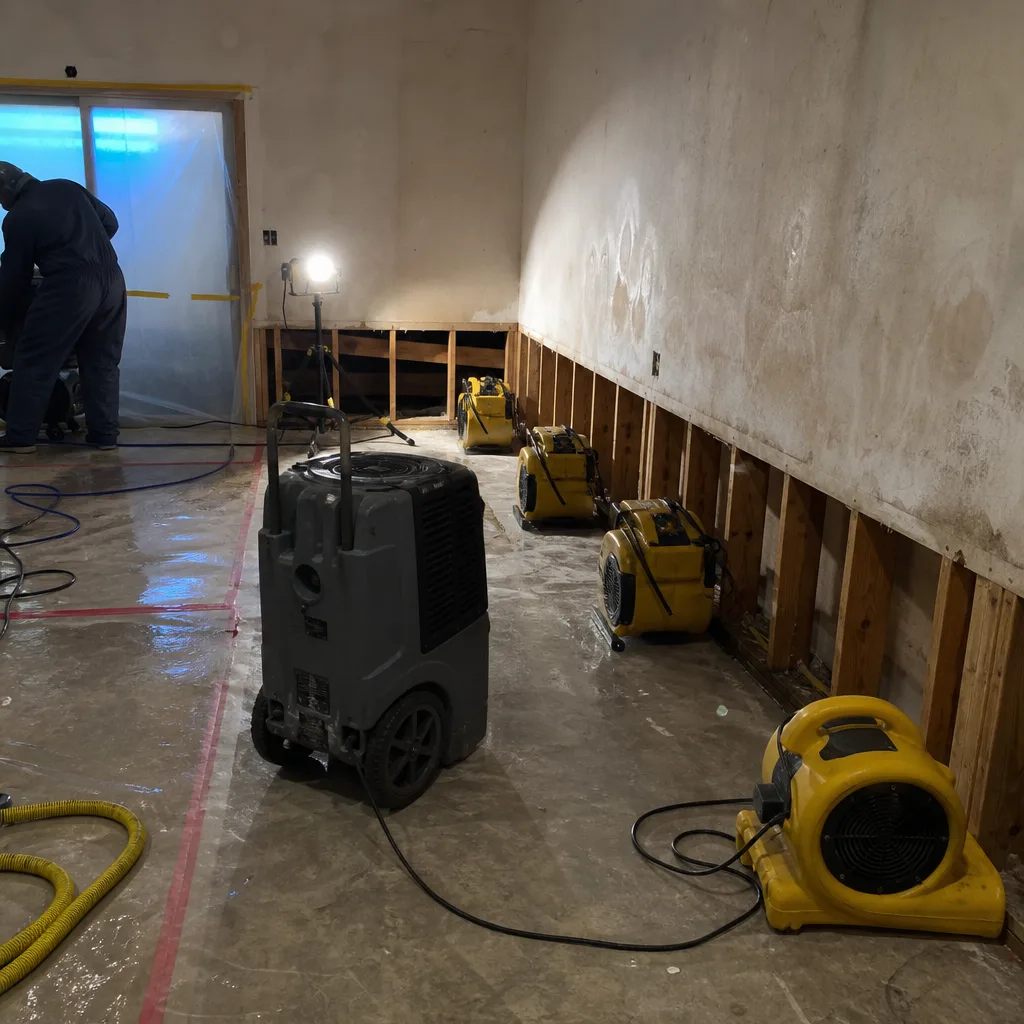
Flood water in Mountain View behaves differently depending on which side of Highway 101 you’re on. In Rex Manor, Cuesta Park, and Waverly Park, the 1950s-60s slab-on-grade ranch homes hold water beneath the slab, where original copper supply lines run. A storm that saturates the ground can also expose a chronic slab leak, turning one problem into two. We extract first, then use Dri-Eaz LGR dehumidifiers and Injectidry panels to dry what you can’t see, documenting every reading in a log you keep at the end.
In North Bayshore, the bay-fill substrate holds water against foundation slabs for days. Drying there runs 7 days or more, not the standard 3. We scale equipment up accordingly. You don’t want a crew finding out on day 5 that the slab is still damp. We plan for it on day 1.
Emergency Board-Up
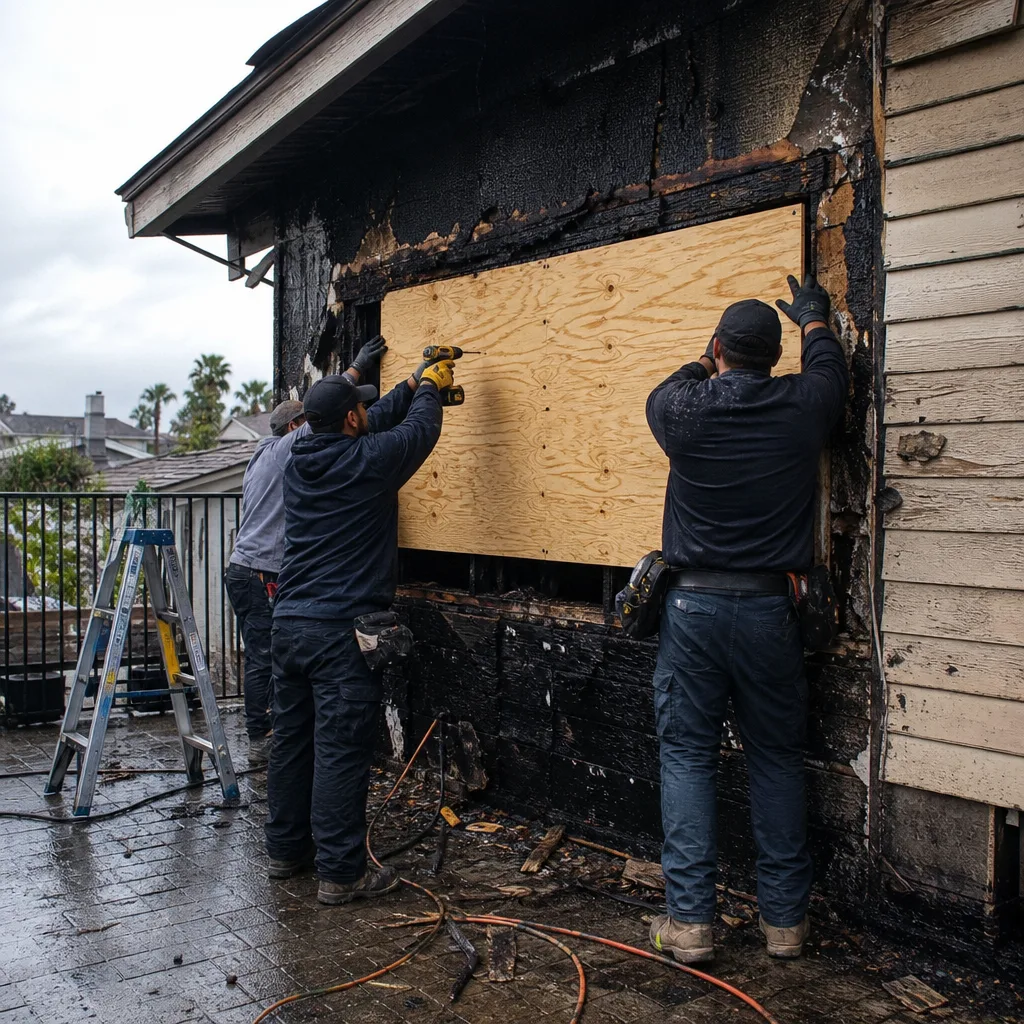
After wind damage or a fallen limb, Mountain View ranch homes with single-pane windows and older framing need secure board-up fast, both to keep out weather and to keep out animals and people. We board and secure openings the same day we get your call, including detached workshops and garages common on Mountain View’s larger lots. This is not a cosmetic fix. It’s the difference between a contained loss and a house open to the next system rolling through.
Storm Damage Cleanup
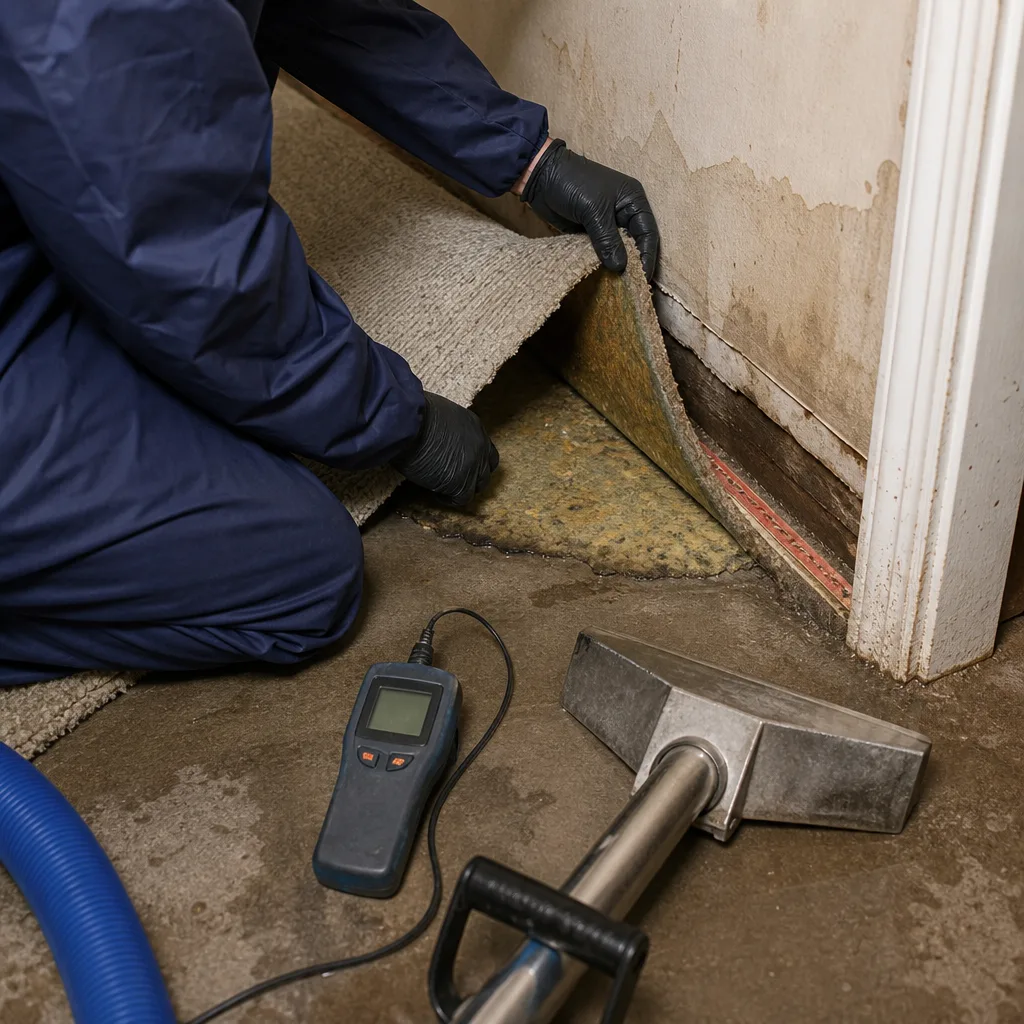
When Permanente Creek or Stevens Creek overflows during heavy El Niño winters, low-lying sections of Mountain View see sheet-flow water that pushes mud, silt, and debris into garages, crawl spaces, and finished rooms. Our crew removes the water, removes the damaged materials, and takes moisture readings every single day until the structure is stable. One thing we do that most crews won’t: we test frequently disturbed materials for asbestos before demo in older Mountain View homes, because 1950s floor tile and insulation commonly test positive. Testing first keeps your home safe and keeps the job running.
Roof Tarping
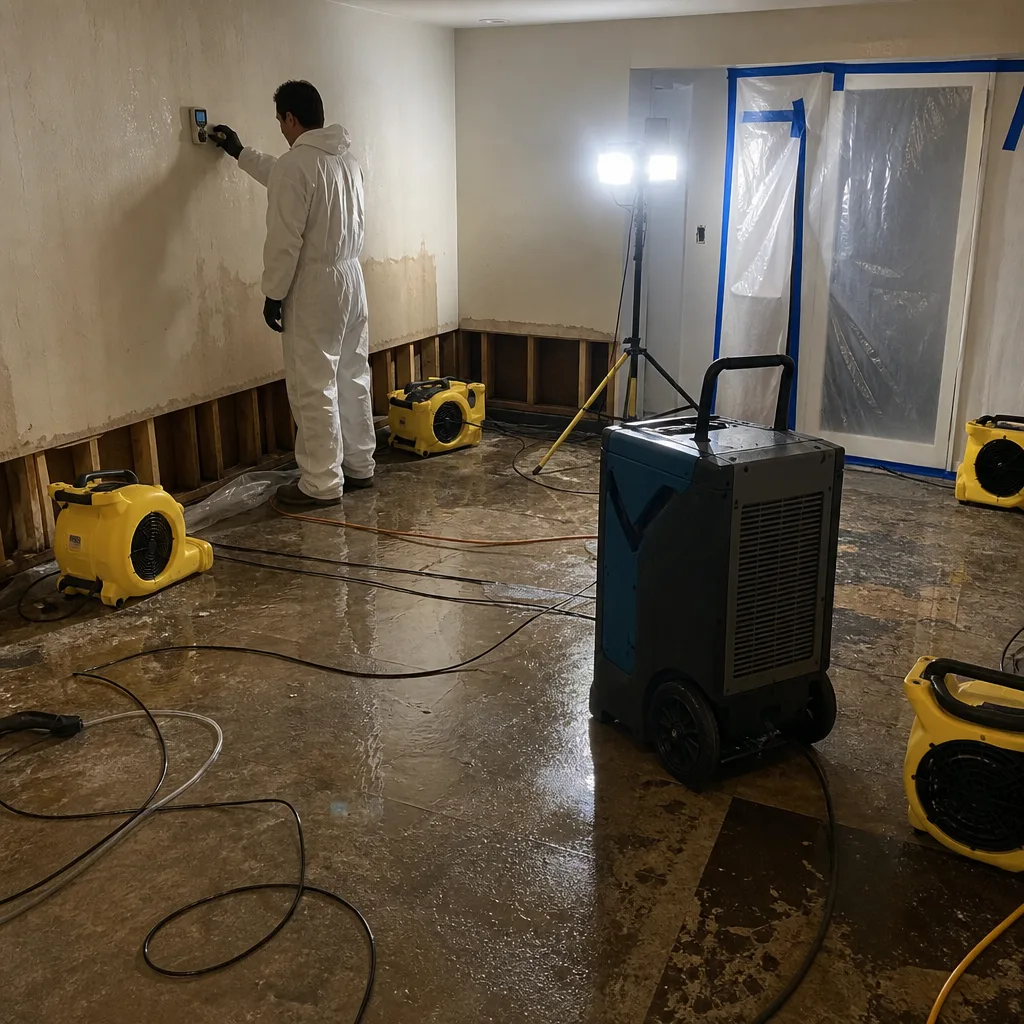
When a storm opens your roof, tarping isn’t a permanent fix. It’s the step that stops the bleeding until a roofer can get there. We tarp to prevent water from continuing to travel through your ceiling assembly, and we do it with materials that hold up to the Bay Area’s wind and rain. For Mountain View ranch homes, we also inspect the attic and ceiling insulation while we’re up there, because wet insulation in a marine-layer climate starts growing mold fast if it isn’t pulled or dried quickly.
What happens when you call
- 1
A real person answersNo phone trees - you reach a local pro.
- 2
You get an upfront price rangeHonest numbers before anyone is dispatched.
- 3
A background-checked tech heads outLicensed & insured, dispatched right away.
- 4
You approve before work beginsNothing starts until you say go.
Trusted Brands We Service in Mountain View
We don’t sell equipment brands. We run them. On Mountain View jobs, our crews use Dri-Eaz LGR dehumidifiers and Injectidry drying panels because they handle the city’s long-drying structural conditions better than consumer-grade gear ever could. Phoenix axial air movers get into tight wall cavities in ranch homes and townhomes around Whisman Station. For commercial restoration on the North Bayshore side of Highway 101, we bring industrial-scale drying arrays sized for big floor plates. We also maintain local parts stock for common Mountain View building assemblies, which means less waiting when a repair needs a specific component. Wade’s team is certified to the standards the brands require, and our IICRC and RIA affiliations back the work itself.
Common Storm & Disaster Restoration Problems We See in Mountain View Homes
- Slab-on-grade ranch homes that won’t dry on a standard timeline. The 1950s-60s stock in Rex Manor and Cuesta Park sits directly on ground that stays damp. Storm water gets under the slab and stays there, so the drying phase runs longer than a contractor from a drier inland county would expect.
- Asbestos surprises mid-job. Floor tiles, duct insulation, and popcorn ceilings in Mountain View’s older ranch homes frequently contain asbestos. Disturb them during storm cleanup and the job pauses for hazmat abatement. We test before we demo.
- Undersized equipment on North Bayshore commercial buildings. The tech campus buildings south of the Bay hold huge floor plates, and moisture hides in wall cavities fed by the year-round marine layer. A crew that brings residential-grade dehumidifiers to a 40,000-square-foot floor plate is going to leave mold behind. We scale up from the start.
- Shared-wall moisture migration in townhomes and condos. The 1980s-90s attached units near Whisman Station share wall assemblies. If your neighbor’s unit flooded, water moves through shared framing. Your unit can be wet even if your floors look dry. We check both sides of the wall before calling a job done.
Pricing for Storm & Disaster Restoration in Mountain View, CA
Storm restoration in Mountain View runs on a range, not a flat number. Emergency board-up and roof tarping are the most predictable: $450-$1,200 for board-up, $350-$900 for tarping on a typical ranch roof. Water extraction and structural drying start around $1,800 and climb to $8,500 or more when water traveled through multiple rooms, wetted wall insulation, or sat more than 24 hours. Flood damage in North Bayshore commercial buildings runs higher because of equipment scaling and longer drying days. The variables are square footage, how long the water sat, and whether asbestos abatement or a secondary slab leak enters the picture. We write the scope and price before work starts. No trip charge inside our own county. Call (855) 915-0646 and Wade or one of his team will give you a straight number.
We Also Serve Cities Near Mountain View
We regularly work in Los Altos, Los Altos Hills, Sunnyvale, and Stanford. If you’re in one of those communities and dealing with storm or flood damage, the same Storm & Disaster Restoration in Mountain View crew can be at your door. Same direct phone, same owner-operated approach. Our Storm & Disaster Restoration team covers the whole area, and we don’t charge a trip fee inside our own county.
Serving Mountain View, CA - Our Local Coverage Area
We’re based in the Mountain View area and know this community well. Use the map below to see our service coverage - if you’re nearby, we can almost certainly help.
FAQs - Storm & Disaster Restoration in Mountain View
Because North Bayshore sits on compressible bay mud with a high water table. The saturated ground keeps concrete slabs cool and damp from below, which resists evaporation and slows structural drying from the typical 3 days to 7 or more. A crew that applies an inland Sunnyvale timeline will find the slab still holding moisture on day 5 and hidden mold inside wall cavities. We factor this in before we set up equipment. Call (855) 915-0646 if your commercial building took storm water and you’re being told it’s dry when it isn’t.
Yes, if your home has original floor tile, duct insulation, or popcorn ceilings from that era. Many Rex Manor ranch homes test positive for asbestos, and disturbing those materials during water-damage demolition triggers regulated abatement. We test before demo. It costs less than a shut-down and it keeps your family safe. Call (855) 915-0646 and we’ll tell you what to expect before work begins.
During heavy El Niño winters, both creeks can overtop and send sheet-flow water into low-lying residential sections. That water pushes mud and silt into garages and crawl spaces, and it comes up through slab foundations rather than down through roofs. Homes near the creek corridors need faster extraction and a longer drying monitor than homes on higher ground. We know which streets flood first and we bring the right equipment for it.
Mountain View ranch homes tend to have single-pane windows, older framing, and detached workshops or garages with separate openings. A wind event can damage multiple structures on the same lot. We board every opening, not just the main house, and we use fasteners that hold in the wind and rain the peninsula gets between storms. The board-up needs to last until permanent repairs happen, not just a day or two.
That depends on how far water traveled through the shared wall assembly. If water reached your side, the drying equipment needs to run in your unit too, and that means noise, cords, and restricted access to some rooms. If the wall assembly stayed dry, you can usually stay. We determine this with moisture readings inside the shared wall, not by looking at your floor. Call (855) 915-0646 and we’ll assess it honestly.
One More Thing About Mountain View Ground
There’s a reason storm restoration in Mountain View resists the one-size-fits-all timelines that damage restoration franchises write into their playbooks. The city sits on two very different ground conditions. Inland, the ranch homes of Cuesta Park and Rex Manor rest on clay that drains slowly, and their slab foundations sit low to the grade with original copper supply lines running beneath. When a flood event saturates that ground, the water doesn’t drain away from the slab. It lingers, keeps the slab cold, and pulls more moisture into the structure from below. That’s why a 3-day drying job in inland Palo Alto is routinely a 7-day job in Mountain View. The ground itself won’t let go of the water.
On a ranch home off Cuesta Drive in the Cuesta Park neighborhood, our crew responded to El Niño sheet-flow flooding that pushed water through the slab-on-grade foundation. Because the original copper supply lines had already corroded under the slab, the storm intrusion triggered a secondary leak, and asbestos-positive floor tiles forced us to pause mid-job for hazmat abatement. We deployed Dri-Eaz LGR dehumidifiers and Injectidry panels for 12 days, not the usual 3, before moisture readings stabilized in the bay-mud saturated sub-slab. That’s what a real Mountain View storm job looks like. It isn’t a template.
And on the North Bayshore side of Highway 101, where Google and the other tech campuses sit on bay fill, the saturated substrate keeps concrete slabs damp even when the interior air feels dry. Floor plates are enormous. Hidden moisture inside wall cavities feeds on the year-round marine layer humidity. If a restoration contractor runs standard residential protocols there, you’ll get mold inside 30 days and a bill to fix it. We scale equipment up from the first day and plan for the extended timeline the ground demands. That’s the difference between a job done right and a job done twice.
This page shows exactly why storm and flood restoration in Mountain View demands longer drying timelines, hazmat-aware demolition, and heavy-duty equipment scaling that a generic damage restoration page never mentions. If your home or building took storm water, call (855) 915-0646. Wade will answer, he’ll ask the right questions, and he’ll tell you what he’d do if it were his place. Because in Mountain View, chances are pretty good he lives close enough that it could be.
Written by Wade Ferris, Owner at Wade’s Restoration of California, serving Mountain View and the surrounding Bay Area since 2007.