
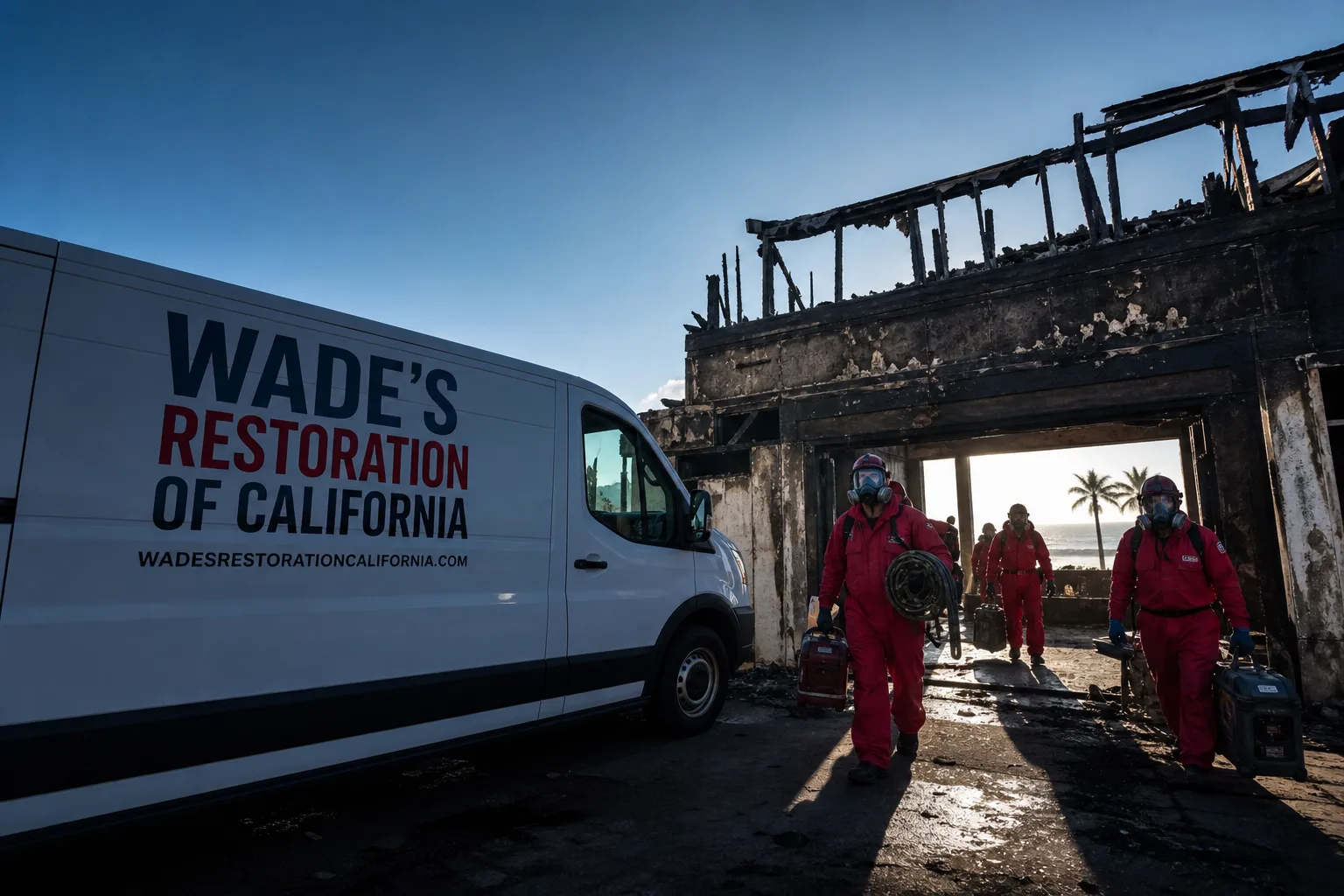
Fast, Reliable Mold Remediation Across Stanford
Mold remediation in Stanford typically runs $1,800 to $6,500 for a contained removal job, and if you’re calling from university housing, the first call usually isn’t to a contractor at all. It’s to Stanford Facilities Management. We know that because we’ve worked inside Stanford’s system for years, and we understand that campus access, compliance, and scheduling all run through one centralized office. Whether you’re in a 1950s faculty home on the east side of campus or a graduate unit at Escondido Village, we can walk you through exactly how the process works here. Call Wade directly at (855) 915-0646 and he’ll tell you what to expect before you even file the work order.
Key Takeaways:
- Most Stanford mold jobs require coordination with the university’s Facilities Management, not just the homeowner.
- Contained remediation in Stanford runs $1,800-$6,500 depending on square footage and materials affected.
- Wade’s Restoration is pre-vetted through Stanford’s approved-vendor process, so scheduling moves faster.
- Free written estimate, and a free second opinion on any written estimate you already have.
Why Wade’s Restoration of California Is Stanford’s Preferred Mold Remediation Company
We’ve worked in Stanford long enough to know that every job on campus comes with a layer of bureaucracy most contractors won’t touch. Wade’s crew is pre-vetted through Stanford’s vendor system. That means when Facilities Management approves a mold job, we can actually get access, schedule work around student housing operations, and move without the delays that plague unapproved contractors. We show up with IICRC-certified training and equipment from Dri-Eaz and Phoenix, and Wade hands you a written scope before any work starts.
People in Stanford don’t ask for much. They want someone who shows up when they say they will, does the work without cutting corners, and doesn’t disappear when the invoice is paid. The 90-Day Done Right Promise is in writing on every mold job. If it’s not right, Wade comes back. No runaround. Ask anyone on your street. Wade’s name is on the truck, and he’s probably the one answering the phone at 2 a.m.
Response time to Stanford from our Bay Area office is typically under two hours for emergency water events that feed mold growth. For scheduled mold inspection and testing, we’re usually on campus within one to two business days of the work order being approved.
Our Mold Remediation Services in Stanford
Mold Inspection & Testing
In Stanford’s university-owned housing, mold inspection often starts with a Facilities Management work order rather than a homeowner’s call. We test for moisture intrusion using thermal imaging and moisture meters, document everything in writing, and hand you the full moisture log at the end. That documentation matters more in Stanford than almost anywhere else because the university’s risk management office will want to see it. A typical inspection with lab sampling in Stanford runs $350-$650.
Mold Removal
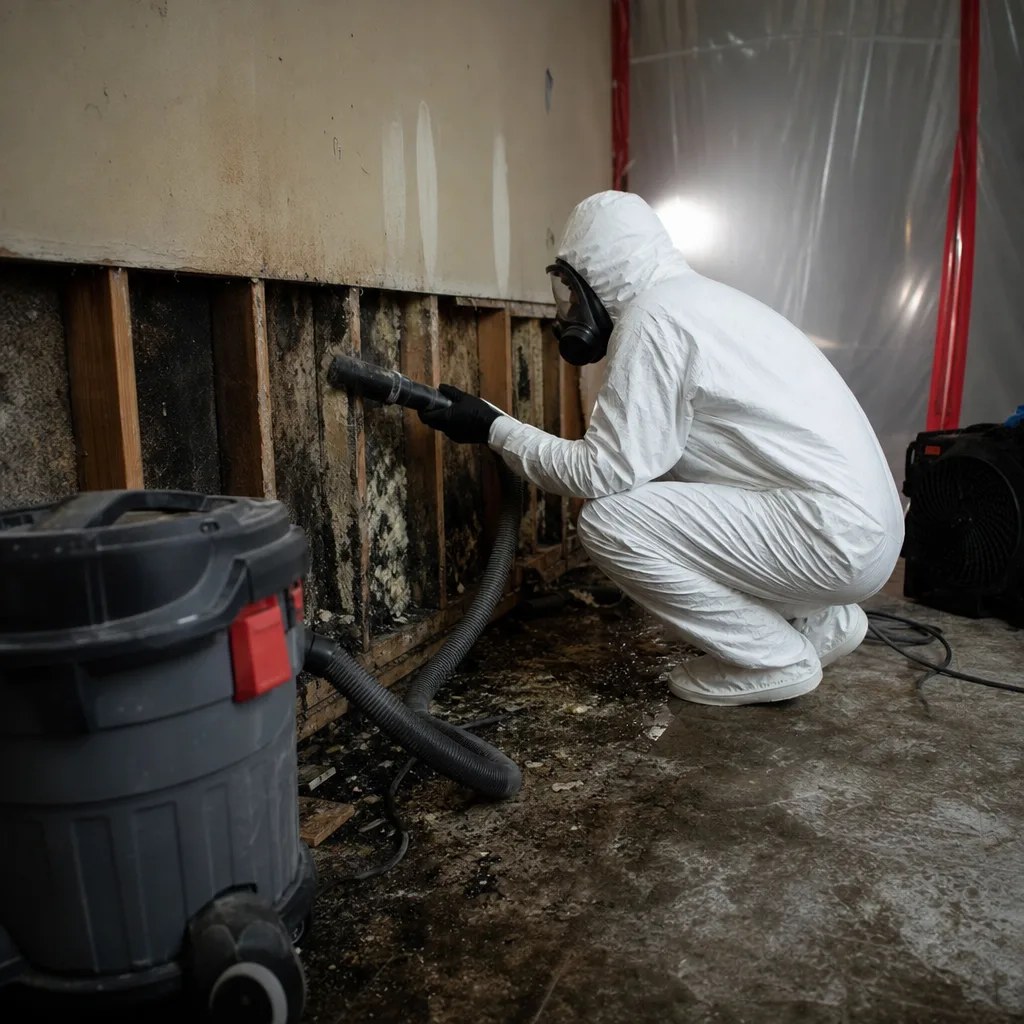
Contained mold removal in Stanford means setting up negative air pressure, sealing off affected rooms, and removing affected drywall, insulation, or carpet under controlled conditions. In 1940s-1960s faculty homes, we frequently find mold behind original plaster walls where slow plumbing leaks went unnoticed for years. Removal plus rebuild of a typical 10×10 room runs $2,800-$5,000 in Stanford, depending on how far the moisture traveled.
Black Mold Remediation
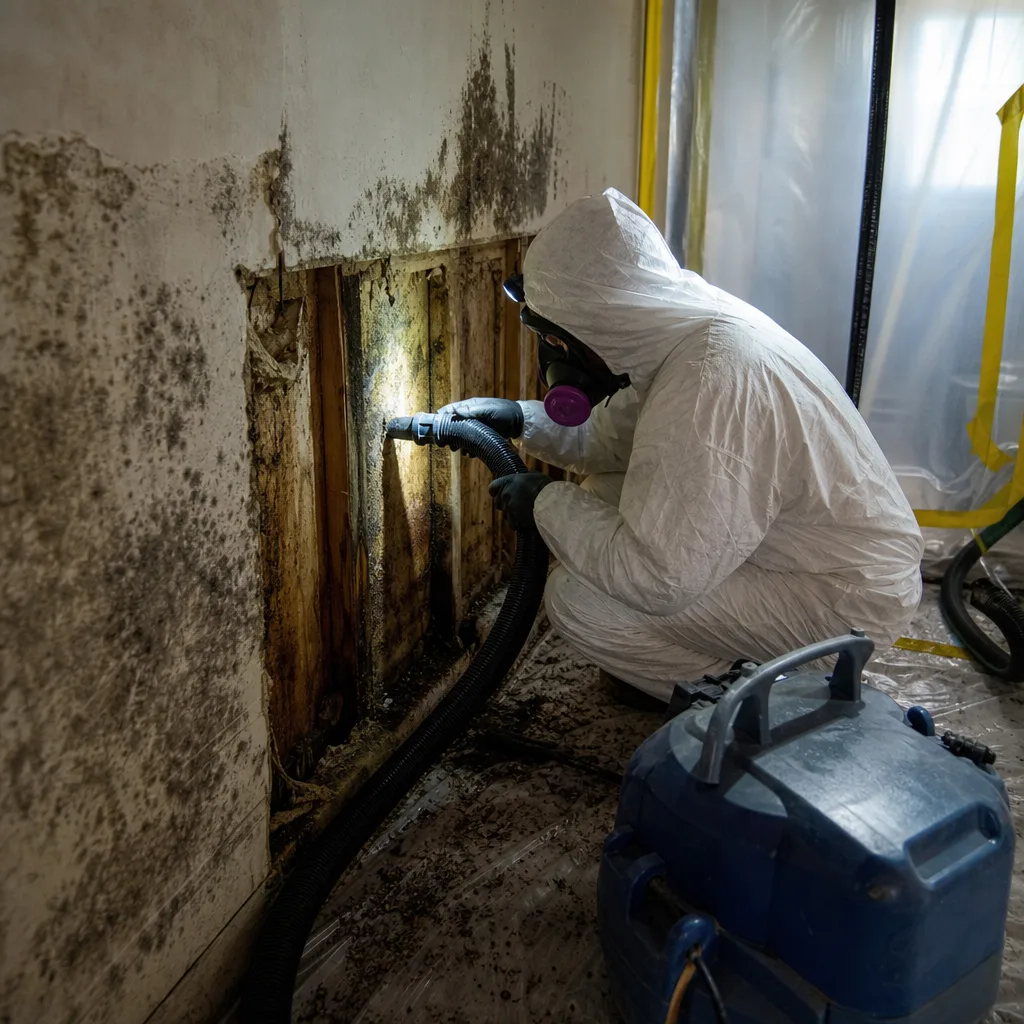
Stachybotrys, the mold people call “black mold,” needs constant moisture to thrive. In Stanford, we most often find it in crawlspaces under older campus housing where groundwater seepage or failed drainage keeps wood wet for months. Full containment, removal, and sanitization of a crawlspace with black mold involvement starts around $3,500 in Stanford and goes up based on access and the extent of affected framing. This is not a surface-cleaning job, and we won’t pretend otherwise.
Air Quality Restoration
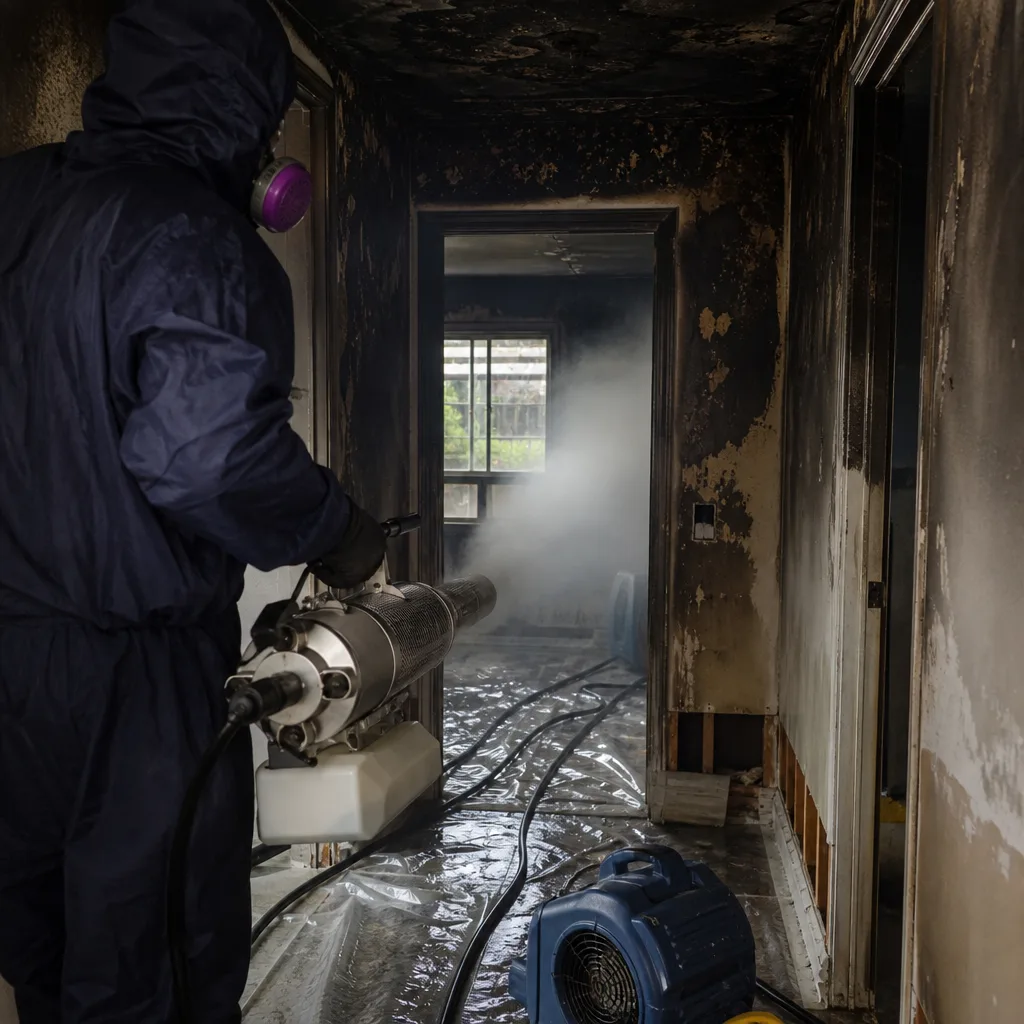
After physical mold removal, we run HEPA air scrubbers and bring indoor spore counts back to normal background levels. In Stanford, this matters especially after wildfire smoke events when soot and particulates settle into ducts and porous surfaces, creating air quality issues that mimic mold symptoms. Post-remediation air clearance testing in Stanford runs $400-$800 and includes a written report you can hand to Facilities Management or your insurance adjuster.
What happens when you call
- 1
A real person answersNo phone trees - you reach a local pro.
- 2
You get an upfront price rangeHonest numbers before anyone is dispatched.
- 3
A background-checked tech heads outLicensed & insured, dispatched right away.
- 4
You approve before work beginsNothing starts until you say go.
Trusted Brands We Service in Stanford
We run professional-grade equipment from Dri-Eaz and Injectidry, and our techs maintain IICRC, RIA, and IFA credentials. That’s not because the brands sound good on a brochure. It’s because Stanford’s vendor compliance process actually checks this stuff. For crawlspace drying and structural drying in older campus buildings, we use Injectidry systems that pull water out of wall cavities without tearing open historic plaster. We keep replacement filters, HEPA scrubbers, and drying equipment stocked in our Bay Area facility, so we don’t lose days waiting on parts when a Stanford job is already approved.
Common Mold Remediation Problems We See in Stanford Homes
- Deferred maintenance masks real problems. Faculty homes built in the 1940s-1960s sit on institutional maintenance cycles, so a small roof flashing leak can go unaddressed for years while mold spreads inside wall cavities. By the time anyone opens the wall, the damage is far bigger than a surface stain.
- Unapproved vendors can’t get access. This is the most frustrating thing we hear from Stanford residents. They call a random mold company, the company shows up, and campus security won’t let them through. Mold sits there growing while the contractor tries to figure out Stanford’s vendor approval process. We’re already inside that system.
- Historic Main Quad buildings can’t be treated like standard drywall jobs. Sandstone masonry breathes differently than gypsum board. In landmark-restricted areas, invasive demolition is off the table, and sealing surfaces without addressing trapped moisture guarantees recurrence. This requires an approach tailored to unreinforced masonry, not a cookie-cutter bleach job.
- Seismic retrofit gaps create hidden water paths. Stanford’s ongoing earthquake retrofit work means some buildings have partially upgraded walls where old cracks and shifted framing still let water in. What looks like a cosmetic mold spot on a wall might trace back to a concealed structural gap that only moisture mapping can find.
Pricing for Mold Remediation in Stanford, CA
Here’s what we quote for typical Stanford jobs:
| Service | Typical Range in Stanford |
|---|---|
| Mold Inspection & Testing | $350-$650 |
| Contained Mold Removal (per room) | $1,800-$4,200 |
| Black Mold Remediation (crawlspace) | $3,500-$7,000 |
| Air Quality Restoration & Clearance | $400-$800 |
| Moisture & Humidity Control (crawlspace encapsulation) | $2,500-$6,500 |
What changes the number is square footage, how much drywall or insulation has to come out, whether the crawlspace needs full encapsulation, and how much of the job has to be documented for Stanford’s risk management or your insurance carrier. We give a written scope before work starts. No number changes at the door. Call (855) 915-0646 for a free written estimate, and if you already have a number from someone else, bring it in. Wade does free second opinions on any written estimate, no charge.
Stanford’s Unique Mold Challenge: One Owner, One Gatekeeper
Here’s what no generic mold guide will tell you about Stanford: the entire census-designated place is essentially owned by one institution. Stanford University controls the housing stock, the commercial buildings, the academic spaces, and the access roads. That means virtually every mold remediation job in 94305 runs through the university’s centralized Facilities Management and approved-vendor system. There is no scenario where you, as a resident or even a department administrator, can just call any contractor and have them start work the next day. Contractors who aren’t pre-vetted through Stanford’s system simply cannot get the work.
This changes everything about how a mold job proceeds here. Scheduling has to align with university operations. Access to student housing has to respect academic calendars and privacy requirements. Documentation has to meet the university’s compliance standards, not just industry norms. In Palo Alto or Menlo Park, a homeowner signs a contract and the crew shows up. In Stanford, the university is effectively the property owner, and the university has lawyers, risk managers, and procurement rules. We’ve spent years working inside that system, and we know how to move through it efficiently without wasting your time or letting mold spread while paperwork sat on someone’s desk.
A recent job at Escondido Village shows how this plays out on the ground. During a routine moisture survey, our techs found slow, concealed water intrusion behind a 1960s graduate housing unit’s original stucco facade. Moisture had wicked into the crawlspace and up the sill plates, producing hidden Aspergillus growth that no one would have caught by looking at the walls. Because Stanford Facilities Management had pre-vetted our IICRC-certified crew, we scheduled access around student housing operations, contained the crawlspace, installed temporary Dri-Eaz dehumidification, removed affected insulation and vapor barrier, and restored the envelope to prevent recurrence. That job only happened because the vendor approval was already done. If it hadn’t been, the mold would still be growing.
How Stanford’s Climate and Location Make Mold Problems Worse
Stanford sits at the base of the Santa Cruz Mountains foothills in a wildland-urban interface zone. During dry-season Diablo wind events, ember-cast wildfire smoke and soot blow across campus and settle into every building that isn’t sealed tightly. That soot doesn’t cause mold directly, but it loads porous surfaces with organic particulates that hold moisture and feed fungal growth when humidity rises. We see this pattern in older campus buildings with single-pane windows and unsealed attics.
San Francisquito Creek runs along the edge of campus and has a documented history of overbank flooding during atmospheric river storms. When low-lying university structures take on water, the clock starts on mold. Within 48 hours, wet drywall and carpet begin supporting visible growth. That’s why we treat any Stanford water event as a mold prevention job from the first hour. Extraction, drying, and humidity control happen immediately, not after the adjuster finally calls back.
Then there’s the seismic history. The 1989 Loma Prieta earthquake did well-documented structural damage across campus, and the retrofit work that followed didn’t always address the hidden stuff. Restoration technicians like ours regularly encounter partially upgraded or unreinforced masonry walls where concealed past seismic damage, hidden cracks, compromised mortar, shifted framing, quietly worsens water infiltration. Moisture finds those gaps. Mold follows moisture. The surface problem is never the whole problem in Stanford.
We Also Serve Cities Near Stanford
Wade’s Restoration covers the full San Francisco Peninsula corridor, including Mold Remediation in Palo Alto, Atherton, East Palo Alto, and Los Altos Hills. If you’re outside the immediate Stanford campus but dealing with water damage or mold, we’re the same local crew, same owner on the phone, same written promise. Mold Remediation in Stanford is our specialty, but the service area extends everywhere a Stanford employee or faculty member might live.
Serving Stanford, CA - Our Local Coverage Area
We’re based in the Stanford area and know this community well. Use the map below to see our service coverage - if you’re nearby, we can almost certainly help.
FAQs - Mold Remediation in Stanford
Start with Stanford Facilities Management, not with a contractor. File a maintenance request describing the visible mold or moisture issue, and request that a pre-vetted mold remediation vendor be assigned. If you want Wade’s Restoration on the job, say so in the request. We’re already approved in their vendor system, so adding us to the work order doesn’t add delay. For full-service mold remediation, call (855) 915-0646 and we’ll guide you through the process before you file.
The earthquake left hidden cracks in unreinforced masonry walls and shifted framing throughout the Main Quad and older campus buildings. Those gaps let water infiltrate silently, and mold grows inside wall cavities where no one looks. Proper remediation in these buildings requires moisture mapping to trace the water path before any mold removal starts. Surface cleaning alone won’t fix a hidden moisture source behind compromised masonry.
When the creek overbanks during atmospheric river storms, low-lying university structures can take on standing water. Mold growth begins within 48 hours in wet building materials. The real answer is immediate extraction and structural drying, and because we respond to Stanford within two hours, we can typically start drying before mold becomes a problem at all. Call (855) 915-0646 the moment water is in the building.
Sandstone masonry can’t be treated like drywall. Landmark-preservation rules limit invasive demolition, so remediation in the Main Quad focuses on source control, low-impact surface treatment, and humidity management rather than gutting walls. We remove visible mold with compatible biocides, trace moisture to its entry point, and repair that entry point so the masonry can dry and stay dry. Sealing sandstone without addressing water intrusion guarantees the problem returns.
Wildfire smoke deposits fine organic particulates into porous surfaces and ductwork. When humidity rises, those deposits hold moisture and support fungal growth that produces musty odors and respiratory symptoms similar to mold exposure. If you’re in Stanford and your building smells musty after a smoke event, schedule a mold inspection for $350-$650. We’ll tell you honestly whether it’s mold, smoke residue, or both. Call (855) 915-0646 and ask about air quality testing after a Diablo wind event.
Written by Wade Ferris, Owner at Wade’s Restoration of California, serving Stanford and the surrounding Peninsula since 2007.