
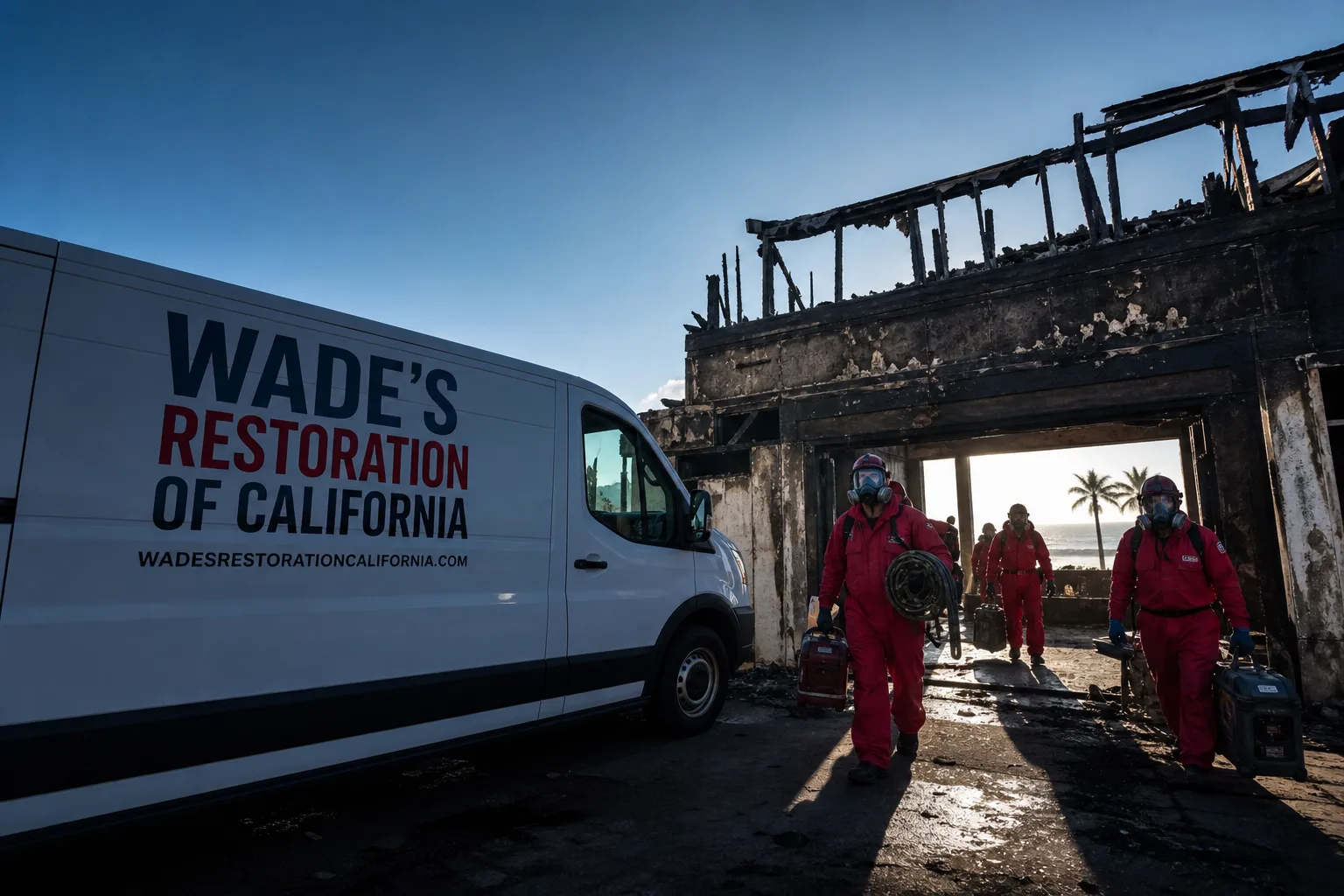
Fast, Reliable Water Damage Restoration Across Country Club
Water damage in Country Club moves fast, and the older homes here make it worse. Crawl spaces stay damp year-round from Delta humidity, and by the time a ceiling stain shows up in a 1920s Craftsman, you’ve likely already got mold behind the plaster. That’s why we answer the phone at 2 a.m., get a crew heading toward Country Club Boulevard within the hour, and bring the right drying equipment the first time. If you’re dealing with a burst pipe, a flooded basement, or a ceiling that’s sagging, call Wade at (855) 915-0646. He’ll talk you through what to do right now and what can wait until morning.
The short version: Water damage restoration in Country Club typically costs $1,800 to $6,500 depending on how far moisture has traveled, and serious cases involving structural drying and mold prevention usually run higher. We do free estimates and written scopes before any work starts.
Why Wade’s Restoration of California Is Country Club’s Preferred Water Damage Restoration Company
Wade Ferris founded this company in 2007, and he still answers his own phone. That’s not a marketing line. If you call the number on this page at midnight, the man who picks up is the same man whose name is on the truck. Country Club homeowners tend to want that. They’ve dealt with national chains that quote one price over the phone and a different number at the door, and they’re done with it.
When we work in Country Club, we’re working in our own backyard. Wade knows the difference between a 1940s bungalow on Country Club Boulevard and a 1950s ranch over by the 95204 side of the neighborhood. He knows what lath-and-plaster does when it holds moisture, and he knows that a one-trip extraction crew isn’t enough for these homes. Every job gets daily moisture readings, and you get the full log when we’re done. Almost nobody else in this trade hands over that kind of paperwork.
Response time to Country Club matters more than most cities. Low-lying floodplain geography means groundwater intrusion doesn’t wait for a storm. A February tule fog spell can leave crawl spaces wetter than a January downpour. We’ve had calls where the visible water was only a puddle in the corner, but the wall cavity was already colonized. If you’re in Country Club right now and water is spreading, call (855) 915-0646.
Our Water Damage Restoration Services in Country Club
We cover the full range of Water Damage Restoration, but in Country Club, three services matter most. Older homes with original plaster and hardwood need a different approach than drywall-and-carpet houses. Here’s what we do about it.
Emergency Water Extraction
When a pipe bursts in a Country Club home, every minute the water sits, it’s wicking into lath, plaster, subfloor, and framing. We get our extraction gear running fast. Our crews use Dri-Eaz and Phoenix equipment, not rental-store fans. In a pre-1960s bungalow, extracting standing water is just step one. The real work is what you can’t see.
Structural Drying & Dehumidification
This is the service Country Club homes need more than any other. Delta humidity doesn’t leave on its own, and crawl spaces under original bungalows rarely have vapor barriers. We use Injectidry systems to pull moisture from wall cavities and ceiling spaces without tearing out original plaster. In a 1920s Craftsman, that’s often the difference between a three-day dry-out and a full gut-and-rebuild.
Flood Cleanup
Country Club sits in Stockton’s San Joaquin Valley floodplain, and groundwater intrusion is a chronic issue here, not an occasional storm event. When water comes up through the slab or soaks a crawl space, we handle the cleanup and the drying. We also document everything for your insurance adjuster with photos and moisture logs, so you’re not stuck relaying information between two sides.
Burst Pipe Restoration
Galvanized plumbing in 1940s and 1950s Country Club homes fails with age. When it goes, it goes fast. A burst pipe in a wall soaks insulation, plaster, and framing within hours. We find the source, stop it, extract the water, and dry the structure without ripping out more than necessary. If the pipe itself needs replacement, we’ll tell you that straight, and we’ll write it in the scope before any work starts.
What happens when you call
- 1
A real person answersNo phone trees - you reach a local pro.
- 2
You get an upfront price rangeHonest numbers before anyone is dispatched.
- 3
A background-checked tech heads outLicensed & insured, dispatched right away.
- 4
You approve before work beginsNothing starts until you say go.
Trusted Brands We Service in Country Club
We stock parts and equipment that match what Country Club homes actually need. If your water heater is a Rheem or a Bradford White, if your condensate line runs to a Goodman or a Carrier, we’ve seen it before and we know how the failure behaves. We run Dri-Eaz dehumidifiers and Phoenix air movers on every structural drying job, and we use Injectidry systems for hard-to-reach cavities. If you have an older home with original plumbing, we’ll tell you what’s likely to fail next and what can wait. No scare tactics. Just straight answers.
Common Water Damage Restoration Problems We See in Country Club Homes
Country Club’s housing stock creates specific failure patterns. Here’s what we deal with most often:
- Lath-and-plaster ceilings that hide water damage for weeks. In a drywalled home, a leak shows up as a brown stain within days. In a 1920s Country Club bungalow, the plaster absorbs the moisture and spreads it laterally before any stain appears. By the time you see it, the mold is already behind the wall.
- Chronically damp crawl spaces with no vapor barrier. Most pre-1960s Country Club homes were built before modern moisture barriers were standard. Winter tule fog and year-round Delta humidity keep those crawl spaces wet. That moisture wicks up into floor joists and subfloors, which means mold prevention isn’t seasonal here. It’s a 12-month job.
- AC condensate line overflows during summer heat waves. Stockton hits 100°F plus routinely in July and August. Condensate lines fail under that load, and in Country Club bungalows, the water soaks blown-in insulation against original plaster ceilings. The damage is always worse than it looks.
- Galvanized pipe bursts in 1950s ranches. The original plumbing in these homes was built to last 50 years. It’s been 70. When it bursts, it’s usually inside a wall, and the water travels before you even know it happened.
Pricing for Water Damage Restoration in Country Club, CA
We Also Serve Cities Near Country Club
If you’re in Country Club, you already know we’re local. We also serve Country Club and the surrounding communities including Lodi, Discovery Bay, Mountain House, and Tracy. Same response times, same written scopes, same owner answering the phone.
Serving Country Club, CA - Our Local Coverage Area
We’re based in the Country Club area and know this community well. Use the map below to see our service coverage - if you’re nearby, we can almost certainly help.
FAQs - Water Damage Restoration in Country Club
Why does my Country Club crawl space stay damp even without visible flooding?
Country Club sits in the San Joaquin Valley floodplain, and the Sacramento-San Joaquin Delta’s year-round humidity keeps crawl spaces under pre-1960s bungalows chronically damp, especially because most were built without vapor barriers. That moisture wicks into floor joists and subfloors, which means mold prevention is a 12-month concern in Country Club, not just after a storm. If your crawl space smells musty or you see condensation on foundation walls, call us for a moisture assessment.
How do you dry a lath-and-plaster ceiling in a 1920s Country Club bungalow without ripping it out?
We use Injectidry systems to pull moisture from inside the ceiling cavity without tearing out original plaster. The equipment forces dry air through the cavity and extracts the humid air, drying the lath and plaster in place. This approach usually preserves original ceilings in Country Club bungalows that would otherwise be gutted. It takes longer than ripping things out, but it’s worth it.
My AC condensate line leaked into my walls-how fast does mold grow in Country Club’s humidity?
In Country Club’s Delta humidity, mold can begin colonizing wall cavities within 24 to 48 hours, especially in pre-1960s homes where original plaster and blown-in insulation hold moisture longer than modern drywall. By the time you see a ceiling stain, the mold is often already established behind the surface. We pulled water from a 1940s Craftsman on Country Club Boulevard after a condensate line overflowed during a 104°F week, and mold colonies were already behind the plaster before the first stain appeared. Don’t wait to call.
Do I need to replace my galvanized pipes after a burst in my 1950s ranch?
Not necessarily. A single burst can often be repaired without replacing the entire system, but if your galvanized pipes are original to a 1950s Country Club ranch, they’ve exceeded their expected lifespan by 15 to 20 years. We’ll give you an honest assessment of what failed and what’s likely to fail next, and we’ll put it in writing before any work begins. The decision is yours.
Will my Country Club hardwood floors warp if water sits for a few days?
Yes, and with Country Club’s persistent crawl space moisture and Delta humidity, the damage compounds. Original hardwoods in pre-1960s bungalows absorb water quickly, and once they cup or buckle, they rarely return to flat without sanding and refinishing, if at all. Fast extraction and structural drying give the floors the best chance. Call (855) 915-0646 and Wade will tell you what you’re dealing with.
Call Wade’s Restoration of California Today
If you have water spreading through your Country Club home right now, call (855) 915-0646. Wade answers his own phone, and he’ll tell you exactly what to do in the next thirty minutes. If it can wait until morning, we’ll schedule a free assessment and give you a written scope before any work starts. No trip charge inside our own county. Free second opinion on any written estimate. Senior and Veteran discount, always. Ask anyone on your street.
Written by Wade Ferris, Owner at Wade’s Restoration of California, serving Country Club and surrounding communities since 2007.