
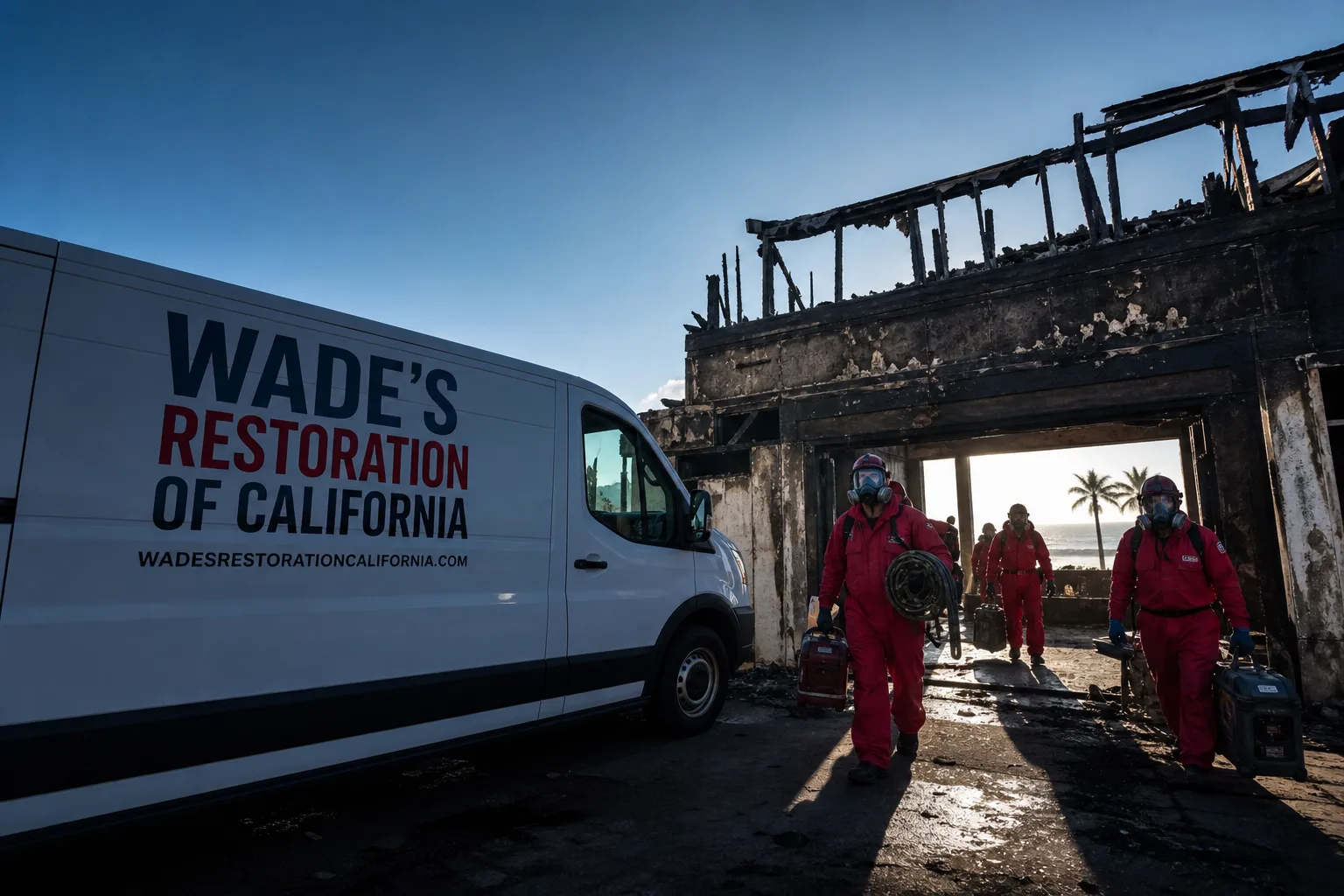
Fast, Reliable Water Damage Restoration Across Mountain House
Water damage in Mountain House almost always starts the same way: a slab leak from the original PEX manifold, a post-tension cable snap under the great room, or stucco that finally let Delta rain behind the paper. The repairs need to happen fast, but they also need to account for the adobe clay under your foundation and the way these homes were built between 2003 and 2015. We’re Wade’s Restoration of California, and we answer the phone around the clock. Call (855) 915-0646 and Wade Ferris will head out to Mountain House himself, usually within the hour.
This is not a national chain. Wade lives in the Central Valley, owns the company, and his name is on the truck. The homes here were built in a narrow window, which means whole subdivisions share the same failure points. We know what to look for before we even open the door.
Why Wade’s Restoration of California Is Mountain House’s Preferred Water Damage Restoration Company
Mountain House is not Tracy. The housing stock here went up fast, all of it on post-tension slabs over adobe clay that moves every season. That means the water damage we see is different from what an older town deals with. We get called out for slab leaks that three houses down the street had the same month. We get called out for hidden mold inside walls where the stucco separated from the thermal cycling between 100°F summers and foggy Delta winters. A contractor who treats Mountain House like any other Central Valley town will miss the pattern.
Wade started this company in 2007, and he still answers his own phone. Ask anyone on your street. He hands you a daily moisture log on every job. Almost nobody in the trade does that. When your insurance adjuster has questions, Wade talks to them directly, so you are not stuck relaying messages between two sides. And every water, fire, and mold job comes with the 90-Day Done Right Promise in writing. If it is not done right, he makes it right.
Our Water Damage Restoration team is background-checked, uniformed, and trained on IICRC standards. We run Dri-Eaz dehumidifiers, Phoenix axial fans, and Injectidry wall-cavity drying systems. The equipment matters, but what matters more is knowing where to place it in a Mountain House home.
Our Water Damage Restoration Services in Mountain House
Emergency Water Extraction
When a PEX manifold lets go in a Mountain House home, water travels fast, and in a two-story stucco-over-frame build it does not stay on the floor. It runs down the chase, wicks into the walls, and seeps into the slab cracks that every wet winter reopens. Our extraction crews get standing water up before the clay underneath starts moving. For homes in the 95391 zip code, we aim to have extraction running inside the hour.
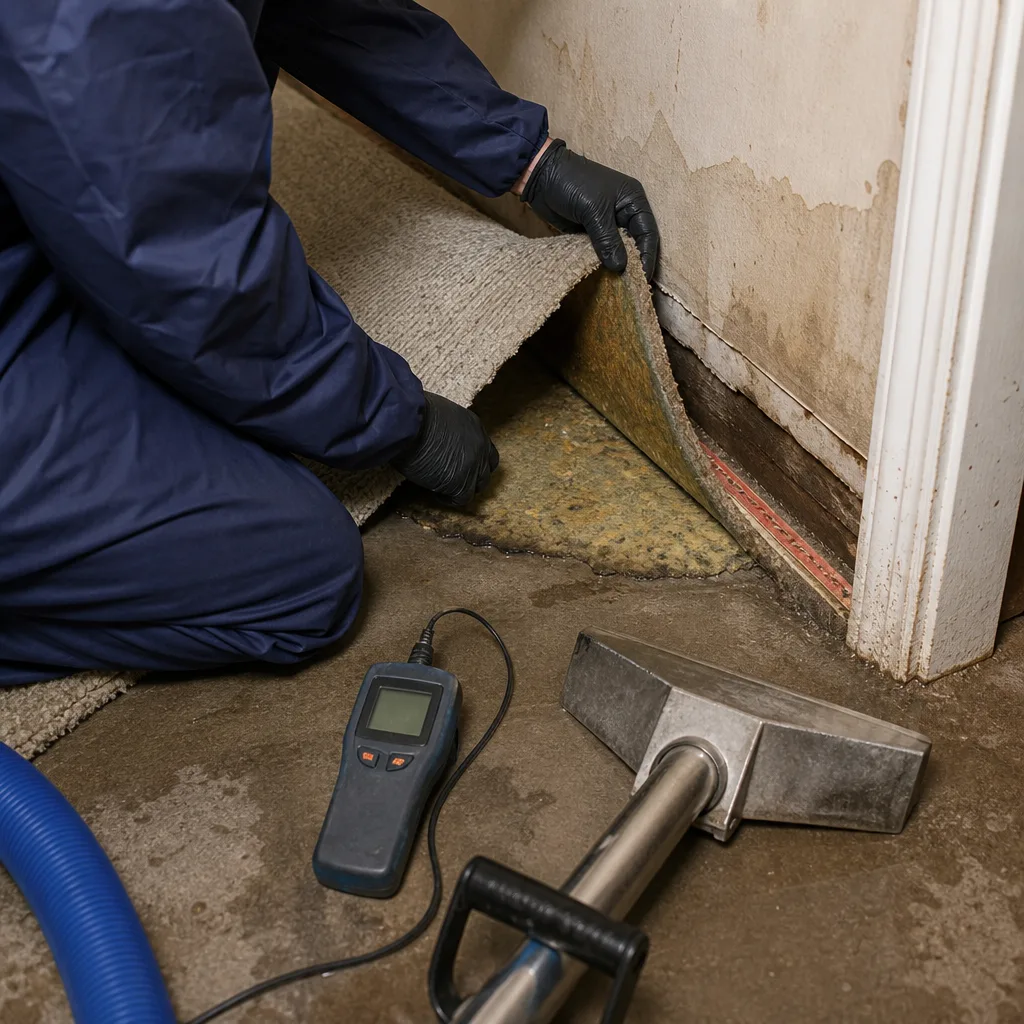
Structural Drying & Dehumidification
A post-tension slab is a different animal. You cannot just point fans at the tile and call it done. The concrete holds moisture, the framing holds moisture, and the adobe clay under the slab holds moisture. We map it with daily readings, dry the wall cavities with the Injectidry system, and keep Dri-Eaz LGR dehumidifiers running until every layer hits dry standard. This service gets more emphasis here than in neighboring towns because the failures are structural, not cosmetic.
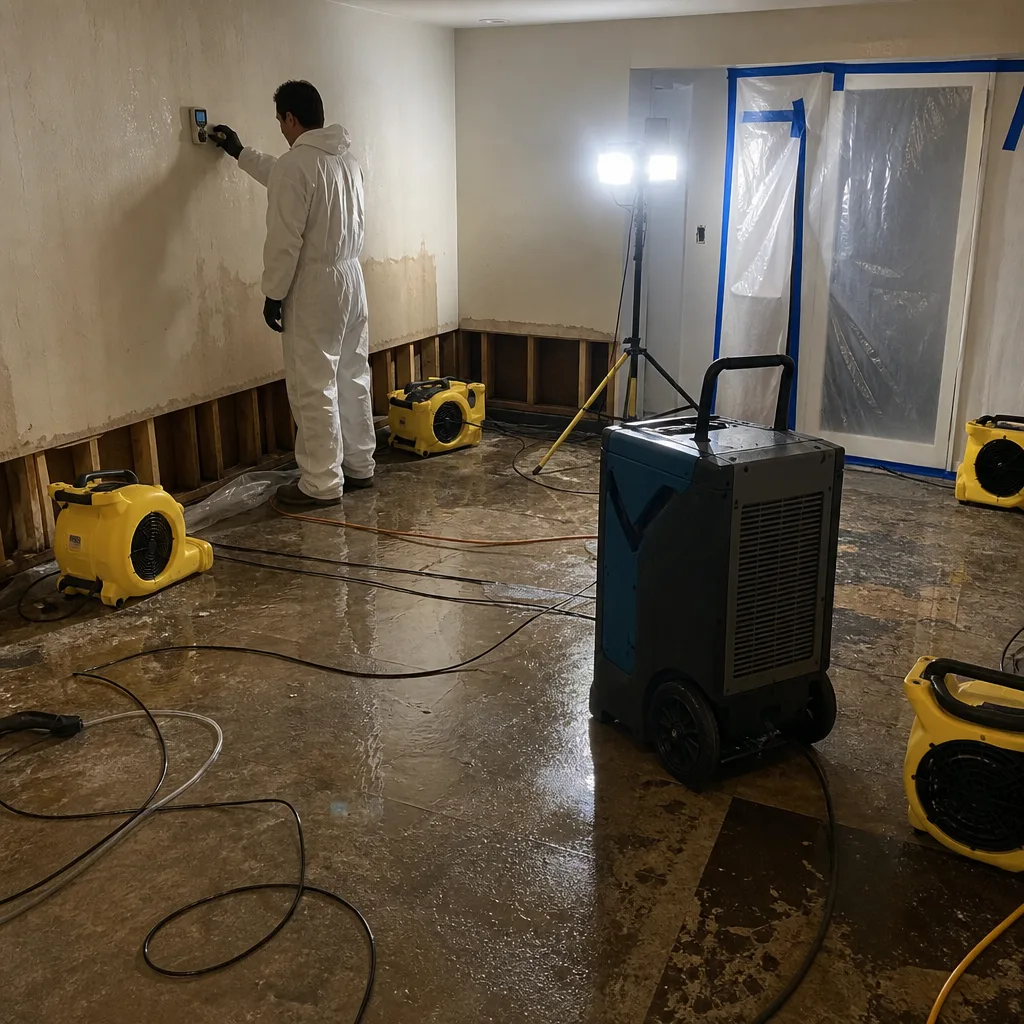
Flood Cleanup
Mountain House sits at the western edge of the San Joaquin Valley, close enough to the Delta that heavy rain years push groundwater up through slab cracks and create standing-water problems that communities just a few miles inland never see. Flood cleanup here means not just extracting water, but dealing with contaminated mud, saturated drywall, and the high water table that keeps moisture coming back. We address the water, then we address why the water is coming in.
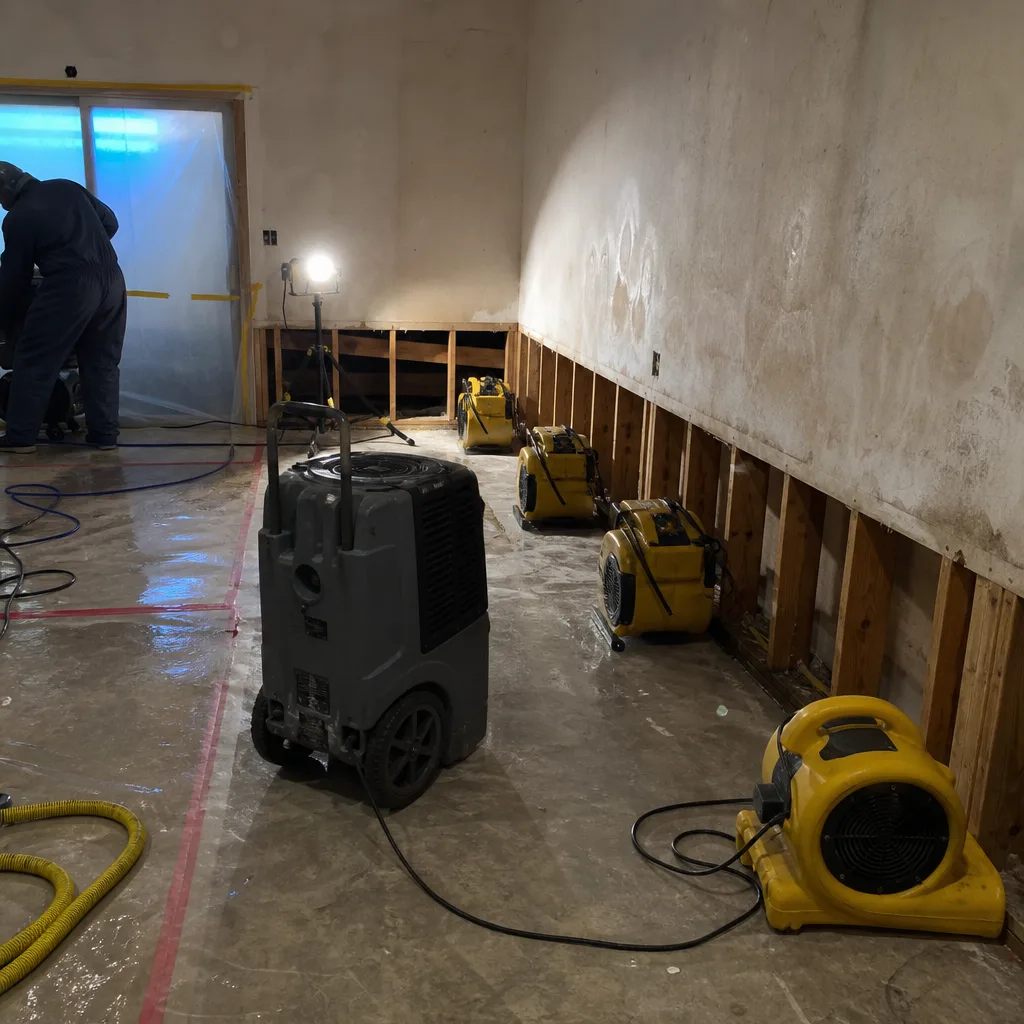
Burst Pipe Restoration
Early-generation PEX manifolds installed during the rapid build-out between 2003 and 2008 are failing now, and they fail in clusters. A burst pipe in Mountain House is rarely a one-off. We have responded to homes off Central Parkway where three houses on the same block had the same manifold crack within weeks. That is why our burst pipe restoration includes a full moisture assessment of the surrounding framing, not just the visible wet spot.
Ceiling & Roof Leak Water Damage
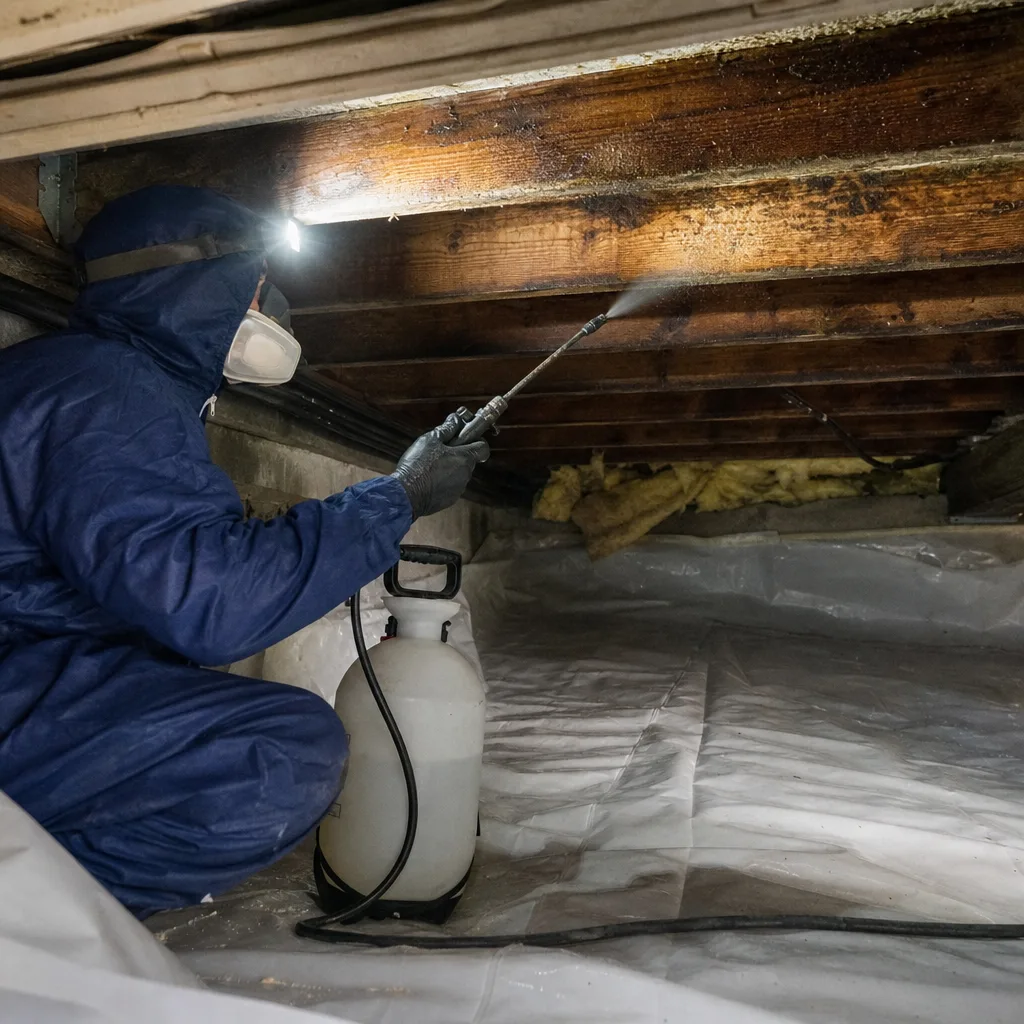
Mountain House roofs are mostly concrete tile over asphalt underlayment, and after fifteen to twenty years of thermal cycling, that underlayment gets brittle. A roof leak here is often completely dry from above and only noticed when a brown stain shows on the ceiling. By then, water has already saturated the drywall and insulation. We dry the ceiling cavity, remove what is compromised, and document everything for your insurer.
What happens when you call
- 1
A real person answersNo phone trees - you reach a local pro.
- 2
You get an upfront price rangeHonest numbers before anyone is dispatched.
- 3
A background-checked tech heads outLicensed & insured, dispatched right away.
- 4
You approve before work beginsNothing starts until you say go.
Trusted Brands We Service in Mountain House
Mountain House was built in phases, and most of the phases used the same plumbing and waterproofing assemblies. That means we stock the materials and know the systems before we arrive. We service homes plumbed with early PEX systems, dry with Dri-Eaz and Phoenix equipment, and document with the same methods our RIA and IFA affiliations require. We do not improvise. Wade brings the right equipment the first trip, because returning a second time for something he should have brought the first time is not how he runs a job.
Common Water Damage Restoration Problems We See in Mountain House Homes
- Post-tension slab cables corroding and snapping. The 2003-2008 build phase used post-tension cables that rust over time. When one snaps, it can crack the slab and open a path for groundwater and plumbing water to enter. In Mountain House, that crack reopens every wet winter.
- PEX manifold failures across entire tracts. The homes went up fast, and the manifolds installed then are aging out at the same time. A “one-off” slab leak usually means the neighbor two doors down is about to call too.
- Hidden mold behind stucco drainage-plane gaps. A 100°F summer expands the stucco. A Delta-driven winter shrinks it. The hairline cracks that form let water behind the paper, and by the time a stain appears on the interior wall, the cavity has been wet for months.
- Two-story water migration through shared chases. These homes share floor plans, which means they share the paths water takes. A second-floor leak shows up in the first-floor great room, not above the source. We dry the path, not just the puddle.
Pricing for Water Damage Restoration in Mountain House, CA
A typical emergency water extraction in Mountain House runs $350-$900 depending on square footage and how far the water traveled. Structural drying with cavity injection for a slab leak usually lands between $1,200 and $3,400, and full burst pipe restoration with drywall removal and rebuild starts around $2,500 and goes up from there. Ceiling and roof leak drying typically costs $900-$2,200. Mold remediation of a hidden stucco leak averages $2,000-$6,500 depending on how far the colony spread before it was found. We give a written scope before any work starts, and we do not charge a trip fee inside our own county. Seniors and veterans get 10% off, always. Call (855) 915-0646 for a free estimate.
We Also Serve Cities Near Mountain House
We’re based in the Central Valley and run crews to Mountain House daily. If you’re in Tracy, Discovery Bay, Livermore, or Brentwood, the same Water Damage Restoration in Mountain House team can be there just as fast. Mountain House gets our most specialized work because the homes demand it, but the same standards apply everywhere we go.
Serving Mountain House, CA - Our Local Coverage Area
We’re based in the Mountain House area and know this community well. Use the map below to see our service coverage - if you’re nearby, we can almost certainly help.
FAQs - Water Damage Restoration in Mountain House
The plumber fixed the leak, but the slab was never properly dried before the repair was closed up. In Mountain House, the adobe clay under your foundation holds moisture for weeks after the water source is stopped. That moisture re-enters the slab crack, weakens the repair, and the leak returns. Wade dries the slab and the clay zone underneath it, not just the visible water, and hands you the moisture log to prove it. Call (855) 915-0646 if yours is back again.
Within 72 hours. The stucco on Mountain House homes takes a beating from thermal cycling, and after a Delta-driven winter rain the hairline cracks open enough for water to get behind the paper. The first sign is usually not a stain but a faint musty smell in a south-facing wall. We can do a moisture reading before you see any damage at all. Call (855) 915-0646 and we will come take a look.
Yes, unfortunately it is. The homes between 2003 and 2015 were built in rapid phases, and the PEX manifolds and post-tension cables installed then are failing on the same timeline. When one house on your block gets a slab leak, the neighbors are usually a few weeks behind. That is why we tell Mountain House homeowners to get a moisture baseline reading even if they have not had a leak yet. Call (855) 915-0646 and we will check yours.
No. A tile roof leak is usually a top-down event: the saturated ceiling cavity, insulation, and drywall need drying or removal. A slab leak is a bottom-up event where the slab itself and the clay below it must dry, not just the surface. Mountain House homes deal with both, but the protocols are completely different. Wade will tell you which one you actually have before any equipment gets set. Call (855) 915-0646.
You do not inject anything into the slab. We dry from the surface using low-grain refrigerant dehumidifiers and controlled airflow, and we monitor the slab’s moisture content daily without penetrating the post-tension cables. The goal is to remove moisture from the concrete and the clay zone below it without compromising the structural tension. Wade has been doing this since 2007 and will show you the readings every step of the way. Call (855) 915-0646.
One more thing about Mountain House. Our crew dried a two-story stucco home off Central Parkway after a slab leak from the original PEX manifold migrated under the great room. We used Dri-Eaz LGR 7000XLi dehumidifiers and injected drying into the wall cavity with the Injectidry system, mapping moisture every 12 hours until we confirmed the slab and framing hit dry standard. Because in Mountain House, the same leak is often repeating on three houses down the street.
If you have water in your home right now, call (855) 915-0646. Wade answers his own phone. If he’s not already on the road to Mountain House, he will be.
Written by Wade Ferris, Owner at Wade’s Restoration of California, serving Mountain House and the Central Valley since 2007.