
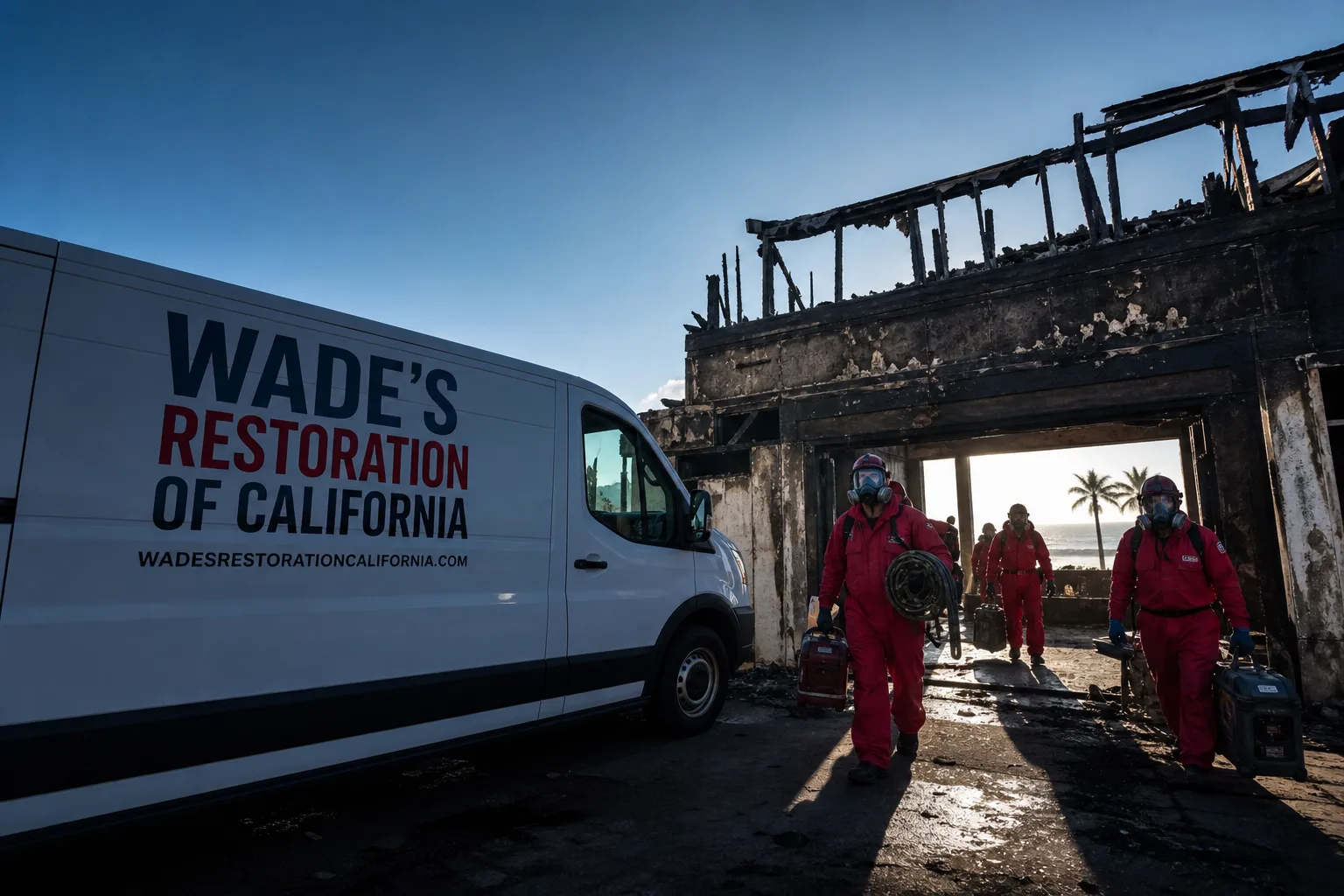
Fast, Reliable Storm & Disaster Restoration Across Silver Lake
Storm damage in Silver Lake moves fast, and the clock starts the moment water finds its way into a 1920s bungalow or a hillside Spanish Revival. We’re Wade’s Restoration of California, and we’ve worked these streets long enough to know that a storm that barely touches Echo Park can send runoff straight into a crawl space on Redesdale Ave. When you call (855) 915-0646, you get a live person. Usually, you get Wade Ferris himself. He can have a crew and extraction equipment rolling into Silver Lake inside the hour, because we’re not routing a call center in another state. We’re local, and we answer the phone.
Why Wade’s Restoration of California Is Silver Lake’s Preferred Storm & Disaster Restoration Company
Silver Lake homeowners have been burned before by national outfits that quote one number on the phone and another at the door. We hear it on nearly every job. Wade Ferris started this company in 2007 with a simple idea: his name is on the truck, his address is published, and he’s going to run into you at the farmers market on Saturday. That’s the oldest accountability mechanism there is. Ask anyone on your street. We don’t hide behind a brand. We show up in uniform, background-checked, with Dri-Eaz and Phoenix equipment in the van, and we tell you what we’re going to do before we touch anything.
Calls are answered live, 24 hours a day, seven days a week. Not a voicemail. Not a queue. When a eucalyptus limb comes through a roof on a hillside off Silver Lake Blvd at 2 a.m., you talk to a person who knows the neighborhood. That matters more in Silver Lake than most places, because the streets are narrow, tiered, and unforgiving. You need a crew that has staged equipment on those switchbacks before. We have.
Our Storm & Disaster Restoration Services in Silver Lake
Storm Damage Cleanup
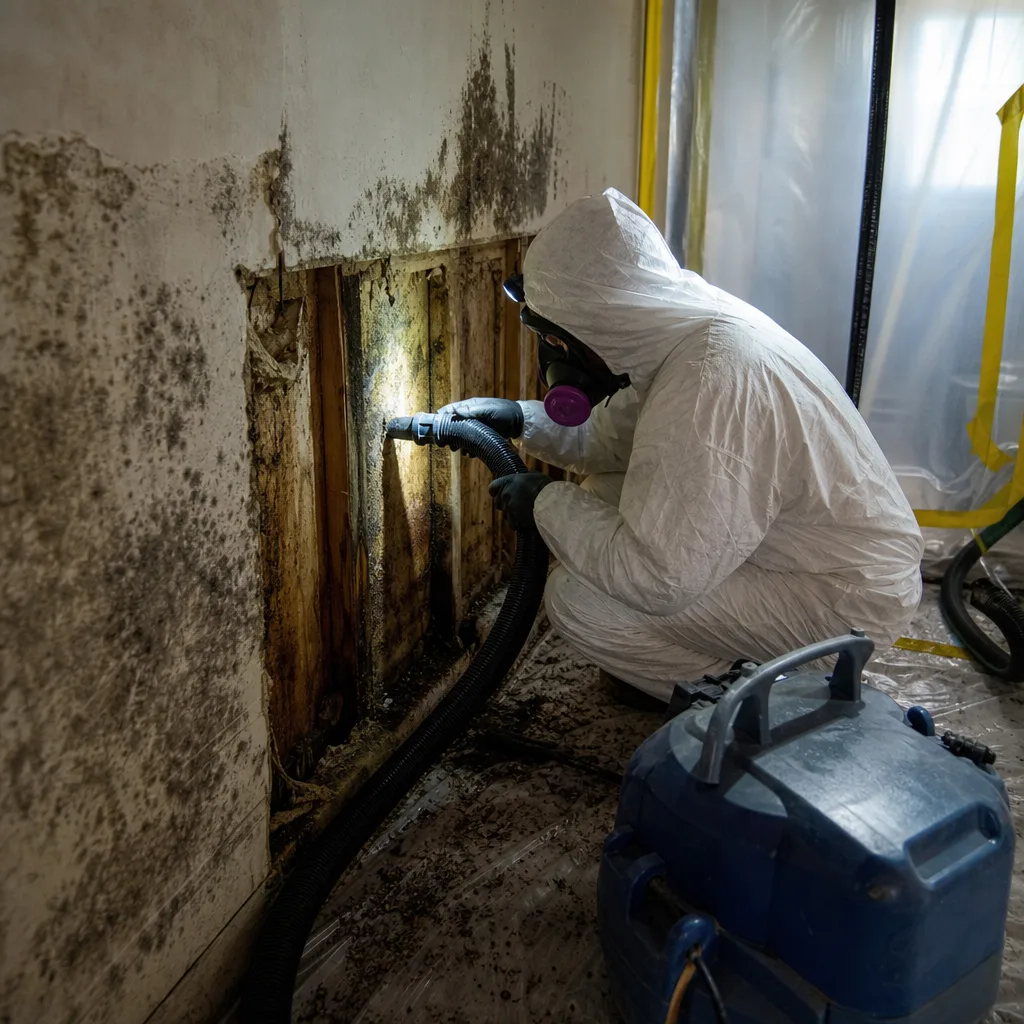
When the compressed Mediterranean rain season hits Silver Lake, it hits all at once. Hillside soil saturates quickly, and water migrates laterally into cut-and-fill foundations instead of draining away like it would on flat lots. Our Storm & Disaster Restoration team handles the full aftermath: saturated drywall removal, framing assessment, structural drying, and the kind of debris removal that canyon streets demand. We don’t just suck up water. We track moisture with daily readings, then hand you the full log at the end of the job. Almost nobody in this trade does that.
Flood Damage Restoration
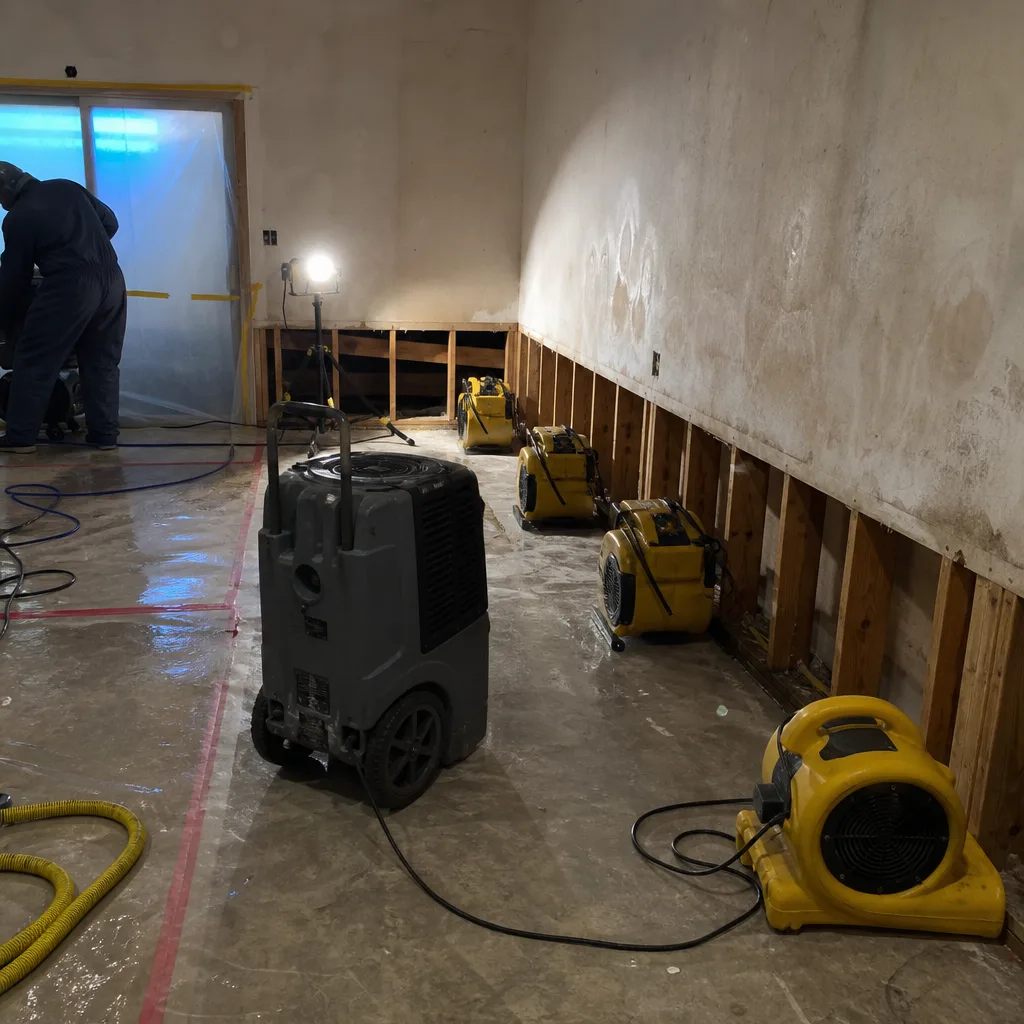
Flooding in Silver Lake rarely looks like a flooded basement. It looks like a hairline crack in a stem wall on a steep parcel off Redesdale Ave, or a crawl space slowly saturating beneath original 1920s hardwood. Those cut-and-fill pads shift after a wet winter, and runoff gets routed against foundations in ways flat-lot neighborhoods never experience. Our crews use Injectidry floor-drying systems and Dri-Eaz dehumidifiers to pull moisture from materials most companies would just rip out. On a hillside Craftsman off Silver Lake Blvd, we completed a full crawl space extraction in a single day after diagnosing the true intrusion source: soil creep routing runoff against the foundation, not a pipe failure. The homeowner had already spent money on two unnecessary plumbing repairs. That’s what local knowledge is worth.
Emergency Board-Up
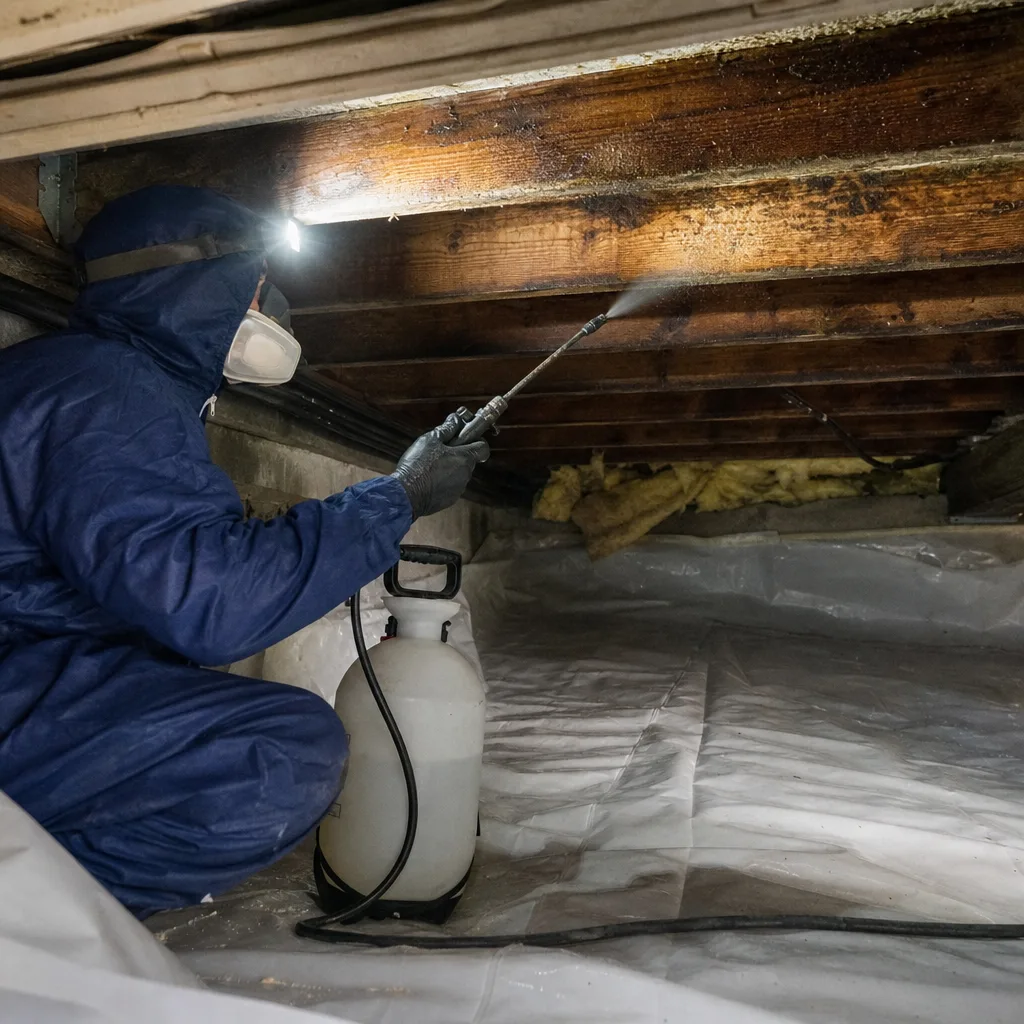
Silver Lake’s housing stock doesn’t always give you a wide driveway and a clear staging area. Many homes sit on tight lots with alley access or single-width drives carved into a hill. Boarding up a broken window or a storm-damaged wall on those parcels requires equipment planning that flat-lot crews never think about. We stage what we need in phases, park where the street allows, and get the opening secured the same day. Security matters here. A boarded home on a quiet hillside is a target, and we don’t leave gaps.
Roof Tarping
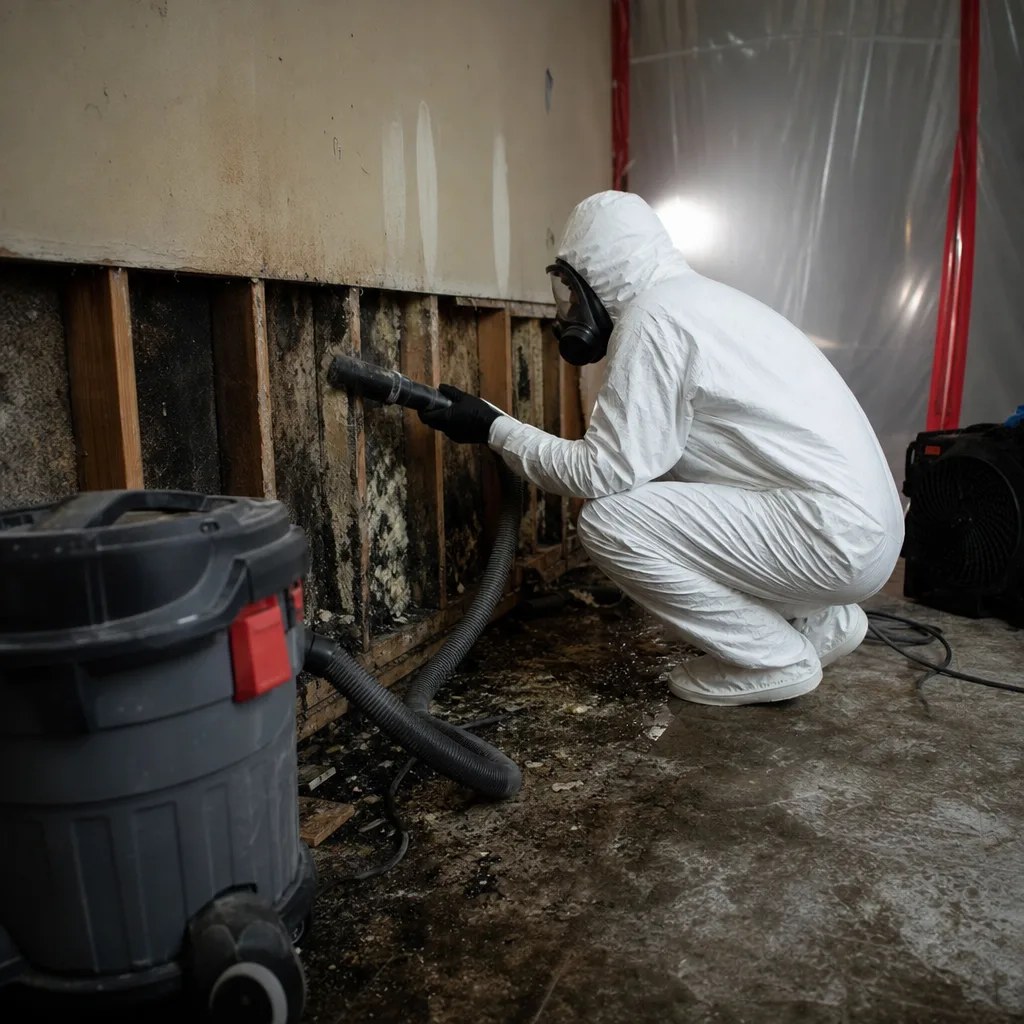
Wind damage and fallen limbs are the two most common roof failures we see in Silver Lake after a storm. Tarping a Spanish Colonial Revival roof isn’t the same as tarping a ranch house in the Valley. The tile profiles, the parapet walls, the steep pitches on hillside lots, and the access constraints all change how you anchor a tarp so it actually holds through the next rain. We tarp to last, not just to cover. And we document everything with photos for your adjuster before we leave the property.
What happens when you call
- 1
A real person answersNo phone trees - you reach a local pro.
- 2
You get an upfront price rangeHonest numbers before anyone is dispatched.
- 3
A background-checked tech heads outLicensed & insured, dispatched right away.
- 4
You approve before work beginsNothing starts until you say go.
Trusted Brands We Service in Silver Lake
We run professional-grade equipment from Dri-Eaz and Phoenix because Silver Lake’s older construction doesn’t forgive cheap tools. Thick plaster-and-stucco wall assemblies hold water longer and dry slower than modern drywall, especially in Spanish Colonial Revival homes where the exterior stucco skin traps moisture behind it. Our IICRC-certified crews carry the drying capacity to handle those thick wall cavities without tearing out original lath and plaster that doesn’t need to go. We’re RIA-affiliated, and the equipment on our trucks is the same grade you’d find on commercial restoration projects. In Silver Lake, that’s not overkill. It’s the baseline.
Common Storm & Disaster Restoration Problems We See in Silver Lake Homes
- Hillside soil-creep cracks mistaken for plumbing leaks. On steep parcels, post-storm hairline stem-wall fractures get misdiagnosed as pipe failures. Homeowners pay for plumbing repairs that never fix the actual problem, then the next storm brings the water back. We trace the drainage angle before we open a single wall.
- Concealed water spread in 1920s-1940s plaster-and-stucco assemblies. Original lath and plaster absorbs water deep inside the assembly, and the stucco exterior hides it from view. By the time staining appears on an interior wall, mold has usually been colonizing for weeks. We use daily moisture readings to find it early.
- Equipment staging failures on narrow canyon streets. Tiered hillside roads with tight clearances and limited parking force phased staging. Crews that don’t plan for this lose entire days, and saturated subfloor framing keeps degrading while they wait. We stage deliberately from the moment we leave our Los Angeles office.
- Roof tarp failures from poor anchoring on steep pitches. Silver Lake homes on hillside lots often have steeper roof angles than flat-land neighborhoods. A tarp that’s not anchored for wind shear and raking rain will fail within days. We anchor for the next storm, not just the insurance photo.
Pricing for Storm & Disaster Restoration in Silver Lake, CA
Storm damage cleanup in Silver Lake typically runs $1,800 to $4,500 depending on how far water has moved through the structure. Flood damage restoration on a hillside crawl space usually lands between $3,200 and $7,500, with the higher end reflecting the difficulty of staging drying equipment on a tiered lot with no driveway access. Roof tarping runs $450 to $1,200 for a standard pitched roof, more if parapet walls or steep access make anchoring complicated. Emergency board-up on an alley-loaded lot averages $350 to $900. Every job gets a written scope before work starts, so you know the number up front. And if you already have an estimate from another company, bring it in. We’ll give you a free second opinion, and there’s no trip charge inside our own county. Call (855) 915-0646 for an exact quote. Estimates are free.
We Also Serve Cities Near Silver Lake
Our crews work throughout the neighborhoods around Silver Lake, including Echo Park, Koreatown, Los Angeles, and Hollywood. If you’re on the edge of Silver Lake and not sure whether we cover your street, call. We serve all of Silver Lake and the surrounding hillside communities with the same live-answer responsiveness.
Serving Silver Lake, CA - Our Local Coverage Area
We’re based in the Silver Lake area and know this community well. Use the map below to see our service coverage - if you’re nearby, we can almost certainly help.
FAQs - Storm & Disaster Restoration in Silver Lake
On steep cut-and-fill pads, storm water doesn’t drain away from the foundation the way it does on flat lots. It migrates laterally through saturated hillside soil and presses against stem walls, finding entry through hairline cracks that open after soil creep. This creates intrusion patterns that look like plumbing leaks but are actually drainage problems. We diagnose the drainage angle first, before recommending any interior work. If you’re seeing water after every heavy rain, call us at (855) 915-0646 and we’ll tell you what’s actually happening.
The thick exterior stucco skin on these 1920s-1940s homes acts like a moisture barrier in the wrong direction. Water that gets behind the stucco during a storm has nowhere to evaporate quickly, so it sits inside the wall assembly and feeds mold growth long after the visible exterior dries out. Combined with original plaster and lath interiors, these walls can stay wet for weeks without showing obvious signs. That’s why we take daily moisture readings and hand you the log. If you suspect hidden moisture in stucco walls, get it checked before the dry season sets in and makes the problem harder to find.
Hillside bungalows need tarping that’s anchored for steep pitches and raking wind. We secure tarps under eaves and along ridge lines where flat-lot crews would just use perimeter anchors, and we account for the runoff patterns that come down canyon slopes. Access matters too. On a narrow street with no staging area, we bring materials in phases so we can secure the roof the same day. For a roof tarping estimate, call (855) 915-0646.
We stage equipment in phases and use hand-carryable materials when there’s no room for a truck at the door. Many Silver Lake homes have alley access or single-width drives that limit what we can bring in one trip. We plan for that from the first call, so the board-up happens the same day rather than waiting for a flat-lot staging area. If you’ve got storm damage and need an opening secured, call (855) 915-0646 and Wade will head out himself.
Debris on canyon streets tends to collect in narrow drainage paths where a conventional haul-away crew can’t park a large truck. We use smaller staged vehicles and hand-loading on those streets, and we clear the drainage paths themselves, not just the yard. That matters in Silver Lake because the next storm will push debris right back into the same channel if it’s not cleared properly. For debris removal after storm damage, call (855) 915-0646.
Written by Wade Ferris, Owner at Wade’s Restoration of California, serving Silver Lake since 2007.