
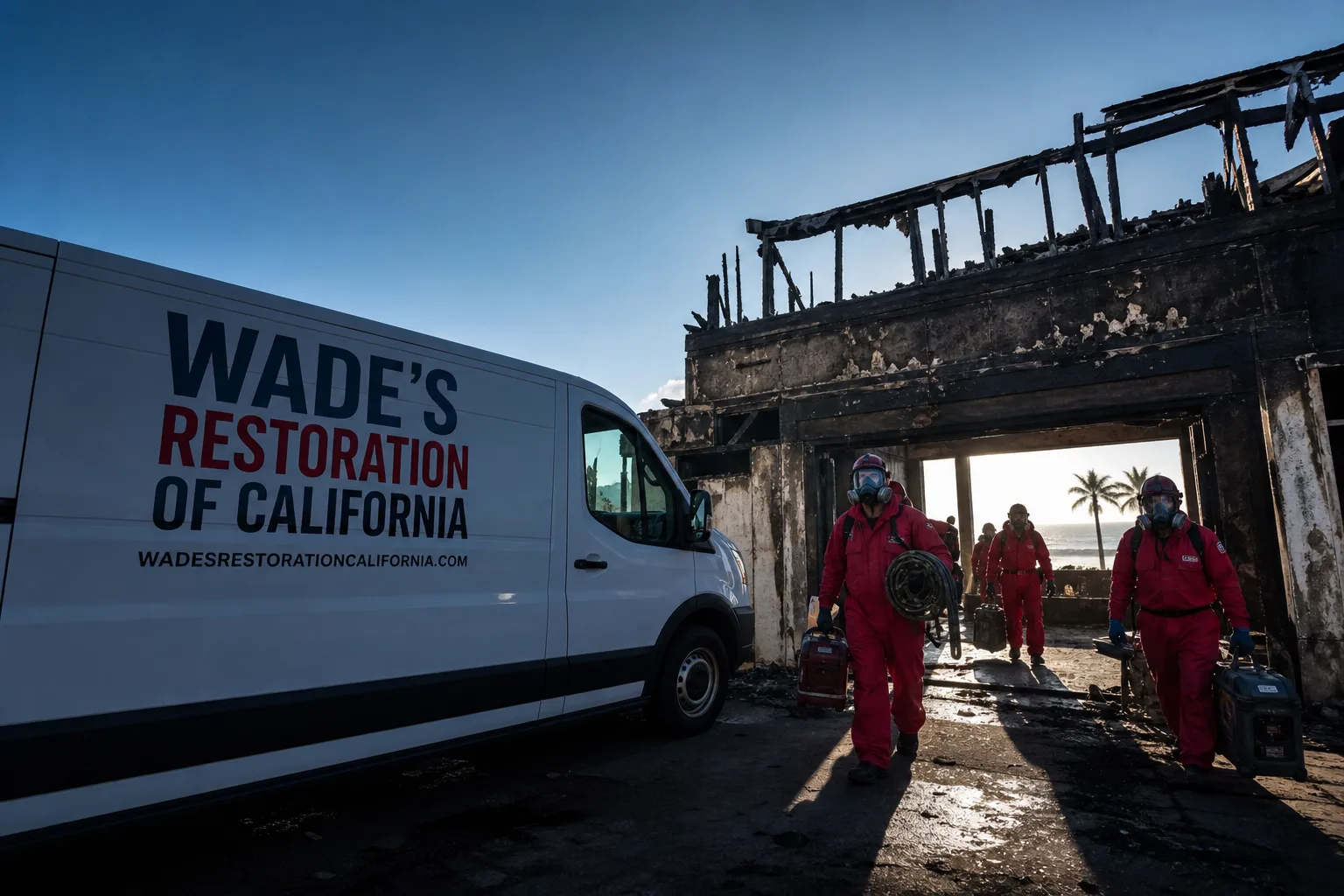
Fast, Reliable Storm & Disaster Restoration Across Rancho Cucamonga
Storm damage in Rancho Cucamonga moves fast, and so do we. When Santa Ana winds tear roofing off foothill homes or a debris flow pushes mud into a garage near Deer Creek, you need a crew that knows exactly what they’re walking into. Wade’s Restoration of California serves all four Rancho Cucamonga ZIP codes, 91737, 91739, 91701, and 91729, with live-answered calls at (855) 915-0646 around the clock. Our Storm & Disaster Restoration team is on the road within the hour for emergencies, because the first 24 hours after water or smoke intrusion decide how much of your home can be saved.
Why Wade’s Restoration of California Is Rancho Cucamonga’s Preferred Storm & Disaster Restoration Company
Wade Ferris founded this company in 2007 and still answers his own phone. That matters in Rancho Cucamonga, where neighbors talk, and a contractor’s name travels fast. When a homeowner off Baseline Road needed emergency board-up after a wind event last year, Wade was the one who knocked on the door with his crew. Not a regional dispatcher. Not a rotating subcontractor. The owner.
People in the 91737 foothills know the stakes better than most. A fire on the slopes above Cucamonga Canyon can mean smoke damage in September and mud in the garage by November. Wade has worked that exact sequence more times than he can count, and his crew carries the documentation experience to match. When San Bernardino County floodplain paperwork becomes the difference between a covered claim and a denied one, we handle it directly with the adjuster. You don’t relay information between two sides. We do it for you.
Every storm and flood restoration job in Rancho Cucamonga gets the 90-Day Done Right Promise in writing. If something isn’t right, Wade comes back and makes it right. No argument. No fine print. That’s how a locally owned company competes with national chains that quote one price on the phone and another at the door.
Our Storm & Disaster Restoration Services in Rancho Cucamonga
Storm Damage Cleanup
When Santa Ana winds funnel through the Cajon Pass, they hit the northern reaches of Rancho Cucamonga harder than almost anywhere in the Inland Empire. Shingles, fascia, patio covers, and fence sections end up scattered across yards along the 91737 corridor. Our crew arrives with the equipment to remove debris, assess structural risk, and document every inch of damage with photos your adjuster can actually use. We work directly with insurance, so you spend your time getting your family safe while we handle the claim.
Flood Damage Restoration
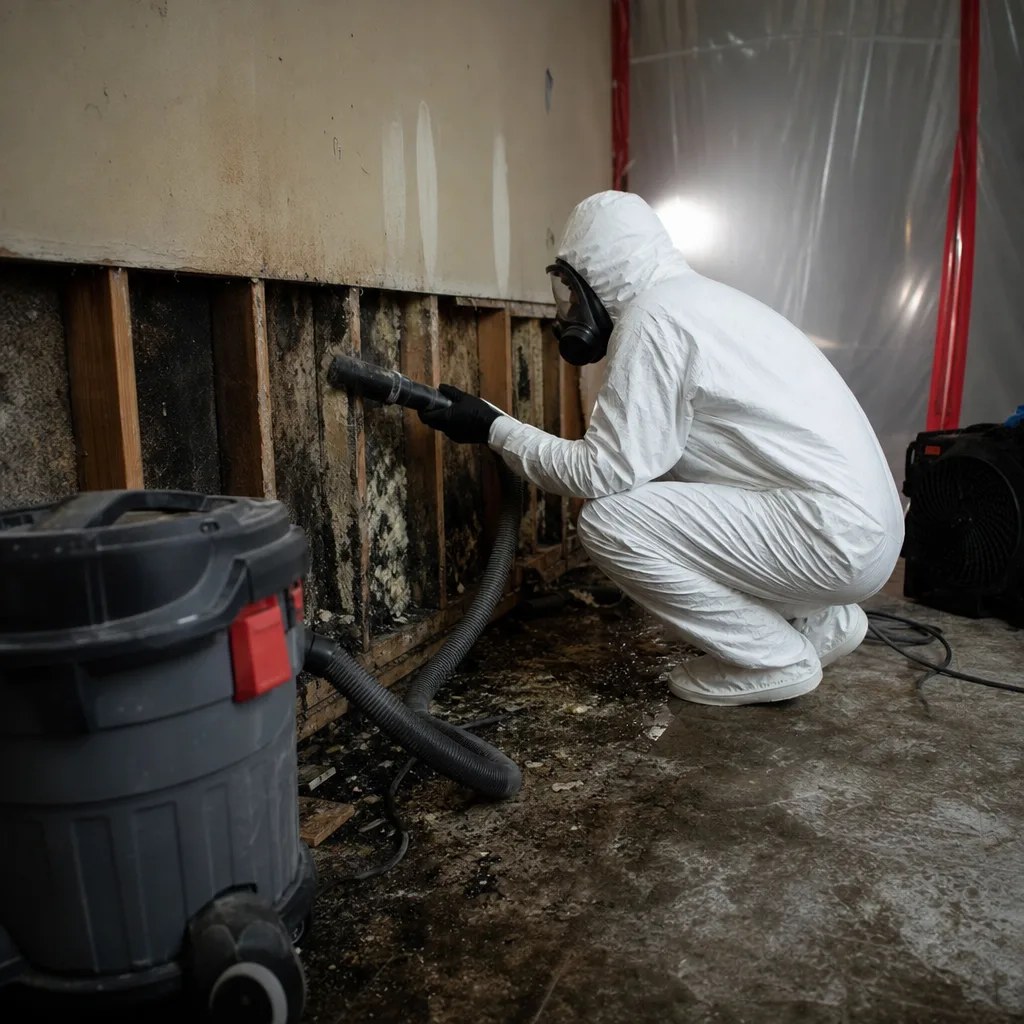
Floodwater in Rancho Cucamonga is rarely clean water. After a mountain fire burns the slopes above the city, the first real rain flushes ash, silt, and charred debris down the alluvial fan and into the drainage channels that slice through the eastern half of town. Properties near Deer Creek and the Etiwanda channel in 91739 face a real risk of sediment intrusion into garages and ground-floor rooms. Our crew extracts that water, dries the structure with Dri-Eaz LGR dehumidifiers and XPOWER air movers, and logs moisture readings every single day. At the end of the job, you get the full moisture log. Almost nobody in this trade does that.
Emergency Board-Up
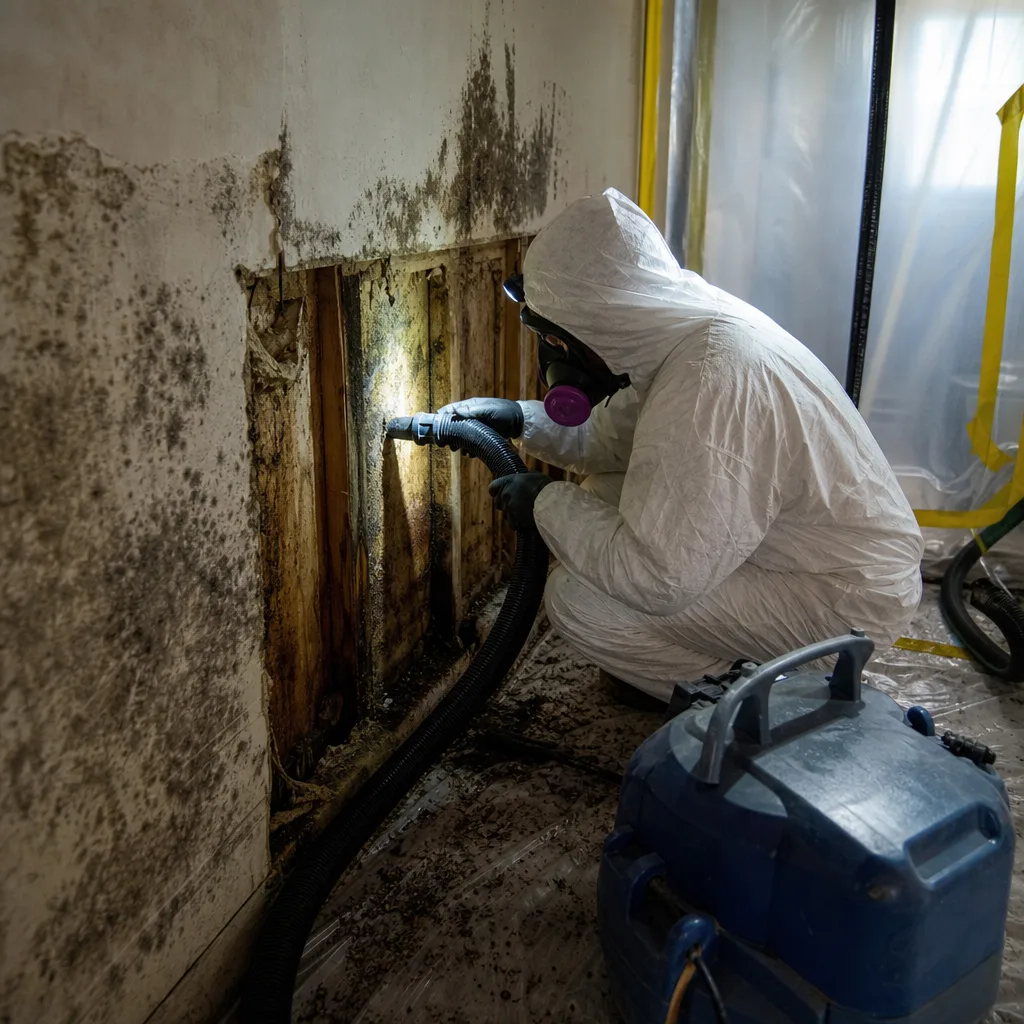
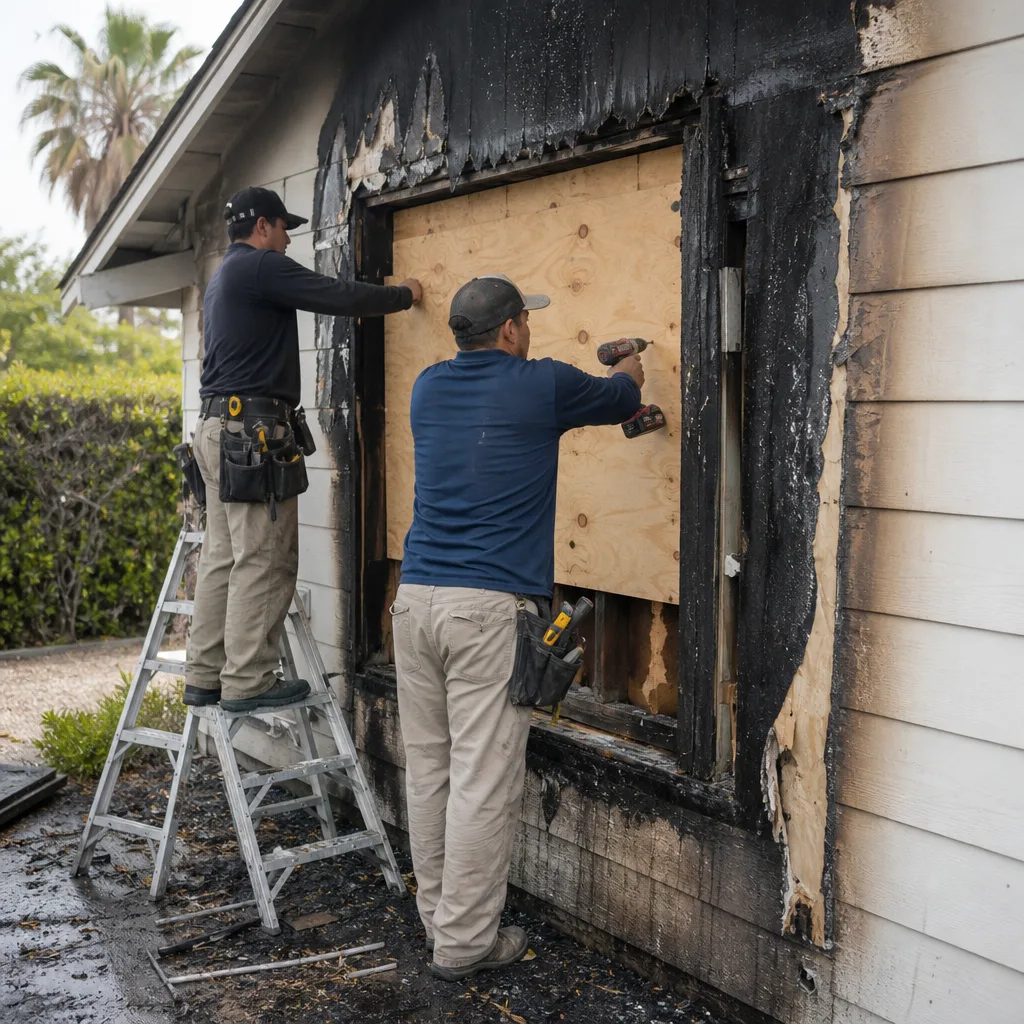
A broken window or a torn-off roof section is an open invitation to rain, animals, and looters. In Rancho Cucamonga, where wind events often happen in the middle of the night, we show up fast and secure the opening properly. Our board-up work uses professional-grade fasteners and framing, not a piece of plywood and a prayer. We also photograph the before and after for your claim file, because adjusters want to see that mitigation happened immediately.
Roof Tarping
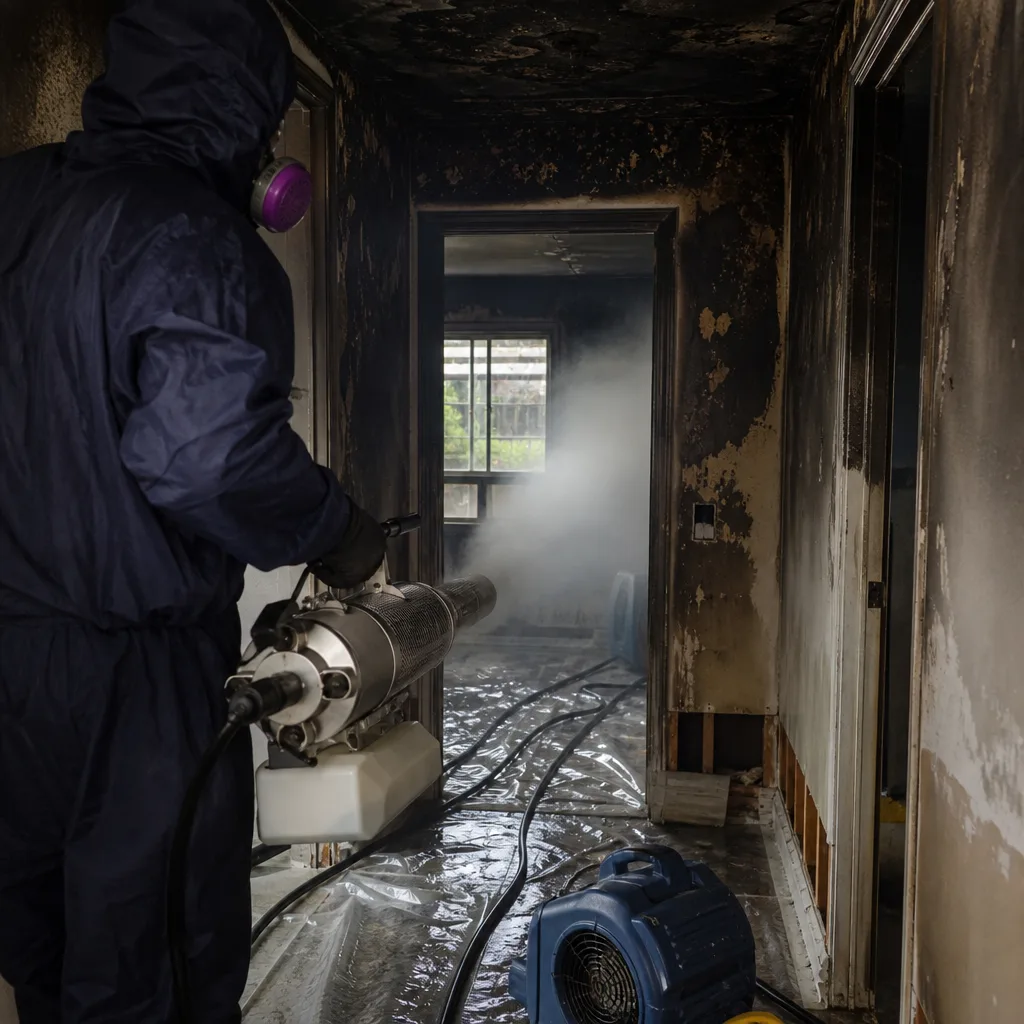
After a wind event strips shingles or a tree limb punches through the decking, the clock starts. Rancho Cucamonga’s semi-arid climate means homeowners sometimes assume rain won’t come for months, but a single afternoon storm can pour water through an exposed attic and into the insulation, drywall, and ceiling below. Our crew gets a tarp anchored the same day. We use commercial-grade sheeting and proper furring strips, not weighted-down blue tarps that flap loose in the next wind. The tarp is temporary. The protection is real.
What happens when you call
- 1
A real person answersNo phone trees - you reach a local pro.
- 2
You get an upfront price rangeHonest numbers before anyone is dispatched.
- 3
A background-checked tech heads outLicensed & insured, dispatched right away.
- 4
You approve before work beginsNothing starts until you say go.
Trusted Brands We Service in Rancho Cucamonga
Wade’s Restoration of California carries IICRC and RIA credentials, and we run professional equipment from Dri-Eaz and XPOWER on our jobs. Why does that matter to a homeowner in Rancho Cucamonga? Because the handyman with a shop vac and a fan can’t dry a wall cavity that’s been saturated by Deer Creek overflow. We bring the same equipment and the same documented process to every job, whether it’s a 1970s ranch off Baseline Road or a 2000s stucco tract home in Etiwanda. No shortcuts. No rented gear we don’t know how to run.
Common Storm & Disaster Restoration Problems We See in Rancho Cucamonga Homes
- Sequential smoke-then-mud damage in foothill neighborhoods. Homes in 91737 that survive a nearby wildfire’s smoke phase often get hit again weeks later when the first rain carries ash and debris down the drainage channels. Contractors unfamiliar with this pattern treat it as two separate jobs. We treat it as one continuous restoration with a single scope of work.
- Water trapped behind stucco in Etiwanda tract homes. The 1990s and 2000s stucco cladding in 91739 looks solid but traps moisture after any intrusion. By the time a stain appears on the interior drywall, the cavity behind the stucco has been wet long enough to support mold. Our remediation scopes in that district are always deeper than the visible damage suggests.
- Hidden leaks in 1970s-1980s ranch homes. Original galvanized plumbing in the 91701 and 91730 corridors corrodes slowly in Inland Empire hard water, and small leaks behind original drywall go unnoticed for weeks in this dry climate. No musty smell tip-off like you’d get in a humid region. By the time you see a stain, mold has had a head start.
- Ember intrusion through older soffit and attic vents. Santa Ana winds drive embers into homes with original single-pane windows and unsealed attic vents on foothill-facing lots. The fire may not touch the house, but the smoke and ash that get pulled inside require full HVAC duct cleaning and structural deodorization afterward.
Pricing for Storm & Disaster Restoration in Rancho Cucamonga, CA
Storm damage cleanup in Rancho Cucamonga typically runs $900 to $2,800 depending on debris volume and structural stabilization needs. Flood water extraction and drying for a single room starts around $1,400 and can reach $9,000 or more for a whole-home event involving the Deer Creek or Etiwanda channel overflows. Emergency board-up usually costs $450 to $1,200 per opening, and roof tarping runs $600 to $1,800 depending on roof pitch and access, with steep foothill roofs at the higher end.
What moves the number is the scope of hidden damage, not your square footage. A water intrusion behind Etiwanda stucco costs more to remediate than the same square footage in a wood-siding ranch, because the cavity has to be opened, dried, and documented differently. We give you a written scope before we start, and the estimate is free. Call (855) 915-0646 for exact numbers on your situation.
We Also Serve Cities Near Rancho Cucamonga
Wade’s team handles storm and disaster restoration work throughout western San Bernardino County. Our crews regularly respond to wind and flood damage in Upland, Ontario, Fontana, and Montclair, bringing the same live-answered phone and documented drying process to every job. If you’re in a neighboring city looking for Rancho Cucamonga-area restoration, the number is the same: (855) 915-0646.
Serving Rancho Cucamonga, CA - Our Local Coverage Area
We’re based in the Rancho Cucamonga area and know this community well. Use the map below to see our service coverage - if you’re nearby, we can almost certainly help.
FAQs - Storm & Disaster Restoration in Rancho Cucamonga
Santa Ana winds funnel through the Cajon Pass and hit the northern foothills of Rancho Cucamonga with gust speeds that rarely reach flatland cities like Ontario or Fontana. That means roofing damage in the 91737 ZIP is often more extensive, with whole sections of shingles lifted rather than individual tabs. It also means embers get driven into attic and soffit vents on foothill-facing homes, requiring smoke and ash cleanup inside the structure even when the fire never touched the exterior. Our restoration scopes in the foothills account for both wind and ember damage as a single event, not two separate line items. Call (855) 915-0646 and we’ll walk the property with you before any paperwork gets written.
Stucco cladding on Etiwanda tract homes traps moisture between the stucco layer and the framing, and the semi-arid climate means that moisture doesn’t evaporate quickly on its own. By the time water from a storm or plumbing leak shows up as a stain on your interior drywall, the cavity behind it has likely been wet for weeks. Remediation involves opening the wall from the interior, drying the cavity with Dri-Eaz LGR dehumidifiers and XPOWER air movers, and replacing any insulation that wicked moisture. It’s a bigger job than the visible damage suggests, which is why we always document the full cavity condition with photos and moisture readings before and after drying. Call (855) 915-0646 for a free assessment of your Etiwanda home.
Wildfire burns the vegetation that holds mountain soil in place, and the first significant rain after a fire flushes that soil, ash, and charred debris down the alluvial fan toward the city. The drainage channels that normally handle seasonal runoff, Deer Creek and the Etiwanda channel, become conduits for post-fire debris flows that can overtop their banks and deposit sediment into garages and ground-floor rooms in the 91739 ZIP. That’s a combined mud-and-smoke remediation, and it requires San Bernardino County floodplain documentation before most insurers will authorize the full scope. We handle that documentation directly with your adjuster. Call (855) 915-0646 the moment you see sediment anywhere near your home.
Older homes in the 91701 and 91730 corridors often have original 1970s and 1980s ductwork that leaks at the seams, which means smoke and ash pulled into the attic during a wind event circulate through every room of the house even if the fire never reached your property line. Cleaning that system requires more than a filter change. We inspect the duct runs, clean the registers and plenums, and document airflow before and after so you know the system isn’t recirculating char particles. In some cases, we recommend sealing or replacing sections of duct that have degraded. Call (855) 915-0646 and we’ll tell you what your specific system needs.
If your 1970s or 1980s ranch home in the 91701 or 91730 ZIP still has original single-pane windows and unsealed attic vents, every Santa Ana event is going to pull smoke, ash, and wind-driven debris inside. Repairing storm damage without addressing those openings means you’ll be back in the same situation next season. Retrofitting to double-pane windows and ember-resistant soffit and gable vents is a one-time cost that reduces both wind intrusion and fire risk. If the damage this time is limited to a cracked pane or a torn screen, we’ll tell you straight whether a repair makes sense or whether retrofitting now saves you money. The estimate is free at (855) 915-0646.
Written by Wade Ferris, Owner at Wade’s Restoration of California, serving Rancho Cucamonga since 2007.