
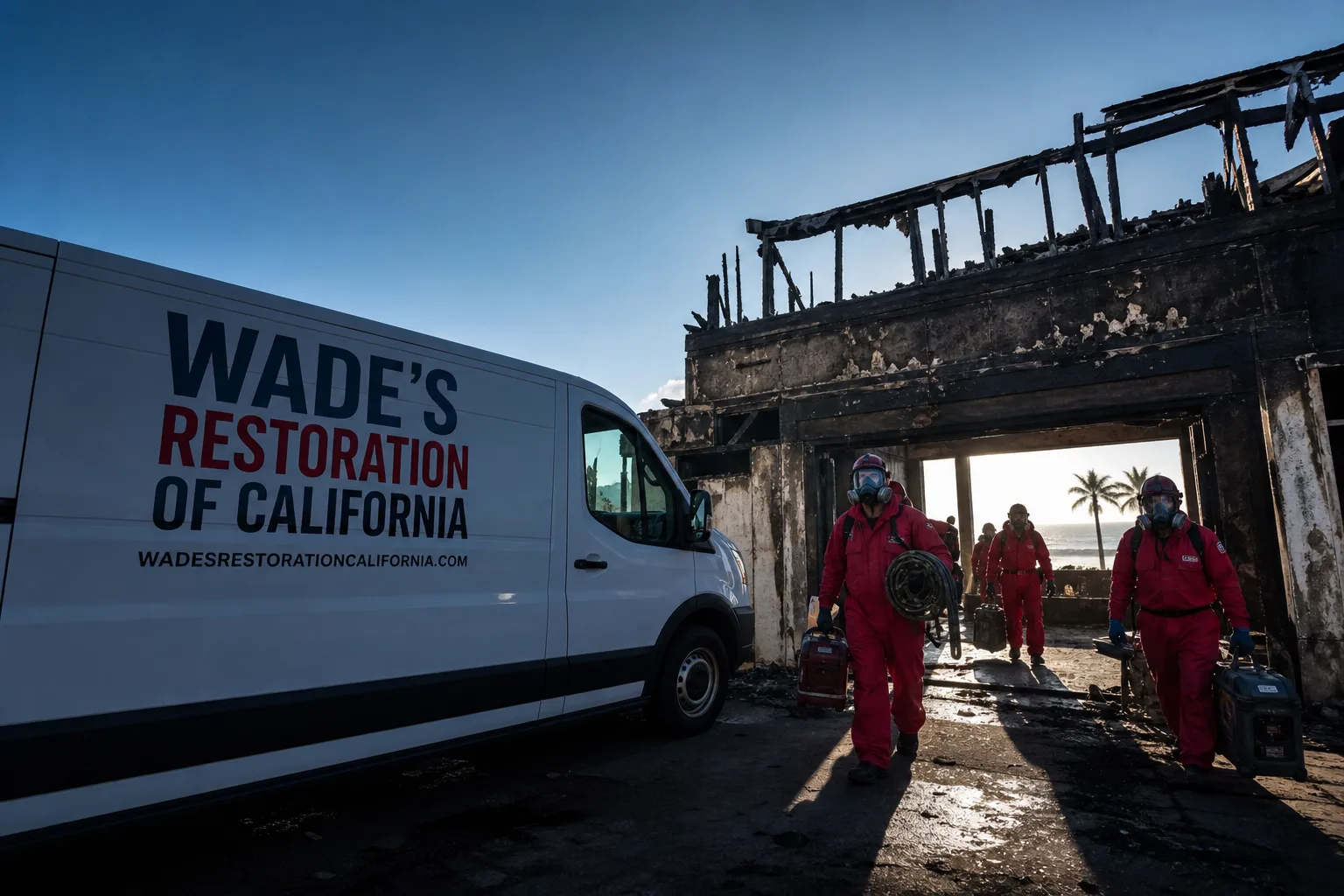
Fast, Reliable Storm & Disaster Restoration Across Upland
Storm damage in Upland usually means one of three things: debris-laden floodwater from the Cucamonga Wash jumping its banks, wind-driven rain getting under Spanish tile, or mud flowing off a burn scar above the 210. Wade’s Restoration of California has handled all three across 91784, 91785, and 91786 for years, and we answer the phone ourselves at (855) 915-0646. Wade heads out himself, not a crew you’ve never met, and he can have extraction running inside the hour when the situation calls for it.
You’re not calling a national chain with a call center in another state. You’re calling a local owner-operator who runs into you at the hardware store on a Saturday. That’s the oldest accountability mechanism there is, and it’s why Upland homeowners have been calling Wade Ferris since he started this company back in 2007.
Why Wade’s Restoration of California Is a Good Fit for Upland Homeowners
Upland isn’t Ontario. The houses are different, the drainage is different, and the way storms hit north of the 210 versus south of it is almost two different climates. Wade knows the difference because he’s worked both sides of it for the better part of two decades. A 1954 post-war tract home off Euclid in 91786 floods differently than a 1980s custom build on San Antonio Heights with a Spanish-tile roof. If the crew doesn’t know that, they’re going to miss moisture that’s still hiding in the walls.
About our reputation in Upland: ask anyone on your street. That’s how restoration work actually gets found around here, not through some star rating from a stranger three towns over. Wade’s published his name, address, and license number since 2007. He’s been IICRC-certified and RIA-affiliated the whole way, and he puts the 90-Day Done Right Promise in writing on every water, fire, and mold restoration job. If it’s not done right, he makes it right. One call brings Wade back.
Response time to Upland: calls are answered by a live person, 24/7. Not a voicemail, not an answering service. Wade answers his own phone. For storm and flood calls in Upland, he can typically be on site and running extraction inside the hour, because the equipment is already staged and the crews are already in the Inland Empire. No trip charge inside our own county.
Our Storm & Disaster Restoration Services in Upland
Our Storm & Disaster Restoration team handles the whole mess from initial damage control through the insurance paperwork and the final rebuild. Here’s what that looks like for Upland specifically.
Storm Damage Cleanup
When a Santa Ana blows through the Cajon Pass and the gap corridors north of Upland, it tears branches, patio furniture, and sometimes entire sections of roofing loose. Our crew removes debris, tarping exposed areas and clearing the way so we can assess what actually needs to be fixed. In north Upland’s foothill neighborhoods, we always check for mud-line staining on exterior stucco, because debris from a prior burn scar above the Cucamonga Wilderness can show up months after a fire, mixed in with what looks like ordinary storm dirt.
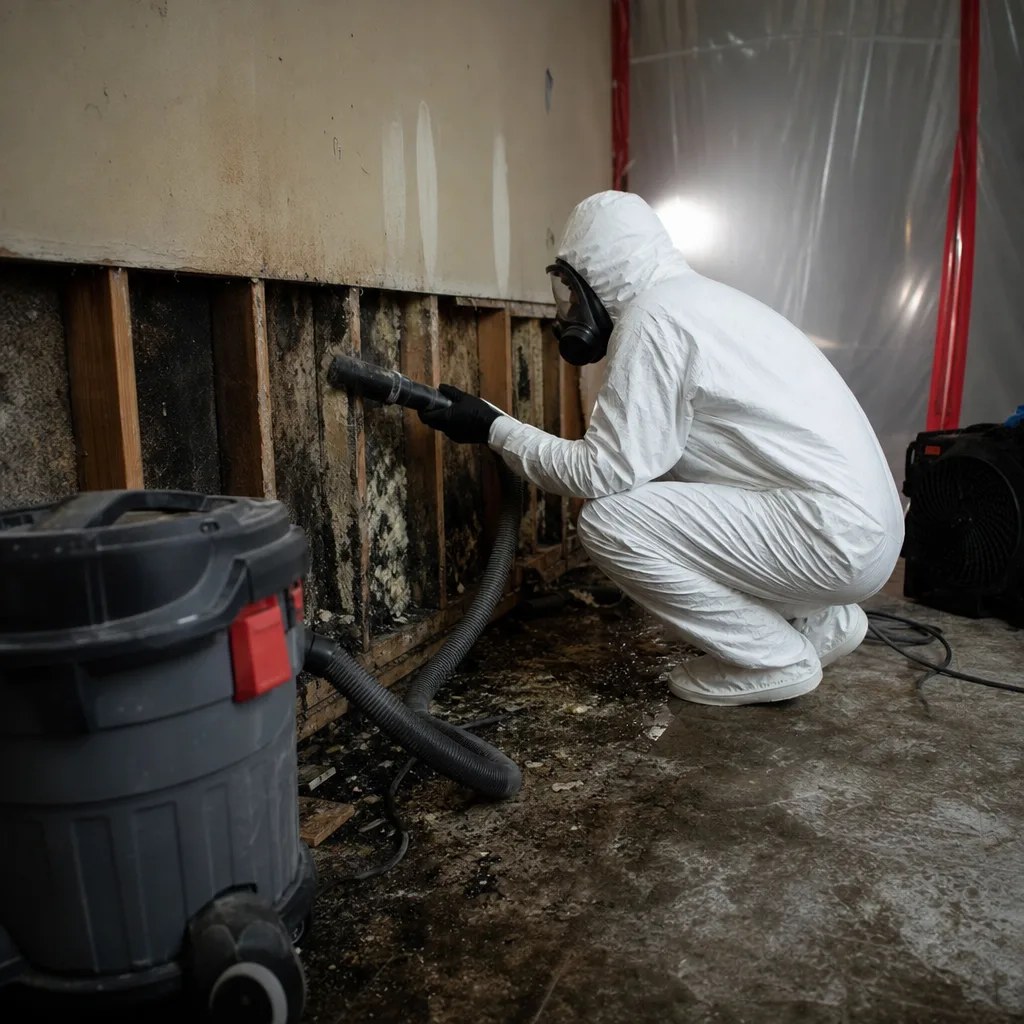
Flood Damage Restoration
Upland gets measurably more rain than Ontario or Montclair because the San Gabriels force orographic lift. That means a cloudburst can overwhelm the Cucamonga Wash and the lateral drainage channels without much warning, and water ends up where it was never supposed to be. We run professional-grade Dri-Eaz dehumidifiers and air movers to dry the structure, document every moisture reading daily, and hand you the full log at the end. Almost nobody in this trade does that. Wade does, on every single job.
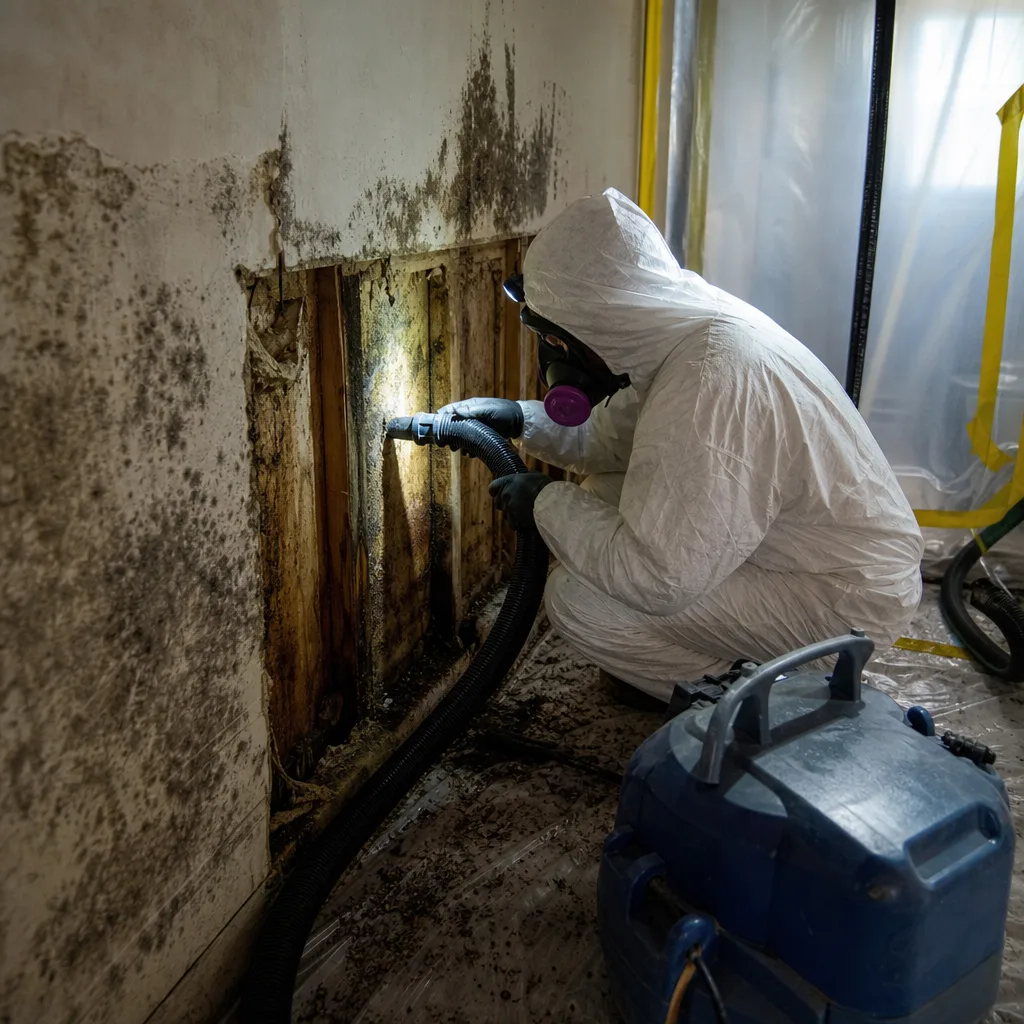
Emergency Board-Up
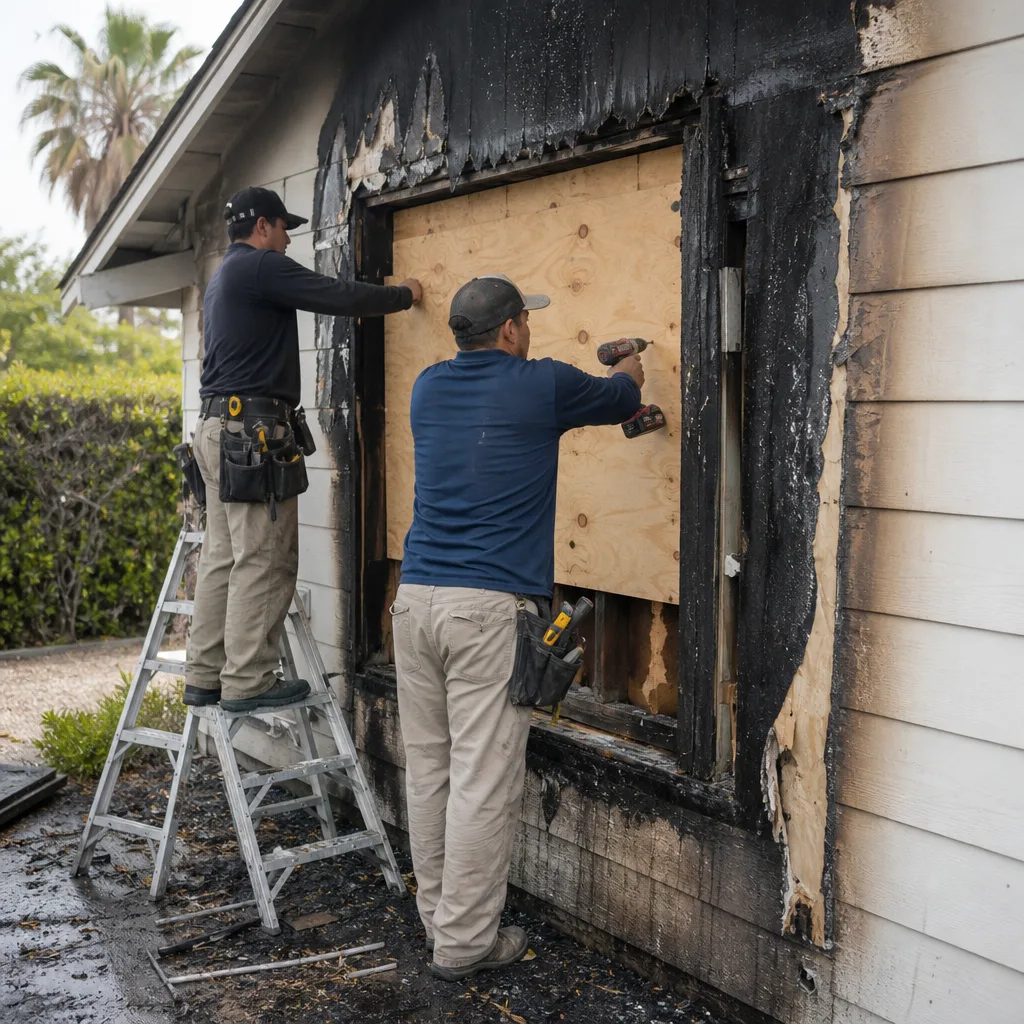
When a window blows out or a tree limb comes through a wall, the damage gets worse by the hour. We board up openings with sturdy plywood, secured properly, so rain and opportunists stay out. This is not a temporary nicety; it’s the thing that stops a $4,000 repair from becoming a $40,000 one. Wade heads out as soon as you call, and he’ll tell you over the phone what he’s going to do before the truck leaves the yard.
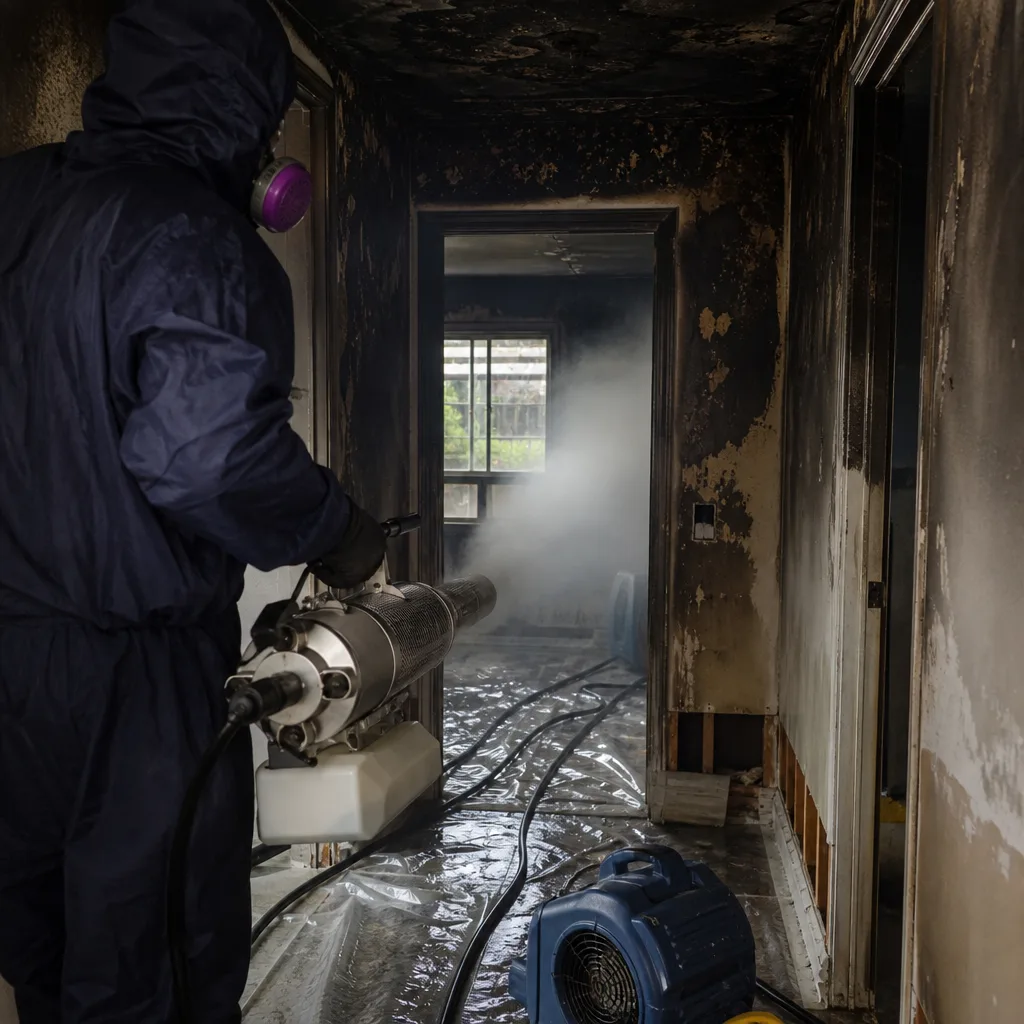
Roof Tarping
North Upland’s Spanish-tile roofs are built for looks, not for 70 mph wind gusts. When a Santa Ana lifts a section of tile, water gets into the roof deck and the ceiling drywall, often before you even know anything’s wrong. We tarp roofs with heavy-duty material that’s tied and weighted to hold in real wind, then we secure any loose tile so more doesn’t come off before the repair crew arrives. Matching custom tile profiles in the foothills matters, and we’ve done it enough to get it right.
What happens when you call
- 1
A real person answersNo phone trees - you reach a local pro.
- 2
You get an upfront price rangeHonest numbers before anyone is dispatched.
- 3
A background-checked tech heads outLicensed & insured, dispatched right away.
- 4
You approve before work beginsNothing starts until you say go.
Common Storm & Disaster Restoration Problems We See in Upland Homes
- Post-fire debris-flow mud intrusion in 91784. After a fire burns the slopes above Cucamonga Peak, the next heavy rain funnels mud and burned material straight down into foothill streets. This is not standard floodwater. It’s abrasive, it’s contaminated, and it requires different cleanup and different insurance documentation than a regular storm loss.
- Hidden moisture in 1950s-1960s tract homes in 91786. Those original galvanized supply lines have spent six decades in Inland Empire hard water, and they’re often paper-thin by now. When one lets go, water creeps into places nobody looks until the mold starts. We check wall cavities and subfloor spaces where moisture hides.
- Wind-driven roof failures during Santa Ana events. The same mountains that give Upland its rain also funnel wind through the gaps, and it hits foothill roofs harder than it hits the flatlands. Tiles lift, ridge caps slide, and the next rain goes right in.
- Debris clogging drainage paths along the Cucamonga Wash. Storm debris, tree limbs, and mud build up fast in the washes and lateral channels that run through Upland. When they back up, water goes overland and into the nearest low-lying home. We’ve seen it happen on the streets north of Foothill after a solid downpour.
Pricing for Storm & Disaster Restoration in Upland, CA
A typical storm damage cleanup in Upland runs $800-$2,500, depending on how much debris has to be removed and how much of the structure got opened up. Flood damage restoration in Upland homes usually lands between $3,000 and $12,000 for a moderate event, with drying equipment, moisture logging, and content handling all in that range. Roof tarping on a standard Upland single-story runs $400-$900, though a two-story Spanish-tile roof in 91784 often costs more because of ladder access and the risk of working on steep pitches. Emergency board-up for a blown window or door is $250-$600 including materials. A post-fire debris-flow cleanup in the foothills is harder to bracket; those jobs often run $5,000-$20,000 or more because of the mud volume, contamination, and the documentation insurers demand. Wade gives a free estimate on every job, and he offers a free second opinion on any written estimate you’ve already got. Call (855) 915-0646 for exact numbers on your place, and ask about the permanent Senior & Veteran 10% discount.
We Also Serve Cities Near Upland
Our crews live and work throughout the Inland Empire, and we regularly take storm calls from Upland and the surrounding communities. If you’re in Claremont, Montclair, Rancho Cucamonga, or Ontario and you’ve got water where it shouldn’t be, call the same number: (855) 915-0646. Wade covers this whole corner of the county, and the no trip charge applies here too.
Serving Upland, CA - Our Local Coverage Area
We’re based in the Upland area and know this community well. Use the map below to see our service coverage - if you’re nearby, we can almost certainly help.
FAQs - Storm & Disaster Restoration in Upland
Post-fire debris flow cleanup is a different animal because the water is carrying mud, ash, burned material, and sometimes rocks the size of your fist, not just dirty rainwater. In Upland’s 91784, the alluvial fans below Cucamonga Peak deliver this slurry directly into residential streets after a heavy rain on a recent burn scar. Standard flood cleanup misses the mud-line staining, the subfloor debris compaction, and the contamination that comes with post-fire runoff. Insurers writing policies on 91784 addresses increasingly require documentation that separates fire-related flood from ordinary storm loss, so the paperwork has to be right too. Wade’s Restoration has handled enough of these to know what the adjuster needs. Call (855) 915-0646 and Wade will walk you through it.
The biggest hidden moisture problem in south and central Upland’s older tract homes is water that travels along the original galvanized supply lines, which have been degraded by decades of Inland Empire hard water, and then settles in wall cavities and under slab floors where nobody can see it. Add a storm event on top of that, and the water finds every weak pipe joint and every micro-crack in the stucco. The moisture sits there, mold begins to grow, and the evidence is invisible until it’s an expensive problem. Wade takes daily moisture readings and gives you the log at the end of the job, so you know what was wet, what got dried, and what never was.
Santa Ana winds funnel through gap corridors in the San Gabriels and hit north Upland’s foothill neighborhoods with more force than the flatlands below. Spanish-tile roofs are vulnerable because tiles can lift, ridge caps slide, and the underlayment underneath gets exposed, so even a light rain that follows a heavy wind event drips straight into the roof deck and the ceiling below. The damage happens in minutes, not hours. We’ve responded to homes on San Antonio Heights where a single lifted tile section led to saturated ceiling drywall throughout an entire hallway. If you hear tiles rattling during a Santa Ana, have them checked before the next rain. Call (855) 915-0646 for an honest assessment, no charge for the estimate.
Yes. Upland sits higher on the alluvial slope and the mountains force more rain out of the same storm systems that pass over the valley floor, so Upland gets measurably more annual rainfall than Ontario or Montclair a few miles south. That means the drainage systems here, the Cucamonga Wash, the lateral channels, the street gutters, hit their limits faster and more often. Flash flooding inside structures happens with less advance warning. For restoration, it means we treat every Upland water event as potentially worse than it looks, because the volume of water that hits a foothill street in a short burst is more than what flatland neighborhoods ever see.
Insurers writing policies on 91784 addresses often require documentation that separates fire-related debris-flow flood from standard storm loss, because the causation matters for which part of the policy responds. That means photos of mud-line staining on exterior walls, subfloor samples showing debris compaction, elevation readings where the slurry entered, and contemporaneous moisture logs that show the progression of the damage. Wade’s Restoration documents all of it, coordinates with your adjuster directly, and hands you a complete file at the end. It’s the difference between a paid claim and a denied one. If you’ve been told your claim is questionable, call (855) 915-0646 for a free second opinion on what was written up.
When the storm’s over and the water’s rising, or the roof’s open and the rain’s coming in, call (855) 915-0646. Wade picks up. He’ll tell you what he’d do, what it’ll cost, and when he can get there. No pressure, no runaround, one neighbor to another. Free estimates, free second opinions, and the 90-Day Done Right Promise in writing on every job.
Written by Wade Ferris, Owner at Wade’s Restoration of California, serving Upland and the Inland Empire since 2007.