
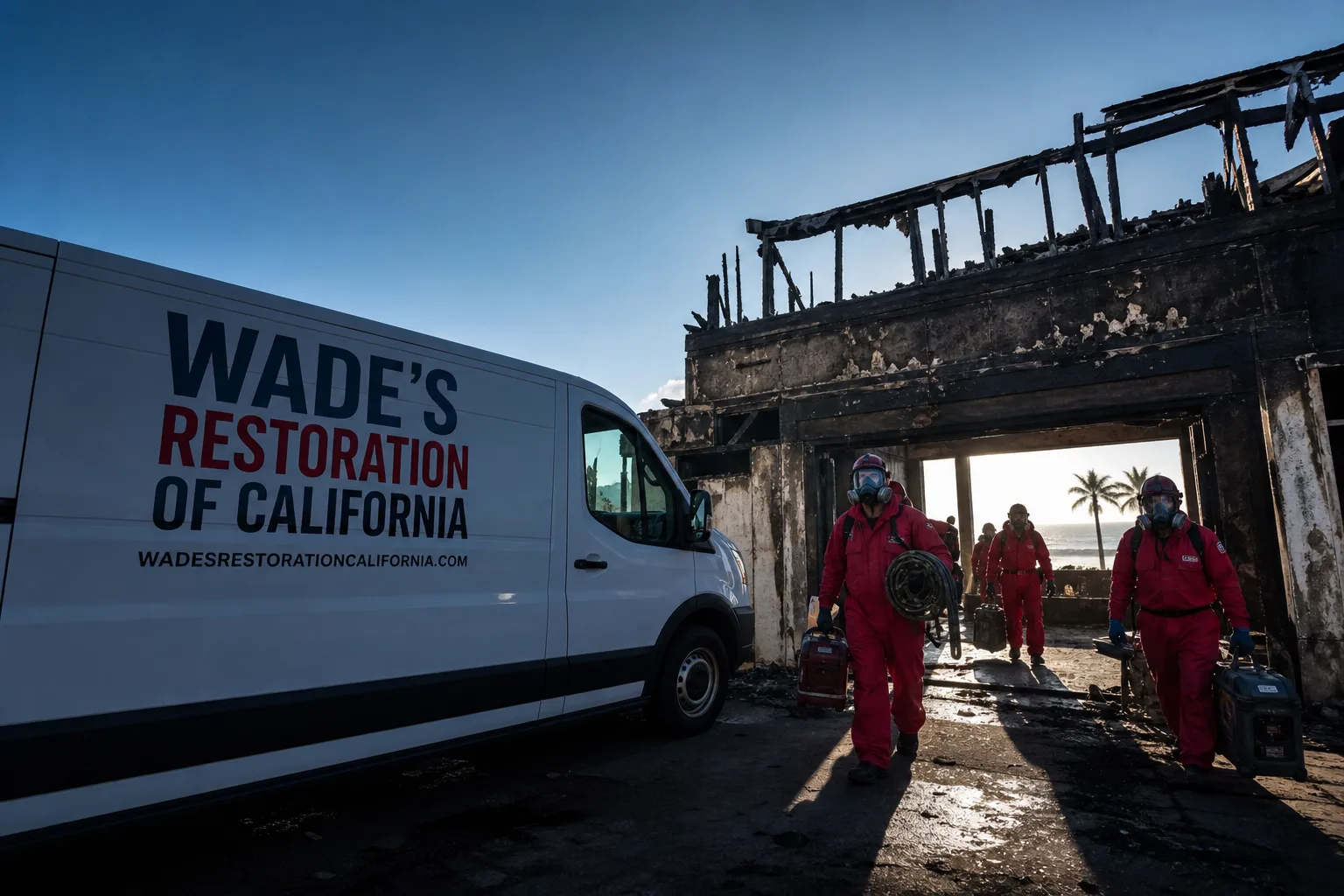
Fast, Reliable Storm & Disaster Restoration Across Lakewood
When a storm tears through Lakewood, the damage doesn’t wait for business hours and neither do we. Wade Ferris answers his own phone at (855) 915-0646, any hour, and can have extraction running in your living room inside sixty minutes. Storm damage in Lakewood hits differently than in neighboring cities because nearly every one of the city’s 17,500 homes shares the same 1950-1954 construction vintage. That means slab-on-grade foundations, original copper supply lines, and asbestos-era materials that change how cleanup has to be done. We know Lakewood’s housing stock cold, and that knowledge changes outcomes on the first day of a loss.
Why Wade’s Restoration of California Is Lakewood’s Preferred Storm & Disaster Restoration Company
Wade’s Restoration competes on transparency, not volume. Since 2007, Wade Ferris has run this company with his name on the truck and his address published. Ask anyone on your street. The same crew that shows up to your storm loss is the one you’ll see at the hardware store on Saturday morning. That’s the oldest accountability mechanism there is, and it works.
Lakewood customers know what they’re getting because we hand over the full moisture log at the end of every job. Daily readings, not guesswork. Wade takes those readings himself every single day a job is running. When you call our Storm & Disaster Restoration team, you’re not getting a rotating cast of subcontractors. You’re getting Wade’s crew, background-checked and uniformed, running IICRC and RIA standard protocols on Dri-Eaz, Phoenix, Injectidry, XPOWER, and B-Air equipment.
We answer live, 24/7. No voicemail. No answering service. Wade picks up. And on every storm, water, and fire restoration job, you get our 90-Day Done Right Promise in writing. If it’s not done right, we make it right. One call brings Wade back.
Our Storm & Disaster Restoration Services in Lakewood
Storm Damage Cleanup
Storm damage cleanup in Lakewood almost always means more than hauling out wet carpet and drywall. In this city, original 9×9 vinyl asbestos tile is hiding under decades of later flooring in a huge share of homes. The moment demolition exposes it, work legally must stop for AHERA sampling before anything else moves. We plan for that from the first assessment so your cleanup doesn’t stall out mid-job waiting on a lab. Because Lakewood sits in the flat coastal LA Basin with persistent marine-layer humidity, we run longer drying cycles and heavier dehumidification than a crew would in, say, Riverside. That’s not a delay; it’s the difference between a dry home and a mold bloom six weeks later.
Flood Damage Restoration
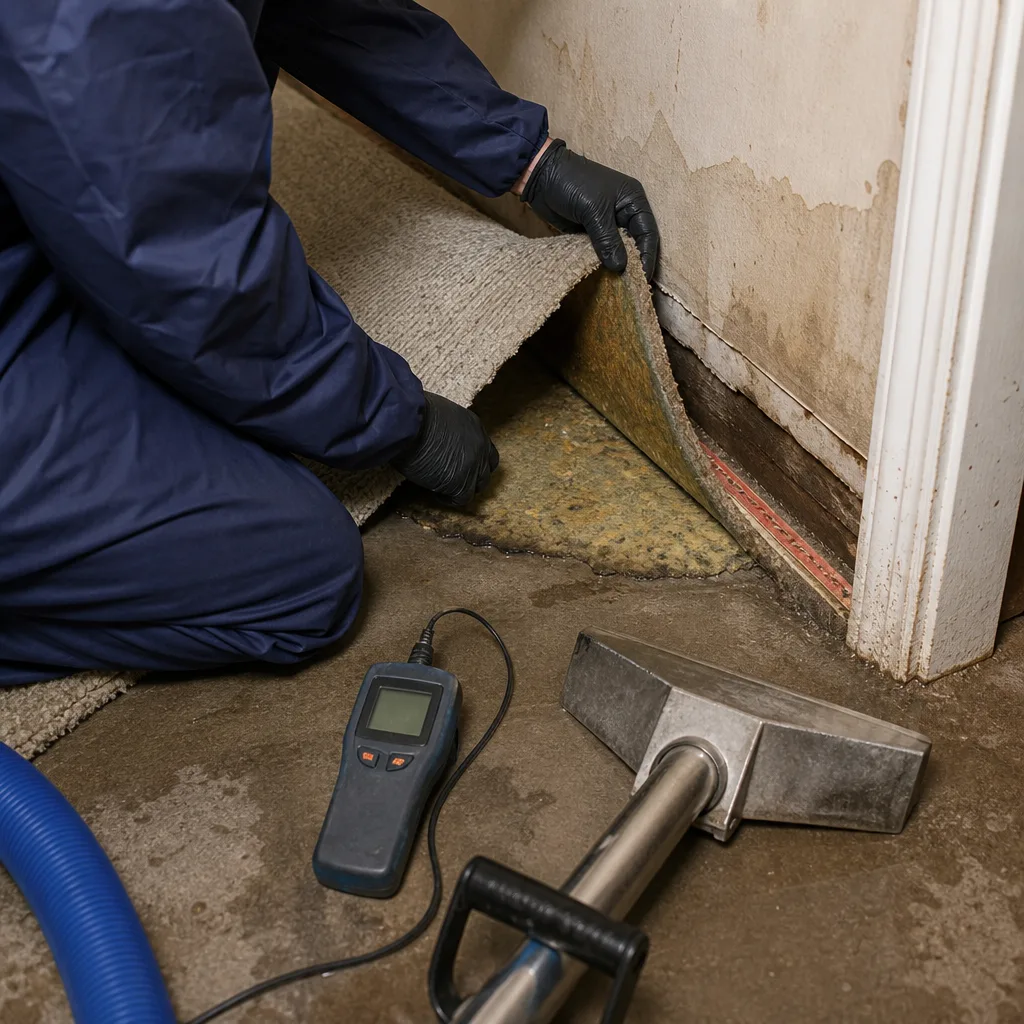
Lakewood’s level storm drainage gets overwhelmed fast in heavy rain. When El Niño hits, water sheet-flows into slab-level homes that have no crawl space to buffer the intrusion. Every minute that water sits against those 1950s slab foundations counts. Our flood restoration in Lakewood starts with extraction inside the hour, then moves to daily moisture readings that get logged and handed to you at the end. We coordinate directly with your insurance adjuster so you’re not the one stuck relaying messages between two parties. Photo documentation, written scope before work starts, and a straight answer on what’s wet and what isn’t.
Emergency Board-Up
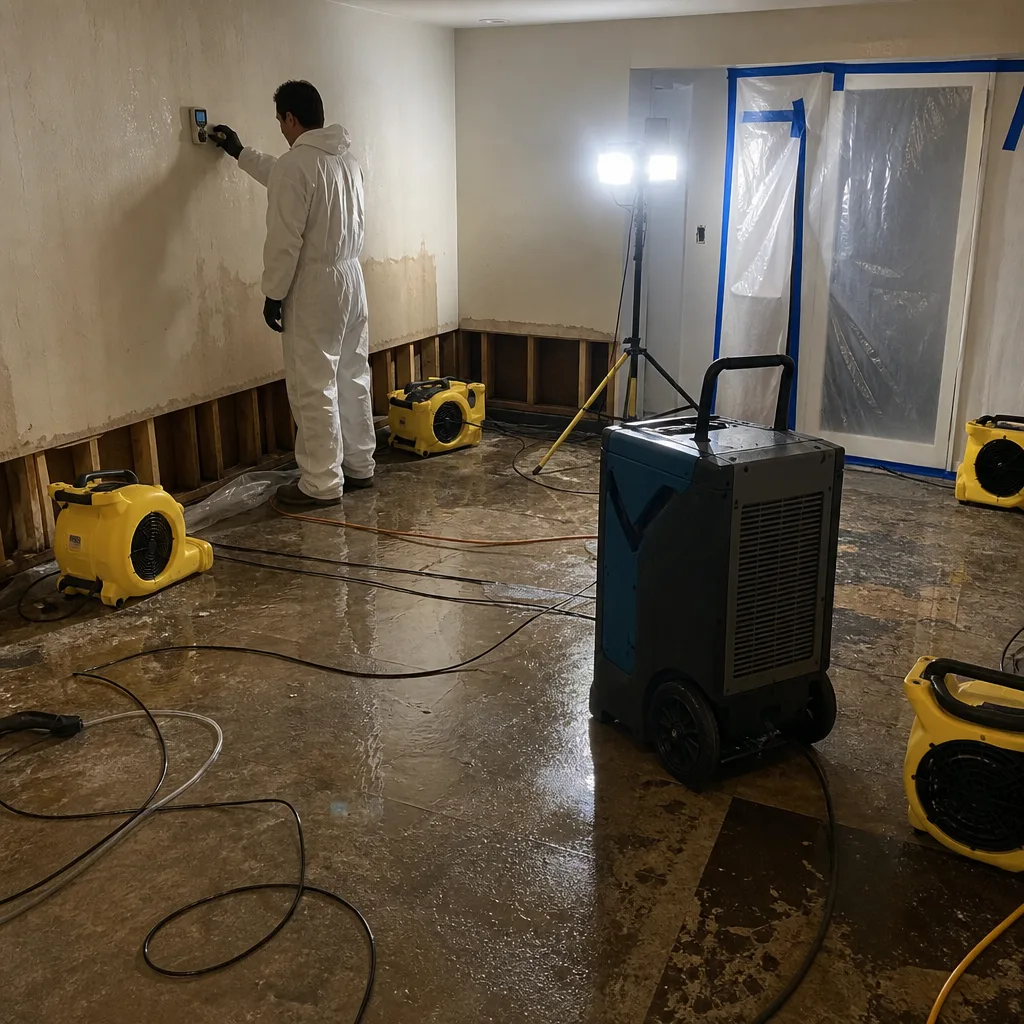
Board-up on a 1950s Lakewood stucco home is different work than on a modern tract house. The single-pane aluminum windows, original wood framing, and deteriorated flashings on these homes don’t tolerate sloppy sealing. A board-up crew that misses the failed header flashing above a window just lets more water in behind the boards. We cut, seal, and secure openings knowing what’s behind that stucco, because we’ve worked these exact houses for years. Emergency board-up in Lakewood happens fast when you call (855) 915-0646. Wade heads out himself more often than not.
Roof Tarping
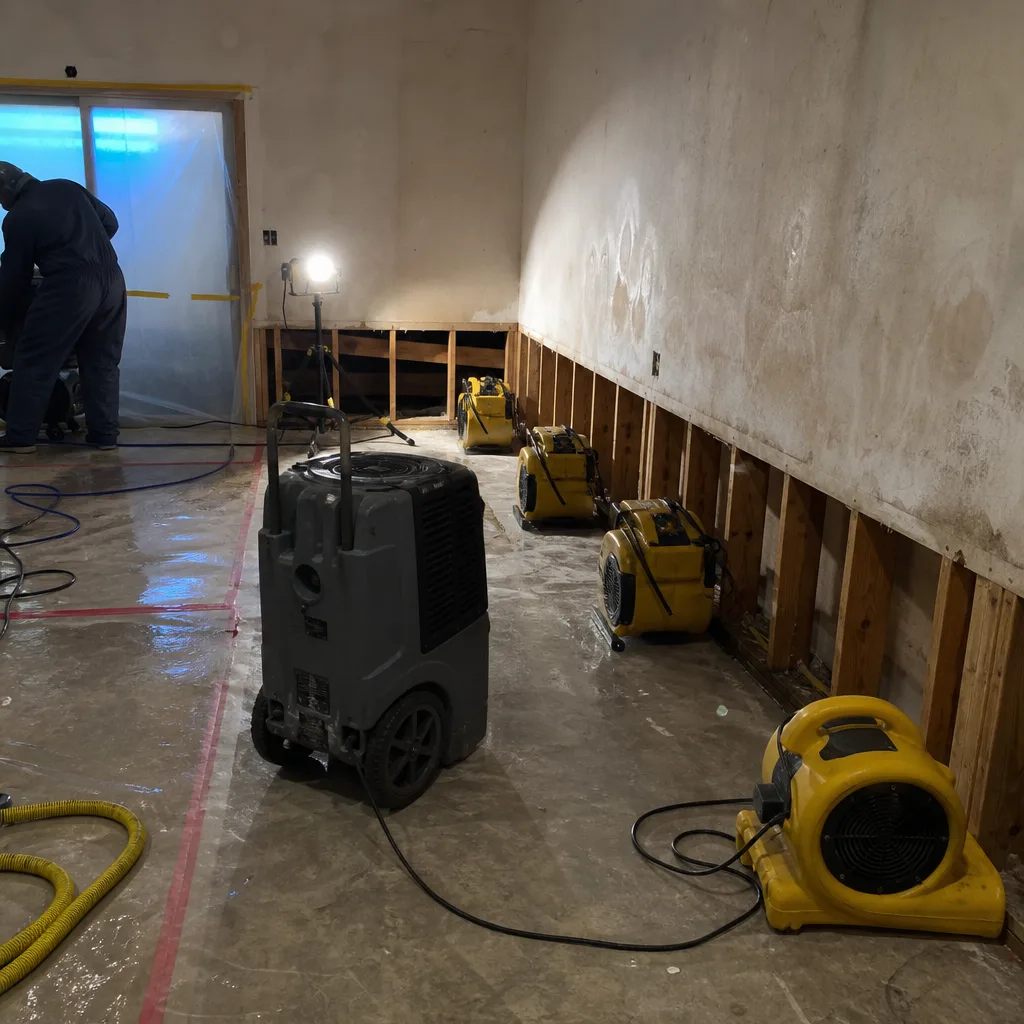
Wind damage from a coastal storm will rip shingles and tiles off a roof fast, and the next marine-layer push puts water straight into your attic. Roof tarping on Lakewood’s original 1950s roof framing requires care around the older vents, flashings, and single-ply membrane patches these homes often carry. We tarp to stop water intrusion, then document everything for your adjuster with photos and a written scope. If the water already made it inside, the tarping is just step one. The drying plan runs underneath it from day one.
What happens when you call
- 1
A real person answersNo phone trees - you reach a local pro.
- 2
You get an upfront price rangeHonest numbers before anyone is dispatched.
- 3
A background-checked tech heads outLicensed & insured, dispatched right away.
- 4
You approve before work beginsNothing starts until you say go.
Trusted Brands We Service in Lakewood
Wade’s Restoration runs Injectidry systems for the kind of slab-level water extraction Lakewood’s copper slab leaks demand, and our crews hold IICRC and RIA credentials on every job. We keep the equipment and the knowledge local, so you’re not waiting on gear to ship in from a regional warehouse. For 1950s-era construction with asbestos-era materials, we apply IFA-recognized standards for containment and documentation. That’s the standard operating procedure in Lakewood, not the exception.
Common Storm & Disaster Restoration Problems We See in Lakewood Homes
- Original 9×9 vinyl asbestos tile under every flooring layer. Demolition crews without AHERA protocols tear it out, trigger a stop-work order, and contaminate the whole house. In Lakewood, this is the single most common reason restoration jobs go sideways.
- Marine-layer humidity that stretches drying cycles. The coast is five to seven miles away. Contractors who assume a standard 48-hour dry-down under-deploy dehumidifiers and leave slab-level homes primed for secondary mold.
- Slab-leak-driven flood losses disguised as storm damage. When a 70-year-old copper supply line under the slab fails during a rain event, it looks like storm intrusion. We pressure-test and map the source before demolition so you’re not chasing the wrong cause.
- Board-up and tarp work that ignores 1950s stucco and single-pane windows. Failed flashings and unsealed openings behind the boards create a second water event inside the first one. We seal for the house we’re actually standing in, not a generic assumption.
Pricing for Storm & Disaster Restoration in Lakewood, CA
Storm damage cleanup in Lakewood typically runs $1,400 to $4,200 depending on the number of affected rooms and whether AHERA sampling and containment are required. Flood damage restoration with extraction, drying, and documented moisture logs runs $2,200 to $6,800. Emergency board-up in Lakewood runs $350 to $900 per opening depending on window size and access. Roof tarping typically runs $450 to $1,200 for a standard single-story tract roof. What changes your number is the asbestos sampling and containment work, which is routine in Lakewood and nearly always required. Estimates are free and Wade will walk the scope with you before any work starts. The 90-Day Done Right Promise is in writing on every job.
We Also Serve Cities Near Lakewood
Our Lakewood crews cover the surrounding communities too, including Signal Hill, Bellflower, Long Beach, and Paramount. Same live-answer phone, same daily moisture logs, same written Done Right Promise. If you’re in a neighboring city and storm damage has you underwater, call (855) 915-0646 and Wade will head out.
Serving Lakewood, CA - Our Local Coverage Area
We’re based in the Lakewood area and know this community well. Use the map below to see our service coverage - if you’re nearby, we can almost certainly help.
FAQs - Storm & Disaster Restoration in Lakewood
Nearly every home in Lakewood was built between 1950 and 1954, and the original 9×9 vinyl asphalt floor tile used throughout that era is presumed to contain asbestos. When water or fire damage exposes that original tile under later flooring, federal AHERA regulations require sampling before demolition can proceed. On a water loss off Candlewood Street after an El Niño downpour overwhelmed the slab-level drainage, our crew stopped demolition the moment we exposed original 9×9 vinyl asphalt tile beneath a 1980s laminate layer. We sealed the area, ordered AHERA sampling, and kept the Dri-Eaz LGR 2800i dehumidifiers running an extra two days to overcome the marine-layer humidity that slows drying in Lakewood. Any contractor who doesn’t test first is risking a stop-work order and cross-contamination. Call (855) 915-0646 and we’ll handle the testing through the same scope.
Lakewood sits roughly five to seven miles from the Pacific, and the persistent marine layer keeps ambient humidity high enough to slow structural drying well beyond the 48-hour cycles many restoration companies assume. We run Dri-Eaz LGR 2800i dehumidifiers and Phoenix units longer and position more of them per affected room than we would in a drier inland city. Daily moisture readings track actual drying against a drying goal, and you get the full log at the end. In Lakewood, under-deployed dehumidification is the fastest route to a mold problem that didn’t have to happen.
Lakewood’s drainage is level, and in heavy rain the water has nowhere to go but into slab-level homes that have no crawl-space buffer. Water sheets across the slab and wicks into the drywall, the original flooring, and any wall cavities along the intrusion path. That means extraction has to start fast, and drying has to account for the marine-layer humidity working against you. We start extraction inside the hour when you call (855) 915-0646, then run daily moisture logs until the numbers show dry, not just until the visible water is gone.
They’re a factor in a surprising number of Lakewood storm losses. Those copper lines have been under those slabs for 70-plus years now, and pinhole or pressurized slab leaks often show up during a heavy rain event when the ground shifts and the drainage backs up. What looks like storm intrusion is sometimes a slab leak that predates the storm. We pressure-test and map the source before demolition so the drying plan targets the actual water source, not the weather.
Because these homes are single-story stucco over original 1950s framing, with single-pane aluminum windows and flashings that have been deteriorating for seven decades. A generic board-up crew that seals openings without addressing failed header flashings or unsealed window surrounds is just inviting a second water intrusion behind the boards. We board up Lakewood homes knowing what’s behind the stucco, because we’ve worked these exact houses for years. The goal is one storm, not two.
Call Wade’s Restoration for Storm & Disaster Restoration in Lakewood
Storm damage doesn’t care about the clock, and in Lakewood the clock matters more than most places because of the humidity and the asbestos-era materials. Wade Ferris answers his own phone at (855) 915-0646, any hour, every day. You’ll get a straight answer on scope, a written estimate, and the 90-Day Done Right Promise on every storm and flood restoration job. No trip charge inside our own county. Senior and veteran discounts always. Call now and Wade will head out.
Written by Wade Ferris, Owner at Wade’s Restoration of California, answering his own phone for Lakewood since the company started taking calls in this area.