
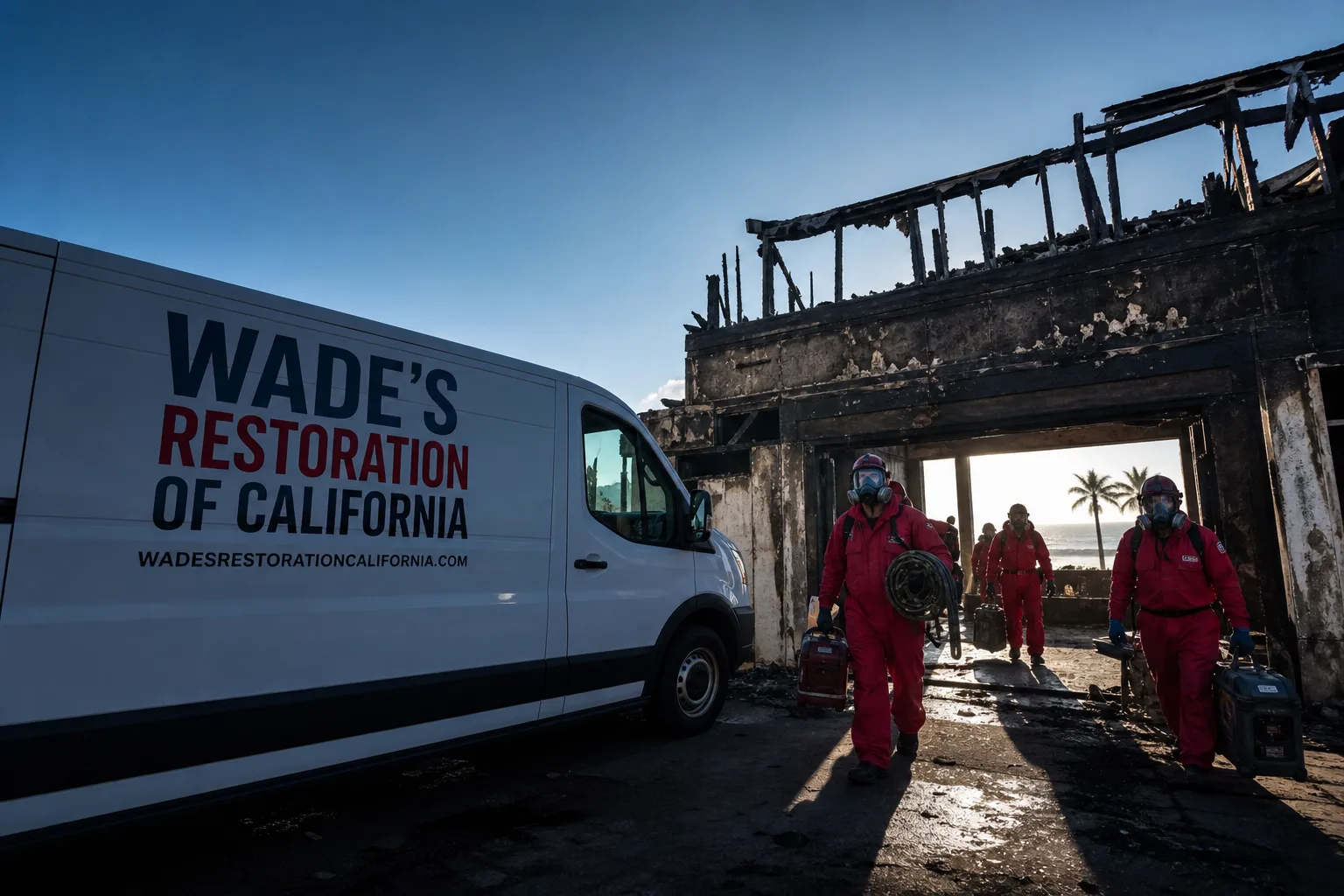
Fast, Reliable Storm & Disaster Restoration Across Glendale
Storm damage in Glendale rarely announces itself politely. A Santa Ana event can rip a section of roof off a 1920s Spanish Colonial on Eton Drive at 3 a.m., and by sunrise the water is already through the plaster and into the floor joists. That’s when you need a crew that knows Glendale’s 91207 and 91208 hillside streets, the alley-load problem on those tight Verdugo Woodlands lots, and exactly how fast damage spreads in a house built before modern sheathing. We’re Wade’s Restoration of California, and we’ve been responding to storm, flood, and wind emergencies in Glendale for over 29 years. Call (855) 915-0646 and a live person answers. Not a queue. Not a call center. A person who can have extraction running within the hour.
Why Wade’s Restoration of California Is Glendale’s Preferred Storm & Disaster Restoration Company
Wade Ferris started this company in 2007 with a simple rule: put his own name on the truck, publish his address, and answer his own phone. That’s how he’s done it in Glendale ever since. When you call at 2 a.m. because a eucalyptus limb went through a bedroom window on Mountain Street, Wade heads out. He doesn’t hand you to a dispatcher in another state.
We work a lot in Glendale. The 91207 and 91208 ZIP codes up against the Verdugo Mountains are a different animal than the flatland cities around us, and we know what that means for storm scopes. Canyon drafts pull smoke into attics through soffit vents. Fire-denuded slopes slide mud into lower Verdugo Canyon homes after winter rains. A crew that only knows suburban tract houses will under-scope that work every time. Wade’s crew doesn’t.
Our restoration work carries a 90-Day Done Right Promise in writing. If it’s not done right, Wade makes it right and he comes back himself. That’s the whole pitch. It works because Wade lives with the same accountability any neighbor does: you’ll see him at the hardware store later. And every water, fire, and mold job comes with a daily moisture log that Wade hands you at the end. Almost nobody in this trade does that.
Our Storm & Disaster Restoration Services in Glendale
When a storm hits Glendale, the damage arrives in layers: wind tears the roof, rain follows into the attic, and mud from the Verdugo slopes pushes through the foundation vents. Our Storm & Disaster Restoration team sequences the work in the right order so you don’t end up with a dried-out room that still smells like smoke, or a tarped roof over a mold problem that started on day one. Here’s what we handle most in Glendale:
Storm Damage Cleanup
After a Santa Ana wind event, Glendale yards and rooftops collect branches, tiles, glass, and sometimes pieces of the neighbor’s patio furniture. We clear the debris, document the damage for your insurer with photos and written scope, and get the structural drying started immediately. On hillside lots where access is tight, we stage equipment in whatever narrow side yard or alley we can, because waiting for perfect staging costs you dry-out time.
Flood Damage Restoration
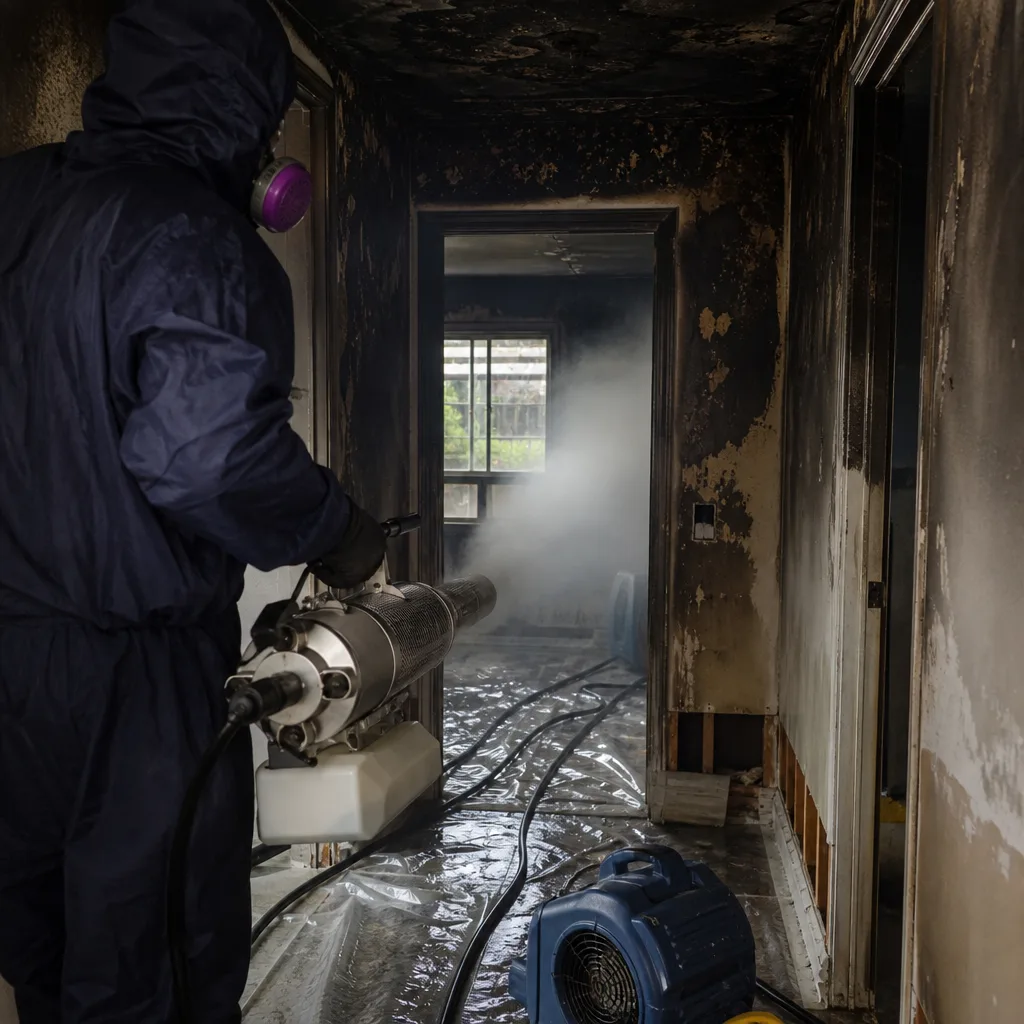
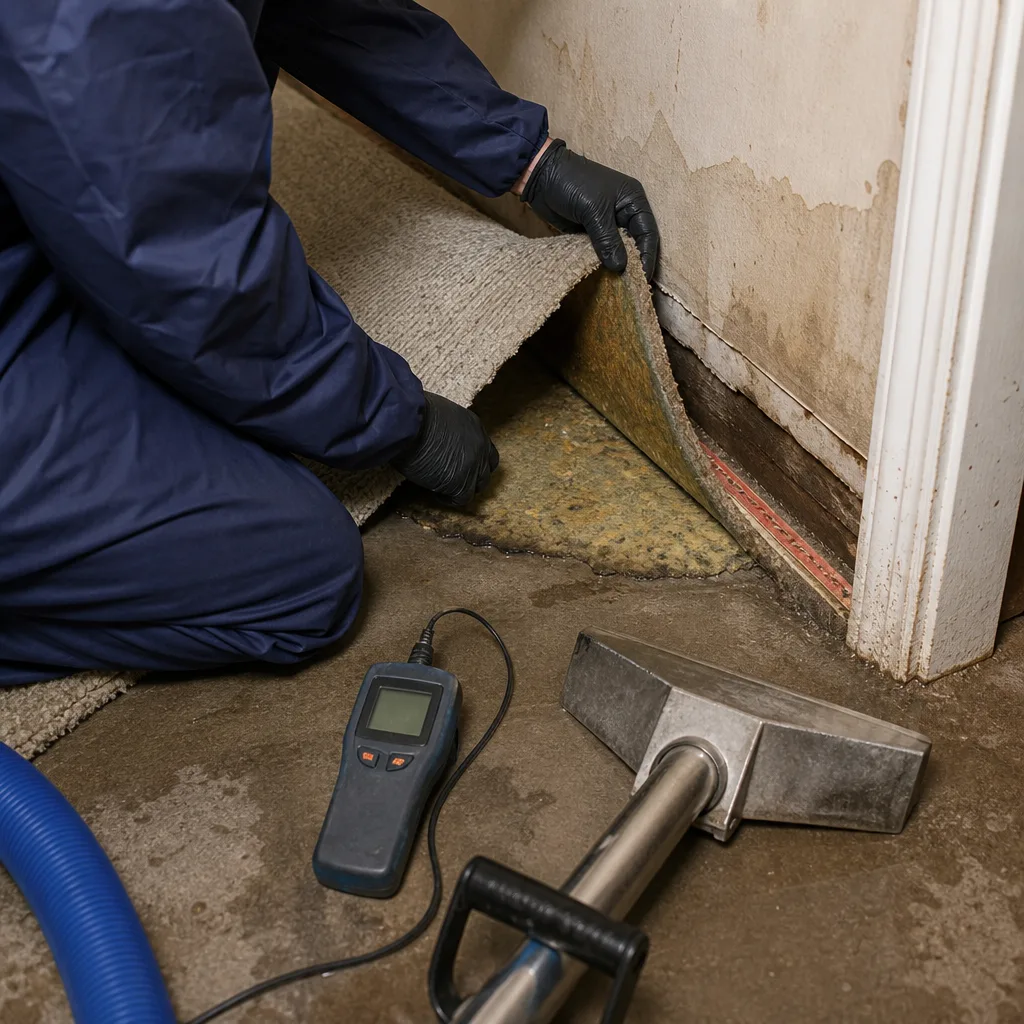
Glendale’s winter rains don’t just wet the ground. They saturate denuded Verdugo slopes above Verdugo Canyon and push muddy water into lower corridor homes through every opening in the foundation. We extract the water, run Dri-Eaz and Phoenix drying equipment, and log moisture readings daily until the framing is actually dry. Not surface dry. Framing dry. You get the log at the end.
Emergency Board-Up
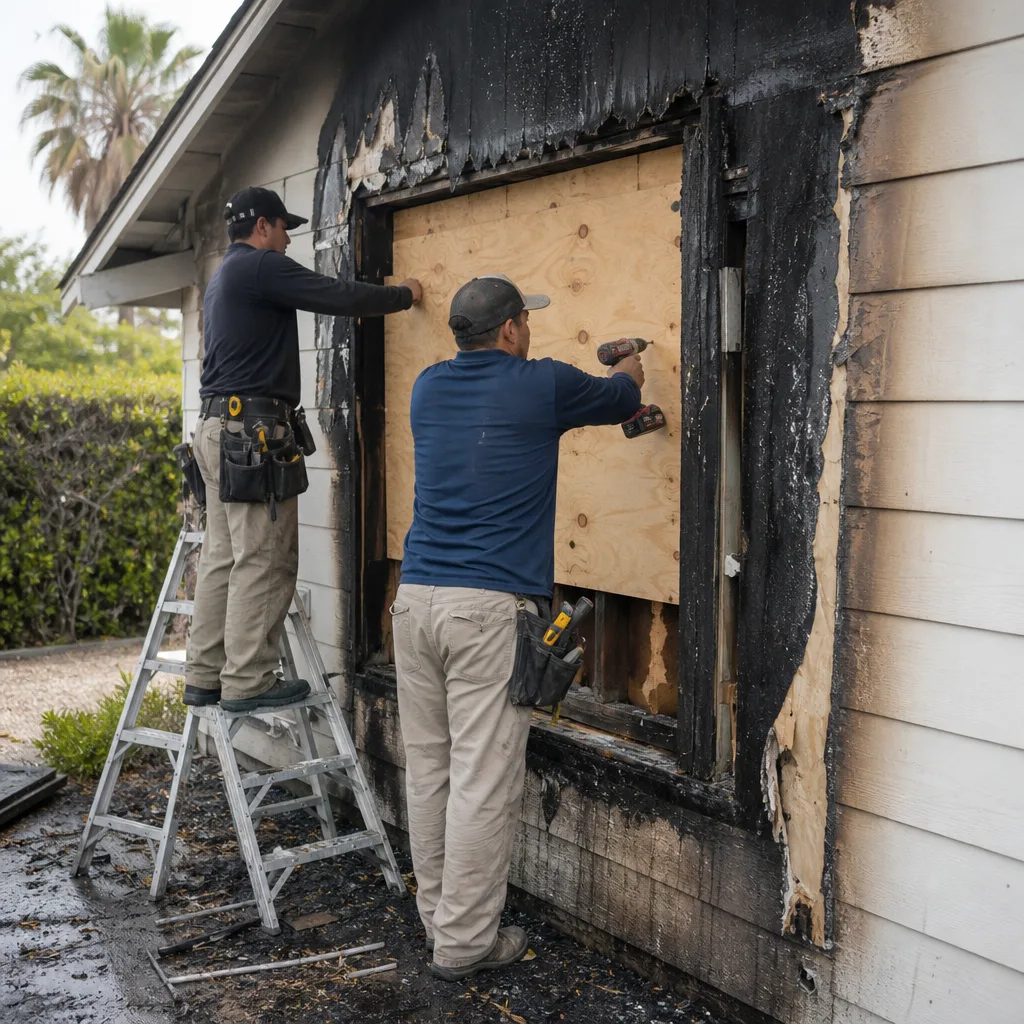
A smashed window or a breached door on Brand Boulevard can’t wait until morning. We handle same-day emergency board-up anywhere in Glendale, including the tight-quarters bungalow neighborhoods where bringing a full truck with materials needs a plan. If the opening is large enough to be a liability, we get it secured before the next weather system or the next person walks by.
Roof Tarping
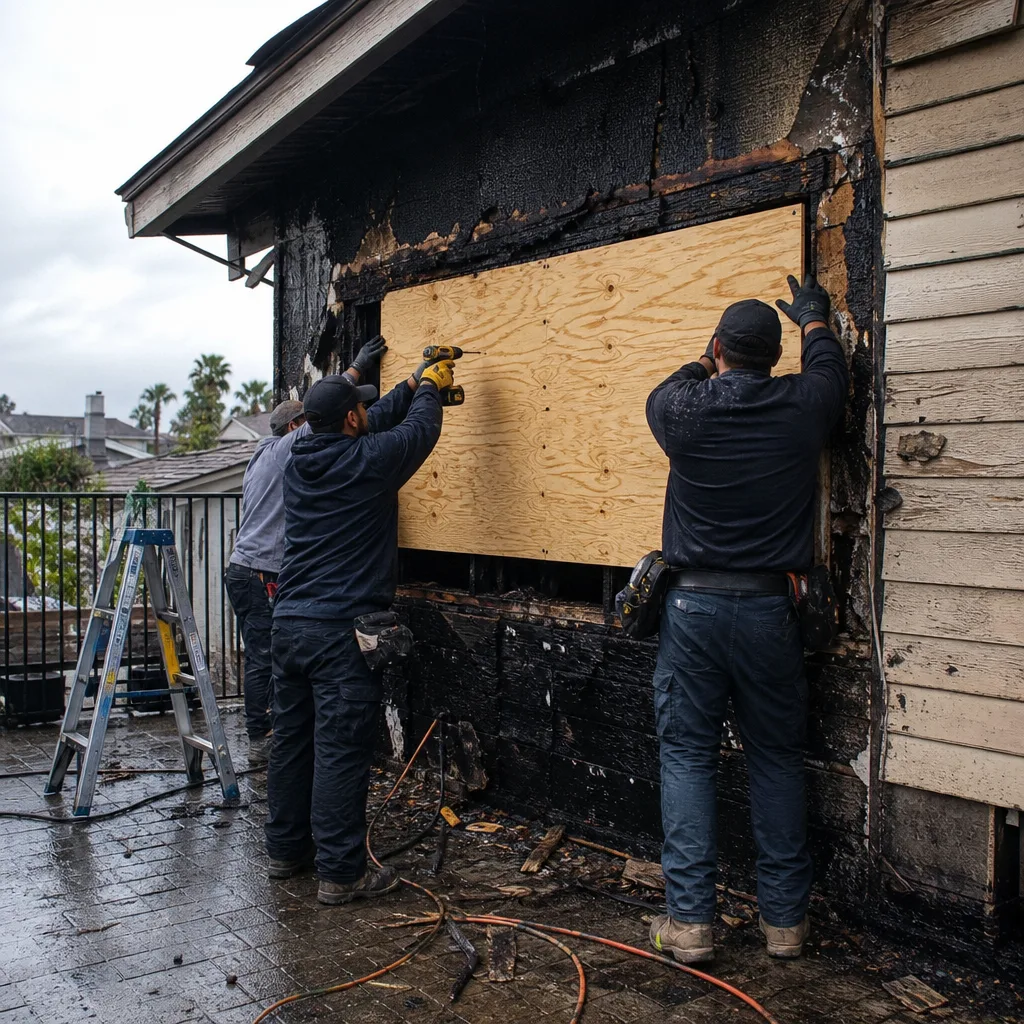
Glendale’s roof stock runs from 1920s barrel tile to postwar flat and low-slope built-up roofs. Wind damage on tile roofs doesn’t just leave missing tiles. It leaves broken tile fragments that cut through the underlayment and open the roof deck. We tarp the damaged area same-day, using the right anchors for the roof type, so your interior doesn’t take on more water while a permanent repair is scoped and priced in writing.
We also handle debris removal and wind damage repair as part of the same storm response. No subbing out. Wade’s crew does the work and Wade signs the scope before anything starts.
What happens when you call
- 1
A real person answersNo phone trees - you reach a local pro.
- 2
You get an upfront price rangeHonest numbers before anyone is dispatched.
- 3
A background-checked tech heads outLicensed & insured, dispatched right away.
- 4
You approve before work beginsNothing starts until you say go.
Trusted Brands We Service in Glendale
We work on Glendale homes built by every era, from 1920s Craftsman bungalows with original window casings to 1960s stucco multi-family buildings in 91204 and 91205. The equipment we run reflects that range. We use Dri-Eaz and Phoenix drying systems because they’re reliable on hard-to-reach jobs, and our technicians hold IICRC and RIA credentials because Glendale’s older housing stock punishes sloppy work. If a manufacturer’s spec calls for something specific on a hillside home, we follow it. We stock the most commonly needed repair materials for Glendale’s housing mix, which means faster turnaround when your 1930s Spanish Colonial needs a matching door jamb or a period-appropriate roof flashing.
Common Storm & Disaster Restoration Problems We See in Glendale Homes
- Santa Ana smoke infiltration with no visible fire. In 91207 and 91208, canyon drafts pull smoke particulate through soffit and ridge vents into attics and HVAC systems on homes miles from the actual ridge fire. Out-of-area contractors skip HVAC filter and attic air sampling, under-scope the odor remediation, and the smell comes back in weeks. We pull those samples as standard practice on any post-fire scope in the Verdugo foothills.
- Hidden moisture behind 1920s-1940s plaster-over-wood-lath walls. Glendale’s core neighborhoods are full of original plaster walls that absorb water and hold it longer than drywall. A roof that looks intact from the outside can hide a soaked plaster wall cavity from a wind-driven rain event. That’s why we log moisture readings daily and don’t declare a home dry without data.
- Post-fire debris-flow flooding in lower Verdugo Canyon. Winters after a dry-season fire, the denuded slopes above Verdugo Canyon let go. Mud and contaminated water push into lower corridor homes. This damage rarely shows up in flatland neighboring cities, and it requires different extraction and sanitation procedures than a clean-water pipe break.
- Tight alley-load access sites. Glendale’s hillside and bungalow neighborhoods often have side yards under 6 feet wide and driveway clearances that won’t fit a full-size restoration truck. Crews without compact equipment and flexible staging plans will delay your dry-out. We plan for that from the first call.
Pricing for Storm & Disaster Restoration in Glendale, CA
Storm damage restoration in Glendale typically lands in a few clear ranges. Emergency board-up for a single door or window usually runs $250-$500 depending on opening size and material. Roof tarping a wind-damaged section runs $400-$900, more if the roof is steep or the decking is compromised. Storm debris removal runs $300-$800 for a standard hillside yard. Flood extraction and structural drying for a single room runs $1,500-$3,500, and a full basement or crawlspace flood with contaminated water from post-fire debris flow can run $5,000-$12,000 because of the sanitation and soil removal step those jobs require. Every storm job in Glendale gets a written scope before work starts. No number changes when the crew pulls up. Call (855) 915-0646 for a free estimate, and if you have another contractor’s written estimate, Wade will give you a free second opinion on it.
We Also Serve Cities Near Glendale
We handle storm response across the northeast LA basin, including Storm & Disaster Restoration in Glendale, Burbank, La Cañada Flintridge, Echo Park, and Silver Lake. If you’re a few blocks outside the city line and water is coming in, call anyway. We’ll tell you straight whether we can get to you fast.
Serving Glendale, CA - Our Local Coverage Area
We’re based in the Glendale area and know this community well. Use the map below to see our service coverage - if you’re nearby, we can almost certainly help.
FAQs - Storm & Disaster Restoration in Glendale
The way you know is by pulling the HVAC filter and taking an attic air sample. Glendale’s canyon drafts pull combustion particulate through soffit and ridge vents into homes that never saw a flame or an ember. You won’t smell it for weeks, and then it comes out of the vents on the first hot day. We pull filter and attic air samples on every post-fire scope in the Verdugo foothills, because that’s the only way to document what actually infiltrated the house. If you’re unsure, call us and Wade will talk you through whether it’s worth sending a tech out. The consult is free.
Yes. We’ve done extractions on hillside lots in Montecito Hills and Verdugo Woodlands where the only access was a 7-foot alley-load clearance and a side yard so narrow two people couldn’t pass with a dehumidifier at the same time. Wade’s crew runs compact Dri-Eaz and Phoenix equipment and we stage in whatever space exists. The key is getting extraction running inside the hour. If your contractor says they can’t get equipment to the house, they’re telling you they don’t have the right equipment. Call (855) 915-0646 and we’ll look at access before we arrive.
Because plenty of those buildings are postwar stucco with flat or low-slope roofs, and wind-driven rain doesn’t need a visible hole to get in. It works through failing flashing, cracks in parapet walls, and old scuppers. The water migrates into the framing and stays hidden behind the stucco and drywall. By the time you see a stain on the ceiling, the roof deck has been wet for a week. We pull moisture readings from the attic side and the interior side before we tell you anything is dry.
Yes. After a debris flow in lower Verdugo Canyon, the mud often carries branches and rock through windows and foundation vents at the same time the roof is compromised from the same storm system. We handle both in the same response: board-up on any breached openings and tarping on the roof before the next rain cell. Same-day is standard for us in Glendale, including the canyon corridors where access is difficult. Call (855) 915-0646 and we’ll get Wade on the road.
It means we sequence the work in two phases. In the fall, after Santa Ana events, we handle smoke and soot infiltration, HVAC filter replacement, and attic air testing. In the winter, we return to the same hillside addresses for debris-flow and flood cleanup after rains hit the fire-denuded Verdugo slopes. If you skip the fall soot work, your HVAC system recirculates particulate all winter. If you skip the winter flood prep, mud intrusion finds every foundation crack. We plan both phases for Glendale foothills homes because that’s the actual damage cycle here.
Written by Wade Ferris, Owner at Wade’s Restoration of California, serving Glendale and the Verdugo foothills since 2007.