
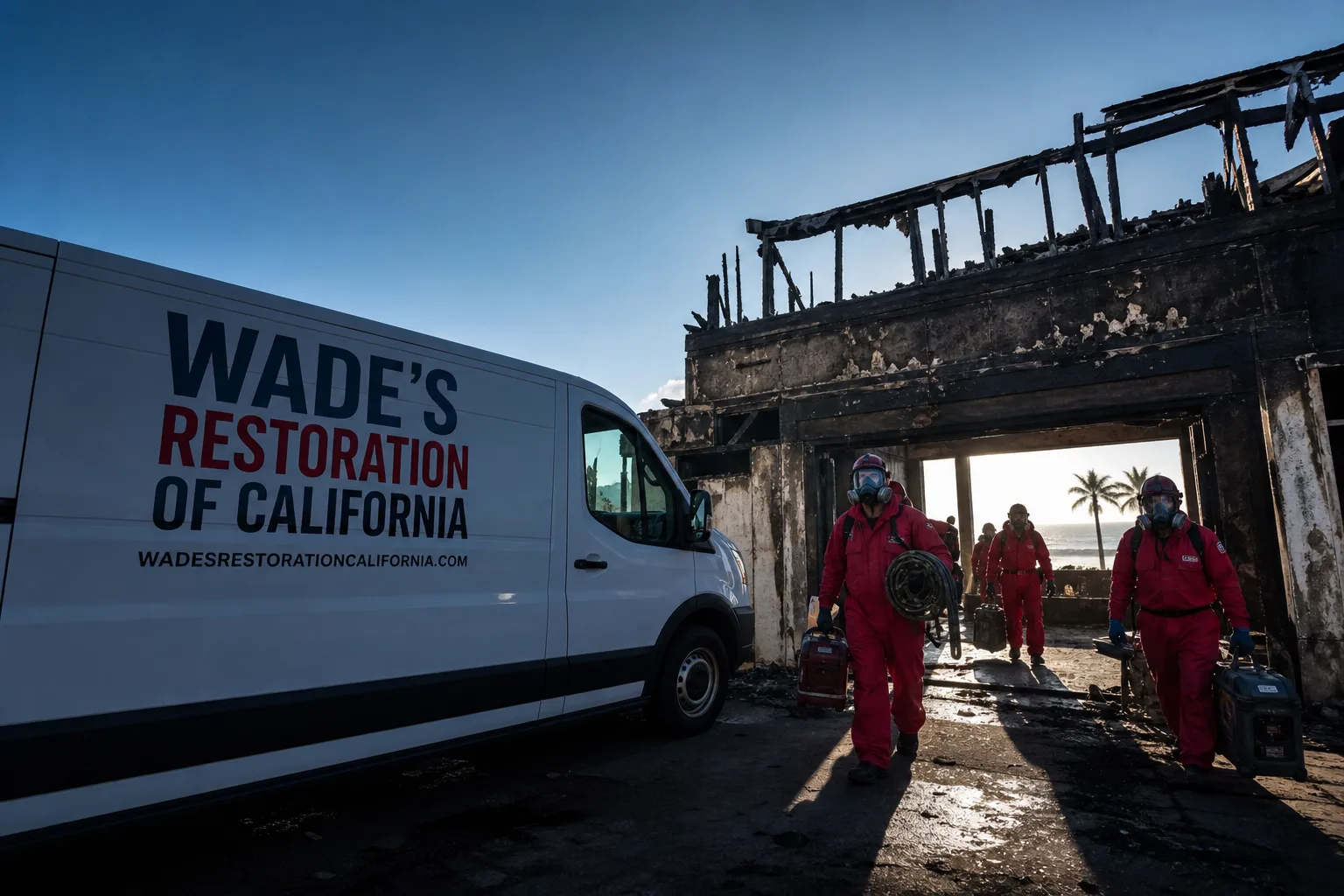
Fast, Reliable Storm & Disaster Restoration Across Crestline
When a winter storm tears through Crestline at 4,700 feet and your roof gives way or a frozen pipe splits inside a wall, you need a crew that knows the mountain, not a call center reading from a script. We answer the phone around the clock at (855) 915-0646, and Wade Ferris, the owner, is often the person on the other end. Storm damage in Crestline doesn’t wait for business hours, and neither do we. Our Storm & Disaster Restoration team works on the mountain year-round, so we understand what snow load, ice damming, and freeze-thaw cycles actually do to a wood-frame cabin up here.
Why Wade’s Restoration of California Is Crestline’s Preferred Storm & Disaster Restoration Company
Since 2007, Wade Ferris has run this company the old way: his name is on the truck, his address is published, and he’s the guy you’ll see again at the hardware store on Lake Drive. That kind of accountability is rare in this trade, and Crestline homeowners notice it. When neighbors swap stories after a bad storm, they don’t ask which national franchise showed up with subcontractors. They ask who actually answered the phone and stood behind the work.
Wade’s Restoration of California serves Crestline with a locally coordinated crew out of the Inland Empire, and callers get a live person 24/7, including Wade himself. No voicemail, no answering service. For Crestline specifically, that matters because road closures on Highway 18 can turn a two-hour response window into a two-day gamble. We plan around that. Every water, fire, and storm restoration job carries the 90-Day Done Right Promise in writing: if it’s not done right, Wade comes back and makes it right.
Ask anyone on your street who’s had storm damage up here. The answer usually comes back the same: call the guy who shows up when he says he will.
Our Storm & Disaster Restoration Services in Crestline
Storm Damage Cleanup
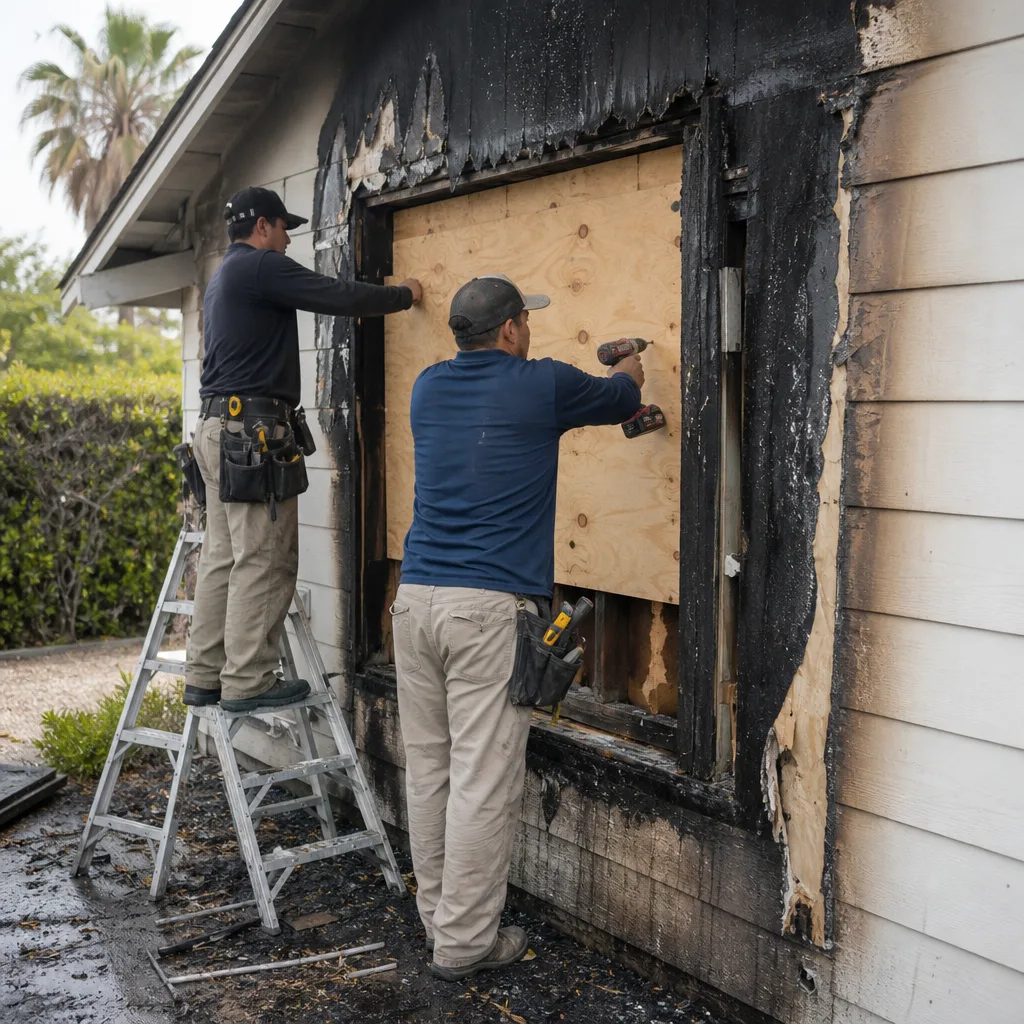
A February storm in Crestline can bury a cabin under several feet of snow, tear limbs off pines, and leave a roof groaning under ice-laden branches. We handle the full cleanup: fallen trees pulled away from structures, snow and ice removal from roof edges, debris hauling, and saturated material removal. Our crew works in 92325 routinely, including Lake Gregory Drive, Top Town, and the streets off Waters Drive near Lake Gregory. When Highway 18 finally reopens, we know the access points and the shortcuts.
Flood Damage Restoration
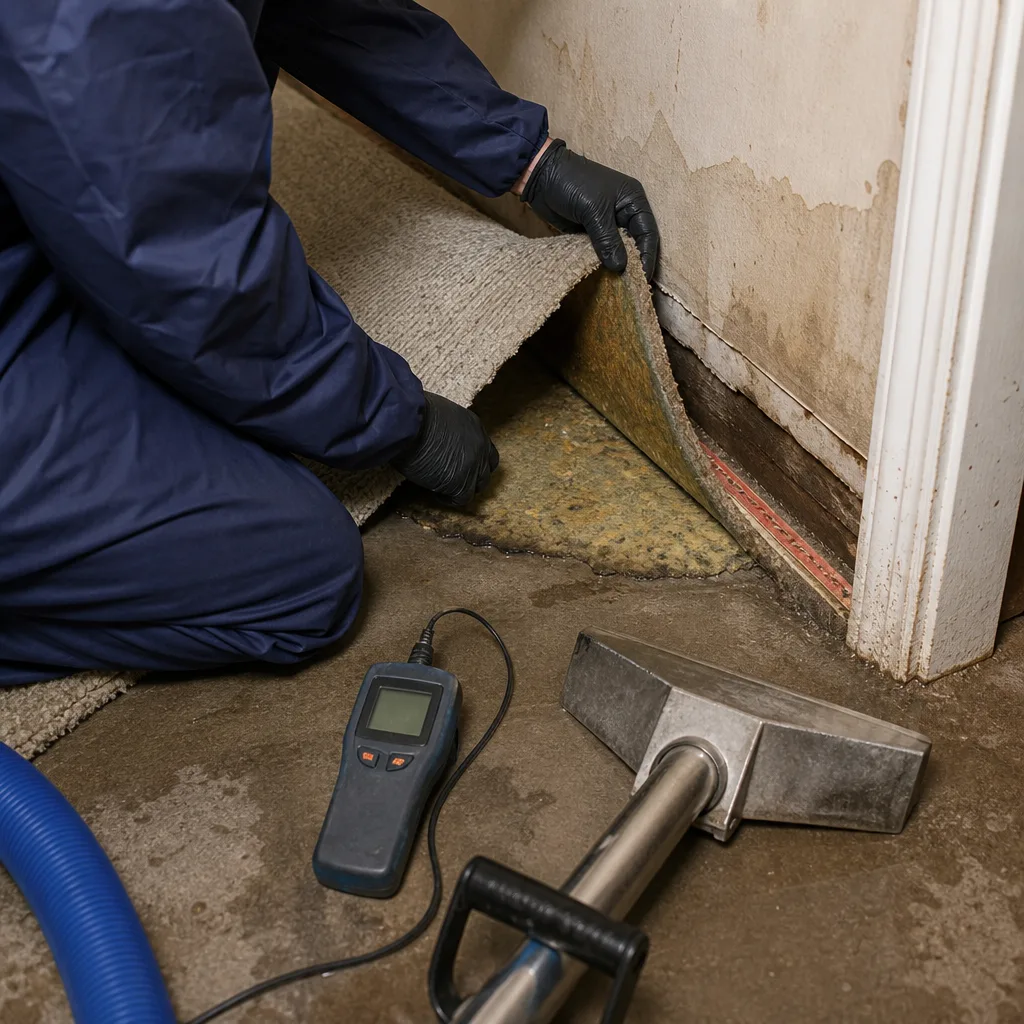
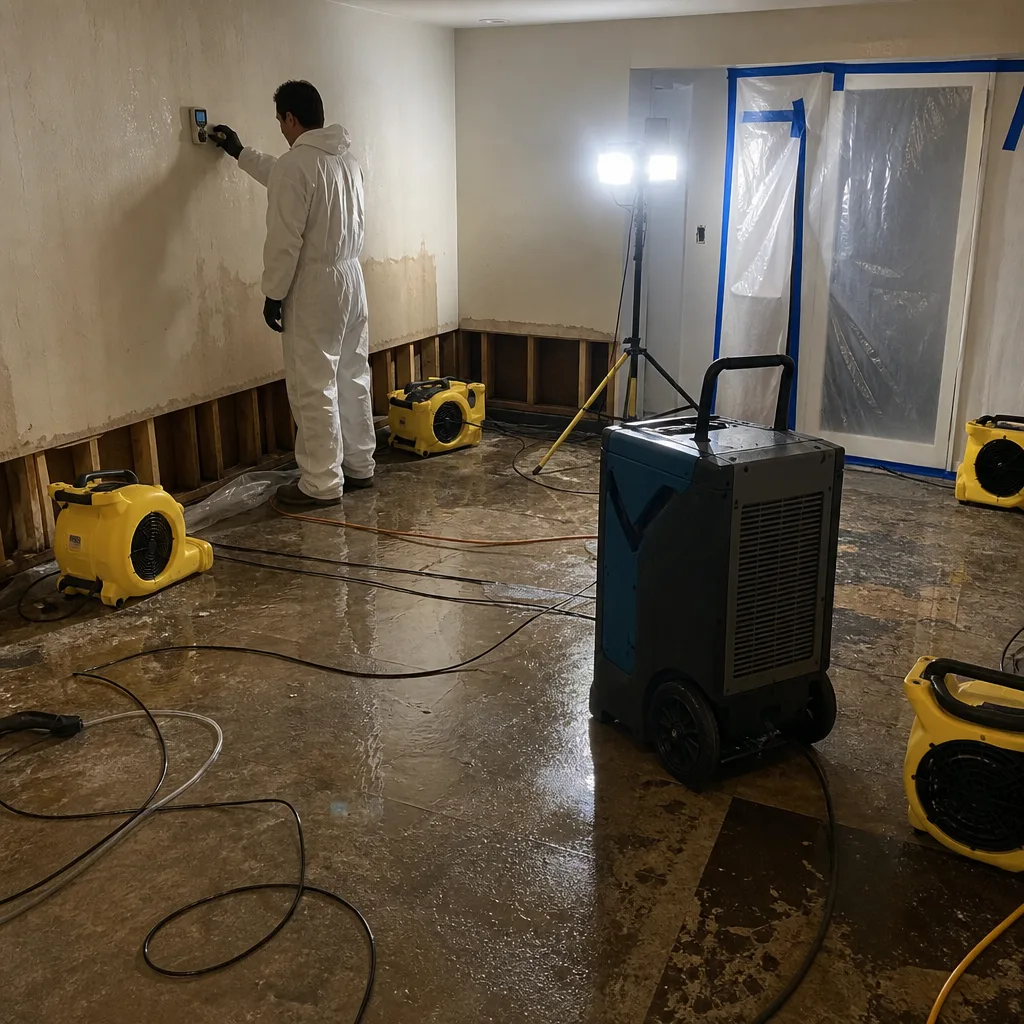
Meltwater and storm runoff in Crestline don’t behave like valley flooding. They come fast, cold, and straight into crawlspaces that were never built for saturation. We extract standing water, open walls where necessary, and run professional-grade drying systems from Dri-Eaz and Phoenix until moisture readings actually bottom out. In a mountain cabin with uninsulated exterior walls, stopping at the surface is a mistake. We check behind the cedar shake and under the floor joists, because that’s where Crestline water hides.
Emergency Board-Up
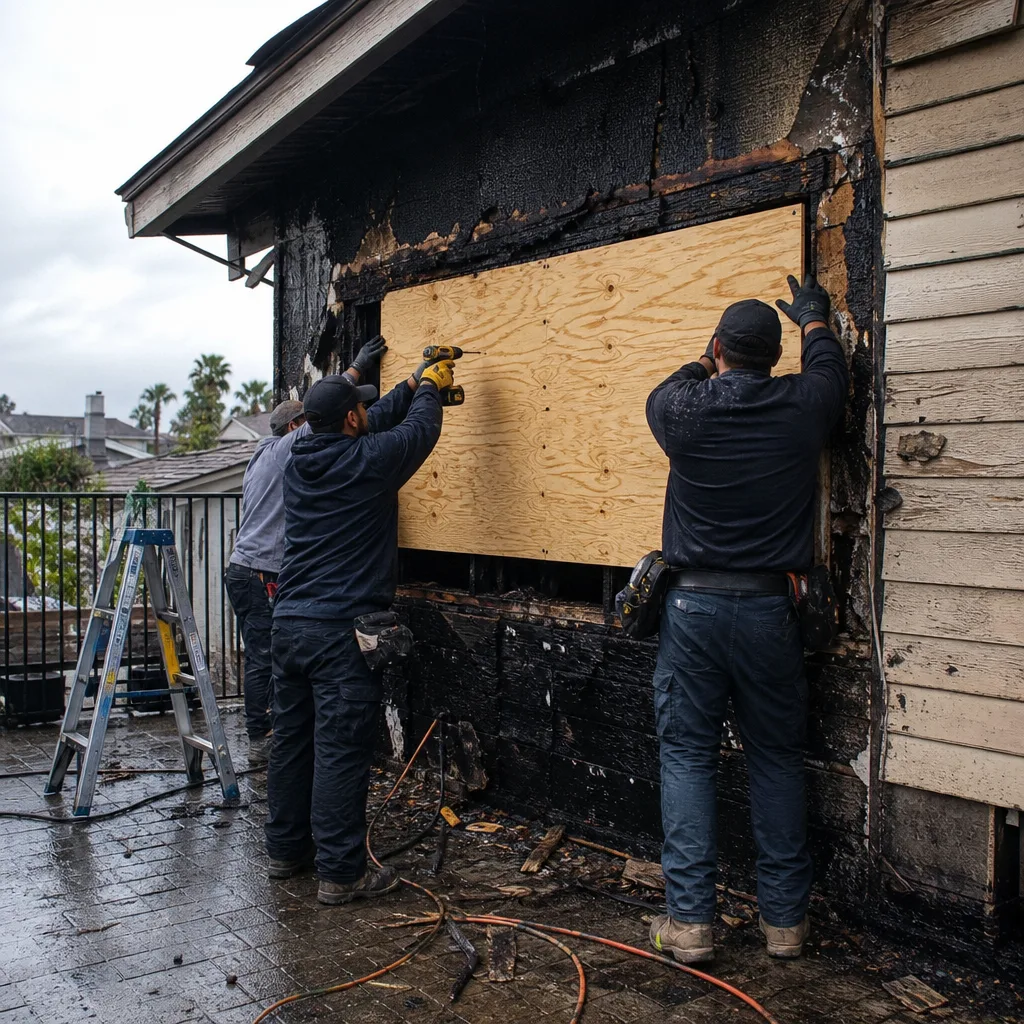
When a tree punches through a roof or a window blows out at midnight, the first thing that needs to happen is securing the opening before snow, rain, and animals get inside. We board up fast using materials rated for repetition: wind, snow weight, and freezing temperatures. A valley-grade plywood patch can fail within days up here. Our board-ups are built for Crestline conditions, not for a flatland strip mall. Call (855) 915-0646 and a crew heads up as soon as the road allows.
Roof Tarping
Most roof tarps sold for storm response are rated for short-term use in mild weather. Up here, that’s a liability. Snow load on a tarped roof can tear through cheap poly in a single freeze-thaw cycle. We use heavy-duty, reinforced tarping methods anchored for Crestline’s actual winter: repeated snow accumulation, ice, and overnight winds coming off the San Bernardino National Forest ridgeline. Proper tarping buys you time to plan a real repair without letting water keep coming in.
What happens when you call
- 1
A real person answersNo phone trees - you reach a local pro.
- 2
You get an upfront price rangeHonest numbers before anyone is dispatched.
- 3
A background-checked tech heads outLicensed & insured, dispatched right away.
- 4
You approve before work beginsNothing starts until you say go.
Trusted Brands We Service in Crestline
We service all major equipment brands found in Crestline homes, and our crew carries common storm-restoration parts and materials suited to mountain structures. When you call about a failing roof patch or a basement sump issue, we can typically bring what’s needed on the first trip. For drying and structural work, we rely on Dri-Eaz and Phoenix equipment, and for hard-to-reach cabin wall cavities we use Injectidry systems. The work is backed by IICRC-certified training and RIA-affiliated continued education. These aren’t badges we hang on a wall. They’re the reason our drying logs hold up when an adjuster asks questions.
Common Storm & Disaster Restoration Problems We See in Crestline Homes
- Frozen pipes in uninsulated exterior walls. Most Crestline cabins were built between the 1940s and 1980s as seasonal structures, and plumbing in exterior walls often has little or no insulation. A single hard freeze splits the line, and the leak runs for weeks if the owner is off the mountain.
- Roof failure under snow load. Aging shake and composition roofs in 92325 were not designed for repeated heavy accumulations. Ice damming backs water under the shingles, and the damage spreads well beyond what you can see from the ground.
- Mold inside wall cavities after undetected leaks. In a valley home, a burst pipe gets noticed in hours. In a Crestline vacation cabin during a road closure, water runs for two to four weeks. By the time anyone opens the door, the 72-hour mold-prevention window is long gone.
- Smoke and ash intrusion from wildfires. Crestline sits inside the Wildland-Urban Interface of the San Bernardino National Forest. Fires like the 2003 Old Fire and subsequent burns push smoke and fine ash into every gap, vent, and wall cavity. That odor and contamination linger for months without proper remediation.
Pricing for Storm & Disaster Restoration in Crestline, CA
Storm cleanup and emergency response in Crestline runs on mountain time and mountain pricing, but honest numbers make planning easier. A typical emergency board-up after a tree strike runs $350 to $800 depending on the opening size and height. Roof tarping on a standard A-frame or wood-frame cabin in Crestline generally runs $500 to $1,200, with heavier reinforced tarping for snow-load conditions adding to the total. Flood water extraction and drying for a single room starts around $900 to $1,800, while a full crawlspace dry-out with Injectidry and containment can reach $2,500 to $6,000 when mold remediation is required at the same time. Every estimate is in writing before work starts, and we do free second opinions on any written estimate. Seniors and veterans get 10% off, always. Call (855) 915-0646 for exact numbers on your situation.
We Also Serve Cities Near Crestline
Beyond Crestline, our storm and disaster restoration crews regularly work in Lake Arrowhead, Muscoy, San Bernardino, and Highland. The mountain communities present their own access challenges, while the valley cities bring flatland flooding and older housing stock. Same standard in every one: a live person on the phone 24/7 and the 90-Day Done Right Promise in writing on every job.
Serving Crestline, CA - Our Local Coverage Area
We’re based in the Crestline area and know this community well. Use the map below to see our service coverage - if you’re nearby, we can almost certainly help.
FAQs - Storm & Disaster Restoration in Crestline
About 48 to 72 hours is the standard window before mold colonization begins on wet drywall and wood surfaces in a Crestline cabin. After the February 2023 storms, many owners were locked out by Highway 18 closures for two to four weeks, and by the time they returned, mold had fully colonized wall cavities behind burst-pipe leak points. At that stage, every water-loss job requires simultaneous mold remediation, which is exactly what we encountered across 92325 in early 2023. If you suspect a cabin went unaddressed for more than a few days, call (855) 915-0646 before opening up walls yourself.
Roof tarping on a Crestline A-frame or wood-frame cabin means anchoring a heavy reinforced tarp across the damaged area and extending it over the ridge and eaves so snowmelt and rain can’t back up underneath. We secure it with battens and edge fastening designed for repeated freeze-thaw cycles, not just a quick staple job. The goal is to keep the interior dry through the next snowfall while you plan a permanent roof repair, and a failed valley-grade tarp in February is a second disaster nobody needs.
Yes, but with honest limits. If Highway 18 is closed and there is no emergency vehicle access, no restoration crew can legally or safely reach your property until the road reopens. What we can do is stage materials and prep our Crestline response so we head up the moment access is restored. When the road is open, which is the case for most of the year, we’re typically on-site within two to three hours of your call to (855) 915-0646. In the 2023 storms, our crew hiked into a wood-frame A-frame on Lake Gregory Drive once access allowed, where an uninsulated supply line had split during a freeze. We found full mold colonization inside wall cavities from two weeks of undetected moisture, requiring Injectidry wall-drying, containment, and mold remediation before any structural repairs could begin.
Drying a crawlspace in an older Crestline cabin usually does not require tearing out the floor, as long as the joists and subfloor are still structurally sound. We use low-profile drying systems and dehumidifiers that run in tight spaces, with moisture meters taking readings at the joists, sill plates, and subfloor daily until everything reaches dry standard. In a cabin with minimal insulation, we also check the exterior-wall cavities and rim joists, because water migrates. You get a written moisture log at the end of the job, which is something most restoration companies in this trade never hand over.
Yes. Smoke and ash from fires like the 2003 Old Fire and more recent burns in the San Bernardino National Forest get into wall cavities, attic insulation, HVAC ducts, and every porous surface in a Crestline cabin. We remove charred debris, clean surfaces with professional soot and smoke remediation methods, seal remaining odor, and replace insulation where contamination is too deep to clean. The process takes longer than a surface wipe-down, and if your cabin was exposed to heavy smoke for days, you’ll want the full treatment rather than a cosmetic cleanup. Call (855) 915-0646 and Wade will walk you through what actually needs doing.
Written by Wade Ferris, Owner at Wade’s Restoration of California, serving Crestline and surrounding mountain communities since 2007.