
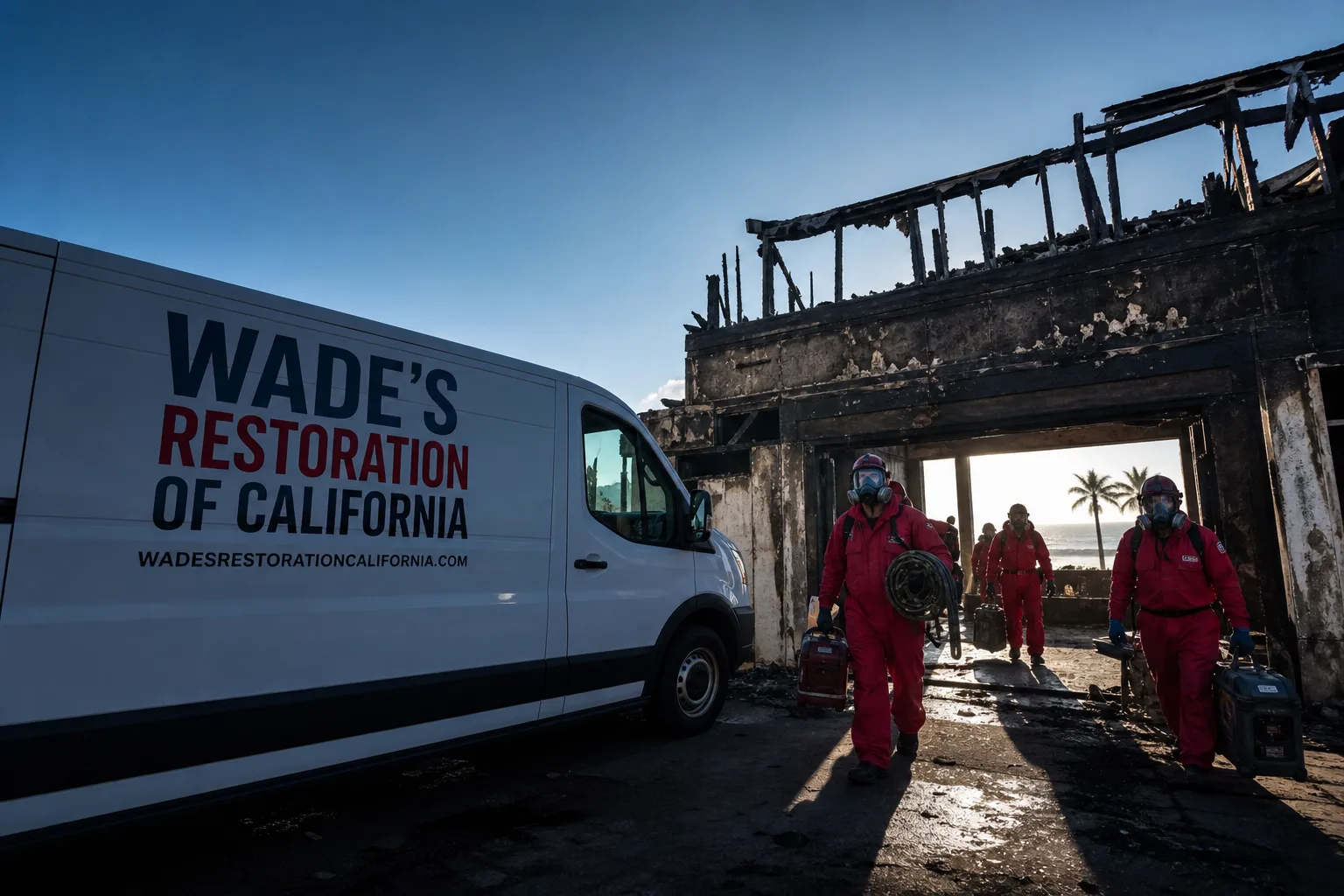
Fast, Reliable Storm & Disaster Restoration Across San Bernardino
Storm damage in San Bernardino is not like storm damage in Riverside or Fontana. When the Santa Anas howl through Cajon Pass at 70 mph, they don’t just knock over a trash can. They drive embers into attic vents, tear shingles off 1950s tract roofs, and slam debris through single-pane windows before you can get the kids into the hallway. Storm and disaster restoration here means real wind-load repair, emergency board-up before the next gust front hits, and water extraction when Lytle Creek jumps its banks and runs silt through the 92407 corridor. Wade Ferris answers his own phone at (855) 915-0646, and he can have a crew in your San Bernardino neighborhood inside the hour when it matters.
Why Wade’s Restoration of California Is San Bernardino’s Preferred Storm & Disaster Restoration Company
We started running restoration jobs in San Bernardino in 2007, and the same thing shows up year after year: post-WWII tract homes with original roof sheathing, single-pane windows, and thin-mesh attic vents that never stood a chance against a Cajon Pass wind event. Our Storm & Disaster Restoration team knows what a 1958 slab-on-grade in the 92411 ZIP does when alluvial runoff from Warm Creek backs up against a failed vapor barrier. That is not a paragraph you will find on a national chain’s website.
Homeowners in San Bernardino have told us the same thing on dozens of jobs: another outfit quoted one number on the phone and a different one at the door. That does not happen with Wade’s crew. The estimate is written, it matches the phone number, and the 90-Day Done Right Promise is stamped on every restoration contract. If it is not right, Wade comes back and makes it right. His name is on the truck, his phone rings at 2 a.m., and he will run into you at the Stater Bros. on Highland Avenue next Saturday. That is the accountability structure a big-box restoration chain cannot fake.
Our Storm & Disaster Restoration Services in San Bernardino
Storm Damage Cleanup
After a high-wind event, the damage in San Bernardino is rarely just what you can see from the driveway. We work the whole property: downed tree limbs against the fascia, wind-driven debris in the gutters, and the ash and particulate that Cajon Pass winds deposit into attic spaces and ductwork even when the house never saw flame. We remove the debris, document everything with photos, and hand you a written scope before any repair work starts.
Flood Damage Restoration
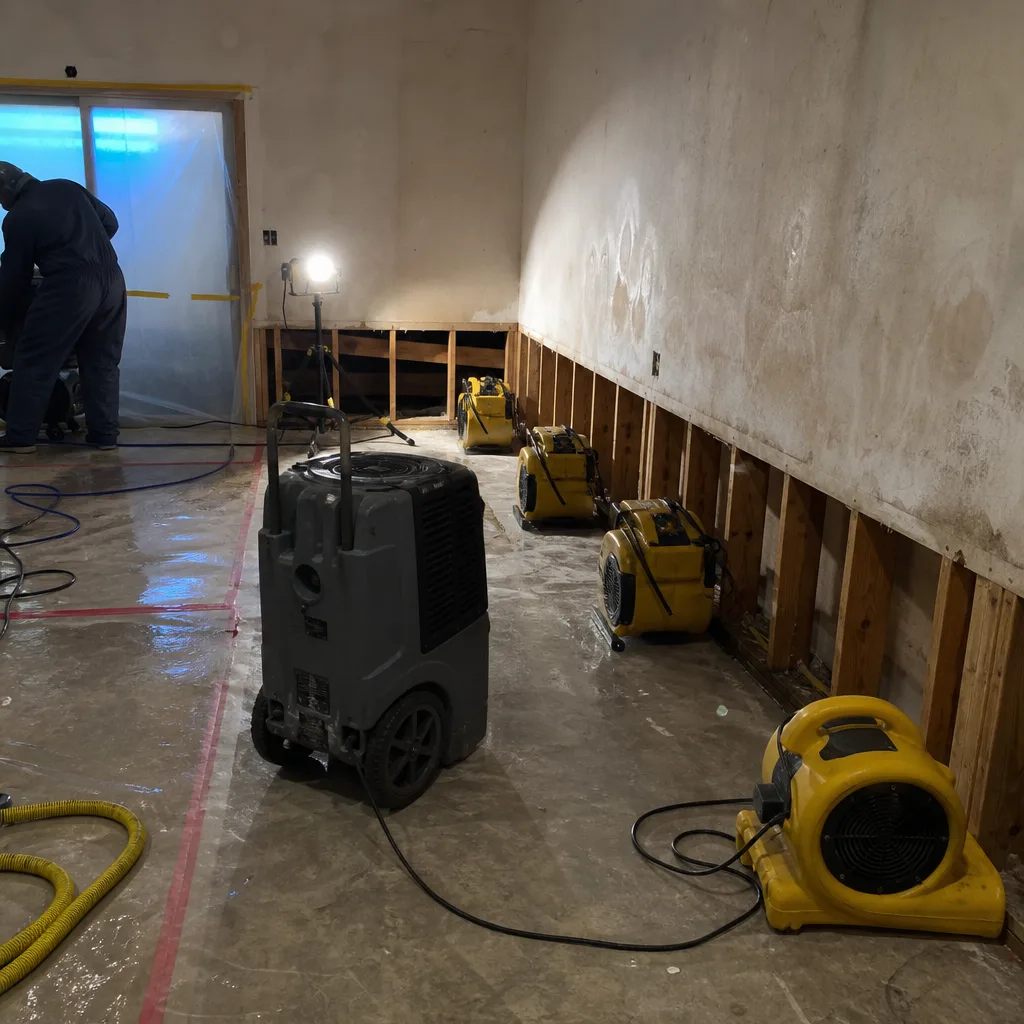
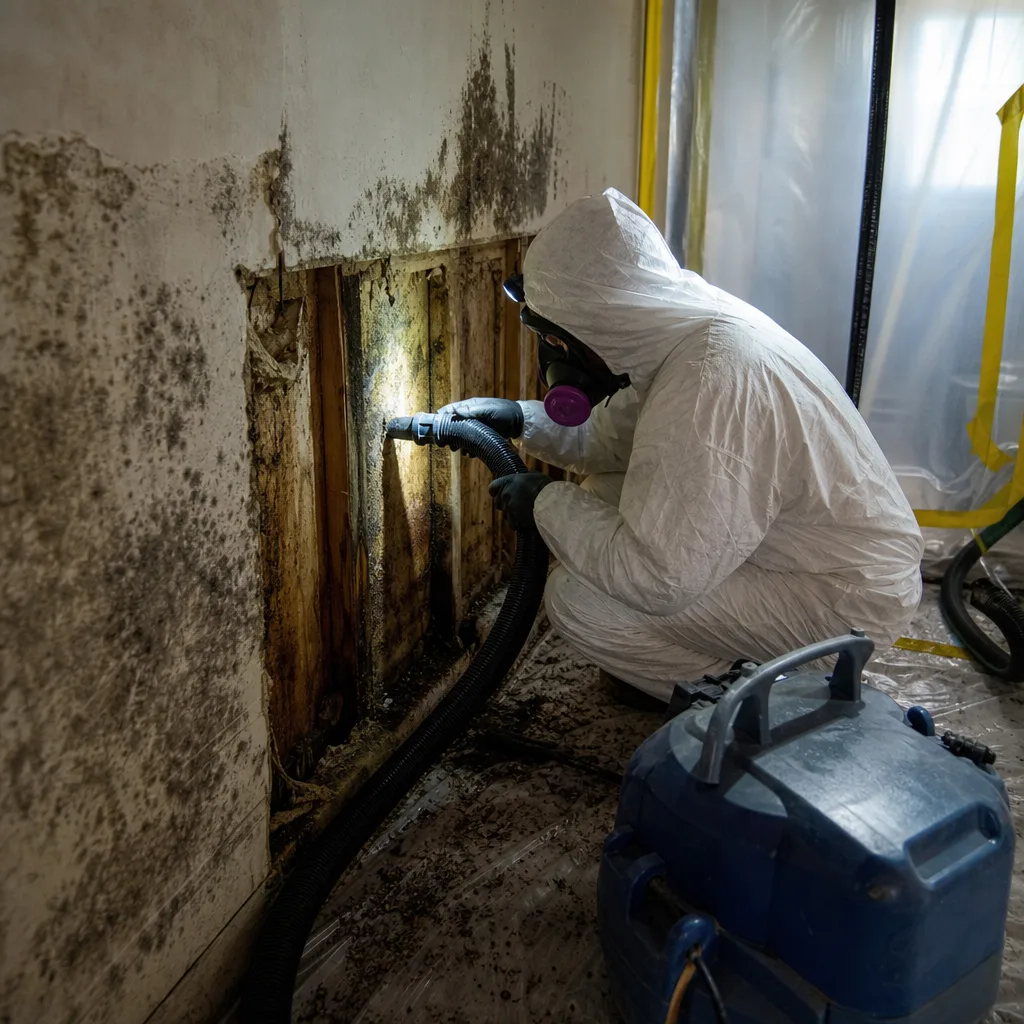
When Lytle Creek, Warm Creek, or Devil Creek runs high after mountain rain, the water does not always come through the front door. Alluvial fans push silt-laden runoff under slab edges and crawlspace vents in the 92407 and 92404 corridors. We extract standing water, run Dri-Eaz LGR dehumidifiers and Injectidry panels, and check for the fine sediment that causes mold callbacks 60 to 90 days later if a tech misses it on the first pass. In a 1950s San Bernardino ranch with original slab-on-grade construction, that check is the difference between a clean dry-out and a second restoration bill.
Emergency Board-Up
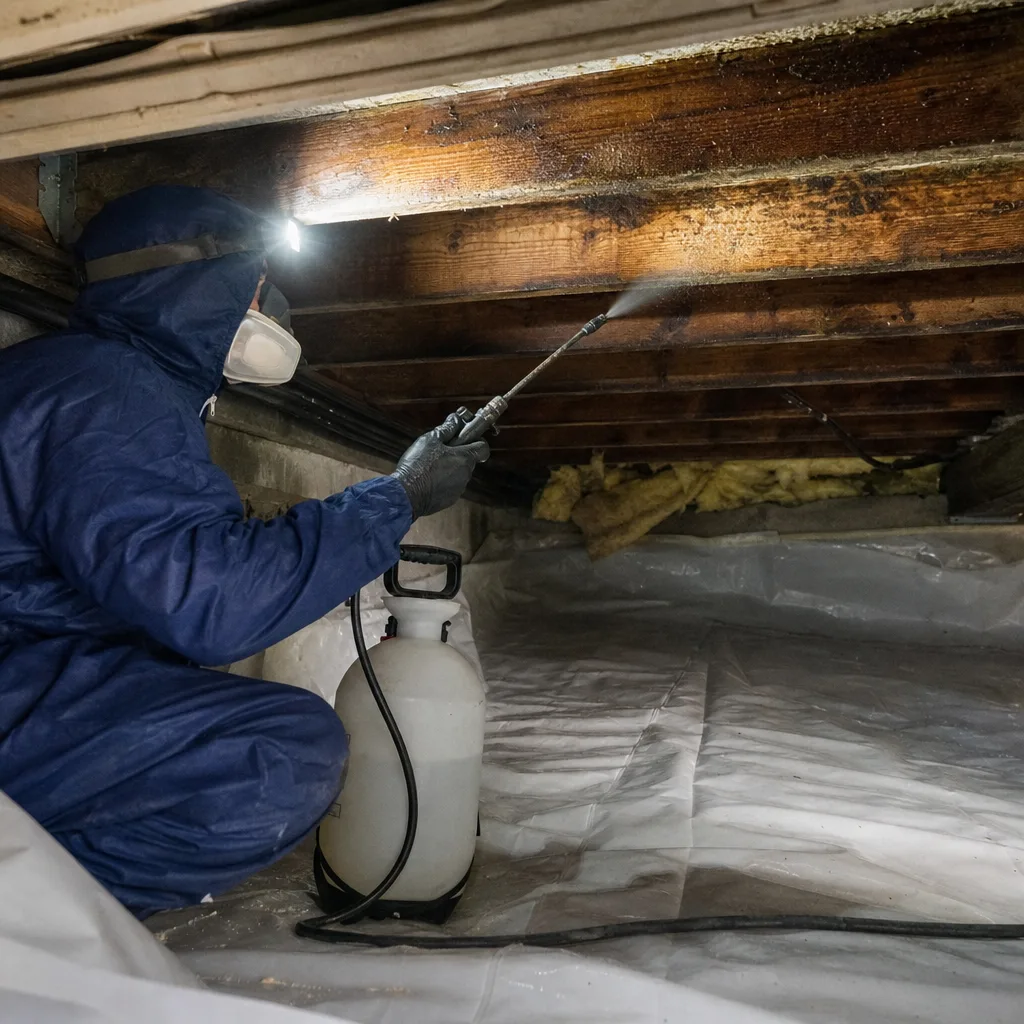
A blown-in door or shattered window in the middle of a Santa Ana event is an open invitation to more damage: rain intrusion, ember entry, and opportunistic break-ins. We board up with rated plywood, secure the opening, and tarp the roof if the wind took shingles with it. Wade’s crew carries board-up materials on every truck in the San Bernardino area, so the truck that arrives is the truck that solves the problem, not a scouting crew that has to come back tomorrow.
Roof Tarping
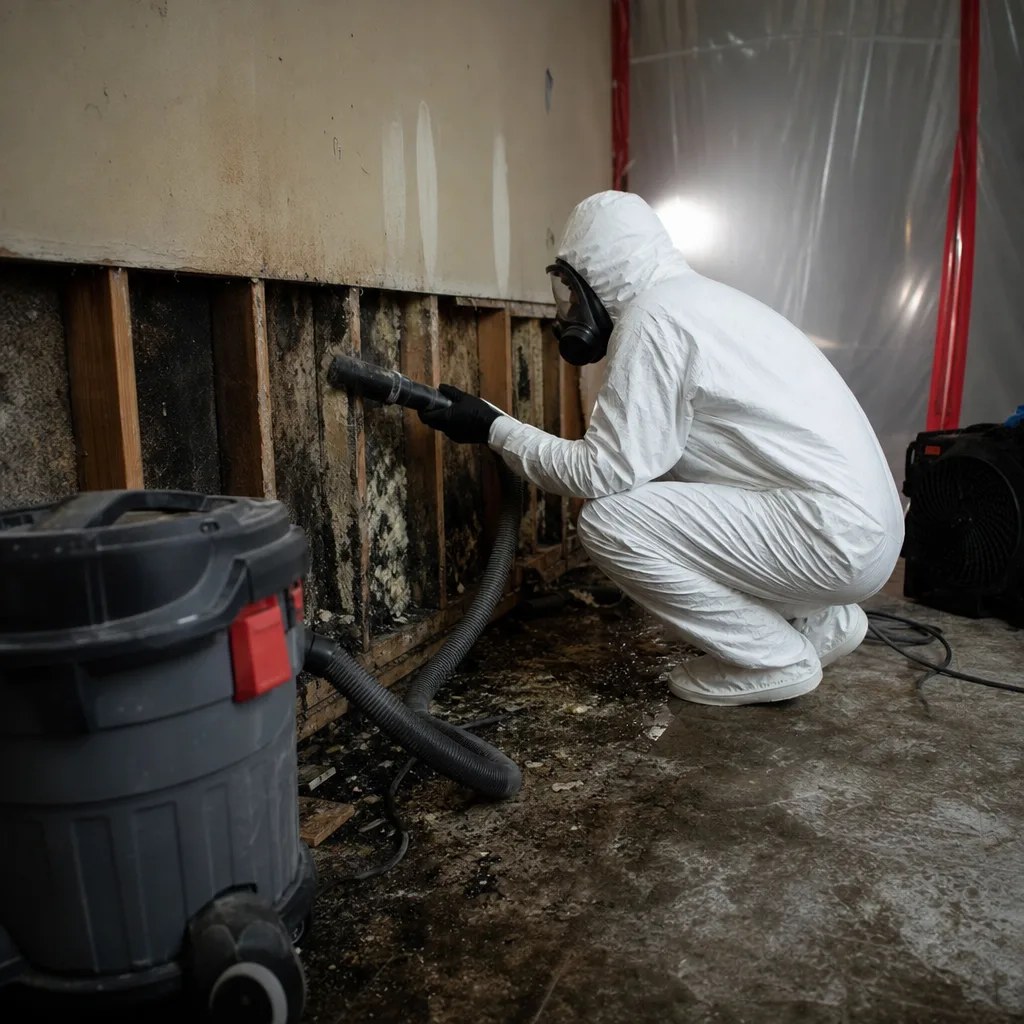
Post-WWII San Bernardino homes were built with roof assemblies that are now 60 to 80 years old and often holding on with a prayer. When a gust front tears off a section of shingles or drops a tree limb through the decking, the first job is stopping water from getting inside. We tarp tight, seal the edges against wind lift, and document the condition for your insurance adjuster. Temporary roof protection buys you the days you need to get a permanent repair scoped and scheduled, and it prevents a $600 storm repair from becoming a $14,000 interior rebuild.
What happens when you call
- 1
A real person answersNo phone trees - you reach a local pro.
- 2
You get an upfront price rangeHonest numbers before anyone is dispatched.
- 3
A background-checked tech heads outLicensed & insured, dispatched right away.
- 4
You approve before work beginsNothing starts until you say go.
Trusted Brands We Service in San Bernardino
We run professional-grade equipment on every San Bernardino job: Dri-Eaz desiccant and LGR dehumidifiers, Phoenix axial air movers, Injectidry panels for hard-to-reach wall cavities, and XPOWER air scrubbers. The equipment matters because San Bernardino’s wet-dry cycles and alluvial silt loads demand more than a box fan and hope. Our techs carry IICRC certifications, and the company holds RIA and IFA affiliations, so the work meets the same standards a forensic restoration firm would apply. If you already have an estimate from another company, bring it in. We will give you a free second opinion on it, and if we find work that does not need doing, we will tell you so.
Common Storm & Disaster Restoration Problems We See in San Bernardino Homes
- Wind-load door failures. A standard hollow-core entry door with a 1960s latch is not a wind-rated assembly. When a 70 mph gust hits the face of the door, the pressure differential can blow it inward, and then wind-driven rain follows it into the house. Pre-storm reinforcement with impact-rated hardware is cheaper than the restoration after.
- Alluvial silt intrusion in 92407 and 92404. The Devil Creek and Lytle Creek drainage paths deposit fine sediment that wicks under slab edges and vapor barriers invisibly. If the initial assessment misses the silt compaction, the mold shows up two or three months later and the homeowner is calling us again, frustrated and suspicious. We check for it on every flood job in those corridors.
- Ember and ash intrusion through old attic vents. Homes in the flatlands of San Bernardino are miles from the mountain tree line, but the Cajon Pass wind tunnel carries embers and heavy ash far beyond the fire perimeter. Unscreened 1950s attic vents let that particulate into the insulation and ductwork, leaving a smoke odor that lingers long after the winds die down.
- Deferred maintenance from San Bernardino’s economic history. The city’s stretch of fiscal distress left a lot of homeowners with no budget for roof replacement or moisture barrier repair. That means a moderate storm event lands on a house that was already compromised. Every restoration job here runs into original building materials, galvanized supply lines that have been leaking slowly for years, and roof sheathing that gives way under wind load it should have survived.
Pricing for Storm & Disaster Restoration in San Bernardino, CA
Board-up and roof tarping in San Bernardino typically runs $400-$900 depending on the number of openings and the roof pitch. Full storm damage cleanup with debris removal runs $1,200-$3,400 for a typical single-family home. Flood extraction and structural drying of a 1,000-square-foot slab-on-grade starts around $2,800 and goes up from there if silt remediation or crawlspace work is involved. Wind damage repair is priced by the scope, not by the square foot, and we give you a written line-item estimate before any work starts. There is no trip charge inside San Bernardino County, and seniors and veterans take 10% off every job, permanently. Call (855) 915-0646 and Wade will put a number in writing.
We Also Serve Cities Near San Bernardino
Our crews work the whole San Bernardino basin. If you are in Muscoy, Highland, Loma Linda, or Rialto, the same owner-operated team handles your storm damage, board-up, debris removal, and wind repair. We know the drainage patterns and housing stock across this whole corridor, from the 1950s tracts to the newer builds on the hillside benches. Storm & Disaster Restoration in San Bernardino is our anchor, but the service radius covers your street too. Call (855) 915-0646 and tell us what the storm did.
Serving San Bernardino, CA - Our Local Coverage Area
We’re based in the San Bernardino area and know this community well. Use the map below to see our service coverage - if you’re nearby, we can almost certainly help.
FAQs - Storm & Disaster Restoration in San Bernardino
Every two years, and right before the October-to-January Santa Ana season if you live in the wind-exposed neighborhoods along the Cajon Pass corridor. The inspection checks the door slab, hinges, latch hardware, weatherstripping, and the frame-to-wall connection. A 1960s-era door with original hardware in a 92411 bungalow is not going to hold against a 70 mph gust. Pre-storm reinforcement is a few hundred dollars. Post-storm replacement and interior water damage is thousands. Call (855) 915-0646 and we will take a look before the winds do.
Alluvial silt compaction under slab edges and behind vapor barriers. The Lytle Creek and Devil Creek drainage paths carry fine sediment off the San Bernardino Mountains during storm events, and that silt wicks moisture into areas you cannot see from a walkthrough. If it is missed on the initial assessment, it shows up as mold and musty odor 60 to 90 days later. We inspect for it on every flood job in the 92407 corridor and document the findings with moisture readings. Call (855) 915-0646 for an inspection before the smell tells you the story.
Minor hardware reinforcement (new deadbolts, strike plates, hinge screws) does not require a permit in San Bernardino. Replacing a swing entry door with a pre-hung assembly is typically considered a like-for-like replacement and also does not require a permit, as long as the opening is not being enlarged or reframed. If the door is in a fire-rated wall or you are changing the swing direction or rough opening, that may trigger a building permit through the City of San Bernardino. Our team checks the specific conditions on your house before recommending any work, and we will tell you if a permit is needed before you spend a dollar.
The difference is what the particulate is sitting on and whether structural materials were heated. Ash intrusion from Cajon Pass-deposited embers and particulate typically leaves a dry, powdery coating on insulation, ductwork, and the attic floor, with no charring on framing members. Direct flame exposure leaves heat patterns, charred wood, and melted wiring sheathing. Our techs can tell the difference in about ten minutes with a visual inspection and air-quality testing, and we document everything with photos for your insurance adjuster. Call (855) 915-0646 and Wade will get up there and look.
Three things, in this order: the roof sheathing for soft spots and nail fatigue along the eaves and rake edges, the window glazing and putty for cracks that let wind-driven rain behind the frames, and the attic vents for mesh integrity. Most 1950s tract homes around the 92408 and 92410 ZIP codes were built with thin-mesh or unscreened vents that do nothing against ember intrusion. A pre-storm inspection catches the weak points before a gust front turns them into open wounds. Call (855) 915-0646 and we will walk the property with you, no charge for the assessment.
Call Wade’s Restoration of California in San Bernardino
Storms hit San Bernardino differently than they hit the rest of the Inland Empire. The wind comes through Cajon Pass with a head of steam, and the water comes off the mountains faster than the old drainage paths can handle. We have been pulling flooded drywall, tarping wind-torn roofs, and digging alluvial silt out of crawlspaces here since 2007. You will not get a call center. You will get Wade Ferris on the line, a written estimate that matches the phone quote, and a crew that shows up on time. If you are looking at storm damage right now, call (855) 915-0646. The estimate is free, and the first truck rolls inside the hour.
Written by Wade Ferris, Owner at Wade’s Restoration of California, serving San Bernardino and the Inland Empire since 2007.