
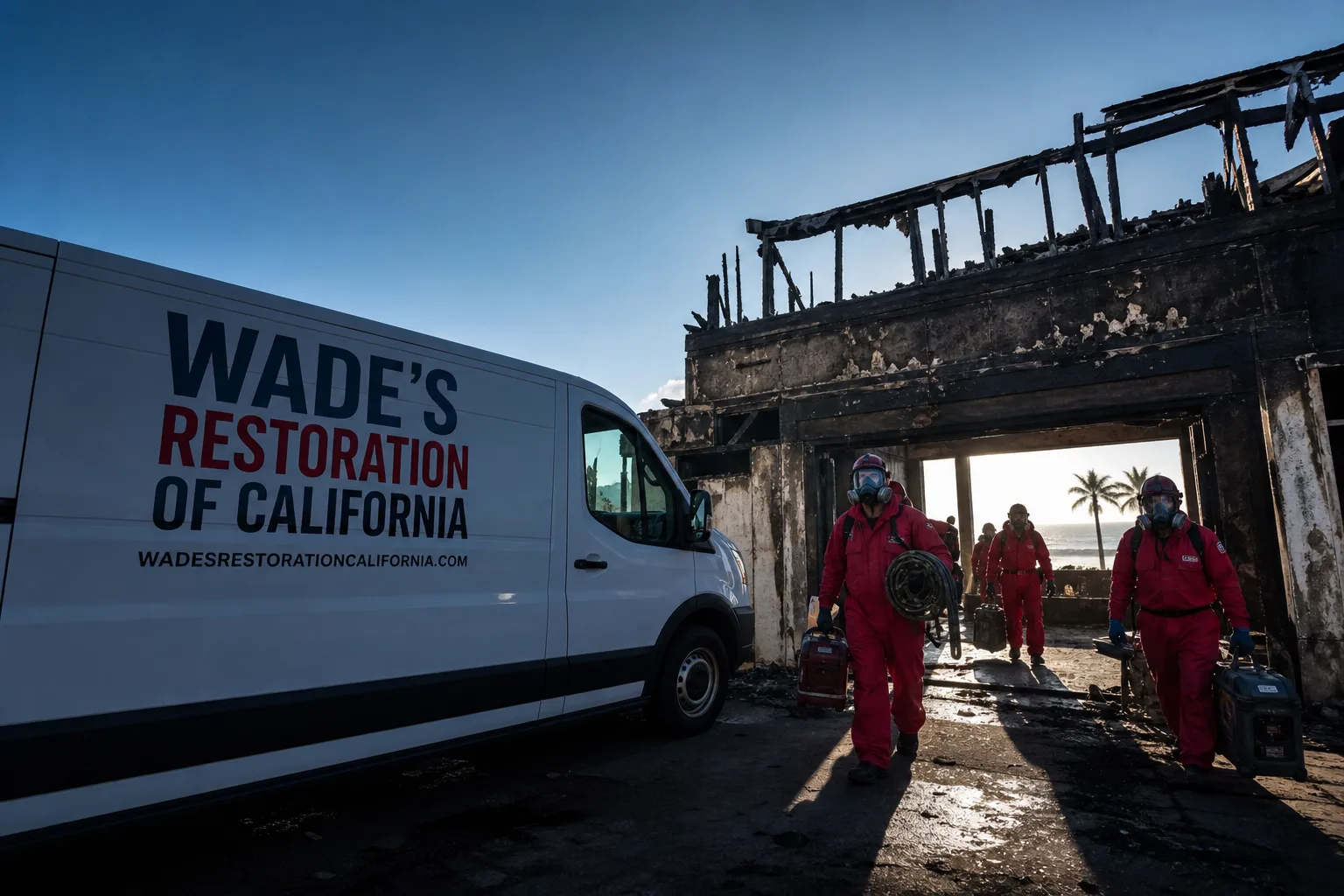
Fast, Reliable Storm & Disaster Restoration Across Colton
Storm damage in Colton doesn’t wait for business hours. When the Santa Ana River swells or Lytle Creek jumps its banks, water moves through the low-lying streets of 92324 faster than most residents expect, and every hour of delay means more soaked drywall, more warped flooring, and more mold risk inside walls that never fully dried. We know Colton’s neighborhoods, we know how fast our trucks can reach homes near La Cadena Drive or the streets off Mount Vernon Avenue, and we answer the phone around the clock at (855) 915-0646. Not an answering service. A person who can have a crew headed your way before you finish mopping the entryway.
Wade Ferris started this company in 2007 because he got tired of watching national outfits hand a spreadsheet to a homeowner instead of a plan. Now his crew handles Storm & Disaster Restoration in Colton the same way he always has: show up fast, document everything, and tell you the truth about what needs to happen next.
Why Wade’s Restoration of California Is Colton’s Preferred Storm & Disaster Restoration Company
Colton homeowners tend to be skeptical of big promises. Many of you have lived in these streets for decades, raised kids in these 1950s ranch houses, and watched one too many companies quote one number on the phone and another at the door. Wade publishes his name, address, and license number. That’s the oldest accountability mechanism there is in Colton, and it still works because he’s going to run into you at the Stater Bros. on Washington Street.
Our response time to Colton is built around the same geography that causes the problems. Dispatch is coordinated from our Inland Empire office in the Riverside-San Bernardino area, and we keep crews staged to move into 92324 quickly when a storm front is moving through the Cajon Pass. Wade talks to insurance adjusters directly. He takes moisture readings every single day and hands you the full log when the job closes. Almost nobody in this trade does that. Ask anyone on your street who’s had water under their slab how many contractors ever offered them a daily moisture log.
Our Storm & Disaster Restoration Services in Colton
Flood Damage Restoration
When Lytle Creek or the Santa Ana River overtops, the water that reaches Colton homes isn’t clean rainwater. It carries silt, debris, and whatever it picked up from the rail yards and drainage channels on the way down. Flood restoration in Colton starts with extraction, then moves to structural drying, and here’s where the local details matter: many of these post-WWII homes sit on slab-on-grade concrete, not raised foundations. Moisture wicks up through that old concrete for days after the surface looks dry. We map moisture daily, not once at the start, until the numbers prove the slab is stable.
Storm Damage Cleanup
Colton gets the double hit: Santa Ana winds throw tree limbs and debris into fences, windows, and rooflines, and then the rain comes right behind and finds every new crack. Storm cleanup is not just raking branches. We secure what’s open, document everything for your adjuster, and pull wet materials before mold gains a foothold in the warm Inland Empire air. During a Santa Ana event, wind-driven rain enters homes through original single-pane windows that lost their caulking seals decades ago. We find those before they become a second claim.
Emergency Board-Up
A broken window on a 1958 rancher near Colton High School isn’t a “Monday problem.” It’s an invitation for weather, animals, and worse. We board up with plywood cut to the actual window opening, not a sheet thrown over the frame. Then we photograph the board, the opening, and the surrounding damage so your adjuster sees exactly what we saw. Nothing gets oversold, and nothing gets skipped because it’s late.
Roof Tarping
Colton’s older roof decks, many of them original skip sheathing or plank under shingle, don’t take tarping the way a new roof does. The tarps have to be secured to solid framing, and the seams need to hold against Santa Ana gusts that routinely exceed 50 mph through the pass. A tarp that flaps loose in the wind does more damage than no tarp. We inspect the deck before we cover it, and we photograph the work for your insurance file.
What happens when you call
- 1
A real person answersNo phone trees - you reach a local pro.
- 2
You get an upfront price rangeHonest numbers before anyone is dispatched.
- 3
A background-checked tech heads outLicensed & insured, dispatched right away.
- 4
You approve before work beginsNothing starts until you say go.
Trusted Brands We Service in Colton
Every storm crew on our jobs uses professional-grade equipment from Dri-Eaz and Phoenix, the same brands trusted by IICRC-certified restorers nationwide. We keep dehumidifiers, axial air movers, and extraction pumps stocked and ready, and we don’t waste hours tracking down equipment when a storm front stalls over Colton. Our technicians are background-checked and uniformed, and our work adheres to standards set by the RIA and the IFA. When you call at 2 a.m., you’re not getting a subcontractor with a rented fan. You’re getting our equipment, our people, and our name on the job.
Common Storm & Disaster Restoration Problems We See in Colton Homes
- Slab-on-grade water wicking. Colton’s housing stock from the 1940s through the 1960s is overwhelmingly slab-on-grade concrete. Water that sat for even a few hours seeps down and then comes back up through the concrete for days. If you stop drying when the surface is dry, you’re leaving moisture under the flooring.
- Wind-driven rain through old window seals. Single-pane aluminum windows from the 1950s lose their caulking seals over time. Santa Ana winds push rain horizontally into those gaps, and water finds its way inside wall cavities without ever showing up as a puddle on the sill.
- Rail vibration masking structural movement. Homes near the BNSF Colton Yard experience continuous low-level ground vibration from heavy freight trains. Even when everything is dry, those vibrations can create hairline cracks through the slab and foundation. After a flood, it’s hard to tell storm damage from pre-existing stress, and that requires careful documentation.
- Debris blocking drainage. Colton’s older streets were built with basic storm drains that can’t keep up with atmospheric river events. Palm fronds, oleander branches, and whatever the Santa Ana winds shred overnight clog the inlets, sending water down driveways and into garages instead of into the storm system.
Pricing for Storm & Disaster Restoration in Colton, CA
We Also Serve Cities Near Colton
Stormwater moves the same way across the whole valley floor. If you’re in Grand Terrace, Loma Linda, Rubidoux, or San Bernardino, you’re dealing with the same Santa Ana River and Lytle Creek drainage pressures, the same aging housing stock, and the same need for someone who shows up fast and documents everything. We serve all of these communities from the same Inland Empire office, and we’re just as familiar with their streets as we are with yours. See our Storm & Disaster Restoration in Colton page for the full local picture.
Serving Colton, CA - Our Local Coverage Area
We’re based in the Colton area and know this community well. Use the map below to see our service coverage - if you’re nearby, we can almost certainly help.
FAQs - Storm & Disaster Restoration in Colton
Water reaches Colton homes faster than almost anywhere else in the Inland Empire because 92324 sits at the low point where two drainage corridors meet. During an atmospheric river event, runoff from the San Bernardino range funnels down the Santa Ana River and Lytle Creek simultaneously, and when they converge near Colton, the system overtops into neighborhoods before most residents can even move furniture. In adjacent higher-ground cities like Rialto or Fontana, water has to climb to reach homes. In Colton, it just arrives. Call (855) 915-0646 if water is approaching your door, not after it’s inside.
Slab-on-grade foundations absorb water like a sponge, and Colton’s houses from the 1940s through 1960s sit directly on concrete with no crawl space and no vapor barrier between the slab and the living space. Moisture wicks up through that concrete for days after the surface looks dry, which means we have to run dehumidifiers and take daily moisture readings until the slab itself stops releasing water into the air. Skip that step and you get mold behind baseboards and buckling floor coverings months later.
Yes, and it’s one of the first things we check on homes within about a half mile of the yard. Decades of continuous freight train vibration causes micro-cracks in foundations and drywall even without any storm. When a flood or wind event hits those same homes, we have to document which damage is storm-related and which was pre-existing, because the adjuster will ask. Our photo documentation and moisture logs make that distinction clear, and we walk you through what we find before we write the scope.
Board the opening first, then extract any water that entered, then document everything with photos before any drying starts. The mistake we see too often is homeowners tarping or boarding and then waiting a few days to call, by which point water has already soaked into the slab or the wall base. In Colton’s warm climate, mold starts growing inside wall cavities within 48 to 72 hours. Call (855) 915-0646 the same day, and we’ll get extraction running inside the hour if the roads are passable.
Yes. The streets are narrower, the lots are smaller, and the drainage infrastructure was built for 1950s rainfall patterns, not atmospheric rivers. Debris from Santa Ana winds clogs the storm drains on older residential blocks, and water backs up into garages and carports. The homes themselves often have original single-pane windows, no modern weatherproofing, and shallow concrete footings. Storm restoration in Colton requires a different sequence than a newer city: stabilize the water at the slab first, check for pre-existing foundation movement, and only then start reconstruction.
Written by Wade Ferris, Owner at Wade’s Restoration of California, serving Colton since 2007.