
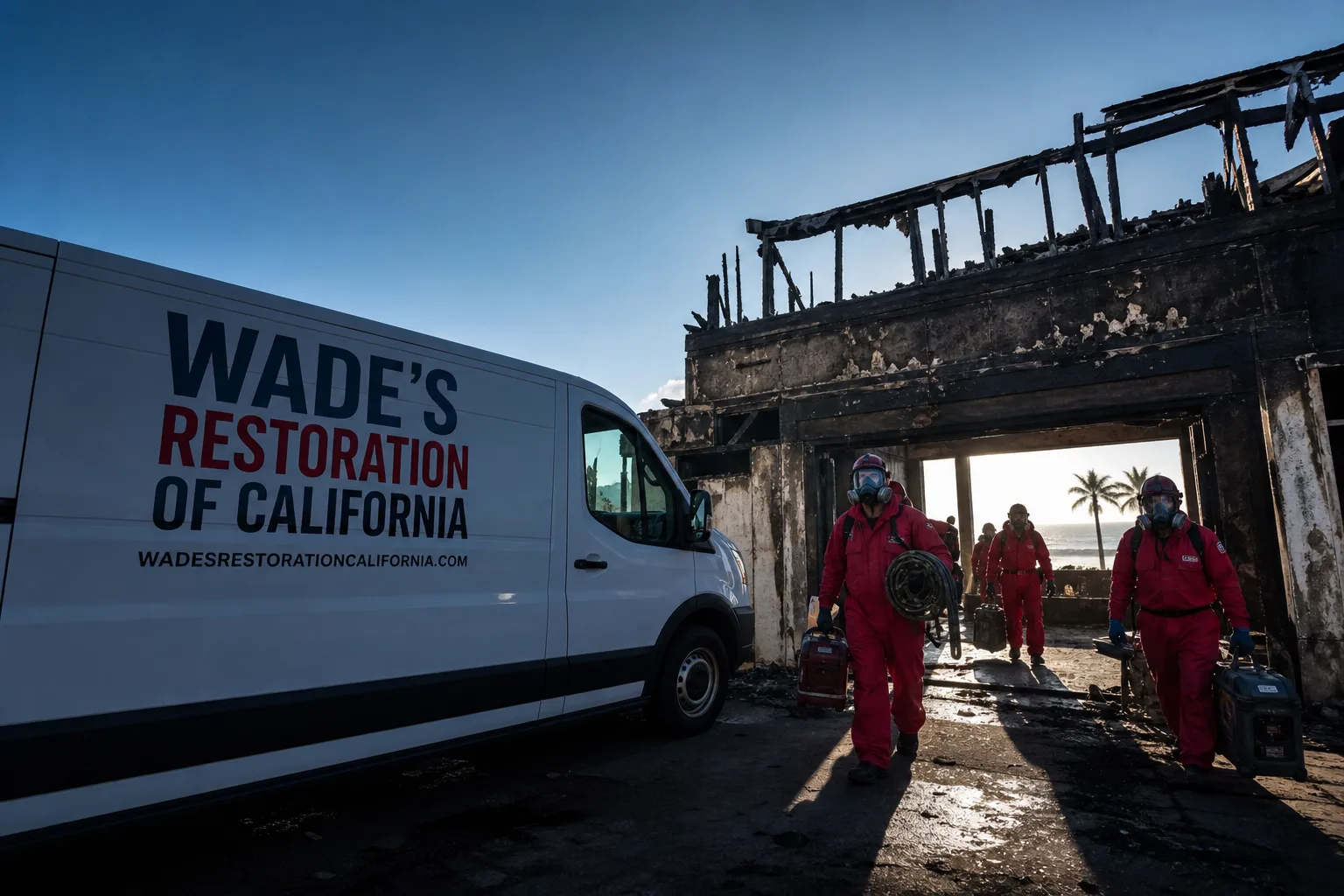
Fast, Reliable Storm & Disaster Restoration Across Claremont
Storm and disaster restoration in Claremont runs $1,800-$12,500 for typical residential cleanup, with emergency board-up and roof tarping starting around $400-$900 the same day you call. Most foothill homes in the 91711 ZIP code need a two-part response: immediate water extraction and structural protection, followed by careful drying calibrated to 1920s-1950s plaster and original hardwood. That’s the work we do. Wade Ferris founded Wade’s Restoration in 2007, and he still answers the phone himself at (855) 915-0646, any hour, any storm.
Claremont sits against the San Gabriel Mountains in a way that changes how storm damage unfolds here. Northern foothill streets above Baseline Road catch wildfire soot one season, then debris flows the next. Homes near the Claremont Colleges hold moisture in original plaster walls longer than newer construction. We know both problems, and we bring equipment sized for them: Dri-Eaz dehumidifiers, Injectidry drying mats, and roof tarping that holds against 60 mph Santa Ana gusts. If your home just took water or wind damage, call now. Wade heads out fast, and the first assessment is free.
Why Wade’s Restoration of California Is Claremont’s Preferred Storm & Disaster Restoration Company
We’re not a national chain with a rotating crew roster. Wade Ferris runs this company under his own name, publishes his address and license number, and works the same Claremont streets you drive every day. When you call about a flooded basement below Foothill Boulevard or a storm-damaged roof up in the foothills, the person you talk to is the person who will stand in your living room and walk you through the scope of work. No call center. No “we’ll have someone in the area next week.” Wade answers his own phone and can have extraction running inside the hour.
Claremont homeowners have a specific frustration with restoration work: crews that quote one price on the phone, then pad the invoice once they’re inside. That’s exactly what Wade built this company to avoid. Every water, fire, and mold restoration job gets the 90-Day Done Right Promise in writing. If it’s not done right, he makes it right. And because Claremont is a town where you run into your contractor at the farmers market on Sunday, the old accountability mechanism still works: Wade knows he’s going to see you again.
Our crews are background-checked and uniformed. We carry IICRC certification and maintain RIA and IFA affiliations, which means we follow the drying standards that matter for older homes. We hand you the full moisture log when the job ends, every reading, every day. Almost nobody in this trade does that. It’s the kind of documentation that matters when your insurance adjuster asks why a plaster wall behind a baseboard wasn’t opened up, and you can show them the moisture numbers that said it stayed dry.
Our Storm & Disaster Restoration Services in Claremont
Storm Damage Cleanup
When a Santa Ana windstorm drops trees, branches, and debris onto a Claremont property, the first job is safety, then documentation, then cleanup. We photograph everything before we move a single branch, because your insurance claim depends on that record. Then we clear the debris, check the roof and gutters for puncture damage, and look for the secondary problem most people miss: ember and wind-driven rain entry points around ridge vents and aging window seals. Storm damage cleanup in Claremont typically runs $1,200-$4,800 depending on debris volume and structural exposure.
Flood Damage Restoration
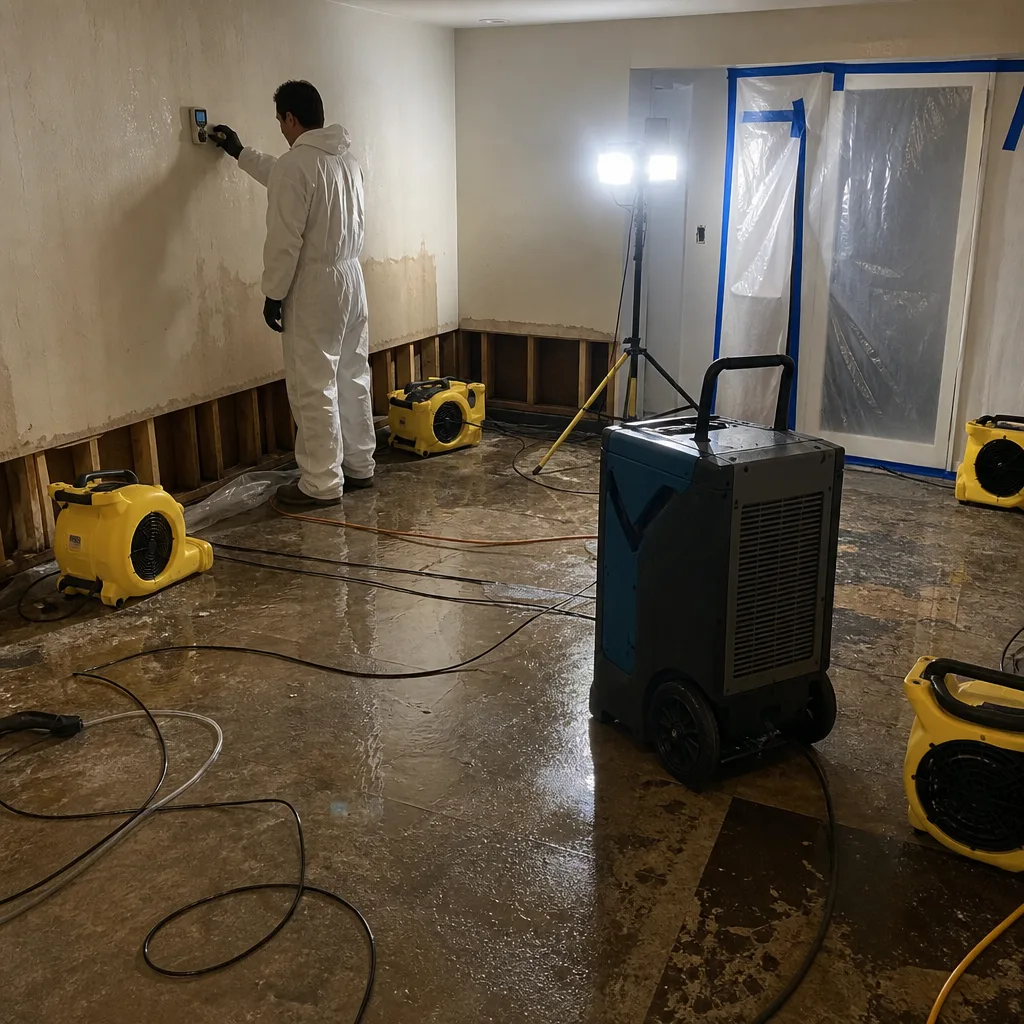
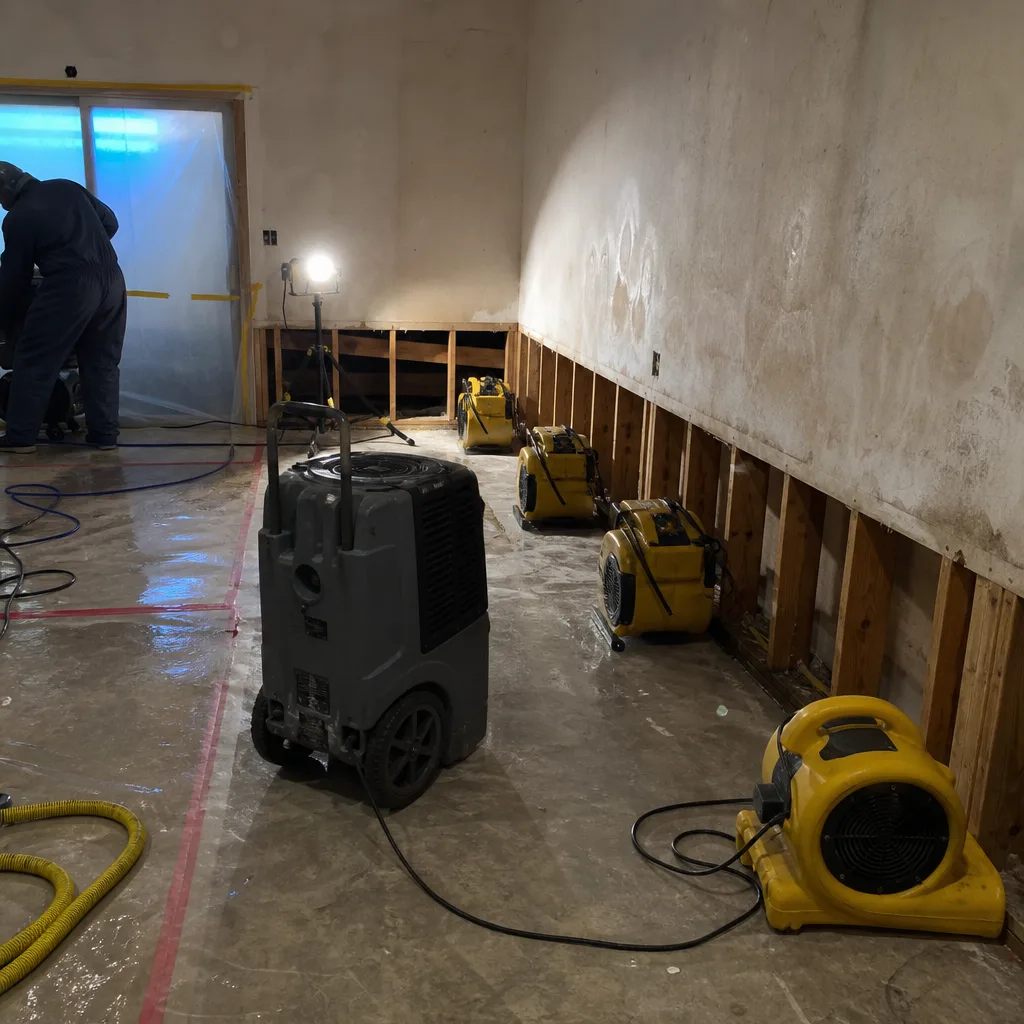
Claremont gets hit two ways on floods. Flatland neighborhoods near the 10 freeway and down toward Pomona borders deal with street-level water intrusion during heavy rain. Foothill homes face mud and debris flows coming off fire-denuded canyon slopes. Both need fast water extraction, but the drying plan is different for a 1940s Craftsman with original plaster than for a 1980s foothill tract home with drywall and insulation. Flood damage restoration in Claremont usually lands between $2,500 and $9,800 for a typical single-story home, with structural drying taking three to six days.
Emergency Board-Up
Broken window, storm-blown door, or a section of roof torn open? You need the opening secured before the next rain gets in. We board up openings same-day in Claremont, using fasteners that won’t tear up your original stucco or wood siding. Emergency board-up runs $350-$750 for a standard window or door opening, and we photograph the boarding process for your adjuster. If you filed a claim, we coordinate directly with your insurance so you’re not the one stuck relaying information back and forth.
Roof Tarping
Claremont’s Santa Ana winds peel shingles and tear ridge vents off at 60-plus mph, and once that membrane is breached, water pours straight into the attic and down through your ceilings. We tarp damaged roof sections same-day, anchored to hold against the next downslope gust. A standard roof tarping in Claremont runs $400-$1,100 depending on roof pitch, size, and access. The goal is to stop the bleeding tonight, then give you a written scope for the permanent repair so you’re not scrambling when the adjuster asks what actually happened.
What happens when you call
- 1
A real person answersNo phone trees - you reach a local pro.
- 2
You get an upfront price rangeHonest numbers before anyone is dispatched.
- 3
A background-checked tech heads outLicensed & insured, dispatched right away.
- 4
You approve before work beginsNothing starts until you say go.
Trusted Brands We Service in Claremont
We run professional-grade drying and extraction equipment from Dri-Eaz, Phoenix, Injectidry, XPOWER, and B-Air, and we stock enough spare parts locally to keep a Claremont job moving without waiting on a warehouse shipment. That matters when you’re watching water wick up an original plaster wall and every hour counts. Our IICRC-certified crew knows how to run this equipment correctly on the housing stock we actually have here in Claremont: too-aggressive drying cracks 1920s plaster off its lath, and we’ve seen enough of that from out-of-area crews to know exactly what to avoid.
Common Storm & Disaster Restoration Problems We See in Claremont Homes
- Fire-soot damage followed by mud intrusion, same property, same season. A north Claremont home near the wildland interface above Baseline Road gets smoke and ash through ridge vents during a mountain fire. Weeks later, winter rain sends mud and debris across the same lot. Out-of-area contractors treat the first event and miss the second until a homeowner calls back with a flooded crawlspace.
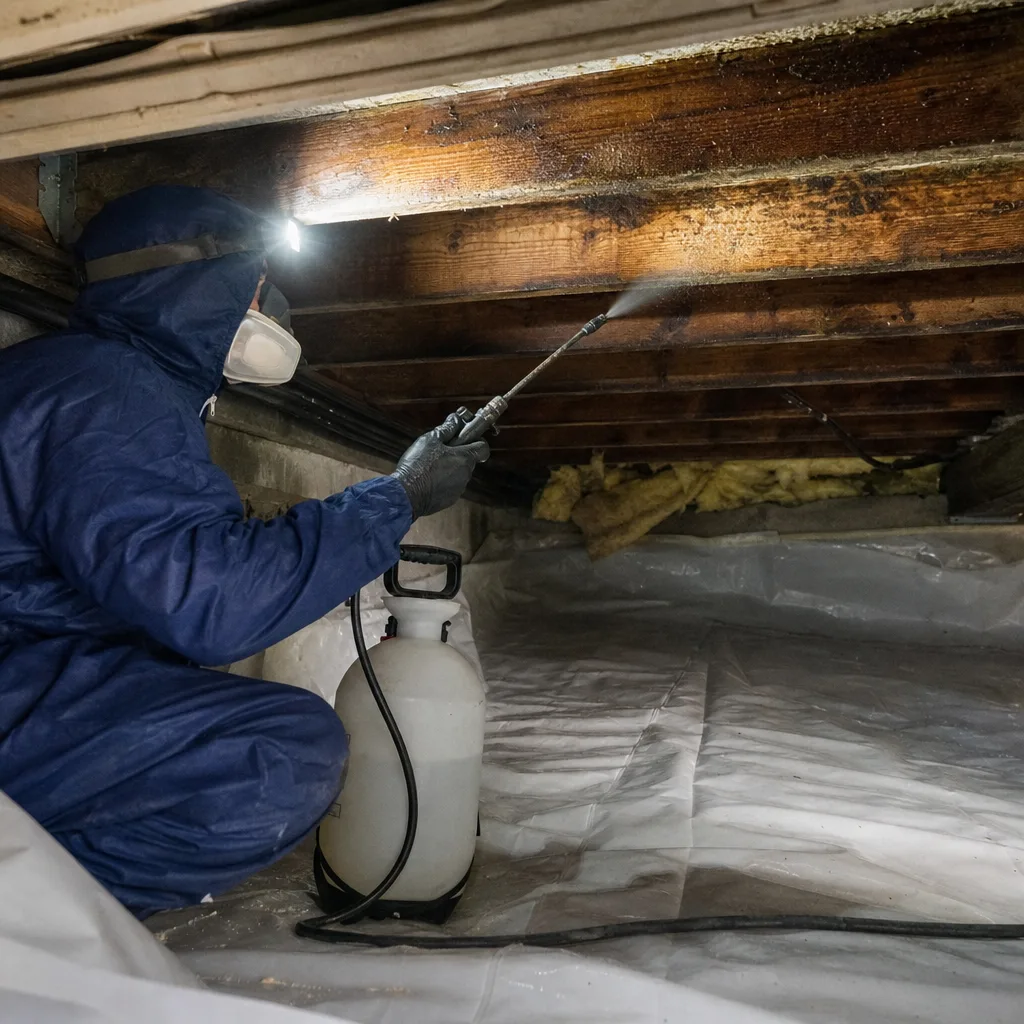
- Original plaster walls that absorb water fast and hide mold longer. The 1920s-1950s Craftsman and Spanish Colonial Revival homes around the Claremont Colleges have plaster over wood lath, not gypsum board. Water migrates through that assembly slowly, and mold can seed behind baseboards and window casings weeks before visible staining appears. Aggressive drying cracks the plaster; too-slow drying lets mold establish.
- Legacy galvanized plumbing that splits under storm pressure. Many original Claremont homes still have galvanized supply lines. After decades of internal corrosion, a pressure surge during a big storm finishes them off. We’ve found pipes that looked fine from the outside, then split along a seam the moment we pressurized the system. Replacement is the fix, not a patch.
- Roof vents and window seals that fail during Santa Ana winds. Downslope gusts regularly exceed 60 mph in Claremont’s wind corridor. Aging ridge vents, original single-pane windows, and worn door weatherstripping let that wind drive rain and embers into places that should be dry. We see water staining in attics and around window heads after nearly every major wind event up in the foothill neighborhoods.
Pricing for Storm & Disaster Restoration in Claremont, CA
Here are the numbers we actually see in Claremont, not a national average you’d find on some generic website. Emergency roof tarping: $400-$1,100. Board-up per opening: $350-$750. Storm debris removal and property cleanup: $1,000-$3,500. Full flood damage restoration with structural drying: $2,500-$9,800 for a single-story home. Fire soot and smoke remediation after a mountain fire: $3,000-$12,500 depending on square footage and how far the ash penetrated into HVAC ducting and contents. Your total depends on the scope we agree to in writing before work starts, never after. And right now, Wade’s standing offers apply to Claremont jobs: no trip charge inside the county, $40 off any repair over $200, and a permanent 10% discount for seniors and veterans. Call (855) 915-0646 and Wade will give you a straight number.
We Also Serve Cities Near Claremont
Our crews work the whole eastern Los Angeles County foothill corridor, so if you’re in Claremont or one of the neighboring cities, we can reach you fast. We run storm and flood response in Montclair, La Verne, Upland, and Pomona, same-day in most cases. If you need Storm & Disaster Restoration anywhere in the eastern foothills, call the number above and Wade will get moving.
Serving Claremont, CA - Our Local Coverage Area
We’re based in the Claremont area and know this community well. Use the map below to see our service coverage - if you’re nearby, we can almost certainly help.
FAQs - Storm & Disaster Restoration in Claremont
In Claremont, storm damage documentation has to account for a two-stage sequence that out-of-area adjusters and contractors consistently miss: first the wildfire soot and ash event in late summer or fall, then the debris-flow and mud event in the following wet season. We photograph and log smoke infiltration through ridge vents and HVAC returns when the fire is still burning in the canyons, then we document the mud line, water marks, and foundation intrusion after the first heavy winter storm. Without both records, an insurance claim can fall apart, because the water damage gets blamed on a “new” storm event when it was actually set up months earlier by a fire that stripped the slopes above your home. Call (855) 915-0646 and we’ll show you what proper Claremont storm documentation looks like.
Older Claremont homes near the colleges hide mold longer because they’re built with original plaster over wood lath, not modern gypsum wallboard, and that assembly absorbs water differently. The plaster itself can hold significant moisture for weeks while the lath and studs behind it stay damp. Mold seeds in the wall cavity, behind baseboards, and under window casings long before it shows as staining on the visible plaster surface. We use daily moisture readings and occasionally open small inspection ports behind baseboards to catch it early. If you’ve had floodwater in a 1920s-1950s Claremont home, call us before you assume the wall “dried out fine on its own.”
The biggest mistake on a north Claremont foothill job is treating it like a single-event flood or fire cleanup and closing the file too early. An out-of-area crew dries the home after a mountain fire, packs up, and never comes back when the winter debris flow hits the same property weeks later. Then the homeowner calls us because mud is against the foundation and water is in the crawlspace. Local crews who work the 91711 ZIP code know to schedule a follow-up inspection after the first heavy rain, because the fire-denuded slopes above Baseline Road are going to move debris the next time it storms. That’s the Claremont restoration cycle, and it repeats.
Yes, and it’s one of the best pre-storm investments a 1970s-1990s foothill home can make in Claremont. Original ridge vents and gable-end vents on those homes were sized for normal weather, not the 60-plus mph downslope gusts that come through the San Gabriel wind corridor. Driven rain and embers get pushed through those vent gaps and into your attic. Retrofit options include baffled ridge vents with narrower openings, ember-resistant vent screens, and sealing any gaps around return-air ducting that connects to attic spaces. It’s usually a $600-$1,800 fix depending on the vent count, far cheaper than the soot remediation and water extraction that comes after the vent fails. We’ll inspect your roof vents during any storm restoration job and tell you honestly if retrofitting is worth the money.
When galvanized plumbing fails during a Claremont storm, we shut down the line, assess the full extent of corrosion, and replace the damaged sections rather than patching. Galvanized pipe from the 1950s-1970s corrodes from the inside out, so a split fitting is almost never an isolated problem; it’s a sign the whole run is near the end of its service life. We’ll pressure-test the remaining lines, show you our findings, and provide a written scope for either targeted replacement or a full repipe if the corrosion is widespread. We dry the water damage first, then fix the plumbing so you’re not paying for a second extraction next storm.
Call Wade’s Restoration for Storm & Disaster Restoration in Claremont
Storm damage doesn’t wait, and neither do we. If your Claremont home just took water, wind, or fire damage, call (855) 915-0646 right now. Wade Ferris answers his own phone, and he can have a crew at your door inside the hour for emergencies, whether you’re in a 1930s Spanish Colonial near the colleges or a 1980s tract home up in the foothills. Estimates are free, and every job comes with the 90-Day Done Right Promise in writing. One call brings Wade back if anything isn’t right. That’s the deal, and it’s been the deal since 2007.
Written by Wade Ferris, Owner at Wade’s Restoration of California, serving Claremont and the eastern Los Angeles County foothills since 2007.