
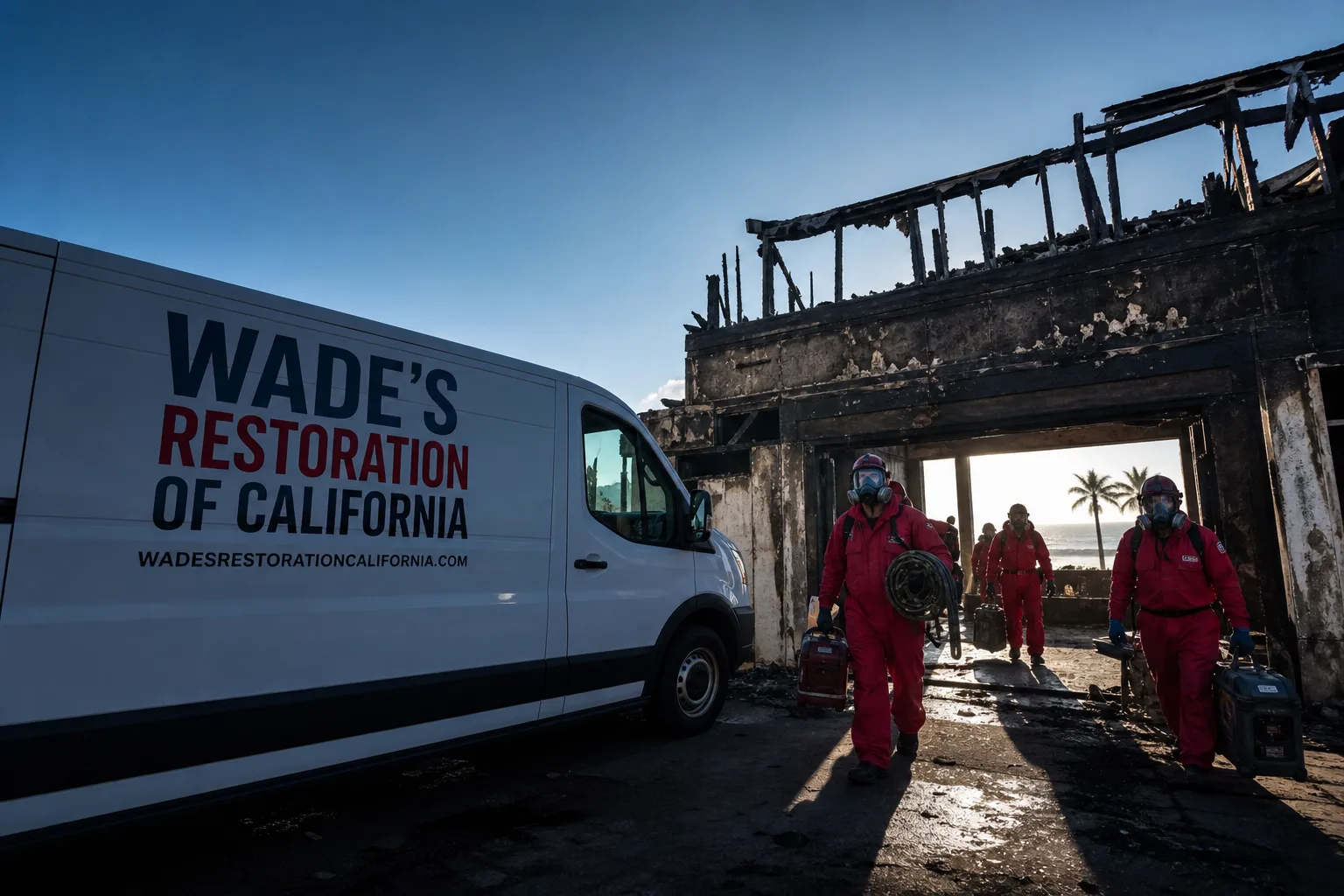
Fast, Reliable Sewage Cleanup Across Stanford
When a sewage line backs up in a Stanford home, the clock starts immediately. Category 3 black water carries bacteria, viruses, and parasites that can make a family sick in hours, and the longer it sits, the deeper it wicks into subflooring, drywall, and crawl space insulation. We get a crew to Stanford addresses fast, usually within the hour, because we know the campus roads, the campus access procedures, and the campus calendar. Call (855) 915-0646 and you’ll get a real person, day or night. Wade Ferris answers his own phone, and he’ll tell you exactly what happens next.
Why Wade’s Restoration of California Is Stanford’s Preferred Sewage Cleanup Company
Stanford is not like working in Palo Alto or Menlo Park. Nearly every home and building inside the CDP is owned by Stanford University, which means almost every sewage cleanup job runs through the university’s Facilities Management office and its approved-vendor system. We’re already in that system. We’ve been pre-vetted, our insurance and certifications are on file, and we know how to schedule work within the university’s maintenance windows. That’s not a small thing. A contractor who isn’t approved by Stanford simply cannot get access to a faculty home or graduate housing unit, full stop.
Wade started this company in 2007 and built it on a simple idea: do the work right, document everything, and stand behind it. Every sewage cleanup job includes a written scope before work starts, photo documentation throughout, and a 90-Day Done Right Promise. If something isn’t right, Wade makes it right, in writing. You’ll deal with the adjuster directly if there’s a claim, because Wade handles that conversation himself. You won’t be stuck relaying messages between your insurance company and a contractor.
We’re local to the Bay Area. When you call about a sewage backup in a Stanford home, you’re not talking to a call center in another state. You’re talking to someone who knows what Escondido Village is, who knows the difference between a faculty home and graduate housing, and who understands that access badges and Facilities Management approvals are part of the job here. That local knowledge saves hours when hours matter.
If you want to know what we’re like to work with, ask anyone on your street. Or call us and find out. There’s no charge for a trip inside the county, and we’ll give you a free second opinion on any written estimate you’ve already received.
Our Sewage Cleanup Services in Stanford
Sewage Backup Cleanup
A sewage backup in Stanford usually means one of two things: a blockage in the main waste line or a failure in the original cast-iron plumbing that runs under so many campus homes. We locate the blockage, extract the standing sewage, remove contaminated materials, and sanitize every surface the black water touched. We’ve done this in postwar faculty homes, graduate complexes, and academic buildings across the 94305 zip code. The goal is simple: get the home safe to live in again as fast as possible, and keep the damage from spreading.
Toilet Overflow Cleanup
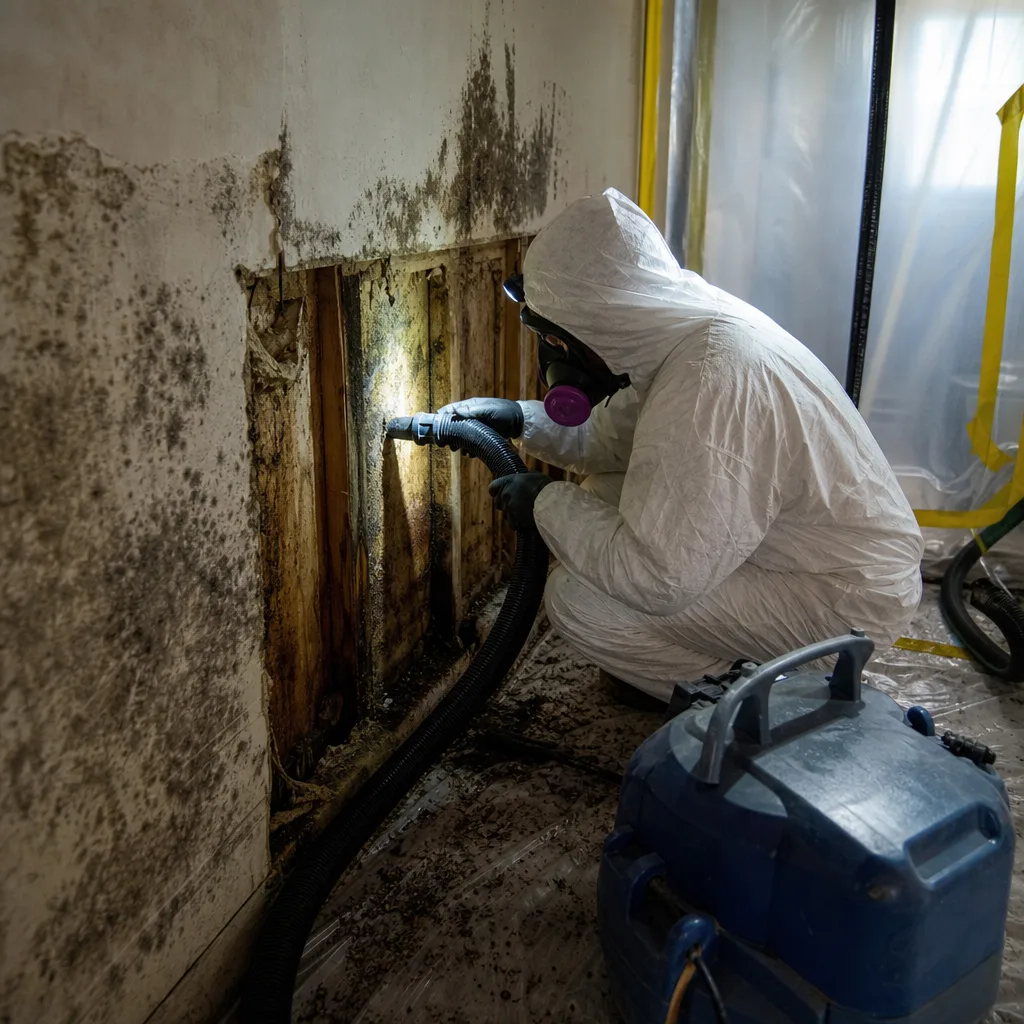
A toilet overflow is never just a mop-up job. The water that comes out of a toilet is Category 3, which means it contains human waste and the pathogens that come with it. In a Stanford faculty home with original 1950s flooring, that water soaks through tile grout, under baseboards, and into the subfloor within minutes. We extract, dry, and sanitize down to the structural layers. We check what’s beneath the surface, because that’s where the real damage hides.
Septic Failure Cleanup
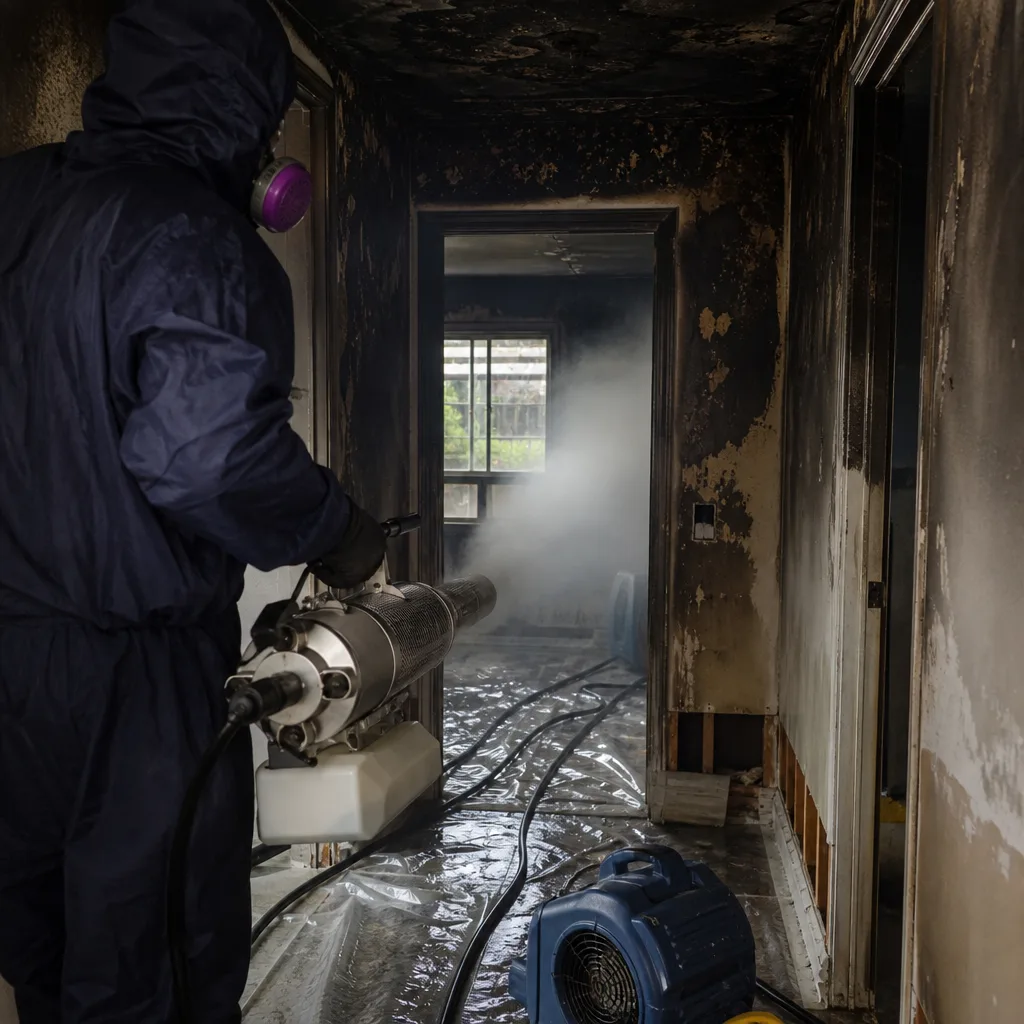
Some of the older faculty homes on the Stanford campus still run on original septic systems from the 1940s and 1950s. When those systems fail, sewage doesn’t just drain slowly; it can surface in the yard or back up into the house through floor drains. We handle the full mitigation: extraction, contaminated soil assessment, crawl space decontamination, and sanitization of any affected interior surfaces. Then we coordinate with the university’s Facilities Management on the replacement scope, because most of those systems are institutional property, not privately owned.
Black Water Extraction
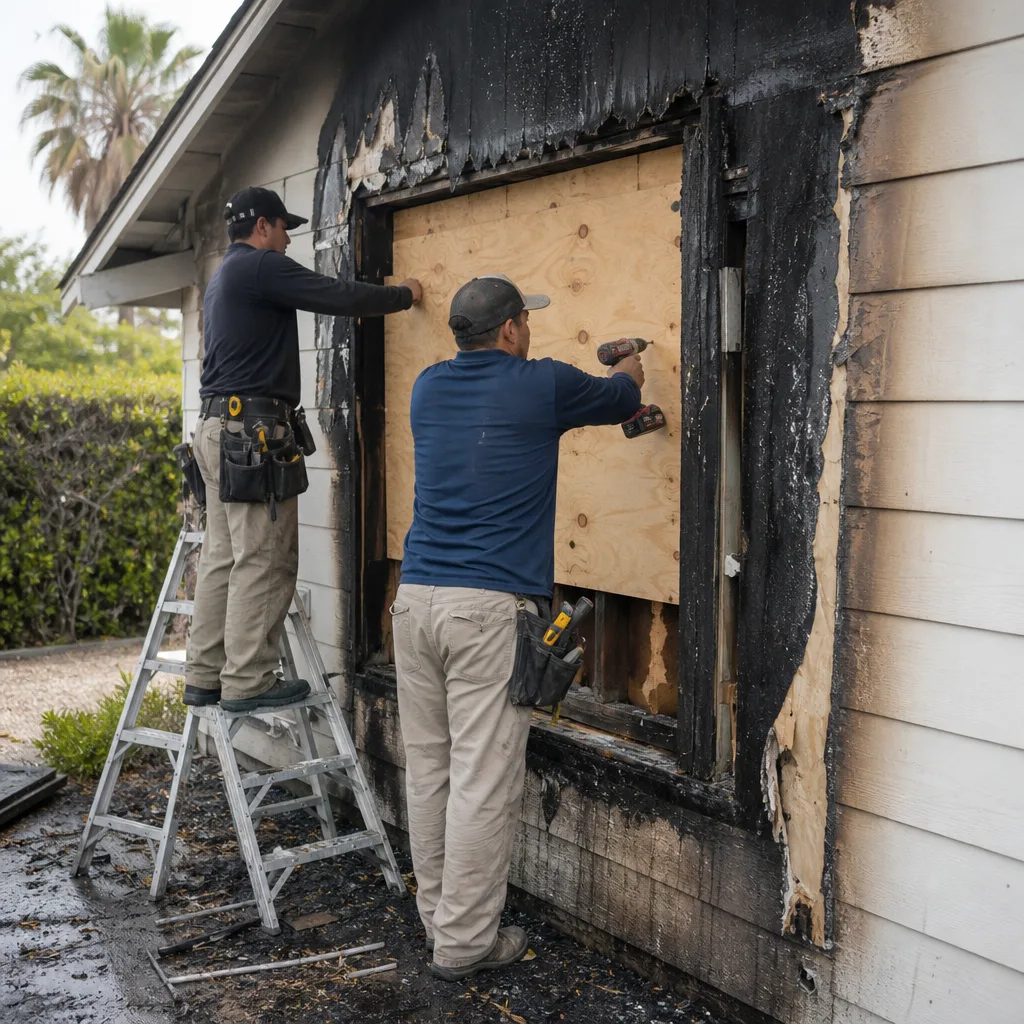
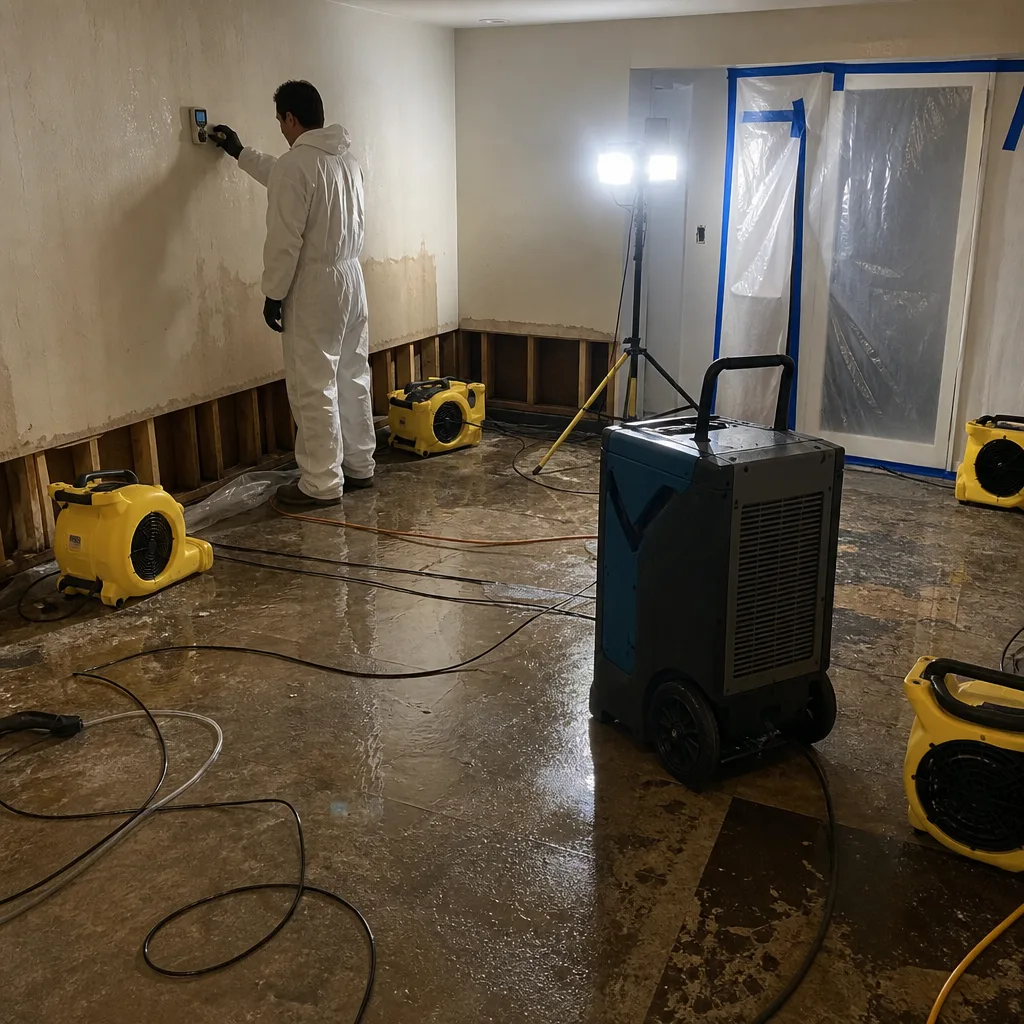
Black water is what we call any water that has come into contact with human waste. It requires full PPE, HEPA air filtration, and aggressive extraction. We use Dri-Eaz extraction equipment and XPOWER air movers to pull the water out fast, then run HEPA air scrubbers to capture airborne pathogens while we work. Every surface the water touched gets either removed or sanitized with an EPA-registered disinfectant. We document moisture levels every single day and hand you the full log at the end of the job. Almost nobody in our trade does that. We do it because you deserve to know exactly what was done and why.
Sanitization & Disinfection
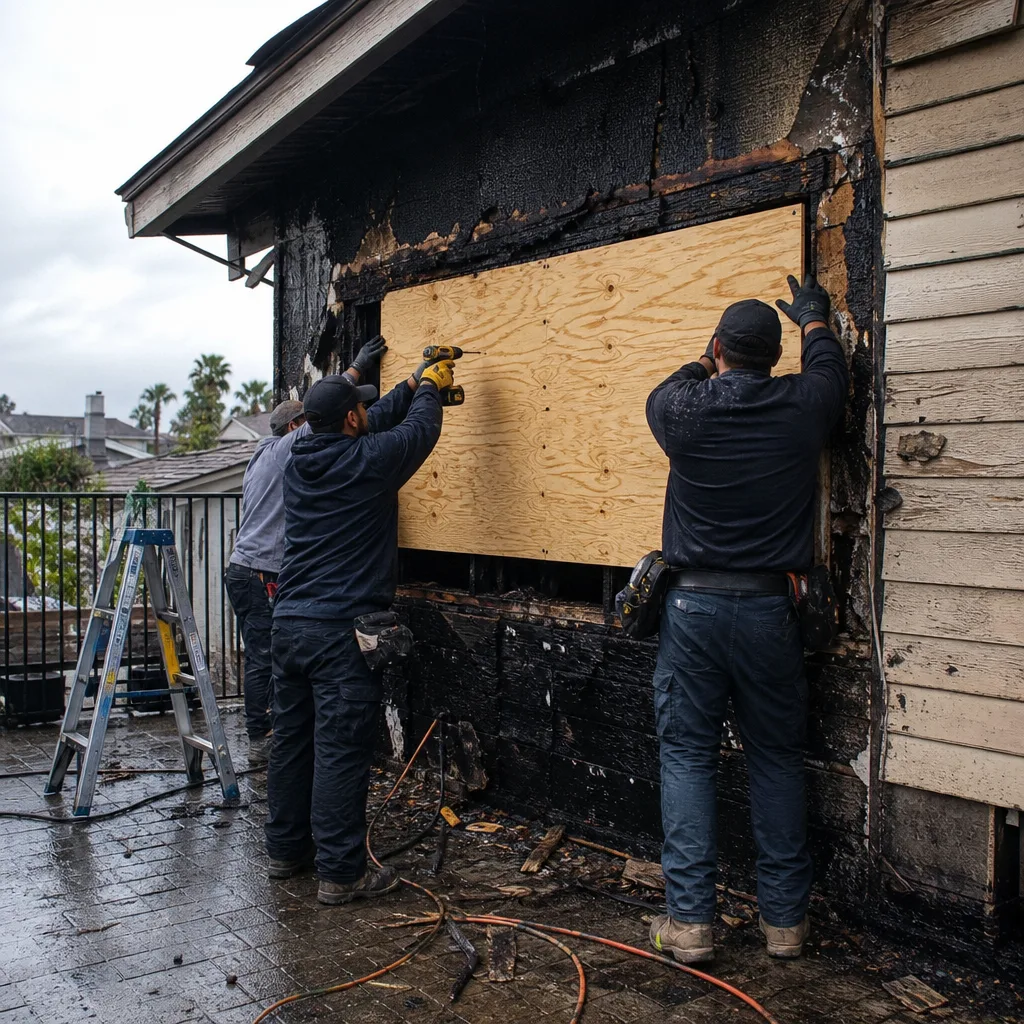
Sewage cleanup isn’t finished when the water is gone. The bacteria and viruses left behind can remain infectious on surfaces for days. We sanitize every affected area with hospital-grade disinfectants, run HEPA air scrubbers to clean the air, and take swab samples when the job calls for it so you can see the results. In a Stanford home, where university housing standards apply, that documentation matters.
Crawl Space Sewage Removal
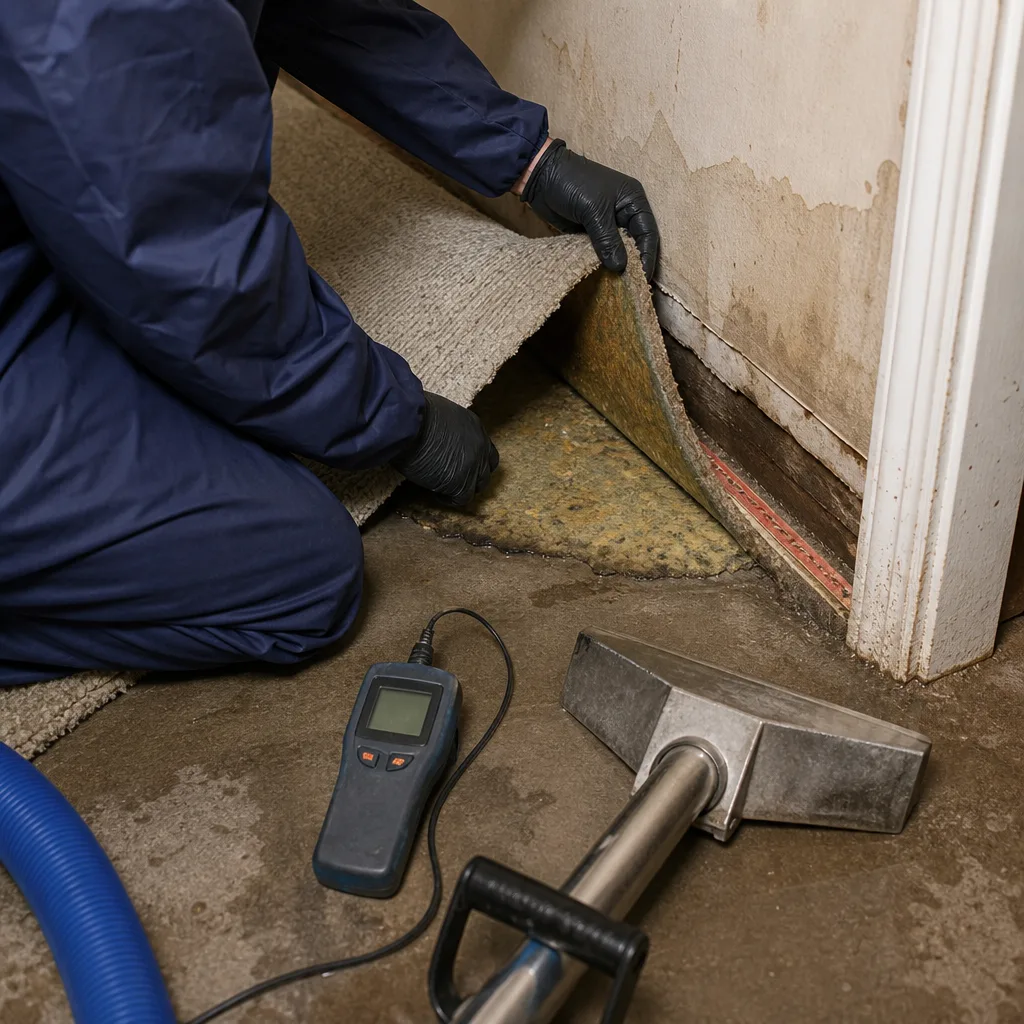
This is the one most people don’t see coming. A cast-iron waste line under a 1950s faculty home cracks, sewage seeps into the crawl space, and nobody knows until an odor starts or a maintenance crew opens the access panel. By then, the contamination has spread across the vapor barrier and into the insulation. We remove the contaminated materials, sanitize the entire crawl space, and dry it with professional-grade equipment before any restoration work begins. We’ve done this exact job more times than we can count on campus.
What happens when you call
- 1
A real person answersNo phone trees - you reach a local pro.
- 2
You get an upfront price rangeHonest numbers before anyone is dispatched.
- 3
A background-checked tech heads outLicensed & insured, dispatched right away.
- 4
You approve before work beginsNothing starts until you say go.
Common Sewage Cleanup Problems We See in Stanford Homes
- Original cast-iron waste lines corroding from within. Faculty homes built in the 1940s through 1960s often have original cast-iron drain lines that look fine from the outside but are nearly rusted through. When they finally fail, sewage saturates the crawl space before anyone realizes there’s a problem. We’ve replaced 12-foot sections of corroded pipe under slab foundations on campus.
- Sewage leaks hidden behind landmark-protected masonry. The historic sandstone buildings on the Main Quad, some dating to the 1890s, present a unique challenge. When sewage pipes leak inside those walls, the black water wicks into porous stone that can’t simply be replaced. Cleaning requires specialized poultice techniques and careful documentation for preservation review.
- Misdiagnosed slow drains in graduate complexes. In mid-century graduate housing like Escondido Village, slow drains are often written off as routine clogs. A snake job clears the immediate blockage, but the sewage that already backed up into wall cavities and under flooring gets missed. By the time we’re called, mold has already started colonizing the damp drywall. The extraction costs more, and the restoration takes longer.
- Deferred maintenance masking real problems. University-managed housing runs on maintenance cycles. When a plumbing issue is patched rather than repaired, the underlying problem can grow for years. We regularly find sewage-damaged subfloors and sill plates that were hidden by previous cosmetic repairs. The written scope we provide before work starts makes it clear what’s actually there.
Pricing for Sewage Cleanup in Stanford, CA
You deserve real numbers, not a vague “it depends” and a surprise invoice later. The honest truth is that every job is different, but here’s what Stanford homeowners can typically expect. A straightforward toilet overflow cleanup confined to a bathroom runs $800 to $1,500. A sewage backup that affects a larger living area typically lands between $2,500 and $6,000. Crawl space sewage removal, which is common on older campus homes, runs $3,500 to $9,000 depending on access, contamination spread, and how much insulation and vapor barrier needs replacing. Sanitization and disinfection as a standalone service starts around $500 and goes up with square footage. When we inspect, you get a written scope with the exact price before any work starts. No surprises, no pressure. Call (855) 915-0646 for a free estimate. We’ll come out, look at what happened, and tell you straight what it will cost.
Trusted Brands We Service in Stanford
We don’t use rental-store equipment. Every Stanford job runs on professional-grade gear from Dri-Eaz, XPOWER, and Injectidry. Why does that matter? Because a homeowner-grade fan from the hardware store doesn’t move enough air to dry a crawl space. A Dri-Eaz HEPA 500 air scrubber captures airborne sewage particles; a borrowed box fan just blows them around. Our technicians are IICRC-certified, and our work is backed by RIA and IFA standards. When you hire us for Sewage Cleanup, you’re getting the same equipment and protocols that commercial restoration companies use on hospital and university jobs. The difference is you’ll deal directly with Wade, not a rotating cast of project managers.
We Also Serve Cities Near Stanford
We’re based in the Bay Area and regularly work in Stanford and the surrounding communities. If you’re in Palo Alto, Atherton, East Palo Alto, or Los Altos Hills, the same crew and the same response time apply. Call us and find out how fast we can get there.
Serving Stanford, CA - Our Local Coverage Area
We’re based in the Stanford area and know this community well. Use the map below to see our service coverage - if you’re nearby, we can almost certainly help.
FAQs - Sewage Cleanup in Stanford
Yes, if you live in university-owned housing within the Stanford CDP, the contractor must be in Stanford’s approved-vendor system through Facilities Management. We’re already pre-vetted and in that system, so there’s no delay while paperwork gets processed. If you’re in a privately owned property inside the CDP, standard homeowner rules apply. Call (855) 915-0646 and we’ll help you figure out which situation you’re in.
Typically we can be on site within an hour of your call, but access to graduate housing units like Escondido Village requires Facilities Management to unlock or badge us in. If you report the issue through the housing office first, that speeds everything up. We coordinate directly with Facilities Management to schedule entry, often same day.
Yes, absolutely. The Main Quad buildings are landmark-protected, so any work that touches the original sandstone masonry requires preservation review. We use non-invasive extraction methods, specialized poultice cleaning for stone contaminated by sewage, and we document everything for the university’s review process. This is not a job for a generalist contractor. Call us and Wade will explain exactly what’s involved.
Yes. We’ve mitigated septic failures in original 1940s systems on campus faculty homes. The cleanup involves full extraction, contaminated soil assessment, and sanitization of any affected interior spaces. Because the system itself is university property, the replacement scope goes through Facilities Management. We handle the mitigation and coordinate with them on the rest. Call (855) 915-0646 and we’ll walk you through it.
We need access approval, the maintenance window, and any lockout schedules for the building. For faculty homes, Facilities Management typically provides the access panel location and any historical plumbing records. We handle the rest: extraction, contaminated material removal, sanitization, drying, and the daily moisture log. We’ve done this enough times on campus that the coordination usually takes one phone call.
If you’ve got sewage backing up in a Stanford home right now, don’t wait. Call (855) 915-0646. Wade will answer, tell you what to do in the next ten minutes, and get a crew moving toward you. Estimates are free, and there’s no trip charge inside the county.
Written by Wade Ferris, Owner at Wade’s Restoration of California, serving Stanford and the Bay Area since 2007.