
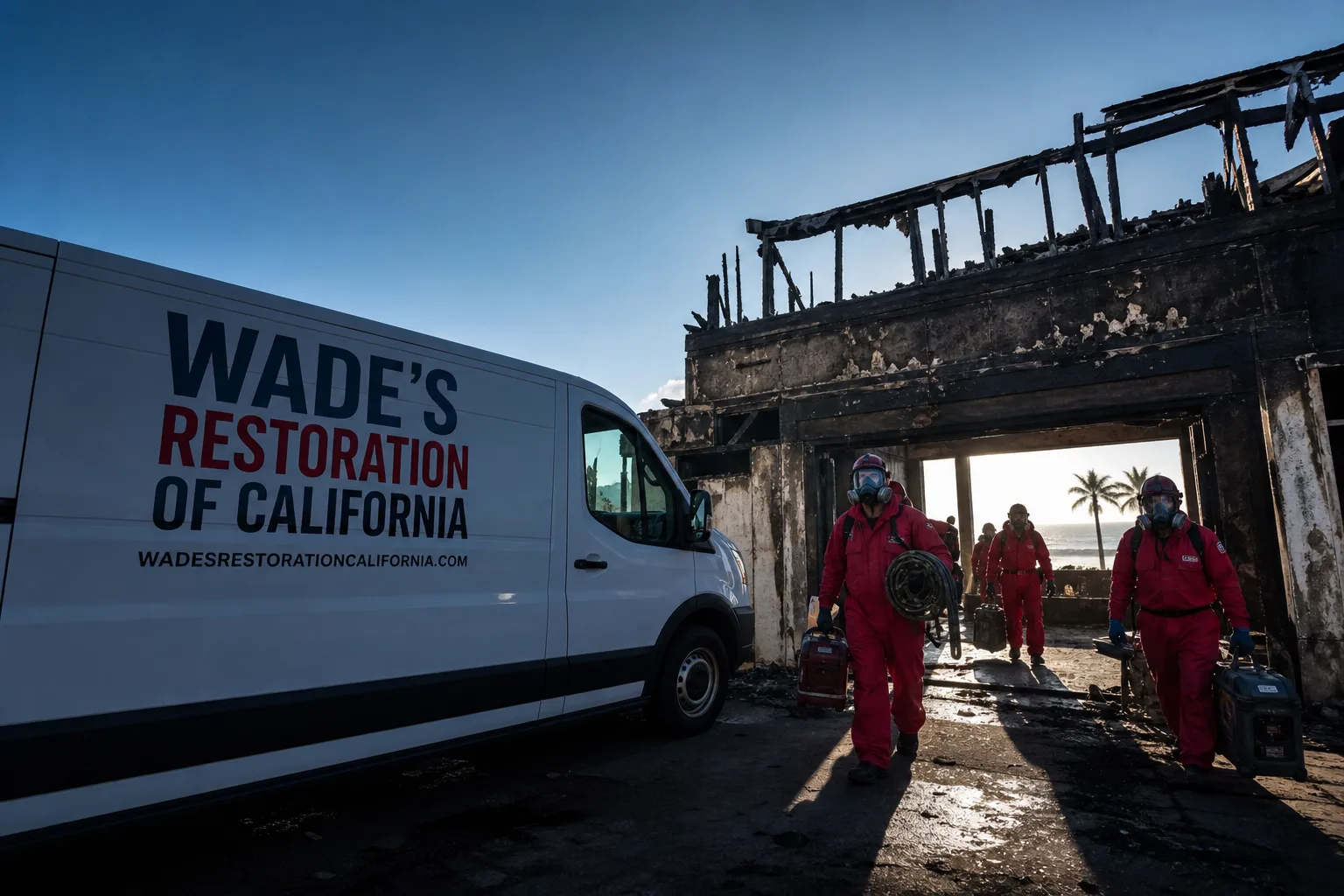
Fast, Reliable Mold Remediation Across Stanford
Mold remediation in Stanford typically costs $1,800-$6,500 depending on containment scope, and most jobs are inspected within 24 hours. If you’re in faculty housing, a graduate student complex, or a university-managed building, you already know the first hurdle isn’t the mold itself, it’s getting work approved. Wade’s Restoration of California has navigated Stanford’s institutional property system enough times to know exactly what Facilities Management needs to see: a written scope, moisture logs, and a remediation plan that matches university compliance standards. Call (855) 915-0646 and Wade Ferris will personally walk you through the approval paperwork before a single piece of equipment comes off the truck.
Why Wade’s Restoration of California Is Stanford’s Preferred Mold Remediation Company
Wade Ferris put his name on this company in 2007, and he still answers his own phone. That matters in Stanford, where almost every property decision runs through a university office and a contractor’s reputation has to survive the scrutiny of people who manage hundreds of buildings at once. Our Mold Remediation team has worked inside Escondido Village units, postwar faculty homes off Mayfield Avenue, and academic buildings near the Main Quad. We understand that Stanford is not like Palo Alto, where a homeowner just calls and says yes. Here, a real person from Facilities Management needs documentation, and Wade provides it: daily moisture readings, photo evidence, and a written remediation plan with clear containment protocols.
Beyond the paperwork, there’s the fact that Wade’s crew is IICRC-certified and RIA-affiliated. That’s not decoration. Stanford’s procurement office looks for those credentials, and so should any resident who wants a job done right the first time, without a second crew coming in to fix the first one.
Calls are answered 24/7 by a live person, not a voicemail tree. If you’re in Stanford and you suspect mold, Wade can have an inspection scheduled before the week is out, and in a genuine emergency, he heads out himself.
Our Mold Remediation Services in Stanford
Mold Inspection & Testing in Stanford
A proper mold inspection in Stanford starts with questions: where’s the moisture coming from, how long has it been active, and has the building been through any recent renovation that opened a wall? We test air and surface samples, take moisture readings in wall cavities and crawl spaces, and hand you a written report that tells you exactly what’s there and what’s not. For university properties, this report is what opens the door to remediation approval. For a faculty home built in the 1950s, it’s often the first time anyone has actually measured what’s been hiding behind plaster walls for years. Inspection and testing in Stanford runs $350-$750 depending on how many rooms and crawl space access points are involved.
Mold Removal in Stanford
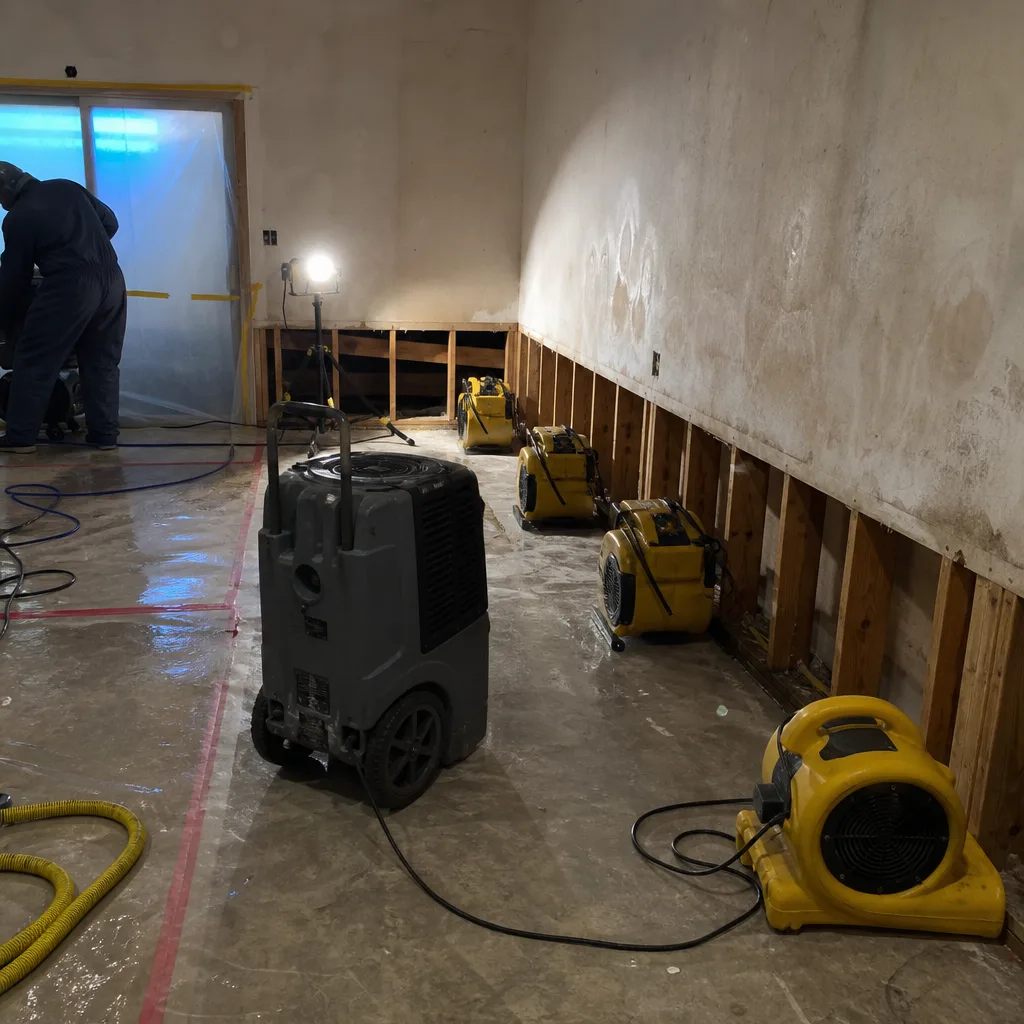
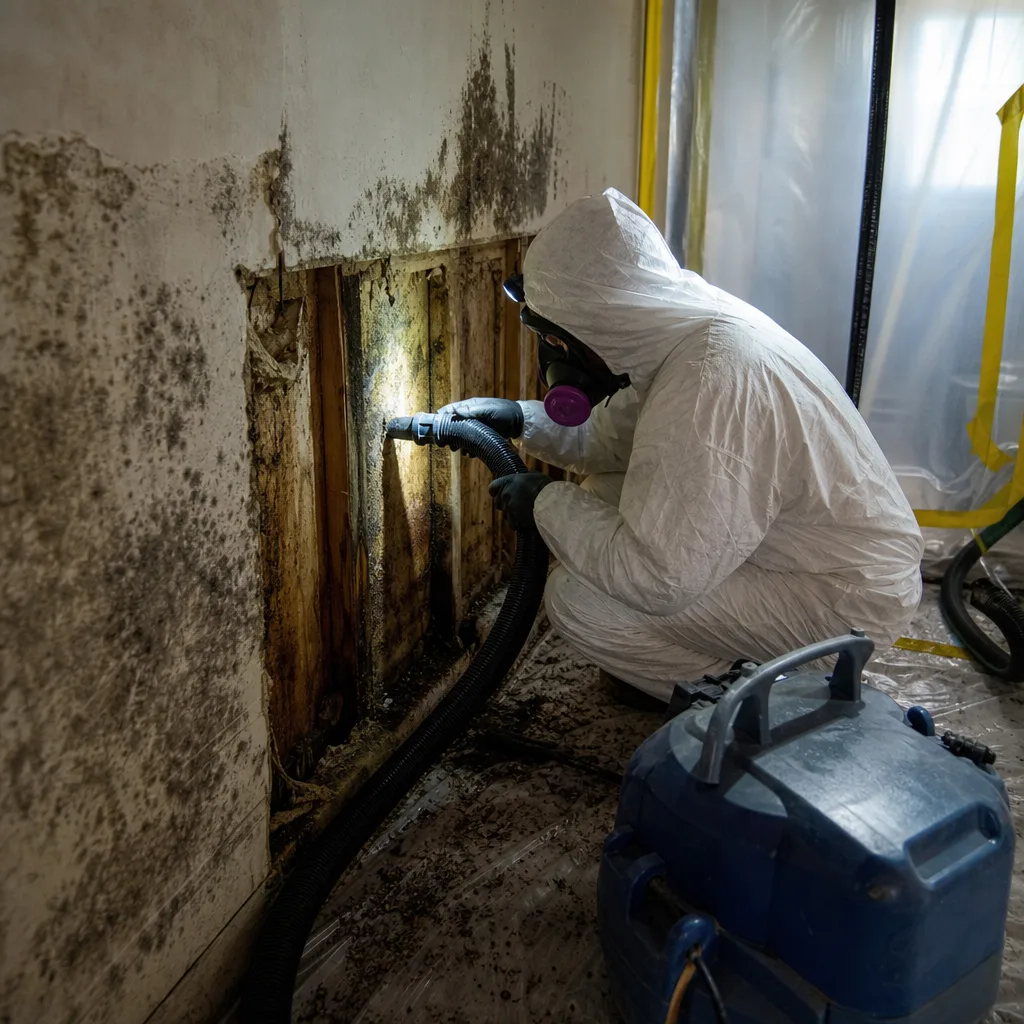
Mold removal in a Stanford building usually means containment first: sealing off the affected area, running negative air pressure, and HEPA-vacuuming every surface before any demolition starts. In older faculty homes, that often includes removing water-damaged drywall and insulation that’s been wet for months. In graduate housing units, it can mean working around residents’ belongings while keeping the rest of the unit livable. We run HEPA air scrubbers throughout the job, bag and dispose of contaminated materials on-site, and document every step with photos. Typical mold removal for a single room in Stanford runs $1,500-$4,500; a whole-home or multi-room job can reach $8,000-$12,000.
Black Mold Remediation in Stanford
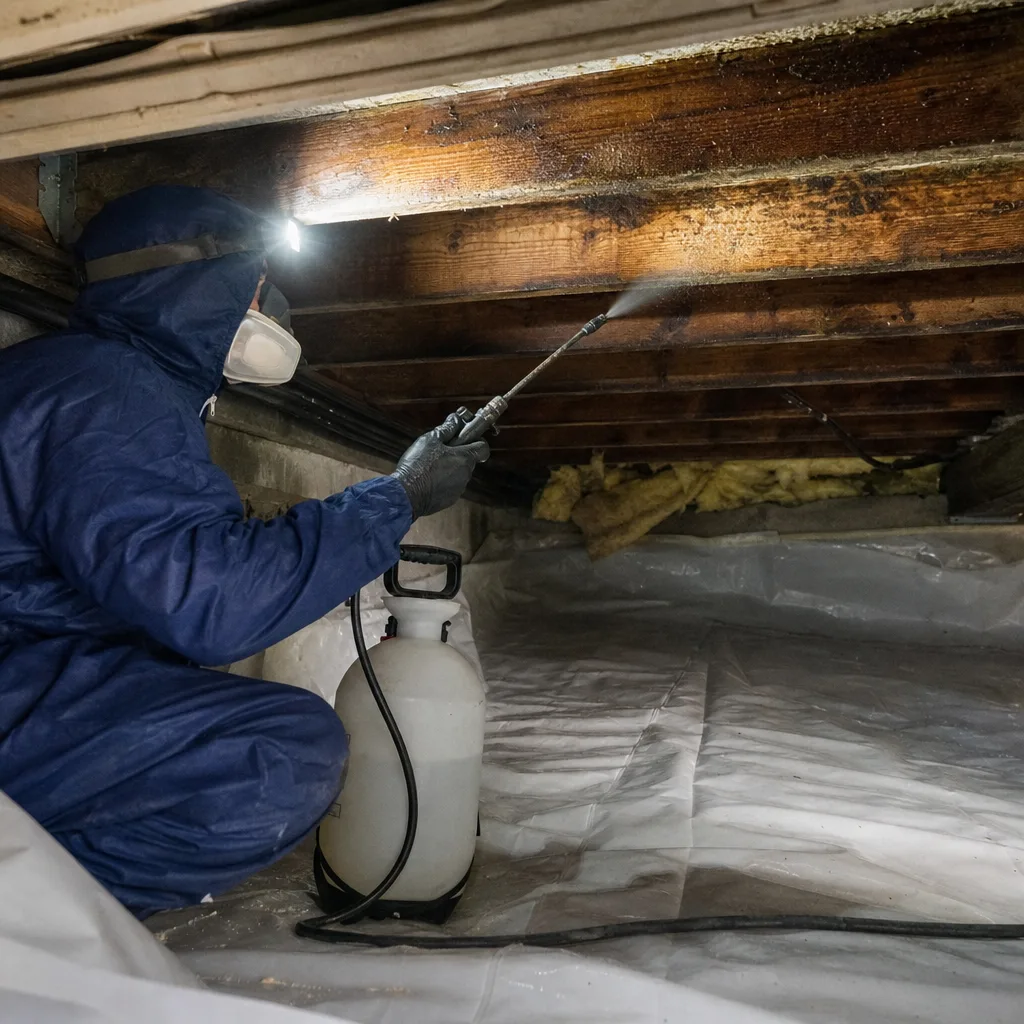
Black mold, or Stachybotrys, needs respect. It shows up where water has been sitting a long time, often behind walls in Stanford’s older campus housing where a slow leak went unnoticed during a deferred maintenance cycle. We treat black mold as a containment-first job: full plastic barriers, negative air pressure, and proper PPE for every person on-site. The affected material gets removed, the cavity gets dried to below 60% RH, and we apply an EPA-registered antimicrobial before rebuilding. Black mold remediation in Stanford typically runs $2,000-$7,000 per affected room depending on how far the colony has spread into framing and insulation.
Air Quality Restoration in Stanford
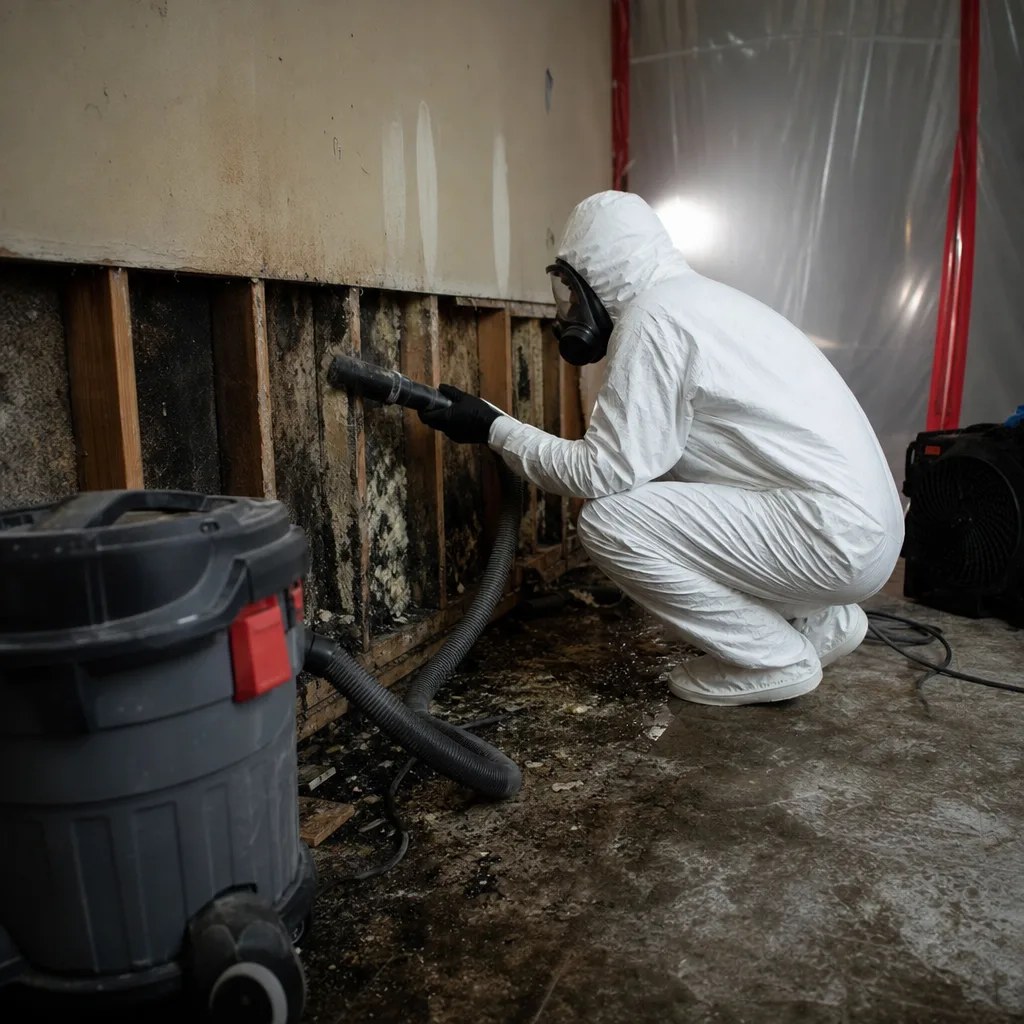
After mold is removed, the air itself needs attention. We run HEPA air scrubbers and negative air machines for 24-48 hours after remediation to pull residual spores out of the air column. In Stanford buildings with older HVAC systems, this step is especially important because duct runs can carry spores from one room into another. Post-remediation air quality testing confirms spore counts have returned to baseline. Air quality restoration in Stanford runs $400-$900 for the equipment and testing, and we include it as a line item on every mold remediation job. If you’re dealing with wildfire smoke intrusion from a Diablo wind event, the same equipment gets repurposed to pull soot and ash particulates out of indoor air.
What happens when you call
- 1
A real person answersNo phone trees - you reach a local pro.
- 2
You get an upfront price rangeHonest numbers before anyone is dispatched.
- 3
A background-checked tech heads outLicensed & insured, dispatched right away.
- 4
You approve before work beginsNothing starts until you say go.
Trusted Brands We Service in Stanford
Wade’s crew uses professional-grade equipment from Dri-Eaz and XPOWER, because when you’re drying out a crawl space under a 1960s graduate housing unit, the equipment has to work the first time. Our team is trained to IICRC standards and follows RIA protocols on every job. That means the moisture readings we hand you at the end of each day are measured with calibrated tools, not guessed at. And for Stanford specifically, we stock the consumables, containment barriers, and drying equipment needed to start work within 24-48 hours of approval, so university-managed jobs don’t get delayed waiting on parts shipped from across the country.
Common Mold Remediation Problems We See in Stanford Homes
- Concealed seismic damage from Loma Prieta. Hairline cracks in unreinforced masonry walls, common in Stanford’s older academic and residential buildings, let water track behind paint and drywall. Years later, that hidden moisture has created a mold colony no one sees until a renovation opens the wall.
- Deferred university maintenance cycles. A slow plumbing leak or failed roof flashing in a postwar faculty home may go unaddressed for months, not because anyone’s negligent but because institutional repair schedules batch work. By the time a crew arrives, mold has established in wall cavities and under flooring.
- Wildfire smoke from Diablo wind events. Embers and soot push through old single-pane windows and deteriorated sill plates in 1950s-era campus housing. That organic material settles in crawl spaces and becomes a food source for mold once winter humidity rises.
- Failed legacy condensation lines and through-the-wall AC sleeves. We see this most in Escondido Village units built in the 1960s. An original condensate drain slow-weeps for months, saturating the crawl space. It never looks like a flood, just a persistent musty smell.
In Escondido Village, a graduate student complained of persistent musty odors in a 1960s unit. Our tech traced the source to a failed legacy condensation drain line from an original through-the-wall AC sleeve. The slow weep had saturated the crawl space for months, hidden by the university’s deferred maintenance cycle. We used a Dri-Eaz dehumidifier and XPOWER air movers to dry the crawl space to below 60% RH, then performed HEPA-vacuuming and applied an EPA-registered antimicrobial before reinstalling a modern condensate pump. That’s the kind of crawl space treatment that gets missed when a contractor doesn’t understand Stanford’s housing stock.
Pricing for Mold Remediation in Stanford, CA
Mold remediation in Stanford runs higher than in surrounding cities, and the reason is structural: almost every job involves coordinating with university personnel, following campus access rules, and documenting everything to institutional standards. Here are real ranges for Stanford’s market:
- Mold Inspection & Testing: $350-$750
- Single-room mold remediation: $1,500-$4,500
- Black mold remediation per affected room: $2,000-$7,000
- Crawl space treatment and encapsulation: $1,200-$4,000 depending on square footage and access
- Whole-home or multi-room mold remediation: $8,000-$12,000
- Air quality restoration and post-remediation testing: $400-$900
Every estimate is free and in writing before work starts. Wade’s standing offer: if you have a written estimate from another contractor, he’ll give you a second opinion at no charge. No trip charge inside our county. Senior and veteran discounts apply on every job. Call (855) 915-0646 for an exact number on your building.
We Also Serve Cities Near Stanford
Wade’s Restoration of California handles mold remediation throughout the Stanford area, including Mold Remediation in Stanford, Palo Alto, Atherton, East Palo Alto, and Los Altos Hills. If you’re just over the line and your property isn’t university-managed, the approval process gets simpler, but the thoroughness of the work stays the same. Crews are staged from the Bay Area office and reach Stanford quickly. Call and ask for Wade.
Serving Stanford, CA - Our Local Coverage Area
We’re based in the Stanford area and know this community well. Use the map below to see our service coverage - if you’re nearby, we can almost certainly help.
FAQs - Mold Remediation in Stanford
Stanford’s approval process typically adds 3-10 business days to a mold remediation job in Escondido Village, because the work must be reviewed and authorized through the university’s centralized Facilities Management office before a contractor is cleared to start. Residents report the issue, Facilities assigns a work order, and an approved vendor like Wade’s Restoration submits a scope and pricing. We can shorten the delay by submitting a complete remediation plan, including moisture logs and containment protocols, on the same day as the inspection. Call (855) 915-0646 and we’ll walk through the current approval timeline for Escondido Village.
The 1989 Loma Prieta earthquake left hairline cracks in unreinforced masonry walls throughout Stanford’s Main Quad, and those cracks still provide pathways for water to enter behind sandstone and plaster. Years of moisture tracking through shifted mortar and cracked framing have created hidden mold colonies that only surface when a renovation opens a wall. Restoration work on Main Quad buildings also has to account for landmark-preservation restrictions, which means sealed-off containment and documentation for every structural change. Call (855) 915-0646 if you’re managing a Main Quad building and suspect concealed mold.
No, mold remediation in a Stanford faculty home cannot proceed without university sign-off, because the university owns the property and all repair work must route through Facilities Management as the authorized contracting party. Even if a faculty member is willing to pay directly, the university’s approval process still applies, and unapproved contractors will be denied access or payment. Wade’s Restoration is pre-vetted through Stanford’s system and can submit the needed scope, pricing, and compliance documentation quickly. Call (855) 915-0646 for help starting the approval process on a faculty home.
Diablo wind wildfire events push soot and embers through old single-pane windows and deteriorated sill plates in Stanford’s older campus buildings, depositing organic material in crawl spaces and attics that later feeds mold growth once seasonal humidity arrives. The smoke also forces buildings to seal up for days, which raises indoor humidity and creates ideal conditions for mold on surfaces that already have moisture damage. After a major fire event, we recommend an indoor air quality test and a crawl space inspection. Call (855) 915-0646 to schedule one before winter rain sets in.
The biggest difference is that Stanford’s CDP is almost entirely university-owned, so virtually every mold remediation job, whether in faculty housing, graduate student housing, or academic buildings, must go through Stanford’s centralized Facilities Management and approved-vendor system, a hurdle no neighboring city like Palo Alto or Menlo Park imposes. A Palo Alto homeowner can call us and approve a job the same day; a Stanford resident or property manager has to work through the university’s procurement and compliance process first. That’s why we keep our documentation tight and our approval timelines fast. Call (855) 915-0646 and Wade will help you figure out which path applies to your building.
Written by Wade Ferris, Owner at Wade’s Restoration of California. Wade founded the company in 2007 and still answers his own phone, 24 hours a day.