
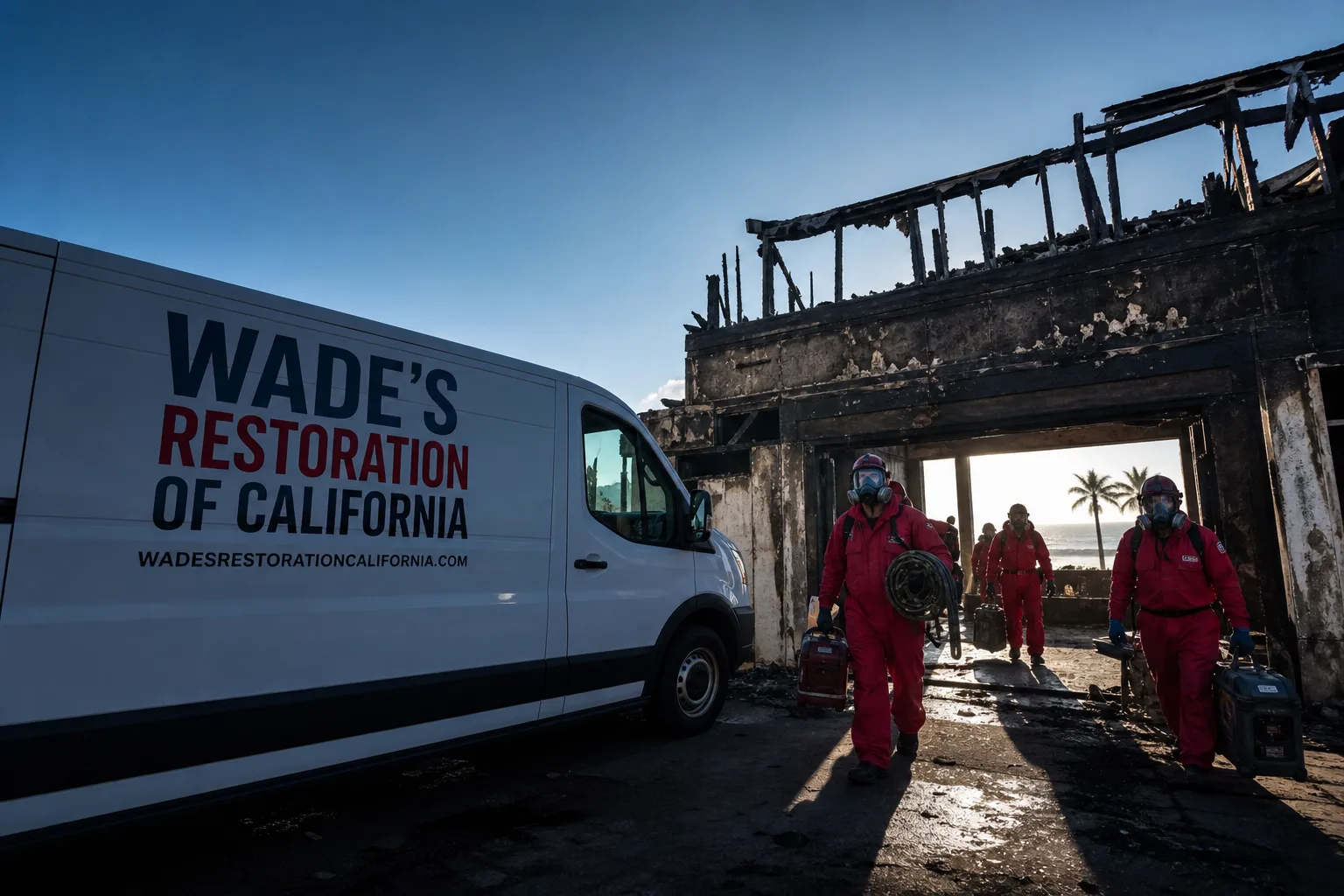
Fast, Reliable Mold Remediation Across San Francisco
Mold remediation in San Francisco costs between $1,800 and $6,500 for a typical single-room project, with whole-floor or multi-room work running $8,000 to $25,000 depending on how far the colony has spread into lath-and-plaster wall cavities. Most jobs here take two to five days of active containment and drying, not the single-day turnaround some inland outfits will quote. That timeline difference is real, and it’s driven by San Francisco’s fog belt, housing stock, and the way moisture behaves in century-old walls. If you’re seeing staining, catching a musty smell, or just moved into a Mission flat that smells like a basement, call Wade at (855) 915-0646 and he will walk you through exactly what a San Francisco mold job actually requires.
Key Takeaways
- San Francisco’s fog-driven humidity means mold colonies here grow faster and hide deeper than in drier Bay Area cities.
- Most older SF homes have lath-and-plaster walls, which trap moisture differently than drywall and demand longer drying protocols.
- Mold inspection in San Francisco with lab testing typically runs $400-$800; remediation itself starts around $1,800 for a contained single room.
- Wade’s Restoration is locally owned and owner-operated, with Wade Ferris answering his own phone around the clock.
- Your 90-Day Done Right Promise is in writing on every mold restoration job.
Why Wade’s Restoration of California Is San Francisco’s Preferred Mold Remediation Company
Wade Ferris has been in this trade since 2007, and he runs his company the old way: his name is on the truck, his phone number is on the website, and when you call, you get him, not a call center in another state. San Francisco homeowners keep calling Wade because he publishes his address and license number, shows up in uniform crews that have passed background checks, and doesn’t hide behind a national brand’s logo. If something isn’t done right, the 90-Day Done Right Promise is stamped right on the contract: one call brings Wade back to make it right.
Response time to San Francisco neighborhoods like Noe Valley, the Mission, Chinatown, and Visitacion Valley runs inside the hour for emergency water and mold call-outs, because Wade coordinates dispatch from the San Francisco Bay Area office, not from some regional hub two counties over. When you call at midnight, Wade answers. When you need moisture readings logged daily, Wade’s crew takes them daily and hands you the full log at the end of the job. Almost nobody else does that, and it is the single best way to prove the drying was done right.
Wade deals with insurance adjusters directly. If you are a San Francisco homeowner with a mortgage, you know how tense claim negotiations can get. You never have to be the middleman relaying numbers between your insurer and a contractor. Wade coordinates with the adjuster, documents everything with photos and moisture logs, and fights to make sure the full scope gets covered, not just the visible patch.
Our Mold Remediation Services in San Francisco
Mold Inspection & Testing
Testing is where San Francisco mold work gets complicated fast. In an Edwardian flat in the Mission, that musty smell often has nothing to do with a leak; it’s two or three decades of fog-driven condensation working into original plaster. Our Mold Remediation team starts with a visual inspection, then takes air and surface samples where the history of the building suggests hidden colonies. We tell you the truth: if you don’t have mold, we say so and you don’t pay for remediation. Sample analysis at a certified lab with a full written report for San Francisco properties typically runs $400-$800.
Mold Removal
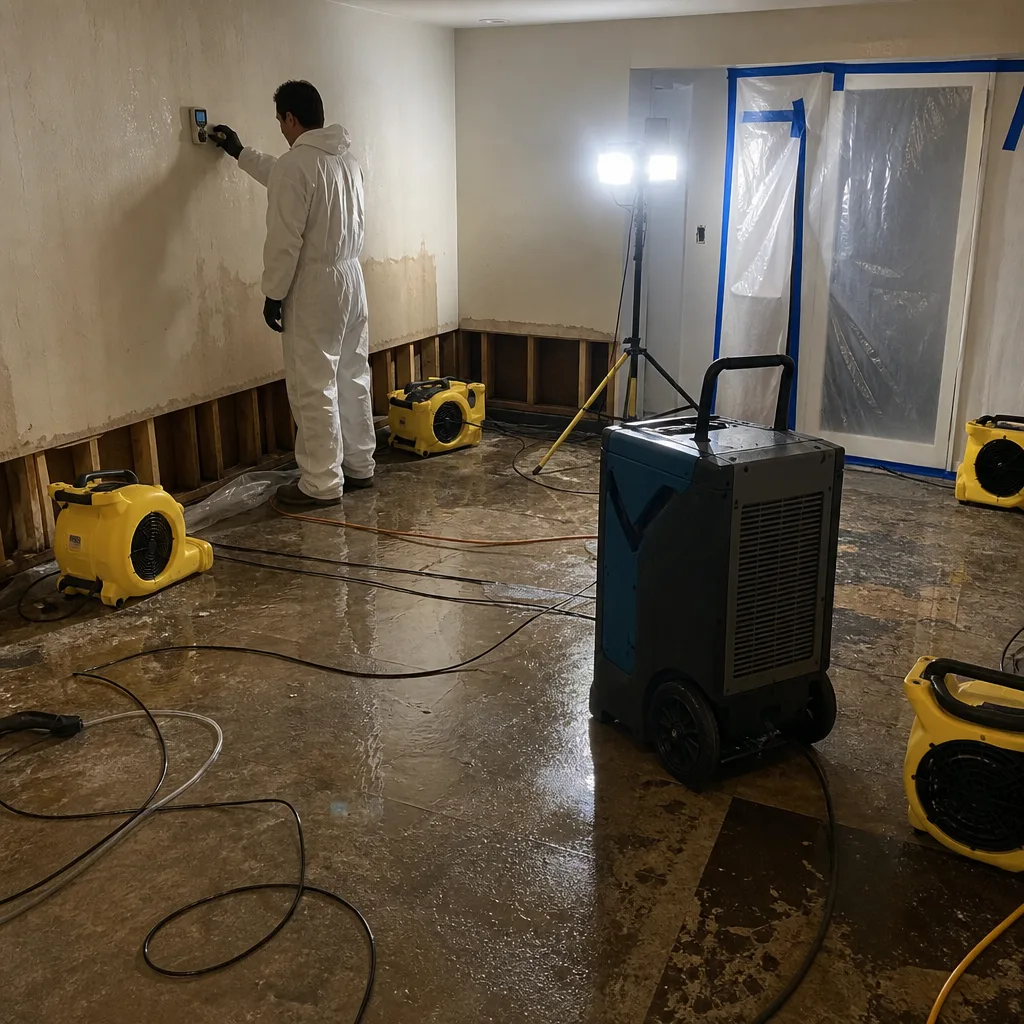
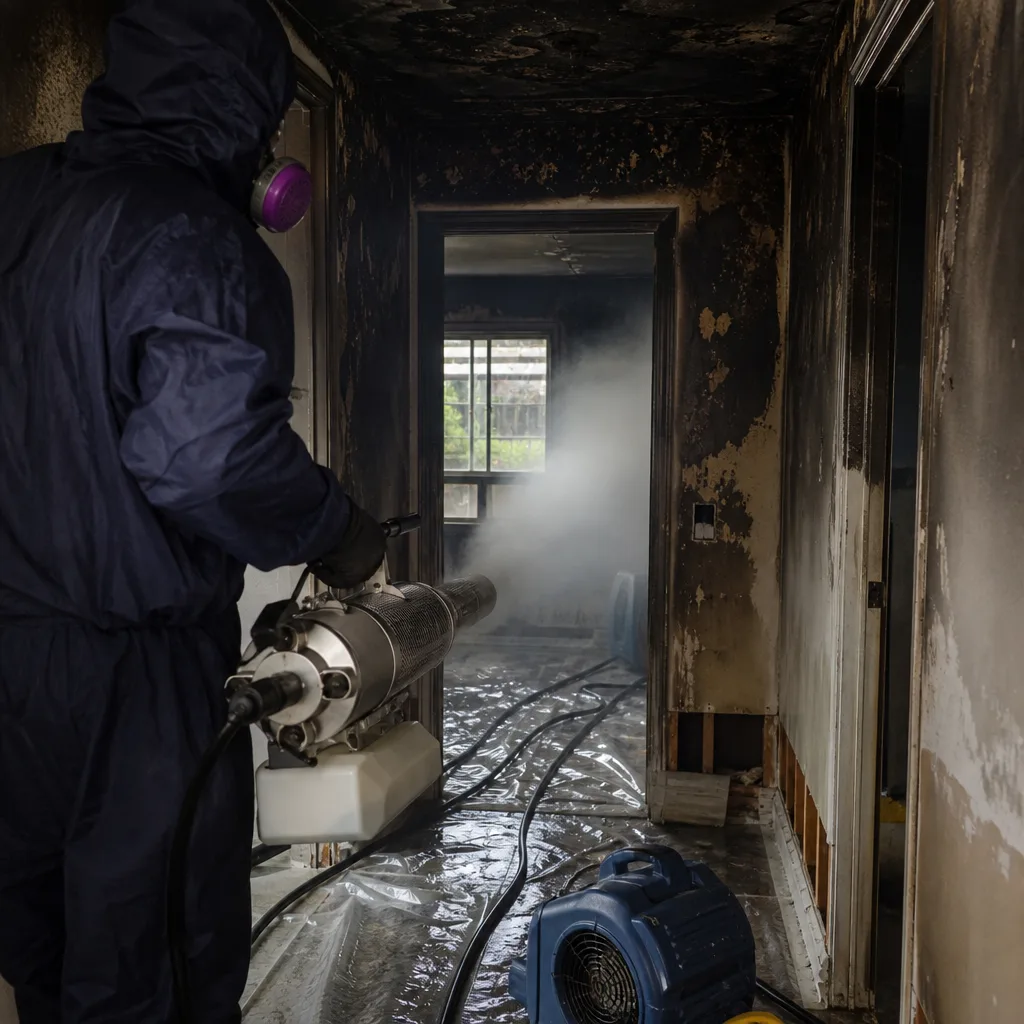
Removal in San Francisco means containment first. We seal the affected rooms with negative air pressure, remove colonized materials, and treat the structural framing. The challenge here is that a damp wall cavity in a lath-and-plaster Victorian doesn’t dry on the same schedule as drywall in a 1990s Sunset townhouse. We size Dri-Eaz dehumidifiers and Injectidry panels for San Francisco’s elevated ambient humidity, not for Sacramento numbers. Rushing that step is how mold comes back six months later, and that’s why our drying logs are yours to keep.
Black Mold Remediation
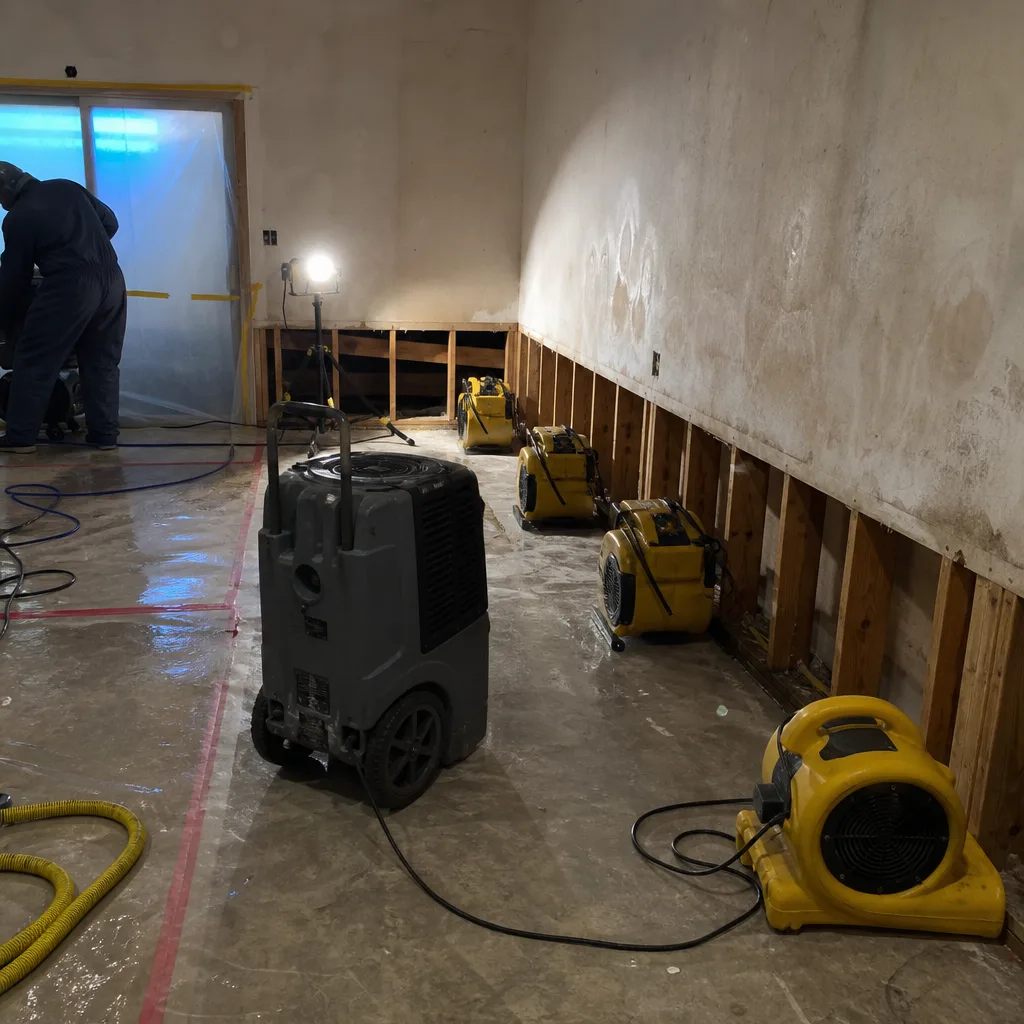
Black mold, typically Stachybotrys, gets the headlines and the panic. In San Francisco, we see it most often in bathrooms with chronic condensation, in laundry closets behind stacked units, and in ground-floor units of older Mission District and Visitacion Valley buildings where foundation dampness never really stops. Black mold removal follows strict containment: HEPA filtration, sealed waste bags, and antimicrobial treatment of the framing after the colonized material is gone. The work is not inherently harder than other mold work, but the containment is non-negotiable.
Air Quality Restoration
After any mold job, the air inside a San Francisco home needs work, especially in bedrooms and kitchens where windows stay closed most of the year. Air quality restoration means HEPA air scrubbing during the job, not just after, plus ventilation checks and final clearance testing. In dense apartment buildings, where one unit’s exhaust can push spores into the hallway and the neighbor’s unit, we adjust the airflow plan to protect everyone, not just the unit we’re hired to fix.
Moisture & Humidity Control
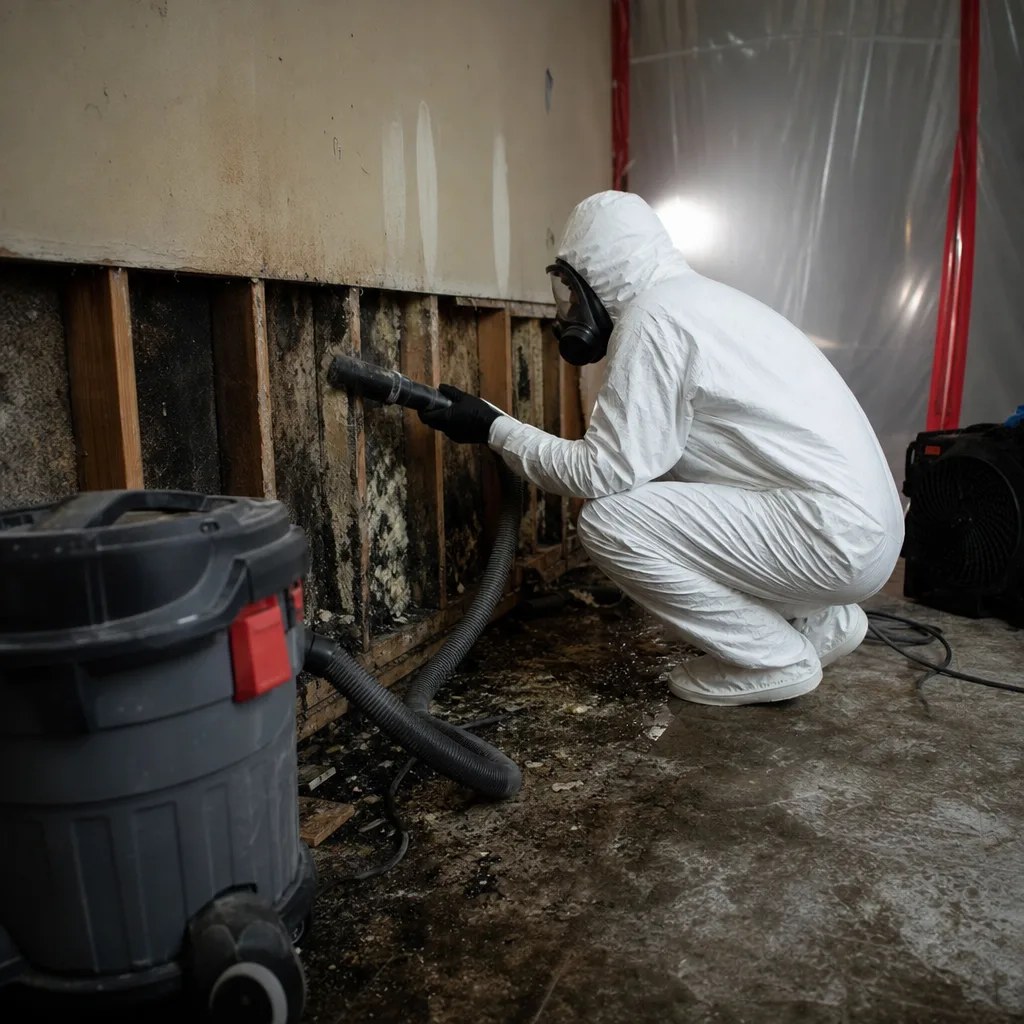
This is the overlooked half of San Francisco mold work. You can remediate every spore in a wall cavity, but if the humidity source stays, the colony returns. We install or repair bathroom fans, check vapor barriers in crawl spaces, and recommend dehumidifier placement sized for your microclimate. The fog belt in the Sunset behaves differently from the sun-baked Mission, so we don’t use a one-size-fits-all humidity target. We match the equipment to the building’s actual readings.
Crawl Space Treatment
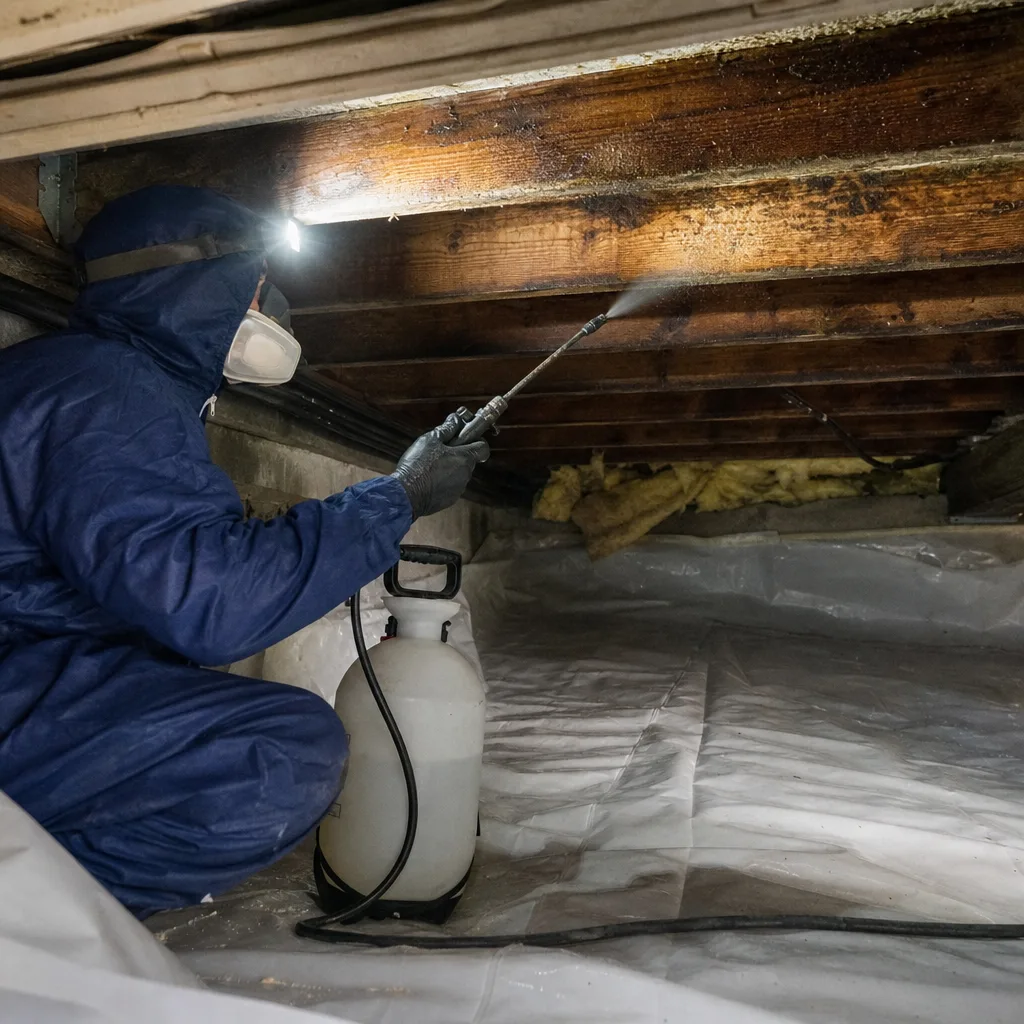
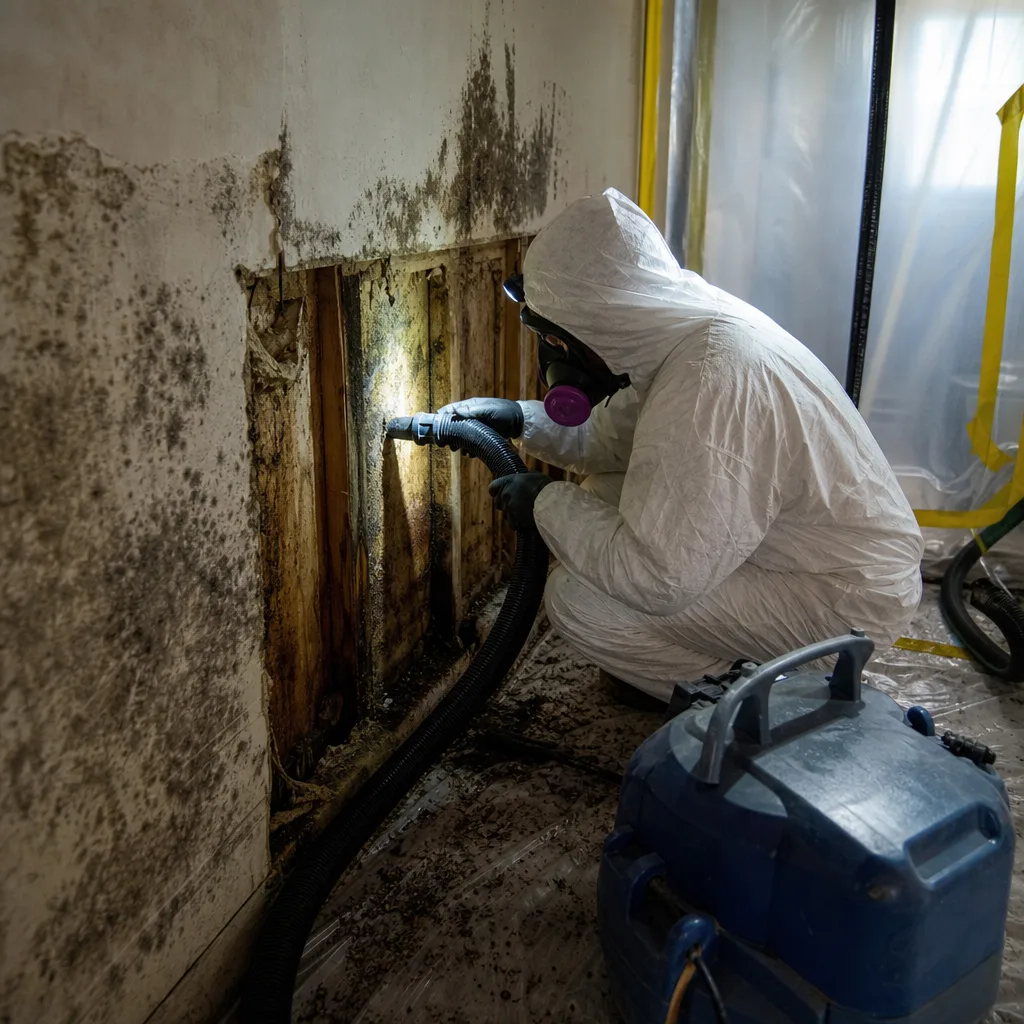
San Francisco crawl spaces are their own problem. Dirt floors, no vapor barrier, and fog that never quite burns off mean the underside of your house can sit at 70% humidity for months. Crawl space mold in older homes often requires full encapsulation or at least a serious vapor barrier upgrade before treatment makes sense. We handle the mold and the moisture in the same scope, because treating one without the other is a temporary fix.
What happens when you call
- 1
A real person answersNo phone trees - you reach a local pro.
- 2
You get an upfront price rangeHonest numbers before anyone is dispatched.
- 3
A background-checked tech heads outLicensed & insured, dispatched right away.
- 4
You approve before work beginsNothing starts until you say go.
Common Mold Remediation Problems We See in San Francisco Homes
- Fog-driven baseline moisture. San Francisco’s marine layer condenses on cold north- and west-facing facades year-round. Contractors using inland Bay Area drying thresholds routinely release SF structures too early, leaving hidden mold in original lath-and-plaster that thermal imaging cannot reliably detect. This is the single most common reason mold returns after a “successful” remediation.
- Earthquake-created entry points in mid-retrofit buildings. Many older buildings are partway through the city’s mandatory Unreinforced Masonry retrofit program. Fresh penetrations from anchor bolts and shear-wall tie-ins can channel periodic rain or fog condensation into wall cavities, causing mold that looks like an old problem but is actually new. We trace the moisture source, not just the stain.
- Lath-and-plaster hiding spots. In Victorian and Edwardian flats, the mass of plaster dampens thermal imaging, so mold colonies behind walls go undetected until odor or visible staining shows up. That’s why we combine moisture meters with physical probes and visual inspections rather than relying on thermal alone.
- Crawl spaces that never dry out. Dirt-floor crawl spaces under San Francisco homes hold foggy humidity for months. Mold spreads under the floorboards while the living space above seems fine. Our crawl space treatments always include a moisture plan, because treating the mold without fixing the moisture is paying twice for the same problem.
Pricing for Mold Remediation in San Francisco, CA
Here are real numbers for San Francisco, not national averages. A mold inspection with lab testing runs $400-$800. A contained single-room remediation, including HEPA air scrubbing, removal of colonized drywall or plaster, antimicrobial treatment, and drying, typically costs $1,800-$4,200. Black mold in a bathroom or laundry closet usually lands in the $2,500-$4,500 range. Whole-floor or multi-room jobs in older flats run $8,000-$16,000. Crawl space treatment with a new vapor barrier can push $5,000-$12,000 depending on square footage and access. If another company quotes you a number before anyone has seen or tested the space, be suspicious. Wade gives free estimates, and there is no trip charge inside the county. Call (855) 915-0646 and we will give you a written scope before any work starts.
A San Francisco Mold Problem Most Contractors Miss
San Francisco’s chronic fog belt means mold colonization timelines in ZIP codes like 94109 and 94107 run measurably faster than in inland Bay Area cities. Pre-existing elevated moisture content from daily condensation on cold north- and west-facing facades is a baseline condition that changes drying equipment calculations before any acute water loss. What that means practically: a wall cavity in a Pacific Heights Edwardian can already be at 65% moisture content in August, before the rains even start. A contractor who treats that wall like it’s in Walnut Creek will pull drying equipment too early. The wall looks dry on the surface, the clearance reading passes inland standards, and the mold colony simply goes dormant until the next condensation cycle reactivates it. Wade’s crew runs drying calcs on San Francisco numbers, not generic ones.
In a 1920s Edwardian flat in the Mission (94110), our crew traced a persistent musty odor to original lath-and-plaster walls that had been absorbing fog-driven condensation for decades, masking hidden mold behind layers of calcimine paint. Using Injectidry panels and Dri-Eaz dehumidifiers sized for San Francisco’s elevated ambient humidity, we opened only the affected wall cavities, removed colonized plaster and lathe, and treated the framing with an IICRC-approved antimicrobial before rebuilding with moisture-resistant materials. The homeowner had called two other companies before us. Both said the odor was “old house smell.” It wasn’t.
We Also Serve Cities Near San Francisco
Wade’s Restoration covers the entire city, including the Mission District, Noe Valley, Chinatown, and Visitacion Valley. If you are in one of those neighborhoods or anywhere else in the 94102, 94103, or 94127 ZIP codes, you are inside our response area. This page is part of our resources for Mold Remediation in San Francisco, and if you are nearby, call us for the same straight answers.
Serving San Francisco, CA - Our Local Coverage Area
We’re based in the San Francisco area and know this community well. Use the map below to see our service coverage - if you’re nearby, we can almost certainly help.
FAQs - Mold Remediation in San Francisco
San Francisco’s fog creates year-round elevated humidity that inland cities do not experience, which means mold grows faster and drying takes longer here. A wall cavity in the Mission or Noe Valley can hold 60-70% moisture content even in summer, so our drying equipment runs longer and our clearance standards are stricter than what would pass in Sacramento or San Jose. Expect two to five days of active drying for most San Francisco mold jobs, not the single-day timeline some companies advertise.
Lath-and-plaster walls are dense and hold moisture invisibly, which means thermal imaging misses colonies that drywall would reveal. The plaster mass also slows drying, so we use Injectidry panels to pull moisture through the wall system rather than just drying the surface. Remediation in these walls often means opening larger areas than a drywall patch job, because the mold colony typically extends further behind the plaster than visible staining suggests.
We look at the moisture readings and the damage pattern. New water intrusion produces active, wet mold with high moisture content at the time of inspection. Pre-existing mold, the kind that has been there for years, is usually dry or only intermittently damp, and the staining pattern often corresponds to old water lines rather than fresh cracking. In mid-retrofit buildings, we also check for recent penetrations from anchor bolts and shear-wall tie-ins that could be channeling water into cavities that were previously sealed. That distinction matters for insurance, because new damage and old damage are covered differently.
Older San Francisco homes typically have dirt-floor crawl spaces with no vapor barrier, which means the ground releases moisture into the crawl space year-round. In newer construction, the crawl space is usually sealed and conditioned, so mold there points to a specific leak or flood. In an older home, the crawl space itself is often the moisture source, so mold treatment without a vapor barrier upgrade is a temporary fix. We treat the crawl space and the moisture source in one scope.
Yes, in most cases. We use containment barriers with negative air pressure in the affected rooms, which keeps spores from spreading into occupied areas. In a dense building, we also manage hallway air pressure so remediation work in one unit doesn’t push spores into a neighbor’s unit. Full evacuation is rare and usually only required for extensive contamination or when occupants have severe respiratory conditions. We tell you the truth after the inspection, not before.
Call Wade’s Restoration for Mold Remediation in San Francisco
If you smell mold, see staining, or just bought an older flat and don’t trust the air in it, call Wade directly at (855) 915-0646. He answers his own phone, he will be there himself, and he will give you a written scope before any work starts. Free estimates, no trip charge in the county, and a 90-Day Done Right Promise on every mold job. Don’t let it spread while you wait.
Written by Wade Ferris, Owner at Wade’s Restoration of California.