
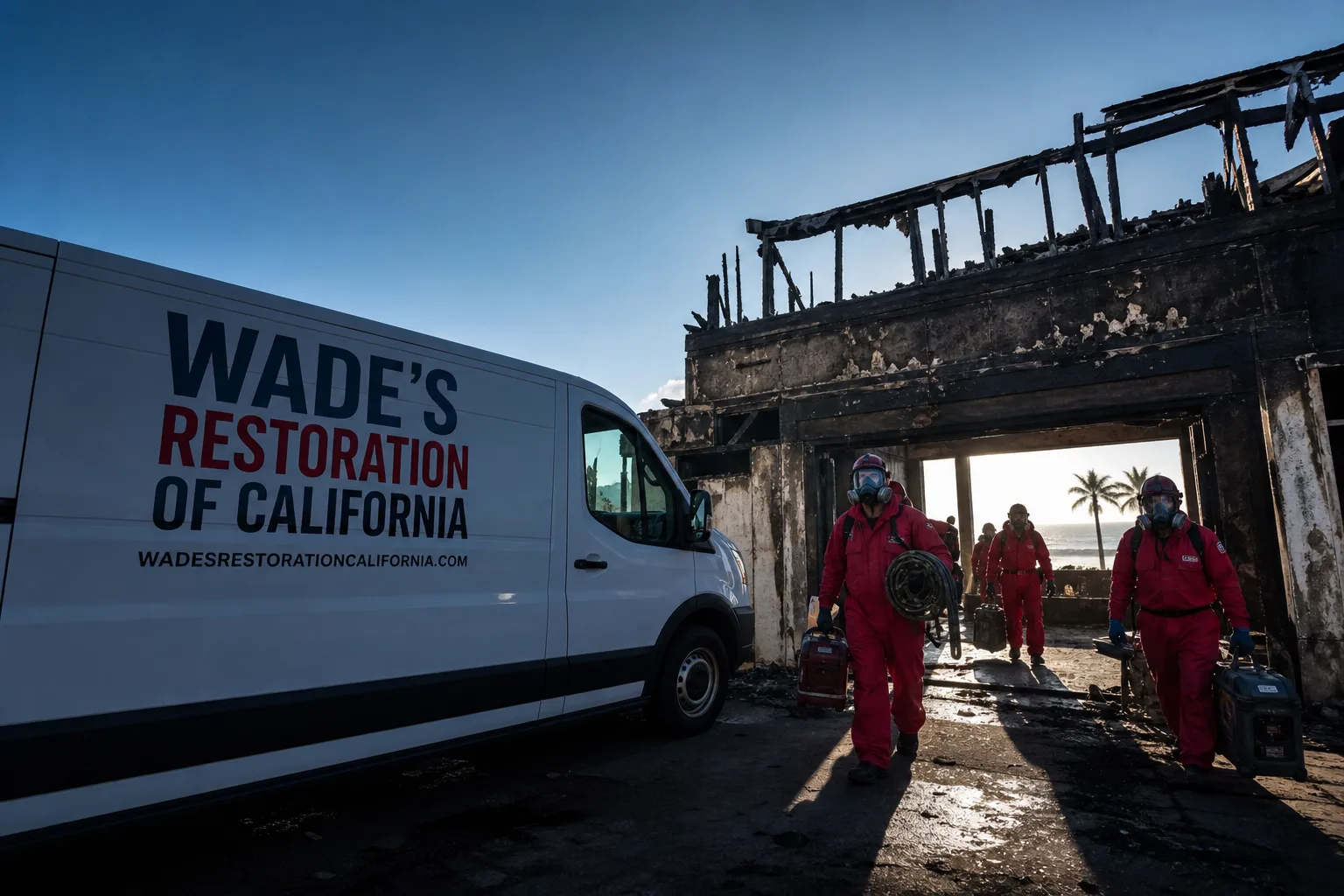
Mold Remediation in Chinatown: What It Costs and How We Work
Mold remediation in Chinatown typically runs $1,800 to $6,500 for a contained removal in a single residential unit, with black mold and multi-floor moisture tracking pushing costs toward the upper end. We reach most Chinatown buildings within 60 to 90 minutes of your call, and Wade Ferris answers the phone himself, day or night, at (855) 915-0646. If you’ve noticed a musty smell in a closet on Grant Avenue or peeling paint along a ceiling on Stockton Street, the sooner we map the moisture, the less wall we have to open.
The older the building, the more important that first hour is. Chinatown’s post-1906 tenements hold moisture in ways newer construction simply doesn’t, and what starts as a small leak above a kitchen on Jackson Street can be feeding mold inside a wall cavity two floors down before you ever see a stain. Our Mold Remediation team knows what to look for here because we’ve opened enough of these walls to recognize the patterns.
Why Chinatown Buildings Need a Different Kind of Mold Remediation
Chinatown is not like North Beach or the Financial District. The housing stock is older, denser, and built in a way that actively hides water damage. Most of the neighborhood was rebuilt fast after the 1906 earthquake and fire, and the construction methods from that era have consequences a century later.
In 94133, the typical building is a three-to-five-story brick or wood-frame tenement from the 1910s through 1930s. These buildings were subdivided over generations. Walls got added, floors got sectioned off, and plumbing got replaced piecemeal. That means a supply line leaks and the water travels along framing members that were never meant to be accessible. It follows diagonal bridging and un-firestopped balloon-frame bays. Wade has watched a third-floor pipe failure surface as a damp lath-and-plaster wall on the first floor, two residential units away from the source. You can’t treat that by drying the visible stain and painting over it. The moisture boundary has to be mapped, or the mold comes back.
Moisture Mapping First, Containment Second
Most companies in Chinatown will quote you based on what they can see. Wade doesn’t work that way. He brings thermal imaging and moisture meters into every job because in these buildings, the visible stain is almost never the whole story. The real moisture boundary often extends through floor cavities, behind chimney stacks, and along shared walls into neighboring units. Mapping that boundary before containment begins is the single most important step in a Chinatown mold job. Skip it and you’ll be treating the same wall again in six months.
Our Mold Remediation Services in Chinatown
Mold Inspection & Testing
Mold inspection in Chinatown runs $350 to $650 for a single-unit assessment with moisture mapping and air sampling. We test because clearance matters: if you’re in a mixed-use tenement above a restaurant on Stockton Street, your landlord, your neighbors, and possibly your insurer will want documentation proving the mold is actually gone. Wade hands every homeowner a full moisture log at the end of the job. Almost nobody else does that.
Mold Removal
Contained mold removal in Chinatown homes runs $2,000 to $5,500 depending on how far the moisture boundary extends and how many rooms need containment. In these older buildings, we’re often removing plaster rather than drywall, and plaster removal is slower, dustier work that requires more careful negative-air containment. We build proper containment chambers, run HEPA air scrubbers, and physically remove affected material rather than spraying something over it and calling it done.
Black Mold Remediation
Black mold remediation in 94133 tenements carries a different risk profile than in suburban single-family homes because of shared drainage stacks and minimal fire separation between units. If you have Stachybotrys growing inside a wall cavity, spores don’t stay inside that cavity when we open it. We treat every black mold job with full containment, HEPA filtration, and post-remediation clearance testing. On Waverly Place, our crew handled a job where black mold had grown in the wall behind an original cast-iron drain stack that had been leaking slowly for years. We coordinated access with three occupied units, contained each opening, and ran the job in sections so nobody had to leave their home for more than a day at a time.
Air Quality Restoration
After removal, the air quality work is what keeps mold from returning and protects the people living above and below the affected unit. Air quality restoration in Chinatown runs $500 to $1,800 and includes HEPA air scrubbing during and after removal, plus post-remediation air sampling. In tight tenement buildings, we also check for negative-pressure problems: bathroom exhaust fans venting into dead cavities, range hoods recirculating into shared walls, and other conditions that keep interior humidity elevated year-round.
What happens when you call
- 1
A real person answersNo phone trees - you reach a local pro.
- 2
You get an upfront price rangeHonest numbers before anyone is dispatched.
- 3
A background-checked tech heads outLicensed & insured, dispatched right away.
- 4
You approve before work beginsNothing starts until you say go.
How Chinatown’s Climate and Construction Speed Up Mold Growth
San Francisco’s marine layer keeps humidity high in Chinatown even when the rest of the Bay Area is baking. Summer fog rolls through the Stockton Street corridor and sits there. In buildings with original wood windows and no mechanical ventilation, interior humidity stays above 60 percent for months at a time. That’s already mold-friendly. Add a pipe leak or roof penetration and you’ve got conditions where mold growth starts within 24 to 48 hours.
But it’s the walls that make Chinatown different, not just the fog. The dense plaster-on-lath assemblies common in post-1906 construction are more than two inches thick in places. They hold water like a sponge. The wall cavities are deeper and more irregular than modern stud framing, which means the drying path is longer and slower. Add decades of informal renovations that created hidden cavities and dead spaces behind cabinets, under stair treads, and around fireplace backs, and you have a building type where mold can grow for months without ever showing you a visible sign on the painted surface.
What Mold Remediation Actually Costs in Chinatown
Here’s what we tell people who call from 94133, and it’s what we’ll tell you when you call (855) 915-0646:
- Mold inspection with moisture mapping: $350-$650 for a single unit
- Contained mold removal (single room): $2,000-$4,000
- Contained mold removal (multi-room or multi-unit path): $4,500-$6,500
- Black mold remediation with clearance testing: $3,500-$6,500
- Crawl space mold treatment under a tenement: $1,800-$4,500
- Air quality restoration after remediation: $500-$1,800
- Moisture and humidity control retrofit: $800-$2,500
The range is wide because the scope in Chinatown is unpredictable until walls are opened. A job that looks like a two-foot-square ceiling stain can turn into three floors of moisture tracking along balloon framing. That’s why we write a scope, agree to it before work starts, and don’t change the number mid-job unless you approve it in writing. No bait pricing, no surprise change orders. And if you have a written estimate from another company, we’ll give you a free second opinion. No charge for that.
How Emergency Mold Remediation Works in Chinatown
Here’s the sequence, based on how Wade runs every Chinatown job:
- You call (855) 915-0646. Wade answers. Not a call center, not a voicemail queue. He asks what you’re seeing and smelling, and tells you whether you need someone out now or whether you can wait a day. He’s told people to save their money before. That’s the kind of company this is.
- We arrive within 60 to 90 minutes for emergencies. For a supply-line failure or sewage backup, that speed matters. In Chinatown’s climate, 24 hours is the difference between a dry-out and a full mold remediation.
- We map the moisture boundary with thermal imaging. We don’t open a wall until we know where the water went. In these post-1906 buildings, the water almost always went further than the stain suggests.
- We agree on a written scope before work starts. You see the number, the plan, and the timeline before anything gets demoed.
- We contain and remove. HEPA air scrubbers run the whole time. We remove affected plaster, lath, or drywall to the moisture boundary, not to some arbitrary two-foot rule.
- We dry, document, and clear. Daily moisture readings go into a log. You get the log. Post-remediation air sampling confirms the job is done before we call it done.
Local Knowledge That Changes the Job: Balloon Framing and Shared Walls
One true local insight drives everything we do in Chinatown: unlike nearby North Beach or the Financial District, a burst supply line in a Chinatown tenement routinely travels through un-firestopped balloon-frame bays and century-old diagonal bridging to surface two floors below the source. That means moisture-boundary mapping is the critical first step before any mold containment can begin here.
Our crew traced a third-floor supply-line failure on Waverly Place that had channeled along 1920s balloon framing and saturated the lath-and-plaster wall of a first-floor residential unit. Using thermal imaging, we mapped the true moisture boundary across three occupied floors, coordinated containment with the building’s Cantonese-speaking tenants, and removed all affected plaster before drying the cavities with Dri-Eaz dehumidifiers and Injectidry floor mats to a verified dry standard. That’s the job. That’s what mold remediation actually looks like in 94133.
Most companies won’t touch a job like that because it’s three times the work for the same visible square footage. Wade takes it because he knows it’s the only way to actually solve the problem.
Moisture and Humidity Control for Chinatown’s Older Buildings
After we remove mold, moisture and humidity control is what keeps it from coming back. In Chinatown tenements, this usually means addressing one or more of these conditions:
- Reliance on natural ventilation that doesn’t exist. Many original windows have been painted shut for decades, and bathroom exhaust fans vent into dead cavities rather than outside. We correct the ventilation path and install proper exhaust where it’s feasible.
- Kitchen and laundry moisture loading. In units where several adults share a small kitchen, daily cooking produces enough moisture to keep plaster walls damp. We recommend and install appropriately sized dehumidification for these spaces.
- Crawl space humidity migrating upward. Under many Chinatown buildings, crawl spaces sit directly on soil with no vapor barrier. That moisture moves up through the framing into first-floor units. We treat the crawl space, install vapor barriers, and document the before-and-after readings.
- Shared walls transferring moisture between units. When one unit’s kitchen is on the other side of your bedroom wall, their steam becomes your humidity problem. We can’t rebuild the building’s separation, but we can recommend and implement practical moisture-control measures for your side of the assembly.
We Serve Chinatown and the Surrounding San Francisco Neighborhoods
If you’re in Chinatown, we’re already nearby and can be at your door within the hour. We also serve San Francisco, the Mission District, Noe Valley, and Visitacion Valley. Same crew, same written scope, same 90-Day Done Right Promise. If it’s not done right, Wade makes it right, in writing, on every mold job.
Serving Chinatown, CA - Our Local Coverage Area
We’re based in the Chinatown area and know this community well. Use the map below to see our service coverage - if you’re nearby, we can almost certainly help.
FAQs - Mold Remediation in Chinatown
Why does mold grow so fast in Chinatown’s older brick and wood-frame tenements after a water leak?
Mold grows fast in Chinatown because the buildings hold moisture exceptionally well and the climate keeps humidity high. Dense plaster-on-lath walls in unventilated post-1906 tenements reach mold-growth thresholds within 24 to 48 hours during summer fog, especially when a leak saturates the thick plaster assembly. Add San Francisco’s persistent marine layer, which keeps interior humidity above 60 percent for months, and a clean-water event becomes a mold problem before most homeowners even notice a stain. Call (855) 915-0646 as soon as you suspect water has entered a wall; the first 48 hours are when the scope is smallest.
How do you handle mold remediation in a Chinatown building where multiple occupied units share walls and drainage stacks?
We treat every shared-wall job as a multi-unit coordination project, not a single-unit job. That means we map the moisture boundary across the whole assembly, identify which units are affected, and coordinate access with each resident (and the property owner) before we open anything. We work in sections so no one has to leave their home for more than a day at a time. Containment is built per opening, not just around a single room, which matters when a wall cavity connects two occupied units and a hallway. We document everything and provide the property owner and each affected resident with a copy of the moisture log at the end.
Why do you need thermal imaging to find mold in Chinatown’s post-1906 tenements?
Because in these buildings, the visible stain almost never represents the full moisture boundary. Decades of informal renovations created hidden cavities and dead spaces that don’t follow modern framing logic. Water travels along diagonal bridging and original balloon-frame bays, often surfacing two floors below the source. Thermal imaging shows us the temperature difference between wet and dry building materials behind the finished surface, so we can map where the moisture actually is before we start cutting. Without thermal imaging, you’re guessing, and guessing in a Chinatown tenement means you’ll be back in six months for the same mold.
What is the risk of black mold in Chinatown buildings with original cast-iron drain stacks?
The risk is real but manageable if caught early. Original cast-iron drain stacks in Chinatown tenements are 80 to 100 years old. They crack at the hubs and leak slowly behind walls for months or years before anyone notices. That slow, persistent moisture is exactly what Stachybotrys (black mold) needs to establish itself. The pattern we see is black mold growing in the wall cavity behind the stack, often spreading into the plaster and lath on one or both sides. Remediation requires full containment, HEPA air scrubbing, physical removal of the affected material, and post-remediation clearance testing. If you smell a persistent musty odor near a bathroom or kitchen wall in a Chinatown building, call (855) 915-0646.
Can you remediate mold in a crawl space under a Chinatown building without disrupting the businesses or residents above?
Yes. Crawl space mold remediation under Chinatown buildings is done entirely from below, without opening any walls or floors in the occupied space above. We set up containment at the crawl space access point, run HEPA air scrubbers, remove affected insulation, treat the framing, and install a vapor barrier where needed. Residents and businesses above typically experience no disruption beyond occasional foot traffic near the exterior access. Crawl space jobs in 94133 run $1,800 to $4,500 depending on the size of the space and the extent of the fungal growth.
Call Wade’s Restoration for Mold Remediation in Chinatown
If you’ve got a mold problem in a Chinatown tenement, a shop on Grant Avenue, or a single-family home in 94133, call (855) 915-0646. Wade Ferris answers the phone himself. He’ll tell you straight whether you need us out today or whether you can wait, and he won’t charge you for that conversation. Free estimates, free second opinions, no trip charge in the county, and a 10% discount for seniors and veterans that never expires.
Written by Wade Ferris, Owner at Wade’s Restoration of California, serving Chinatown and the greater San Francisco Bay Area since 2007.