
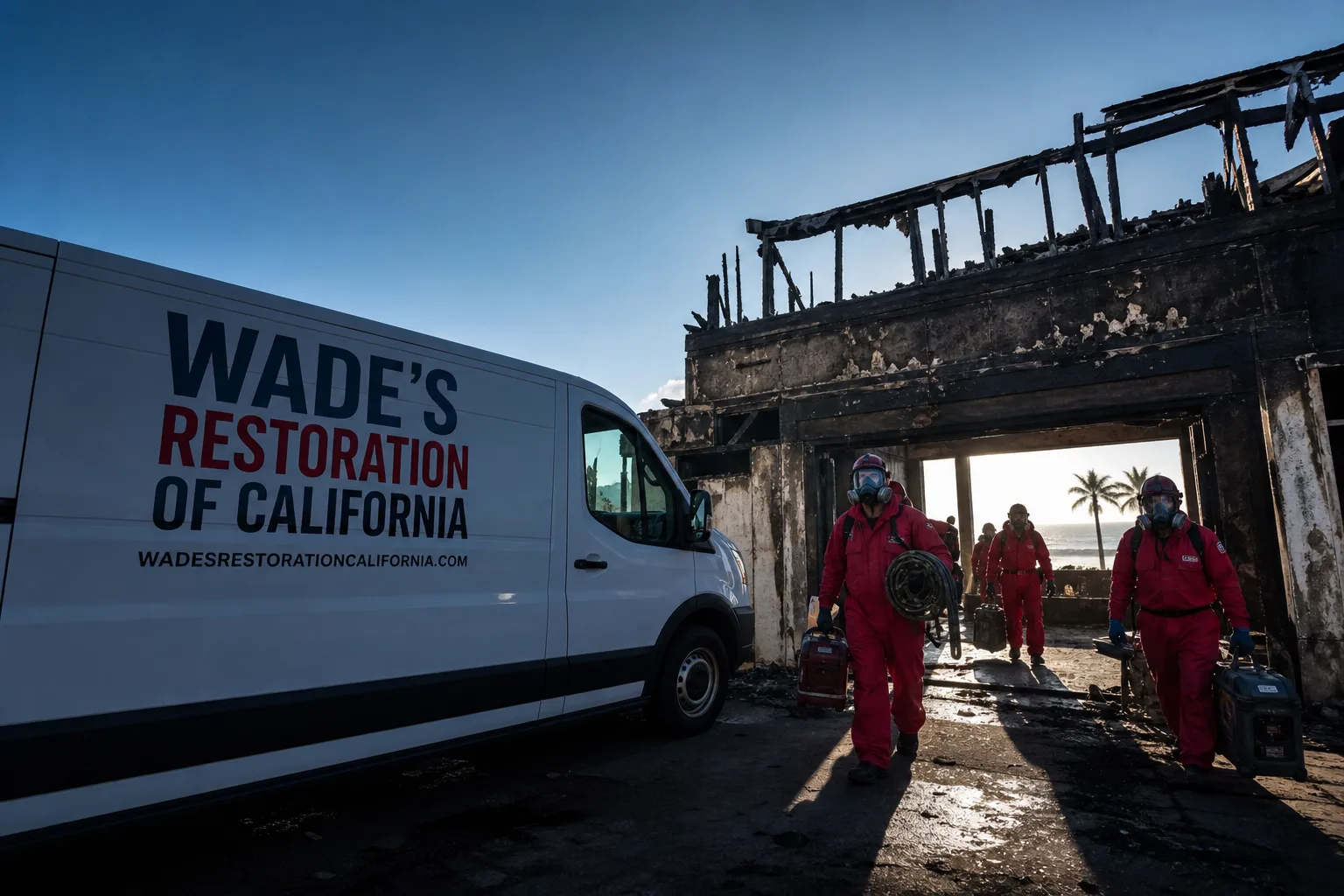
Fast, Reliable Mold Remediation Across Mountain House
Mold remediation in Mountain House typically costs $1,800-$6,500 depending on how far the moisture has traveled, and most jobs take two to five days once we open the walls and see what’s actually behind them. That’s the honest range for this community, and it’s shaped by something most contractors outside the area don’t understand: Mountain House homes fail in clusters. Because nearly every house here was built between 2003 and 2015 on expansive adobe clay over a Delta-influenced water table, the mold we pull out of one tract home on a Tuesday is often the same mold profile we’ll find in the house three doors down on Thursday.
Wade Ferris has been answering his own phone since 2007, and he’s the one who will walk your home, not a sales rep with a clipboard. If you’ve got a musty smell you can’t place, a dark stain spreading behind a baseboard, or a closet that smells like wet cardboard every time it rains, call (855) 915-0646. Wade will be there himself.
Why Wade’s Restoration of California Is Mountain House’s Preferred Mold Remediation Company
We don’t have a call center. When you call us from Mountain House, a live person picks up, and more often than not that person is Wade. He’s the owner. He publishes his address and license number. He’ll hand you his cell number before he leaves the job. There’s no runaround because there’s no one to pass you off to.
What sets us apart in Mountain House specifically is that we already know what we’re going to find before we cut into your drywall. This community has a documented pattern of post-tension slab cable failures and early-generation PEX manifold leaks that feed moisture into wall cavities for months before anyone notices. We’ve mapped it across Altamont Village, Bethany Village, and Wicklund Village. A national franchise will treat your job like a generic mold call. We treat it like what it actually is: a Mountain House tract home built fast in the 2000s, with the same plumbing and slab stresses as every other house on your street.
Every mold job we run in Mountain House comes with our 90-Day Done Right Promise in writing. If it’s not done right, Wade makes it right. Ask anyone. He runs into his own customers at the hardware store on Saturdays, and that’s the oldest accountability mechanism there is.
Wade and his crew carry IICRC and RIA credentials, use professional-grade Dri-Eaz drying equipment, and document every moisture reading daily. At job’s end, you get the full moisture log. Almost nobody in this trade does that, and it matters when your adjuster starts asking questions.
Our Mold Remediation Services in Mountain House
Mold Inspection & Testing in Mountain House
A proper mold inspection in Mountain House starts with the slab, not the attic. That’s the difference between a local contractor who knows this community’s failure patterns and someone running a generic checklist. We test air quality, swab visible growth, and pull moisture readings from the slab, the wall cavities, and the stucco drainage plane. In homes along Central Parkway and the newer phases north of Mountain House Parkway, we’ve found elevated moisture behind baseboards that had no visible mold yet, but the meter told us it was coming.
Mold Removal in Mountain House
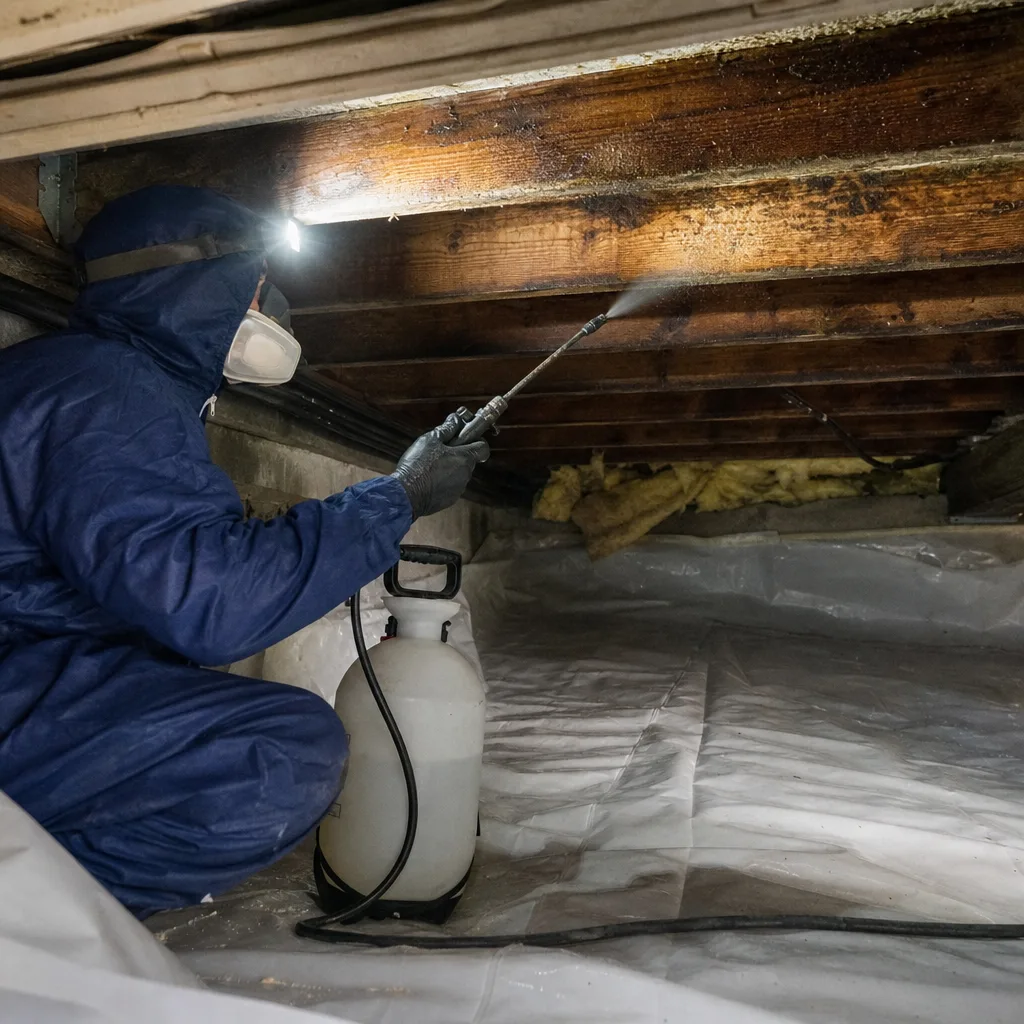
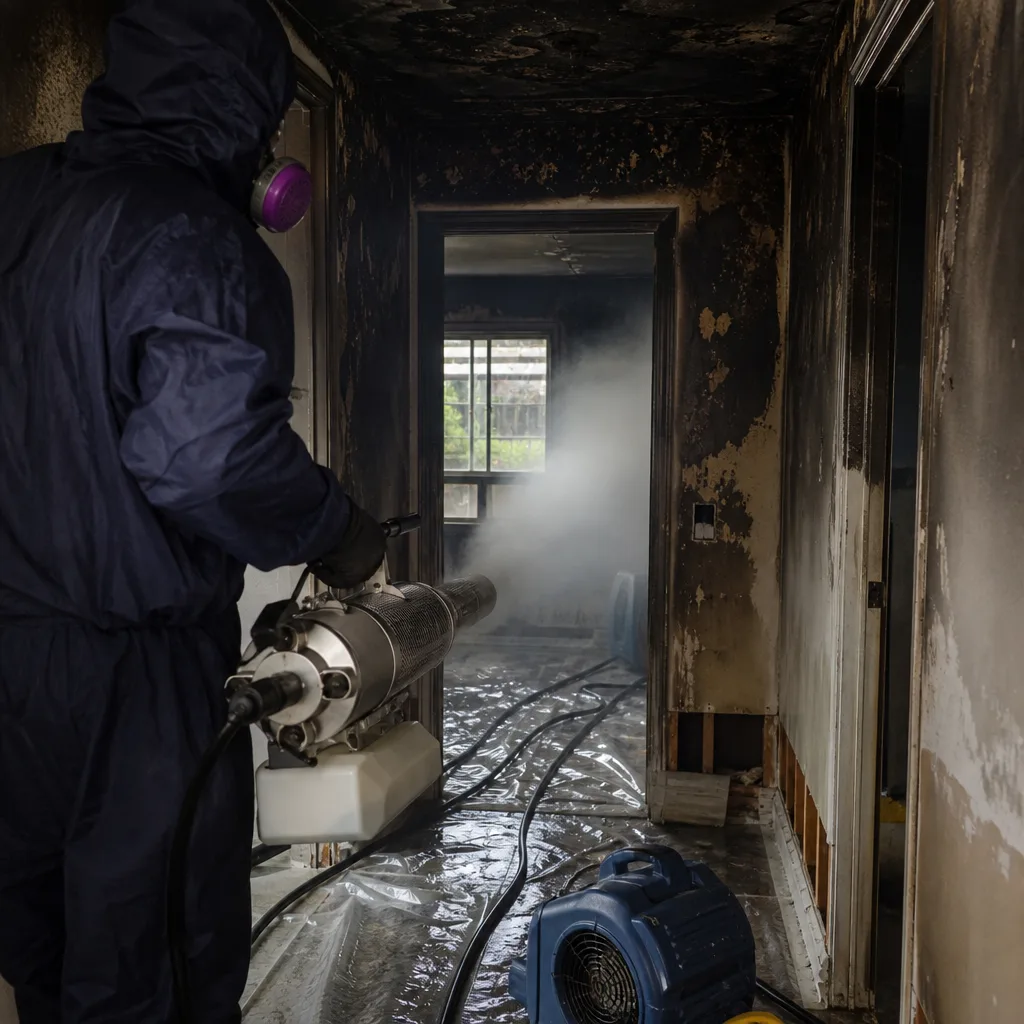
Mold removal here often means opening walls adjacent to plumbing manifolds and post-tension cable runs. We contain the affected area with negative air, remove mold-damaged drywall and insulation, and treat the framing. But the critical part in Mountain House is finding the moisture source first. Pulling out mold without fixing the slab crack or PEX manifold that fed it just means you’ll be calling us again in eight months. Most Mountain House mold removal jobs run $2,200-$5,800 depending on square footage and how many rooms are involved.
Black Mold Remediation in Mountain House
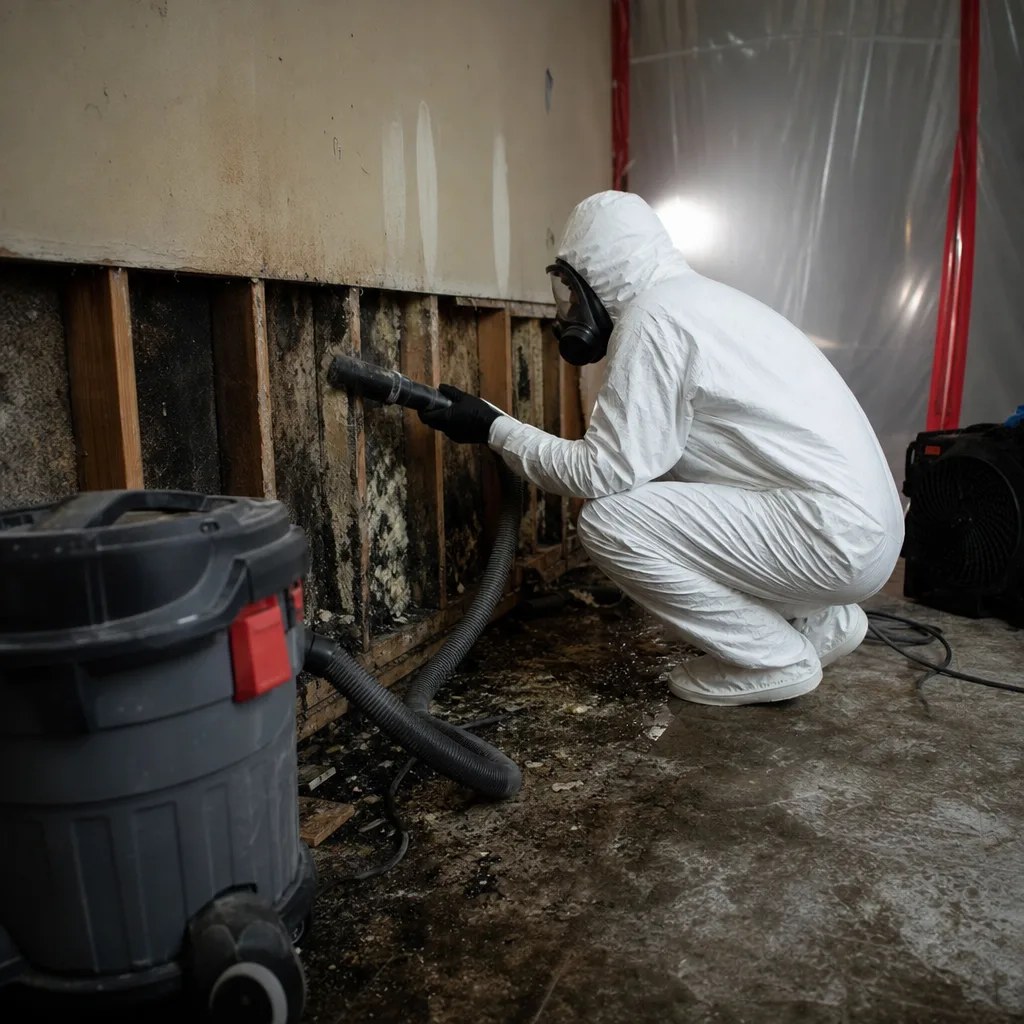
Black mold, or Stachybotrys, loves the conditions Mountain House homes create: warm summers, Delta humidity, and hidden moisture trapped inside wall cavities. We handle full black mold remediation with proper containment, HEPA air filtration, and post-remediation clearance testing. If you’ve got black staining in a closet, behind a water heater, or along the base of a shared wall, don’t open it up yourself. We’ll sample it, identify it, and remove it safely. Typical black mold remediation in Mountain House runs $2,800-$6,500 depending on spread.
Air Quality Restoration in Mountain House
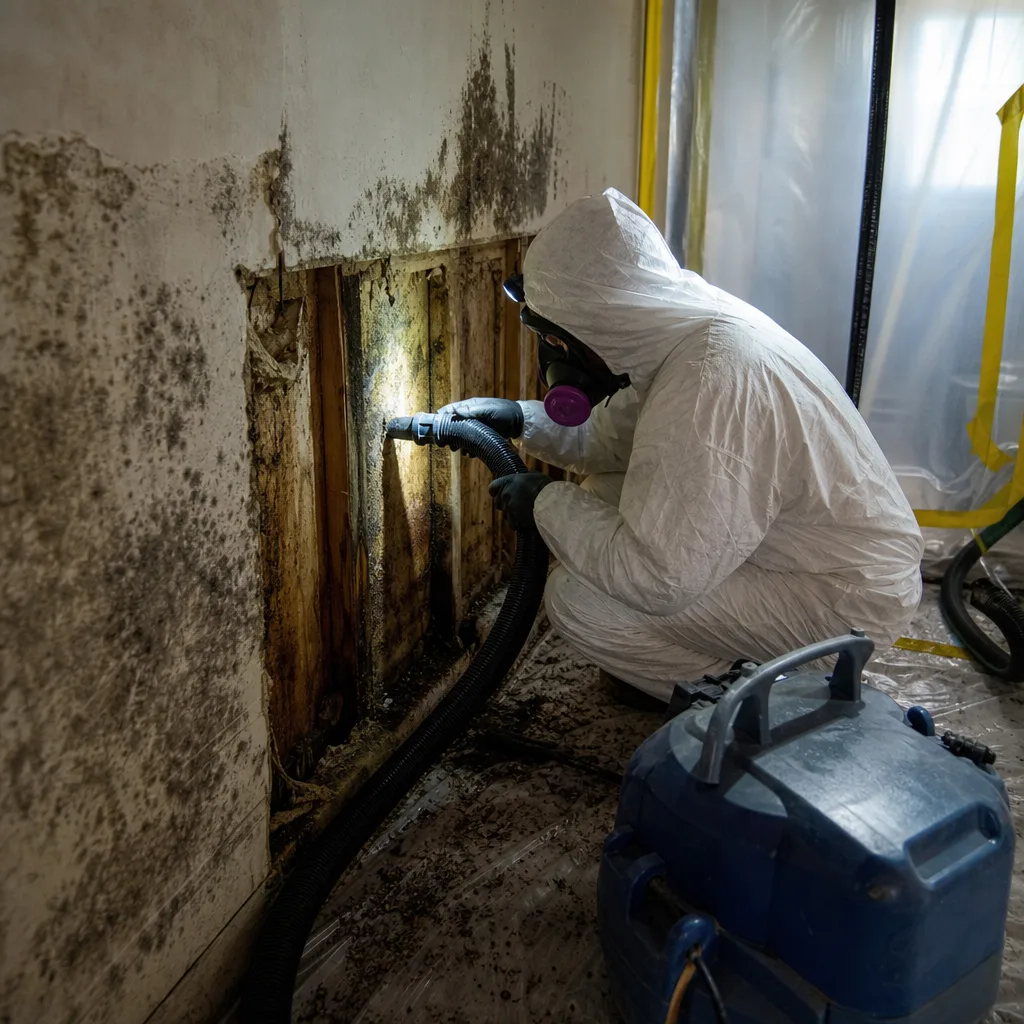
When mold meets the Delta’s winter fog and summer dust, indoor air quality can go bad fast in this community. After we remove the mold and dry the structure, we run HEPA air scrubbers and clean the HVAC system if spores have spread through the ductwork. Mountain House homes built after 2010 often have forced-air returns that pull from the same spaces where slab moisture wicks upward, which means a small mold bloom under the floor can circulate spores through every bedroom. We test and we treat.
What happens when you call
- 1
A real person answersNo phone trees - you reach a local pro.
- 2
You get an upfront price rangeHonest numbers before anyone is dispatched.
- 3
A background-checked tech heads outLicensed & insured, dispatched right away.
- 4
You approve before work beginsNothing starts until you say go.
Why Mountain House Homes Are Different When It Comes to Mold
Here’s the thing about Mountain House that most mold remediation companies miss: this is one of California’s youngest master-planned communities, built almost entirely during the 2000s housing boom on former agricultural land adjacent to the Sacramento-San Joaquin Delta. The expansive adobe clay soils under this community heave and contract dramatically between wet winters and scorching summers. That annual ground movement opens slab cracks and stucco drainage-plane gaps at a pace unusual for homes this young, meaning water and mold damage restoration calls here are disproportionately tied to foundation settling and moisture intrusion rather than aging infrastructure. That’s a dynamic virtually absent in older neighboring Tracy or Stockton neighborhoods, where mold calls usually trace back to roof leaks or plumbing fixtures reaching end of life.
Because the homes were built so fast, between 2003 and 2008 especially, we’re now seeing original post-tension slab cables and early-generation PEX manifold systems producing slab leaks across multiple homes in the same tract simultaneously. We were called to a two-story stucco tract home in the Altamont Village neighborhood after the homeowner noticed a persistent musty smell in a downstairs closet. Our techs traced elevated moisture to hairline cracks in the post-tension slab that had opened during the summer shrink cycle, and an early-generation PEX manifold in the adjacent wall was weeping at several crimp rings. We set up Dri-Eaz drying equipment, removed mold-damaged drywall, and treated the affected framing before sealing the slab cracks-then mapped a dozen other homes on the same street with identical plumbing layouts for preventative inspections. That’s what local knowledge in Mountain House actually looks like.
Common Mold Remediation Problems We See in Mountain House Homes
- Post-tension slab cable failures: Expansive adobe clay under Mountain House stresses post-tension cables at recurring points, and when those cables fail, groundwater wicks upward beneath finished floors and behind baseboards. We find the same crack patterns in home after home within single subdivisions.
- Builder-grade PEX manifold failures: Homes built in the 2003-2008 Mountain House construction boom used early-generation PEX manifolds that are now failing in clusters. A weeping crimp ring inside a wall cavity can feed hidden moisture for months, and by the time you smell it, mold is already in the framing.
- Stucco drainage-plane gaps: The thermal cycling between 100°F+ summers and foggy, rain-driven winters accelerates stucco cracking, and winter storms push moisture behind the paper backing. We regularly see jobs where the homeowner was told it was a roof leak, when the real problem was water getting behind the stucco at a failed drainage plane.
- Whole-tract failure patterns: Because so many Mountain House homes share identical framing details, plumbing manifold layouts, and waterproofing assemblies, restoration contractors see the same failure mode repeated street by street. A neighbor’s mold problem is often a preview of yours if you have the same floorplan.
Pricing for Mold Remediation in Mountain House, CA
Here are the ranges we see for Mountain House jobs in 2026, based on what we’ve actually billed here:
- Mold inspection with air sampling: $350-$650
- Containment and small area mold removal (under 30 sq ft): $1,200-$2,800
- Full-room mold remediation with drywall replacement: $3,500-$6,500
- Whole-home mold remediation with HVAC cleaning: $6,500-$14,000+
- Moisture mapping and slab leak investigation: $450-$900
What drives the cost up in Mountain House is finding the moisture source. If it’s a PEX manifold inside a wall, that’s a plumbing repair plus mold work. If it’s a slab crack, we’re sealing concrete and treating the affected flooring and baseboards. The mold removal itself is usually straightforward. Finding what fed it is where local expertise saves you real money, because we don’t tear open three walls to find a leak we could have mapped in one. Call (855) 915-0646 and we’ll give you a written estimate before any work starts. We also offer a free second opinion on any written estimate from another company, and a Senior & Veteran 10% discount always applies.
Moisture & Humidity Control in Mountain House
Mold remediation without moisture control in Mountain House is a band-aid. The Delta-adjacent water table rises in wet years, and our winters bring weeks of fog that keeps exterior walls damp. We install crawl space encapsulation, dehumidification systems, and drainage improvements that address the root cause. For homes on post-tension slabs, that often means redirecting downspout water away from the foundation and sealing slab penetrations before they become mold feeders. We take moisture readings every single day of the job and hand you the full log when we’re done. That’s how you know the drying actually worked.
Does Insurance Cover Mold Remediation in Mountain House?
Sometimes, and the honest answer is that it depends on the source of the moisture. Sudden plumbing failures, like a burst PEX manifold or a slab leak, are usually covered. Long-term seepage that’s been happening for months may not be. The best move is to call us before you open anything up. We photograph the damage, we document the moisture source, and Wade deals with your adjuster directly. You’re never the one stuck relaying information between us and your insurance company. That’s part of the job, and we’ve been doing it for Mountain House homeowners since we started.
We Also Serve Cities Near Mountain House
Wade’s Restoration of California runs mold remediation calls throughout the 95391 area and beyond. If you’re in Tracy dealing with a similar post-tension slab issue, or in Discovery Bay with crawl space moisture, or in Livermore or Brentwood with a stucco drainage problem, we head out there too. Our Mold Remediation team knows this whole corner of the Delta. Dispatch and scheduling are coordinated from our Fresno, Central Valley office, and crews serve Mountain House locally.
Serving Mountain House, CA - Our Local Coverage Area
We’re based in the Mountain House area and know this community well. Use the map below to see our service coverage - if you’re nearby, we can almost certainly help.
FAQs - Mold Remediation in Mountain House
Mountain House was built almost entirely in a narrow window between 2003 and 2015, mostly on post-tension slab foundations over expansive adobe clay. Those slabs heave and shrink with the Delta’s wet winters and hot summers, and the post-tension cables are now failing at predictable points. When an entire subdivision shares the same foundation design, the same builder, and the same plumbing specs, the failures repeat street by street. If your neighbor has a slab leak, there’s a real chance your home has the same latent issue. Call (855) 915-0646 and we’ll moisture-map your slab before you have visible mold.
Mountain House sits closer to the Sacramento-San Joaquin Delta than Tracy or Stockton, which means the water table here is higher and more responsive to rain years. When the ground saturates, hydrostatic pressure pushes moisture through slab cracks and up into wall cavities. Homes in Tracy may have older plumbing, but they’re not dealing with the same groundwater wicking. Our moisture logs from Mountain House jobs consistently show elevated sub-slab readings in winter that you wouldn’t see a few miles inland.
Yes. The stucco on Mountain House homes goes through extreme thermal cycling, from 100°F+ summer days to foggy winter mornings. That repeated expansion and contraction opens hairline cracks in the stucco and gaps at the drainage plane, the paper-and-lath layer behind the stucco. Winter rain gets behind that layer and soaks the sheathing and framing. The moisture is often misdiagnosed as a roof or window leak, which delays proper mold remediation by weeks or months. We check the drainage plane on every mold call in Mountain House, because it’s rarely the first thing other contractors look at.
Mountain House is mostly single-family detached homes, so the mold from a leaking PEX manifold stays within your own walls. But in attached townhome or patio-home sections of the community, a failed manifold on a shared wall can absolutely push moisture into a neighboring unit’s framing. We’ve remediated jobs where the mold was visible on one side of the wall and the source was on the other. If you’re in an attached home, get it checked now. We’ll trace the source before we write the scope.
Post-tension slab cables run through the concrete and can fail catastrophically when stressed by expansive soil movement, just as they’re designed to do under tension. When a cable snaps or a pocket cracks, groundwater from the Delta-influenced water table wicks upward through the concrete into flooring, carpet, and wall cavities. That moisture feeds mold you can’t see until it’s already spread behind baseboards and under flooring. We’re one of the few mold remediation crews in this area running moisture mapping specifically for post-tension slab failures, which is why we catch problems in Mountain House before they become whole-room tear-outs.
Call Wade’s Restoration for Mold Remediation in Mountain House, CA
If you’ve got a smell you can’t place, a stain that keeps coming back, or a floor that feels damp when the weather hasn’t been wet, call us. Wade answers his own phone at (855) 915-0646, 24 hours a day, seven days a week. No voicemail, no answering service, no charge for a trip inside our own county. We’ll come out, take moisture readings, and tell you honestly what you’re dealing with. If you already have a written estimate from another company, bring it to us and we’ll give you a free second opinion. Wade has been walking Mountain House homes since these subdivisions were brand new, and he’s still showing up himself.
Written by Wade Ferris, Owner at Wade’s Restoration of California, serving Mountain House and the surrounding Central Valley since 2007.