
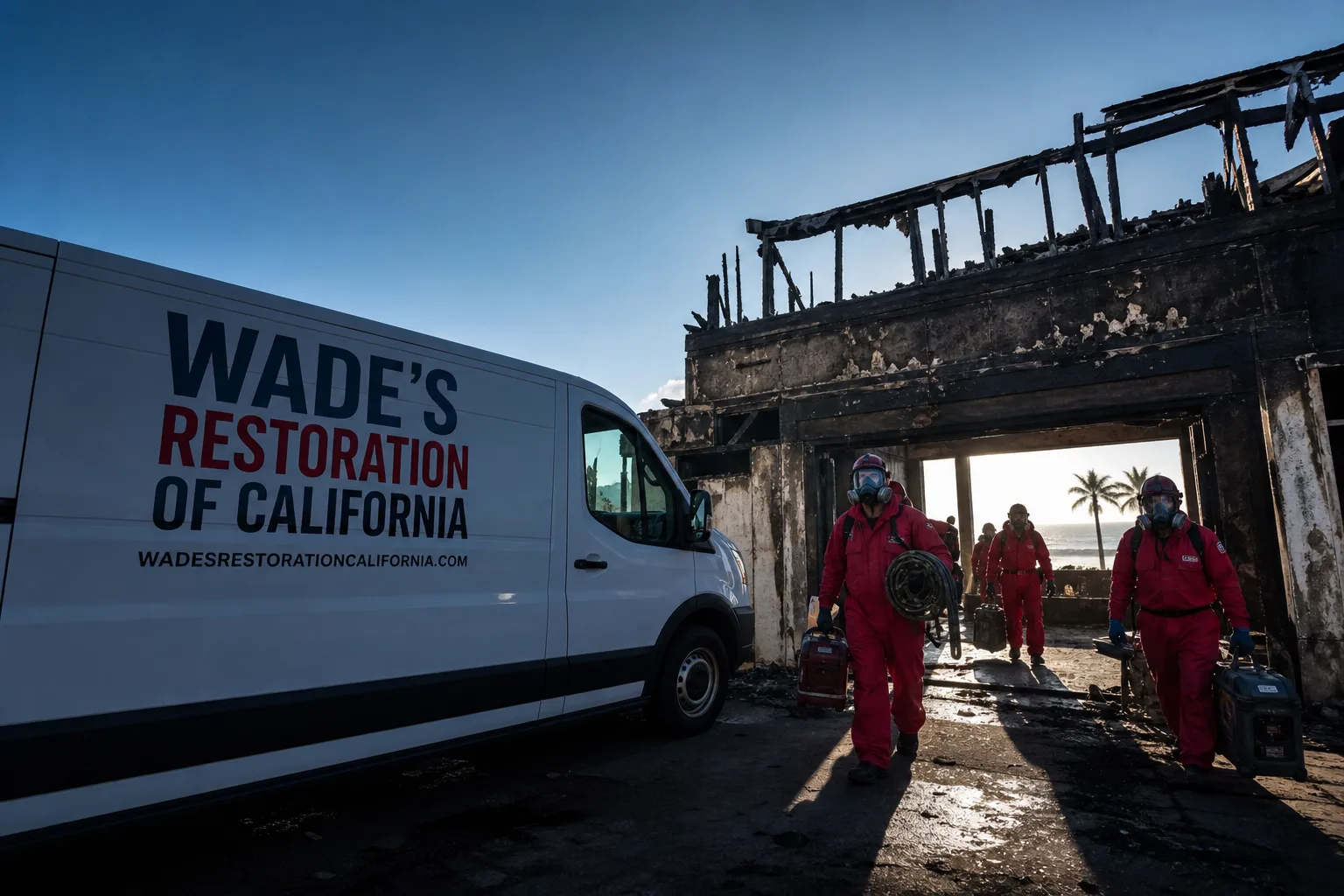
Fast, Reliable Mold Remediation Across Brentwood
Mold remediation in Brentwood usually runs $1,800 to $6,500 for a typical single-room job, and most homes here need it sooner rather than later. The houses in Brentwood were built fast during the 1995 to 2008 boom, and now they’re all aging on the same clock. When a condensate pan rusts through during a 105°F week or a weep screed wicks rainwater behind the stucco, mold gets a head start before you ever see a stain. Wade Ferris has been chasing these exact failures since 2007, and he’ll be the one picking up the phone when you call (855) 915-0646.
Why Wade’s Restoration of California Is Brentwood’s Preferred Mold Remediation Company
Wade publishes his address and license number. That’s the whole pitch. In a trade where national franchises send a different crew every time and quote one price on the phone and another at the door, Wade’s name is on the truck and he’s going to run into you again at the grocery store on Marsh Creek Road. That’s the accountability mechanism that keeps him honest.
His crew knows Brentwood’s subdivisions the way a mechanic knows a specific engine. They’ve opened walls in Garin Ranch, Shadow Lakes, and the streets around Balfour Road, and they know what hides behind the stucco on a 2003 tract home: paper-backed insulation, bottom plates, and framing that’s been wet longer than the homeowner realizes. Wade takes moisture readings every single day on a job and hands you the full log when it’s done. Almost nobody else in the trade does that. Ask anyone on your street.
Response time to Brentwood is measured in hours, not days. Calls get answered by a live person, 24/7, including Wade himself. He’s the one who answers his own phone, and he can have a crew containing the affected area before the mold spreads to the next room. That speed matters in Brentwood, where summer heat accelerates mold growth inside a wet wall cavity within 48 hours.
Our Mold Remediation Services in Brentwood
Every job starts with the same question: where’s the water coming from? In Brentwood, the answer is usually one of three things. Here’s what our Mold Remediation team actually does once we find it.
Mold Inspection & Testing
Before we touch anything, we need to know what we’re dealing with. In a Brentwood house, that means checking the weep screed at the bottom of the stucco, the condensate pan above the ceiling, and the crawl space under the slab. We run air sampling before and after remediation, and we hand you the lab results. No vague “we took care of it.” You get numbers.
Mold Removal
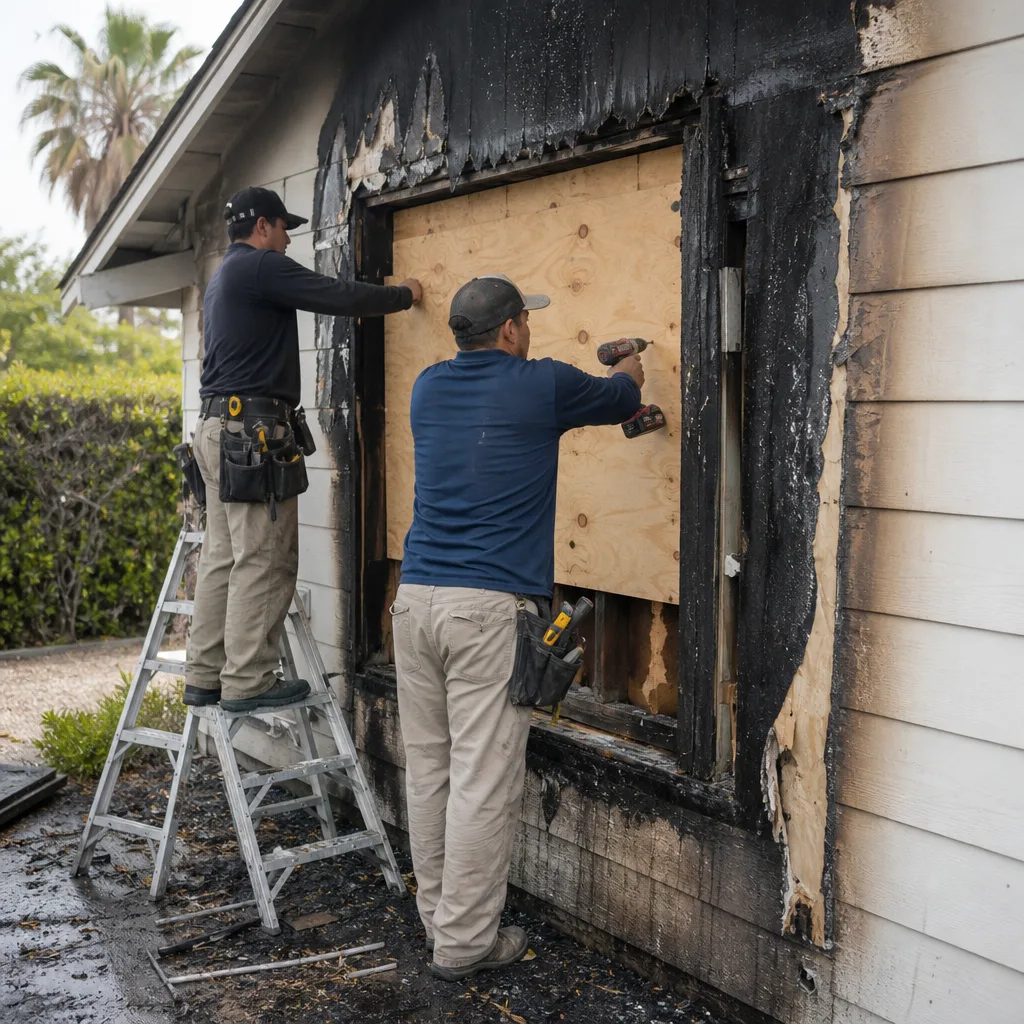
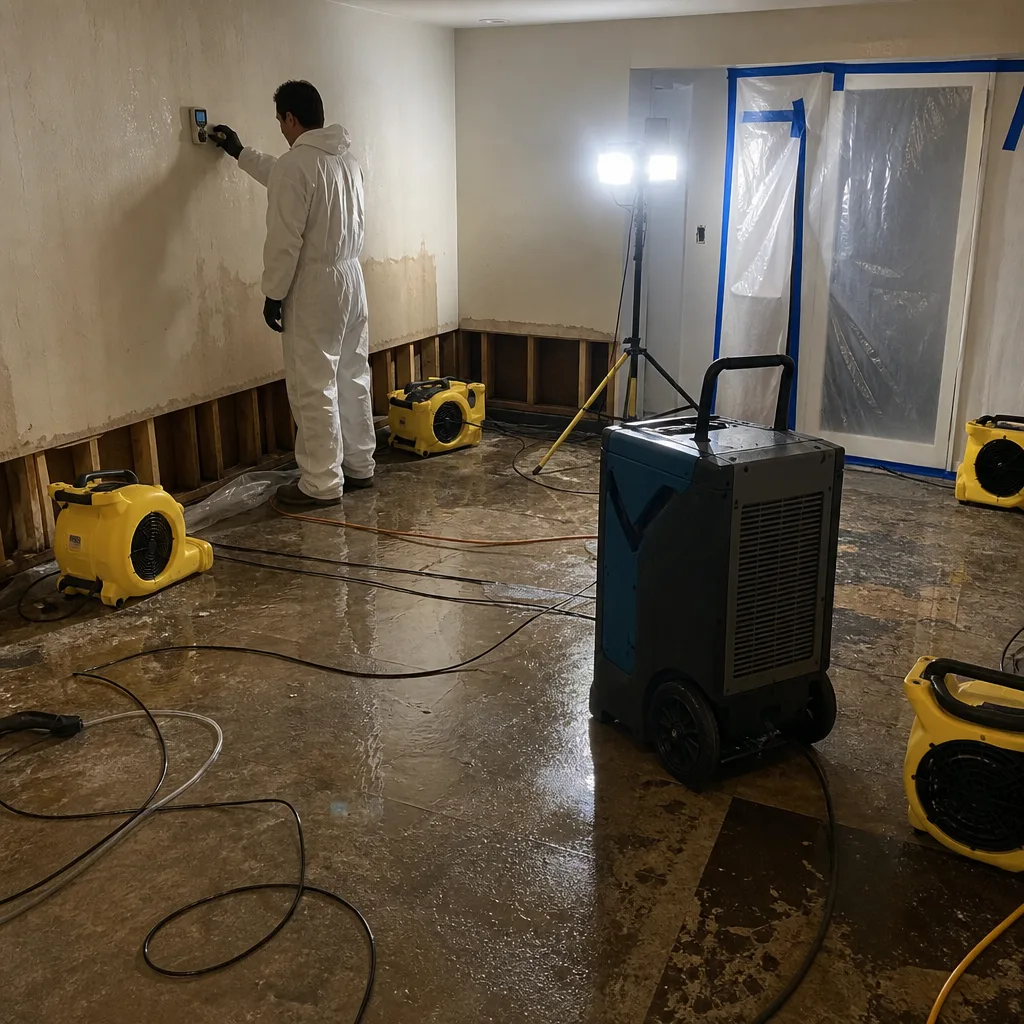
Most Brentwood mold jobs involve removing drywall, insulation, or baseboard that’s been wet long enough to feed fungal growth. We contain the area with negative air pressure so spores don’t spread to the rest of the house, HEPA-vacuum the framing, and remove the damaged material. Then we dry everything to the documented moisture standard and treat the surfaces that stay.
Black Mold Remediation
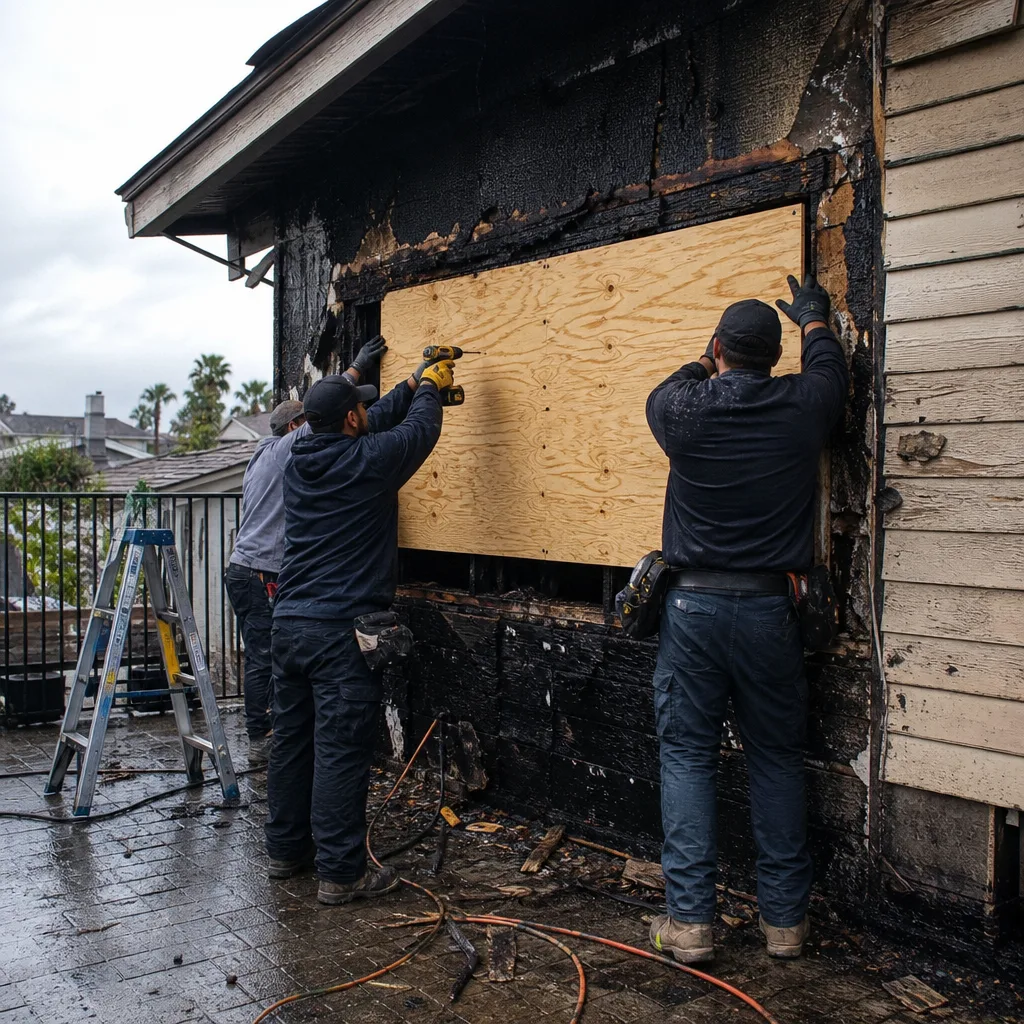
“Black mold” is the phrase homeowners use when they’re scared, and we treat it seriously. Stachybotrys and its cousins grow where water has sat for weeks, which is exactly what happens behind a settled weep screed in Brentwood during a wet winter. We treat black mold like any other contamination: contain, remove, clean, dry, verify. The color doesn’t change the protocol; it just raises the stakes.
Air Quality Restoration
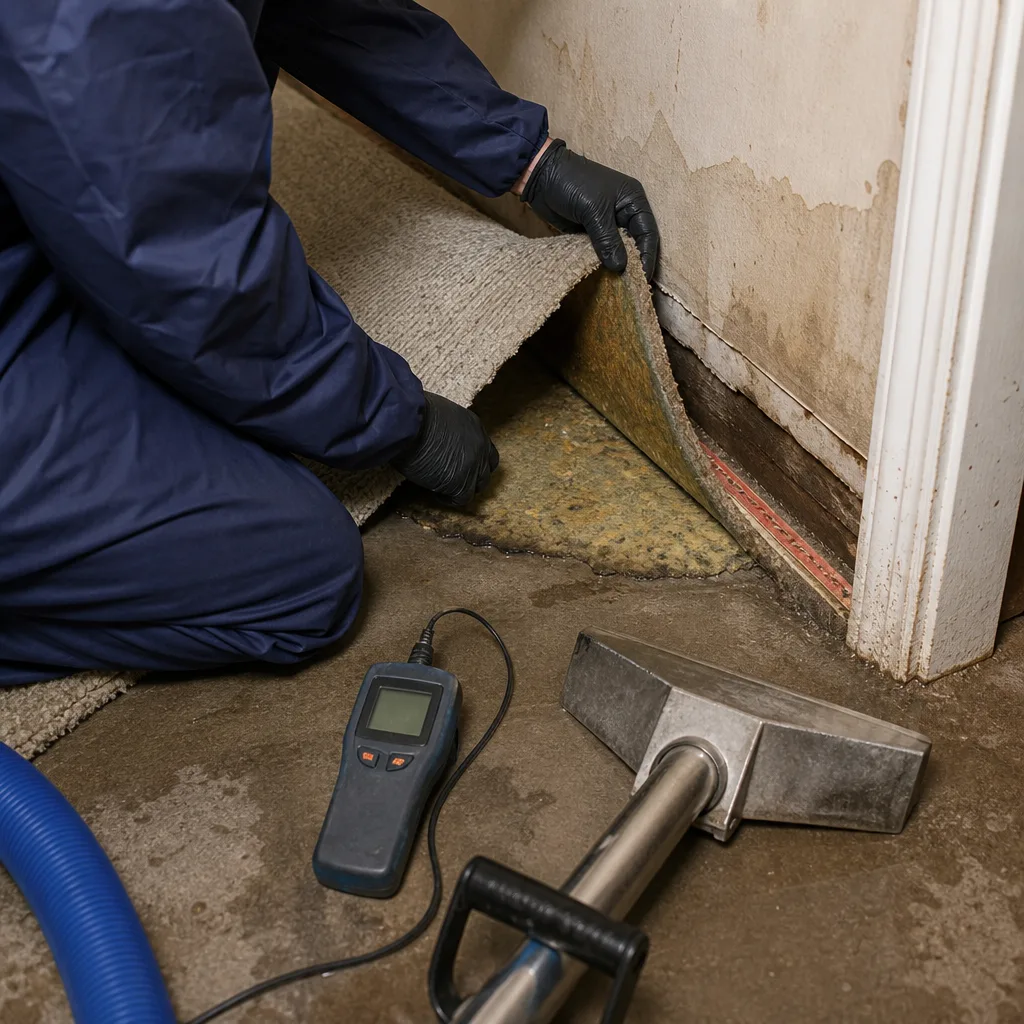
After the visible mold is gone, the air in the house still carries spores for a while. We run HEPA air scrubbers during the job and often afterward. In a Brentwood tract home with a central HVAC system, we’ll also check the ducts and the air handler, because that’s where spores settle and recirculate. Post-remediation air sampling confirms the indoor spore count is back to normal outdoor levels.
What happens when you call
- 1
A real person answersNo phone trees - you reach a local pro.
- 2
You get an upfront price rangeHonest numbers before anyone is dispatched.
- 3
A background-checked tech heads outLicensed & insured, dispatched right away.
- 4
You approve before work beginsNothing starts until you say go.
Trusted Brands We Service in Brentwood
We run Dri-Eaz and Phoenix drying equipment because they hold up to Brentwood’s summer heat without tripping thermal overloads. Our crew is IICRC-certified and the company maintains RIA and IFA affiliations, which matters when your insurance adjuster wants documentation from a qualified restoration firm. Wade deals with the adjuster directly, so you’re never the one stuck relaying information between two sides. We keep replacement parts on the truck for the most common failure points in Brentwood homes, so we don’t have to leave mid-job to chase a part across the county.
Common Mold Remediation Problems We See in Brentwood Homes
We’ve opened enough walls in Brentwood to know what’s behind the drywall before we cut into it. Here’s what we find most often.
- Rusted condensate pans above ceiling cavities. Brentwood’s 100°F+ summer days push AC units hard, and original pans from the 1990s and 2000s fail. The water saturates the ceiling cavity for weeks before the first stain appears, and by then mold has colonized the insulation and framing.
- Settled weep screeds wicking rainwater behind stucco. Expansive clay soils expand and contract with every wet-dry cycle, which settles the ground around slab foundations over 20 to 30 years. When the weep screed drops below grade, winter rain wicks up behind the stucco and rots the bottom plates from the inside out.
- Damp crawl spaces that never visibly leak. Slab foundation cracks from the same soil movement let groundwater vapor rise into the crawl space. It’s a slow, invisible process that keeps subfloor cavities damp enough for mold even when there’s no standing water anywhere.
- HVAC duct condensation in attics. Attics in Brentwood tract homes get brutally hot, and duct runs without adequate insulation sweat in the summer. The moisture drips onto drywall below or collects in the attic, creating the slow, hidden dampness that mold loves.
We were called to a 2003-built home in the Garin Ranch subdivision after a ceiling stain appeared below the upstairs air handler. Our tech found the original condensate pan had rusted through, sending water into the ceiling cavity for weeks. After removing the affected drywall, we discovered black mold had colonized the backside of the paper-faced insulation and the bottom plate of an interior partition. We contained the area, HEPA-vacuumed the framing, applied an EPA-registered antimicrobial, and installed a new secondary drain pan with an overflow shutoff switch, then verified clearance with post-remediation air sampling. That’s a Tuesday in Brentwood for us.
Pricing for Mold Remediation in Brentwood, CA
| Service | Typical Brentwood Cost |
|---|---|
| Mold inspection with air sampling | $350-$700 |
| Small contained remediation (single wall section or closet) | $1,200-$3,000 |
| Full room remediation (remove drywall, treat framing, restore air quality) | $3,500-$6,500 |
| Crawl space treatment and encapsulation (moderate) | $4,000-$9,000 |
| Whole-house remediation with HVAC cleaning | $8,000-$18,000 |
Brentwood’s market is shaped by the housing stock. A 2002 tract home with a contained wall-cavity mold problem runs less than a 1997 custom build where water wicked through multiple rooms. What drives the price higher: how far the mold has spread inside the wall cavity, whether ductwork is contaminated, and how much framing has to be removed. Wade gives you a written scope before any work starts, and the estimate is free. Senior and Veteran customers get 10% off, always. We don’t charge a trip fee inside our own county. Call (855) 915-0646 and Wade will tell you what he thinks it’ll take.
We Also Serve Cities Near Brentwood
When mold spreads in Oakley, Discovery Bay, Antioch, or Clayton, the failure modes are often the same: aging tract housing, clay soils, and heat that pushes old HVAC systems past their limits. We run crews through Brentwood and the surrounding communities every week, and the same daily moisture logs and written scope apply everywhere we work. If you’re in one of those nearby cities with a ceiling stain that won’t dry, call us.
Serving Brentwood, CA - Our Local Coverage Area
We’re based in the Brentwood area and know this community well. Use the map below to see our service coverage - if you’re nearby, we can almost certainly help.
FAQs - Mold Remediation in Brentwood
Brentwood’s 100°F to 110°F summer days force AC units to run far longer than coastal units ever do, and the original condensate pans on 1995 to 2008 tract homes are now past their service life. When a pan rusts through, the water drips into the ceiling or wall cavity for weeks before any stain appears on the drywall, and by then mold has already colonized the insulation and framing. If you have a ceiling stain below an air handler, shut the unit off and call (855) 915-0646. Wade will walk you through what to check before he gets there.
A weep screed is the metal flashing at the bottom of a stucco wall that lets moisture drain out. On Brentwood’s 2000s-era homes, the expansive clay soil has expanded and contracted enough over 20 to 30 years that many weep screeds have settled to grade or below. When that happens, winter rainwater wicks up behind the stucco instead of draining out, and the bottom plates of the wall framing rot slowly while mold grows in the dark. The fix is removing the damaged stucco at the base, repairing or replacing framing, and restoring proper drainage clearance. Call us for a free assessment.
We test moisture levels during the inspection. A leak-driven problem shows high moisture concentrated around a specific source: an AC unit, a pipe, a window, a stucco crack. Humidity-driven mold is more uniform, showing up on north-facing walls, closets, and anywhere air movement is poor. In Brentwood, both happen, which is why we run air sampling and moisture mapping together. The testing costs $350 to $700, and you’ll know exactly what you’re dealing with before any remediation starts. Call (855) 915-0646 for a free second opinion on any written estimate.
Because the houses were built at the same time, using the same materials and the same designs, and they’ve all been exposed to the same Brentwood climate for the same number of years. A 2003 subdivision in Garin Ranch and a 2001 subdivision near Balfour Road were built by different developers but the failures are nearly identical: original HVAC pans, weep screeds, and slab joints all aging out on the same timeline. When one house on the street gets a ceiling-cavity mold problem, the neighbors usually aren’t far behind. We’ve done three and four houses on the same block in the same month. If yours is next, call (855) 915-0646.
In most cases, yes. We treat crawl space mold by drying the space, HEPA-vacuuming the affected surfaces, applying an antimicrobial, and then installing a vapor barrier or encapsulation liner to keep groundwater vapor out permanently. We don’t remove the house above it unless the subfloor or floor joists are structurally compromised. Brentwood’s slab-on-grade tract homes vary: some have crawl spaces under a portion of the house, and we’ll inspect the full footprint before recommending anything. The cost for moderate crawl space treatment runs $4,000 to $9,000, and we’ll put the scope in writing before we start.
If you’ve got a ceiling stain, a musty smell, or a wall that’s soft to the touch in Brentwood, call Wade Ferris at (855) 915-0646. He’ll answer the phone himself, talk through what you’re seeing, and give you an honest opinion about what it’ll take. The estimate is free, there’s no trip charge inside the county, and every mold job comes with the 90-Day Done Right Promise in writing. If it’s not done right, he makes it right. That’s the deal.
Written by Wade Ferris, Owner at Wade’s Restoration of California, answering his own phone since 2007.