
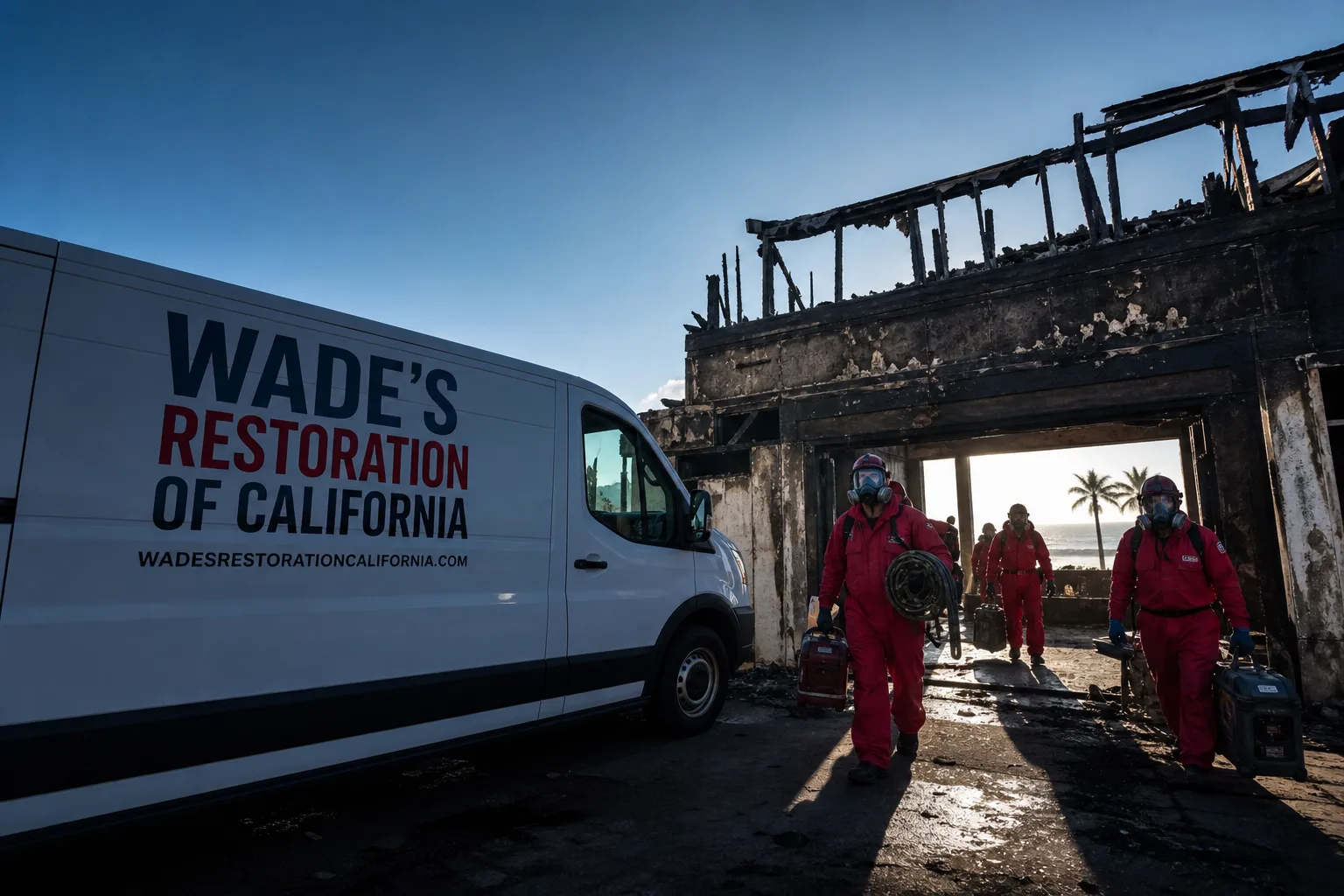
Fast, Reliable Mold Remediation Across Fillmore
Mold remediation in Fillmore typically runs $1,200-$4,800 depending on how far the colony has spread and whether the crawlspace is involved. Most jobs are finished in 2-5 days, and we can usually have a crew at your door within a few hours. If you’re smelling something musty near Central Avenue or seeing dark patches spreading along baseboards in a 1940s bungalow, don’t wait for it to get worse. Call Wade’s Restoration at (855) 915-0646 and you’ll talk to a real person, not a call center.
Why Wade’s Restoration of California Is Fillmore’s Preferred Mold Remediation Company
Wade Ferris founded this company in 2007 because he got tired of watching national franchises send rotating crews that never had to face the homeowner at the grocery store. Wade puts his name, address, and license number on every contract. He answers his own phone at midnight. And when you call about mold in a Fillmore crawlspace, he’s the one who decides whether it’s a drying job or a full Mold Remediation scope, not a sales rep working commission.
Fillmore homeowners ask us the same thing: can you actually get here fast? Yes. Our crews stage from the Los Angeles metro office and serve Fillmore locally, which means we’re not two hours away when the Santa Clara River jumps its banks after a winter storm. We know Highway 126, we know the older streets off A Street and Sespe Avenue, and we know the ZIP codes 93015 and 93016 like the back of our hand. When a homeowner in Fillmore calls about mold, we know to ask about the crawlspace first. That’s local knowledge you can’t fake.
Ask anyone on your street. Wade’s name circulates in this town because he’s been showing up for years, handing homeowners daily moisture logs and taking readings until the numbers say dry, not just until the surface looks fine.
Our Mold Remediation Services in Fillmore
Mold Inspection & Testing
Before we tear out drywall, we find out exactly what we’re dealing with. In Fillmore’s 1920s-1960s wood-frame homes, mold hides inside original plaster walls, behind single-pane window casings, and in subfloor cavities that haven’t been opened since the Northridge earthquake cracked them in 1994. We use moisture meters, thermal imaging, and air sampling to map the full extent before a single cut is made. If you already have a written estimate from another company, bring it to us. Wade offers a free second opinion on any written estimate, no strings attached.
Mold Removal
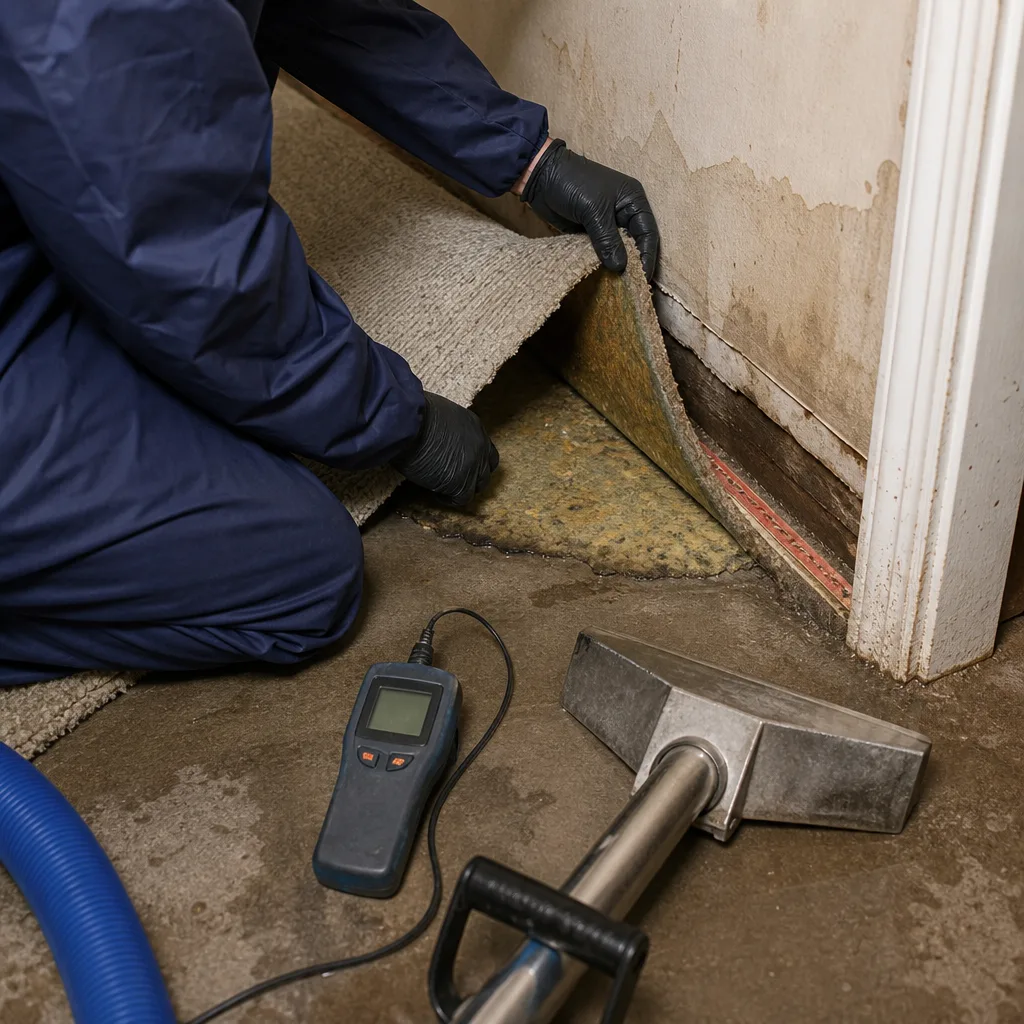
Mold removal in Fillmore means more than wiping down a bathroom ceiling. It means opening walls where hidden colonies have been feeding on damp framing for months. We set up containment with negative air pressure so spores don’t migrate to your living room, then remove affected materials and HEPA-vacuum every exposed surface. For older Fillmore homes, that often means pulling original plaster that’s absorbed moisture from post-fire flooding and replacing it with mold-resistant drywall. No one wants to hear their 1950s wall has to go, but leaving it in place just guarantees regrowth.
Black Mold Remediation
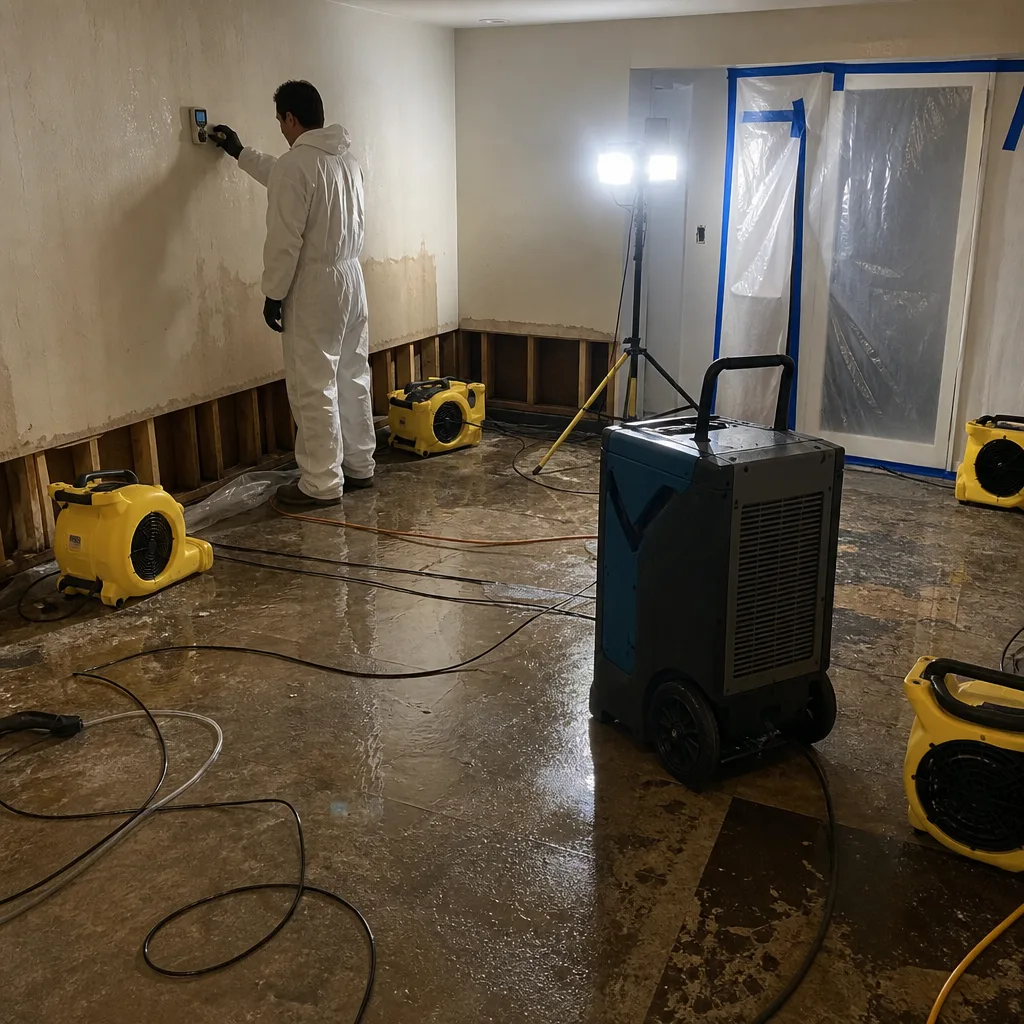
Black mold, usually Stachybotrys chartarum, shows up in Fillmore homes after chronic water exposure: leaky roofs, failed water heaters, and crawlspaces that never properly dried after Thomas Fire debris flows redirected stormwater. We treat it with full containment, HEPA filtration, removal of porous materials, and EPA-registered antimicrobials on structural wood. Black mold isn’t a DIY project. Spores get airborne fast, and in an older house with open stud bays, they travel. Call us and we’ll assess it the same day.
Air Quality Restoration
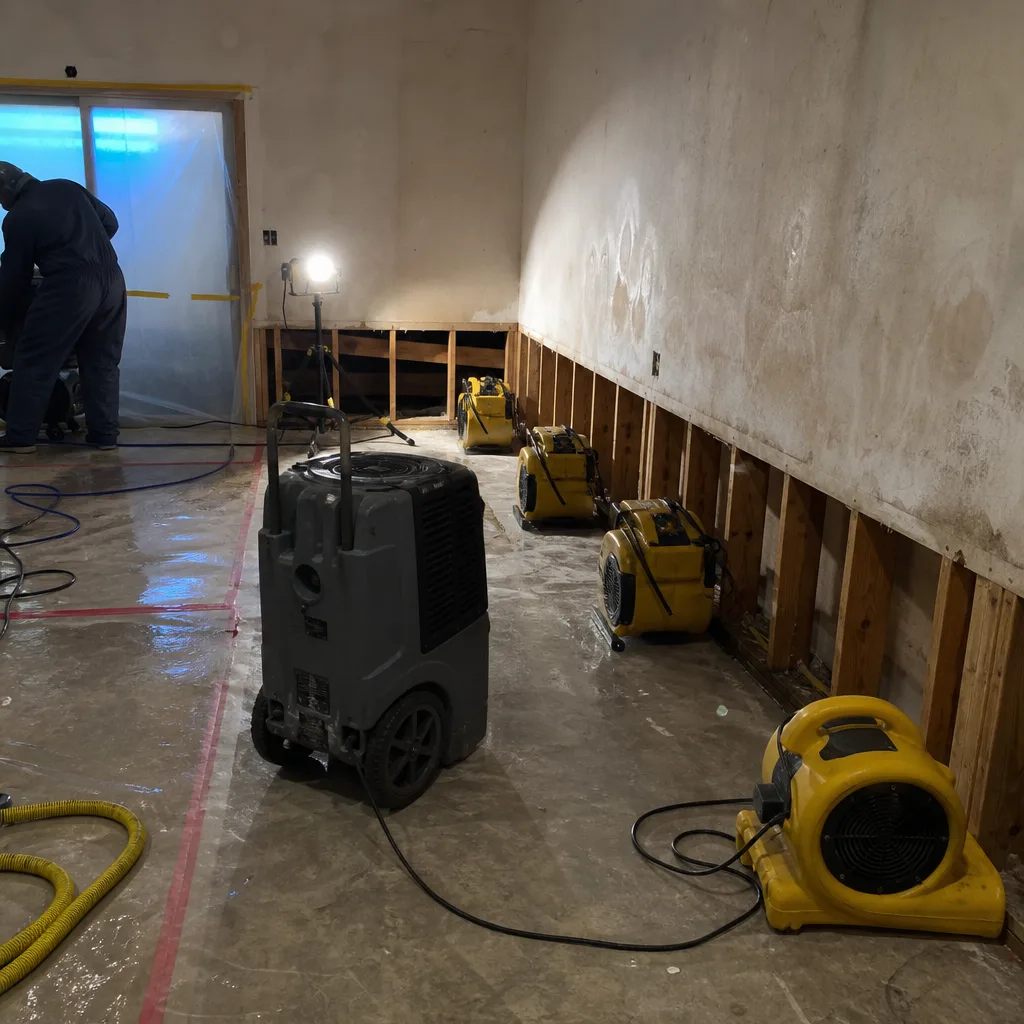
After physical mold removal, the air in your home still carries spore counts that can trigger asthma and chronic sinus issues. Fillmore’s inland valley position means homes stay closed up during hot Santa Ana wind days, trapping whatever’s in the air. We run HEPA air scrubbers during remediation and post-remediation air sampling after we finish. You get the lab report. You get the moisture log. You know the air your family breathes is clean, not just that someone told you it was.
What happens when you call
- 1
A real person answersNo phone trees - you reach a local pro.
- 2
You get an upfront price rangeHonest numbers before anyone is dispatched.
- 3
A background-checked tech heads outLicensed & insured, dispatched right away.
- 4
You approve before work beginsNothing starts until you say go.
Trusted Brands We Service in Fillmore
We don’t use rental-grade equipment. Wade’s crews run Dri-Eaz dehumidifiers, XPOWER air movers, and Injectidry systems for hard-to-dry cavities in old Fillmore construction. Our techs hold IICRC certifications, and the company is RIA-affiliated and IFA-recognized. That matters when you’re trusting someone to cut into your walls. We stock the parts and materials needed for older Fillmore homes so we’re not waiting on a supply house in Oxnard when your subfloor is actively growing mold. Background-checked, uniformed, and paid to do the job right the first time.
Common Mold Remediation Problems We See in Fillmore Homes
- Hidden colonies in original plaster walls. Fillmore’s pre-1960 homes have plaster that absorbs water like a sponge. Soot and moisture from the Thomas Fire era penetrated deep, and surface cleaning won’t touch what’s living inside the wall cavity.
- Recurring crawlspace flooding along the Highway 126 corridor. The burned hillsides above Fillmore shed water at rates that would have been unheard of before 2017. Homes that never had water problems now flood in storms that used to be routine, keeping crawlspaces chronically damp and primed for mold.
- Incomplete drying of old-growth framing. 1920s-1960s Douglas fir and redwood framing holds moisture differently than modern kiln-dried lumber. Contractors using standard drying protocols stop too soon, and three weeks later the musty smell is back.
- Single-pane window condensation. Older Fillmore homes still have original single-pane windows. Winter nights in the valley drop into the 40s, condensation forms, and mold takes root in window voids and surrounding wall cavities. It’s a slow drip that becomes a big problem.
Pricing for Mold Remediation in Fillmore, CA
Here’s what Fillmore homeowners can expect to pay, based on the jobs we run in 93015 and 93016:
- Mold Inspection & Testing: $250-$550, depending on how many air samples and surface samples we pull
- Containment Setup and Surface Mold Removal: $800-$2,200 for a single room or bathroom
- Full Remediation with Drywall Removal: $2,500-$6,500 for a typical kitchen or hallway-to-bedroom spread
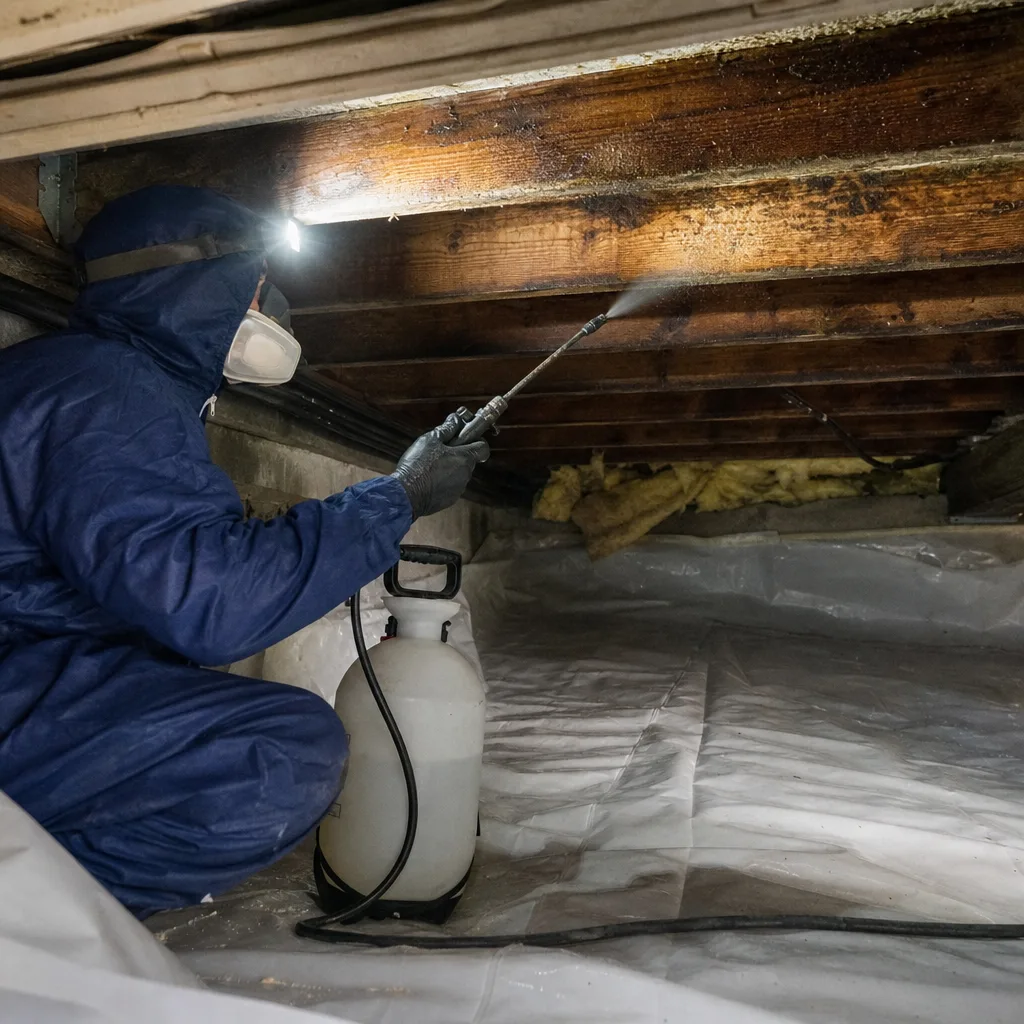
- Crawlspace Mold Treatment with Drying: $1,500-$4,800, higher if standing water or structural repair is needed
- Whole-House Air Quality Restoration: $900-$2,500, including HEPA scrubbing and post-remediation lab testing
What drives cost in Fillmore specifically: home age, crawlspace access, whether plaster needs removal, and whether insurance is involved. We work directly with your adjuster, send photo documentation, and never make you relay messages between two parties. Estimates are free, and there’s no trip charge inside our own county. Seniors and veterans get 10% off, always. Call (855) 915-0646 for an exact quote.
We Also Serve Cities Near Fillmore
Wade’s Restoration serves Fillmore and the surrounding communities throughout Ventura County. Our crews regularly run jobs in Moorpark, Santa Paula, Simi Valley, and Camarillo. If you’re just outside the Fillmore city limits, chances are we’re headed your way this week anyway. Call and find out.
Serving Fillmore, CA - Our Local Coverage Area
We’re based in the Fillmore area and know this community well. Use the map below to see our service coverage - if you’re nearby, we can almost certainly help.
FAQs - Mold Remediation in Fillmore
The fire changed how water moves in Fillmore. The hillsides above town lost their chaparral root systems, so when winter rains hit, runoff slams down into the Santa Clara River floodplain at speeds that would have been absorbed before 2017. Homes along the Highway 126 corridor and near the river now see crawlspace flooding during storms that used to cause no damage. That standing water saturates subfloor framing and stays there. Mold follows within days. If your crawlspace hasn’t flooded but smells damp, call us. We’ll send a tech in with a moisture meter and tell you what’s actually going on, not what a template report says.
The Northridge quake cracked foundations, separated sill plates, and broke the moisture envelope on thousands of Fillmore homes. Every crack is a pathway for water. Gutters that overflow, garden sprinklers aimed the wrong direction, a slow pipe leak under the kitchen sink: water finds those cracks and moves into wall cavities and subfloor voids. Mold grows in the dark spaces no one looks at. We map those vulnerabilities during our inspection because we know they’re there. A house that survived 1994 with hidden damage is a house that needs more than surface cleaning when mold appears.
They don’t directly cause mold, but they change the conditions that let mold thrive. Santa Ana winds off the Topatopa Mountains create a dry, low-humidity spell that can temporarily mask a damp problem by evaporating surface moisture. That sends moisture deeper into wood and plaster. When the winds stop and Fillmore’s valley humidity returns, the cycle starts again and mold resurfaces. We dry structures to the core, not to the surface. That’s why Wade logs daily moisture readings and hands you the full log when the job is done.
Mold removal is scrubbing what you can see. Mold remediation is finding and eliminating the moisture source, containing the colony, removing contaminated materials, treating structural surfaces, and verifying the air is clean afterward. In a 1950s Fillmore house, that almost always means opening walls and dealing with plaster that’s absorbed decades of moisture. If someone quotes you $400 to spray and wipe, they’re not doing remediation. You’ll be back in the same spot next winter. Ask for the written scope before work starts. Wade wouldn’t do it any other way.
Ventura County doesn’t have a burn-zone-specific mold code, but homes that filed fire or flood claims after 2017 are subject to standard California building code requirements for moisture management and structural drying before reconstruction. That means: fix the water source, dry it to below acceptable thresholds, remediate the mold, then rebuild. Cut corners on step one and the inspector will catch it, or worse, the mold will come back after the permit is closed. We document every step so you have a paper trail for your insurance file and any future inspection.
Written by Wade Ferris, Owner at Wade’s Restoration of California, serving Fillmore and Ventura County since 2007.
Get a Free Estimate for Mold Remediation in Fillmore
If you smell mold, see staining on walls or ceilings, or your crawlspace flooded after the last winter storm, call Wade’s Restoration at (855) 915-0646. Wade answers his own phone. He’ll ask about your house, your street, what you’re seeing. Then he’ll tell you straight what it’ll take to fix it. Free estimate, no trip charge in the county, and a written scope before any work starts. That’s how it should work.