
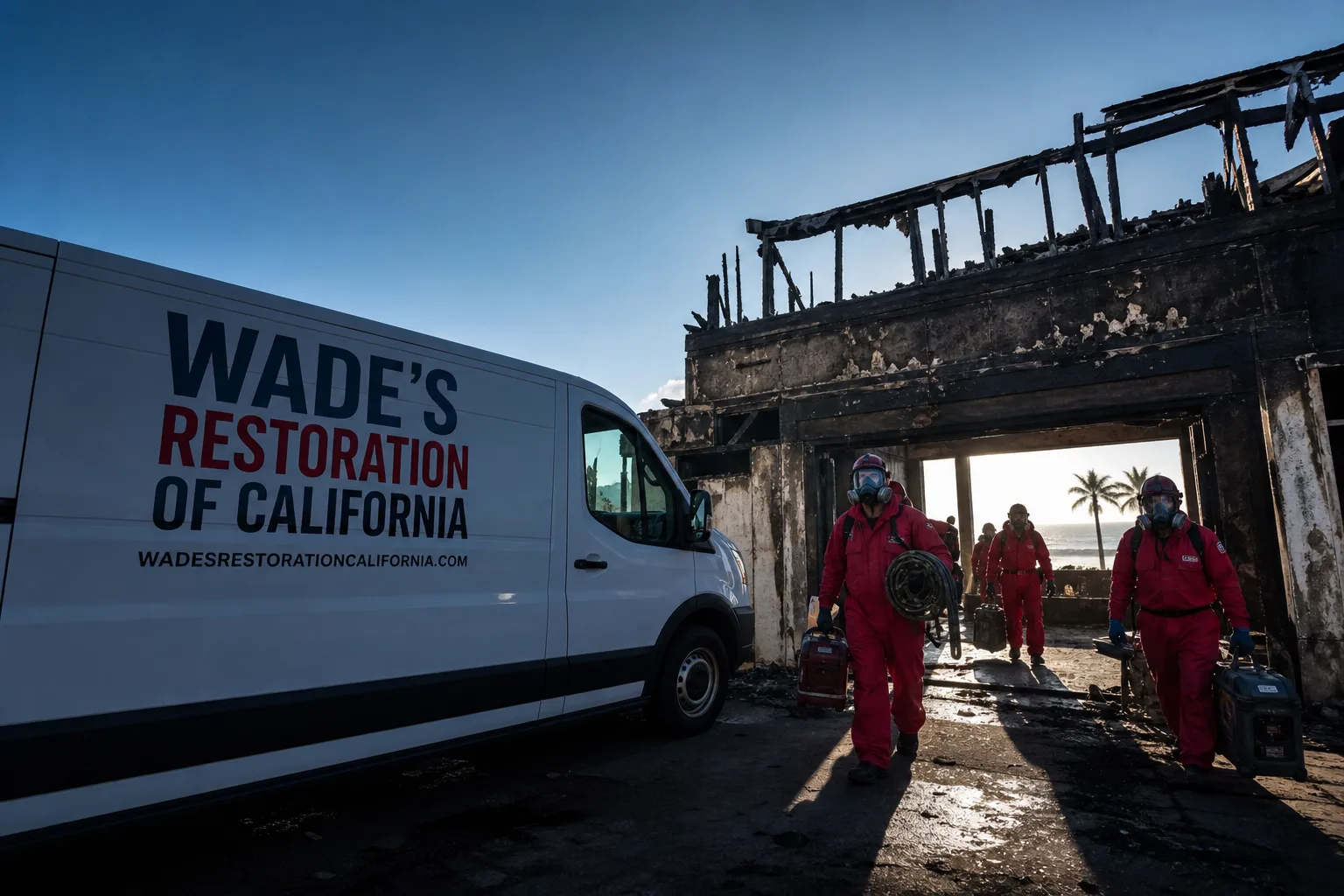
Fast, Reliable Mold Remediation Across Simi Valley
Mold remediation in Simi Valley usually runs between $1,800 and $6,000 depending on how far the growth has spread and whether you’re dealing with a post-fire debris-flow situation. We can usually have a crew at your door within 90 minutes of your call, because Wade keeps trucks staged to cover Simi Valley, Moorpark, and Thousand Oaks without waiting on Los Angeles dispatch. If you’ve got water staining on ceilings, a musty crawl space, or visible growth along baseboards in a 93063 or 93065 home, call (855) 915-0646 and Wade Ferris will answer. Not an answering service. Him.
Simi Valley isn’t like the coastal cities. We get maybe 14 inches of rain a year, but when it comes, it comes hard and fast across hillsides already stripped bare by Santa Ana-driven fires. That’s the part most remediation companies don’t plan for. We do, because we’ve been pulling wet drywall and failed clearance tests out of Simi Valley homes long enough to know the sequence.
Why Wade’s Restoration of California Is Simi Valley’s Preferred Mold Remediation Company
Wade Ferris founded this company in 2007, and he still answers his own phone. That matters here more than most places, because Simi Valley homeowners tend to check a contractor’s name, address, and license before letting anyone into the house. Wade publishes all three. Ask anyone on your street. In a town this size, reputation travels faster than a Santa Ana gust.
Our reviews from Simi Valley customers consistently mention the same three things: Wade showed up when he said he would, the crew wore uniforms and respected the house, and the moisture readings were handed over daily without anyone having to ask. That last part is rare. Wade takes moisture readings every single day on every mold job and gives you the full log at the end. Almost nobody else in the trade does that, and in Simi Valley, where the difference between a damp crawl space and a full Stachybotrys bloom can be one winter storm, that log is the difference between guesswork and proof.
We’re IICRC-certified and RIA-affiliated, and we run Dri-Eaz and Phoenix equipment on every Simi Valley job. Background-checked crew, uniformed, driving marked trucks. No subcontractor roulette.
Our Mold Remediation Services in Simi Valley
Mold Inspection & Testing
Most Simi Valley homes built between 1965 and 1985 have forced-air ductwork that’s been moving air through the same spaces for 40-plus years. When mold takes hold behind a wall, the spores don’t stay put. They ride the ducts. That’s why we start every inspection with air sampling in the living space and the crawl space, plus a visual inspection of supply and return registers. In Simi Valley we also check for post-fire ash contamination, because after the Easy Fire and similar burn events, smoke and ash settled into duct liners and attic insulation across the western ridgeline. Skip that test and your “clean” walls will keep failing clearance.
Mold Removal
Mold removal in a Simi Valley tract home usually means cutting out affected drywall, treating the framing, and running containment while we dry the cavity with Dri-Eaz LGR dehumidifiers. The homes here share a common weakness: original galvanized supply lines. If those pinhole-leak behind a bathroom wall, mold will return within weeks no matter how well we cleaned it the first time. We check the plumbing before we seal the wall. Most crews don’t.
Black Mold Remediation
Black mold, usually Stachybotrys, loves the slow leaks that come from aging pipes and poorly vented bathrooms in 1960s and 1970s Simi Valley construction. We contain the affected area under negative air pressure, remove the contaminated material, and treat the remaining surfaces with an antimicrobial. Then we verify with post-remediation air sampling, not just a visual pass. In Simi Valley we also run a moisture check on the surrounding structural lumber, because the valley’s seasonal humidity swings can leave subfloor framing wetter than you’d expect even after the visible growth is gone.
Air Quality Restoration
After a hillside fire, air quality restoration in Simi Valley means more than running a HEPA scrubber. It means addressing the smoke and ash that settled into ductwork, carpet, and attic insulation during the days the Santa Anas pushed smoke overhead. We use negative air machines and air scrubbers to pull particulates out, then verify with particle counts before we hand the home back. If your home sits near the western drainage corridors, ask us about post-fire air quality testing even if you didn’t file a fire claim. The smoke damage often shows up as a mold or air quality issue months later.
What happens when you call
- 1
A real person answersNo phone trees - you reach a local pro.
- 2
You get an upfront price rangeHonest numbers before anyone is dispatched.
- 3
A background-checked tech heads outLicensed & insured, dispatched right away.
- 4
You approve before work beginsNothing starts until you say go.
Trusted Brands We Service in Simi Valley
We run professional-grade Dri-Eaz dehumidifiers and XPOWER air movers on Simi Valley jobs, backed by IICRC methodology and RIA documentation standards. We keep a rolling inventory of replacement HEPA filters, antimicrobials, and containment supplies staged for Simi Valley and Moorpark, so we’re not waiting on a parts delivery when your crawl space is already open. If your adjuster wants brand-name equipment logs, we can provide them. If you want to know why we use one brand over another, Wade will tell you straight.
Common Mold Remediation Problems We See in Simi Valley Homes
- Post-fire ash and debris flow, not just standing water. When the Easy Fire stripped the western hillsides, the first winter rains channeled ash-laden runoff into downslope drainages. Homes that never showed standing water still ended up with contaminated moisture wicking through stucco and into subfloor framing.
- 1960s-80s galvanized supply lines with pinhole leaks. The original plumbing in Simi Valley’s tract housing stock is at the end of its service life. A slow pinhole leak inside a wall cavity can feed mold for months before staining shows on the drywall face.
- Acoustic popcorn ceilings that need asbestos testing before demo. Most Simi Valley homes built before 1978 still have popcorn ceilings. If mold has spread into the ceiling assembly, we can’t lawfully cut into it until an asbestos survey clears the material. That’s not a delay tactic. That’s the law, and it protects your family.
- Crawl spaces with high winter humidity but no visible standing water. Simi Valley’s semi-arid climate fools a lot of homeowners. Fourteen inches of rain doesn’t sound like enough to cause a mold problem, but when it arrives in a few concentrated events and the drainage corridors back up against fire-denuded soil, the crawl space becomes a humidity trap that feeds fungal growth on floor joists.
Pricing for Mold Remediation in Simi Valley, CA
What moves the number is square footage, the type of mold, whether the ductwork needs cleaning, and whether we find plumbing leaks that need repair before we close the wall. We hand you a written scope before any work starts. If you already have an estimate from another company, bring it to us. Wade will give you a free second opinion and usually find at least one thing the other crew missed, especially if they quoted Simi Valley without accounting for the fire-and-debris-flow risk. Call (855) 915-0646 for an exact quote. The estimate is free.
We Also Serve Cities Near Simi Valley
Our Mold Remediation team covers Simi Valley and the surrounding communities, including Oak Park, Moorpark, Thousand Oaks, and West Hills. We schedule by geography, not by call volume, so you’re not waiting on a crew idling in traffic on the 118. If you live in one of those nearby cities, you get the same owner-operated service and the same 90-Day Done Right Promise. See our Mold Remediation in Simi Valley page for specifics on coverage boundaries and response times.
Serving Simi Valley, CA - Our Local Coverage Area
We’re based in the Simi Valley area and know this community well. Use the map below to see our service coverage - if you’re nearby, we can almost certainly help.
FAQs - Mold Remediation in Simi Valley
After a Simi Valley hillside fire, how likely is my home to need mold remediation from the following winter’s debris flow?
Homes within a few hundred yards of the western or northern ridgeline drainages have a meaningfully higher risk, and we’ve seen it repeatedly after fires like the 2019 Easy Fire. The fire denudes the hillsides, then the first winter storms push ash and sediment into the drainage corridors and down into residential streets. Homes that never took on standing water still get water wicking through stucco and into subfloor framing from saturated soil. If you live near the Bridle Path area or the drainages below the western ridgelines, we recommend a moisture assessment before the first heavy rain, not after the staining shows up. Call (855) 915-0646 and we’ll schedule it.
My Simi Valley home was built in the 1970s with a popcorn ceiling. Do we really need asbestos testing before mold remediation?
Yes, if the mold has reached the ceiling assembly and we need to cut into it. Pre-1978 acoustic ceilings in Simi Valley regularly contain asbestos, and state and federal rules require testing before any restoration demo that disturbs them. We coordinate the sampling, wait for the lab results, and then proceed with containment and removal. Skipping that step is illegal and puts your family at risk. We won’t cut corners on it, and no reputable contractor should either.
How do Santa Ana winds affect mold growth in Simi Valley homes?
Santa Anas do two things here. First, they drop the ambient humidity dramatically, which can briefly suppress active mold growth, but that dry air also suspends spores and pushes them through ductwork and into living spaces. Second, the same winds drive the fires that leave the hillsides bare, which sets up the winter water intrusion that feeds mold. So the Santa Ana pattern is indirectly responsible for both the initial contamination and the recurrence cycle. That’s why our Mold Remediation approach here includes post-fire ash testing, not just moisture mapping.
My Simi Valley crawl space gets damp every winter, but we rarely see standing water. Is mold still a risk?
Yes, and it’s one of the most common problems we find in Simi Valley tract homes. The floor joists and subfloor absorb moisture from the soil evaporation and high winter humidity even without visible pooling. Once the wood fiber reaches about 20% moisture content, fungal growth starts. You won’t see it from the access door. We run a moisture meter across the joists and subfloor, and when we find the numbers too high, we recommend crawl space treatment with a vapor barrier and dehumidification, which is a permanent fix, not a wipe-down.
What’s different about black mold remediation in Simi Valley compared to other Ventura County cities?
The sequence. In Thousand Oaks or Moorpark, mold work is usually triggered by a plumbing leak or a bathroom ventilation problem. In Simi Valley, especially on the north and west sides, we routinely see mold that traces back to a fire, then a debris flow, then a slow saturation of the subfloor that nobody noticed until the baseboards started staining. That means our remediation scope here often includes post-fire ash testing, drainage assessment, and subfloor drying in addition to the standard containment and removal. Most contractors don’t even look for the drainage connection. We do.
If you’re seeing staining, smelling must, or just got a vague answer from another company, call (855) 915-0646. Wade will talk you through what’s actually happening in your house, and if he thinks you don’t need remediation, he’ll tell you that too. Written scope before work starts. Daily moisture logs. 90-Day Done Right Promise in writing. That’s how we’ve done it in Simi Valley for years, and that’s how we’ll do it for you.
Written by Wade Ferris, Owner at Wade’s Restoration of California, serving Simi Valley and Ventura County since 2007.