
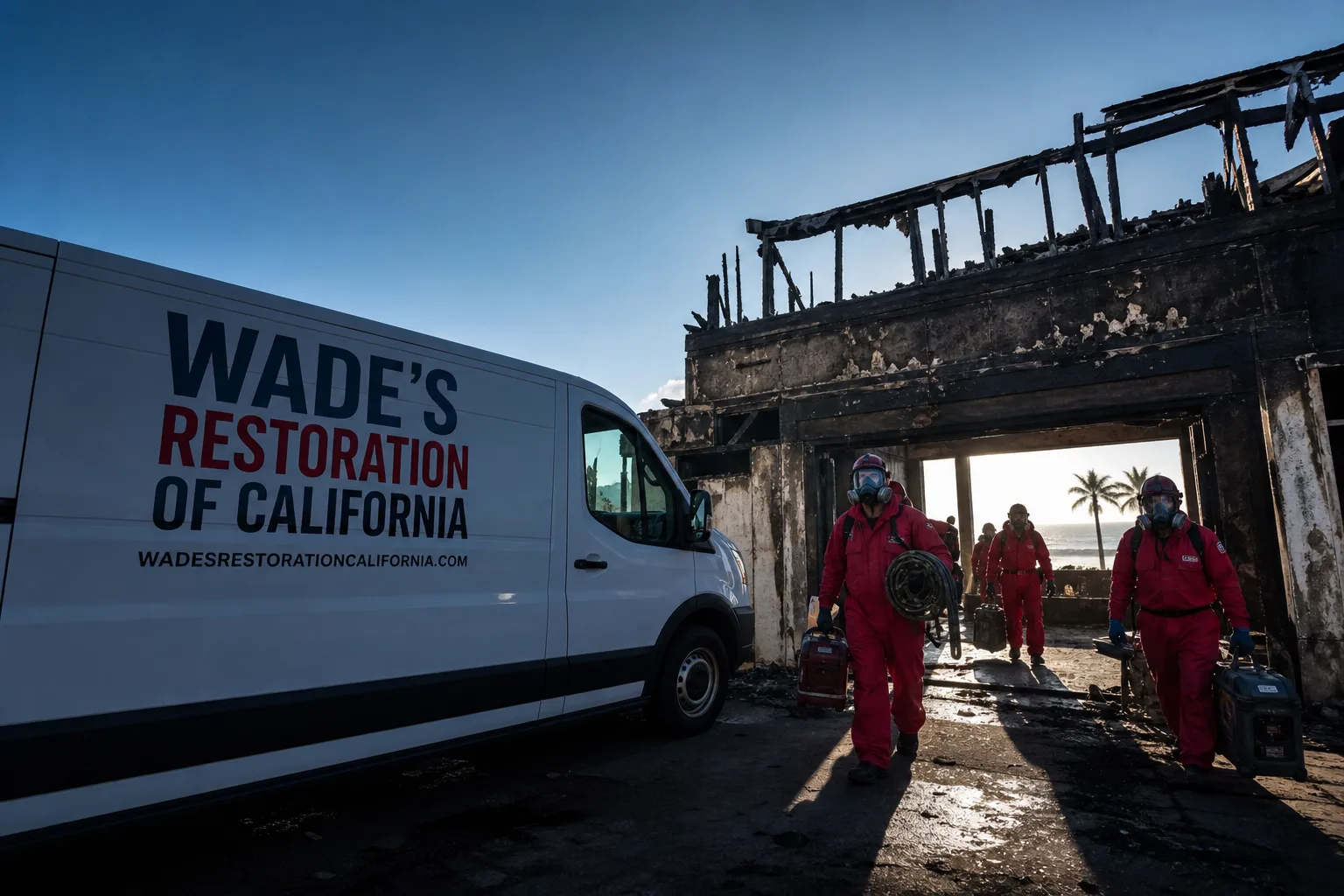
Fast, Reliable Water Damage Restoration Across Newark
Water damage restoration in Newark typically costs between $800 and $4,200 depending on the affected square footage, and emergency extraction can usually be running within the hour when you call (855) 915-0646. Newark’s flat, bay-fill terrain and shallow groundwater table create water problems that a generic restoration crew will misread, and we’ve spent years learning exactly how homes here fail. Wade Ferris answers his own phone 24/7, and he knows the difference between a slab leak on Thornton Avenue and a surface flood near the refuge boundary. If you’re standing in water right now, call. We’ll walk you through the first ten minutes before the truck rolls.
Why Wade’s Restoration of California Is Newark’s Preferred Water Damage Restoration Company
We’re not a franchise with a call center three states away. Wade Ferris founded this company in 2007, published his name and license number, and still picks up the phone at 2 a.m. when a Newark homeowner finds a burst pipe flooding a 1960s rancher off Cedar Boulevard. That matters here because Newark’s water problems aren’t textbook. They’re bay-fill specific. We know whether the moisture at your slab edge is from the storm or the water table, and that changes everything about how we dry the building.
Newark homeowners have our cell number, not a dispatch queue. Ask anyone on your street. The people Wade sends are background-checked, uniformed, and answerable to him. Every job gets a written scope before work starts, and every water job carries the 90-Day Done Right Promise: if it’s not done right, we make it right, in writing. No fine print. No phone-tree runaround.
Our Water Damage Restoration Services in Newark
Most Newark calls start with one of four problems. Here’s how we handle each.
Emergency Water Extraction
When a pipe lets go in a Newark home, the first hour determines whether you’re dealing with a $900 dry-out or a $14,000 rebuild. Standing water on slab-on-grade concrete wicks into drywall, baseboards, and door frames fast, especially in older tract homes where the slab has settled and cracked over decades. Our extraction crews use submersible pumps and truck-mounted vacuums to pull standing water fast, then start the drying math. In Newark, that math always includes a perimeter foundation check, because groundwater from the old tidal flats underneath the city keeps pushing up through hidden slab cracks long after the visible flood is gone.
Structural Drying & Dehumidification
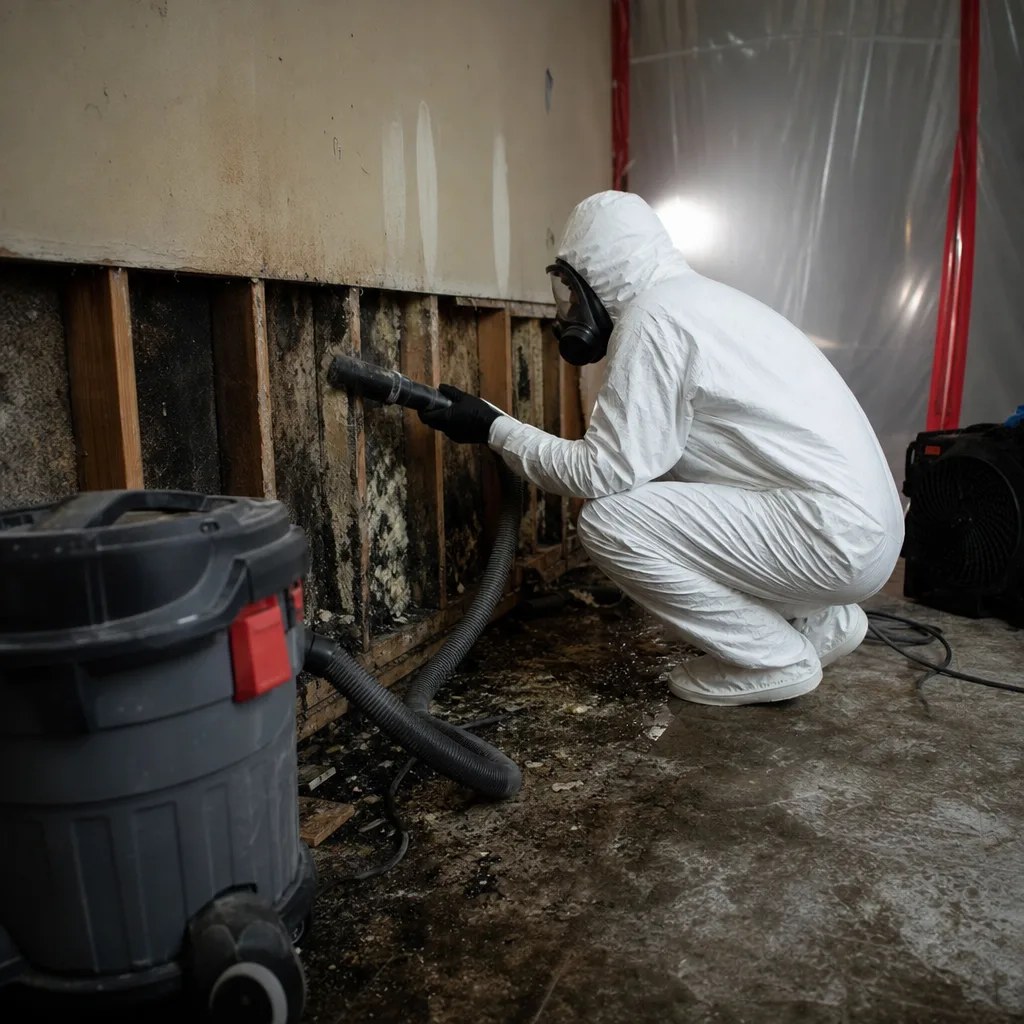
Newark’s winter fog and marine humidity mean a standard dry-out isn’t enough here. We take daily moisture readings at slab perimeters, baseboards, and wall cavities, and we hand you the full moisture log when the job closes. Almost nobody else in the trade does that. We run Dri-Eaz and Phoenix dehumidifiers matched to the room volume, not the square footage, because Newark’s damp bay air keeps framing wetter longer than the manufacturer’s standard drying charts assume. On a 1960s tract home off Thornton Avenue near the Don Edwards refuge, our crew traced persistent slab-edge moisture to differential settling cracks along the north perimeter. We set Dri-Eaz LGR 7000 dehumidifiers and XPOWER air movers inside the affected rooms, injected epoxy into the slab cracks, and sealed the exterior grade line. After 72 hours of structural drying, moisture readings at the slab edge dropped from 28% to under 12% even though the groundwater table stayed high. That’s what a Newark-specific dry-out looks like.
Flood Cleanup
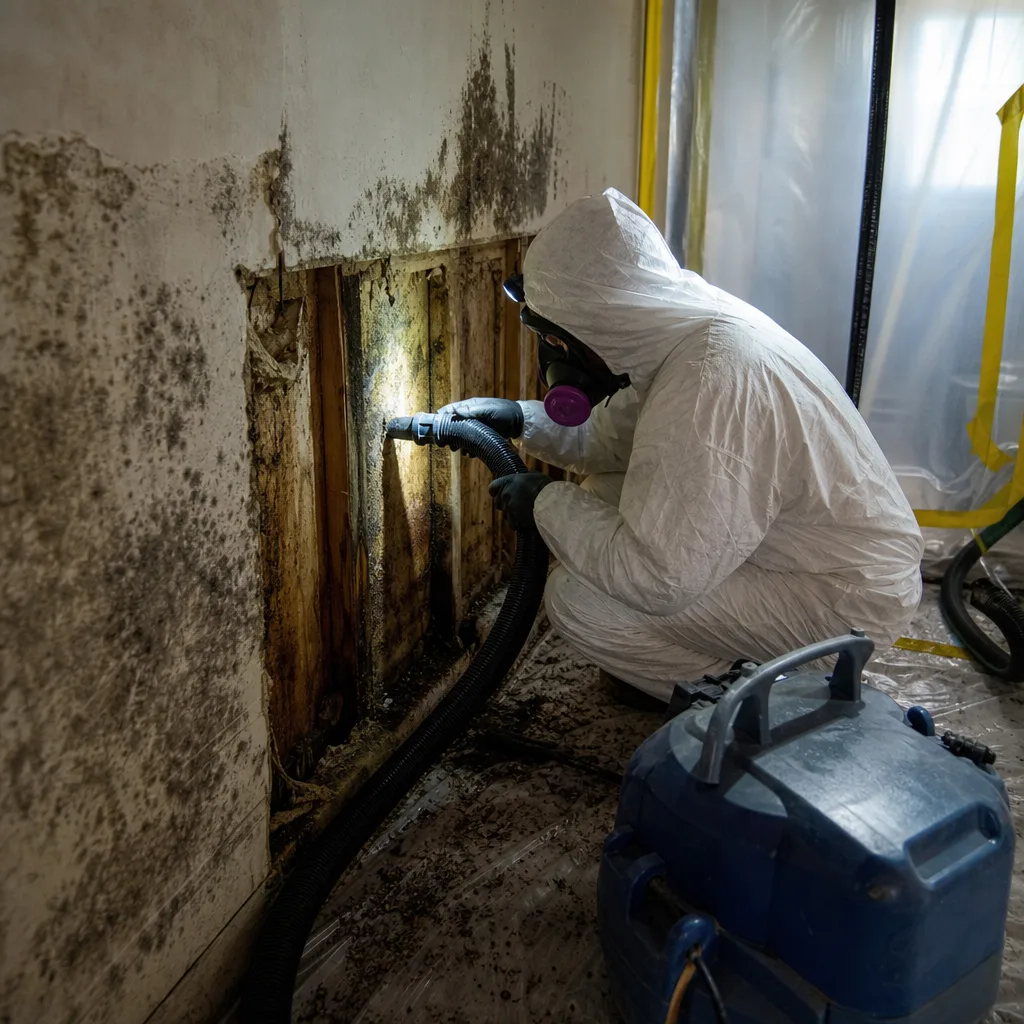
When an atmospheric river parks over the South Bay, Newark’s flat streets and limited drainage relief mean water ponds where it never should. Homes near the slough fingers that poke into the wildlife refuge boundary can see rising water from the street side while groundwater pushes up from below. We handle both. Flood cleanup here isn’t just extracting what you can see. It’s checking the crawlspace, testing the slab perimeter, and knowing which Newark lots historically stay wet for weeks because the water table on former tidal flats never fully recedes. If you’re filing an insurance claim, we photograph everything, document moisture levels by room, and talk to your adjuster directly so you’re not stuck relaying numbers between two sides.
Burst Pipe Restoration
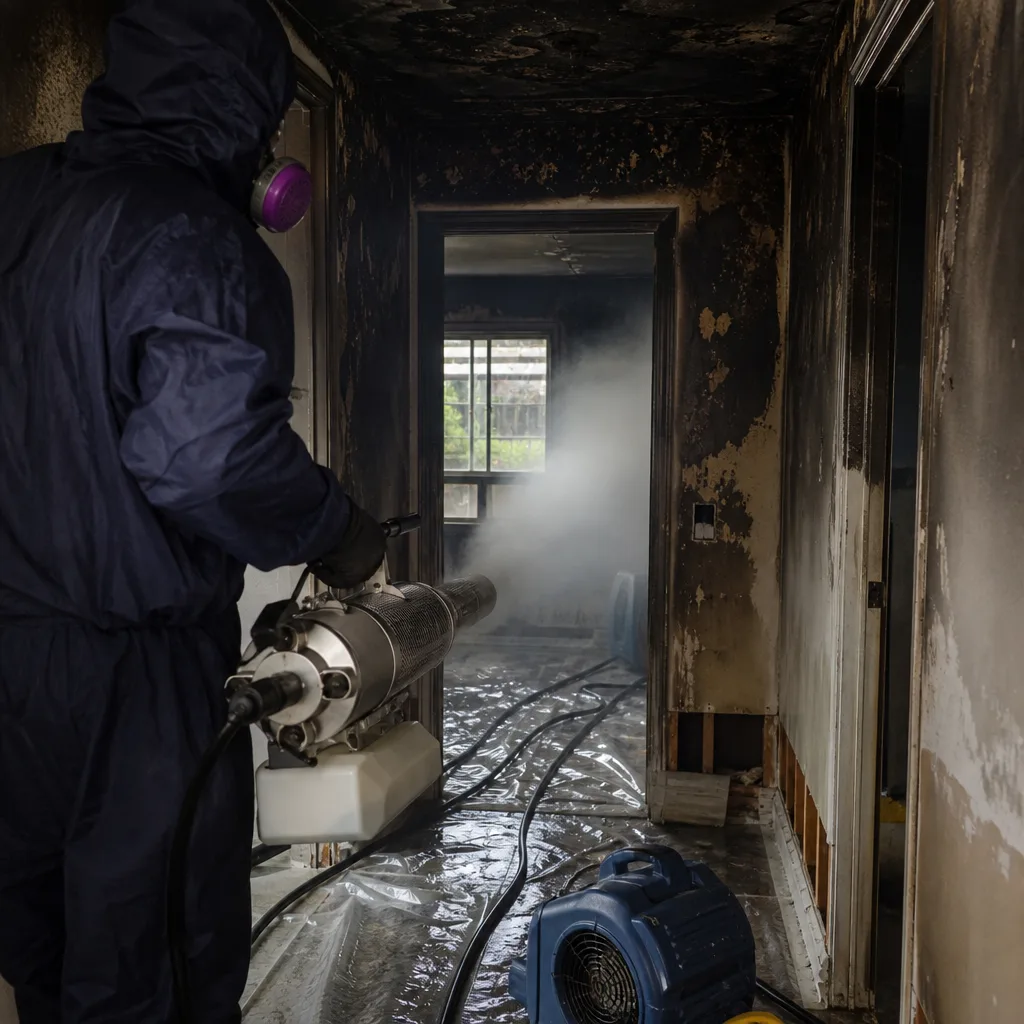
Newark’s slab-on-grade homes from the 1950s through early 1970s were built fast on compressible bay mud. Settling from that mud bends and eventually breaks copper supply lines inside or below the slab. Burst pipe restoration here usually means opening the slab or rerouting the line, not just drying a room. Our team maps the leak, cuts the affected area, and dries the structural cavity before closing it back. We account for salt-laden bay air corroding the same copper lines, and we check the electrical panel for moisture intrusion while we’re at it, because a 1960s panel that got splashed during a slab leak is a fire risk no one needs.
What happens when you call
- 1
A real person answersNo phone trees - you reach a local pro.
- 2
You get an upfront price rangeHonest numbers before anyone is dispatched.
- 3
A background-checked tech heads outLicensed & insured, dispatched right away.
- 4
You approve before work beginsNothing starts until you say go.
Trusted Brands We Service in Newark
Water damage restoration in Newark touches every major equipment brand found in local homes: Rheem, Bradford White, AO Smith, Lennox, Carrier, Trane, and Goodman are the ones we see most. When a water heater ruptures in a Newark garage or a Carrier air handler dumps condensate into a hallway, we know the unit’s failure points before we arrive. Our crews carry common gaskets, valves, and fittings for Newark’s housing stock, and we can usually source the odd part within a day from Bay Area suppliers. That fast turnaround means less downtime for your household.
Common Water Damage Restoration Problems We See in Newark Homes
- Groundwater weeping through slab cracks. Newark’s slab foundations sit on bay mud that compresses and settles unevenly. Concrete cracks follow, and the shallow water table underneath never fully drains. Even weeks after a rain event ends, moisture pushes up through those cracks and keeps baseboards, flooring, and wall cavities damp.
- Fog-driven marine humidity extending dry-out times. Newark’s location on the bay’s eastern shoreline means persistent winter fog keeps structures damp for months. A standard dehumidification protocol that works in Fremont’s hillier, better-drained neighborhoods will leave your framing wet enough for mold to bloom weeks later.
- Salt-air corrosion on electrical and HVAC components. If your flood touched the electrical panel or exterior AC condenser, the salt-laden bay air accelerates corrosion even after the water is gone. We inspect those components as part of every restoration, not as an optional add-on.
- Rushing the perimeter foundation check. A generic outfit will extract the visible water, run fans for three days, and close the job. In Newark’s western and southern tracts near the wildlife refuge, that misses the real problem. The groundwater table never settles, so the slab perimeter keeps feeding moisture into the house. We test it before we close any water job.
Pricing for Water Damage Restoration in Newark, CA
Here’s what Newark homeowners can expect to pay in 2025:
- Emergency water extraction only: $600-$1,800 for a typical single-room flood or burst pipe in Newark.
- Structural drying and dehumidification (whole room or two): $1,200-$3,500, depending on how long the water sat and whether slab-edge drying is required.
- Flood cleanup with crawlspace or slab-perimeter work: $2,000-$6,000, because Newark’s groundwater table means we’re often drying the structure below the floor, not just the room above it.
- Burst pipe restoration including slab leak repair: $1,800-$7,500, depending on whether the line is rerouted or the slab is opened and patched.
Every job gets a written scope before work starts, so you see the line items and agree to the numbers before a fan gets plugged in. We offer a free second opinion on any written estimate from another company, and there’s no trip charge inside Alameda County. Seniors and veterans save 10% on every bill. Call (855) 915-0646 for exact numbers on your situation.
We Also Serve Cities Near Newark
Our crews regularly work in Union City, Fremont, East Palo Alto, and Fairview, and we apply the same slab-aware, groundwater-conscious drying protocols wherever the geography demands it. If you’re in Newark, Water Damage Restoration in Newark is what we do every day. For a full look at our process and credentials, see our Water Damage Restoration service page.
Serving Newark, CA - Our Local Coverage Area
We’re based in the Newark area and know this community well. Use the map below to see our service coverage - if you’re nearby, we can almost certainly help.
FAQs - Water Damage Restoration in Newark
West Newark sits on former tidal wetlands and bay fill, and the water table underneath those slabs is shallow and slow to drain. After a storm or king-tide surge, the ground under your foundation stays saturated for weeks. If your slab has settled and cracked over the decades (most 1950s-70s Newark tract homes have), that groundwater pushes up through the cracks and keeps your floor and baseboards damp no matter how much you dry the room above. The fix is a perimeter foundation check, epoxy injection into the cracks, and exterior grade sealing. Call (855) 915-0646 and we’ll test your slab edge before we recommend anything.
You dry it differently than a crawlspace in Fremont. In Newark, we set up perimeter drainage and dehumidification matched to the crawlspace’s air volume, then run daily moisture readings on the floor joists and sleeper walls until the wood drops below 12% moisture content. If the ground itself is still saturated, we may add a vapor barrier and temporary perimeter venting to pull the excess moisture out. Rushing this step is how mold gets a foothold. We leave the moisture log with you when the job is done.
Yes. Newark’s marine fog keeps ambient relative humidity high from November through March, which slows evaporation and keeps materials damp longer than they would be in Union City or inland Fremont. We add dehumidification capacity beyond what a standard drying chart calls for, and we run our equipment in longer cycles. Expect a typical structural dry-out in Newark to take 20-35% longer than the same job in a drier inland neighborhood. We’d rather run the equipment an extra two days than leave your framing damp.
If your panel got splashed or submerged, have it inspected before you flip any breakers. Newark’s salt-laden bay air corrodes bus bars and terminal connections fast, and a panel that got wet during a flood can fail months later even if it worked temporarily. We check for signs of corrosion during every water restoration, and if we see white or green residue on the bus bar, we flag it for an electrician before we close the job. Don’t open a panel yourself after a flood. That’s a job for someone trained to work on live electrical boxes.
It is. Most of Newark’s residential core is slab-on-grade, which means the supply lines run through concrete instead of under a raised floor. A burst pipe here usually requires either cutting into the slab to reach the break or rerouting the line through the attic or exterior wall. Both approaches are common in Newark, and the right call depends on the pipe’s location and the slab’s condition. We’ll map the leak, give you a written scope with both options priced, and coordinate with your insurance adjuster directly. Call (855) 915-0646 for a free on-site evaluation.
Written by Wade Ferris, Owner at Wade’s Restoration of California, serving Newark and the surrounding Bay Area since 2007.