
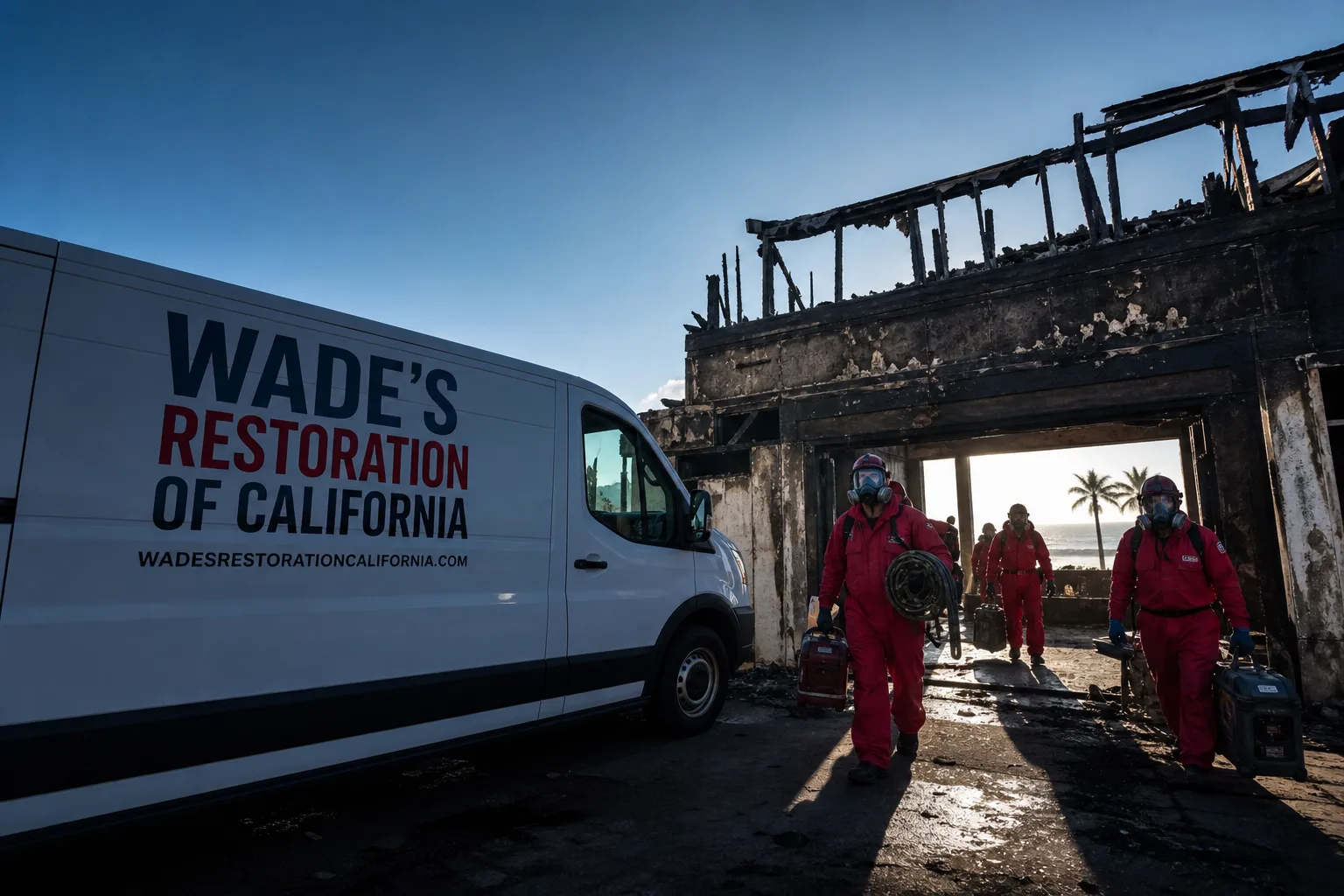
Fast, Reliable Storm & Disaster Restoration Across Newark
When a storm tears through Newark, the damage doesn’t wait, and neither do we. Storm damage on bay-fill ground behaves differently than it does on hillside lots. Water comes up through the slab, not just down from the sky. We’ve spent years working on Newark’s 1950s-to-1970s tract homes, and we know exactly what that means for drying, board-up, and reconstruction. If you need Storm & Disaster Restoration right now, call (855) 915-0646. A real person answers, day or night.
Why Wade’s Restoration of California Is Newark’s Preferred Storm & Disaster Restoration Company
Wade Ferris founded this company in 2007 because he was tired of watching national outfits overpromise and underdeliver. His name is on the truck. His address and license number are published. He answers his own phone at 2 a.m. when a storm blows through and a family is standing in water. That’s not a marketing line; that’s how the business runs. Newark homeowners don’t need a call center in another state. They need someone who understands that a flooded living room on Cherry Street sits above a water table that never fully recedes.
We work in Newark every week. The slab-on-grade homes near the Don Edwards refuge, the older tracts off Newark Boulevard, the neighborhoods along Cedar Boulevard and Thornton Avenue. We know which streets flood first when the atmospheric rivers hit, and we know what the salt air does to fasteners and panels when we’re rebuilding exterior walls. Wade deals directly with your insurance adjuster, so you’re never stuck relaying information between two sides. And every water, fire, and mold restoration job is covered by our 90-Day Done Right Promise, in writing. If it’s not done right, Wade makes it right.
Our Storm & Disaster Restoration Services in Newark
Storm Damage Cleanup
After a bad storm, Newark yards and driveways fill with branches, debris, and whatever else the wind picked up. We handle it quickly so the damage doesn’t spread. A typical debris removal and initial site stabilization for a Newark home runs $400 to $1,100 depending on the size of the yard and how much material came down. Wade’s crew arrives in uniform, background-checked, and headed by someone whose name you’ll recognize if you’ve lived here long enough.
Flood Damage Restoration
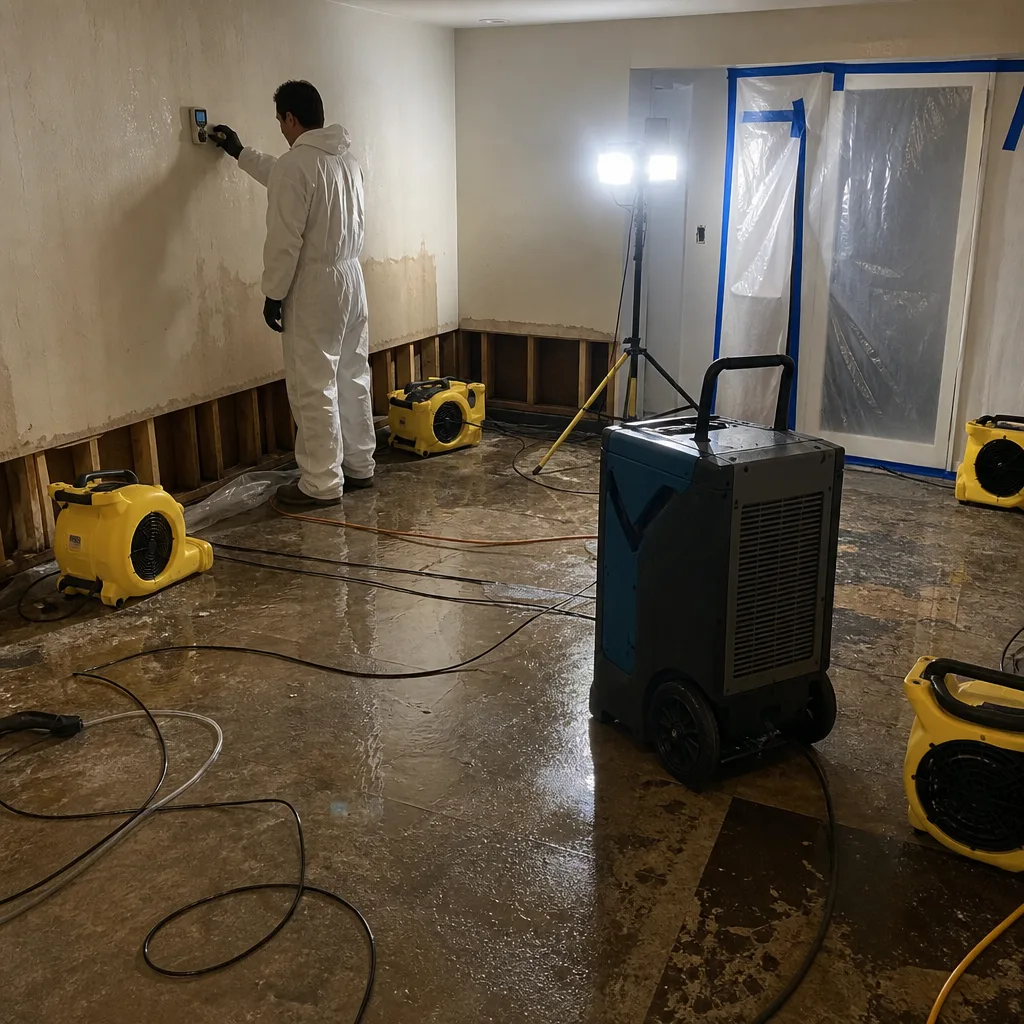
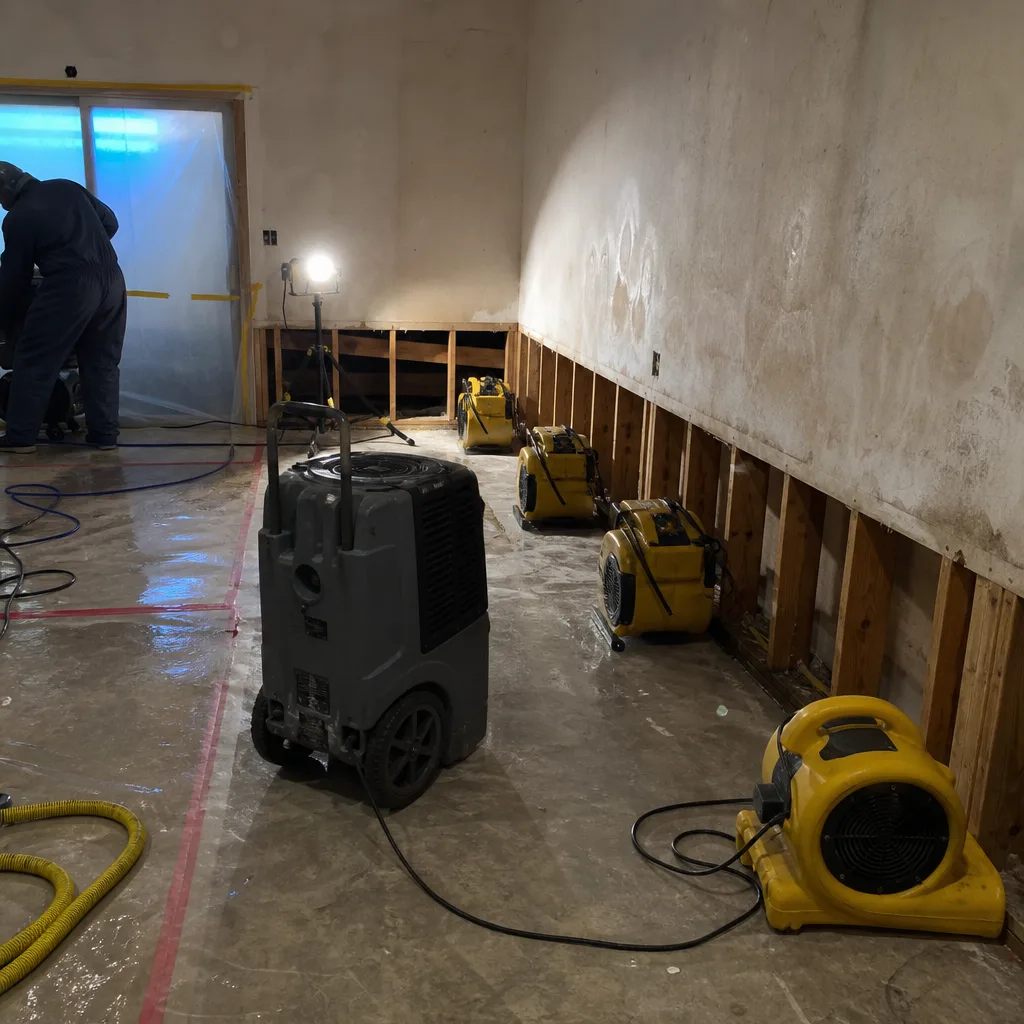
This is where Newark’s geography really matters. The city sits on former tidal wetlands and bay fill, which means the ground under your slab holds water. During winter atmospheric river events or king-tide surges, surface flooding is only half the problem. Groundwater pushes up through slab cracks, and if your restoration crew only addresses the surface water, you’ll be fighting damp floors and mold for months. We test the perimeter foundation before closing any water job in Newark. A full flood restoration on a 1,200 to 1,800 square-foot slab home typically runs $3,500 to $9,000, depending on how far the water traveled and how long it sat. Call (855) 915-0646 and Wade heads out inside the hour.
Emergency Board-Up
Broken windows and damaged doors leave your home open to weather, animals, and people who shouldn’t be there. We board up storm-damaged openings immediately, usually within 2 to 3 hours of your call for most Newark neighborhoods. Board-up alone on one or two openings typically runs $300 to $700. But on Newark’s 1960s tract homes, board-up is rarely the end of the story. Bay mud settling means structural stress points shift over time, so we always check whether the storm exposed a new crack or a failing wall plate before we call it done.
Roof Tarping
A torn section of roof over a Newark home isn’t just letting rain in; it’s inviting the marine fog to keep everything damp for weeks. We tarp within hours of your call, using high-strength material rated for bay wind. Emergency tarping on a typical Newark roof runs $450 to $900. That buys you time while the insurance claim gets sorted. Wade photographs everything for your file and talks to the adjuster directly.
What happens when you call
- 1
A real person answersNo phone trees - you reach a local pro.
- 2
You get an upfront price rangeHonest numbers before anyone is dispatched.
- 3
A background-checked tech heads outLicensed & insured, dispatched right away.
- 4
You approve before work beginsNothing starts until you say go.
Trusted Brands We Service in Newark
We work on the equipment Newark homes actually have, not just the newest stuff. That includes older HVAC units rusted by bay air, corroded electrical panels, and the kind of hardware you’ll find in a 1963 tract home off Thornton. Wade stocks parts for common local brands so we’re not waiting on a supply house order when you need the heat back on. We’re IICRC-certified and RIA-affiliated, and we run professional-grade drying equipment from Dri-Eaz, Phoenix, and Injectidry. Our standing offers apply to every Newark job: $40 off any repair over $200, a free second opinion on any written estimate, no trip charge inside Alameda County, and a permanent 10% discount for seniors and veterans.
Common Storm & Disaster Restoration Problems We See in Newark Homes
- Groundwater intrusion through slab cracks. Crews that only address surface water miss this on Newark’s slab-on-grade 1950s-to-1970s tract homes. The water table on the former tidal flats stays high for weeks, so the slab keeps pulling moisture unless you actively dry it. We’ve seen mold start in six days on a slab that looked dry on top.
- Slab settling from compressible bay mud. The fill under Newark’s homes compresses unevenly over decades, opening new crack pathways during every big storm. Repairs that don’t account for differential movement fail within months. We tie crack sealing to the foundation’s actual movement pattern, not just the visible crack.
- Salt-air corrosion on fasteners and electrical panels. If you rebuild an exterior wall on a home near the bay with standard hardware, the fasteners rust out faster than the lumber rots. We specify corrosion-resistant materials for any reconstruction within a mile of the shoreline. It costs a little more up front and saves a head-scratching failure in two years.
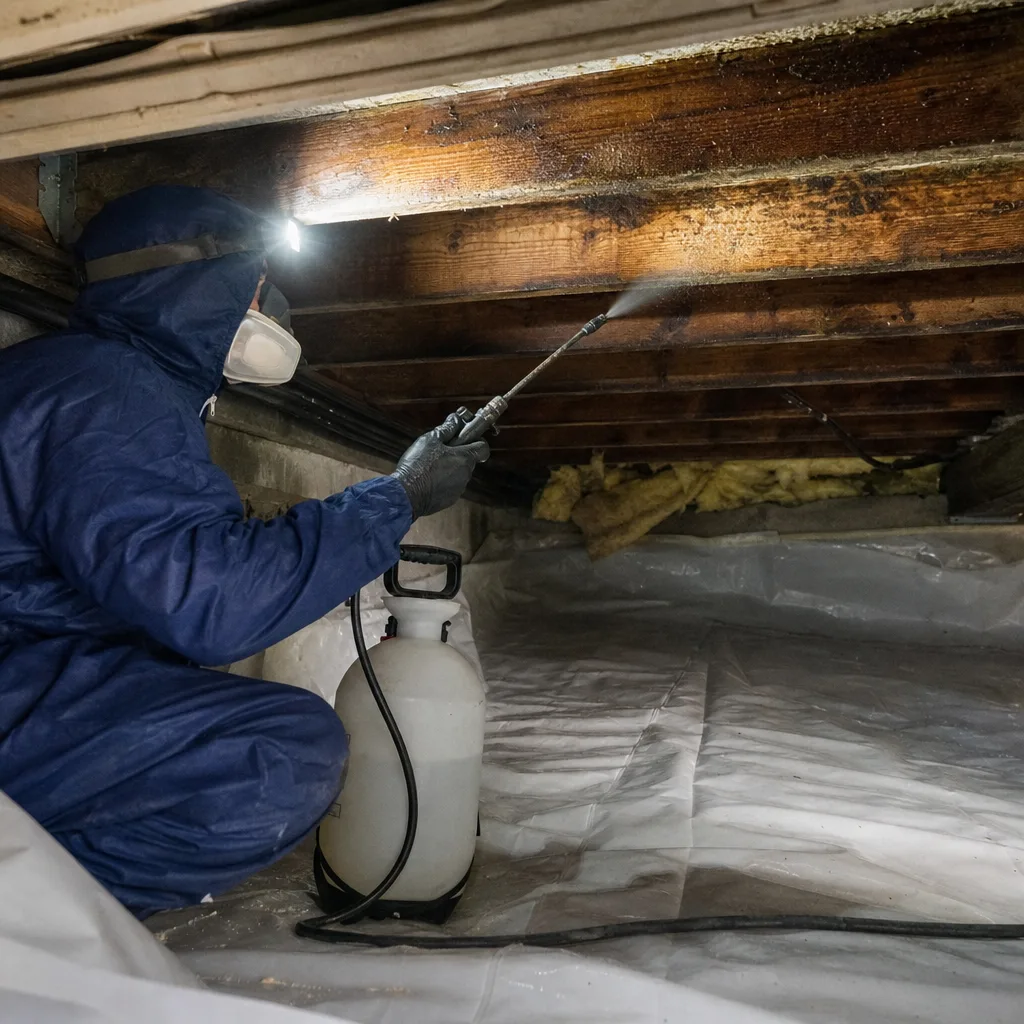
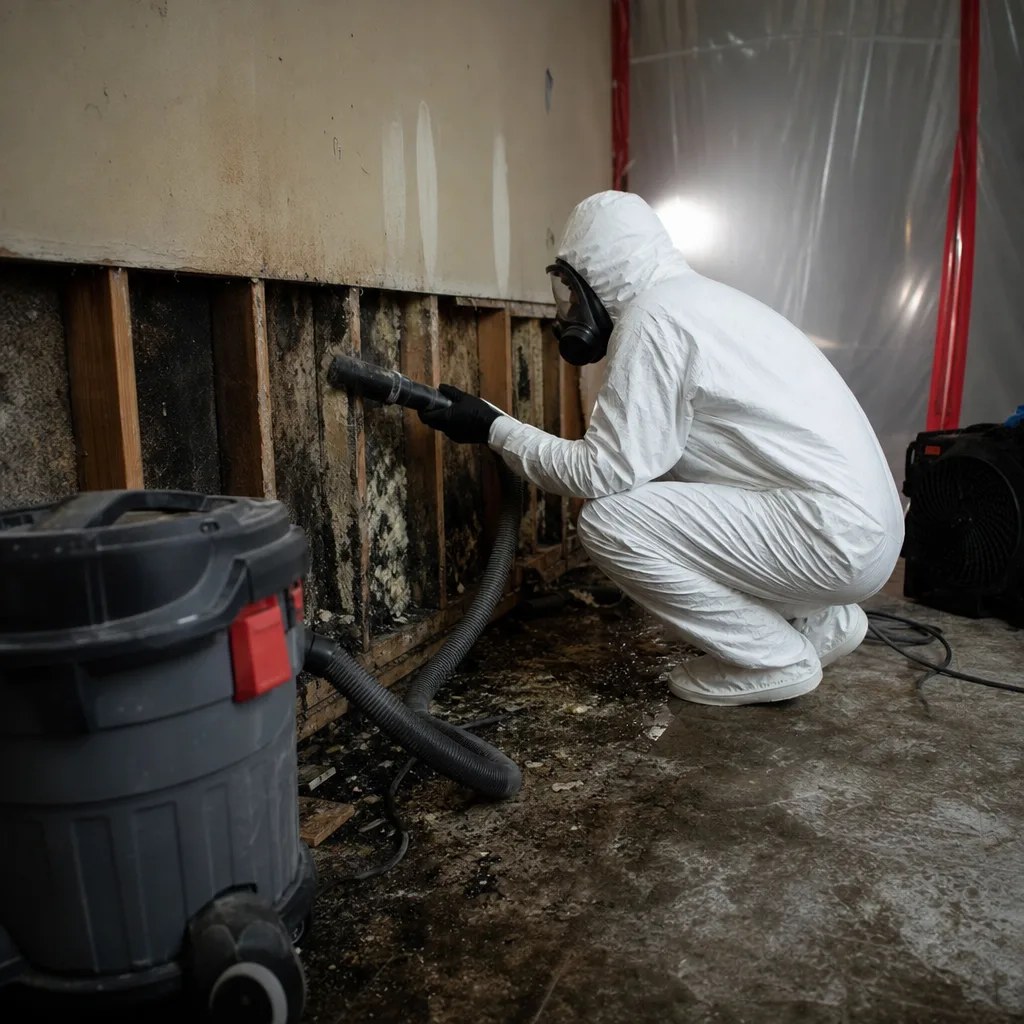
- Marine fog extending the mold window. Newark’s position on the eastern bay shoreline means winter fog keeps exterior surfaces and crawl spaces damp for months. After any water event, that compressed drying window closes fast. We deploy dehumidification equipment immediately and take daily moisture readings, then hand you the full log when the job closes. Almost nobody in the trade does that.
Pricing for Storm & Disaster Restoration in Newark, CA
Here’s what Newark homeowners can expect, based on the work we’ve done across 94560.
| Service | Typical Range |
|---|---|
| Emergency board-up (1-2 openings) | $300 - $700 |
| Roof tarping (standard-size home) | $450 - $900 |
| Storm debris removal & site stabilization | $400 - $1,100 |
| Slab-on-grade flood restoration (whole home) | $3,500 - $9,000 |
| Structural assessment & crack sealing (post-storm) | $850 - $2,200 |
What moves the number is how long the water sat, whether it reached the walls, and whether the slab needs active drying below the surface. We give you a written scope before any work starts, so the number on paper is the number you pay. Estimates are free. Call (855) 915-0646.
We Also Serve Cities Near Newark
Storm damage doesn’t respect city lines. Wade’s Restoration of California serves Newark and the surrounding communities, including Union City, Fremont, East Palo Alto, and Fairview. If you’re a few minutes down the road and the water is rising, call (855) 915-0646. We’re already on our way.
Serving Newark, CA - Our Local Coverage Area
We’re based in the Newark area and know this community well. Use the map below to see our service coverage - if you’re nearby, we can almost certainly help.
FAQs - Storm & Disaster Restoration in Newark
It turns a surface drying job into a below-slab job. The water table on Newark’s former tidal flats sits shallow, so groundwater keeps pushing up through slab cracks for weeks after the rain stops. If your restoration crew only dries the surface, you’ll get persistent dampness and mold. We test the perimeter foundation, install below-grade drying where needed, and seal cracks only after the slab has actually dried. Call (855) 915-0646 for an inspection before the damage compounds.
The shallow water table near the Don Edwards refuge boundary never fully recedes, so moisture keeps wicking into crawl spaces and at slab perimeters long after the sky clears. Homes along the slough fingers that cut into the refuge are the most affected. We run Dri-Eaz dehumidification and Injectidry systems to pull moisture out before sealing. If you’re in western Newark and the damp smell lingers, that’s groundwater, not leftover surface water. Wade can confirm it in one visit.
Newark’s salt-laden bay air accelerates rust on fasteners, HVAC components, and electrical panels, so standard hardware won’t last in exterior walls near the shoreline. We specify corrosion-resistant fasteners, treated lumber, and panel enclosures rated for marine exposure on any reconstruction within about a mile of the water. It costs a little more up front. It’s cheaper than tearing open a wall in two years because the screws failed. Ask Wade about it directly at (855) 915-0646.
Board-up stops the immediate risk; it doesn’t tell you whether the storm exposed a new structural crack from bay-mud settling. On Newark’s 1960s slab homes, we recommend a structural assessment any time a storm has opened a wall, shifted a roofline, or left visible cracking at the slab edge. That runs $850 to $2,200 and gives you a written answer on what actually moved. Then you decide what to fix, and you’re not guessing in front of an insurance adjuster. Call (855) 915-0646 and Wade will walk the property with you.
Within 24 to 48 hours is the standard window, but Newark’s winter fog compresses that. We’ve seen mold colonize on a damp slab in under six days because the marine layer kept everything wet. If water came in during a storm and the fog has been rolling through since, assume the clock is already running. Call (855) 915-0646 the same day you notice dampness. The sooner we test, the less has to be torn out.
Written by Wade Ferris, Owner at Wade’s Restoration of California. Wade founded the company in 2007, answers his own phone, and stands behind the work every day.