
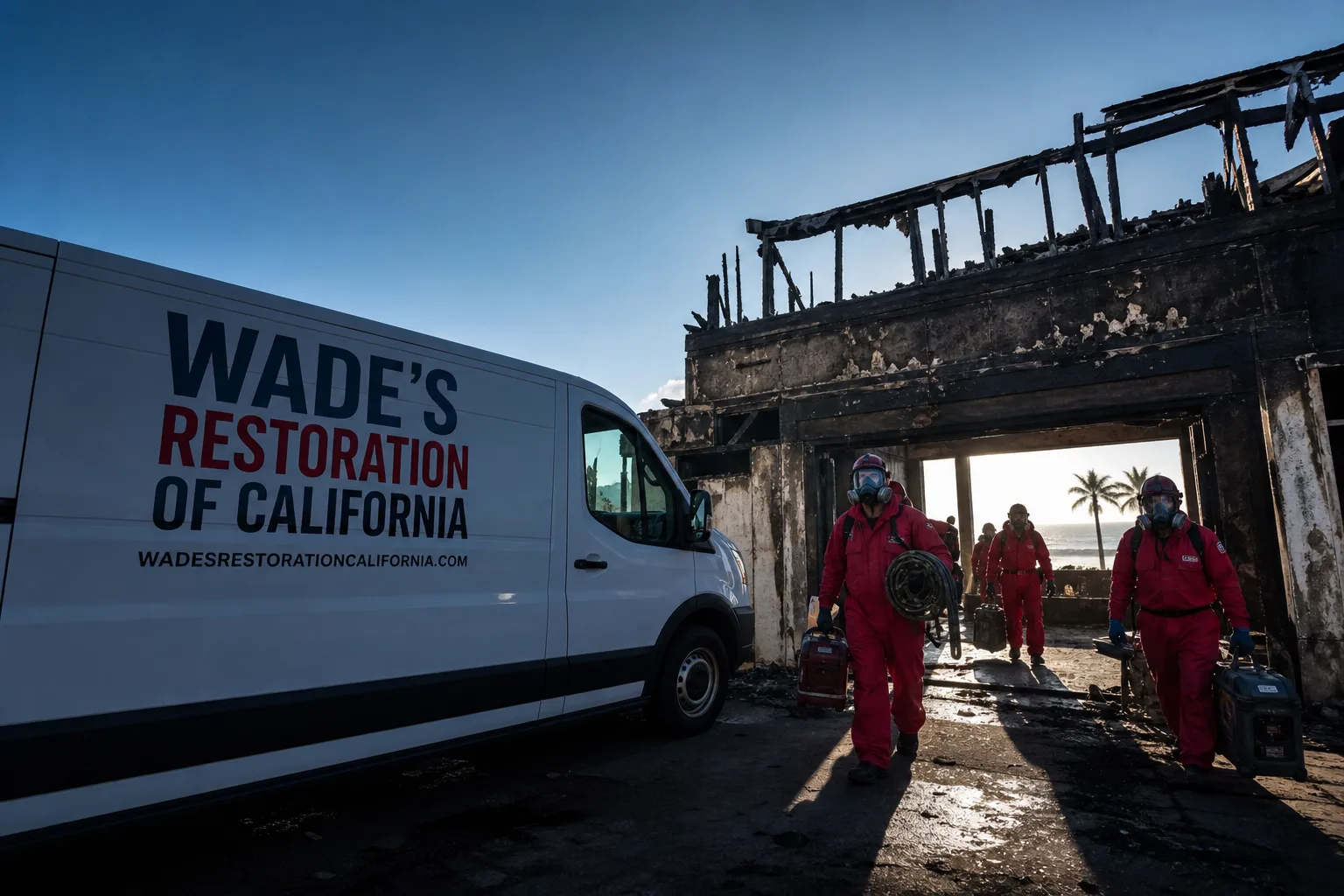
Fast, Reliable Water Damage Restoration Across Koreatown
Water damage restoration in Koreatown usually costs between $1,800 and $6,500 depending on how far the water has traveled through stacked floor plates and shared wall cavities, and most jobs can start within the hour. If you’re standing in a flooded apartment off Wilshire or 8th Street right now, call (855) 915-0646 and Wade Ferris will answer. Not a call center. Not an answering service. The owner himself, and he’s been doing this since 2007.
Koreatown is one of the densest neighborhoods in the country, which means water never stays in one unit. A supply line fails on the third floor of a 1930s courtyard building, and by morning the subfloor is soaked across two units below. We know these buildings because we work in them every week. We know which ones still have original galvanized plumbing, which ones went through the soft-story retrofit and now have framing penetrations that leak, and which flat roofs fail first when the winter storms hit.
Why Wade’s Restoration of California Is Koreatown’s Preferred Water Damage Restoration Company
Wade Ferris puts his name, his address, and his license number on every contract. That’s not a marketing line. He has to run into you at the market on Western Avenue, and that’s the oldest accountability mechanism there is. Ask anyone on your street who has dealt with a water loss in a courtyard building. They’ll tell you the national chains send a rotating cast of crews who quote one number on the phone and a different one at the door. Wade gives you a written scope before work starts, and he stands behind it with a 90-Day Done Right Promise.
Our Water Damage Restoration team has worked Koreatown’s 1920s courtyard apartments, 1960s dingbat walk-ups, and 1970s multi-story blocks long enough to know exactly what hides behind the plaster and stucco. Wade takes moisture readings every single day and hands you the full log at the end of the job. Almost nobody in this trade does that. You’ll see the numbers yourself: where the subfloor started, how fast it dried, and where it ended. No secrets, no vague assurances.
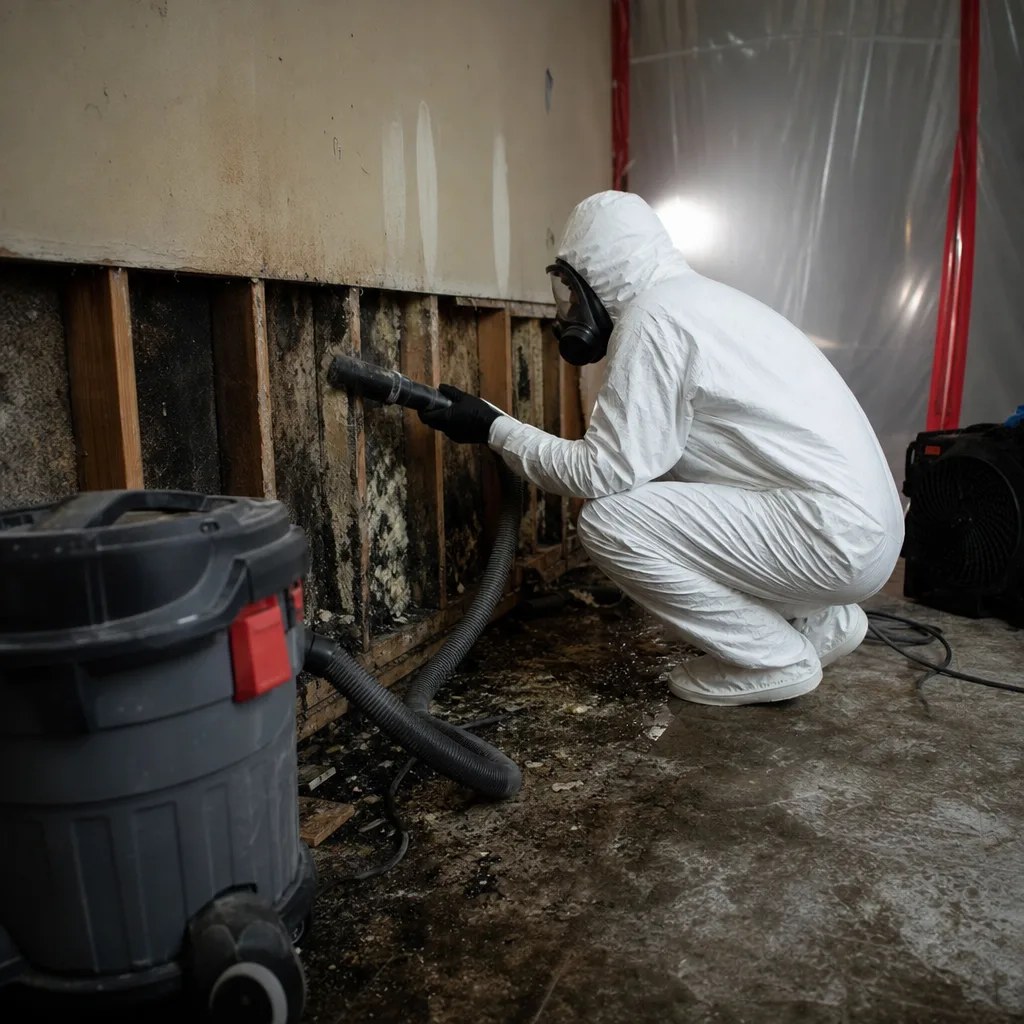
When a 1930s building off 8th Street had a galvanized supply line fail inside a shared wall cavity, water saturated the subfloor across two units below before residents even noticed the ceiling stains. We ran Injectidry floor-drying mats for four days, opened wet wall cavities under containment, and coordinated drying and mold treatment for five tenancies under a single insurance claim. That’s what multi-unit restoration looks like in Koreatown, and it’s what we do every week.
Our Water Damage Restoration Services in Koreatown
Emergency Water Extraction
When water is actively spreading through a Koreatown building, minutes matter. We have extraction equipment running inside the hour, 24 hours a day, seven days a week. Wade answers his own phone at 2 a.m. and heads out himself. The goal is to stop the water before it reaches the unit below, because in stacked buildings, every minute of delay turns a two-unit claim into a five-unit claim.
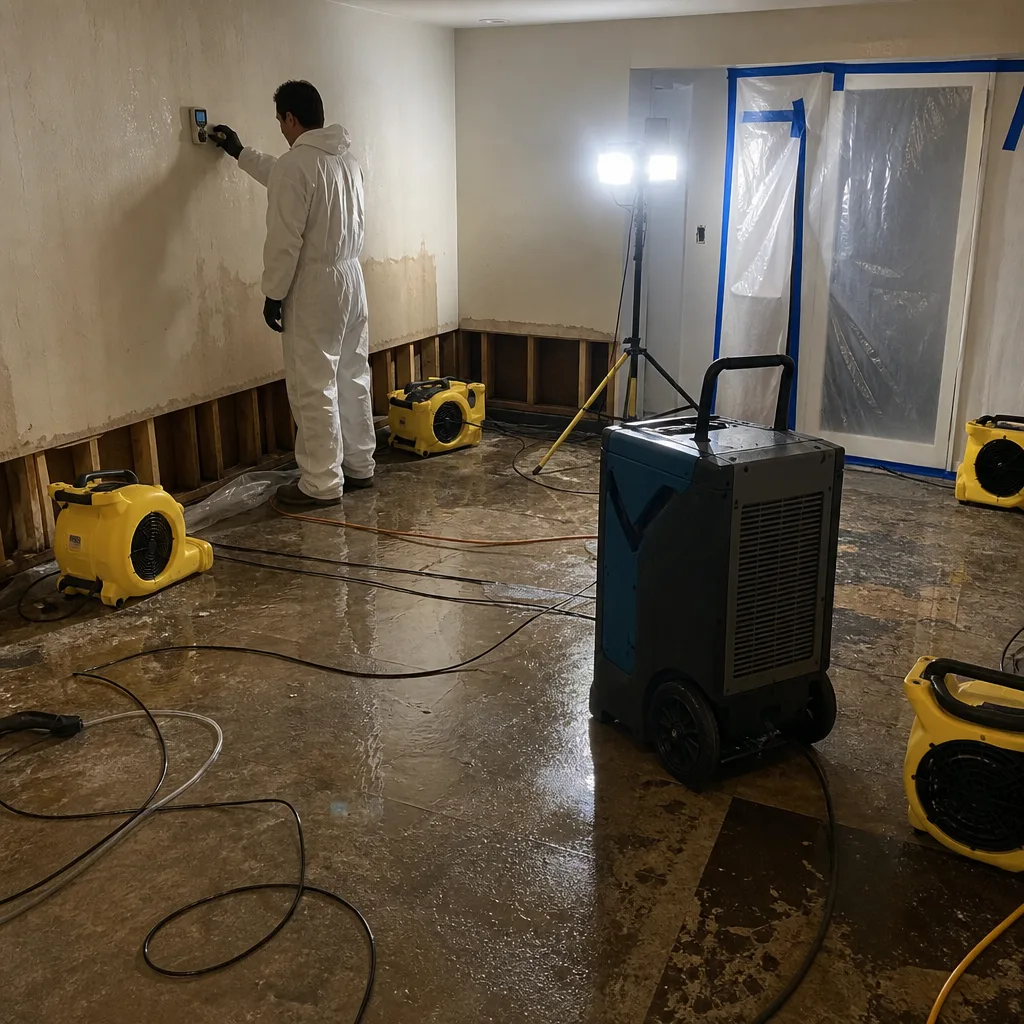
Structural Drying & Dehumidification
Koreatown’s older buildings are concrete-and-wood hybrids with tightly stacked floor plates. A standard fan-and-hope approach won’t dry a subfloor assembly in that kind of construction. We use professional-grade Dri-Eaz and Phoenix dehumidifiers and Injectidry mats under negative pressure to pull moisture out of cavities that would otherwise stay wet for weeks. Daily moisture logs document every reading until the structure reaches a dry standard, and you get the full record at the end.
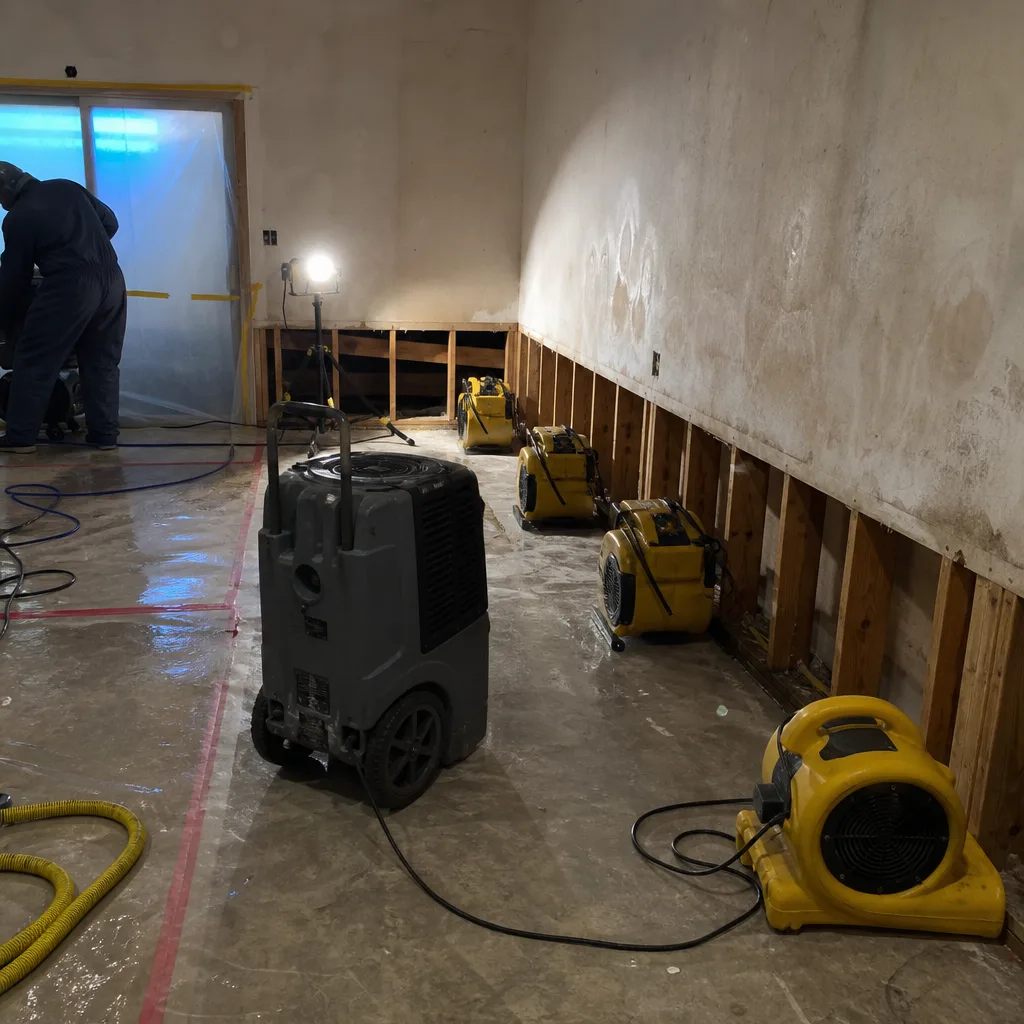
Flood Cleanup
Flat-roofed apartment buildings dominate Koreatown, and they fail differently than single-family homes. Months of LA dryness leave roof drains clogged and membrane seams cracked. When the El Niño rains arrive, rooftop flooding dumps water through stacked units fast. Our flood cleanup process includes full extraction, containment, drying, and documentation for every affected tenancy so no one gets left with hidden moisture that turns into mold six months later. If fire or smoke damage has also occurred, we also provide Fire & Smoke Damage Restoration in Koreatown.
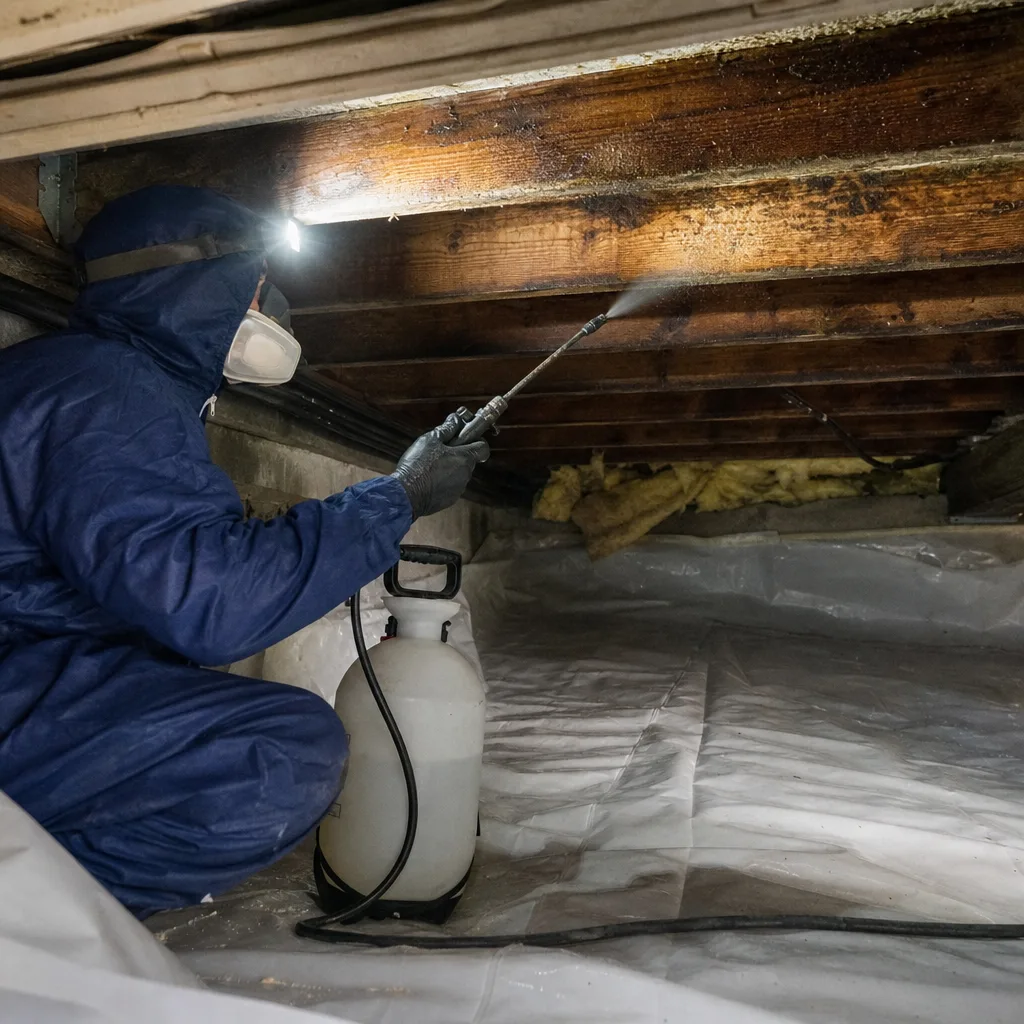
Burst Pipe Restoration
Koreatown’s pre-WWII and mid-century buildings still carry original galvanized and cast-iron supply lines that LA’s mineral-heavy water has been corroding for sixty, eighty, or a hundred years. When one fails inside a shared wall cavity, the damage isn’t just a wet wall. It’s saturated subfloor assemblies spanning two or three units below. We isolate the failed section, coordinate with the building’s plumber, and restore every affected space with documentation ready for the insurance adjuster. When the damage involves contaminated water, our Sewage Cleanup - Koreatown team handles the full remediation.
What happens when you call
- 1
A real person answersNo phone trees - you reach a local pro.
- 2
You get an upfront price rangeHonest numbers before anyone is dispatched.
- 3
A background-checked tech heads outLicensed & insured, dispatched right away.
- 4
You approve before work beginsNothing starts until you say go.
Trusted Brands We Service in Koreatown
Our crews work with professional-grade equipment from Dri-Eaz, Phoenix, and Injectidry, and our technicians hold IICRC and RIA credentials with IFA recognition. That’s not about brand names. It’s about equipment that actually dries a 1930s floor assembly fast enough to prevent mold from spreading into adjoining tenancies. For Koreatown’s older buildings, that equipment matters more than anywhere else in LA, because the margin between a contained claim and a five-unit cascading claim is measured in hours.
Common Water Damage Restoration Problems We See in Koreatown Homes
- Slow leaks in legacy galvanized supply lines behind shared walls. Restorers without local experience miss these because the first visible sign is a stain on a ceiling two floors down. By the time anyone notices, the wall cavity has been wet for weeks and mold is already established across multiple tenancies.
- Low-velocity air movers on concrete-and-wood floor plates. Koreatown’s dense floor assemblies don’t respond to a fan pointed at a baseboard. Subfloor systems need Injectidry mats and high-pressure dehumidification, or the moisture just sits there while mold spreads sideways into the neighboring unit.
- Patching original cast-iron or galvanized plumbing instead of isolating and replacing the failed section. A patch at the same wall cavity fails within months, which means another restoration cycle, another insurance claim, and another round of tenants displaced. Replacing the section is the only fix that lasts.
- Post-retrofit framing penetrations that create new water pathways. Many Koreatown buildings went through LA’s mandatory soft-story seismic retrofit. The structural work was necessary, but the new framing penetrations often weren’t sealed correctly, and they leak during the first heavy rain. We see this constantly now.
Pricing for Water Damage Restoration in Koreatown, CA
What you’ll pay depends on how far the water traveled and how many units are involved. Here’s what we typically see in Koreatown’s market:
- Single-unit emergency water extraction: $900-$2,200
- Structural drying with daily moisture logs: $1,500-$4,800 per affected unit
- Multi-unit cascading leak (2-5 tenancies): $6,000-$28,000 total
- Burst pipe restoration with wall cavity containment: $2,500-$9,500 depending on how many floor plates are saturated
- Ceiling and roof leak water damage: $1,200-$5,000 per stacked unit
These are real numbers from real Koreatown jobs, not national averages. Every estimate is free, in writing, and agreed to before work starts. No charge for a second opinion on any written estimate, no trip charge inside our own county, and a 10% Senior and Veteran discount on every job, always. Call (855) 915-0646 and Wade will walk you through what your building actually needs.
We Also Serve Cities Near Koreatown
While this page focuses on Koreatown, our crews regularly work in Water Damage Restoration in Koreatown and the surrounding neighborhoods including Los Angeles, Echo Park, Silver Lake, and Hollywood. If you’re in one of those areas and dealing with a water loss, the same owner answers the same phone number: (855) 915-0646.
Serving Koreatown, CA - Our Local Coverage Area
We’re based in the Koreatown area and know this community well. Use the map below to see our service coverage - if you’re nearby, we can almost certainly help.
FAQs - Water Damage Restoration in Koreatown
Because these buildings are concrete-and-wood hybrids with tightly stacked floor plates and shared wall cavities, water from a failed pipe on an upper floor travels down through subfloor assemblies before it shows up as a stain on the ceiling below. In a 1930s courtyard building, one galvanized supply line failure routinely saturates two or three units at once, which is why we always inspect the units below before we finish scoping the job. Call (855) 915-0646 and we’ll map the full extent before starting work.
We use Injectidry floor-drying mats under negative pressure and Dri-Eaz/Phoenix dehumidifiers placed inside sealed containment chambers, so we can dry the affected floor plates without shutting down every adjacent unit. In most courtyard buildings, tenants in units that share a wall with the wet cavity can stay while we work in the affected spaces. Daily moisture logs show exactly which areas are drying and which need more time, so nobody moves out unless it’s truly necessary.
Flat roofs on 1960s and 1970s Koreatown apartment blocks clog with debris during LA’s long dry spells, and when winter rain arrives, the water pools instead of draining. The membrane seams, dried out from months of sun, fail catastrophically, and water pours through multiple stacked units at once. A single-family home with a pitched roof sheds water away from the structure. A flat roof holds it there until it finds a path down, which usually means a multi-unit restoration.
Galvanized supply lines can sometimes be isolated and sectionally replaced, but a patch at the same wall cavity is a temporary fix that fails again within months, multiplying restoration costs across multiple units. The honest answer is that once galvanized lines start failing, the corrosion has compromised the whole run, and the only permanent solution is replacement of the affected section. We’ll tell you which one your building needs before any work starts, in writing.
We coordinate directly with each unit’s insurance adjuster, document every affected tenancy with photos and moisture logs, and provide a single written scope that maps how the damage cascaded through the building. The homeowner or building owner is never stuck relaying information between multiple carriers. Wade deals with the adjusters himself, and you get the full paper trail at the end. Call (855) 915-0646 for a free estimate, and we’ll walk you through exactly how your building’s claim should be handled.
Call Wade’s Restoration of California for Water Damage Restoration in Koreatown
If water is moving through your building right now, call (855) 915-0646. Wade answers his own phone, day or night, and he’ll have extraction running inside the hour. If you have a written estimate from another company, bring it in. Free second opinion, no charge, and if we can do the job for less, we’ll tell you so.
Every job gets the 90-Day Done Right Promise in writing. If it’s not done right, Wade makes it right. That’s his name on the truck and his name on the line, and he’s been doing it since 2007. Koreatown’s older buildings need a restoration crew that knows exactly what’s behind the walls and under the floors. That’s us.
Written by Wade Ferris, Owner at Wade’s Restoration of California, serving Koreatown and the surrounding Los Angeles area since 2007.