
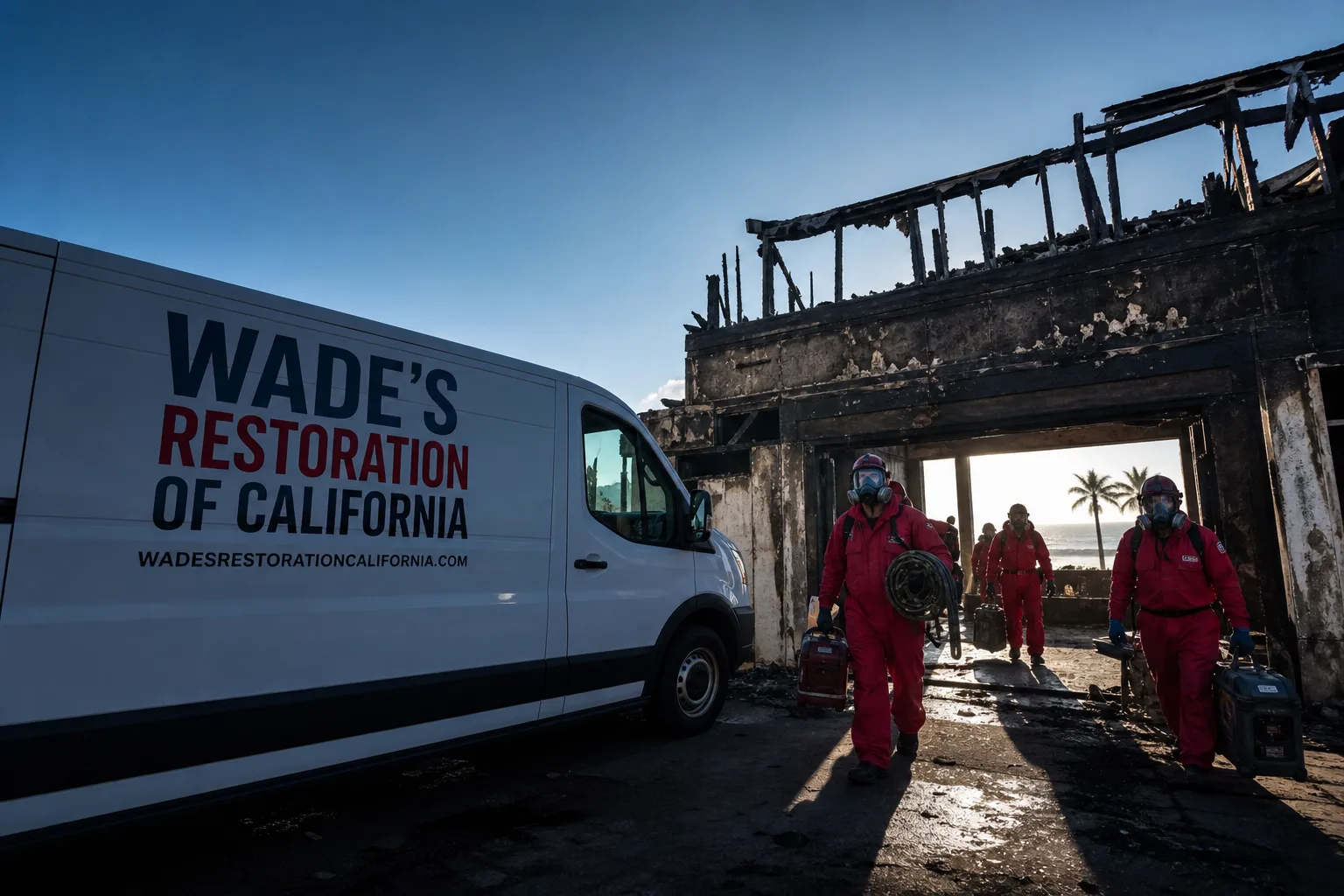
Fast, Reliable Water Damage Restoration Across Chinatown
Water damage restoration in Chinatown typically runs $2,800-$7,500 depending on how far the water traveled through your building’s framing, and emergency extraction is available around the clock. If you’re standing in water right now, call (855) 915-0646 and Wade will answer. Our Water Damage Restoration team knows these century-old tenements better than any national outfit ever will, because we’ve spent years tracing leaks through the exact same balloon-frame construction you’re living in. In Chinatown, a pipe that bursts on the third floor doesn’t stay on the third floor. It follows hundred-year-old framing cavities straight down through your walls, and if you wait for visible staining, you’ve already got mold growing inside the plaster.
Why Wade’s Restoration of California Is Chinatown’s Preferred Water Damage Restoration Company
Wade Ferris founded this company in 2007 and still answers the phone himself. Not a call center. Not a queue. When you call at 2 a.m. because a supply line let go in your Waverly Place walk-up, Wade picks up. He heads out from the Los Angeles office, and crews serving Chinatown get there fast enough to start extraction inside the hour.
Here’s what matters in this neighborhood: our crews have mapped moisture in un-firestopped balloon-frame bays on Grant Avenue, Stockton Street, and the alleys off Waverly Place. We know that a ceiling stain on the second floor often means water pooled behind plaster-on-lath two stories below. That’s not something you learn from a franchise training video. It’s something you learn by opening walls in these buildings for nearly two decades.
Every job ends with something almost nobody else in the trade offers: the daily moisture log. Wade takes readings every single day during structural drying and hands you the full log when the job’s done. You see exactly what we saw, every day, in writing. And the 90-Day Done Right Promise is on every contract. If it’s not done right, he makes it right.
Ask anyone on your street. Or call and ask Wade directly. He’ll tell you what he’s seeing in buildings like yours, no charge for that.
Our Water Damage Restoration Services in Chinatown
Emergency Water Extraction
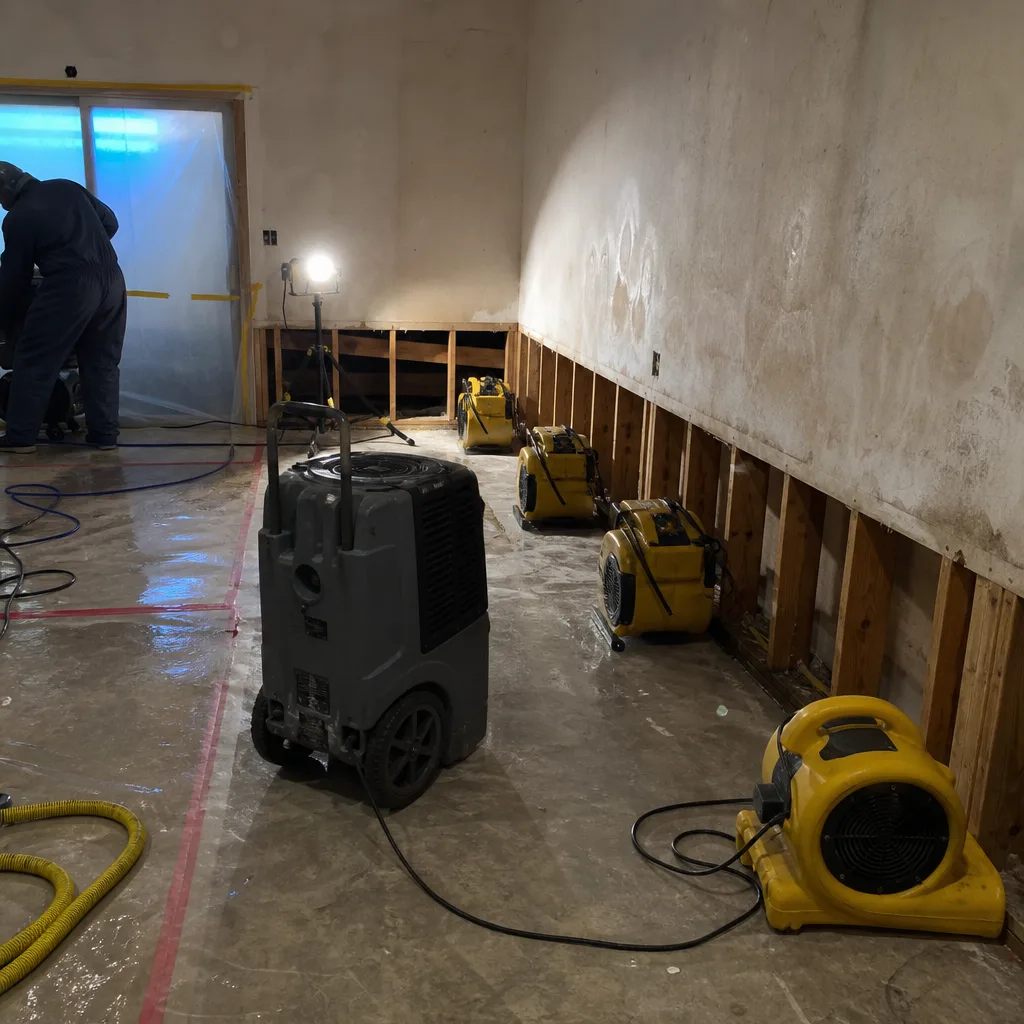
When a supply line fails in a 1920s tenement on Stockton Street, water moves through original hardwood, subfloor, and century-old plaster faster than you’d think possible. Our crews use truck-mounted Dri-Eaz extraction units and XPOWER air movers to pull standing water before it saturates the framing. In Chinatown’s dense mixed-use buildings, every minute of delay means more units affected below you. We run extraction from the moment we walk in.
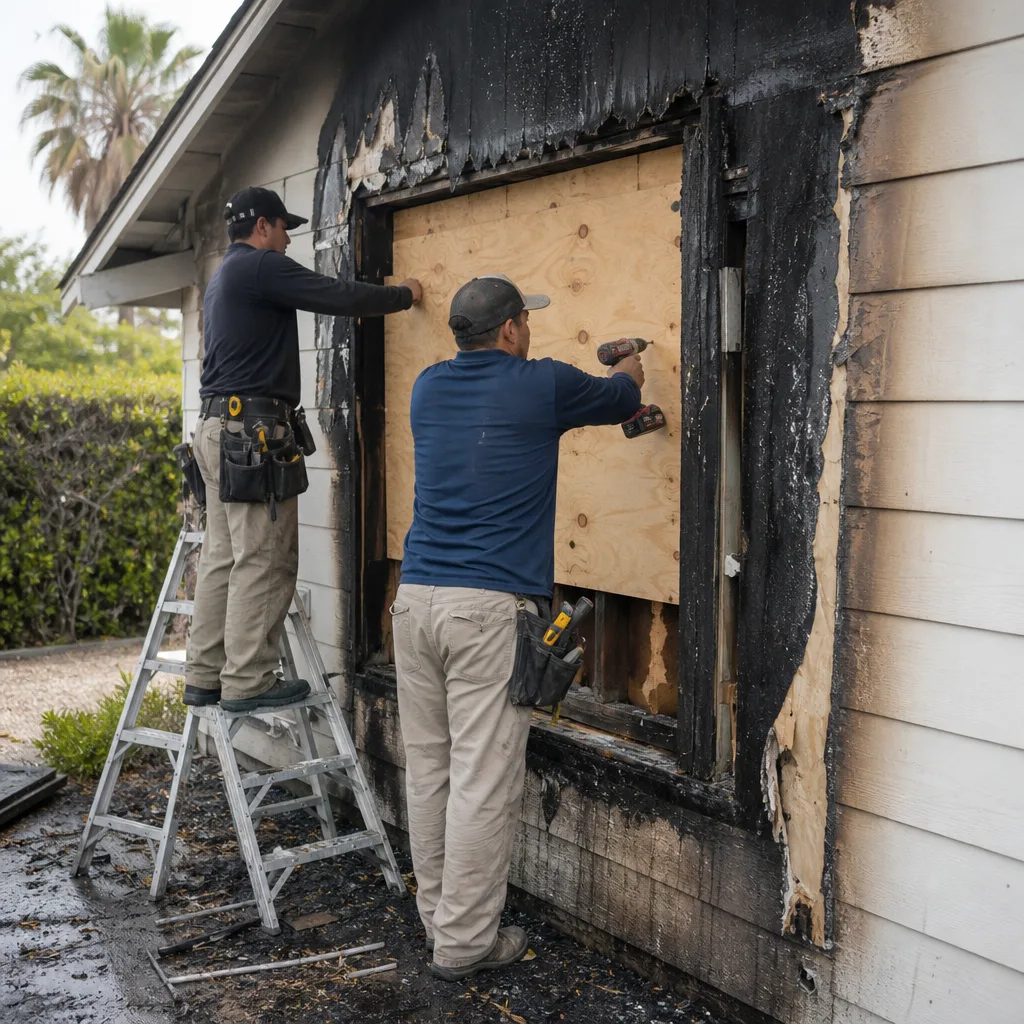
Structural Drying & Dehumidification
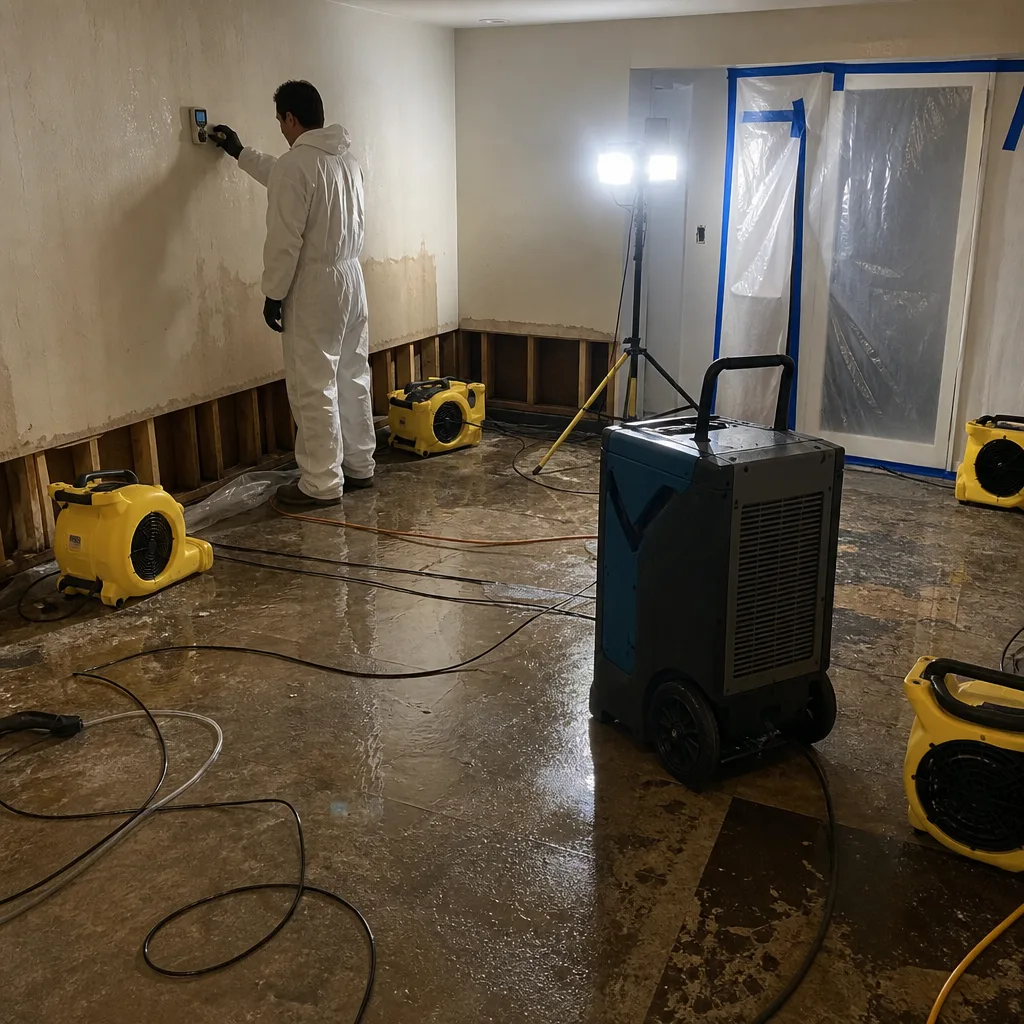
This is where most restoration companies fail Chinatown properties. Air movers alone won’t dry plaster-on-lath that’s absorbed water through un-firestopped wall cavities. We use Phoenix 200 Max desiccant dehumidifiers and Injectidry injection drying systems to push dry air directly into the wall cavities. The moisture log Wade hands you at the end shows every reading we took. You’ll see the numbers come down day by day until the assembly is genuinely dry, not just surface-dry.
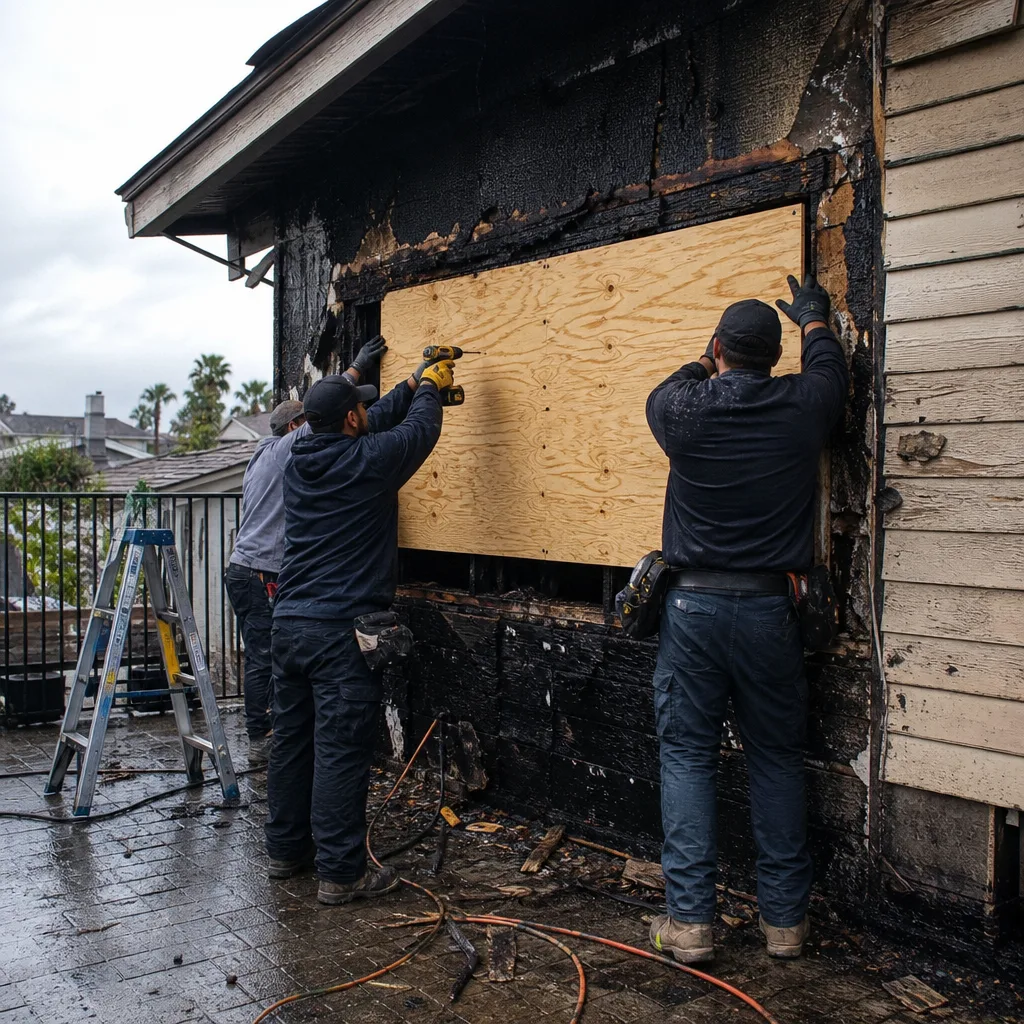
Flood Cleanup
Chinatown sits in a dense urban basin. When heavy storms overwhelm aging drainage stacks and flat roof drains, water pours through ceilings and follows diagonal bridging down through shared walls. We clean category 1 and 2 water the same way: extract, map the moisture boundary with thermal imaging, open only what’s truly saturated, and dry the rest in place. Less demolition means less time displaced from your unit and less dust in your neighbors’ homes.
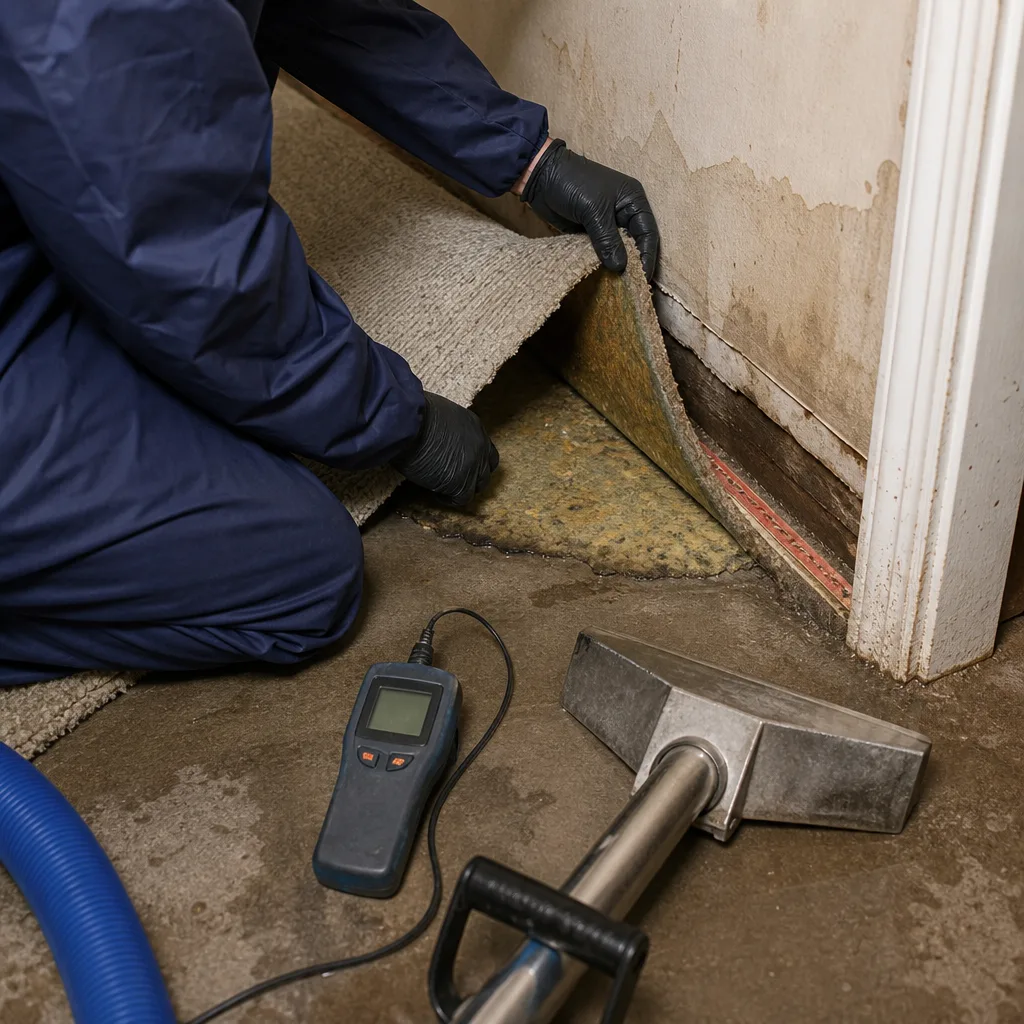
Burst Pipe Restoration
Original galvanized supply lines from the 1910s and 1920s are still carrying water in many of these buildings. When one finally lets go, the damage pattern is predictable if you’ve seen it before. The water finds the path of least resistance: old chase cavities, diagonal bridging, gaps around drain stacks. We’ve traced leaks from third-floor bathrooms down to ground-floor commercial kitchens on Waverly Place. Our team restores the full path of the water, not just the room where the pipe burst.
Ceiling & Roof Leak Water Damage
Flat roofs on post-1906 rebuilds drain poorly, and the persistent summer fog keeps everything damp. When a roof leak finally stains a ceiling in your unit, the water has usually been moving through the assembly for days or weeks. We inspect the full moisture boundary, not just the visible stain. Dense plaster ceilings absorb enormous amounts of water before they fail visually. By the time you see brown staining, the wood lath behind it is usually saturated and mold-viable.
What happens when you call
- 1
A real person answersNo phone trees - you reach a local pro.
- 2
You get an upfront price rangeHonest numbers before anyone is dispatched.
- 3
A background-checked tech heads outLicensed & insured, dispatched right away.
- 4
You approve before work beginsNothing starts until you say go.
Trusted Brands We Service in Chinatown
We run Dri-Eaz extraction units, Phoenix 200 Max desiccant dehumidifiers, and XPOWER air movers on nearly every Chinatown job. The equipment matters because these buildings don’t dry passively. You need real desiccant drying and injection systems to move air through century-old wall cavities. Our IICRC-certified team and RIA-affiliated protocols are standard on every job we do. Wade won’t send a crew without the right gear, and he won’t cut corners on drying time. If that’s what you’ve seen from other companies, you haven’t seen what we do.
Common Water Damage Restoration Problems We See in Chinatown Homes
- Hidden travel through balloon-frame bays. In these un-firestopped buildings, water from a third-floor pipe routinely surfaces two floors below, far from the source. By the time you see a wet wall, the hidden cavity has usually been wet for days, and mold growth threshold passes within 24-48 hours in San Francisco’s humid marine layer.
- Plaster-on-lath retaining water for weeks. The dense plaster walls common to 1910s-1930s Chinatown tenements absorb water like a sponge and release it slowly. Air movers alone leave the assembly above 20% moisture, which means mold regrows after the job is “done.” Injection drying is the only reliable fix.
- Top-floor leaks treated as isolated events. When a ceiling stain appears on the top floor, most contractors dry that room and leave. But diagonal bridging carries water down through shared walls. Failing to inspect two floors below leads to a second damaging event within weeks, usually in a neighbor’s unit.
- Waiting for visible staining before opening walls. In these buildings, visible staining is the last symptom, not the first. By the time you see it, the hidden cavity has been wet long enough to support mold growth. Thermal imaging shows the full moisture boundary before demolition starts, which is why we map first and open only what’s necessary.
Pricing for Water Damage Restoration in Chinatown, CA
Emergency water extraction in Chinatown typically runs $800-$1,800 for a single-unit response. Structural drying with injection systems usually lands between $1,500-$3,600 depending on how many wall cavities are involved. Full burst pipe restoration, including opening saturated plaster, drying, and repair, runs $3,200-$7,500 for a typical unit in these older tenements. Ceiling and roof leak water damage restoration typically costs $1,200-$4,000 depending on how far the water traveled before you caught it.
What drives cost in Chinatown specifically is the hidden travel. When water from a third-floor pipe surfaces two stories down, the scope triples compared to a modern building where water mostly stays put. That’s why our first step is always thermal mapping. We show you the moisture boundary in writing, agree on a written scope, and then start work. No surprises at the door.
Call (855) 915-0646 for a free estimate. No trip charge inside our own county, and a free second opinion on any written estimate you’ve already got. Senior and veteran discounts apply, always.
We Also Serve Cities Near Chinatown
When we’re not tracing moisture through un-firestopped bays in Chinatown, our crews work the surrounding San Francisco neighborhoods. We handle water damage restoration in San Francisco, the Mission District, Noe Valley, and Visitacion Valley. The housing stock changes from block to block, but our approach doesn’t: map first, open only what’s needed, and hand you the moisture log when it’s done.
Serving Chinatown, CA - Our Local Coverage Area
We’re based in the Chinatown area and know this community well. Use the map below to see our service coverage - if you’re nearby, we can almost certainly help.
FAQs - Water Damage Restoration in Chinatown
Water-damaged plaster-on-lath in Chinatown’s poorly ventilated century-old buildings can reach mold-growth thresholds within 24-48 hours, because San Francisco’s marine layer and persistent summer fog keep interior humidity elevated year-round. That compressed window is why we treat every water incident as urgent and start extraction and drying the same day we’re called. Call (855) 915-0646 and Wade will answer, any hour.
Water travels two floors down because these post-1906 tenements have un-firestopped balloon-frame bays and century-old diagonal bridging. The water follows those hidden chases through shared walls, not the modern framing logic a contractor might expect. We map that path with thermal imaging and open only the saturated sections, which keeps demolition minimal and your neighbors’ units untouched where possible.
Yes, in most cases. We use injection drying through small access points to dry wall cavities in place, which means we don’t have to rip out entire plaster walls in an occupied SRO. That matters when your neighbors are living directly above and below the damaged unit and full demolition would displace more people. We coordinate access so we dry the assembly without tearing apart more than necessary.
Wade answers the phone directly, and crews serving Chinatown can typically begin extraction within the hour for a true emergency. After extraction, we set up structural drying equipment the same day. The full drying process in these plaster-heavy buildings usually takes 3-5 days, and you’ll see the daily moisture readings until we’ve hit dry standard. Call (855) 915-0646 and we’ll give you a straight answer on timing for your building.
Yes. Many Chinatown buildings have multiple occupied units above and below the damaged area, and some residents may need communication in Cantonese, Mandarin, or other languages. We coordinate access directly with neighbors and building owners, and we’re used to working around active residencies without shutting down whole buildings. On one 1919 tenement on Waverly Place, our crew traced a third-floor supply line leak that had followed a century-old chase down to the ground-floor commercial kitchen. Using thermal imaging and a Phoenix 200 Max, we mapped moisture through un-firestopped bays, opened only the truly saturated plaster-on-lath sections, and dried the assembly in 72 hours, keeping both the upstairs SRO tenants and the restaurant below open during the job.
Call Wade’s Restoration of California for Chinatown Water Damage Help
If you’ve got water moving through your walls in Chinatown, don’t wait for the stain to show up. Call (855) 915-0646 right now. Wade answers his own phone, and he’ll tell you straight what he thinks is happening in your building and how fast he can get there. No charge for the call. No charge to come out inside the county. And if you’ve already got a written estimate from another company, bring it. We’ll give you a free second opinion. Wade’s name is on the truck, his address is published, and you’re going to see him again on Saturday. That’s the whole point.
Written by Wade Ferris, Owner at Wade’s Restoration of California, serving Chinatown and surrounding San Francisco neighborhoods since 2007.