
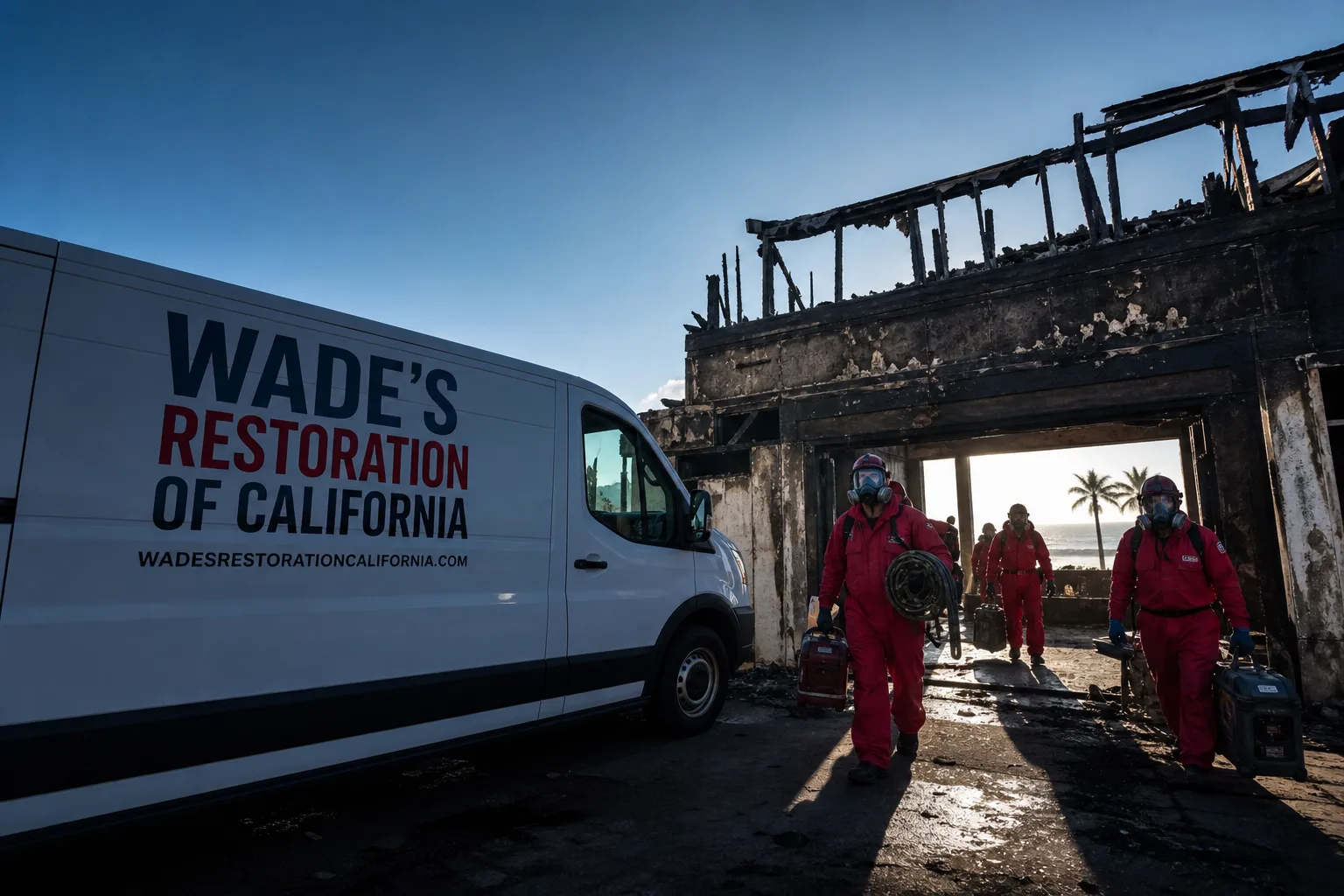
Fast, Reliable Water Damage Restoration Across San Francisco
Water damage restoration in San Francisco usually runs between $2,800 and $7,500 for a typical single-room incident, with emergency extraction starting around $450 to $900. Wade’s Restoration of California gets a live person to your door fast, often with extraction equipment running within the hour. Call (855) 915-0646 and you’ll talk to Wade Ferris himself, not an answering service.
San Francisco is not like other Bay Area markets. The fog, the bay fill, the lath-and-plaster walls, the unreinforced masonry. Wade and his crew know these buildings because they have worked in them for nearly two decades. When a supply line shears inside a 1908 Edwardian flat in the Mission, you don’t want someone who learned drying theory from a PowerPoint. You want someone who has opened probe holes in plaster and knows what a moisture reading of 23% means in this climate.
Why Wade’s Restoration of California Is San Francisco’s Preferred Water Damage Restoration Company
Wade Ferris founded this company in 2007 and never made a secret of where he works. His name is on the truck. His number is his cell. When you call, he picks up. That’s the whole model. No franchise, no out-of-state call center, no crew you’ve never met showing up with a clipboard.
San Francisco homeowners have told us the same thing for years: they got burned by a national chain that quoted one price on the phone and another at the door. Wade’s crew gives you a written scope before any work starts. You know the number before the equipment comes off the truck. And the 90-Day Done Right Promise is stamped right on the contract. If it’s not done right, Wade makes it right. One call brings him back.
Response time matters here. Parking on narrow streets in the Mission or Noe Valley, building access in Chinatown walk-ups, locked lobbies in SoMa loft conversions. Wade knows how to get equipment to a fourth floor without a freight elevator. That’s not a certification. That’s local experience.
Our Water Damage Restoration Services in San Francisco
Emergency Water Extraction
Standing water in San Francisco moves differently than it does in a suburban ranch. Victorian flats have sloped floors, century-old framing, and walls finished in plaster that drinks water like a sponge. We extract first, then map. In the Mission (94110) and Noe Valley, that means getting moisture readings on the floor assembly before you trust what the surface looks like. Typical emergency extraction in San Francisco runs $450 to $900 for a single room, depending on square footage and how long the water has sat.
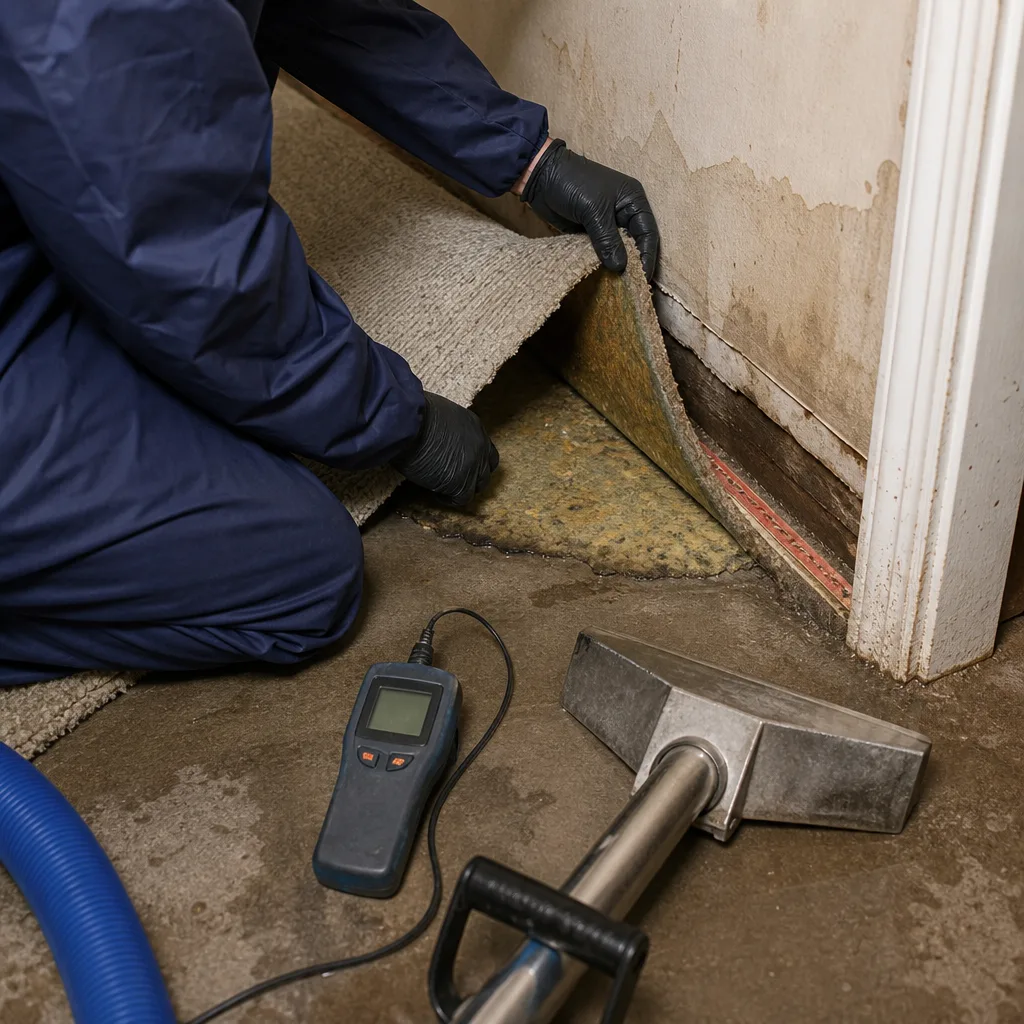
Structural Drying & Dehumidification
This is where San Francisco’s fog changes the math. A building on the west side of a hill in the Sunset corridor carries a baseline moisture load that a Sacramento drying chart never accounts for. Wade takes moisture readings every single day and hands you the full log when the job closes. Almost nobody in this trade does that. We run Dri-Eaz LGR 7000XLi dehumidifiers and Phoenix axial air movers, and we set drying targets against your building’s actual baseline equilibrium, not a generic number from a manual.
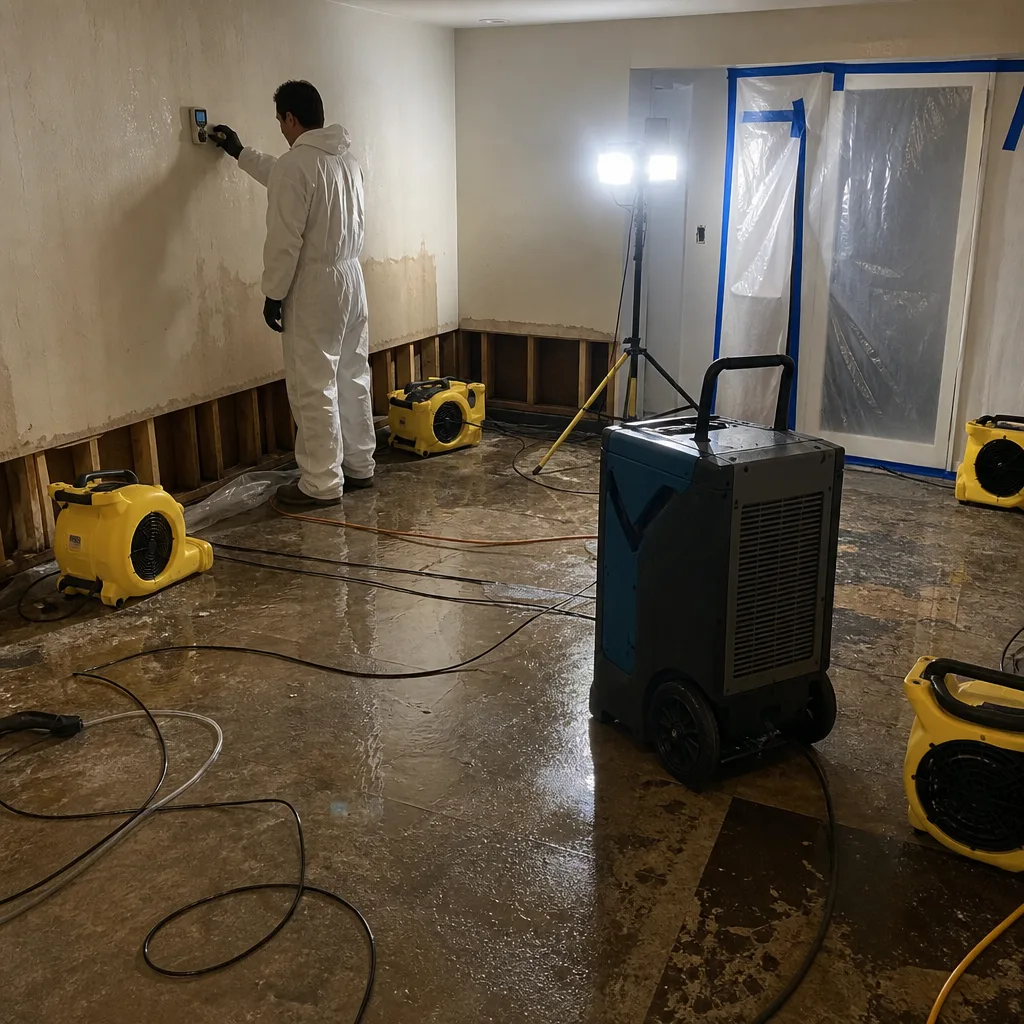
Flood Cleanup
Flooding in Visitacion Valley or along the eastern ZIP corridors near the Embarcadero is not always rain. Bay-fill ground matters. Liquefaction after even a moderate seismic event can push groundwater where it doesn’t belong. Flood cleanup here means pulling water, cutting out saturated lath-and-plaster, and documenting everything for your insurance carrier. Wade talks directly to your adjuster so you don’t have to relay messages between two sides.
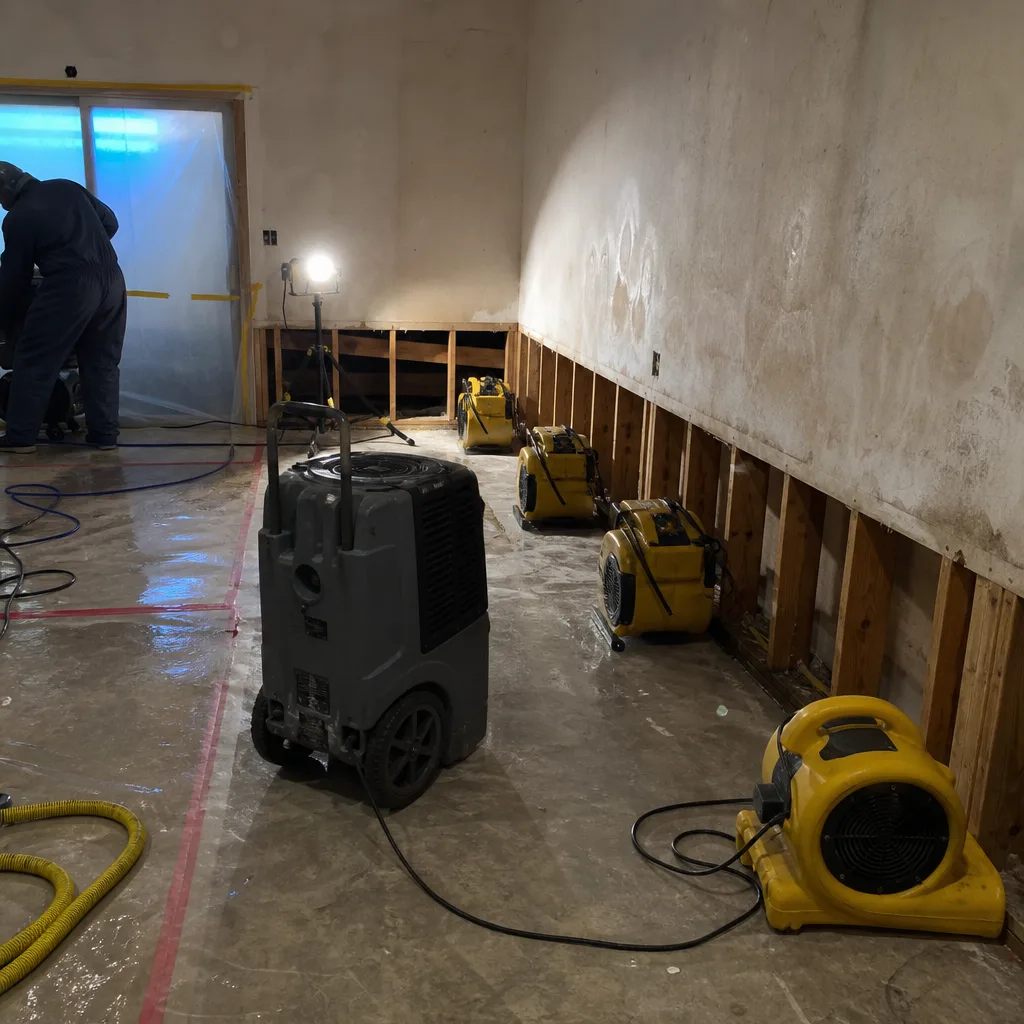
Burst Pipe Restoration
A burst supply line in an unreinforced masonry building in Chinatown (94108) is a different animal than one in a drywall subdivision. Original plaster walls hide moisture. Thermal imaging misses it. We open probe holes, place Injectidry floor mats, and run an extended drying sequence with daily readings until the plaster substrate hits baseline. That’s the difference between a clean close-out and mold six months later.
What happens when you call
- 1
A real person answersNo phone trees - you reach a local pro.
- 2
You get an upfront price rangeHonest numbers before anyone is dispatched.
- 3
A background-checked tech heads outLicensed & insured, dispatched right away.
- 4
You approve before work beginsNothing starts until you say go.
Trusted Brands We Service in San Francisco
We stock drying equipment and parts for the buildings San Francisco actually has: Edwardian flats, Victorian row houses, bay-fill commercial spaces, residential hotels mid-retrofit. Our crew carries IICRC-certified drying protocols and professional-grade equipment from Injectidry, Dri-Eaz, and Phoenix. That means when we diagnose a moisture problem behind a plaster wall, we have the right tool on the truck, not a backordered part from a warehouse in another state. And Wade is IICRC-certified, RIA-affiliated, and IFA-recognized. The credentials back the work, but the local knowledge is what gets the job done right.
Common Water Damage Restoration Problems We See in San Francisco Homes
- Fog-driven condensation on north- and west-facing facades. Karl the Fog deposits measurable moisture on building envelopes year-round, not just in the rainy season. Contractors using inland drying targets pass post-drying clearance and leave structures at ongoing mold risk.
- Lath-and-plaster walls that hide moisture. Original plaster wicks water behind the keys where thermal cameras can’t see it. We use probe holes and substrate-level moisture readings, which takes longer but actually tells you when the wall is dry.
- Unreinforced masonry buildings mid-retrofit. The city’s mandatory URM retrofit program exposes new framing penetrations and unsealed shear-wall tie-ins. Those become hidden water-intrusion pathways after a storm, and the moisture gets trapped behind plaster where nobody looks until the mold shows up.
- Bay-fill liquefaction zones in the Financial District and Embarcadero. After any seismic event above roughly M5.5, restoration technicians answering water-damage calls must distinguish pre-existing differential-settlement cracks from new earthquake damage. Get that wrong, and liability for structural repairs shifts back to the contractor. We document everything.
Pricing for Water Damage Restoration in San Francisco, CA
San Francisco pricing runs higher than inland markets because the buildings are older, the access is tighter, and the drying timelines are longer. A typical single-room water loss in a Victorian or Edwardian flat runs $2,800 to $5,500 for extraction, drying, and basic repair. Larger flood events or multi-floor damage in commercial spaces can run $7,500 to $15,000. Ceiling and roof leak water damage in San Francisco usually falls between $1,200 and $4,000 depending on how long the leak has run and whether the plaster needs replacement. What affects the number: how long the water sat, how many rooms, what kind of wall assembly you have, and whether we’re repairing or just drying. Estimates are free. Wade gives you a written scope before any work begins, so the number on the phone is the number on the job. Call (855) 915-0646 and Wade will tell you straight what he thinks.
We Also Serve Cities Near San Francisco
We work throughout San Francisco, including the Mission District, Noe Valley, Chinatown, and Visitacion Valley. If you’re in any of those neighborhoods with water coming through a ceiling or a basement full of water, call (855) 915-0646. Wade heads out himself.
Serving San Francisco, CA - Our Local Coverage Area
We’re based in the San Francisco area and know this community well. Use the map below to see our service coverage - if you’re nearby, we can almost certainly help.
FAQs - Water Damage Restoration in San Francisco
The marine layer keeps pre-loss moisture content elevated on north- and west-facing facades all year. That means drying equipment calculations must be recalibrated against the building’s actual baseline equilibrium, not a generic inland target. In fog-drenched neighborhoods like the Sunset, post-drying clearance readings that would pass inspection in Sacramento can still signal ongoing risk. Wade takes daily moisture readings and hands you the log, so you see exactly when your structure actually reaches dry.
We can, and we know how to check for what the water brought with it. Basements under bay-fill structures in SoMa (94103, 94107) can see groundwater intrusion after seismic events, not just pipe failures. The extraction is straightforward. What matters is documenting whether the water came from a supply line or from the ground, because that changes your insurance claim. Wade deals with your adjuster directly. Call (855) 915-0646 for an exact quote.
Original lath-and-plaster walls trap moisture in ways that don’t register on a thermal camera. The plaster keys wick water away from the surface, and the thermal signature stays flat while the substrate is saturated. In these buildings, we open probe holes and take direct substrate moisture readings with the full IICRC drying protocol. It takes longer, but it actually tells you when the wall is dry, not just when the surface looks dry.
Yes, and we’ve done enough of them to know what the water does in those buildings. Sprinkler activation in an unreinforced masonry residential hotel in the Tenderloin (94102, 94108) sends water through compromised chase ways and unsealed penetrations from retrofit work. The water goes where the pipes go, and the pipes go through hundred-year-old mortar. We map the moisture path, not just the visible damage, because what you see is never the whole story in those buildings.
The first thing is diagnosis. In the Financial District and Embarcadero ZIP codes (94104, 94105, 94111), buildings sit on 19th-century bay landfill with documented liquefaction potential. After a moderate earthquake, you can’t tell whether a crack is new damage or pre-existing settlement without documentation. We photograph everything, note the pattern, and flag anything that looks seismic before we start drying. If the water came from a sheared supply line and the framing has racked, the drying scope changes. Wade’s crew has made that judgment call in San Francisco for almost two decades.
Wade Ferris started this company because he got tired of watching neighbors get sold work they didn’t need by people who didn’t answer their own phones. He publishes his name, his address, and his license number. He answers calls at two in the morning. To wade is what you do through a flooded basement at night, and it happens to be his name. Call (855) 915-0646 for a free estimate. If you’re worried about the cost, bring him another written estimate and he’ll give you a free second opinion. No charge for that.
Written by Wade Ferris, Owner at Wade’s Restoration of California, providing Water Damage Restoration services throughout the San Francisco Bay Area since 2007.