
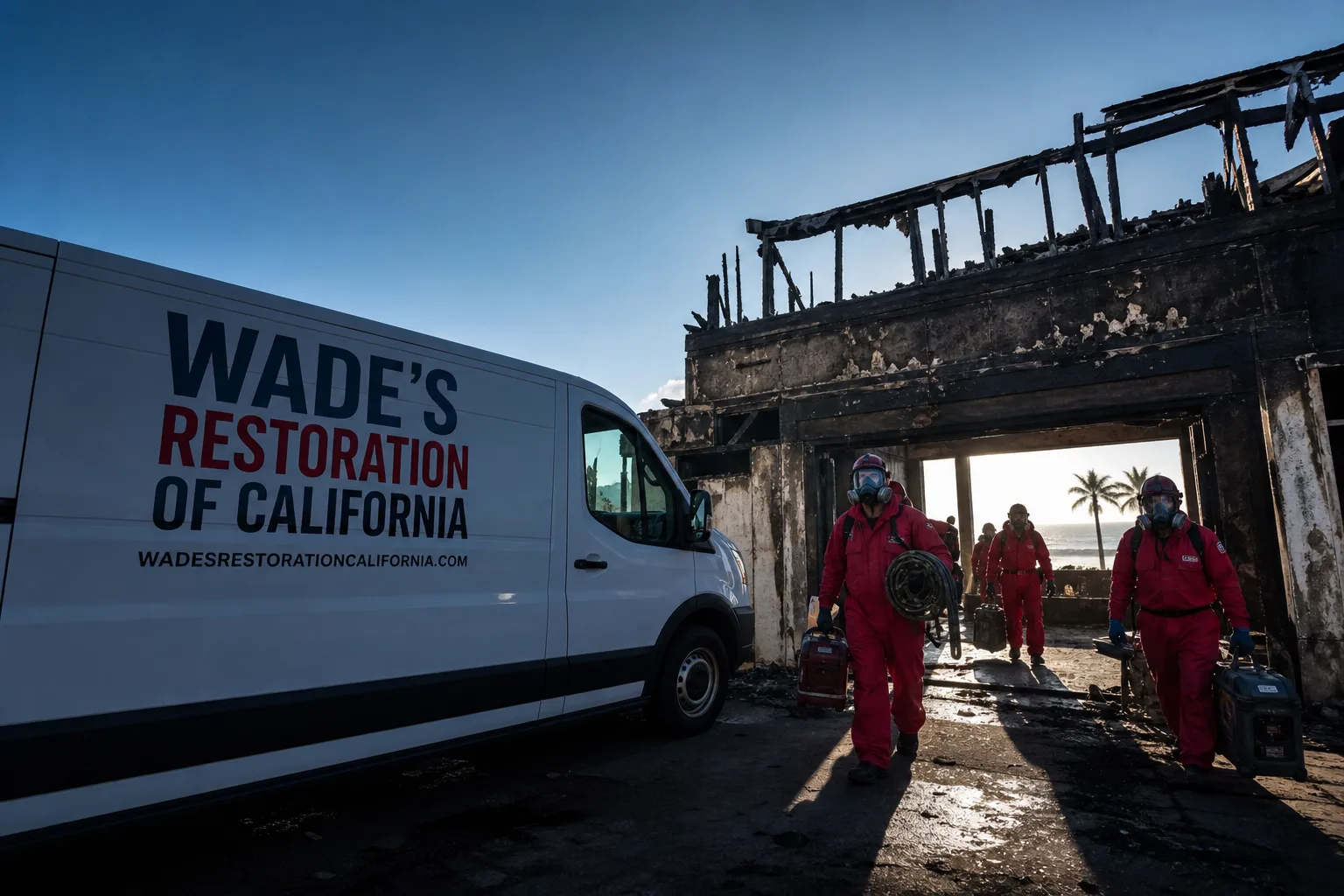
Fast, Reliable Water Damage Restoration Across Century City
When a supply line lets go on the 17th floor of a Century Park East tower, the clock starts before the first drop hits the floor. By the time you notice water at the baseboard, it has often been traveling through the concrete chase for hours, soaking drywall two or three floors down. That is the reality of water damage restoration in Century City, and it is why we answer the phone at 2 a.m. and have extraction running inside the hour. Wade Ferris founded this company in 2007, and he still picks up the phone himself. Call (855) 915-0646 and you will get a live person, not a queue.
Why Wade’s Restoration of California Is Century City’s Preferred Water Damage Restoration Company
Most restoration companies treat a high-rise flood like a house flood stacked vertically. That misses the whole ballgame. In a post-tension tower, water moves through shared concrete chases, elevator shafts, and pipe risers. You do not get one wet unit. You get a moisture column. Our Water Damage Restoration team has spent years mapping those vertical stacks in Century City’s towers, and that changes where we stage equipment, what we cut, and what we document for the HOA.
We are not a national chain with a call center in another state. Wade’s crew parks at the Century Park loading dock, signs in with building management, and works with the board’s maintenance staff. That relationship matters when the leak crosses ownership lines and the HOA’s insurance adjuster needs a documented moisture log. We hand that log to every owner and every board, every time. Ask any property manager in the 90067 ZIP who they call when a riser fails. Wade’s name comes up.
Response time to Century City is tight. Our Los Angeles office is close enough that Wade can be on Olympic Boulevard before the puddle spreads from the foyer to the carpeted hallway. A live person answers 24/7, and for a high-rise flood, we stage a second crew when the moisture mapping shows water has dropped more than one floor.
Our Water Damage Restoration Services in Century City
Emergency Water Extraction
In a Century City tower, standing water is the enemy of every unit below you. We bring truck-mounted and portable extraction units into the unit, pull water from carpet, hardwood, and tile, and start the drying plan while the source is still being repaired. The first hour matters. The second hour is when water reaches the chases and starts its vertical run. Call (855) 915-0646 the moment you see water, and we will be in the loading dock with equipment while the leak is still active.
Structural Drying & Dehumidification
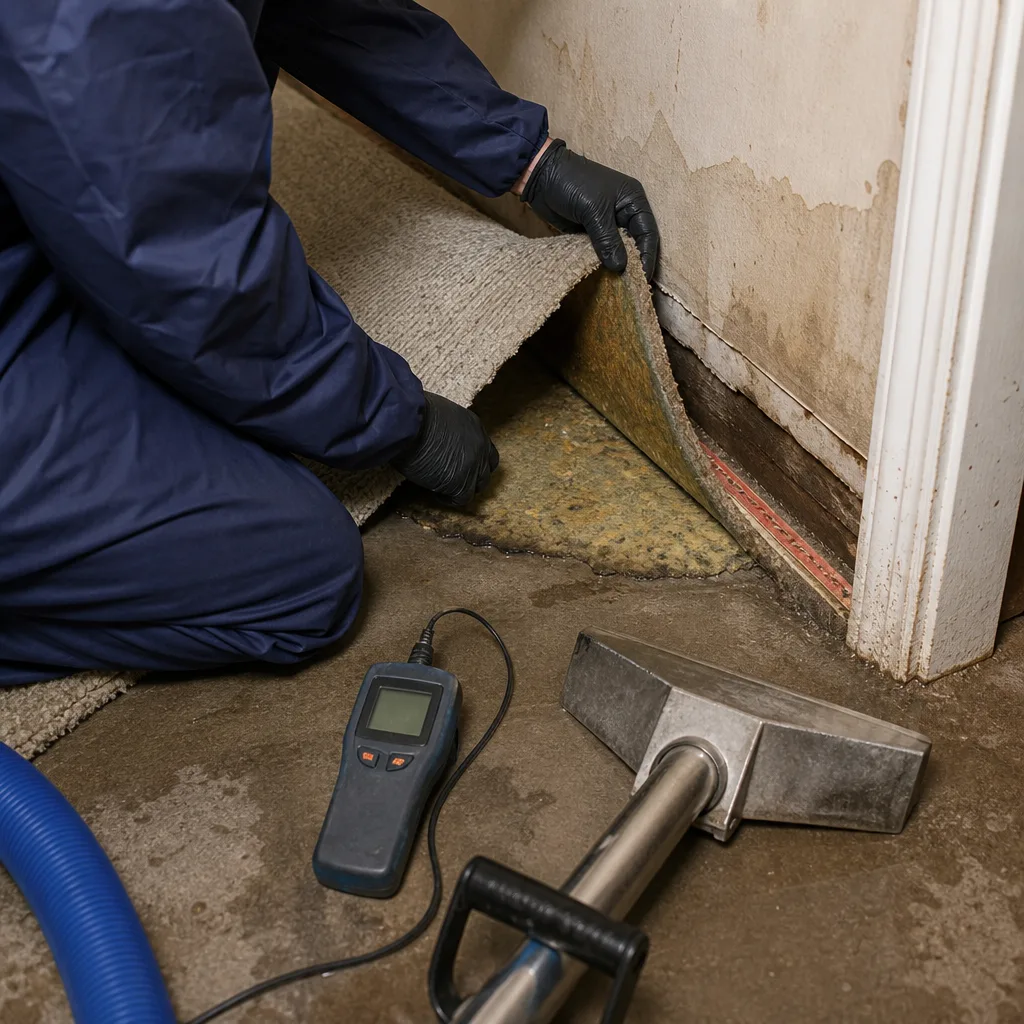
Drying a Century City condo is not the same job as drying a single-family home in Cheviot Hills. The concrete slab holds moisture and releases it slowly, which means the LGR dehumidifiers we stage in one unit may be doing half their work on the unit below. We take moisture readings every single day, in the walls, under the slab, and in the chases, and we hand you the full log when the job is done. If the drying plan does not include vertical-stack mapping, it is not a drying plan. It is a guess.
Flood Cleanup
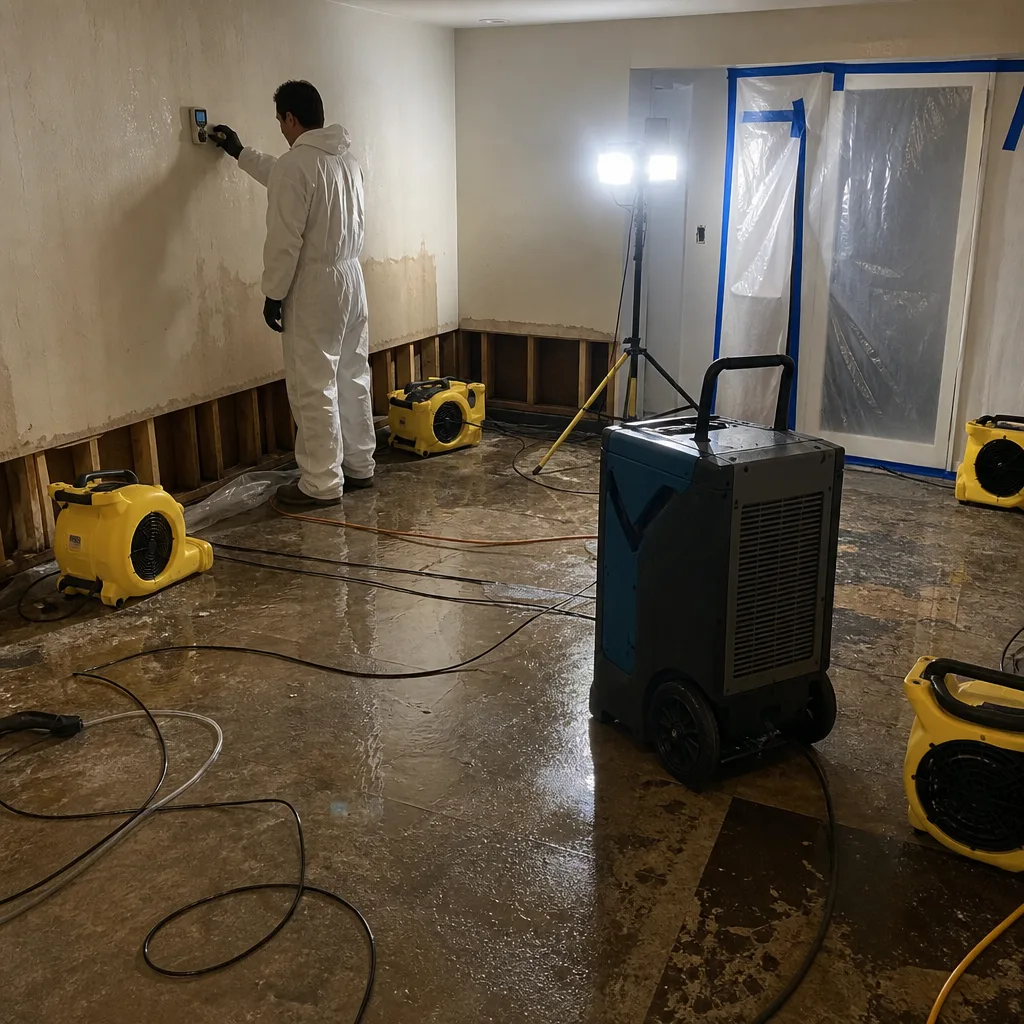
When a dishwasher supply line floods a 12th-floor kitchen, the water does not respect the property line between you and the neighbor below. Flood cleanup in a Century City tower includes sanitizing the affected surfaces, removing saturated materials, and coordinating with building management so your cleanup does not create a new problem for the unit under yours. We have handled dozens of these, and we know which Century Park East and West buildings require contractor certificates of insurance before the freight elevator can be reserved.
Burst Pipe Restoration
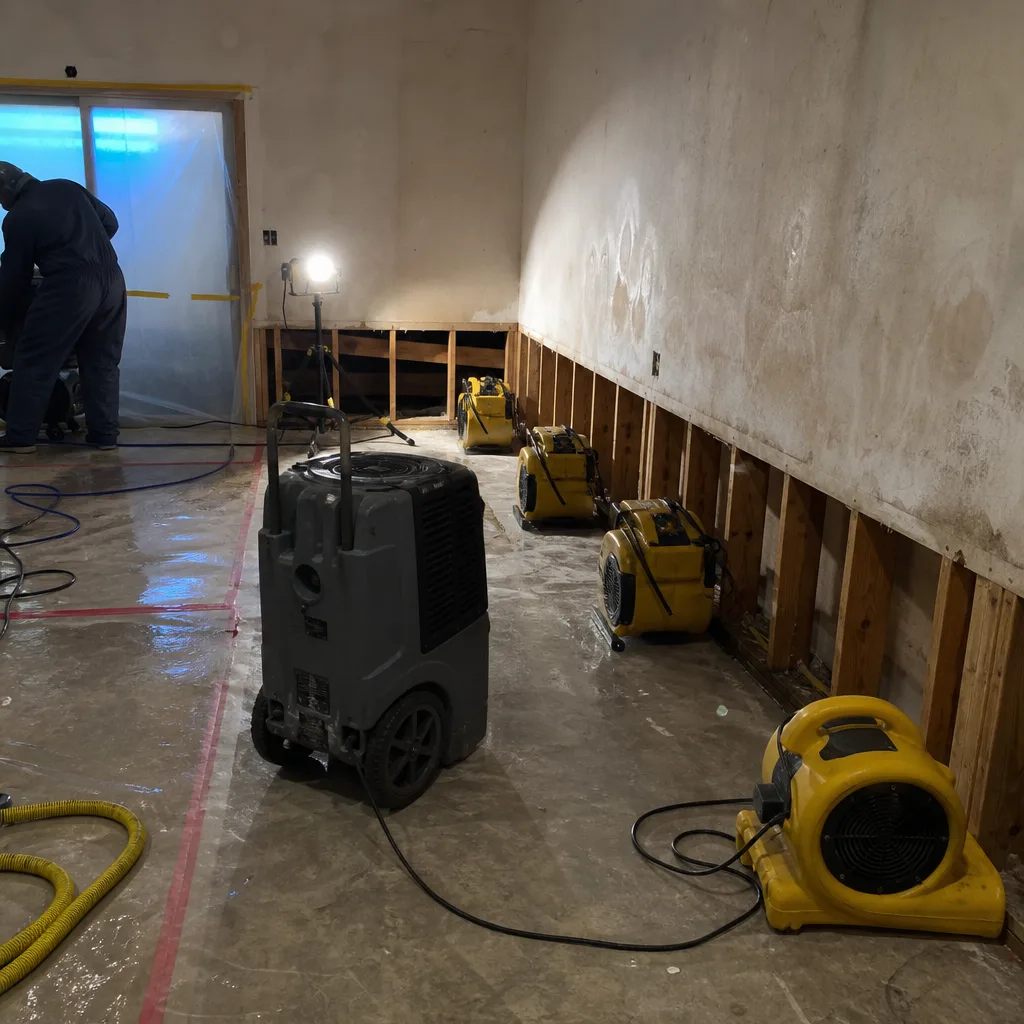
Century City’s original plumbing risers date to the 1960s through 1980s. A burst pipe here is rarely a one-unit problem. Water follows the pipe chase straight down, which is why the origin unit and the most damaged unit are often on different floors. We moisture-map the entire vertical run before we stage drying equipment, and we document everything for the HOA’s adjuster. The repair itself comes after the water is stopped and the structural picture is clear.
What happens when you call
- 1
A real person answersNo phone trees - you reach a local pro.
- 2
You get an upfront price rangeHonest numbers before anyone is dispatched.
- 3
A background-checked tech heads outLicensed & insured, dispatched right away.
- 4
You approve before work beginsNothing starts until you say go.
Common Water Damage Restoration Problems We See in Century City Homes
- Vertical cascade flooding across stacked units. A single failed supply line in a tower unit can travel through concrete chases and damage 10 or more units on different floors. The owner of the origin unit usually has no idea the unit below is wet until the HOA sends an email. Our moisture mapping catches it early.
- Post-tension cable exposure during tear-out. Century City’s residential towers are built on post-tension concrete slabs. Cutting into a slab without ground-penetrating radar clearance can sever a cable and trigger a structural emergency. We run GPR before any penetration, even a 1/4-inch anchor hole for a drying panel.
- Drywall and baseboard tear-out that damages custom finishes. Century City condos are full of custom walnut cabinetry, imported stone, and millwork that cannot be replaced off a shelf. Flood cuts need to be made with the finish schedule in hand, or the repair looks like exactly what it is: a patch.
- HOA documentation gaps that stall insurance claims. When water crosses ownership lines, the board’s adjuster and the owner’s adjuster need the same moisture log, the same photo set, and the same scope. We provide that documentation in writing on every job, and we deal directly with adjusters so the owner is not the one relaying information between two sides.
Pricing for Water Damage Restoration in Century City, CA
Water damage restoration in Century City runs higher than the county average because of the access, documentation, and GPR requirements that high-rise work demands. Emergency water extraction typically runs $1,400 to $3,800 for a single-unit flood with no cross-floor spread. Structural drying and dehumidification in a post-tension tower usually lands between $2,500 and $7,500 when multiple floors are involved and HOA coordination is required. Burst pipe restoration that includes tear-out, drying, and rebuild of affected finishes often runs $6,000 to $22,000, depending on how far the water traveled through the chase and how much custom millwork needs matching. The vertical spread drives cost more than the square footage of the origin unit. A small leak in one bathroom that soaked the unit below can cost more to dry and restore than a large flood contained to one open plan. Estimates are free, and they come in writing before work starts. Call (855) 915-0646 and we will walk the unit with you, run the moisture map, and put a number on paper that holds.
Trusted Equipment and Credentials in Century City
We run Dri-Eaz LGR dehumidifiers, Phoenix axial air movers, and Injectidry panel systems on Century City jobs because these towers need aggressive drying in tight chases and under post-tension slabs. Our techs hold IICRC certification and we carry RIA affiliation, which matters when the HOA’s insurance carrier asks for documentation of professional standards. Wade personally answers his phone, and he will tell you exactly what equipment goes where and why before we stage a single unit.
We Also Serve Cities Near Century City
If you live just outside the 90067 ZIP, we serve Century City and the surrounding neighborhoods, including Beverly Hills, Culver City, West Hollywood, and Santa Monica. The high-rise work in Century City is specific, but the same standard applies everywhere we go: real answers, written scope, and a live person on the phone. No trip charge inside Los Angeles County, and a free second opinion on any written estimate you have from another company.
Serving Century City, CA - Our Local Coverage Area
We’re based in the Century City area and know this community well. Use the map below to see our service coverage - if you’re nearby, we can almost certainly help.
FAQs - Water Damage Restoration in Century City
Century City requires ground-penetrating radar scanning before any penetrating cut because its residential towers are built on post-tension concrete slabs. Post-tension cables run through the slab under tension, and severing one with a drill bit or a saw can trigger structural failure affecting multiple units. A 1/4-inch anchor hole for a drying panel is enough to hit a cable if you do not scan first. That liability does not exist in single-family neighborhoods built on conventional slabs. We run GPR on every Century City job before any penetration, and we document the scan for the HOA’s file. Call (855) 915-0646 if you have a leak and the board is asking about structural clearance.
We treat it as a vertical-stack event, not a single-unit event. The first step is moisture mapping across the full riser run, from the origin unit downward through the chase to every affected floor. Only after that map is built do we stage drying equipment, because a fan placed in the wrong unit does nothing for the soaked drywall two floors down. We have handled cross-floor spread in Century Park East and Century Park West towers, and we coordinate with building management to access affected lower-floor units even when the origin unit owner has never met the neighbor. Call (855) 915-0646 and we will map the stack before anything else.
No, and we would not try. Every Century City high-rise requires contractor certificates of insurance filed with management before the freight elevator can be reserved or any work can start in common areas. When water crosses into common property or into another unit, the HOA’s insurance carrier becomes part of the claim, which means the board needs our scope, our moisture log, and our insurance documentation from day one. We handle that paperwork directly, so the owner is never stuck as the go-between. Call (855) 915-0646 before the board meeting, and we will have the packet ready.
The Palisades Fire blanketed Century City in fine ash that entered HVAC intakes and settled on every horizontal surface in the district’s high-rises. For water damage specifically, the fire’s main effect is that many Century City units now have post-fire remediation equipment and containment still in place, which complicates drying setups and HOA scheduling. We have worked in units where the fire restoration contractor and the water restoration contractor are on site at the same time, which requires coordination on power loads, air paths, and containment. If your unit had smoke damage from the January 2025 event and then developed a plumbing leak, the drying plan has to account for existing containment and air scrubbers. Call (855) 915-0646 and we will assess both conditions together.
Because the moisture is in the structure, not just the air. A house in Cheviot Hills dries outward through an attic, a crawlspace, and exterior walls. A Century City tower unit dries inward, into a post-tension concrete slab that holds moisture and a shared chase that wicks it to the floors below. We use Injectidry panels to pull water out of floor and wall cavities under pressure, and Dri-Eaz LGR dehumidifiers to keep the dew point low enough that the slab actually releases its moisture. A standard air mover setup that works fine in a single-family home will leave a Century City slab wet behind the baseboard for weeks. Call (855) 915-0646 for an equipment plan that fits the building, not the brochure.
Written by Wade Ferris, owner and founder of Wade’s Restoration of California, serving Century City and Los Angeles County since 2007.