
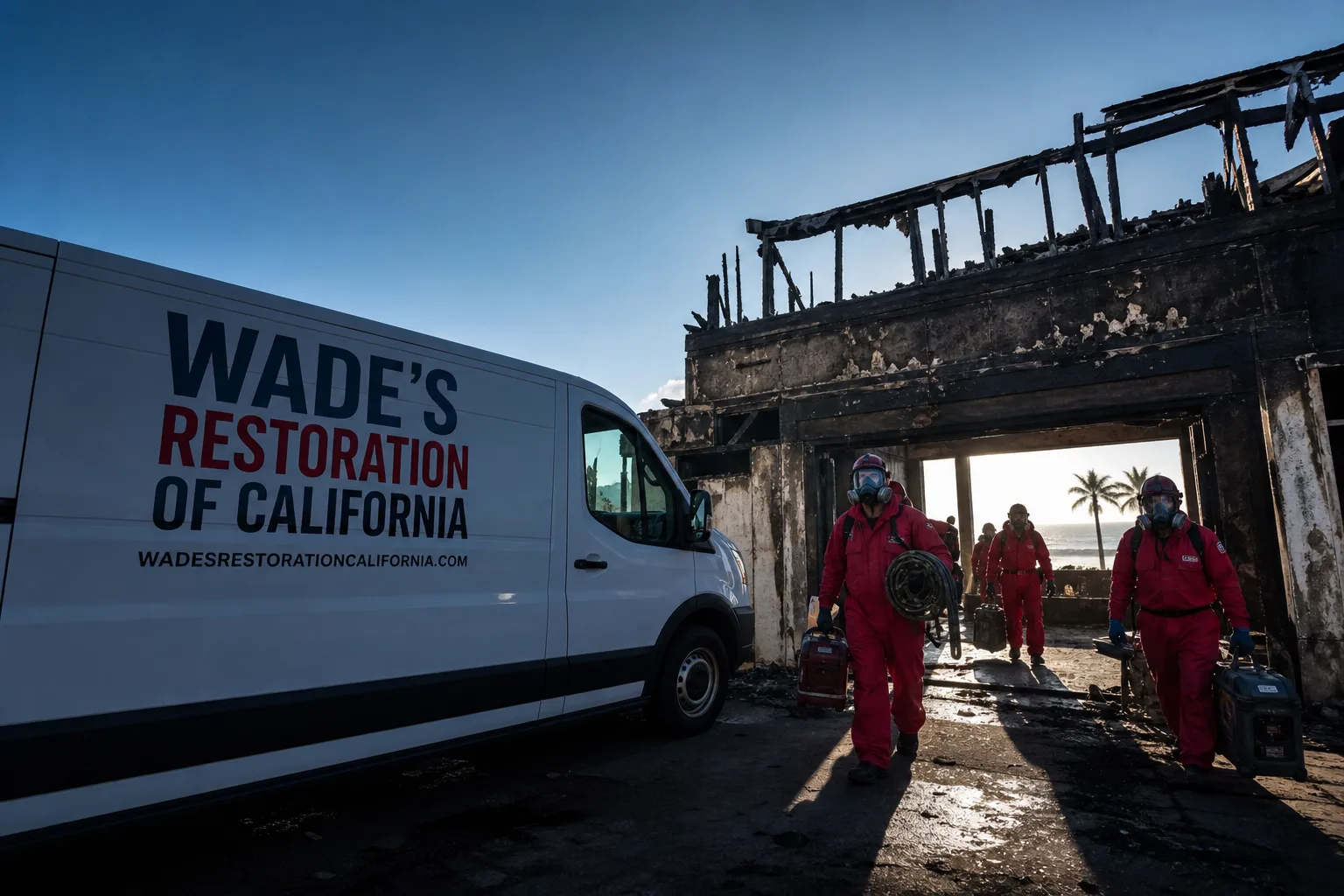
Fast, Reliable Storm & Disaster Restoration Across Sorrento Valley
When storm or flood damage hits a commercial facility in Sorrento Valley, the clock starts immediately. Water inside a biotech lab, a clean room, or an R&D building with raised-access flooring moves fast and hides in places residential crews never look. Wade’s Restoration of California has been running restoration work inside Sorrento Valley’s 92121 corridor long enough to know that the difference between a contained loss and a regulatory nightmare often comes down to the first six hours. Call (855) 915-0646 and Wade Ferris answers, day or night. He’ll tell you straight what you’re dealing with and what it takes to get it dry, documented, and back online.
Key Takeaways:
– Sorrento Valley restoration is commercial-grade work: labs, clean rooms, and R&D facilities, not single-family homes.
– Floodwater from Sorrento Valley Creek carries contamination categories that trigger FDA and DEA compliance requirements.
– Raised-access flooring and plenum HVAC systems demand drying protocols that residential restoration companies don’t run.
– Emergency board-up on tilt-up construction requires anchoring methods that hold during Santa Ana wind events.
– Every job gets a written scope and the 90-Day Done Right Promise. Call (855) 915-0646.
Why Wade’s Restoration of California Is Sorrento Valley’s Preferred Storm & Disaster Restoration Company
Wade Ferris founded this company in 2007 and he’s been answering his own phone since day one. When a building owner or facilities manager along Sorrento Valley Road calls at 2 a.m. with water running through an ISO-classified lab, Wade is the person on the other end. Not a call center. Not a rotating project manager who’s never been west of I-5. The owner.
That matters out here more than almost anywhere else in San Diego County. Sorrento Valley’s 92121 ZIP is a dense concentration of pharmaceutical, life-sciences, and R&D campuses. The buildings don’t fail like tract housing does. Water doesn’t dry the same way. And the documentation burden after a loss can be heavier than the drying itself. Wade’s crew shows up with Dri-Eaz dehumidifiers, Phoenix air movers, and the moisture logs to prove what happened and what got done. Wade hands every customer the full daily moisture log at the end of the job. Most restoration companies in this trade won’t do that because it means showing their work. Wade does it because the work should hold up to scrutiny, including the third-party validation a DEA- or FDA-permitted tenant might require.
Ask anyone managing a building in the business parks off Mira Mesa Boulevard or Roselle Street. The name that keeps coming up is Wade’s. The trucks say it. The phone gets answered. The guy who wrote your estimate is the guy who walks your building. That’s the Storm & Disaster Restoration model Wade has run since 2007.
Our Storm & Disaster Restoration Services in Sorrento Valley
Flood Damage Restoration
Flooding in Sorrento Valley usually starts with Sorrento Valley Creek jumping its banks during a heavy El Niño rain event. The water that comes through the lower stretches of Sorrento Valley Road is not clean. It carries sediment, roadway runoff, and whatever it picked up from the creek bed. In a residential neighborhood, that’s a messy cleanup. In a lab with active biohazard permits, that’s a chain-of-custody event. Wade’s crew categorizes the water correctly, establishes containment before air movers go in, and documents every step the way regulators expect. We run Phoenix AirMax radial blowers and Dri-Eaz LGR dehumidifiers sized for commercial square footage, not the machines a residential outfit would drag in.
Emergency Board-Up
Santa Ana winds come down through Los Peñasquitos Canyon and hit the eastern edge of Sorrento Valley’s business parks hard. Tilt-up concrete panels and steel-frame parapets don’t behave like wood-framed walls when wind gets behind them. A board-up crew that doesn’t understand Sorrento Valley’s construction will anchor into the wrong material and lose the board overnight. Wade’s team anchors to steel framing and respects laboratory exhaust stacks, roof penetrations, and the facility’s continuous operation needs. We board what’s broken and keep the rest of the building breathing.
Debris Removal
After a storm event, debris in Sorrento Valley isn’t just tree limbs. It’s lab packaging, broken glass from damaged windows, construction materials torn off adjacent buildings, and material that may have been inside a facility before the weather got to it. Waste streams in a biotech corridor need to be handled with the same care as the structure itself. Wade’s crew separates standard storm debris from anything that could carry a contamination concern, works with the facility on waste handling, and gets the site clear so insurers can inspect and business can resume.
Roof Tarping
Tilt-up R&D buildings from the 1980s-2000s biotech boom often have flat or low-slope roofs with HVAC plenum systems running through them. Water that gets through a wind-damaged roof doesn’t pool on a living room floor. It travels through the plenum, drops into raised-access flooring cavities, and ends up somewhere nobody looked for it. Roof tarping on these structures has to be done right by someone who knows what’s under the membrane. Wade’s team tarps the breach, maps the water path, and documents what got wet before drying begins.
What happens when you call
- 1
A real person answersNo phone trees - you reach a local pro.
- 2
You get an upfront price rangeHonest numbers before anyone is dispatched.
- 3
A background-checked tech heads outLicensed & insured, dispatched right away.
- 4
You approve before work beginsNothing starts until you say go.
Trusted Brands We Service in Sorrento Valley
Facilities teams in Sorrento Valley run equipment from manufacturers that dominate the biotech and life-sciences space: Thermo Fisher, Agilent, Illumina, and the standard lab infrastructure brands that keep clean rooms operating. Storm and flood restoration around that equipment requires an understanding of what’s downstream of the water. Wade’s Restoration maintains relationships with RIA and IFA networks, runs Dri-Eaz and Phoenix drying equipment, and stays current on the restoration standards that apply to regulated commercial spaces. We don’t stock residential plumbing parts and hope they work. We bring the right equipment for the square footage, the airflow demands, and the containment requirements of the building we’re standing in.
Common Storm & Disaster Restoration Problems We See in Sorrento Valley Homes
Call them buildings, not homes. Sorrento Valley’s 92121 ZIP has almost no residential stock. The problems we see out here are commercial, and they follow patterns:
– Water under raised-access flooring. Floodwater from Sorrento Valley Creek or a roof breach drops into the plenum space beneath the access floor and spreads invisibly. Residential drying math doesn’t account for the cubic footage under the floor, so crews using it leave hidden moisture that later corrodes lab equipment or compromises clean-room integrity.
– Hidden smoke penetration in plenum HVAC. A small fire in one lab sends smoke through shared duct runs into spaces that never saw flame. Soot deposits on lab-grade finishes and inside equipment racks require restoration methods that go beyond wiping down walls.
– Wind-driven roof damage on tilt-up construction. Santa Ana winds peel back roofing membrane and tarp crews without Sorrento Valley experience anchor into the wrong material, fail to secure parapets, and leave buildings exposed for the next wind event.
– Regulatory complications nobody saw coming. A water loss that would be a routine Category 2 job in a strip mall can trigger mandatory FDA or DEA notification in Sorrento Valley. The restoration contractor has to know that before the first dehumidifier gets plugged in, because the documentation requirements change everything about how the work gets done.
Pricing for Storm & Disaster Restoration in Sorrento Valley, CA
We Also Serve Cities Near Sorrento Valley
While Wade’s Restoration of California runs the commercial storm and disaster work across Sorrento Valley, our crews also serve the surrounding communities where the building stock is very different. Mira Mesa, La Jolla, Rancho Penasquitos, and Solana Beach each have their own storm patterns and construction types, and we handle all of them. If your facility is in the canyon or your home is over the ridge, the same phone number rings: (855) 915-0646.
Serving Sorrento Valley, CA - Our Local Coverage Area
We’re based in the Sorrento Valley area and know this community well. Use the map below to see our service coverage - if you’re nearby, we can almost certainly help.
FAQs - Storm & Disaster Restoration in Sorrento Valley
How does storm damage restoration differ for Sorrento Valley’s biotech labs compared to Carmel Valley homes?
Sorrento Valley restoration is commercial work from the first minute. A Carmel Valley home gets residual moisture management using residential drying calculations. A Sorrento Valley lab requires containment before drying, raised-access floor cavity mapping, clean-room protocol awareness, and documentation that holds up to third-party validation. The equipment is bigger, the stakes are higher, and the contractor has to understand what happens if the loss crosses into regulatory territory. Call (855) 915-0646 and Wade will tell you which category your loss falls into.
Which parts of Sorrento Valley are most exposed to flash flooding from Sorrento Valley Creek?
The lower stretches of Sorrento Valley Road are the most exposed. The creek runs through the floor of the canyon, and during heavy El Niño rain events it has overtopped its banks and flooded buildings along the lower corridor, including tilt-up R&D structures on Roselle Street. Facilities closer to the creek bed see floodwater before buildings on higher ground along Mira Mesa Boulevard do.
Do Sorrento Valley’s raised-access floors require a different drying approach after a roof leak?
Yes. Water that enters the plenum space beneath raised-access flooring doesn’t dry on the schedule of a standard structural drying plan. The cubic footage under the floor, the lack of direct airflow, and the presence of cabling and chilled water lines all change the drying math. Wade’s crew uses Dri-Eaz LGR dehumidifiers and Phoenix air movers positioned to pull air through the floor cavity, and we take moisture readings inside that space daily. The full log goes to the building owner at job’s end. Call (855) 915-0646 for a building-specific drying plan.
Can your board-up crews handle wind damage to Sorrento Valley’s steel-frame tilt-up buildings during Santa Ana winds?
They do it regularly. Tilt-up concrete panels and steel-frame structures need anchoring into steel, not wood, and the board-up has to survive 50-plus mph gusts coming down Los Peñasquitos Canyon. Wade’s crew understands parapet details, roof membrane anchoring, and how to secure buildings without damaging laboratory exhaust stacks or rooftop equipment. If your building got hit by Santa Ana winds, call (855) 915-0646 before the next front moves through.
What happens if stormwater contaminates a biohazard-permitted laboratory in Sorrento Valley?
The restoration gets more complicated than drying. Floodwater that enters a lab with active FDA, DEA, or biohazard permits may trigger mandatory regulatory notification, chain-of-custody documentation for contaminated materials, and third-party validation of the drying and cleaning work. Wade’s Restoration has handled losses where floodwater migrated under raised-access flooring into a laboratory with active DEA permits, and we coordinated the documentation alongside the drying. Most residential restoration contractors have never navigated that layer, and it shows when the regulators ask questions. Call (855) 915-0646 and Wade will walk you through what your permit requires before anyone sets up equipment.
Written by Wade Ferris, Owner at Wade’s Restoration of California, serving Sorrento Valley since 2007.