
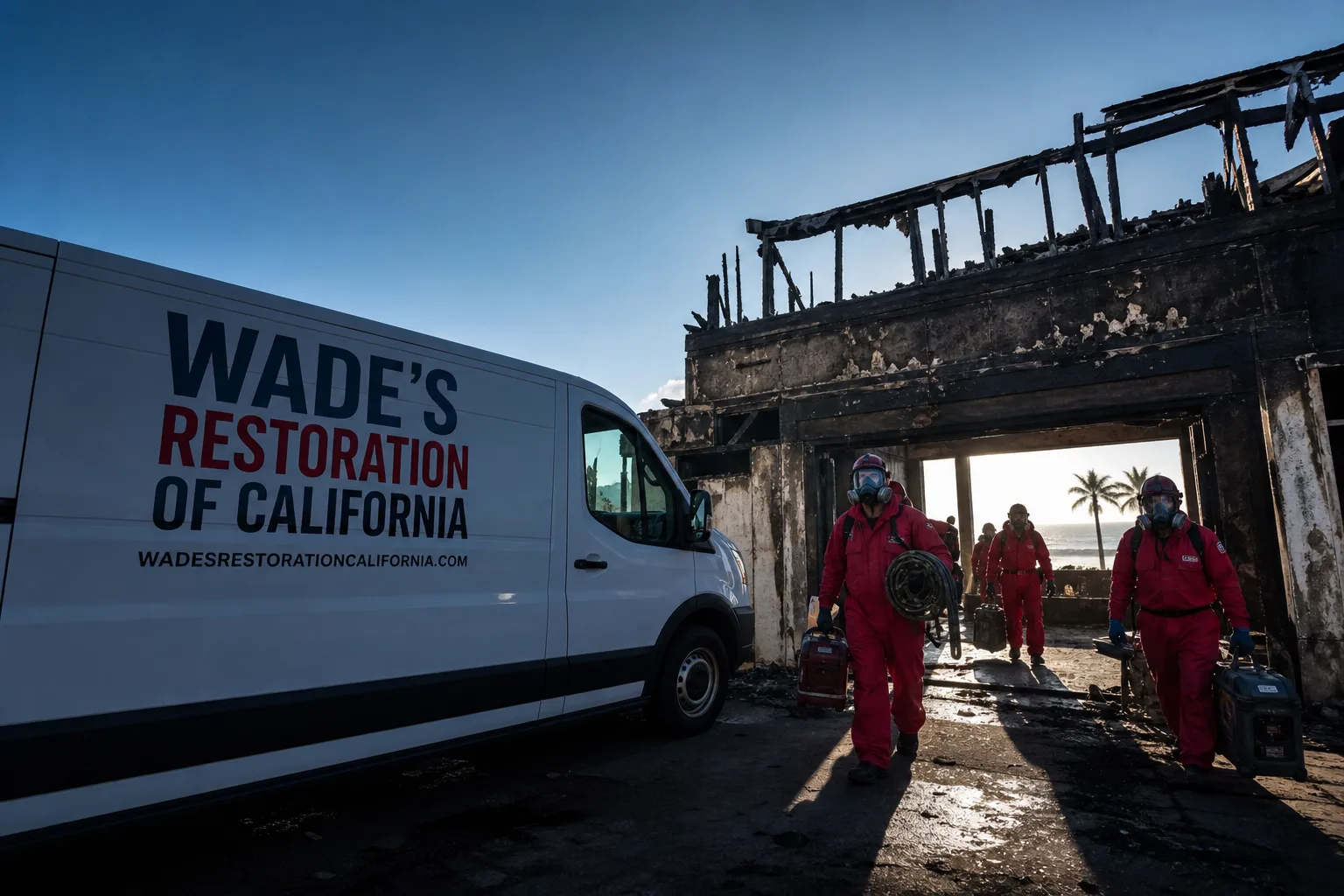
Fast, Reliable Storm & Disaster Restoration Across Solana Beach
Storm damage in Solana Beach doesn’t wait for business hours, and neither do we. Call (855) 915-0646 and Wade Ferris himself will answer. Most storm problems in the 92075 zip code come down to two things: water getting where it shouldn’t, and wind tearing open a way for more water to follow. Our crews serving Solana Beach know the difference between a standard roof leak and something far more specific to this stretch of coastline. If you’ve got water coming through a west-facing wall after an atmospheric river, that’s usually not plumbing. We’ll explain what it actually is below.
Why Wade’s Restoration of California Is Solana Beach’s Preferred Storm & Disaster Restoration Company
Wade Ferris started this company in 2007, and he’s never hidden behind a call center. When you call, a live person answers. When you need someone to walk your property near Fletcher Cove or west of Highway 101, Wade heads out himself or sends a crew he’s trained and background-checked. Not a subcontractor he met last week.
The reason homeowners along the 101 corridor keep our number isn’t a marketing campaign. It’s the simple fact that we document everything: daily moisture readings, photos, a written scope before work starts. And because we’re a local operation with a published owner name and address, people run into us at the same grocery store the next weekend. That’s accountability you can’t get from a national outfit. Our Storm & Disaster Restoration team handles everything from emergency board-up to structural drying, and we treat every job like our own house is at stake.
Our Storm & Disaster Restoration Services in Solana Beach
Storm Damage Cleanup
When a storm tears through Solana Beach, you’re left with a mess: downed branches, wet drywall, flooded garages, sand and debris blown in from the beach. Storm damage cleanup in Solana Beach typically runs $1,200-$4,500 depending on square footage and how much demolition is needed. We remove the ruined material, set up drying equipment, and document everything for your insurance adjuster. We don’t just haul debris away; we figure out how the water got in so it doesn’t happen again next storm.
Flood Damage Restoration
For homes west of Highway 101, flooding often comes from two directions at once: storm surge or groundwater rising through the sandy soil, and runoff channeling down from the bluffs. Flood damage restoration in Solana Beach usually costs $2,800-$9,000 for a typical single-story beach cottage, with blufftop homes running higher because of the access difficulty and the groundwater component. We use Dri-Eaz and Phoenix equipment sized for the job, and we take moisture readings every single day until the structure is actually dry, not just looking dry.
Emergency Board-Up
A broken window or torn-off door after a storm is an open invitation to salt air, rain, and whatever else blows in. Emergency board-up in Solana Beach runs $250-$700 for a standard window or door opening, and we get there fast because we know every road from Sorrento Valley up the coast. We don’t just nail plywood over the hole; we seal it properly so the marine layer doesn’t keep pumping moisture inside while you wait for permanent repairs.
Roof Tarping
Wind damage to roofs is common along the 101 corridor, and a properly secured tarp can stop thousands of dollars in secondary damage. Roof tarping in Solana Beach typically costs $350-$850 for a standard single-story home, more for two-story blufftop properties where access requires harnesses and careful positioning. We anchor tarps the way they should be anchored, because a tarp that blows off in the next gust isn’t worth anything.
What happens when you call
- 1
A real person answersNo phone trees - you reach a local pro.
- 2
You get an upfront price rangeHonest numbers before anyone is dispatched.
- 3
A background-checked tech heads outLicensed & insured, dispatched right away.
- 4
You approve before work beginsNothing starts until you say go.
Trusted Brands We Service in Solana Beach
Our crews use equipment from Dri-Eaz and Phoenix on every water and storm job, and our work carries IICRC, RIA, and IFA credentials. That matters when you’re dealing with a bluff groundwater problem that requires commercial-grade dehumidification, not the rental unit from the hardware store. We stock replacement parts and materials locally so there’s no waiting for a shipment from a warehouse in another state. If it’s a pump, a dehumidifier, a moisture meter, or a drying mat, we either have it or we can get it same day.
Common Storm & Disaster Restoration Problems We See in Solana Beach Homes
- Groundwater weeping through west-facing blufftop walls. This is the one that confuses everyone. After a January atmospheric river, water shows up inside a wall with no roof leak and no plumbing issue. The real source is saturated sandstone releasing water days after the rain stops. Standard leak repairs won’t fix it.
- Premature “dry” declarations. Surface moisture meters say dry, but the marine layer keeps hidden wall cavities humid. We see this constantly in homes where someone declared the structure dry and walked away. Mold blooms in the dark, it takes weeks, and the homeowner is left with a bigger problem.
- Salt-air corrosion compounding storm damage. Drywall fasteners, HVAC components, and structural connectors corrode faster in Solana Beach than they do in inland cities like Rancho Penasquitos. When storm water hits already-corroded metal, the damage is worse and the repair scope is bigger than it would be elsewhere.
- Mismatched materials in older beach cottages. The 1950s-1970s homes west of Highway 101 have been patched and renovated for decades. Restoration uncovers non-standard assemblies, missing vapor barriers, and stucco over framing that was never meant to hold back groundwater. Drying and structural repair get complicated fast.
Pricing for Storm & Disaster Restoration in Solana Beach, CA
We Also Serve Cities Near Solana Beach
Our crews regularly work storm damage jobs in Solana Beach and the surrounding communities, including Encinitas, Sorrento Valley, Rancho Penasquitos, and Mira Mesa. Each has its own geography and its own failure modes, but the same rules apply: show up fast, document everything, and write the scope before work starts. If your home is in any of these areas, the same team that works the blufftop homes here can be at your door quickly.
Key Takeaways for Solana Beach Homeowners
- Most “roof leaks” on blufftop homes are actually groundwater migrating through saturated sandstone bluffs.
- The marine layer keeps wall cavities humid even after surface readings say “dry.” Real drying takes longer here.
- Salt-air corrosion weakens fasteners and connectors, so storm damage compounds faster than inland.
- Older beach cottages west of Highway 101 lack vapor barriers and were never built for this climate.
- We answer the phone, document moisture daily, and hand you the full log at the end of every job.
Serving Solana Beach, CA - Our Local Coverage Area
We’re based in the Solana Beach area and know this community well. Use the map below to see our service coverage - if you’re nearby, we can almost certainly help.
FAQs - Storm & Disaster Restoration in Solana Beach
Why does water keep seeping into my blufftop home’s west-facing walls after every winter storm, even when there’s no roof or plumbing leak?
That seepage is groundwater migrating through the saturated sandstone bluff formation, not a leak in your house. When winter rains soak the porous geology, water travels laterally through the cliff face and weeps out at the base of west-facing walls. On a blufftop home near Fletcher Cove, we responded to a call for what the owner assumed was a roof leak after a January atmospheric river. Our techs found no moisture on the roof deck, but a thermal scan and moisture meters revealed groundwater moving through the sandstone and weeping at the wall base. We installed a subsurface drainage mat and interior vapor barrier, and used Dri-Eaz dehumidifiers to dry the wall cavities, stopping the mold bloom that had plagued the home in previous winters. If this is happening to you, call (855) 915-0646. We’ll find the actual source, not just patch the symptom.
How does the marine layer affect drying times for storm-damaged structures in Solana Beach?
The marine layer extends drying times significantly because it keeps relative humidity elevated even when there’s no measurable rainfall. May Gray and June Gloom are months when a “dried” structure can still measure 60-70% humidity inside wall cavities. Standard drying protocols assume an inland climate and shorter timelines. In Solana Beach, we run equipment longer, monitor daily, and adjust the drying plan based on actual readings, not a calendar. If a crew declares your beach cottage dry after two days, they’re probably looking at surface numbers and missing what’s happening inside the cavities. That’s how mold gets a head start. Call (855) 915-0646 if you suspect your home wasn’t actually dried.
Can storm damage in a 1950s beach cottage west of Highway 101 be dried using standard equipment?
Yes, but only if the equipment is sized correctly and the operator understands the building. Those original 1950s-1970s beach cottages have stucco exteriors, minimal or no vapor barriers, and framing that’s seen decades of marine-layer exposure. Standard rental dehumidifiers and box fans won’t reach the moisture trapped behind stucco and inside non-standard wall assemblies. We use commercial-grade Dri-Eaz and Phoenix equipment and pull daily moisture readings from inside cavities, not just surface checks. The right drying plan for an Encinitas condo won’t work for a 92075 beach cottage, and we adjust accordingly. If you’re worried your structure wasn’t dried properly, call us for a free second opinion.
What should I do immediately after a winter storm if my Solana Beach home has water intrusion but no visible roof damage?
First, shut off power to affected areas if water is near outlets or the panel. Then call (855) 915-0646. The most likely culprit is bluff groundwater intrusion, and every hour of delay gives the water more time to spread through wall cavities and create mold-conducive conditions. We’ll send a crew to take moisture readings, run a thermal scan, and determine whether the source is groundwater, a hidden plumbing leak, or something else. We don’t guess and we don’t throw equipment at the wall hoping it dries. We identify the source, document it for your insurance, and then start extraction and drying. Fast action is the cheapest thing you can do.
Does salt-air corrosion worsen storm damage in Solana Beach homes?
Yes, and it’s one of the most underappreciated factors in restoration work here. The constant salt air weakens drywall fasteners, structural connectors, and HVAC components over time. When storm water hits already-compromised metal, the failure is worse than it would be in a dry inland city like Mira Mesa. We regularly find corroded fasteners that have given way inside wall cavities after water intrusion, and structural connectors that need replacement even after the wall looks dry. A proper restoration in Solana Beach includes checking those components, not just drying the drywall. Call (855) 915-0646 and we’ll walk your property with a moisture meter in one hand and a corrosion assessment in the other.
Written by Wade Ferris, Owner at Wade’s Restoration of California, serving Solana Beach and surrounding coastal communities since 2007. To wade is what you do through a flooded basement at two in the morning, and it happens to be his name.