
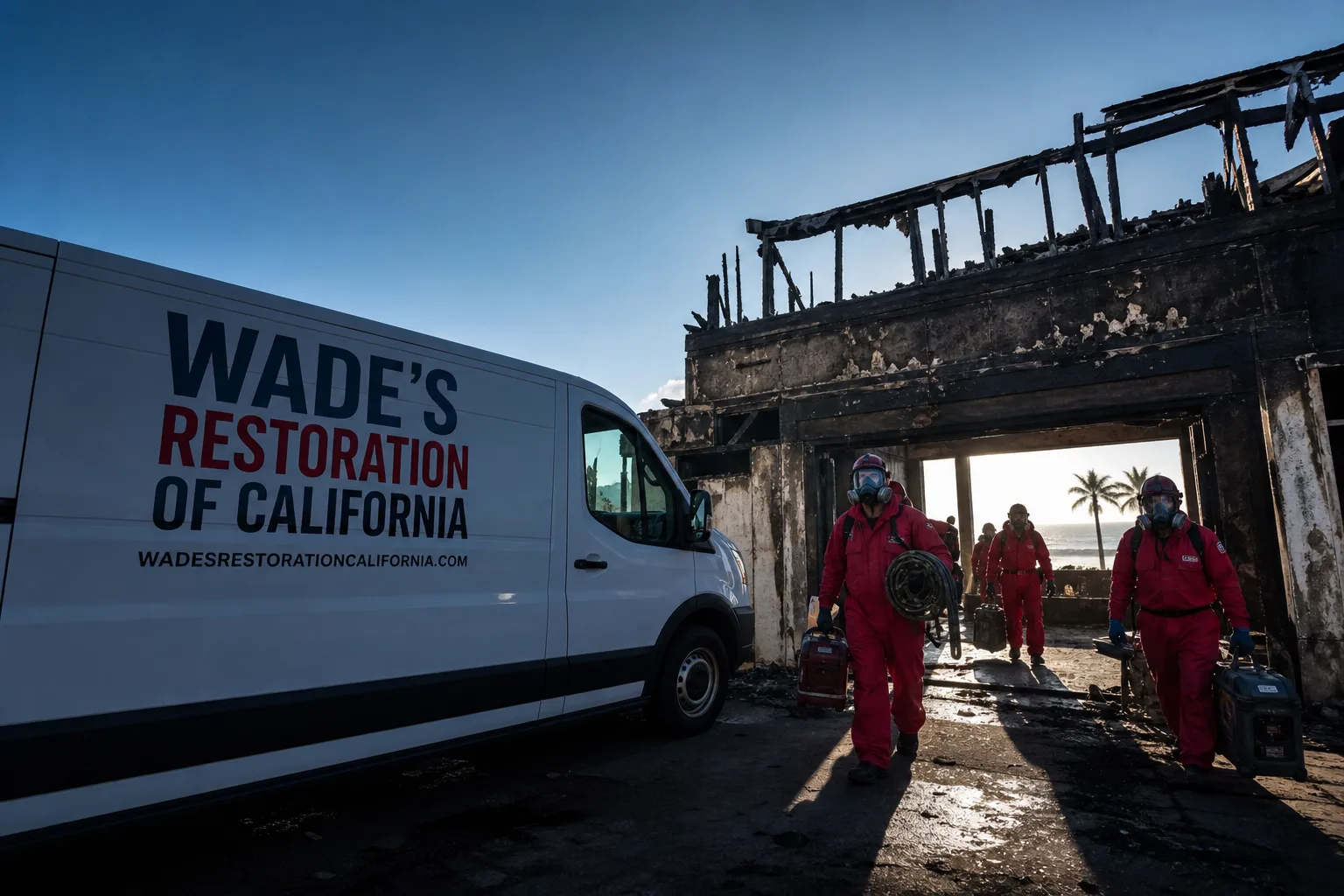
Fast, Reliable Storm & Disaster Restoration Across San Pedro
When a winter storm tears shingles off your roof or drives seawater into your crawl space, you need someone who knows San Pedro’s specific problems, not a call center reading from a script. Storm damage in this city hits differently than it does ten miles inland. The marine layer hangs over the bluffs, the salt air works into every crack, and homes built in the 1920s don’t dry out the way newer construction does. Wade’s Restoration of California has worked on enough of these houses to know what we’re walking into before we open a wall. We’re not a franchise. Wade Ferris owns this company, answers his own phone, and will be on site with his crew, not texting you updates from a dispatch desk somewhere. If your house just took a hit from a storm off San Pedro Bay, call (855) 915-0646 and we’ll have extraction and mitigation running inside the hour.
Why Wade’s Restoration of California Is San Pedro’s Preferred Storm & Disaster Restoration Company
The short version: we show up fast, we know these houses, and we put everything in writing. The longer version matters more when you’re standing in a flooded living room. San Pedro’s housing stock is mostly 1920s through 1940s Craftsman bungalows and Spanish Colonial revivals built for cannery workers and longshoremen. Lath-and-plaster walls, pier-and-beam foundations, minimal attic ventilation. That construction traps moisture in ways that newer homes simply don’t. A restoration crew that treats a Point Fermin bungalow like a Torrance tract house will miss water that’s already wicked into the plaster and framing. Wade has spent nearly two decades learning the failure patterns in these exact homes. His crew runs Dri-Eaz and Injectidry equipment, takes moisture readings every day on the job, and hands you the full log when the work is done. That’s not standard practice in this trade. It should be.
When we respond to storm damage in San Pedro, we’re typically on site within the hour for emergency board-up and tarping. The neighborhoods we know well: the bluff side around Point Fermin and Paseo del Mar, the flats near Gaffey and 9th Street, the older blocks off Pacific Avenue, and the low-lying streets near the Main Channel where the tsunami zone adds a layer of documentation most contractors ignore. Residents in 90731 and 90732 have dealt with us directly, and we’ll give you names of past customers on your street if you want to ask them how it went. That’s how local the accountability runs.
Wade carries IICRC and RIA credentials, and the crew is background-checked and uniformed. The equipment is professional-grade: Dri-Eaz dehumidifiers, Phoenix air movers, Injectidry systems for cavity drying. But the thing that matters most in San Pedro is that Wade understands the marine layer. He knows a water-damaged wall near the harbor stays wet longer than the drying charts say it should. He plans for that from day one, not day four when the musty smell starts.
Our Storm & Disaster Restoration Services in San Pedro
We handle the full scope of storm damage work in San Pedro, but these are the services that matter most after a coastal storm.
Emergency Board-Up
When wind blows out a window or a tree limb comes through a wall, your house is open to rain, animals, and worse. We board up openings the same day we get the call. In San Pedro’s older homes, we’re careful to anchor plywood to framing, not just the stucco shell, because 1930s stucco can be brittle and pulling against it wrong causes more damage. Board-up in San Pedro typically runs $250 to $600 depending on the number of openings and the height of the work. This is emergency work, and Wade doesn’t upcharge for coming out at night.
Roof Tarping
A tarp goes on fast to stop active water intrusion while you deal with insurance. On the bluff side near Point Fermin, wind-driven rain gets under damaged shingles quickly, and every hour of exposure means more water into the attic and walls. We tarp the same day, and we use heavy-duty poly that actually holds in San Pedro’s wind, not the thin blue stuff that shreds by morning. Roof tarping in San Pedro generally runs $400 to $900 depending on roof size, slope, and how much of the perimeter needs anchoring. We’ll also take photos of the tarp seam placements for your adjuster, because documentation matters.
Flood Damage Restoration
Storm surge and flash flooding in San Pedro’s low-lying blocks near the Main Channel and Fish Harbor create a particular kind of water damage. This isn’t clean rainwater. It’s salt-laden, often carries harbor sediment, and it wicks into lath-and-plaster and pier-and-beam subfloors aggressively. We extract standing water, set up drying equipment sized for coastal humidity, and log moisture levels daily until materials hit dry standard. Flood extraction and drying in a typical San Pedro bungalow runs $2,500 to $6,500 depending on square footage and how long water sat before we got there. If the water got into the crawl space or soaked wall cavities, the scope grows, and we’ll show you why with moisture readings, not vague claims.
Storm Damage Cleanup
After the water is out and the tarp is on, there’s still debris, saturated drywall, ruined flooring, and often a layer of harbor-area dust and grime. We handle full cleanup, including content manipulation for salvageable belongings. In San Pedro’s older homes, we’re looking for what’s hidden: water that traveled along rim joists, saturated insulation in unvented attics, delaminating plaster behind wallpaper. Cleanup-only jobs in San Pedro typically run $1,800 to $4,200 depending on the extent of the damage. But cleanup is rarely the full picture, and we’ll tell you if we think there’s more going on behind the walls. Wade doesn’t oversell. He’d rather show you the moisture meter than try to scare you into a bigger contract.
What happens when you call
- 1
A real person answersNo phone trees - you reach a local pro.
- 2
You get an upfront price rangeHonest numbers before anyone is dispatched.
- 3
A background-checked tech heads outLicensed & insured, dispatched right away.
- 4
You approve before work beginsNothing starts until you say go.
Trusted Brands We Service in San Pedro
We work on all makes and configurations of the damage restoration systems found in San Pedro homes, from original 1920s pier-and-beam setups to more recent retrofits. We stock common parts locally so we’re not waiting on a two-day shipment while your walls sit wet. Our equipment lines include Dri-Eaz and Injectidry, and our techs hold IICRC and RIA credentials. When you call us out to a 1930s Spanish Colonial off Western Avenue, the crew knows that house’s construction type before the truck is parked because Wade has seen a hundred of them. That kind of familiarity means faster scoping and fewer surprises once walls are opened.
Common Storm & Disaster Restoration Problems We See in San Pedro Homes
Here’s what actually happens in San Pedro homes after storms, based on the calls we’ve run since 2007:
- Marine-layer drying failures. The marine layer near San Pedro Bay rarely fully burns off, so post-storm materials stay wet longer than inland drying charts assume. A wall that would be dry in Torrance in five days might take eight or nine here. If a contractor sets equipment based on regional averages, the job gets signed off while materials are still holding 17% moisture. Mold follows within weeks. We plan for coastal drying curves from day one, and our daily moisture logs prove it.
- Hidden water in 1920s lath-and-plaster and rim joists. Those original pier-and-beam foundations and unvented attics hide water intrusion that doesn’t show up for months. We regularly open walls in Point Fermin and Gaffey-area bungalows where storm water traveled along rim joists and sat against plaster for weeks before the musty smell tipped anyone off. Then it’s not a patch job anymore. It’s cavity drying and often replacement of saturated framing.
- Tsunami-zone documentation gaps in low-lying blocks near the Main Channel and Fish Harbor. Homes in the designated inundation zone require restoration contractors to document and scope structural repairs differently for insurance and permitting purposes. Miss that from day one, and claim approvals stall or permits get kicked back. Most storm restoration companies in the LA area don’t even know the zone exists. We flag it at the first assessment.
- Stucco cladding that hides water behind it. Older stucco exteriors on hillside lots near Paseo del Mar frequently hide chronic water intrusion behind the cladding. Sea spray during winter swells off San Pedro Bay drives windblown water into aging stucco and window assemblies, and by the time the staining shows inside, the cavity has been wet for a long time. Scopes expand once walls are opened, and we’ll document every bit of it for your adjuster with photos and moisture logs.
Pricing for Storm & Disaster Restoration in San Pedro, CA
We Also Serve Cities Near San Pedro
If you’re in Lomita, Torrance, Rancho Palos Verdes, or Rolling Hills Estates, we cover those areas too with the same owner-operated approach and fast response. But our Storm & Disaster Restoration in San Pedro crews are based to serve this city first, because that’s where the bulk of our coastal restoration work comes from. Call and you’ll reach Wade directly regardless of which side of the county line you’re on.
Serving San Pedro, CA - Our Local Coverage Area
We’re based in the San Pedro area and know this community well. Use the map below to see our service coverage - if you’re nearby, we can almost certainly help.
FAQs - Storm & Disaster Restoration in San Pedro
How does the tsunami inundation zone near the Main Channel affect my storm damage restoration claim in San Pedro?
If your home sits in the designated tsunami inundation zone near the Main Channel or Fish Harbor, your restoration contractor must document and scope structural repairs to meet code and insurance requirements that don’t apply even a mile inland. That means specific photo documentation, a flagged scope of work, and often additional structural review before permits move. Most restoration companies working San Pedro don’t know this zone exists, which delays claims. We flag it at the first assessment and handle the documentation the right way from day one. Call (855) 915-0646 and we’ll check your property’s status during the estimate.
Why do water-damaged walls in my 1920s San Pedro bungalow keep smelling musty after a storm?
Because the water never actually dried out. Lath-and-plaster walls in 1920s bungalows absorb water deeply, and unvented attics plus the persistent marine layer keep moisture trapped for weeks. A contractor who demos the visible damage and patches without drying the cavity leaves saturated plaster and framing behind the wall. The musty smell returns when mold colonizes. We use Injectidry cavity drying and take daily moisture readings until materials hit dry standard, then we hand you the log. That’s the difference between a repair and a recurring problem.
Do coastal bluff homes in San Pedro need different storm restoration than flatland homes near the port?
Yes, substantially. Bluff homes near Point Fermin and Paseo del Mar face direct sea-spray impact during winter swells off San Pedro Bay. Windblown water gets driven into aging stucco and window assemblies, and hillside lots mean water runs downhill through the house, not away from it. Flatland homes near the port deal more with standing water, harbor humidity, and the tsunami-zone documentation issue. Both require a different drying plan than inland homes, but the failure modes are different. We scope each property based on where it sits, not on a generic template. Call (855) 915-0646 and Wade will walk the property with you.
How quickly can your San Pedro crew tarp a damaged roof after a winter storm?
Typically within an hour of your call. We keep crews staged for storm response in San Pedro, and Wade answers his own phone around the clock. When a storm comes through and a dozen roofs get hit, we triage by urgency: active water intrusion gets tarped first, then board-up, then flood extraction. You won’t wait days while water keeps pouring into your attic. Call (855) 915-0646 and you’ll be speaking to the owner, not an answering service.
What extra mold risk does the Port of Los Angeles create for my San Pedro home after flood damage?
The Port of Los Angeles is the busiest container port in the nation, and San Pedro’s air carries salt-laden Pacific moisture, harbor-basin humidity, and diesel particulate falloff from thousands of weekly ship and truck movements. That combination accelerates mold colonization and structural decay in the neighborhood’s 1920s through 1940s housing stock faster than nearby Torrance or Long Beach. After flood damage, mold thresholds are hit sooner than standard regional drying times would predict. We plan for that elevated risk with more aggressive drying protocols and daily moisture logs from day one. If you’ve had a flood and it’s been more than 24 hours, call (855) 915-0646 now. The clock is already running.
Call Wade’s Restoration of California for Storm & Disaster Restoration in San Pedro
When a storm hits your San Pedro home, you need someone who answers the phone, shows up fast, and does the work right the first time. That’s what Wade Ferris has done since 2007. He’s the one on the truck, the one taking moisture readings, the one handing you the log at the end. And every water, fire, and mold restoration job carries the 90-Day Done Right Promise in writing: if it’s not done right, Wade makes it right.
So call (855) 915-0646 for a free estimate. No trip charge inside the county. A free second opinion on any written estimate. And if you’re a senior or veteran, 10% off, always. You’ll get Wade on the phone. Not a call center. To wade is what you do through a flooded basement at two in the morning, and it happens to be his name.
Written by Wade Ferris, Owner at Wade’s Restoration of California, serving San Pedro since 2007.