
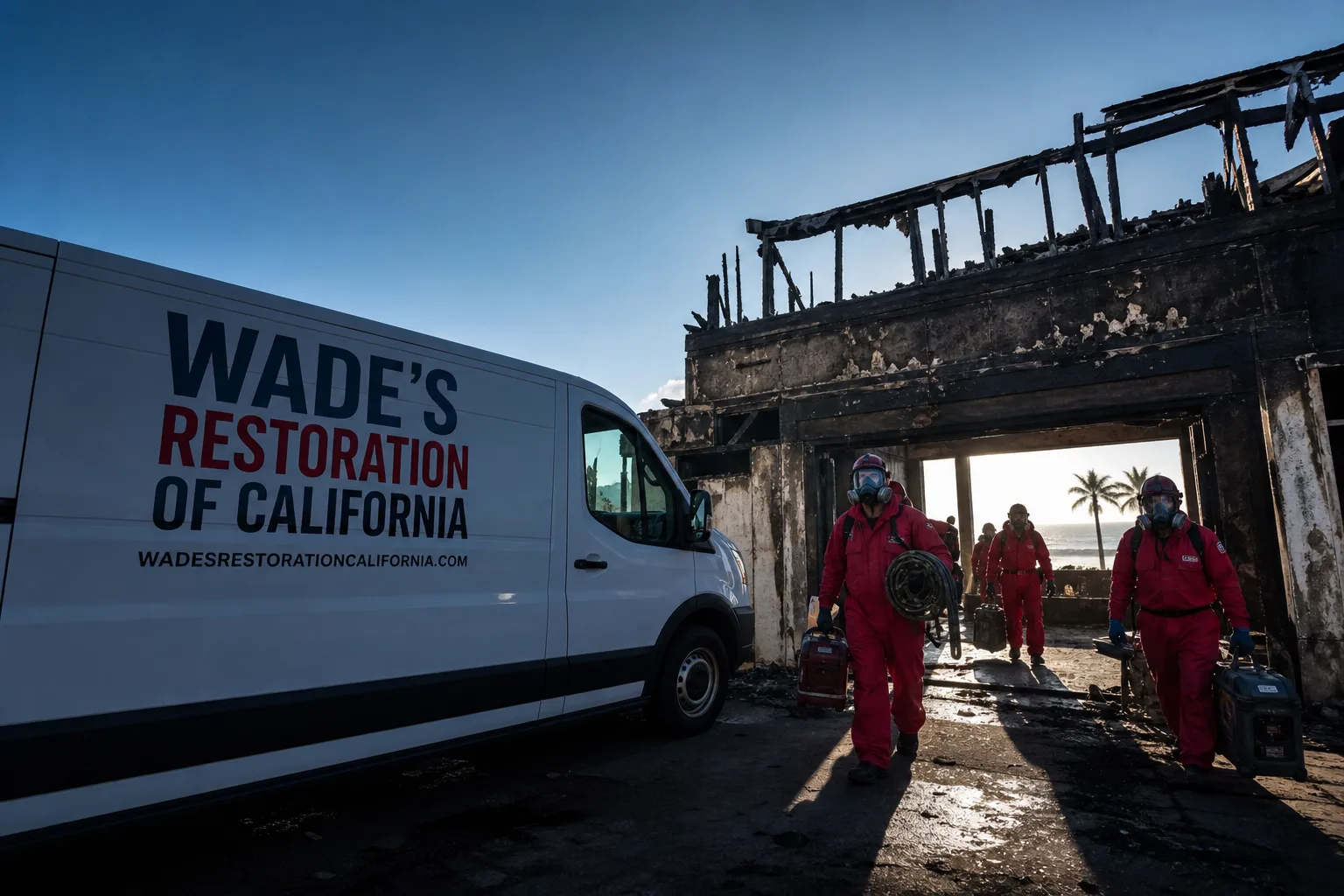
Fast, Reliable Storm & Disaster Restoration Across Rolling Hills Estates
Storm damage in Rolling Hills Estates rarely shows up the way it does down the hill. A winter storm rolls through, and while Torrance is dealing with a few downed branches, you’re standing in a garage corner with water pooling where no roof leak exists. That’s because the Palos Verdes Peninsula moves. Expansive clay soils swell and creep, shearing drain lines beneath slab foundations, and what looks like storm flooding is often a structural failure caused by the ground itself shifting under your house. We’ve been untangling that exact problem since 2007. Call Wade at (855) 915-0646 and he’ll tell you straight whether you’re looking at storm intrusion or something the dirt under your slab is doing.
Why Wade’s Restoration of California Is Rolling Hills Estates’s Preferred Storm & Disaster Restoration Company
Ask anyone on Dapplegray Lane or along Silver Spur Road how they found us. Chances are their neighbor told them about Wade. That’s how it works up here. Rolling Hills Estates is a small enough community that word travels fast, and Wade’s name has been attached to honest restoration work on the peninsula for years. He publishes his address and license number because he’s not hiding behind a call center in another state. You’ll run into him at the hardware store on a Saturday. That’s the accountability mechanism that actually matters.
What sets Wade apart on storm jobs specifically is that he understands the ground you’re built on. Most restoration crews arrive, see water, tear out drywall, and leave. Wade’s crew starts differently. On any Storm & Disaster Restoration call in Rolling Hills Estates, the first question is whether the water came from the sky or from the soil. Expansive clay and slow-moving landslide terrain mean a “storm leak” in your garage might actually be a ruptured drain line caused by ground creep. Skip that check and you’ll remediate the same wall again in eight months. Wade doesn’t skip it. His team runs moisture readings daily and hands you the full log when the job’s done. Almost nobody else does that.
Response time matters after a storm, and Wade’s crews are positioned to reach Rolling Hills Estates quickly from the Los Angeles metro office. Calls are answered by a live person 24/7. Not an answering service. Often it’s Wade himself, and he’s on the road while you’re still explaining what happened.
Our Storm & Disaster Restoration Services in Rolling Hills Estates
Storm Damage Cleanup
After heavy rain and wind, Rolling Hills Estates properties accumulate debris fast. Eucalyptus bark, broken palm fronds, and chaparral litter from the ridgelines end up against foundations, in drainage swales, and inside horse paddocks on the equestrian lots. We clear it, document it for your insurance, and look for secondary damage while we’re there. A clogged drain against a slab foundation on expansive clay is a future water-intrusion problem waiting two months to surface.
Flood Damage Restoration
Flooding in Rolling Hills Estates is rarely simple. On a flat inland lot, standing water means a failed sump pump or a burst pipe. Here, water in the corner of the garage often traces to a drain line sheared by soil creep beneath the slab. We start every flood response with a ground-stability assessment, then extract with professional-grade Dri-Eaz and Phoenix equipment, run daily moisture readings through the IICRC protocol, and dry the structure completely before any rebuild discussion. The marine layer off the Pacific holds humidity high, so half-dry is not dry here. We don’t rush that step.
Emergency Board-Up
A broken window or damaged door after a storm leaves your home exposed to more than weather. The coastal marine air in Rolling Hills Estates means a small opening can let in persistent moisture that soaks into drywall and feeds mold in days. We board up openings within hours, using materials that hold against the gusty winds that whip across the peninsula ridgelines during storm fronts.
Roof Tarping
Wind-driven rain at elevation acts differently than it does at sea level. Rolling Hills Estates sits higher on the peninsula, and Santa Ana events can peel shingles and lift flashing faster than most homeowners expect. We tarp damaged roof sections quickly, securing them against the next wind event. But before we tarp, we check what the wind exposed. If roof decking was already compromised by persistent marine-layer moisture, the tarp is a stopgap. The fix needs to account for that.
What happens when you call
- 1
A real person answersNo phone trees - you reach a local pro.
- 2
You get an upfront price rangeHonest numbers before anyone is dispatched.
- 3
A background-checked tech heads outLicensed & insured, dispatched right away.
- 4
You approve before work beginsNothing starts until you say go.
Why the Palos Verdes Peninsula Changes Storm Damage Diagnosis
Here’s what most contractors from outside the area don’t understand about Rolling Hills Estates. The city sits on geologically active ground. Slow-moving landslide terrain and expansive clay soils mean your foundation is never fully static. Slabs shift. Walls develop hairline cracks that open and close with seasonal moisture. And under-slab drain lines get sheared apart by soil movement. When a homeowner reports “storm water in the garage,” a flatland contractor assumes roof leak or surface flooding. Wade’s crew starts with a soil-creep check. After a winter storm, we responded to a ranch-style home on Dapplegray Lane where the owner was certain the rain had gotten in. We traced the water to a drain line sheared beneath the slab by soil movement. No storm had touched that pipe. We excavated, replaced the section with stainless, dried the structure to IICRC standards using Dri-Eaz and Phoenix equipment, and re-poured the affected slab area. The owner had called two other companies before us. Both wanted to start tearing drywall. Neither checked the ground.
That diagnostic step is the reason this page exists. If you live in Rolling Hills Estates, your storm damage may not be storm damage at all. And fixing the wrong cause means paying twice.
Trusted Brands We Service in Rolling Hills Estates
Rolling Hills Estates homeowners run equipment from every major manufacturer, and storm damage doesn’t discriminate. We service and repair all major brands across our storm and flood work, but what matters more is the restoration hardware we stock. Given the salt air and persistent humidity up here, we keep galvanized and stainless components, corrosion-resistant fasteners, and marine-grade sealants on hand specifically for peninsula properties. That means faster turnaround when your storm-damaged structure needs repair. Stock parts for coastal conditions aren’t something every restoration company carries. We do, because Rolling Hills Estates demands it.
Common Storm & Disaster Restoration Problems We See in Rolling Hills Estates Homes
- Salt-air corrosion on structural hardware. The same ocean air that rusts garage-door springs and hinges in Rolling Hills Estates also attacks the fasteners, brackets, and flashing that hold your home together. After a storm, weakened hardware fails under wind load in ways you won’t see inland for another decade.
- Under-slab drain line shearing. Expansive clay soil movement breaks drain lines beneath foundations. The water that shows up in your garage corner or along baseboards after a storm is often from this, not from the storm at all. This is the single most misdiagnosed restoration issue on the peninsula.
- Persistent marine-layer humidity. The fog off the Pacific keeps relative humidity elevated year-round in Rolling Hills Estates. After any water event, mold colonization begins faster in crawl spaces, attic voids, and unventilated barn structures than in flat inland cities. Mid-century ranch homes with original soffit ventilation are especially vulnerable.
- Santa Ana wind exposure on ridgeline lots. Homes along the chaparral-adjacent ridgelines face rapid fire-and-smoke damage exposure during wind events. Storm restoration on these elevated lots often includes wind-driven ember assessment and smoke residue remediation in addition to water cleanup.
Pricing for Storm & Disaster Restoration in Rolling Hills Estates, CA
We Also Serve Cities Near Rolling Hills Estates
Our crews work throughout the South Bay and peninsula communities around Rolling Hills Estates. That includes Manhattan Beach, Torrance, Lomita, and Palos Verdes Estates. Same diagnostic approach, same written-scope commitment, same 90-Day Done Right Promise on every water, fire, and mold restoration job.
Serving Rolling Hills Estates, CA - Our Local Coverage Area
We’re based in the Rolling Hills Estates area and know this community well. Use the map below to see our service coverage - if you’re nearby, we can almost certainly help.
FAQs - Storm & Disaster Restoration in Rolling Hills Estates
How does the Palos Verdes Peninsula’s soil movement affect whether water in my garage is from storm damage or a drain line break?
Water in your garage corner in Rolling Hills Estates is more likely from a drain line sheared by soil creep than from storm flooding, because the peninsula’s expansive clay soils and slow-moving landslide terrain constantly shift beneath slab foundations. We check ground stability before any remediation plan so you don’t pay to fix the same wall twice. Call (855) 915-0646 and Wade will assess it directly.
Why do my garage-door springs and hinges corrode so quickly here compared to inland cities?
Coastal salt air from the Pacific attacks metal hardware in Rolling Hills Estates years faster than inland, because persistent marine-layer moisture keeps chlorides in contact with springs, hinges, and fasteners almost continuously. We use galvanized and stainless replacements and inspect for corrosion on every storm response. If a corroded assembly failed during a wind event, call us before the door comes down on a car.
What role do Santa Ana winds play in Storm & Disaster Restoration on the ridgelines of Rolling Hills Estates?
Santa Ana events drive fire and ember exposure onto chaparral-adjacent ridgeline lots, and they strip roofing and lift flashing on elevated homes far more aggressively than on flat ground below the hill. Our storm restoration on ridgeline properties always includes wind-damage assessment and smoke-residue evaluation, not just water cleanup. Call (855) 915-0646 for an exact quote.
Why is mold colonization faster in my Rolling Hills Estates ranch home’s crawl space after a flood than in a flat inland city?
The marine layer keeps relative humidity persistently elevated in Rolling Hills Estates compared to inland LA cities, and mid-century ranch homes with original soffit ventilation trap that moisture in crawl spaces and attics after any water event. Mold colonization starts in days, not weeks. We run daily moisture readings and dry to IICRC standards before any rebuild begins. Free estimates at (855) 915-0646.
Do you handle restoration of detached horse barns and tack rooms after a storm in Rolling Hills Estates?
Yes. Many Rolling Hills Estates properties include detached horse barns, tack rooms, and hay storage structures that require different restoration protocols than single-family residential space. We treat those structures as full restoration projects with their own moisture documentation, drying plan, and written scope. Call (855) 915-0646 and Wade will walk the property with you.
Get Storm & Disaster Restoration in Rolling Hills Estates, CA
If you’re dealing with storm damage on the peninsula, don’t let a flatland contractor start tearing things apart before the ground under your home has been checked. Call Wade’s Restoration at (855) 915-0646 for a free estimate. Wade will tell you what’s actually wrong, what it costs to fix, and how long it’ll take, written down before any work starts. If it’s not done right, the 90-Day Done Right Promise means he makes it right. That’s in writing on every job.
Written by Wade Ferris, Owner at Wade’s Restoration of California, providing storm and disaster restoration to Rolling Hills Estates and the Palos Verdes Peninsula since 2007.