
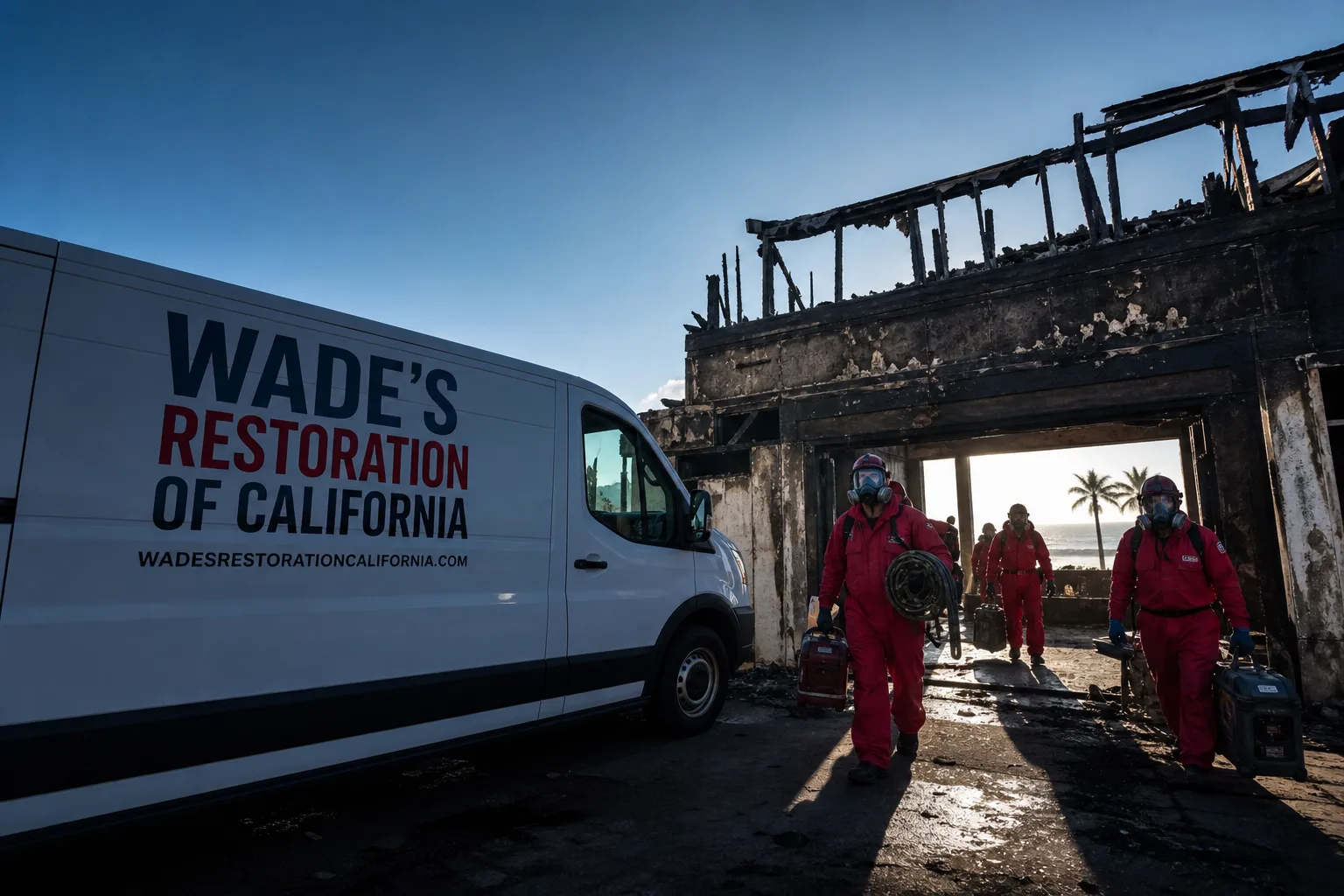
Fast, Reliable Storm & Disaster Restoration Across Mill Valley
Storm damage in Mill Valley rarely looks like the photos insurance adjusters expect. It looks like a redwood limb through a roof on Cascade Drive, a flooded crawl space in Tamalpais Valley, or siding that’s been quietly rotting behind fog-fed ivy for a decade before the wind finally exposed it. When that happens, you need someone who knows the canyons, the switchbacks, and the older wood-frame homes that make this town different from every flatland city in Marin. Wade Ferris founded Storm & Disaster Restoration work with exactly that kind of local knowledge in mind, and we answer calls around the clock at (855) 915-0646.
Why Wade’s Restoration of California Is Mill Valley’s Preferred Storm & Disaster Restoration Company
For more than 29 years, the people Storm & Disaster Restoration in Mill Valley homeowners call have known what a redwood canopy does to a crawl space and why a fog-saturated bungalow off East Blithedale needs different drying than a stucco house in Corte Madera. We don’t send a different crew every visit or shuffle you to a call center. Wade answers his own phone. And when he heads out to Mill Valley, he’s not stringing six jobs behind yours across two counties. He’s coming to your street, with equipment sized for your driveway, and a moisture log he’ll hand you himself at the end.
Our Storm & Disaster Restoration Services in Mill Valley
Emergency Board-Up
A broken window on an alley-load townhome near downtown Mill Valley isn’t something to leave overnight. Wind throws branches, branches take out glass, and narrow alleys hide whatever walks through next. We board up entry points the same day, using fasteners that don’t destroy original 1920s wood trim. If the opening is on an upper floor facing a redwood line, we anchor the plywood so it holds through the next wind event, not just until the insurance adjuster arrives. Call (855) 915-0646 and someone will be there.
Roof Tarping
Mill Valley roofing takes a beating. The Duxbury overlook gets full ocean wind, Blithedale Canyon sees wet gusts channeled right up the valley, and every neighborhood with mature redwoods has limbs waiting for one good November storm. We tarp with reinforced poly anchored at the ridge and under the eave line, because standard perimeter bungees don’t survive the wind loading on hillside homes near Mt. Tamalpais. In areas like Homestead Valley, where roofs are older composition shingle over redwood decking, we check the decking while we’re up there. Rot under a tarp is still rot, and you need to know about it now, not after the adjuster has closed the file.
Flood Damage Restoration
Flooding in Mill Valley doesn’t only come from the sky. It comes up through post-and-pier foundations on the flats near Sycamore Park, where high groundwater and saturated soil push water into crawl spaces that never fully dry anyway because the fog keeps them at 70% relative humidity all year. We install extraction and dehumidification that’s sized for a Mill Valley crawl space: compact, hand-carried units that fit where a box truck can’t, and more of them running longer hours because the ambient moisture load here is higher than in San Rafael. We pull subfloor water, not just what’s visible on the concrete.
Debris Removal
Fallen limbs and wind-driven debris on Mill Valley lots often sit on slopes that can’t be reached with a chipper or a trailer. We carry material out by hand where we have to, and we don’t cut corners on the downhill side. On Blithedale Canyon switchbacks, debris stacked against a hillside retaining wall becomes a drainage liability for the next rain. We clear the drainage path too. If the city picks up some storm debris at the curb and not others, we sort it so you’re not stuck with a pile that rots in place behind the fence.
What happens when you call
- 1
A real person answersNo phone trees - you reach a local pro.
- 2
You get an upfront price rangeHonest numbers before anyone is dispatched.
- 3
A background-checked tech heads outLicensed & insured, dispatched right away.
- 4
You approve before work beginsNothing starts until you say go.
Trusted Brands We Service in Mill Valley
We run Dri-Eaz, XPOWER, and B-Air equipment on Mill Valley jobs because the humidity load here demands machines that don’t quit. The cramped access on Blithedale and the fog-driven moisture in every shaded crawl space means underpowered fans just recirculate wet air. Our crew is IICRC-certified and we stock the filters, hoses, and fittings to keep Dri-Eaz LGR units running when a Mill Valley garage is full of soaked drywall and the dehumidifier runs for four days straight. If you’ve got a unit that’s been sitting since the last Pine Mountain wind event, we can service what you own before you need it twice.
Common Storm & Disaster Restoration Problems We See in Mill Valley Homes
- Fog-fed rot that predates the storm. Mill Valley’s canyon geometry pulls marine fog from the Golden Gate more intensely than flatland Marin cities. Our crews regularly open up storm-damaged walls and find subfloor decay and mold that were active months or years before the tree limb hit the roof. If you don’t account for that baseline, you’ll blame the storm for damage and the new flooring will fail anyway.
- Equipment that physically cannot reach the house. Standard box trucks and trailer units don’t make it up Blithedale Canyon switchbacks or down narrow flagstone paths in the downtown flats. Our techs hand-carry dehumidifiers and air movers 50 to 200 feet on a regular basis. It’s slower, but it’s the only way homes built into the Mt. Tam slopes get dried properly.
- Board-up that ignores alley access. Downtown Mill Valley has back alleys and tight clearances. Board-up that doesn’t account for that leaves a home exposed to foot traffic and wind-driven rain. We cut to the exact opening and use hardware that doesn’t turn a temporary fix into a second insurance claim for the trim.
- Debris that becomes a drainage hazard. Branches on a hillside don’t just sit there. They block downspouts, stack against retaining walls, and redirect runoff into foundations. In Mill Valley, where rain hits a slope and accelerates, we clear the drainage path, not just the pile.
Pricing for Storm & Disaster Restoration in Mill Valley, CA
We Also Serve Cities Near Mill Valley
We run jobs across Mill Valley, from Tamalpais Valley up through Tamalpais-Homestead Valley, and into Corte Madera and Larkspur when the storm track shifts. If you’re on the edge of 94941 or 94942 and aren’t sure whether we cover your street, call and ask. If it’s in the county, there’s no trip charge.
Serving Mill Valley, CA - Our Local Coverage Area
We’re based in the Mill Valley area and know this community well. Use the map below to see our service coverage - if you’re nearby, we can almost certainly help.
FAQs - Storm & Disaster Restoration in Mill Valley
Why does Mill Valley storm restoration often reveal rot even before the storm hit?
Because Mill Valley’s canyon geometry funnels marine fog from the Golden Gate more intensely than any flatland city in Marin, so crawl spaces and shaded redwood siding stay damp year-round. By the time a storm tears open a roof or wall, we commonly find mold and subfloor decay that were already active for months. That’s not a reason to deny a claim; it’s the reality of building with wood in a fog belt. Call (855) 915-0646 for an assessment that separates storm damage from pre-existing conditions correctly.
How do you handle a flooded crawl space on a steep Blithedale Canyon lot where a truck can’t park?
We hand-carry compact dehumidifiers and air movers up the drive or the switchback path, the same way our crew did on a 1930s redwood bungalow off Cascade Drive where a box truck couldn’t get near the house. The job takes a little longer, but the drying gets done. If the access is bad enough, we may stage equipment at the street and run hoses, but we don’t leave a crawl space half-dried because the truck didn’t fit.
What kind of board-up works best for Mill Valley’s older craftsman doors and narrow alley access?
Board-up that’s cut to the opening and fastened without destroying the original trim works best. On Mill Valley’s 1920s and 1930s cottages, we avoid driving lag bolts through historic casing unless the insurance adjuster has already documented it’s a replace. We can anchor to masonry or frame around existing hardware. The point is security and weather resistance now, with repair that doesn’t cost you an extra salvage job later.
Does roof tarping in Mill Valley need special anchoring because of the wind and redwoods?
Yes. Standard bungee and grommet tarping doesn’t hold on hillside homes near Mt. Tamalpais, where wind gets channeled up the canyon and redwood limbs keep falling through the wet season. We anchor at the ridge and under the eave line, and we use reinforced poly that doesn’t shred after two weeks of Duxbury wind. It costs slightly more than a flatland tarp, and it saves your interior from a second round of rain before the roofer gets there.
How do you remove storm debris from Mill Valley hillsides without damaging the narrow access paths?
We carry it out by hand or with wheeled carts narrow enough for the path, and we don’t drag branches across landscaping, stonework, or decking. On Blithedale Canyon lots where the city won’t take certain debris at the curb, we separate haulable material from what gets left for green waste pickup. The drainage path gets cleared too, because in Mill Valley, the next storm doesn’t wait for you to schedule a second appointment.
Written by Wade Ferris, Owner at Wade’s Restoration of California, serving Mill Valley and Marin County since 2007.
If you’ve got storm damage in Mill Valley and you want a straight answer about what it’ll take to fix it, call (855) 915-0646. Wade answers. And if it’s after midnight and your roof is open to the rain, he’ll still answer. The estimate is free, and the work is guaranteed in writing.