
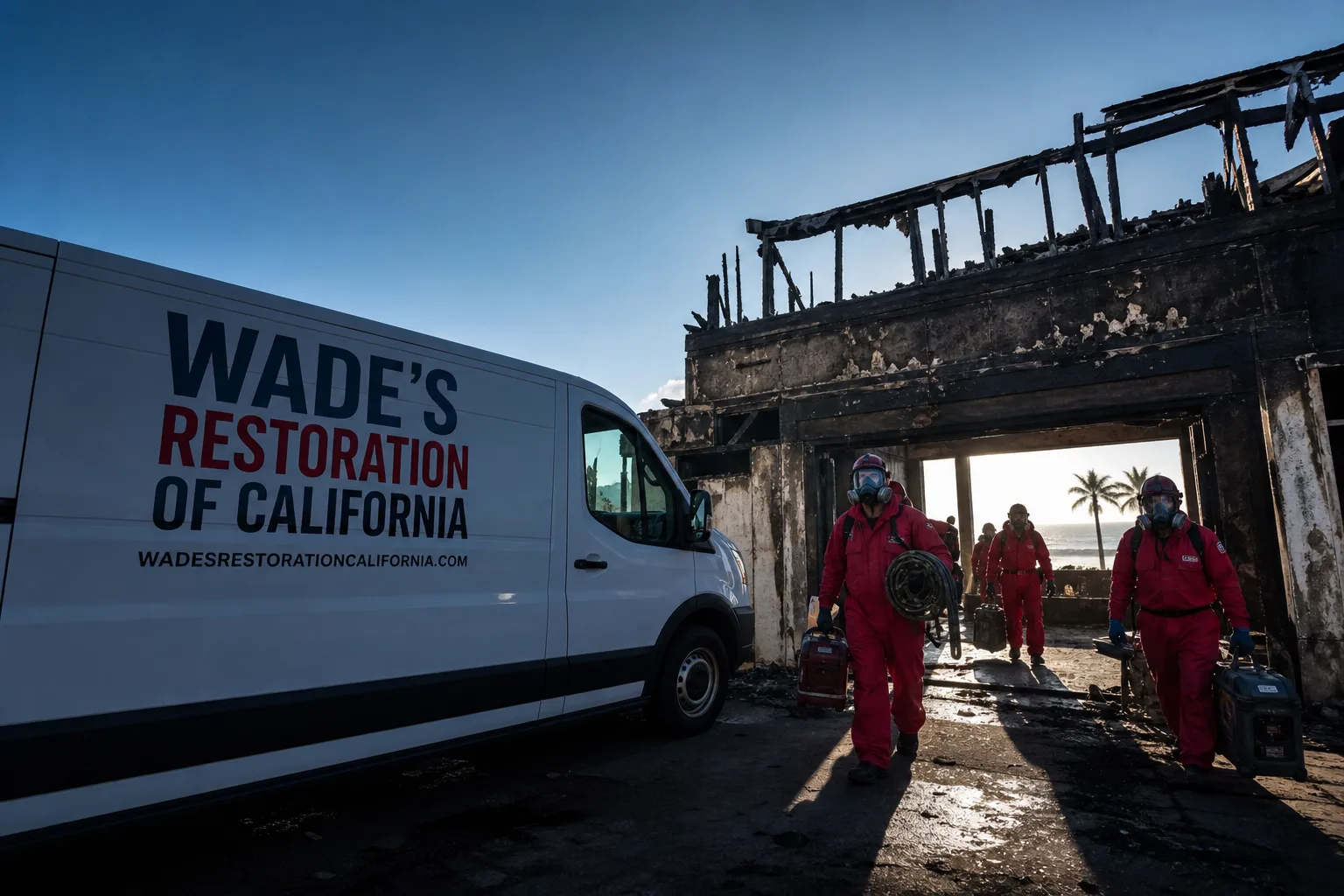
Fast, Reliable Storm & Disaster Restoration Across Los Angeles
Storm damage in Los Angeles rarely looks like the hurricane footage you see from the Gulf Coast. Here, it’s a February atmospheric river overwhelming a flat roof in Koreatown, or Santa Ana winds peeling back membrane on a 1930s Spanish Colonial in West Adams, or a clogged roof drain sending ponded water through four floors of a 90006 duplex. When that happens, you need someone who knows how these old buildings behave when they get wet. Call (855) 915-0646 and Wade Ferris will answer. He heads out himself, and in most Los Angeles neighborhoods, he’s there within the hour, extraction equipment already loaded.
Why Wade’s Restoration of California Is Los Angeles’s Preferred Storm & Disaster Restoration Company
Wade’s Restoration isn’t a franchise. Wade Ferris started this company in 2007, put his name on the truck, and published his address and license number where anyone can find them. That matters in Los Angeles, where homeowners have dealt with too many national outfits that quote one number over the phone and a different one at the door. Ask anyone on your street. Wade’s the guy who shows up at midnight, takes moisture readings every single day until the job’s done, and hands you the full log before he leaves. Almost nobody in this trade does that.
Los Angeles restoration work runs on timing. When it’s storm damage, every hour of delay means water moving deeper into plaster and wood lath. Wade answers his own phone, 24 hours a day, seven days a week. No voicemail, no answering service, no third-party dispatch center. You call, he picks up, he’s on the road. His crew is background-checked, uniformed, and credentialed through IICRC and RIA. They run Dri-Eaz, Phoenix, and Injectidry equipment, which means drying plans are built for how Los Angeles’s aging housing stock actually holds moisture, not for some generic national template.
Every storm restoration job carries the 90-Day Done Right Promise, in writing. If it’s not done right, Wade makes it right. One call brings him back. And when it’s time to deal with insurance, Wade talks to your adjuster directly. You’re never the one stuck relaying information between two sides.
Our Storm & Disaster Restoration Services in Los Angeles
Storm Damage Cleanup
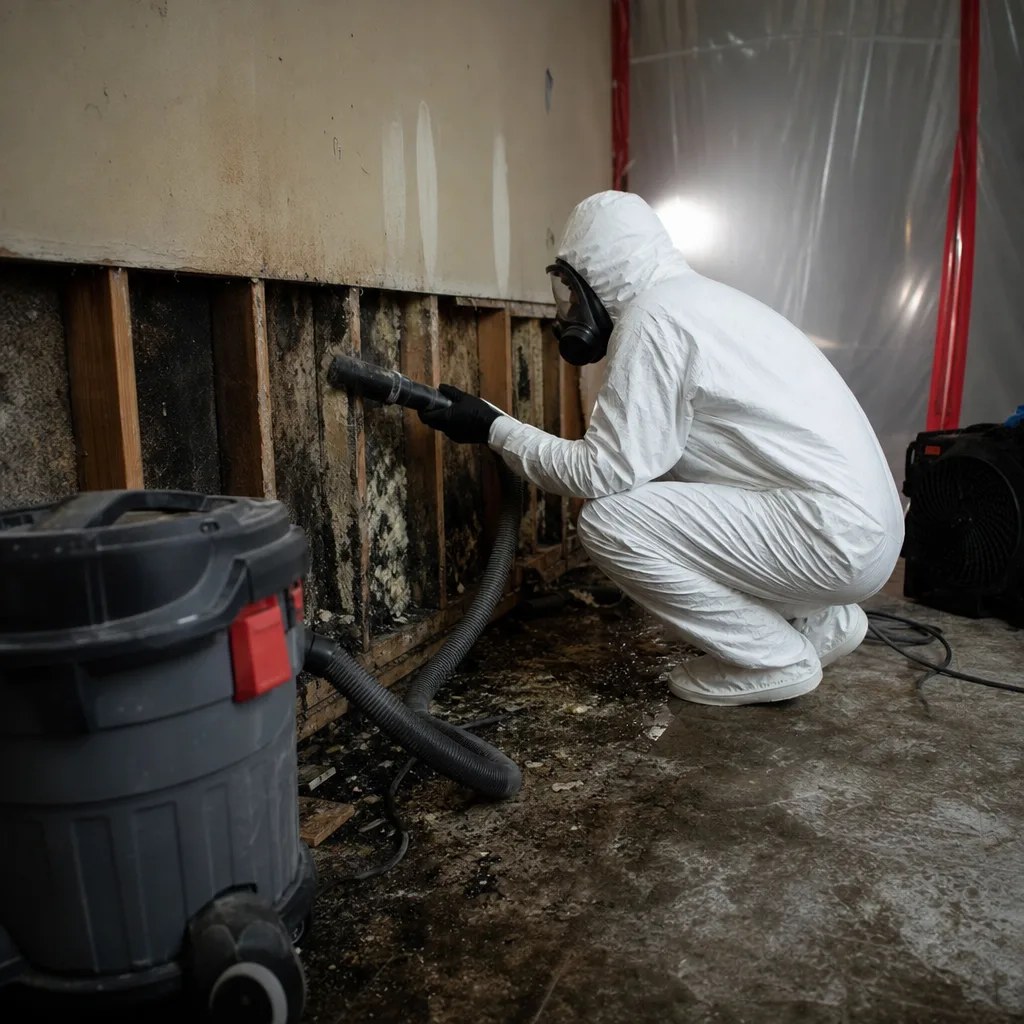
After heavy rain or wind, Los Angeles homes and apartment buildings face a specific set of problems: saturated drywall, standing water in subgrade units, debris-clogged roof drains, and water that’s already moved through plaster-over-wood-lath before anyone noticed. Wade’s team extracts standing water, removes unsalvageable materials, and sets up drying equipment sized for the actual building assembly, not a default chart. In a 1920s Craftsman bungalow near Exposition Park, that means accounting for inches of original plaster that wick moisture far faster than modern drywall.
Flood Damage Restoration
Flooding in Los Angeles is rarely about rivers overflowing. It’s about drought-compacted clay soil that’s gone nearly hydrophobic, so when an atmospheric river drops a winter’s worth of rain in a few days, the water sheets off instead of soaking in. Low-lying streets in South LA and Koreatown flood in blocks that haven’t seen standing water in decades. Wade’s team handles extraction, structural drying, and the Category 2 or 3 contamination issues that come with street-water intrusion into subgrade units and ground-floor apartments in ZIP codes 90001 through 90004 and beyond.
Emergency Board-Up
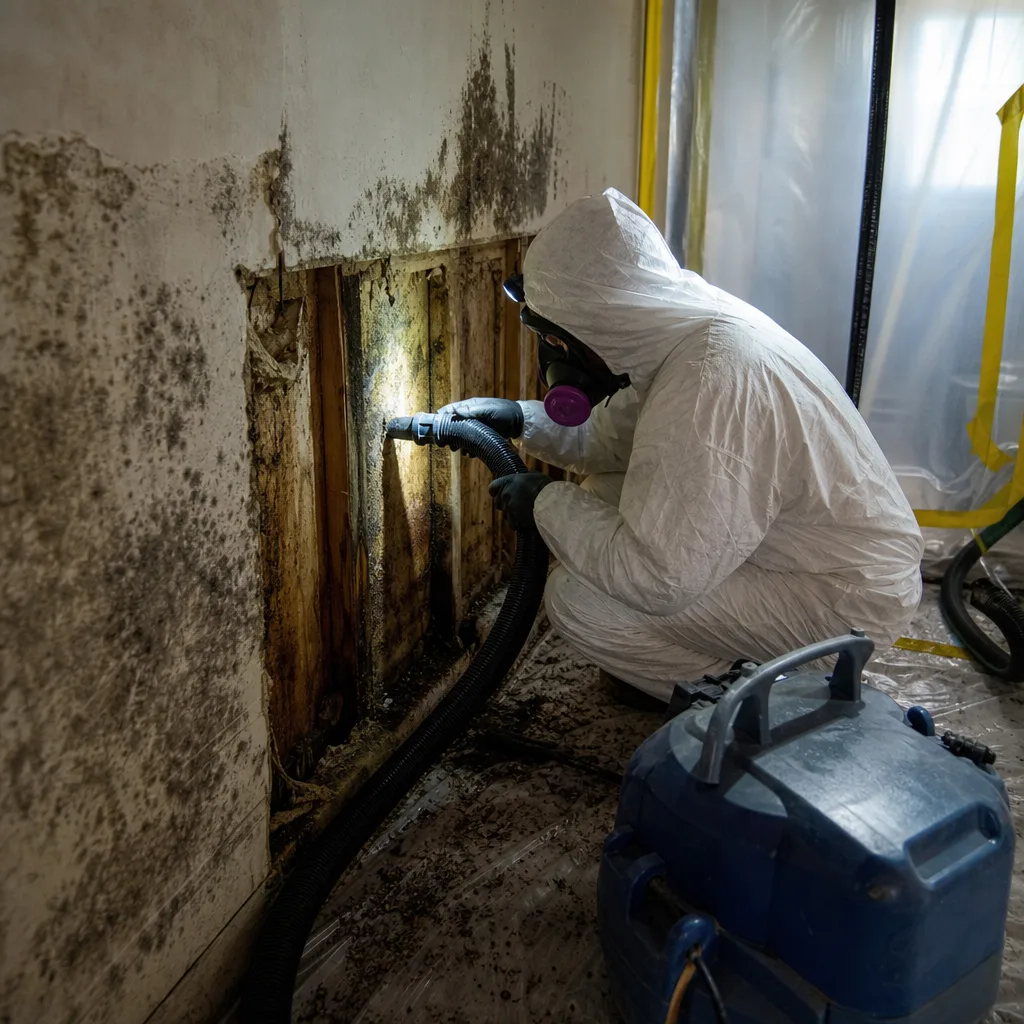
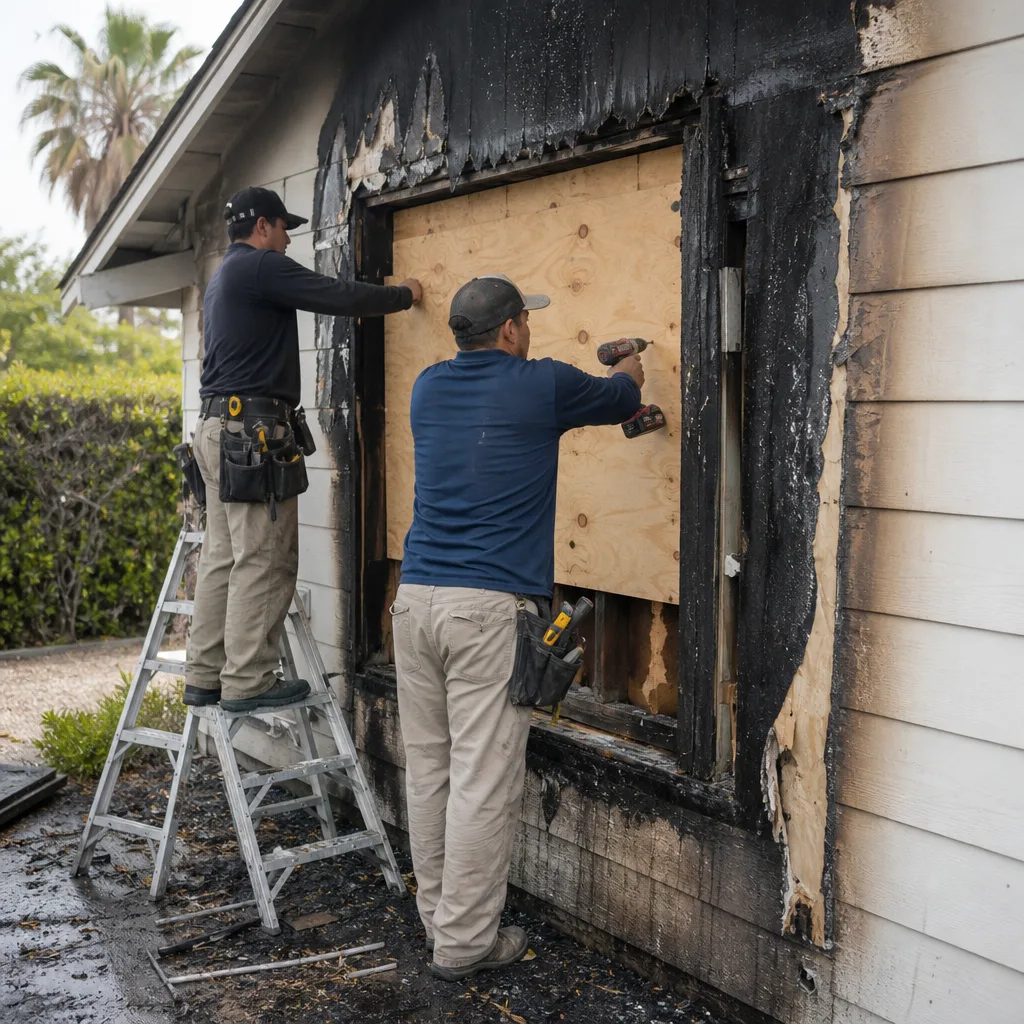
Wind damage from a Santa Ana event or a downed tree limb can leave a Los Angeles property open to weather, animals, and theft within minutes. Wade’s crew does emergency board-up on broken windows, damaged doors, and breached walls, using materials sized to fit the original single-pane window openings and stucco exterior walls common across the 90001-90010 corridor. Security comes first, then the restoration scope gets written up and agreed to before any further work starts.
Roof Tarping
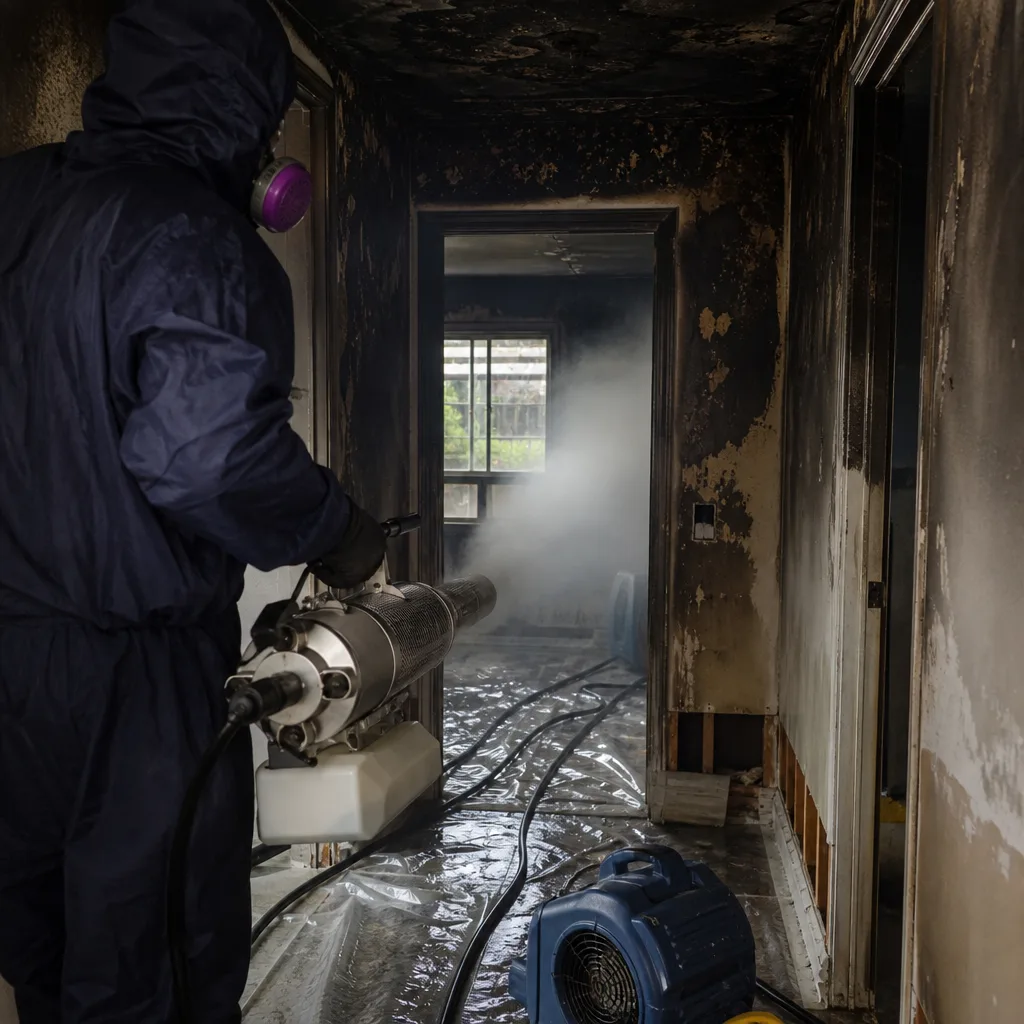
Flat roofs are everywhere in Los Angeles: Koreatown apartment buildings, Westlake duplexes, South LA commercial storefronts, and post-WWII residential stock. When windblown debris clogs the drains and ponding water finds a seam failure, the roof leaks for days before anyone reports it. Wade’s team tarp-ties damaged roof sections fast, using tensioned coverings that hold up under the next front. Then we document the damage with photos for your adjuster and give you a written scope for the permanent repair.
What happens when you call
- 1
A real person answersNo phone trees - you reach a local pro.
- 2
You get an upfront price rangeHonest numbers before anyone is dispatched.
- 3
A background-checked tech heads outLicensed & insured, dispatched right away.
- 4
You approve before work beginsNothing starts until you say go.
Trusted Brands We Service in Los Angeles
Wade’s Restoration runs professional-grade equipment on every job: Dri-Eaz LGR 7000 dehumidifiers, Phoenix axial air movers, Injectidry panel systems for wall-cavity drying, and XPOWER and B-Air support units. We stock parts and consumables locally, so we’re not waiting on a warehouse shipment when a Los Angeles job needs a specific fitting or panel. The IICRC certification and RIA affiliation behind our team mean the drying plans we write are defensible to your insurer and built for the way Los Angeles buildings actually fail.
We also service all major equipment brands in the restoration space, and we know what parts wear out first on the older gear still running in Los Angeles apartment buildings and small commercial properties. If you need storm or disaster restoration, call (855) 915-0646 and Wade will talk you through what you actually need, not what a call center wants to sell you.
Common Storm & Disaster Restoration Problems We See in Los Angeles Homes
- Hidden moisture behind original stucco and wood lath. After Santa Ana winds accelerate surface drying, restorers who follow standard drying timelines pull their equipment too early. The surface reads dry, but moisture is still trapped in the original lath-and-plaster assembly behind 1920s-1940s walls. We take daily readings and keep equipment running until the numbers prove the wall cavity is actually dry, not just the surface.
- Ponding water from flat roof drains clogged with windblown debris. Koreatown and Westlake are dense with flat-roofed apartment buildings. Debris from Santa Ana events clogs the drains, water ponds at the low points, and aging membrane seams start leaking. By the time residents report water on the ceiling, it’s already moved through multiple units below.
- Multi-unit cascading water from a single supply line failure. In a Koreatown upper-floor unit, one burst pipe has flooded four to six apartments below it before anyone called. Residents are often reluctant to involve building management, so water sits for days inside plaster walls. What started as a clean Category 1 loss arrives at the job site already showing mold indicators.
- Subgrade flooding in neighborhoods that haven’t flooded in years. Drought-compacted clay soil across South LA and the 90001-90004 ZIP codes refuses to absorb stormwater. When an atmospheric river hits, low-lying streets and below-grade units flood quickly, catching property owners and insurers completely off guard.
Pricing for Storm & Disaster Restoration in Los Angeles, CA
Storm damage cleanup in Los Angeles typically runs $1,800 to $5,500 for a standard single-unit job where water has moved through drywall and flooring. Flood damage restoration on a subgrade unit with Category 2 contamination usually falls between $3,200 and $9,000, depending on how much material has to be cut out and how long the water sat. Emergency board-up runs $350 to $900 per opening for standard Los Angeles window and door sizes. Roof tarping on a flat apartment roof section typically costs $750 to $2,200, sized for the area that actually needs covering. Wind damage repair varies widely by the building, but most Los Angeles single-family wind claims we see land between $2,000 and $12,000 once structural and interior components are both accounted for. We give free estimates, and there’s no trip charge inside Los Angeles County. Call (855) 915-0646 for an exact quote, and ask about the Senior & Veteran 10% discount if it applies to you.
We Also Serve Cities Near Los Angeles
Beyond the Los Angeles core, Wade’s Restoration covers storm and disaster restoration in Los Angeles neighborhoods and nearby communities including Koreatown, Echo Park, Silver Lake, and View Park-Windsor Hills. If you’re anywhere in the metro and water’s moving through your building right now, call (855) 915-0646. Wade will tell you straight whether he’s the right fit for the job, and he’ll be on the road either way.
Serving Los Angeles, CA - Our Local Coverage Area
We’re based in the Los Angeles area and know this community well. Use the map below to see our service coverage - if you’re nearby, we can almost certainly help.
FAQs - Storm & Disaster Restoration in Los Angeles
South LA sits on clay-heavy soils that become nearly hydrophobic after extended drought. When an atmospheric river dumps most of the year’s rain in a few weeks, the ground can’t absorb it. Water sheets off instead, flooding low-lying streets and subgrade units in blocks that haven’t seen standing water in decades. If your building took on storm water for the first time, don’t wait to see if it dries on its own. Call (855) 915-0646 and Wade will assess it while the water’s still where it shouldn’t be.
Koreatown’s flat-roofed apartment buildings collect debris from Santa Ana winds, which clogs roof drains. Water ponds at the low points, aging membrane seams leak, and water travels down through the building’s plumbing chases and wall cavities. A top-floor leak can show up as water damage in a third-floor unit, while the roof drain issue goes unnoticed. That’s why Wade’s team always checks the drain path first, not just the visible ceiling stain. Call (855) 915-0646 if you’re seeing water where it shouldn’t be.
No. Standard drying timelines built for modern drywall assemblies routinely under-treat 1920s-1940s lath-and-plaster walls in Los Angeles. Santa Ana winds dry the surface fast, so a restorer who relies on a default three-day plan pulls equipment while the wall cavity is still wet. Weeks later, mold shows up behind the stucco. Wade’s team takes daily moisture readings and keeps equipment running until the numbers prove the full assembly is dry. Call (855) 915-0646 for a free assessment if you’re not sure whether your walls actually dried.
Santa Ana wind-driven rain pushes water sideways, so it gets past window flashing, under roof membrane edges, and through stucco cracks that would never leak in a normal rain. You’ll see water stains on interior walls that don’t align with any roof leak, bubbling plaster, and sometimes wet insulation inside wall cavities. These are the exact conditions that create hidden moisture problems. Call (855) 915-0646 and Wade will trace the intrusion source, not just dry what’s visible.
In older Los Angeles apartment buildings, a single burst supply line can cascade through multiple tenant units below, but residents often hesitate to involve building management. Water sits inside original plaster-over-wood-lath walls for days, and that assembly wicks moisture far faster than modern drywall. By the time Wade’s team arrives, what was a clean water loss has often progressed to visible mold indicators. If you’re a tenant or an owner in this situation, call (855) 915-0646. We’ll document everything for your property management and insurer, and the estimate is free.
Written by Wade Ferris, Owner at Wade’s Restoration of California, serving Los Angeles since 2007.