
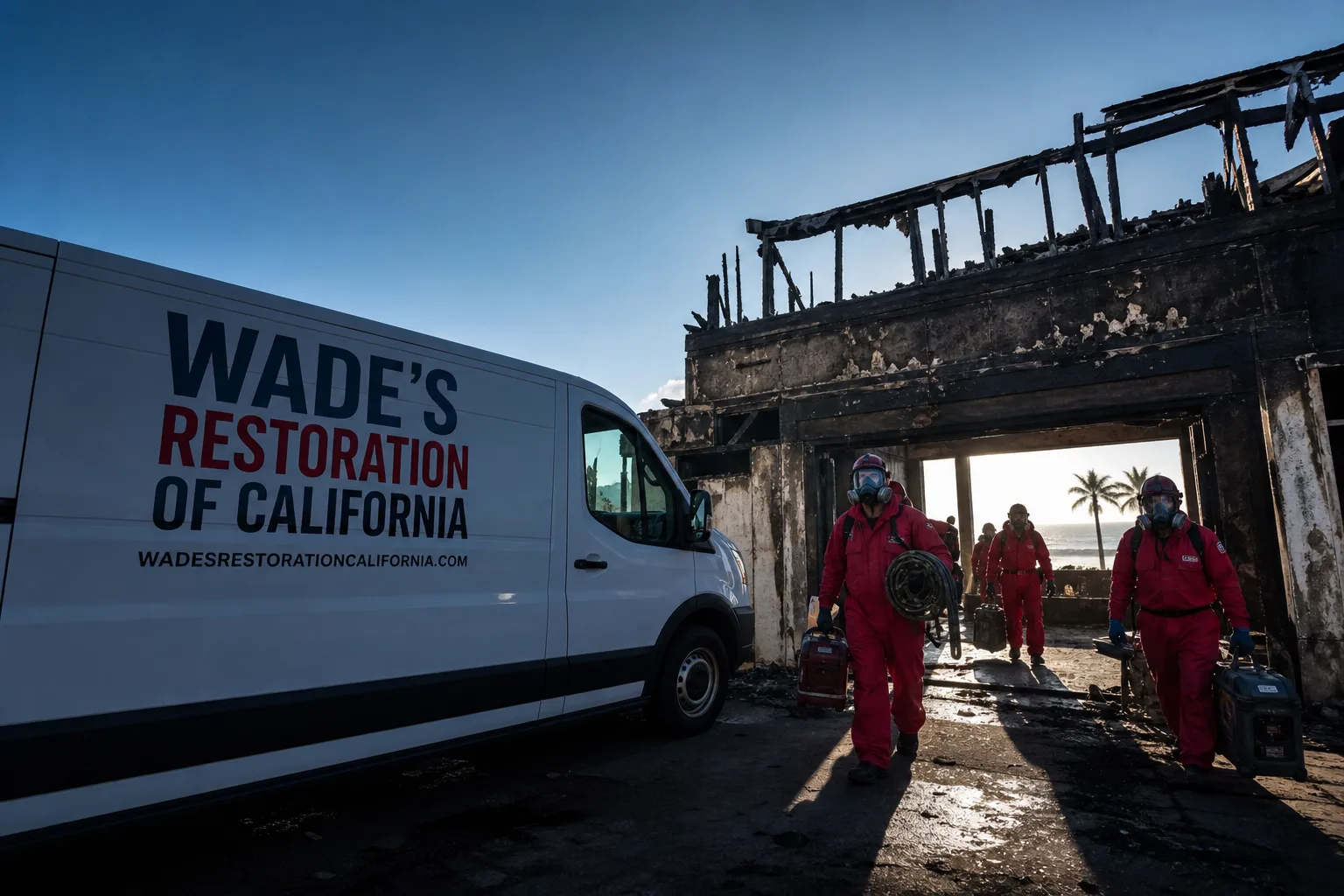
Fast, Reliable Storm & Disaster Restoration Across Los Angeles
Storm damage in Los Angeles hits differently than it does almost anywhere else. The hardpacked, drought-compacted clay beneath our streets shrugs off water instead of absorbing it, so when an atmospheric river rolls in, flash flooding and mudflow arrive where slow seepage never did. If you’re standing in a flooded subgrade unit or watching water pond on a flat roof in South LA right now, call (855) 915-0646. Wade Ferris answers his own phone, and he can have extraction equipment running inside the hour.
We’ve worked the 90001 through 90010 corridor long enough to know which blocks flood first, which flat roofs pond hardest, and which 1920s plaster walls hide moisture longest. That local knowledge changes how we dry, how we document, and how we keep your adjuster in the loop. Storm & Disaster Restoration is what we do every day, and we do it with a written scope before we start, not after.
Why Wade’s Restoration of California Is Los Angeles’s Preferred Storm & Disaster Restoration Company
Wade’s Restoration has been owner-operated since 2007. Wade Ferris publishes his name and address, answers his own cell, and shows up in person. In a city the size of Los Angeles, that’s rare, and in our experience it’s exactly what homeowners want after a storm has turned their kitchen into a wading pool. Ask anyone on your street. The neighbor who had a roof tarped before the second wave hit, the landlord in Koreatown who got four units dried before mold set in. They’ll tell you the same thing: Wade heads out, Wade checks the moisture readings, Wade deals with the adjuster.
We carry IICRC, RIA, and IFA credentials, and our crews run Dri-Eaz, Phoenix, and Injectidry equipment. But the thing that matters most when water is actively moving through your ceiling is that a live person answers at (855) 915-0646 at 2 a.m. and can have a crew on the road inside the hour. No voicemail, no call center, no “we’ll get back to you.”
Response time to Los Angeles neighborhoods including Koreatown, Echo Park, and Silver Lake runs under 90 minutes for emergency board-up and tarping, and under two hours for full extraction crews during a weather event. Our Los Angeles office coordinates scheduling and dispatch, so you’re never waiting on a crew driving from across the county.
Our Storm & Disaster Restoration Services in Los Angeles
Roof Tarping
Los Angeles flat roofs fail in specific ways, and we’ve seen all of them. Palm debris clogs drains, parapet flashing separates after decades of sun, and water ponds until it finds the one weak seam and drops through. We tarp with reinforced polyethylene and secure it against Santa Ana gusts, not just the current drizzle. In the 90006 ZIP, after a February atmospheric river dropped over two inches of rain in 48 hours, we had roof tarps on a 1940s Spanish Colonial duplex before the second band of rain arrived. That tarp kept four tenant units from getting worse while the roof drains were cleared and the membrane repaired. Emergency roof tarping in Los Angeles typically runs $350-$700 for a standard residential flat-roof section, before any structural repair.
Flood Damage Restoration
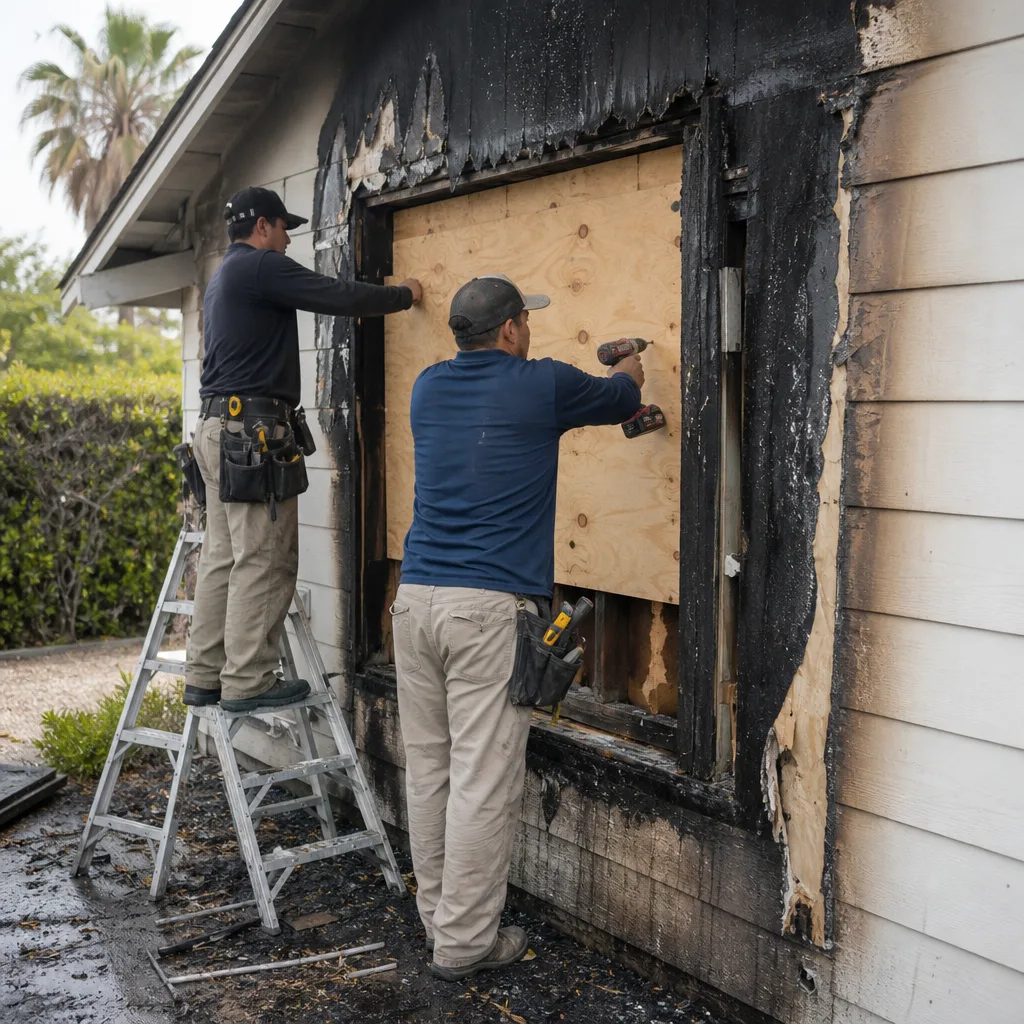
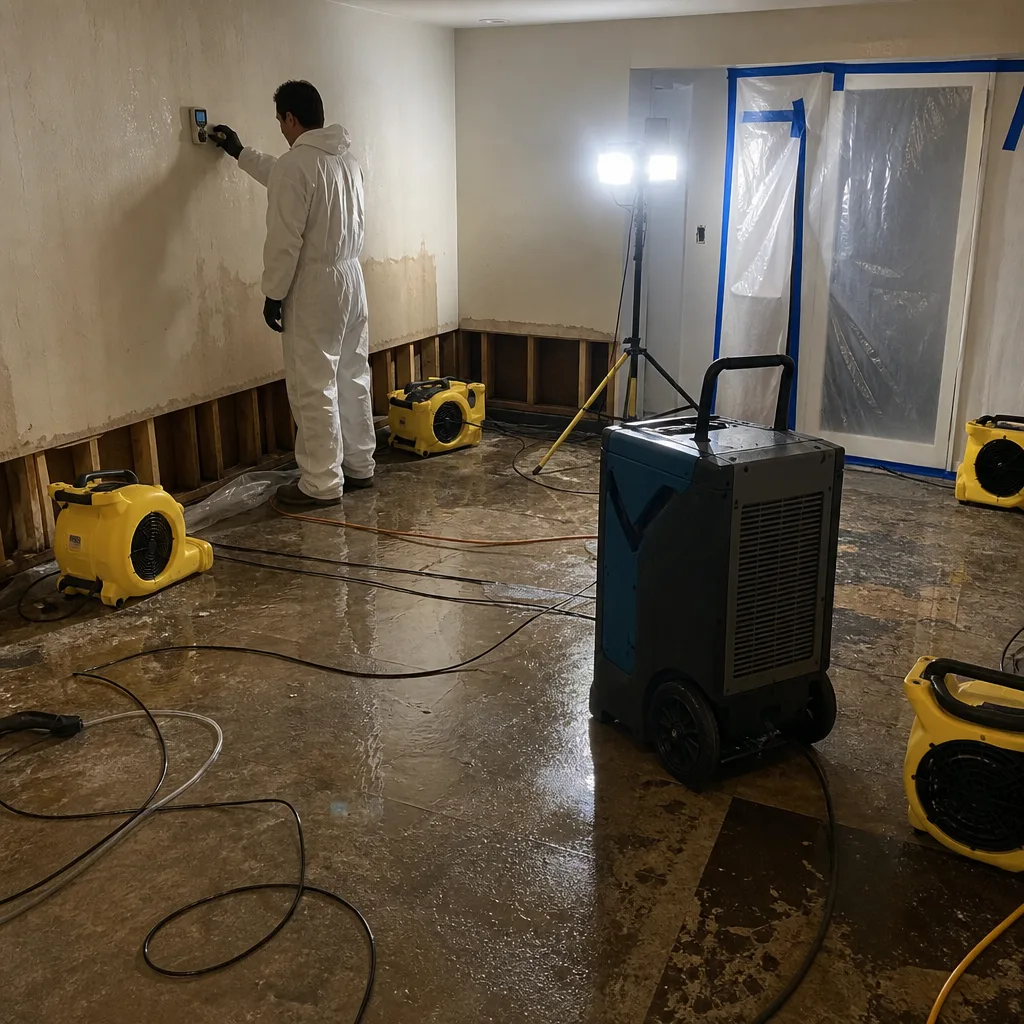
Flash flooding in Los Angeles doesn’t behave like flooding in Houston or Miami. It arrives fast, moves downhill, and disappears into storm drains within hours. What it leaves behind is silt, debris, and water pressed into subgrade units and crawl spaces that haven’t seen moisture in decades. We extract, we dry to documented standard, and we run antimicrobial treatment where floodwater categories demand it. The drought-compacted clay means subgrade water may re-enter through below-grade walls for days after the visible water is gone. We monitor those readings daily and hand you the full moisture log at the end. A typical single-unit flood extraction and drying job in Los Angeles runs $1,800-$3,400, depending on saturation depth and affected square footage.
Storm Damage Cleanup
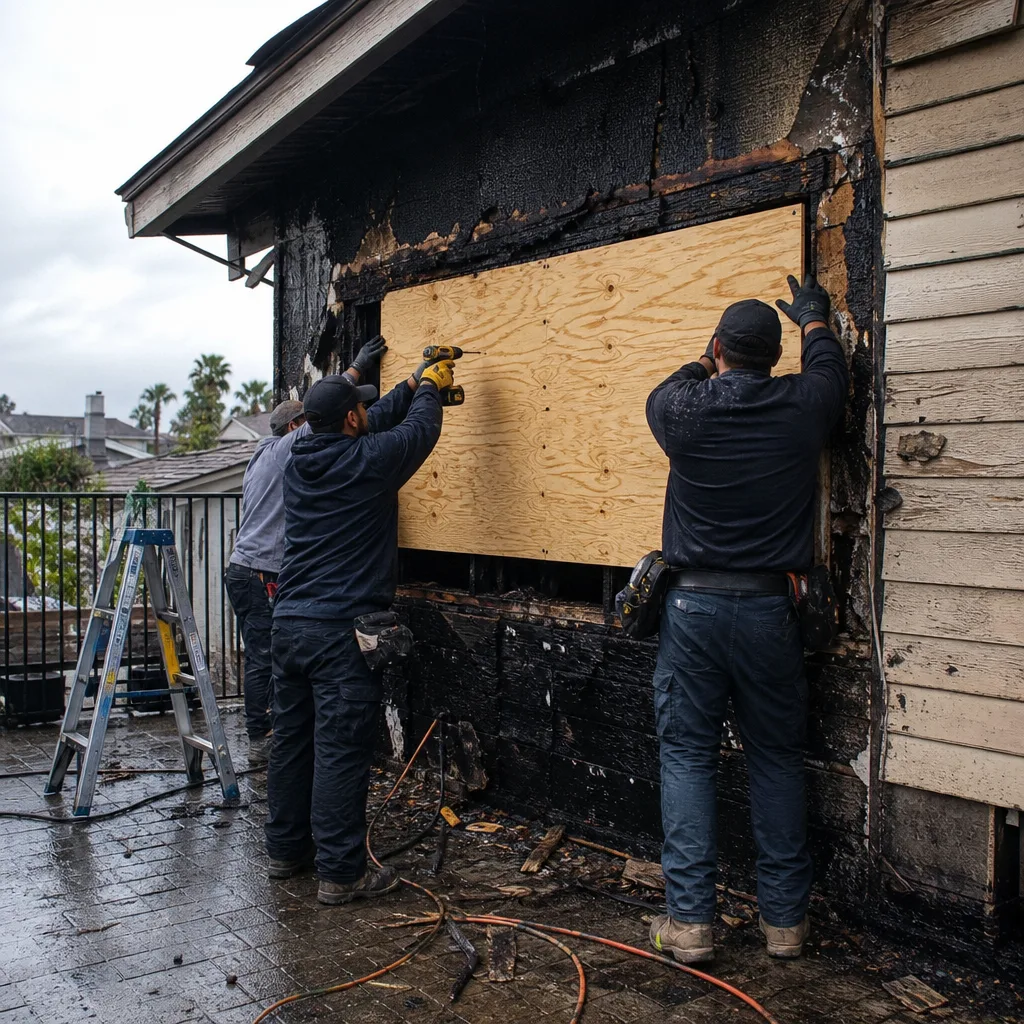
Tree limbs through windows, debris blown into living rooms, gutter failures that send water down interior wall cavities. Storm damage cleanup in Los Angeles means clearing safely, boarding windows properly, and documenting everything on camera for your adjuster before you touch a single personal item. We coordinate directly with your insurance carrier, so you’re not the one relaying messages between us and them. For a standard debris removal and window board-up after a wind event, Los Angeles homeowners can expect $500-$1,200 depending on material volume and access.
Emergency Board-Up
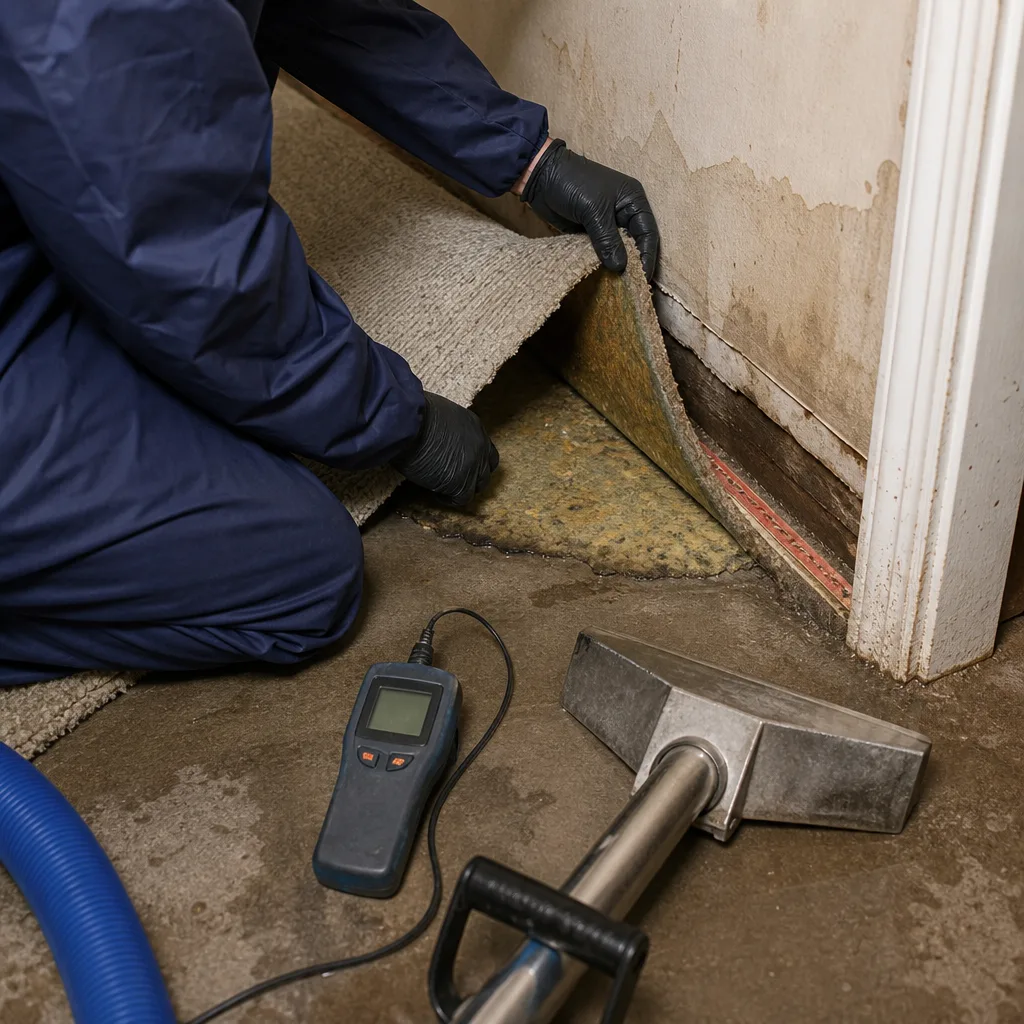
When a storm blows out a window in Echo Park or View Park-Windsor Hills, the clock starts immediately. Glass on the floor, rain coming in, and depending on the neighborhood, a security issue after dark. We board with plywood cut to fit, screwed not nailed, and photographed for your insurance file. Emergency board-up in Los Angeles runs $250-$500 per opening, and we can typically be on-site within 90 minutes.
What happens when you call
- 1
A real person answersNo phone trees - you reach a local pro.
- 2
You get an upfront price rangeHonest numbers before anyone is dispatched.
- 3
A background-checked tech heads outLicensed & insured, dispatched right away.
- 4
You approve before work beginsNothing starts until you say go.
Trusted Brands We Service in Los Angeles
We run Dri-Eaz LGR dehumidifiers, Phoenix axial air movers, and Injectidry drying systems because they’re proven to handle the jobs we see in Los Angeles: deep saturation behind stucco, moisture trapped in lath-and-plaster cavities, and drying cycles complicated by Santa Ana wind fluctuations. We don’t rent equipment and hope it works. We own it, we maintain it, and we calibrate the readings ourselves. For Los Angeles homeowners, that means the drying plan is built around your building’s actual materials, not a generic timeline that under-treats what it can’t see.
Common Storm & Disaster Restoration Problems We See in Los Angeles Homes
- Saturated lath-and-plaster walls that look dry on the surface. The original plaster-over-wood-lath assemblies in 1920s and 1930s buildings wick water far deeper and faster than modern drywall. By the time the wall feels damp to the touch, the interior cavities have been wet for days.
- Ponded water on flat roofs throughout Koreatown and South LA. Flat commercial and residential rooftops in these neighborhoods pond aggressively whenever palm fronds and debris clog the drains, and ponded water eventually breaches membrane seams and parapet flashing. This turns a cleaning issue into an interior flooding issue.
- Santa Ana winds masking residual moisture. Between September and December, Santa Anas drive rapid surface drying that makes walls and ceilings feel dry while hidden pockets behind stucco stay wet. Restorers who rely on standard drying timelines miss it, and the result is a mold callback months later.
- Upper-floor supply line failures cascading through multi-family buildings. In the high-density apartment corridors of Koreatown and Westlake, a single burst pipe on the third floor routes water through four to six units below before anyone reports it. The water sits inside original plaster walls, and what started as a Category 1 loss is already showing mold indicators when we arrive.
Pricing for Storm & Disaster Restoration in Los Angeles, CA
You deserve actual numbers, not a vague “we’ll get back to you.” Here’s what we’re seeing in Los Angeles right now:
- Emergency board-up: $250-$500 per window or door opening
- Roof tarping (residential flat roof): $350-$700 per standard section
- Flood extraction and drying (single unit): $1,800-$3,400
- Storm debris removal: $500-$1,200 depending on volume
- Full storm restoration with structural repair: $6,000-$18,000 and up, scoped in writing before any work begins
Several things move the cost: whether the affected area is subgrade (drying takes longer in drought-compacted Los Angeles clay that resists releasing moisture), whether lath-and-plaster walls are involved, and whether we’re dealing with floodwater versus clean stormwater. We offer a free second opinion on any written estimate, and there’s no trip charge inside our own county. Call (855) 915-0646 and Wade will walk you through what applies to your situation.
We Also Serve Cities Near Los Angeles
Our crews work daily throughout Los Angeles and the surrounding communities, including Koreatown, Echo Park, Silver Lake, and View Park-Windsor Hills. If you’re in one of those neighborhoods and dealing with storm water, damaged roofing, or wind-blown debris, call (855) 915-0646 and tell us what you’re looking at. We’ll be honest about what needs to happen next.
Serving Los Angeles, CA - Our Local Coverage Area
We’re based in the Los Angeles area and know this community well. Use the map below to see our service coverage - if you’re nearby, we can almost certainly help.
FAQs - Storm & Disaster Restoration in Los Angeles
Our clay-heavy soils become nearly hydrophobic after years of drought, so when El Niño or atmospheric-river events arrive, water runs off instead of absorbing. That means flooding appears in low-lying streets and subgrade units that haven’t flooded in decades, and the water causes a different kind of damage than the slow seepage common in coastal cities. Drying timelines run longer because the surrounding soil resists releasing moisture back into the walls. Call (855) 915-0646 and we’ll explain what that means for your specific property.
Santa Anas produce rapid, uneven drying that makes surfaces feel dry while moisture stays trapped behind stucco, drywall, and plaster. We don’t trust how a wall feels; we take moisture readings every single day and log them. A five-minute surface check during or right after a Santa Ana event is how a small water intrusion becomes a mold problem you discover in April. Estimates are free, so call (855) 915-0646 and we’ll test before we quote.
Speed is the whole game, which is why we answer the phone 24/7 and can have a crew on-site within 90 minutes in Koreatown. Original plaster-over-wood-lath walls wick water far faster than modern drywall, so a small leak that began on the top floor can saturate multiple units below in under 24 hours. We open the lath to confirm hidden moisture before we dry, and we document every reading for the landlord and the adjuster. If you’re seeing water in a multi-family building, call (855) 915-0646 immediately.
Don’t go up there. A flat roof with ponding water is unstable in places you can’t see, and the last thing you need during a storm is a fall. Clear debris from the roof drains if you can do it from a safe access point, but leave the roof itself alone. Put buckets under interior leaks, move what you can, and call (855) 915-0646. We’ll tarp the affected section and get the drains cleared properly.
Because the water probably entered through parapet flashing or a clogged drain, traveled along the wall cavity, and sat inside original plaster-over-wood-lath before it ever showed on the interior surface. Those materials wick moisture laterally, so the visible stain might appear feet away from the actual breach. We’ve handled exactly this in a 1940s Spanish Colonial duplex in the 90006 ZIP, where ponded water breached a flat roof and saturated plaster walls in four units. Catching it before mold set in saved the landlord from a full gut. Call (855) 915-0646 and we’ll find where the water actually came in.
Contact Wade’s Restoration of California
If stormwater is moving through your Los Angeles property, don’t wait for the damage to spread. Call (855) 915-0646 and Wade will answer. He’ll tell you what he’s seeing, what he’d do first, and what it’s going to cost, in plain language, before any work starts. Every job comes with a written scope, documented moisture readings, and the 90-Day Done Right Promise in writing. That’s how we’ve worked since 2007, and it’s how we’ll work on your home.
Written by Wade Ferris, Owner at Wade’s Restoration of California.