
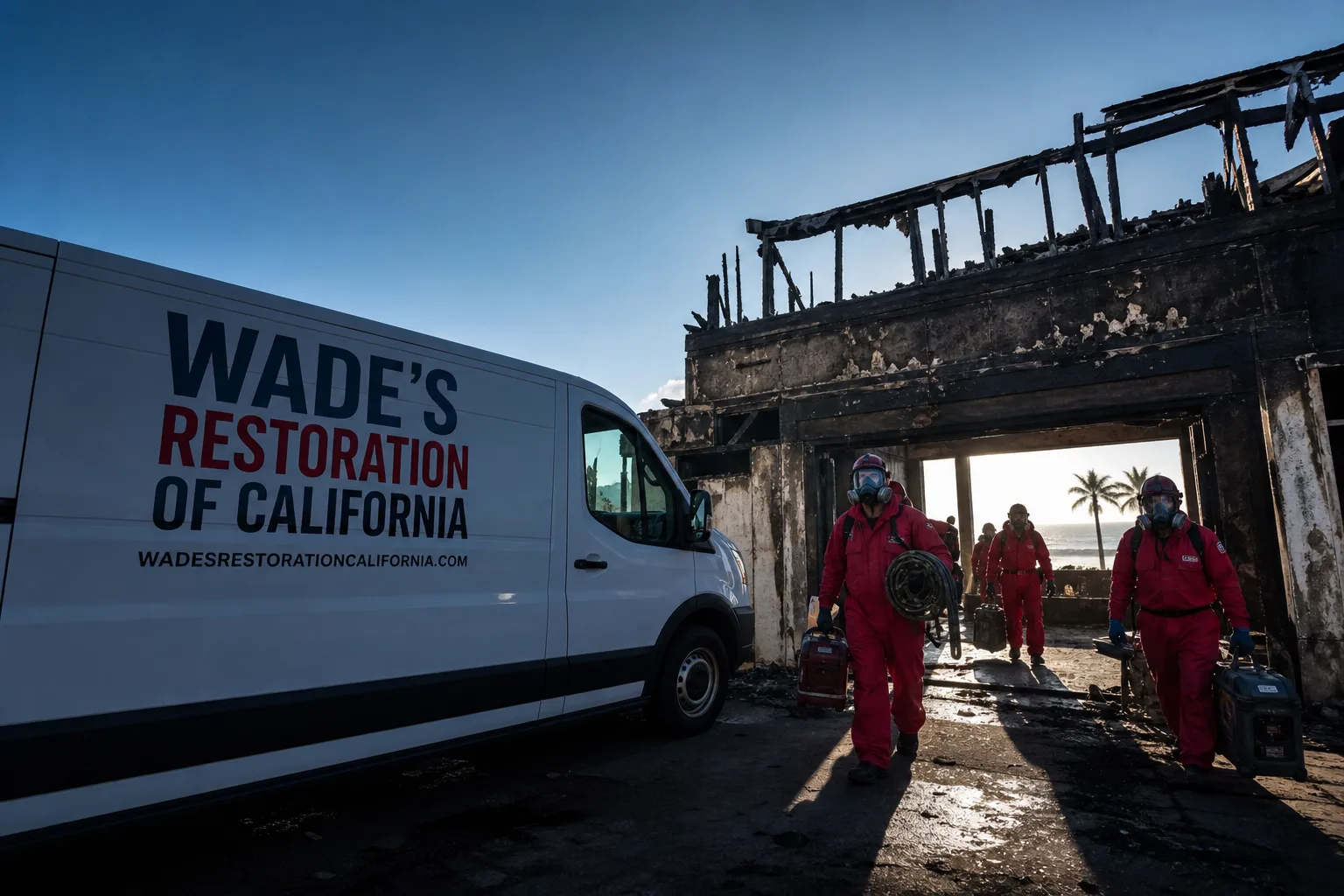
Fast, Reliable Storm & Disaster Restoration Across Fillmore
Storm damage in Fillmore is rarely just water. It’s the intersection of the Thomas Fire burn scar, 1994 Northridge quake cracks, and 1920s through 1960s wood framing. That combination means a storm that would leave a coastal Ventura house untouched can put two feet of mud-charged runoff into a Fillmore crawlspace overnight.
Wade’s Restoration has worked storm and disaster jobs across the Santa Clara River Valley long enough to know what Fillmore homes face when the hills above town shed water. We answer calls live, 24 hours a day, and can have extraction equipment running inside the hour. Wade Ferris answers his own phone. Call (855) 915-0646 and you’ll talk to the owner, not a queue.
Why Wade’s Restoration of California Is Fillmore’s Preferred Storm & Disaster Restoration Company
Wade started this company in 2007 and put his name on the truck. He publishes his address and license number, and he’ll run into you at the hardware store on a Saturday. That’s the accountability that matters when a crew is inside your house after a disaster. Fillmore neighbors have called us for storm damage cleanup, flood restoration, and debris removal, and they know who’s showing up.
The local knowledge matters here because Fillmore’s storm damage profile is different from anywhere else in Ventura County. The Thomas Fire burned the hills above town in December 2017, and since then, every winter storm carries a debris load and runoff volume that coastal cities like Camarillo never see. When we respond to a Fillmore flood, we’re not just moving water, we’re handling silt, char, and mud that came off denuded chaparral slopes. That changes the scope, the equipment, and the drying strategy.
Response time to Fillmore: because our dispatch runs from the Los Angeles office and crews serve Fillmore directly, we can usually have a crew on site within 60 to 90 minutes for emergency extraction and board-up. For storms that hit the 93015 and 93016 zip codes, we stage equipment ahead of major weather events when the forecast calls for heavy rain on burn scar terrain.
Our Storm & Disaster Restoration Services in Fillmore
Storm Damage Cleanup
Storm Damage Cleanup in Fillmore
Wind-driven rain, debris impact, and flash flooding are the usual mix here. Fillmore’s older wood-frame homes with original single-pane windows and aging roofing absorb water fast. Our Storm & Disaster Restoration team starts with a full assessment: where water entered, what’s saturated, what’s salvageable. We document everything with photos for your insurance claim.
Flood Damage Restoration in Fillmore
Flood damage in Fillmore is complicated by what’s in the water. Post-fire runoff carries silt, ash, and debris. Flood damage restoration here means extracting the slurry, then removing contaminated insulation and drywall before mold has 48 hours to set in. We run Dri-Eaz LGR 7000XLi dehumidifiers and XPOWER axial fans, and Wade takes moisture readings every day, handing you the full log when the job wraps.
Emergency Board-Up in Fillmore
When a storm blows out a window or tears off a section of roof, the first job is keeping more water out. Emergency board-up on a Fillmore home near Highway 126 during a winter event has to happen fast because the next rain band is never far behind. We board and tarp, then move directly into the interior assessment so the scope is written and the claim is documented before anything else happens.
Roof Tarping in Fillmore
A tarp done right buys you time. Roof tarping on Fillmore’s older homes with aging shingle or composite roofs requires knowing where water will pond and how the Santa Ana winds off the Topatopa Mountains will catch loose edges. We tarp to hold through 60 mph gusts, not just light rain, because Fillmore’s wind patterns are predictable to anyone who’s worked here long enough.
What happens when you call
- 1
A real person answersNo phone trees - you reach a local pro.
- 2
You get an upfront price rangeHonest numbers before anyone is dispatched.
- 3
A background-checked tech heads outLicensed & insured, dispatched right away.
- 4
You approve before work beginsNothing starts until you say go.
Trusted Brands We Service in Fillmore
Fillmore homeowners don’t insist on the brand name on the equipment, but the equipment quality matters when you’re drying a 1930s plaster wall. We use Dri-Eaz dehumidifiers, XPOWER air movers, and Phoenix units, and our techs carry IICRC certification and RIA affiliation that backs the work. If you’ve had a previous crew use residential-grade fans on commercial water damage, you know the difference. We stock the right gear for Fillmore’s older housing stock, and the equipment arrives when we do.
Common Storm & Disaster Restoration Problems We See in Fillmore Homes
- Post-fire hydrophobic soil shedding runoff. Burned chaparral slopes above Fillmore turn water away instead of absorbing it. Storms that would have soaked in before 2017 now send sheets of runoff into low-lying foundations along the Highway 126 corridor, flooding crawlspaces that stayed dry for decades.
- Hidden Northridge quake gaps. Many Fillmore homes built between the 1920s and 1960s have hairline foundation cracks from the 1994 earthquake. Those gaps let mud-laden storm water and smoke find paths no modern house would. We check stem walls and crawlspace perimeters for exactly this.
- Original plaster walls and soot absorption. Plaster from the 1930s through 1950s drinks smoke and moisture deep. When storm water pushes char and soot into wall cavities months after a wildfire, the drying and odor remediation scope is different, and the drying timeline is longer than a modern drywall house.
- Debris-charged gutters and perimeter drains. Debris flows from denuded slopes overwhelm drains sized for normal rain. Silt, char, and burned vegetation clog gutters and push water into places it never pooled before. Debris removal after a Fillmore storm is not just yard cleanup; it’s part of the water mitigation.
Pricing for Storm & Disaster Restoration in Fillmore, CA
We Also Serve Cities Near Fillmore
Our storm and disaster crews regularly run jobs in Fillmore and the surrounding towns. If you’re in Moorpark, Santa Paula, Simi Valley, or Camarillo, the same live-answer phone line and the same written-scope-before-work policy apply. Storm response across the river valley is coordinated so the closest available crew gets to you fastest.
Serving Fillmore, CA - Our Local Coverage Area
We’re based in the Fillmore area and know this community well. Use the map below to see our service coverage - if you’re nearby, we can almost certainly help.
FAQs - Storm & Disaster Restoration in Fillmore
Why do Fillmore homes that were never touched by Thomas Fire flames still need storm damage restoration?
Because the fire stripped the hillsides above town, so post-fire winters send debris-charged runoff into low-lying neighborhoods along Highway 126 that would have stayed dry before 2017. The flooded crawlspace and the mud intrusion are new problems caused by the burn scar, not the flames. Homes that never saw a single ember still file water and mud damage claims after big storms. Call (855) 915-0646 if you need an assessment.
How does the Northridge earthquake still affect flood damage in old Fillmore houses?
The 1994 earthquake left hairline cracks in foundations and wall assemblies across Fillmore’s 1920s to 1960s wood-frame stock. Those gaps are invisible most of the time, but a debris flow or flash flood finds them, and mud-laden water gets into places a modern house would shed. We inspect stem walls and crawlspace perimeters specifically for quake-era cracking.
What makes debris removal different in Fillmore after a storm?
Fillmore debris after a storm is not just branches and leaves. It’s silt, char, and burned material from the Thomas Fire scar carried down by post-fire runoff. That debris is heavier, harder on gutters and perimeter drains, and more likely to carry contaminants. Debris removal here is part of the water mitigation, not just yard cleanup.
Do you need special equipment to dry a 1930s Fillmore home with original plaster walls?
Yes, you do. Original plaster absorbs moisture differently than modern drywall. We run Dri-Eaz LGR dehumidifiers and XPOWER air movers sized for the wall assembly, not the room volume. Drying a 1930s plaster wall in Fillmore takes more time and more readings, and Wade takes moisture readings every day and hands you the full log at the end.
How soon after a Fillmore flash flood should we call for storm restoration?
Call immediately. Water sitting in a crawlspace or wall cavity starts growing mold within 48 hours, and Fillmore’s warm inland climate speeds that clock. Extraction inside the hour is our standard. Call (855) 915-0646, and you’ll get Wade or a live person on the line, not voicemail.
Call Wade’s Restoration for Storm & Disaster Restoration in Fillmore
When the hills above Fillmore send mud and water into your home, you want the person who answers the phone to be the same person who shows up. That’s how this company has worked since 2007. Wade Ferris answers his own phone at (855) 915-0646, and every water, fire, and mold restoration job comes with the 90-Day Done Right Promise in writing. If it’s not done right, he makes it right. Free estimates, no trip charge inside the county, and a permanent 10% discount for seniors and veterans.
Written by Wade Ferris, Owner at Wade’s Restoration of California, serving Fillmore and the Santa Clara River Valley since 2007.