
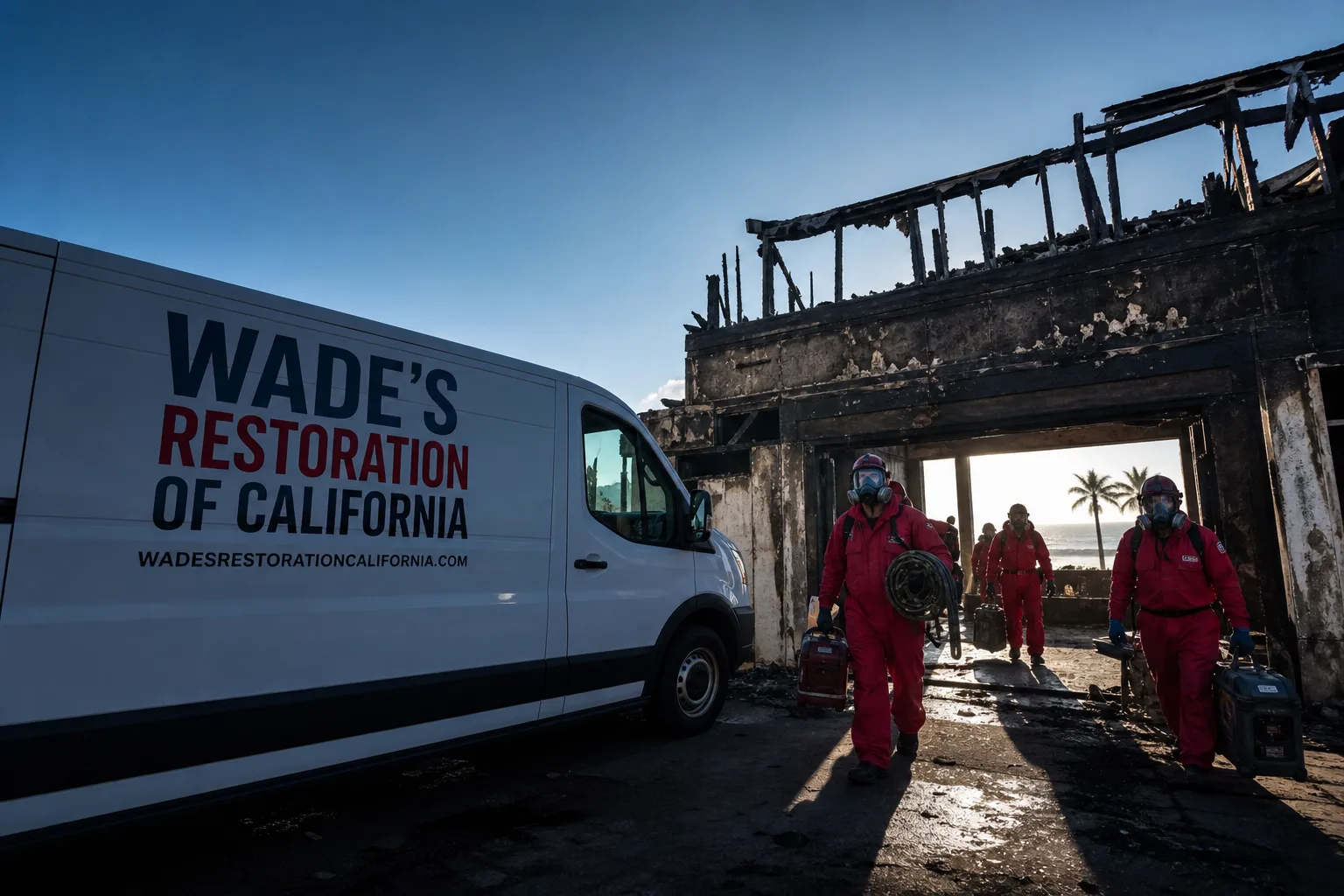
Fast, Reliable Storm & Disaster Restoration Across Moorpark
Storm damage in Moorpark rarely shows up alone. The inland valley geography means Santa Ana winds push embers into attic vents and eave lines during fire season, then the first winter rains send ash-laden debris flows down the chaparral slopes into hillside-adjacent neighborhoods. You need a crew that understands this fire-then-flood rhythm, not a national call center that treats every job like a generic water extraction. That’s exactly what we do. Wade’s Restoration has been answering calls from Moorpark homeowners since 2007, and when you call (855) 915-0646, you get Wade Ferris himself, not a voicemail tree. He’ll be on the road to your street inside the hour, with professional-grade drying equipment and a plan for what actually happened to your home, not a scripted upsell.
Key Takeaways:
- Moorpark’s fire-then-flood cycle means one address often needs smoke remediation and water extraction in the same season.
- Builder-grade stucco from the 1980s and 1990s hides water intrusion behind cladding, making surface inspections miss real damage.
- We do forensic moisture mapping before any dry-out scope is set, so you’re not under-remediated.
- Wade answers his own phone and can have extraction running inside the hour to your Moorpark street.
- Every storm restoration job is backed by our 90-Day Done Right Promise, in writing.
Why Wade’s Restoration of California Is Moorpark’s Preferred Storm & Disaster Restoration Company
Moorpark homeowners have had enough of national chains that quote one price on the phone and another at the door. Wade Ferris built this company in 2007 on the opposite principle: his name, his address, and his license number are published, and he’s going to run into you again at the Vons on Princeton Avenue. That’s the accountability mechanism that matters. When he heads out to a flooded garage in the Peach Hill area or a wind-damaged roof line off Tierra Rejada Road, he’s not sending a stranger who’s never worked this terrain. He’s sending his own crew, background-checked and uniformed, with Dri-Eaz drying systems and Injectidry mats that actually work on Moorpark’s construction types.
Response time to Moorpark is measured in minutes, not days. Wade coordinates dispatch from the brand’s Los Angeles office, but crews serve Moorpark locally, and the 93020 and 93021 zips are familiar ground. We know that the storm drains on the newer tract streets back up faster than the older ones, and that the hillside-backing properties off Peach Hill Road and Country Trail need double passes after a weather event. That local knowledge isn’t something we advertise. It’s just how we work.
Ask anyone on your street. The neighbors who needed emergency board-up before a Santa Ana event, or debris removal after the first heavy rain, they’ll tell you the same thing: Wade shows up, documents everything, and deals with the adjuster directly so you’re not the one relaying information between two sides. That’s the whole job, done right.
Our Storm & Disaster Restoration Services in Moorpark
Storm Damage Cleanup
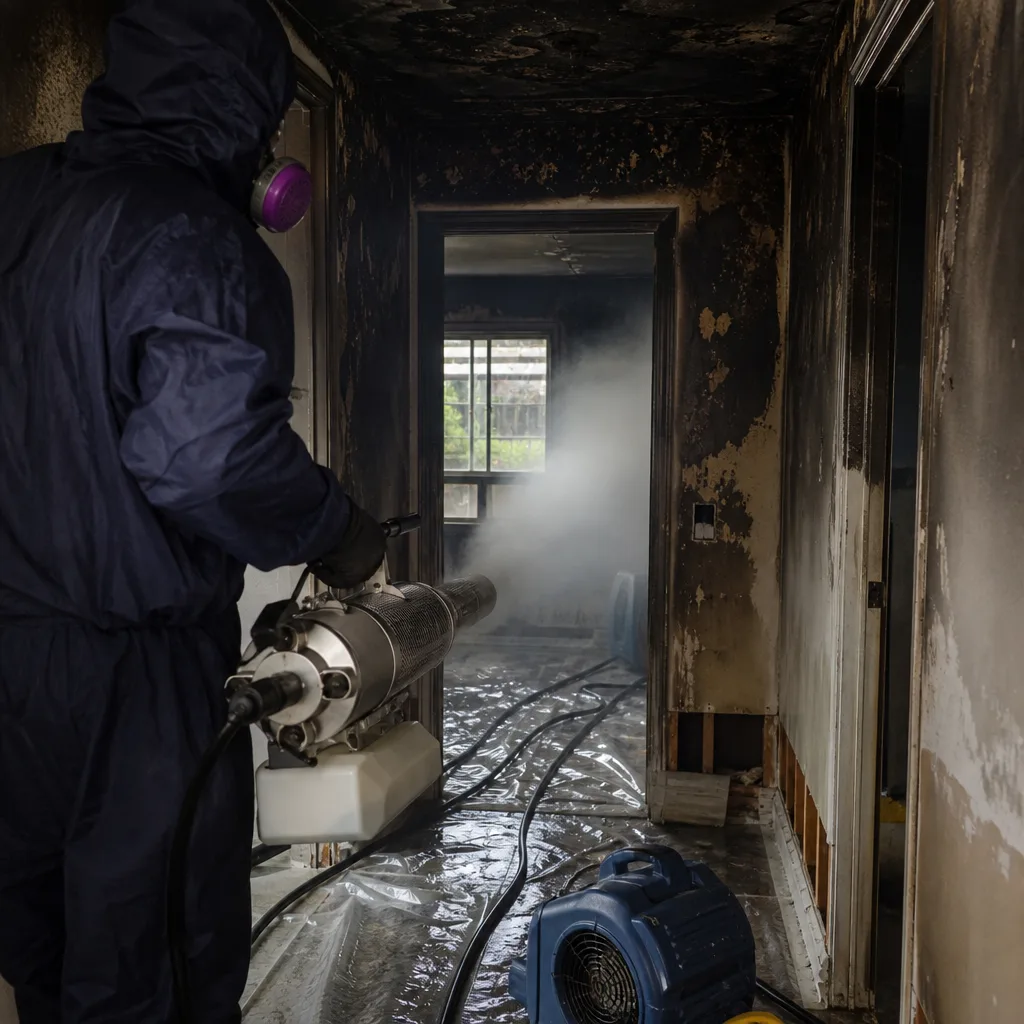
Wind and rain tear through Moorpark’s inland valley with surprising force, and the damage isn’t always obvious from the curb. Broken tile roofs, downed fences along open-space edges, and debris strewn across driveways are the visible problems. The hidden one is ember and soot damage in attics after a Santa Ana event. We inspect attic vents and eave lines on every storm cleanup call in Moorpark, because charred insulation left to wick moisture during the next storm is how a minor chimney fire becomes a major mold remediation. This is the repeat loss pattern we see on hillside-adjacent tracts, and fixing it starts with a thorough inspection, not a quick tarp and invoice. Our Storm & Disaster Restoration team handles the full sequence, from soot removal to structural drying.
Flood Damage Restoration
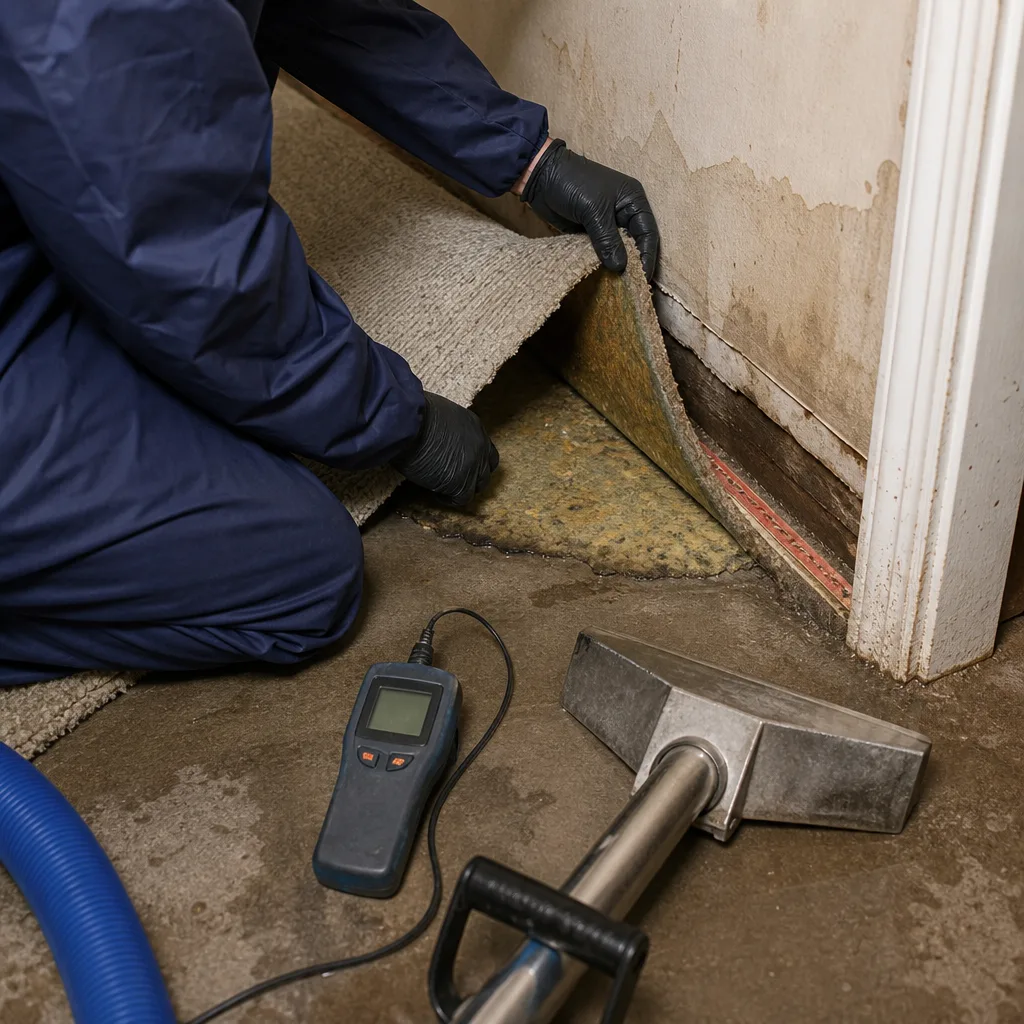
Flood water in Moorpark works differently than in coastal Ventura. The dry summers leave soil hydrophobic, so the first atmospheric river event sends rapid runoff down the chaparral hillsides and straight into garages and crawl spaces on the valley floor. We routinely see flood water in newer tract garages off Los Angeles Avenue when storm drains back up during peak flow. The critical first step is category classification of the water, because runoff from burned slopes carries ash and contaminants that a standard wet-dry vacuum won’t address. Wade’s crew extracts, then sets up drying equipment sized to the actual moisture load, not a one-size-fits-all floor plan. And because Moorpark’s 1980s and 1990s stucco homes often lack modern moisture-barrier detailing, we moisture-map before we scope, so water that’s migrated behind cladding gets found and dried, not painted over.
Emergency Board-Up
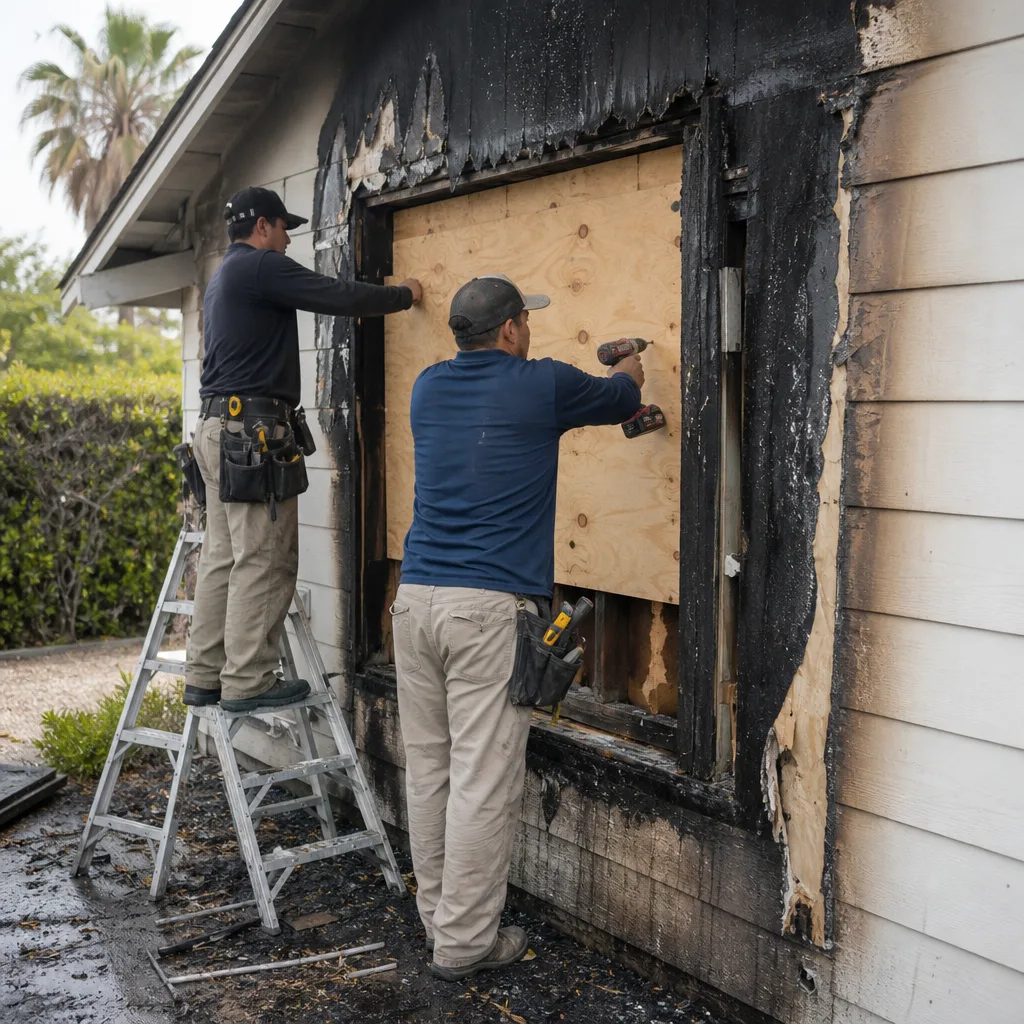
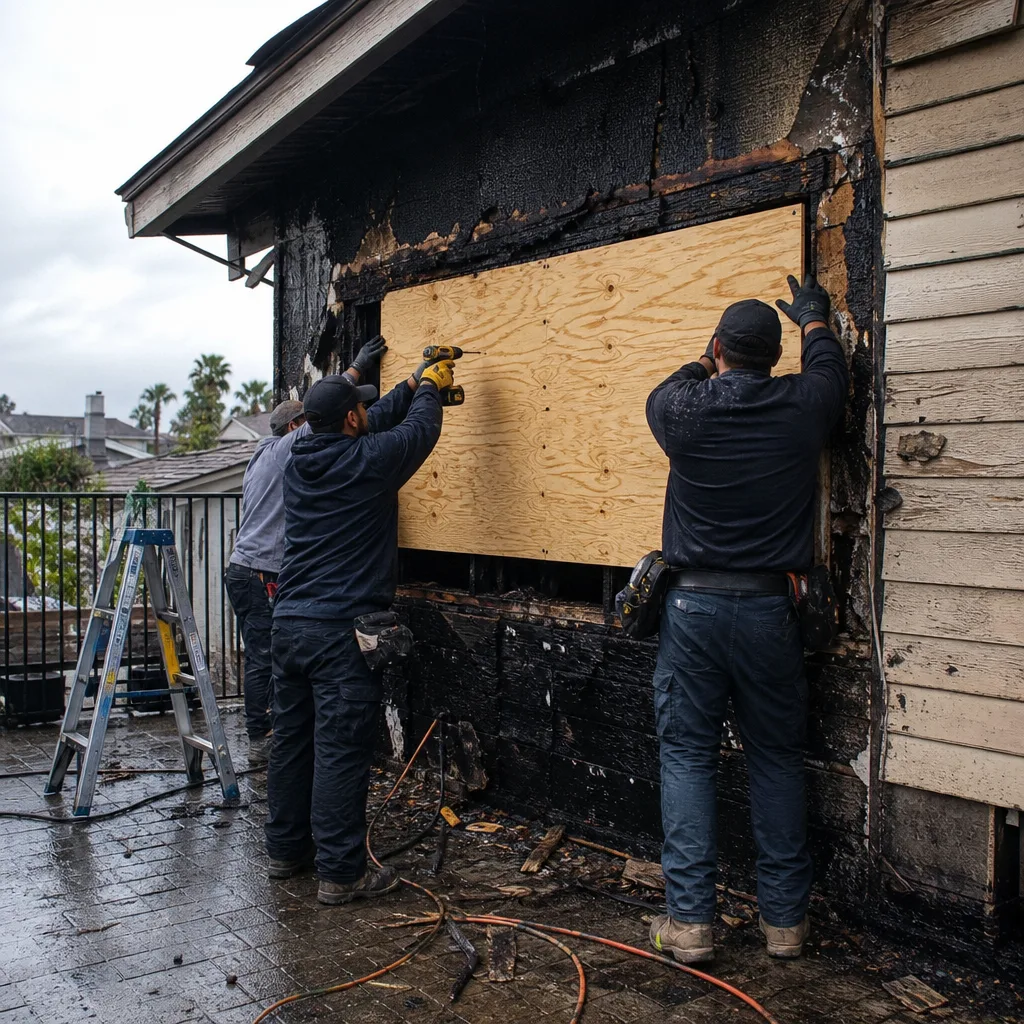
When wind-driven embers are flying toward Moorpark’s residential edges, the difference between a lost attic and a liveable home is a board-up crew that shows up before the next gust. We board windows, secure damaged doors, and, critically, protect attic vents and eave lines from ember intrusion. That’s a detail most emergency crews skip because they’re focused on broken glass and weather exposure. In Moorpark’s inland valley, where Santa Ana winds intensify against the surrounding hills, skipping the vent inspection is how a small fire that never touched the structure becomes a smoke damage claim. We don’t skip it. Emergency board-up is scheduled the moment you call (855) 915-0646, and Wade heads out with plywood, fasteners, and a plan for the specific exposure your street faces.
Roof Tarping
Tile roofs on Moorpark’s 1980s and 1990s tract homes take a beating during high-wind events, and a single dislodged tile can let water into the attic for weeks before the stain shows on the ceiling. We tarp fast, but more importantly, we tarp correctly: overhangs sealed, pitch accounted for, and temporary fastening that actually holds through the next Santa Ana cycle. A failed tarp is worse than no tarp, because it gives a false sense of security while water continues to migrate. We’d rather take an extra hour to secure it properly than be called back twice. And if your adjuster is involved, we document everything with photos and moisture readings you can hand straight to them.
What happens when you call
- 1
A real person answersNo phone trees - you reach a local pro.
- 2
You get an upfront price rangeHonest numbers before anyone is dispatched.
- 3
A background-checked tech heads outLicensed & insured, dispatched right away.
- 4
You approve before work beginsNothing starts until you say go.
Trusted Brands We Service in Moorpark
Moorpark’s housing stock is predominantly 1980s and 1990s master-planned construction, and the equipment needed to dry those stucco-and-frame assemblies properly isn’t available at the local rental yard. Wade’s crew runs professional-grade gear from Dri-Eaz, Phoenix, Injectidry, and XPOWER, because drying a moisture-hidden stucco wall in Moorpark is a different job than drying a sheetrocked condo in Oxnard. We stock the drying mats, thermal hygrometers, and air movers needed for the local construction types, which means we’re not waiting on a supply order while your house stays wet. Our IICRC, RIA, and IFA credentials back the work, and every storm restoration job includes a daily moisture log handed to you at completion. Almost nobody in the trade does that, and it’s the single most useful document your adjuster will see.
Common Storm & Disaster Restoration Problems We See in Moorpark Homes
- Hidden moisture behind 1980s stucco. Moorpark’s tract homes from that era were built before modern moisture-barrier detailing became standard, so water intrusion spreads behind the cladding with no visible staining inside. By the time you see it, the framing is already compromised. We find it with thermal imaging and moisture meters before setting any dry-out scope.
- The fire-then-flood repeat loss. Hillside-adjacent streets like Peach Hill Road get hit twice in the same season: smoke and soot after fire season, then debris flows and flood water after the first big rains. Crews that treat these as two unrelated jobs miss the recurring cycle, and the homeowner pays for that miss later. We flag the address for a return visit the moment we finish the first job.
- Ember damage in attic vents and eave lines. Santa Ana winds drive embers into attic vents on properties near Moorpark’s open-space edges. A quick visual inspection from the ground won’t catch charred insulation or smoldering dust at the eave line. Our storm damage cleanup always includes a full attic inspection on wind-event calls.
- Storm drain backup on newer tract streets. The drainage systems on Moorpark’s newer developments were sized for average rain, not the atmospheric river events we’ve seen in recent years. When the drain backs up, flood water pours into garages on otherwise dry streets. We’ve extracted enough garages off Los Angeles Avenue to know the flow pattern, and we show up with pumps sized for that reality.
After the first heavy rains of winter sent ash-laden debris flows down the hillside behind a 1993-built stucco home on Peach Hill Road, our crew arrived to find water migrating silently behind the builder-grade cladding with no visible staining inside. Using a Dri-Eaz thermal hygrometer and Injectidry drying mats, we traced the moisture path across the garage ceiling into the shared wall, cut the dry-out time by two days, and prevented a hidden mold bloom that a surface-only assessment would have missed. That’s the difference between a crew that knows Moorpark’s construction and a crew that just shows up with fans.
Pricing for Storm & Disaster Restoration in Moorpark, CA
Storm damage cleanup in Moorpark typically runs $400 to $1,200 for debris removal and site securing, depending on how much of the hillside ended up in your yard. Flood damage restoration ranges from $2,800 to $8,500 for a standard garage or crawl space extraction with structural drying, with the higher end applying when moisture has migrated behind stucco and requires mat drying. Emergency board-up runs $350 to $900 for a standard window and door package, with attic vent protection adding $150 to $300. Roof tarping in Moorpark’s market typically falls between $500 and $1,400, factoring in tile roof removal and proper fastening for wind resistance. No charge to come out and assess the situation if you’re within the county, and the estimate is free regardless. Call (855) 915-0646 for an exact quote on your street’s specific damage, and if you’ve got a written estimate from another company, bring it in. We’ll give you a second opinion at no charge.
We Also Serve Cities Near Moorpark
Wade’s Restoration handles storm and disaster restoration throughout Storm & Disaster Restoration in Moorpark and the surrounding communities. Same response commitment, same local knowledge of inland valley wind and flood patterns, same owner on the other end of the phone in Simi Valley, Thousand Oaks, Fillmore, and Camarillo. If you’re on the edge of Moorpark or just across the county line, the worst thing you can do is wait while water keeps moving. Call us and we’ll tell you straight whether we can get to you fast enough to matter.
Serving Moorpark, CA - Our Local Coverage Area
We’re based in the Moorpark area and know this community well. Use the map below to see our service coverage - if you’re nearby, we can almost certainly help.
FAQs - Storm & Disaster Restoration in Moorpark
We can typically have a debris removal crew on your Moorpark property within 2 to 4 hours of your call, often faster if the weather pattern is active. The urgency is real: ash-laden debris left in a garage wicks moisture into drywall and framing as soon as the next rain arrives, compounding a smoke damage problem into a water damage one. Wade answers his phone day or night, and he’ll tell you honestly whether he can get a crew to your street before the front moves in. Call (855) 915-0646 the moment you see debris accumulating.
Yes, and this is the defining pattern of storm work in Moorpark. We flag hillside-adjacent addresses for a follow-up inspection after the first heavy rains, because burned slopes above become debris flow sources that dump into fence lines and garages. Contractors who treat the fall smoke call and the winter flood call as separate jobs miss the recurring cycle, and the homeowner ends up overpaying for surface fixes while hidden damage spreads. Our restoration playbook for this city assumes one address can need soot removal, debris clearing, and hidden moisture remediation in the same season.
Yes, we can, and we do it on nearly every Moorpark flood call. We use thermal imaging and moisture meters to map water that’s moved behind the cladding, because Moorpark’s 1980s and 1990s stucco was frequently installed without modern moisture-barrier detailing. That means water spreads behind the surface where no stain shows for weeks. We find it, map it, and dry it with Injectidry mats placed against the affected wall assemblies, and we hand you the moisture log at the end so you know exactly what was wet and what we did about it.
Yes, and this is standard practice on our Moorpark board-up calls rather than an extra ask. Santa Ana winds drive embers into attic vents and under eave lines on properties near the surrounding open space, and standard board-up that only addresses broken glass leaves that vulnerability wide open. We board windows and doors, then secure attic vents and eave lines with ember-resistant screening. The materials cost a bit more, but a few hundred dollars of prevention is a lot cheaper than smoke remediation through an entire attic.
We extract first, classify the water, then set up drying equipment sized to the actual moisture load in the wall assemblies and the slab. Drain backup water is Category 2 at minimum, often Category 3 if it’s mixed with ash and sediment from the hillsides, so we treat it as contaminated and we clean surfaces accordingly. The critical step in Moorpark’s newer tract homes is moisture-mapping the shared garage wall, because that’s where water migrates when the drain backs up and the slab pitch sends runoff inward. We’ve extracted enough garages off Los Angeles Avenue to know exactly where the water goes, and we don’t guess.
If you’re looking at storm damage in Moorpark and wondering whether it’s bad enough to call, call anyway. Wade will talk you through what he’s hearing, and if he thinks you can handle it with a shop vac and a fan, he’ll tell you that straight. No charge for that. And if you need him on your street, he’ll be there. (855) 915-0646.
Written by Wade Ferris, Owner at Wade’s Restoration of California, serving Moorpark since 2007.