
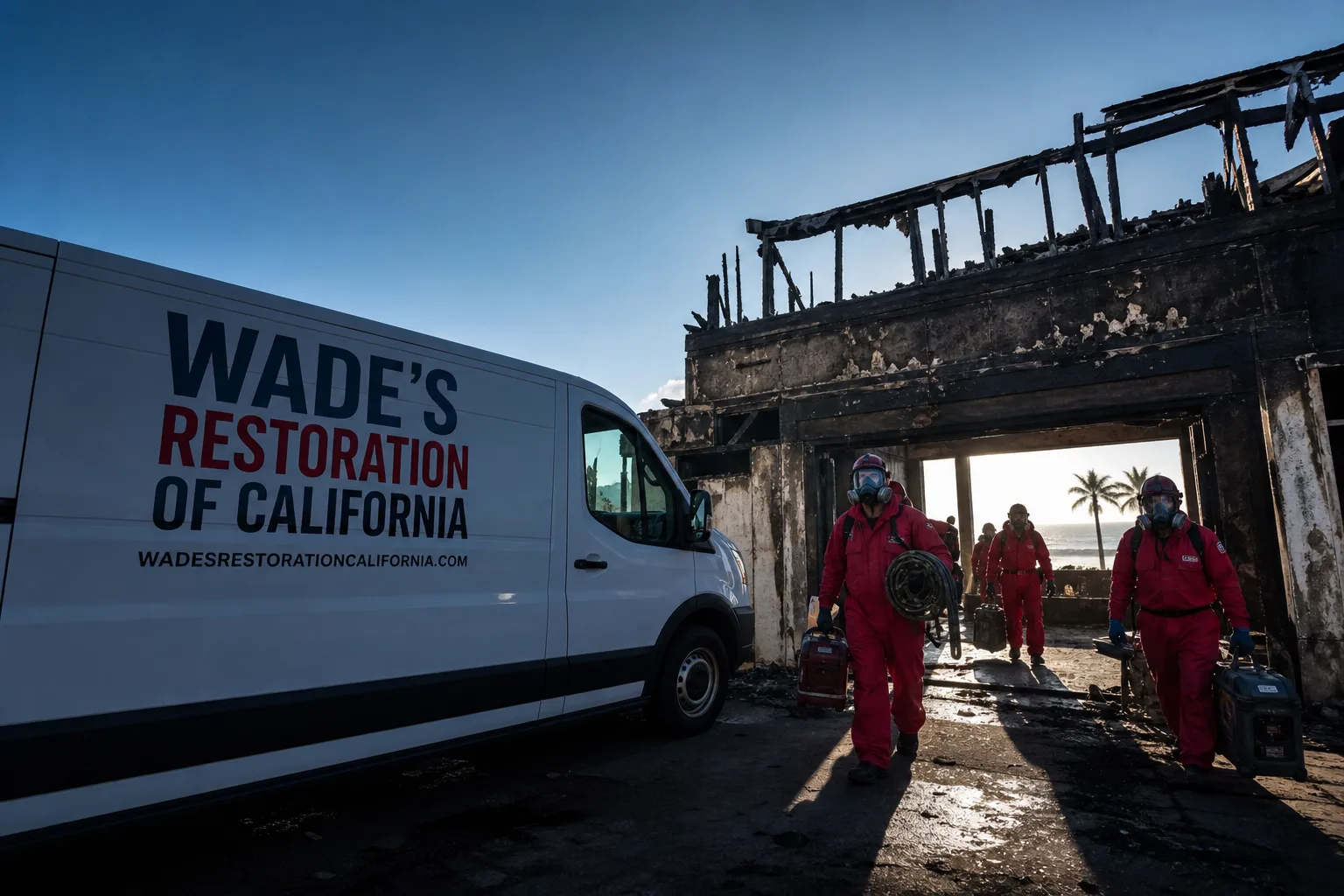
Fast, Reliable Storm & Disaster Restoration Across Culver City
Storm damage in Culver City doesn’t wait for business hours, and neither do we. When wind tears a roof off a Spanish Colonial Revival cottage near Culver Crest or Ballona Creek flash-flood water pushes into a crawl space south of Venice Boulevard, you need someone who knows these blocks and gets there fast. Most storm restoration calls in Culver City run $1,200-$6,500 depending on water volume, structural damage, and how long moisture has been sitting. Call (855) 915-0646 and Wade Ferris answers. He owns the company, he knows Culver City’s housing stock, and he’ll have a crew on the road within the hour.
Why Wade’s Restoration of California Is Culver City’s Preferred Storm & Disaster Restoration Company
Wade Ferris founded Wade’s Restoration in 2007 and never turned it into a call-center operation. When you call, you get Wade or someone he’s trained directly. He publishes his name, address, and license number, and he’s going to run into you again on a Saturday at the farmers market on Main Street. That’s the oldest accountability mechanism there is, and it’s why homeowners in Ladera Heights, Blair Hills, and the 90232 ZIP trust his crew over national outfits that quote one price on the phone and another at the door.
Our Storm & Disaster Restoration team handles everything from emergency board-up to full flood extraction, and we carry IICRC credentials plus RIA and IFA affiliations. The work is backed by the 90-Day Done Right Promise, in writing, on every job. If it’s not done right, Wade comes back. One call brings him back.
Culver City response time matters. We keep crews staged across the LA basin so someone is typically at your door in under 45 minutes when you’re within 90230, 90231, 90232, or 90233. On storm nights, when Ballona Creek rises and the wind rips through the older blocks, we prioritize Culver City addresses because our dispatcher knows the geography: the flood-prone stretch south of Venice Boulevard, the hillside cuts near Blair Hills, the warehouse district along Washington Boulevard. That local knowledge isn’t something a national call center has.
Our Storm & Disaster Restoration Services in Culver City
Storm Damage Cleanup
When a storm blows through Culver City, the damage is rarely just water. Tree limbs through windows, plaster debris, soaked insulation, and silt tracked through living rooms. We clear the debris, document everything for your insurance claim, and get the structure drying. In the 1920s and 1950s Spanish Revival homes that dominate the residential core, we remove baseboards and probe with moisture meters because lath-and-plaster walls hide saturation for weeks before you smell anything.
Flood Damage Restoration
Flash flooding from Ballona Creek overtopping is a real risk in the blocks just south of Venice Boulevard. That water isn’t clean rain. It carries fine silt and urban runoff into crawl spaces, and standard extraction alone leaves behind conductive mud that ruins electrical and HVAC components. We flush, extract, dry, and document every phase with daily moisture readings. At the end of the job, you get the full log. Almost nobody in the trade hands that over.
Emergency Board-Up
A blown-out window or torn-off door leaves your home open to animals, looters, and more rain. We board up within hours, using plywood cut on site and fastened properly. We worked a storm loss off Washington Boulevard near the Hayden Tract where a warehouse window blew out. Our crew boarded the opening, then used Dri-Eaz dehumidifiers and airflow meters to map trapped moisture in the building’s original exposed brick and timber trusses.
Roof Tarping
When a section of roof is gone, the first move is keeping more water out. We tarp fast and secure, using the right anchors for your roof type. On the clay-tile roofs common in Culver City’s Spanish Colonial Revival stock, that means careful placement so the tarp doesn’t slide under wind load. A tarp is temporary. It buys time for a proper repair, and it keeps your insurance adjuster from denying a claim because of “failure to mitigate.”
What happens when you call
- 1
A real person answersNo phone trees - you reach a local pro.
- 2
You get an upfront price rangeHonest numbers before anyone is dispatched.
- 3
A background-checked tech heads outLicensed & insured, dispatched right away.
- 4
You approve before work beginsNothing starts until you say go.
Trusted Brands We Service in Culver City
We use professional-grade equipment from Dri-Eaz, XPOWER, and Injectidry on storm and flood jobs throughout Culver City. Why does brand matter? The marine layer that rolls through most mornings keeps relative humidity elevated year-round, and cheap blowers with no real dehumidification capacity simply don’t get lath-and-plaster dry. XPOWER axial fans and Dri-Eaz low-grain refrigerant dehumidifiers move enough air to actually change the dew point inside a wall cavity. That’s the difference between a dry home and a mold bloom six weeks later. We stock these units on our trucks so a Culver City job doesn’t wait for equipment to be shipped from a warehouse an hour away.
Common Storm & Disaster Restoration Problems We See in Culver City Homes
- Garage doors jammed open during windstorms. The springs and hinges on older Spanish Colonial Revival cottages corrode faster in coastal air. When a strong gust hits a weakened spring, the door tears away from its track and rain pours into a finished room. We see it every storm season.
- Hidden moisture in lath-and-plaster walls. These walls wick and hold water far longer than drywall. Storm intrusion that looks like a small stain on the surface can mean saturated plaster, wet framing, and mold behind the wall. If the baseboards stay on and the crew just sets a fan, the job fails.
- Silt-contaminated crawl spaces. Ballona Creek floodwater isn’t clean. It leaves conductive mud that corrodes wiring and ruins HVAC blowers even after the standing water is pumped. Flushing the crawl space matters as much as the extraction itself.
- Hillside homes with minimal subfloor ventilation. The older blocks near Culver Crest and Blair Hills sit on hillside cuts where enclosed crawl spaces trap moisture for months. A slow drain leak or storm-driven runoff goes unnoticed until the under-stair cavity is full of mold. We price in an exploratory phase on these homes because we know what’s down there.
Pricing for Storm & Disaster Restoration in Culver City, CA
We Also Serve Cities Near Culver City
When storm damage hits Culver City, we’re also on the road to Ladera Heights, Century City, Venice, and Beverly Hills. The same crews, the same equipment, and the same 90-Day Done Right Promise apply. If you’re in a neighboring city and need Storm & Disaster Restoration help, call the same number and you’ll get the same Wade who answers for Culver City.
Serving Culver City, CA - Our Local Coverage Area
We’re based in the Culver City area and know this community well. Use the map below to see our service coverage - if you’re nearby, we can almost certainly help.
FAQs - Storm & Disaster Restoration in Culver City
How does the coastal fog belt near Culver City change storm damage restoration compared to inland LA?
The marine layer keeps relative humidity elevated most mornings, which means drying takes 20-30% longer than the timelines calibrated for inland LA microclimates like the San Gabriel Valley. Standard equipment and standard timelines fail here. Our crews run extra dehumidification and hold drying for additional days because lath-and-plaster walls release moisture slowly in humid air. We found this consistently in Culver City homes, not by reading a chart but by pulling daily moisture readings and watching the numbers. Call (855) 915-0646 if you’re not sure your current drying plan is working.
What should I do if Ballona Creek floodwater enters my crawl space on a hillside home near Blair Hills?
Get the water out and the silt flushed before it dries. Conductive mud from floodwater corrodes wiring, shorts HVAC components, and leaves a residue that keeps moisture cycling through the space for months. First step: call us and get extraction running. Second step: document everything with photos and moisture readings for your adjuster. On Blair Hills hillside homes, the enclosed crawl space traps that moisture, so the longer it sits, the larger the mold problem becomes. Wade will walk the space with you and show you what he sees.
Why do garage doors tear away from their tracks so often during windstorms in Culver City’s 1920s-1950s neighborhoods?
The coastal salt air corrodes garage-door springs, hinges, and tracks years faster than inland. By the time a major windstorm hits, the hardware is already compromised. A strong gust against a weakened spring snaps it, and the door twists off its track. We recommend storm season inspections for any older garage door in 90230 through 90233. If the door is already damaged, we board and brace it, then write up what needs to be replaced. The fix usually involves coated or galvanized springs and stainless hardware.
What does an exploratory phase look like on a storm loss in a Spanish Colonial Revival home near Culver Crest?
We pull baseboards, probe wall cavities with moisture meters, and in some cases cut small inspection ports to see what’s happening behind the plaster. On hillside cuts near Culver Crest, the enclosed subfloor spaces hold moisture for months, so we check those too. The exploratory phase runs $200-$500 and is the difference between a job that’s actually done and a job that looks done until mold blooms in eight weeks. You get every reading in writing, and you’ll see the numbers yourself.
How soon after a flash flood on the streets south of Venice Boulevard can I reopen my business?
For a commercial space, plan on 3-7 days for extraction, drying, and sanitizing before you can safely reopen, depending on how much silt got in and how saturated the building materials are. Washington Boulevard creative-office conversions with exposed brick and timber take longer because those materials hold water and the marine layer slows drying. We can run dehumidifiers around the clock and give you a written drying plan with target dates. Call (855) 915-0646 and Wade will give you a straight answer, not a promise that ignores what Culver City’s humidity does to drying times.
Call Wade’s Restoration of California for Storm & Disaster Restoration in Culver City
If a storm has hit your home in Culver City, don’t wait. Water is still moving through your walls, and every hour matters. Call (855) 915-0646 now. Wade answers his own phone, and he’ll have a crew headed to your street within the hour. Free estimates, a written 90-Day Done Right Promise on every job, and a real person who lives with the same coastal air you do. If you’re anywhere in Culver City from Culver Crest to Blair Hills to the flats near Venice Boulevard, we’re close. Call now.
Written by Wade Ferris, Owner at Wade’s Restoration of California, serving Culver City with Storm & Disaster Restoration since 2007.