
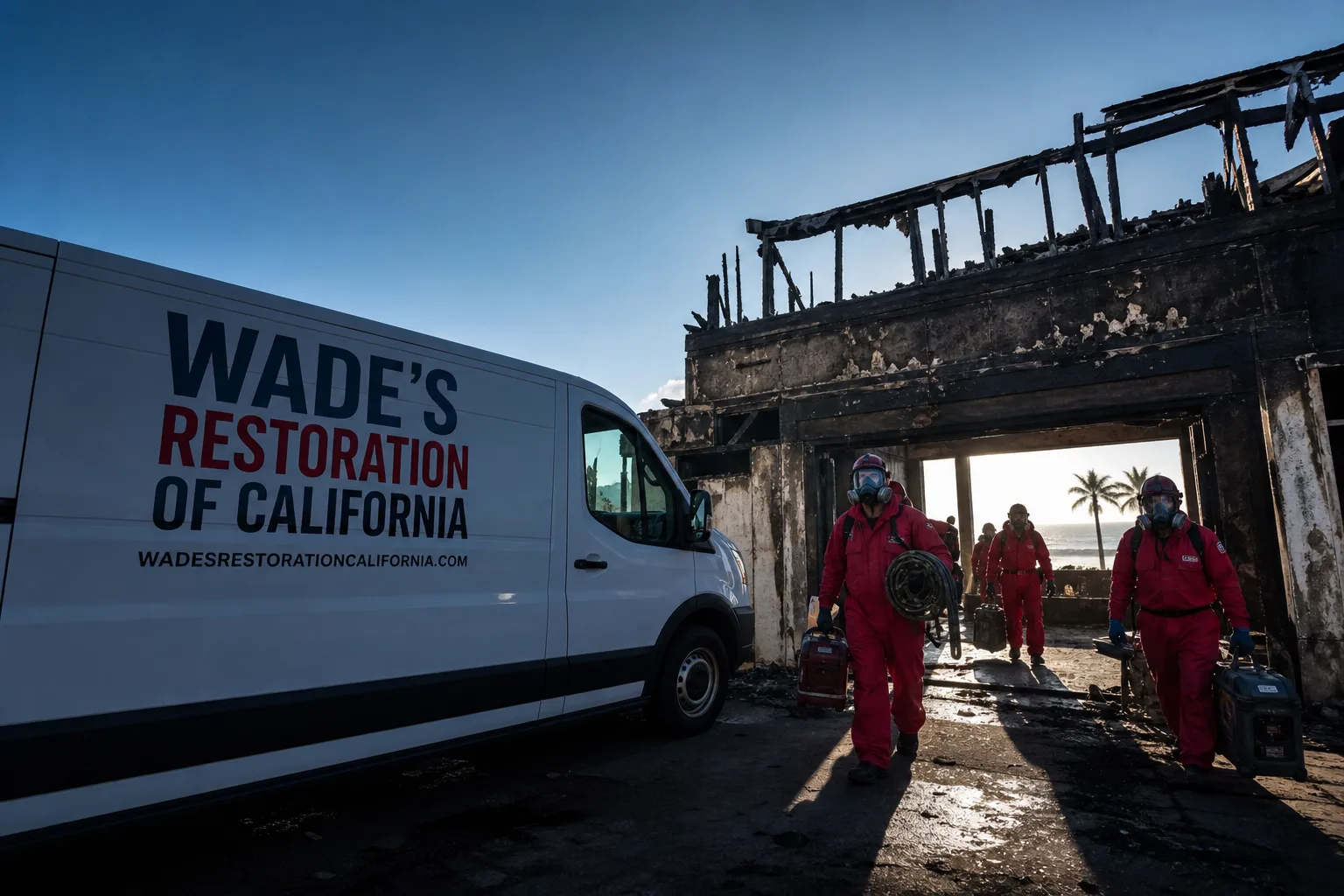
Fast, Reliable Storm & Disaster Restoration Across Country Club
Storm damage in Country Club doesn’t announce itself politely. A wind-thrashed roof, a saturated crawl space after three days of Delta rain, or an AC condensate line that finally gives out during a 105°F Stockton afternoon, soaking the blown-in insulation above your original plaster ceiling. When that happens, you need someone who knows what Country Club’s older homes do under pressure, not a call center that treats your address like a pin on a map. Wade’s Restoration has been running storm and flood response through these streets since 2007. Call (855) 915-0646 and Wade or his crew heads out, usually inside the hour.
Why Wade’s Restoration of California Is Country Club’s Preferred Storm & Disaster Restoration Company
Wade Ferris put his name on the truck in 2007 and never took it off. That matters in a neighborhood like Country Club, where half the houses predate 1960 and the people who live in them have seen enough contractor turnover to be skeptical of anyone with a laminated badge and a national logo. Ask anyone on your street about the restoration company that actually answered the phone at 2 a.m., and you’ll hear his name. Wade answers his own phone. Not a voicemail tree, not an answering service. When a storm puts water where it shouldn’t be, he’s the one who picks up and says he’ll be there himself.
Country Club sits in Stockton’s low-lying floodplain, and the homes here don’t shed water the way newer subdivisions do. Our Storm & Disaster Restoration team has spent nearly two decades pulling water out of 1920s Craftsman bungalows and early ranch-style houses with original lath-and-plaster walls, galvanized plumbing, and crawl spaces that never really dry out. We know where water hides in these houses, and we know what happens when it’s left alone.
Every job gets the 90-Day Done Right Promise in writing. If it’s not done right, Wade comes back and makes it right. That’s not a slogan on a coffee mug. It’s stamped on every storm restoration contract we write in Country Club. Add in background-checked, uniformed technicians running Dri-Eaz, Phoenix, and Injectidry equipment, plus IICRC certification and RIA affiliation, and you get a crew that treats your 1930s plaster walls like they matter. Because they do.
Our Storm & Disaster Restoration Services in Country Club
Flood Damage Restoration
Flood damage in Country Club comes from three places: storm runoff overwhelming yards and foundations, failed galvanized supply lines inside original walls, and Delta-driven groundwater that seeps into crawl spaces and never leaves. We extract standing water, set up drying equipment sized to the affected area, and take moisture readings every single day until the job’s done. Then Wade hands you the full moisture log at the end, every reading from day one. Almost nobody in the trade does that. For flood damage in Country Club, structural drying typically runs $2,800 to $6,500 depending on square footage and how long the water sat before we arrived.
Storm Damage Cleanup
Wind, rain, and whatever the Delta throws at us leaves debris where it doesn’t belong, and it leaves saturated drywall, plaster, and insulation where you can’t always see it. Storm damage cleanup in Country Club means removing wet materials, sanitizing what can be saved, and setting drying equipment to stop mold before it colonizes behind original plaster. We scope the job, write up the scope before work starts, and you sign off on it. No mystery line items. Storm cleanup jobs around Country Club usually fall between $1,800 and $4,200 for typical single-room water intrusion.
Emergency Board-Up
A broken window or a storm-ripped section of siding leaves your Country Club home open to rain, vandals, and the raccoons that wander through from the nearby sloughs and golf course edges. We board up damaged openings with plywood and secure the structure so water stays out and your house stays yours until permanent repairs happen. Board-up service for a typical window or small opening runs $350 to $800, including materials and the trip out to your home.
Roof Tarping
Roof tarping after a storm is more urgent for an older Country Club home with plaster ceilings than it is for a drywalled house. Water coming through a damaged roof soaks the original lath-and-plaster from above, and the plaster masks the moisture for weeks. By the time a stain appears on your ceiling, the structural wood above is already carrying damage. We tarp damaged roofs fast, proper tie-downs included, and make sure water can’t keep getting in while you deal with your adjuster. Roof tarping in Country Club runs $500 to $1,400 depending on roof pitch, accessibility, and squared footage of the damaged area.
What happens when you call
- 1
A real person answersNo phone trees - you reach a local pro.
- 2
You get an upfront price rangeHonest numbers before anyone is dispatched.
- 3
A background-checked tech heads outLicensed & insured, dispatched right away.
- 4
You approve before work beginsNothing starts until you say go.
Trusted Brands We Service in Country Club
Country Club’s older homes were built before standardized building codes, which means every storm repair is a little different. We work on original windows, cedar siding, vintage doors, and plaster walls in Craftsman bungalows from the 1920s through the 1950s. Our equipment runs Dri-Eaz, Phoenix, Injectidry, and XPOWER, and our techs carry IICRC and RIA credentials. If your home has a specific brand of window or door hardware that took storm damage, we can source the right parts locally and usually have the job scoped and scheduled within days, not weeks. And if you’re not sure whether the damage needs fixing now or can wait, Wade does free second opinions on any written estimate. No charge for that.
Common Storm & Disaster Restoration Problems We See in Country Club Homes
- Original galvanized plumbing pinhole leaks. Pre-1960s Country Club bungalows often still have galvanized supply lines. They corrode from the inside out, pinhole-leak behind original lath-and-plaster walls, and saturate wall cavities for weeks before any surface staining appears. By then, studs are carrying moisture and mold is colonizing the backside of the plaster.
- AC condensate overflow during Stockton’s summer heat. Valley-floor heat closes in on 100°F regularly in summer. Condensate lines fail, overflow pan drains clog, and water soaks the blown-in insulation resting against original plaster ceilings. The plaster hides it. The first sign is often a sag or a tea-colored stain weeks after the failure, and the structural damage behind it is worse than what a drywall ceiling would have shown you.
- Delta humidity and winter tule fog saturating crawl spaces. Country Club’s humidity doesn’t take a season off. Tule fog in winter and Delta moisture year-round condense on original subflooring and joists in unvented crawl spaces. Mold feeds on the moisture, traps it against old-growth sill plates, and the problem compounds quietly. This is a perennial issue here, not a seasonal one.
- Storm runoff against 1920s-1950s foundations. Many Country Club homes sit on original perimeter foundations without modern drainage. Heavy rain sends water against foundation walls, and without proper grading or French drains, that water finds its way into the crawl space or up through the slab. Water damage here spreads laterally through original plaster and lathe far faster than in modern drywall construction.
Pricing for Storm & Disaster Restoration in Country Club, CA
We Also Serve Cities Near Country Club
Country Club sits close to Lodi, Discovery Bay, Mountain House, and Tracy, and we run storm and flood response through all of them. If you’re in one of those communities and dealing with water where it shouldn’t be, the same written scope, same moisture logs, and same 90-Day Done Right Promise apply. More about our Storm & Disaster Restoration in Country Club service area is right here, or call (855) 915-0646 and Wade picks up.
Serving Country Club, CA - Our Local Coverage Area
We’re based in the Country Club area and know this community well. Use the map below to see our service coverage - if you’re nearby, we can almost certainly help.
FAQs - Storm & Disaster Restoration in Country Club
Why does water damage spread faster behind original lath-and-plaster walls in Country Club bungalows than in modern drywall?
Lath-and-plaster walls hide moisture differently than drywall. Drywall wicks and stains within days, but original plaster, especially the three-coat stuff in 1920s through 1950s Country Club homes, can hold water against the wood lath and studs for weeks before any surface sign appears. The water spreads laterally through the cavity, saturating studs and sill plates, and by the time you see a stain or sag, the structural damage and mold load are already ahead of what a drywalled house would have revealed. Call (855) 915-0646 and we’ll scope it with a moisture meter, not a guess.
How do winter tule fog and Delta humidity make crawl space mold a year-round issue in Country Club?
Tule fog rolls through Stockton’s valley floor all winter, and the Delta’s humidity never really leaves. In an unvented or poorly vented crawl space under an original Country Club bungalow, that moisture condenses on subflooring and joists. Mold feeds on it, traps it against old-growth wood, and the cycle continues even when the rest of the house feels dry. We treat crawl space mold as a chronic condition in Country Club, not a one-time storm event, and we set drying equipment accordingly. Need a crawl space assessed? Call (855) 915-0646 for a free estimate.
What should I do if my AC condensate line overflows into my Country Club bungalow’s ceiling?
Turn off the AC at the thermostat, then call us. The overflow is soaking the blown-in insulation resting against your original plaster ceiling, and the plaster will hide the damage for weeks before you see a sag or stain. The faster we get drying equipment in place, the less structural damage accumulates behind the plaster. We’ll set Dri-Eaz dehumidifiers and Injectidry injection-drying mats where the cavity is wet, and we’ll scope the studs before recommending any repair work. Call (855) 915-0646 and we’ll be there within the hour.
Can an old galvanized pipe leak in my Country Club home be hidden until it becomes a structural problem?
Yes, and it’s one of the most common calls we get in Country Club. Galvanized supply lines from the 1920s through the 1950s corrode from the inside, develop pinhole leaks, and drip behind original lath-and-plaster walls where nobody can see or hear them. The wall cavity saturates, the wood lath swells, and mold colonizes the backside of the plaster. By the time a ceiling stain or a musty smell appears, the studs and sill plates have been wet for weeks. Call (855) 915-0646 if you suspect one. We’ll cut a small access panel, inspect with a borescope, and show you what we find before any work is scoped.
Why is roof tarping after a storm more urgent for an older Country Club home with plaster ceilings?
Because water coming through a damaged roof soaks the lath-and-plaster from above, and the plaster masks the moisture for weeks. In a drywalled home, a ceiling stain shows up in days and the leak gets fixed while the damage is still manageable. In a Country Club bungalow with original plaster, the first sign might be a sag or a tea stain a month after the storm, and the structural wood above is already carrying mold and rot. Tarp fast, stop the water, then deal with the repair. We tarp roofs in Country Club for $500 to $1,400, and we’ll coordinate with your adjuster on the repair. Call (855) 915-0646.
Call Wade’s Restoration for Storm & Disaster Restoration in Country Club, CA
If you’ve got water where it shouldn’t be, or you’re looking at a storm-damaged roof and wondering what’s hiding behind the plaster, call (855) 915-0646. Wade answers. He’ll ask what’s going on, tell you what he thinks over the phone, and then he’ll head out with his crew. In Country Club, you’ll get a live person, a written scope before work starts, daily moisture readings, and a 90-Day Done Right Promise in writing. That’s how we’ve worked since 2007, and that’s why your neighbors call us first.
Written by Wade Ferris, Owner at Wade’s Restoration of California. Founded in 2007, locally owned and owner-operated, with a published address and license number.