
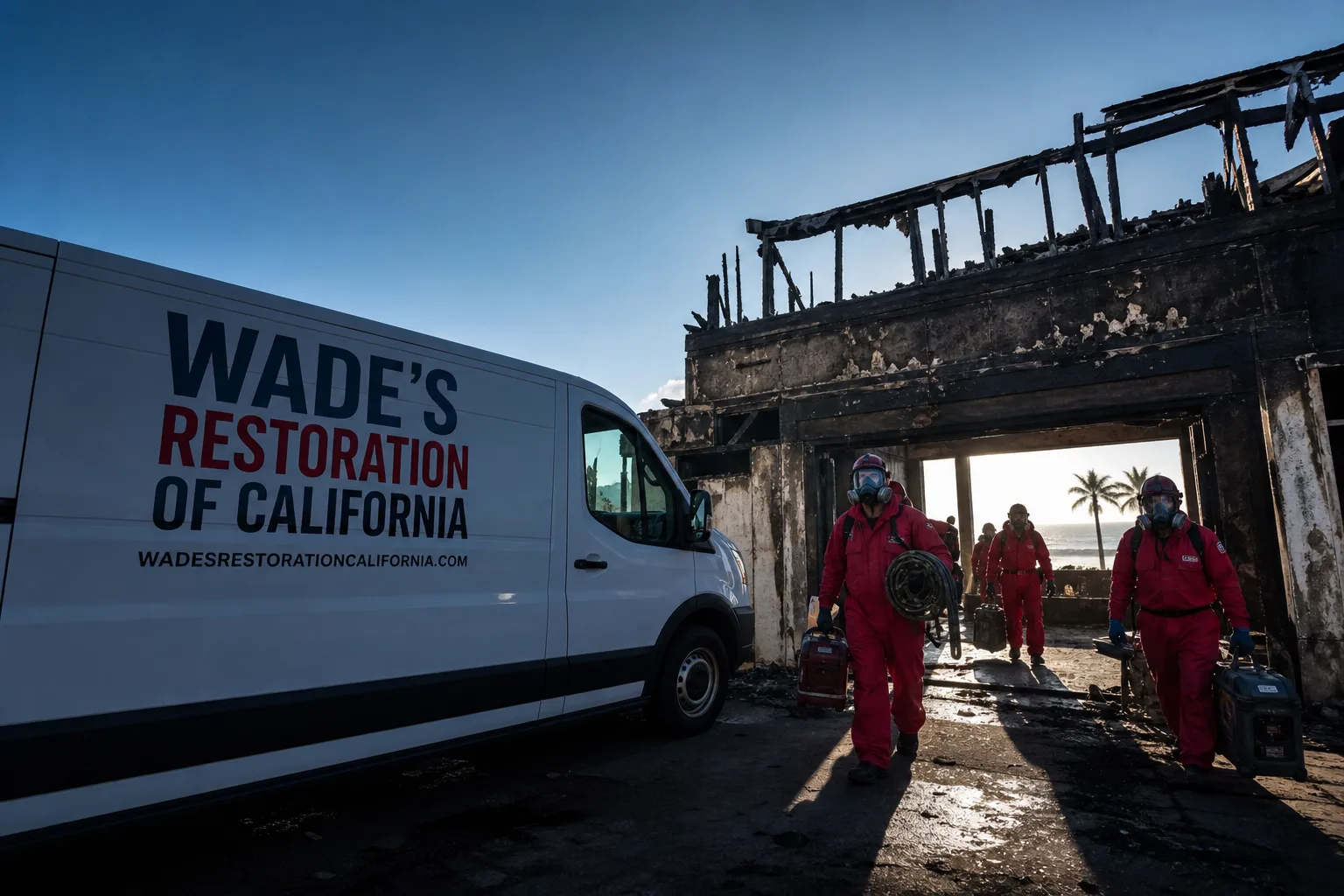
Fast, Reliable Storm & Disaster Restoration Across Mountain House
Storm damage in Mountain House rarely looks like a missing roof or a blown-out window. More often, it’s water seeping through slab cracks that opened during summer’s 100°F heat, then widening through winter’s adobe clay expansion. That’s the pattern we know well here. If you’re staring at a wet carpet edge, a bubbling baseboard, or a musty smell after heavy rain, call (855) 915-0646. Wade Ferris answers his own phone, and he’ll have someone on the road to your Mountain House neighborhood fast.
We’ve workedStorm & Disaster Restoration calls in Mountain House long enough to know that the homes here fail differently than older Central Valley stock. Post-2000 two-story stucco tract homes on concrete slabs behave a certain way when the ground under them won’t sit still. We’ll explain what that means for your home, what it costs to fix, and who’s going to show up.
Key Takeaways
- Storm damage in Mountain House usually means foundation and stucco water intrusion, not roof failures
- Flood damage restoration here typically runs $1,800-$5,600 depending on square footage and how far water traveled
- Emergency board-up and roof tarping can be done within hours, not days
- Wade Ferris answers his own phone at (855) 915-0646, 24/7
- Every job gets a written scope before work starts. No surprises at the door.
Why Wade’s Restoration of California Is Mountain House’s Preferred Storm & Disaster Restoration Company
Mountain House is a small community. You run into the same people at the Mountain House Market, at Central Park on Saturday mornings, at the school drop-off line. That’s how we like it. Wade Ferris puts his own name on the truck, publishes his address, and picks up the phone himself. That’s the oldest accountability mechanism there is, and it works.
We’ve been doing restoration work since 2007, and the Mountain House calls we take tend to share a story: a home that’s barely 20 years old, but water found a way in through the slab or the stucco. National franchises send a crew you’ll never see again. Wade sends himself or a background-checked technician he’d trust in his own house. He takes moisture readings every single day and hands you the full log when the job’s done. Most companies won’t do that.
When a storm hits Mountain House, response time matters. Water moving through wall cavities doesn’t wait for a voicemail. The live person who answers at (855) 915-0646 can have extraction equipment running inside the hour. Not a call center. A person.
Our Storm & Disaster Restoration Services in Mountain House
Flood Damage Restoration
Flooding in Mountain House doesn’t always come from an overflowing creek. The western edge of the San Joaquin Valley near the Delta gets heavy rain years, and the seasonally elevated water table pushes moisture through slab cracks that opened during summer shrinkage. When that happens, you need extraction, containment, and structural drying done right, not a guy with a shop vac. We use Dri-Eaz and Phoenix equipment, thermal imaging to map exactly where water traveled, and daily moisture logs you keep. A typical flood damage restoration in Mountain House on a 2,000-square-foot single-story section runs $1,800-$4,200. Two-story involvement or water in wall cavities pushes it to $3,500-$5,600.
Storm Damage Cleanup
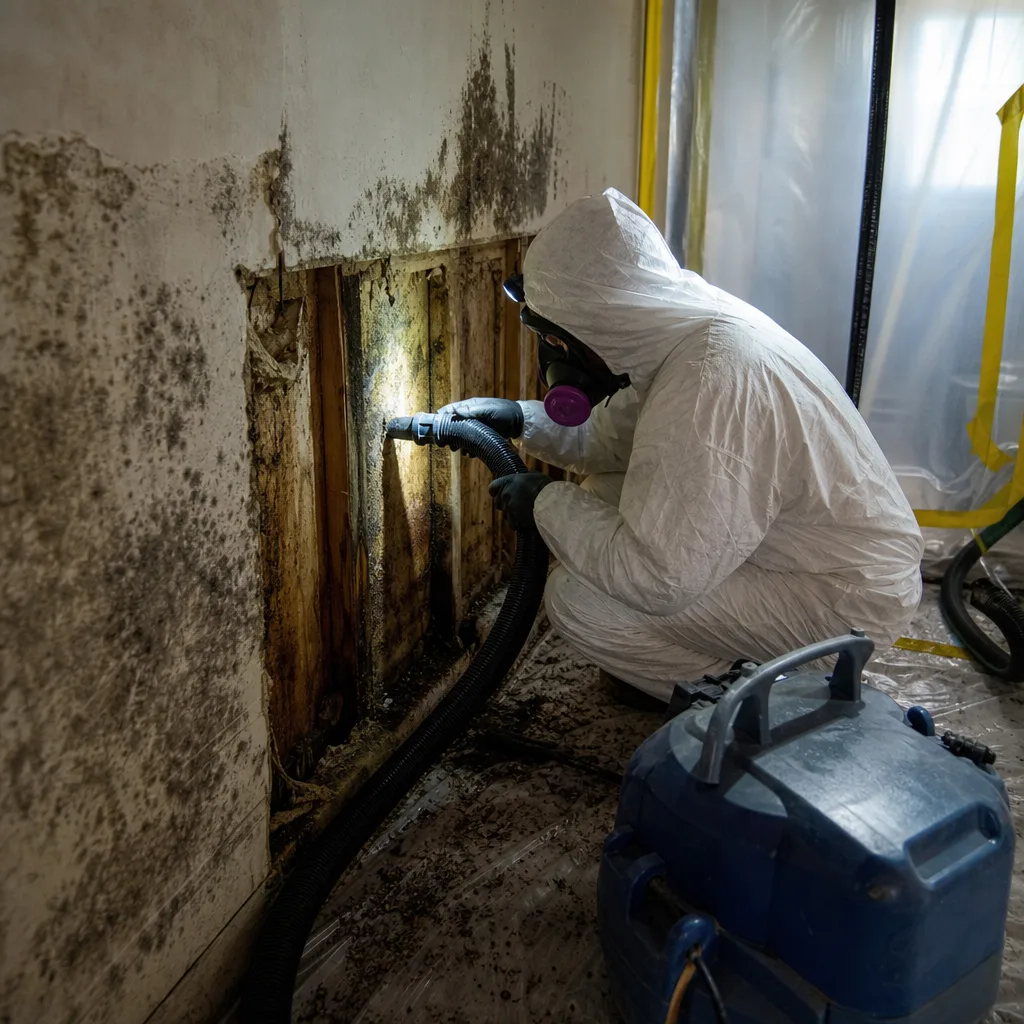
After a wind and rain event moves through the Delta corridor, Mountain House yards collect debris, stormwater pools at slab edges, and hidden moisture starts showing up as baseboard swelling or a musty closet. Storm damage cleanup here means removing debris that’s holding water against your foundation, detecting hidden moisture behind stucco, and pulling wet materials before mold gets a foothold. In Mountain House’s clay soil, yard debris isn’t just a mess. It’s a dam that channels water toward your slab. We clear it, map the moisture, and dry it out. Storm damage cleanup typically runs $900-$2,800 depending on the extent of debris and drying required.
Emergency Board-Up
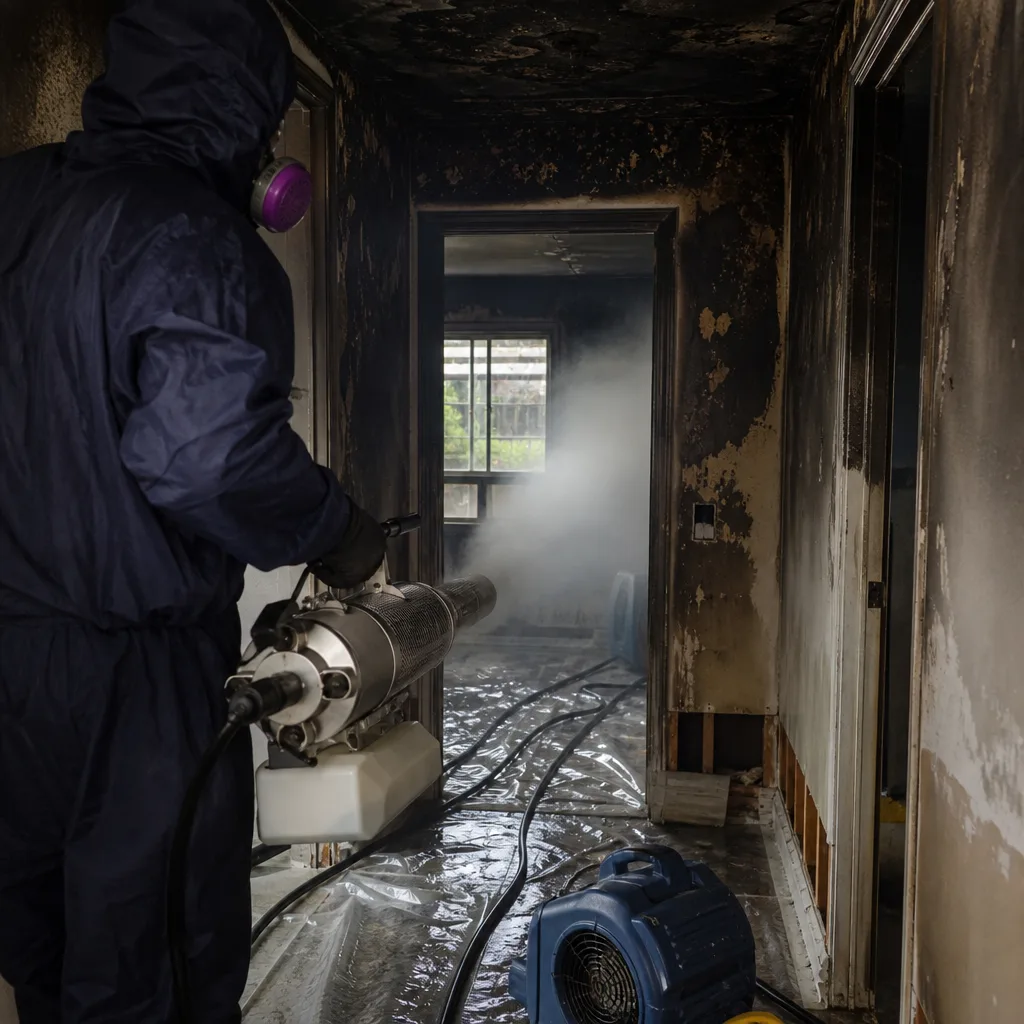
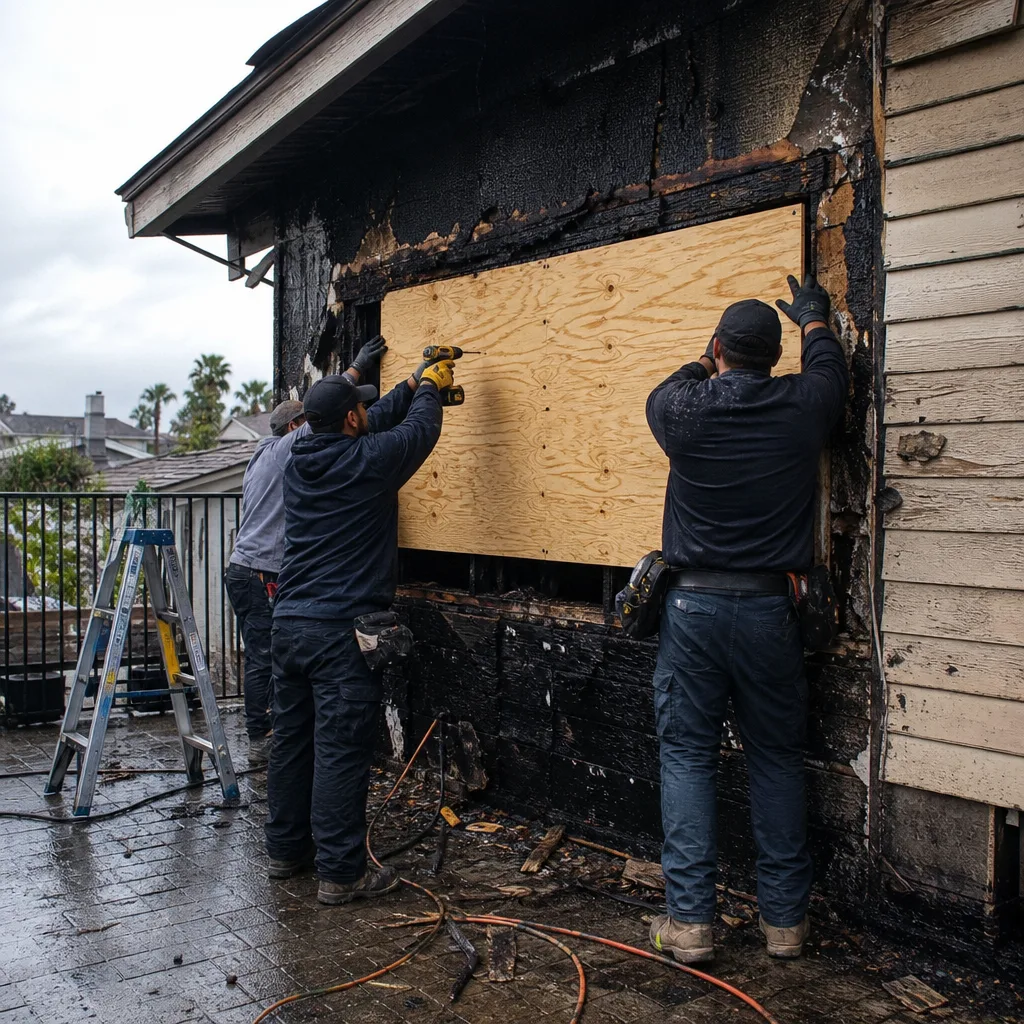
Broken windows and damaged doors after a storm leave your Mountain House home open to weather, animals, and people. We board up fast. This is stop-the-bleeding work, and it’s one of the few services where speed alone changes the outcome. A standard emergency board-up in Mountain House runs $400-$900 for windows and entry doors. We’ll also photograph everything for your insurance adjuster, because that documentation matters when you file a claim. And we’ll talk to the adjuster directly, so you’re not stuck relaying information between two sides.
Roof Tarping
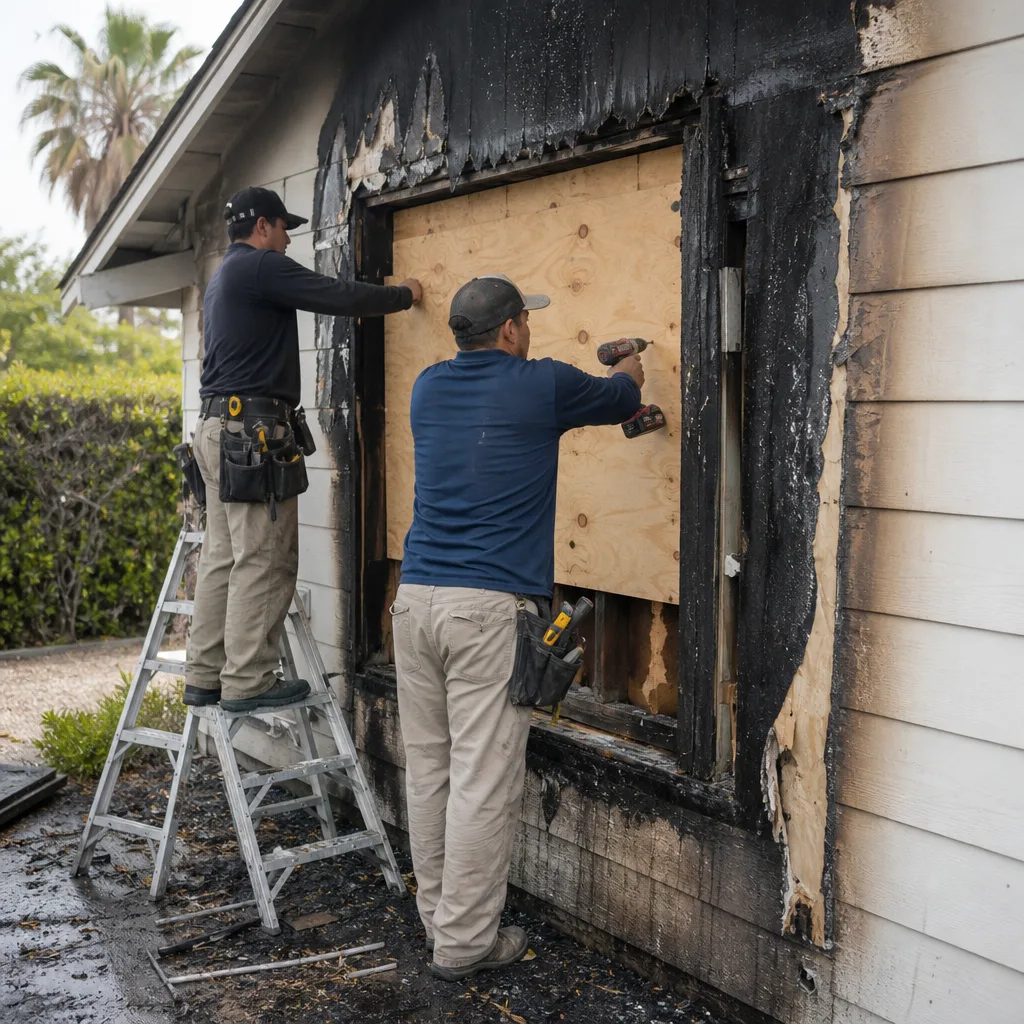
A ceiling stain after a winter storm means water is already inside your roof assembly. The question is how long before it spreads. Tarping stops active leaks until permanent repairs happen. In Mountain House, we often see this on homes built during the 2003-2008 boom, where original roof flashing around vents and valleys was installed fast and is now failing uniformly across whole tracts. Roof tarping locally runs $350-$750 for a standard two-story home. We can usually have it done same-day. If you’re seeing a stain, call (855) 915-0646 before it becomes a ceiling replacement.
What happens when you call
- 1
A real person answersNo phone trees - you reach a local pro.
- 2
You get an upfront price rangeHonest numbers before anyone is dispatched.
- 3
A background-checked tech heads outLicensed & insured, dispatched right away.
- 4
You approve before work beginsNothing starts until you say go.
Trusted Brands We Service in Mountain House
We’re not tied to one manufacturer, and that matters when your home’s hardware or drying needs are specific. We use Dri-Eaz and Phoenix drying equipment because these machines move air and pull moisture at a rate that matters when you’re watching a water meter. Our technicians carry IICRC and RIA credentials, and we’re recognized by the IFA. What this means for Mountain House homeowners: the equipment in your garage is professional-grade, and the person running it knows how to use it. When we need parts or materials for a Mountain House job, we source locally where possible and keep fast turnaround as the rule, not the exception.
Common Storm & Disaster Restoration Problems We See in Mountain House Homes
- Water entering through foundation slab cracks. Expansive adobe clay under Mountain House heaves during the wet winter and contracts during the hot summer, opening cracks along the slab’s weak points. Post-tension cable openings and early PEX manifold penetrations are the usual entry spots.
- Stucco drainage-plane gaps from annual clay heave. Wind-driven rain gets into wall cavities through seams that opened as the ground moved. Hidden mold starts before any visible staining shows up on the interior wall.
- Stormwater pooling at slab edges due to post-construction yard settling. Clay soils settle unevenly after construction, and the grade around the foundation no longer sheds water. During prolonged rain, that pooled water seeps through micro-cracks into living spaces.
- Weep screeds sealed by accumulated clay. Original grade-level weep screeds were never meant to be buried by clay, but that’s what happens as yards settle. Water trapped behind stucco wicks into framing during winter storms, and you don’t know it until the drywall fails.
How Mountain House’s Clay Soil Creates Storm Damage Other Cities Don’t See
Here’s the thing about Mountain House that national restoration chains never mention: this is one of California’s youngest master-planned communities, built almost entirely during the 2000s housing boom on former agricultural land adjacent to the Sacramento-San Joaquin Delta. The soil under these homes is expansive adobe clay. It heaves and contracts dramatically between wet winters and scorching summers. That annual ground movement opens slab cracks and stucco drainage-plane gaps at a pace unusual for homes this young. When a storm hits, water doesn’t pour through the roof. It comes up through the foundation and in through the walls.
During a heavy winter rain event, our crew responded to a flooded slab foundation on a 2004 two-story stucco home in Mountain House. Water was wicking up through post-tension cable openings and a failed stucco drainage-plane seam caused by seasonal clay heave. We mapped moisture with thermal imaging, set up containment and an injected drying system using Dri-Eaz and Phoenix equipment, and restored the slab and wall cavities to dry standard within five days. The homeowner had called two other companies first. Both told him it was a plumbing leak. It wasn’t.
Because so many Mountain House homes were built rapidly between 2003 and 2008, original post-tension slab cables and early-generation PEX manifold systems are now producing slab leaks across multiple homes in the same tract simultaneously. We see the same failure mode repeated street by street. That’s not a coincidence. It’s a neighborhood-scale pattern, and it means moisture mapping and structural drying are recurring services here, not one-off emergencies.
Pricing for Storm & Disaster Restoration in Mountain House, CA
No vague “pricing varies” here. For Mountain House specifically, here’s what you’re looking at:
- Flood damage restoration: $1,800-$5,600 depending on square footage and wall involvement
- Storm damage cleanup: $900-$2,800
- Emergency board-up: $400-$900 for windows and entry doors
- Roof tarping: $350-$750 for a standard two-story home
What affects your cost: how far water traveled, whether wall cavities or cabinetry are involved, how long water sat before we arrived, and whether containment and injected drying are needed. We give a written scope before any work starts. You’ll know the number before we touch anything. Estimates are free. Call (855) 915-0646. And if you already have a written estimate from another company, bring it in. Wade does free second opinions on any written estimate.
We Also Serve Cities Near Mountain House
We work throughout Mountain House and the surrounding communities, including Tracy, Discovery Bay, Livermore, and Brentwood. Same phone, same owner, same written-scope policy. If you’re in one of those towns and storm water is inside your house, call (855) 915-0646.
Serving Mountain House, CA - Our Local Coverage Area
We’re based in the Mountain House area and know this community well. Use the map below to see our service coverage - if you’re nearby, we can almost certainly help.
FAQs - Storm & Disaster Restoration in Mountain House
Mountain House sits on expansive adobe clay that heaves when wet and contracts when dry. The annual cycle opens slab cracks and stucco drainage-plane gaps, even in homes barely 20 years old. Water follows those openings during winter storms. That’s why storm damage here so often means foundation and wall-cavity water intrusion rather than roof or window failures. Call (855) 915-0646 if you suspect it’s happening in your home. We’ll map the moisture and show you exactly what’s going on.
Yes, and soon. A ceiling stain means water is already inside your roof assembly, and in Mountain House’s post-2003 tract homes, original flashings around vents and valleys fail uniformly as the homes age out together. Tarping stops active leaks until permanent repairs happen. Roof tarping here runs $350-$750. If the stain spreads, you’re looking at drywall and insulation replacement on top of the roof repair. Call (855) 915-0646 for same-day tarping.
Yes, in a specific way. It’s not a creek-overflow risk. It’s a slab-seepage risk. Homes built in that narrow window share identical early PEX manifold layouts and post-tension cable openings, and they’re all aging out simultaneously on the same expansive clay. During heavy rain years with an elevated water table, that means water pushing up through slab micro-cracks across whole subdivisions. Call (855) 915-0646 if you’re seeing wet carpet edges or baseboard swelling after rain. We’ll tell you if it’s slab seepage or something else.
We use injected drying systems. After we map where water traveled with thermal imaging, we set up containment and force dry air through the slab and wall cavities using Dri-Eaz and Phoenix equipment. This works for most Mountain House slab post-tension homes, where the slab is the water source. We take moisture readings daily and hand you the full log when the job’s done. Most slabs reach dry standard in three to five days. Call (855) 915-0646 for a free assessment.
First, move furniture and belongings off wet carpet and away from wet walls. Second, turn off the HVAC if water is near floor vents. Third, call (855) 915-0646. Every hour water sits in a Mountain House slab and wall cavity, mold is setting up in the warm dark. Extraction should be running within the hour of our arrival. Don’t wait for the water to “dry on its own.” It won’t. Not in this climate, not with this clay.
Call Wade’s Restoration of California in Mountain House
Storm water in your Mountain House home doesn’t get better with time. It gets worse. The clay soil under your foundation will keep heaving, the water will keep moving, and the damage will keep spreading. Call (855) 915-0646 now. Wade Ferris answers his own phone. He’ll send someone to your Mountain House neighborhood, and you’ll get a written scope before any work starts. Free estimates. No trip charge inside our own county. And every water, fire, and mold restoration job carries the 90-Day Done Right Promise in writing. If it’s not done right, Wade makes it right. That’s the deal.
Written by Wade Ferris, Owner at Wade’s Restoration of California, serving Mountain House since 2007.