
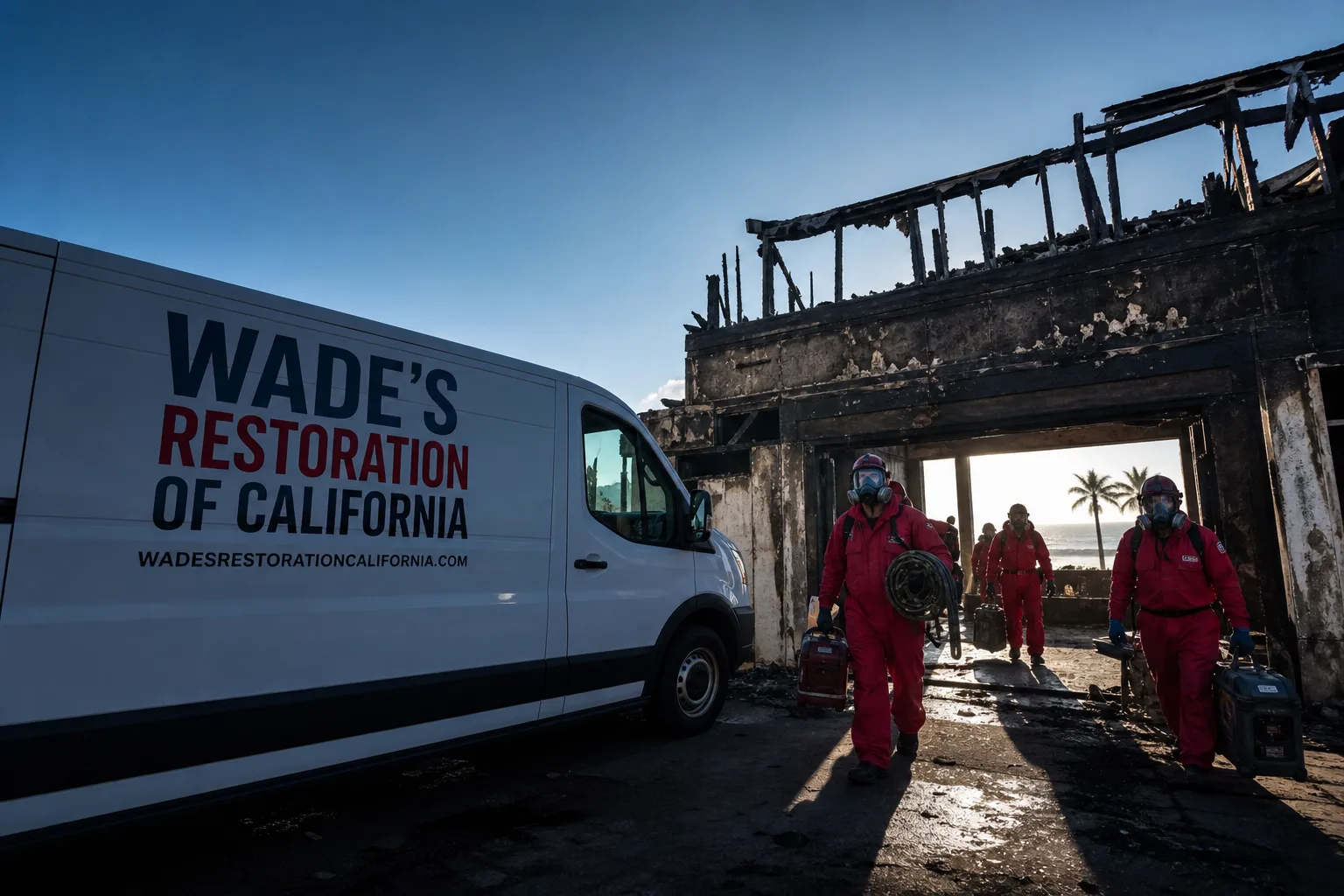
Fast, Reliable Mold Remediation Across Selma
Mold remediation in Selma usually runs between $1,800 and $6,500 depending on how far the growth has spread and whether crawl spaces or ductwork are involved. Most jobs here take two to five days, and we can have a crew at your door the same day you call (855) 915-0646. Selma’s combination of Tule fog, flood-irrigated vineyard ground, and older wood-framed homes creates mold problems that generic national franchises simply don’t know how to read. We do, because we work these streets every week.
Why Wade’s Restoration of California Is Selma’s Preferred Mold Remediation Company
Wade Ferris started this company in 2007 and put his own name on the truck. He still answers his phone. That matters in a town like Selma, where the person you hire is likely someone you’ll run into again at the Save Mart on Floral Avenue or a Friday night football game at Staley Stadium. When we tell you we’ll show up, we show up.
We hold IICRC certifications and maintain RIA and IFA affiliations, which means our crews train to the industry’s actual standards, not whatever a franchise manual says. More importantly, our Mold Remediation team knows Selma’s housing stock: the 1940s wood-framed homes off Rose Avenue, the 1960s ranchers near Selma High, the 1980s slab tract homes east of Highway 99. Each type fails differently, and we treat them accordingly. Wade publishes his address and license number, and every job carries our 90-Day Done Right Promise in writing. If it’s not done right, he makes it right.
Our Mold Remediation Services in Selma
Mold Inspection & Testing
A proper mold inspection in Selma starts with moisture mapping, not just looking for black spots. We run thermal imaging and moisture meters across walls, ceilings, and especially crawl spaces to find where water is entering. In a town surrounded by the Fresno Irrigation District’s canal network and flood-irrigated vineyards, the source is often not a leak at all. It’s groundwater wicking through clay soil under a raised foundation. A mold inspection in Selma without a crawl space moisture reading is incomplete.
Mold Removal
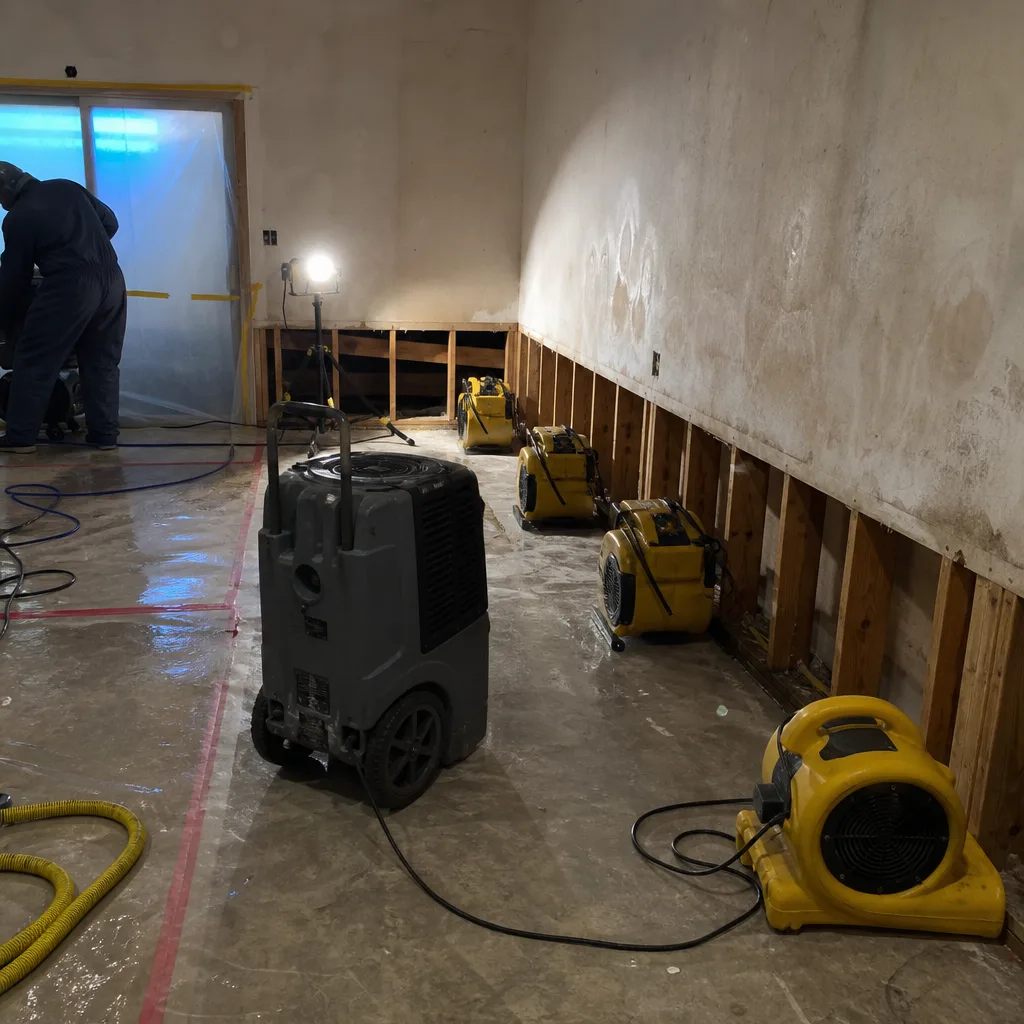
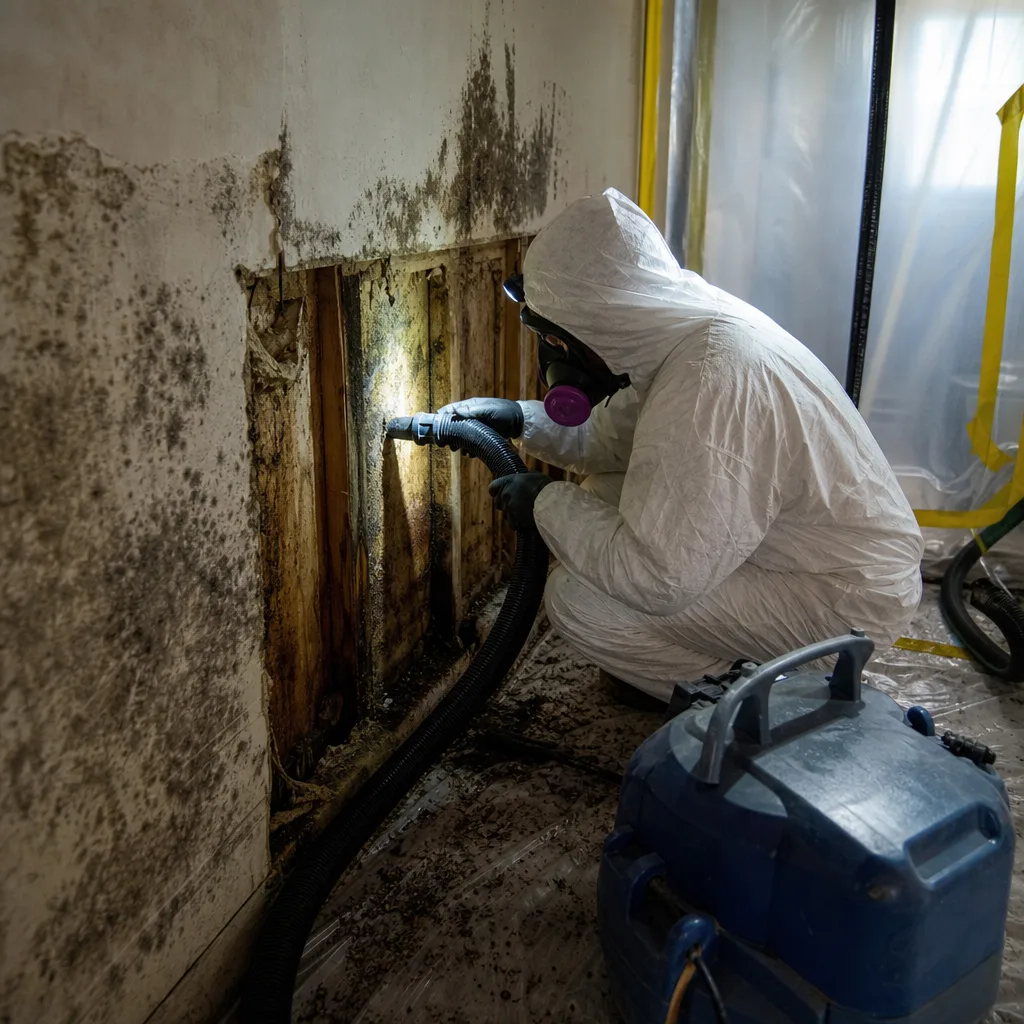
Mold removal is the physical work: containment, HEPA air scrubbing, removal of colonized drywall or insulation, and treatment of remaining surfaces. In Selma, where many homes have unventilated crawl spaces under wood subfloors, removal frequently extends below the living space. We don’t just treat what you can see. We treat what’s been growing in the dark for six months. That’s the only way removal holds.
Black Mold Remediation
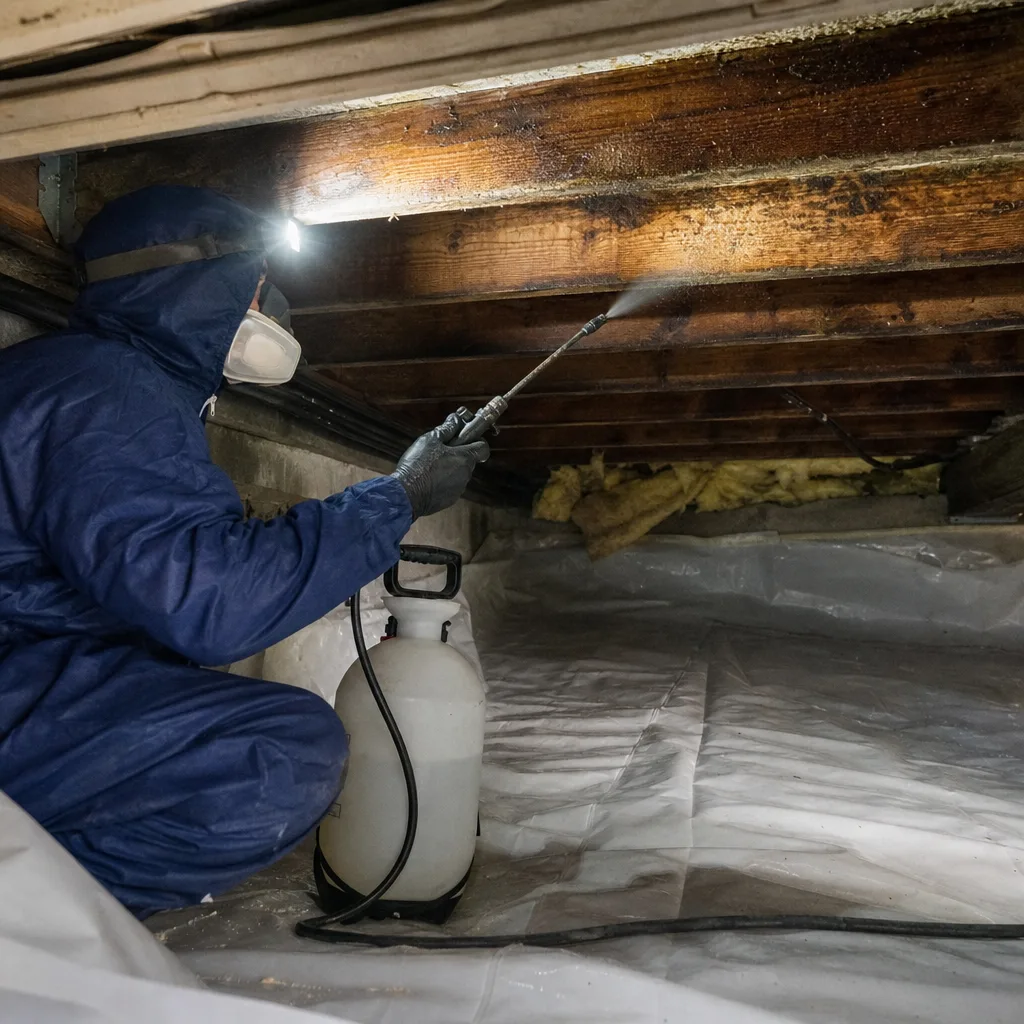
Black mold is what homeowners in Selma call us about most often. It’s the dark staining that shows up on subfloor joists, behind baseboards, or under sinks. The truth is the color matters less than the moisture source feeding it. Our black mold remediation work always starts with finding and stopping that moisture source, then containing the affected area so spores don’t spread through the house while we work. In older Selma homes, black mold in the crawl space is usually a groundwater problem, not a plumbing one. We treat it accordingly.
Air Quality Restoration
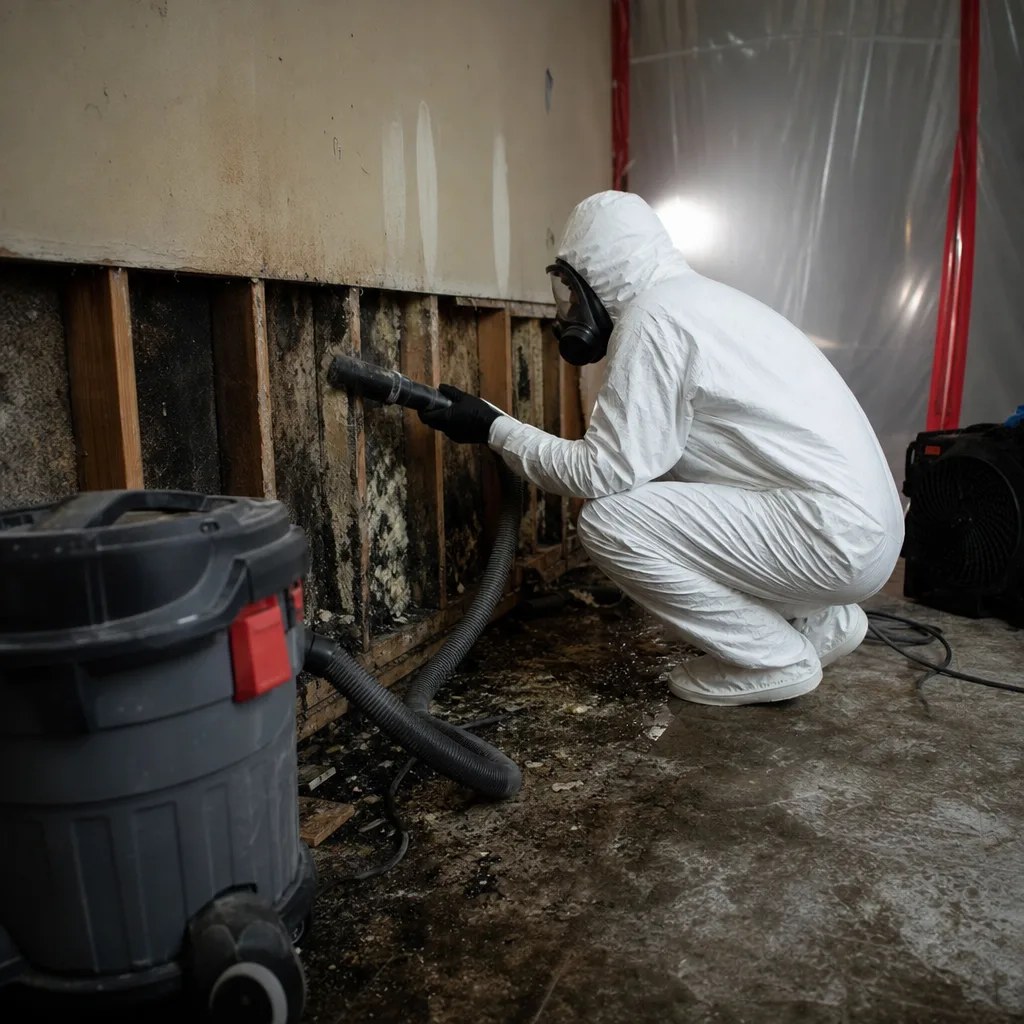
After mold is removed, the air in the house often still carries elevated spore counts, especially after a Tule fog season when outdoor humidity has been pushing spores through wall cavities for weeks. Air quality restoration means running commercial HEPA air scrubbers during and after remediation, replacing contaminated HVAC filters, and in some cases cleaning ductwork. We measure the air before we finish and hand you the results, along with Wade’s daily moisture logs. Almost nobody else in the trade does that.
What happens when you call
- 1
A real person answersNo phone trees - you reach a local pro.
- 2
You get an upfront price rangeHonest numbers before anyone is dispatched.
- 3
A background-checked tech heads outLicensed & insured, dispatched right away.
- 4
You approve before work beginsNothing starts until you say go.
Trusted Brands We Service in Selma
Our crews run Dri-Eaz and Phoenix equipment because it’s what we’d want in our own homes. These machines pull moisture from framing and air that household fans can’t touch, and that’s the difference between a mold job that holds and one that comes back in December. We keep a full stock of filters, containment supplies, and drying gear on our trucks, not in a warehouse an hour away. When we say we’ll be back tomorrow to check readings, we will be.
Common Mold Remediation Problems We See in Selma Homes
- Vineyard-edge crawl space colonization: Homes on the south and west edges of Selma, especially 1950s and 60s raised-foundation houses, sit close enough to flood-irrigated fields that lateral groundwater pushes through clay soil into crawl spaces all summer. By the time a homeowner smells it, the subfloor framing has often been colonized for an entire growing season. This is not a condition you’ll see in foothill cities, and it requires a different drying approach: Injectidry mats on the framing, not just dehumidifiers on the dirt.
- Re-colonization after surface treatment: A crew that treats visible mold but never addresses the crawl space humidity or the slab crack feeding it has not fixed anything. We see this constantly in Selma, often after a “cheap” remediation from an out-of-town operator. The mold returns within months, sometimes worse, because the moisture source was never mapped.
- Slab cracks in 1980s-90s tract homes: Selma’s clay soil expands and contracts dramatically with Valley heat and winter rain. That movement cracks slabs, and those cracks wick moisture up through flooring and behind walls even with no plumbing leak. If a mold company doesn’t check slab moisture before they start tearing out drywall, they’ll miss the hidden growth underneath the floor.
- Tule fog-driven attic and wall cavity mold: From roughly November through February, Selma sits under dense ground fog for days or weeks at a time. That fog pushes persistent humidity into unventilated attics and wall cavities of older wood-framed homes. Homeowners sometimes call us for a musty smell with no visible water event. It’s the fog, and it’s real.
Our crew was called to a 1950s raised-foundation home on the south side of Selma near a vineyard edge, where flood irrigation had been driving moisture through the clay soil into the crawl space for an entire growing season. We found widespread mold colonization on the subfloor framing and joists. After containing the area, we used Dri-Eaz dehumidifiers and Injectidry drying mats to pull moisture from the wood before HEPA-vacuuming and applying an EPA-registered antimicrobial. Because the crawl space had no vapor barrier, we also installed a 6-mil polyethylene liner to slow future moisture wicking from the soil. That job couldn’t have been fixed with a spray bottle and some bleach. It needed someone who understood Selma’s groundwater.
Pricing for Mold Remediation in Selma, CA
A straightforward mold removal job in Selma, where growth is confined to one area like a bathroom wall or a small crawl space section, typically runs $1,800 to $3,200. Whole-crawl-space remediation with subfloor treatment, vapor barrier installation, and air quality restoration runs $4,000 to $6,500. Black mold remediation that requires containment, waste disposal, and structural drying falls in the $2,500 to $5,500 range depending on square footage. We provide a written scope before work starts, so you know exactly what you’re paying for. Estimates are free, and we’ll also give you a free second opinion on any written estimate from another company. Call (855) 915-0646 and Wade will talk you through what you actually need.
We Also Serve Cities Near Selma
Along with our work across Selma, we regularly serve mold remediation customers in Fowler, Parlier, Kingsburg, and Reedley. Each of those towns has its own water table quirks and housing stock, and we treat them accordingly. If you’re anywhere in the 93662 ZIP or the surrounding farming communities, call us. We know the ground.
Serving Selma, CA - Our Local Coverage Area
We’re based in the Selma area and know this community well. Use the map below to see our service coverage - if you’re nearby, we can almost certainly help.
FAQs - Mold Remediation in Selma
Because the moisture source was never stopped. In Selma, crawl space mold on raised-foundation homes near vineyard edges or canals is almost always fed by groundwater wicking through clay soil, not by a leak. If the previous company cleaned the mold but didn’t install a vapor barrier or address the grade around your foundation, the same moisture returns and the mold re-colonizes within months. We map the moisture first, fix the source, then clean. Call (855) 915-0646 for a crawl space assessment.
Tule fog pushes persistent humidity into unventilated crawl spaces, attics, and wall cavities for weeks at a time between November and February, and that humidity alone can sustain mold growth in older homes even with no plumbing leak or rain intrusion. Selma’s fog is dense and lingers because of the Valley’s flat terrain. If you smell mustiness in winter, that’s often the cause. We can measure it and tell you.
Yes, you should at least have it checked. Homes near flood-irrigated vineyard edges sit in ground that stays saturated all summer as irrigation water moves laterally through clay soil. The crawl space becomes a humidity chamber, and subfloor framing can colonize mold for a full growing season before you notice any smell. If your home hasn’t had a moisture reading in the last few years, call us. It’s a fast check and it can save you thousands down the road.
Yes. Selma’s clay soil expands and contracts with summer heat and winter rain, and that movement cracks slabs. Those cracks wick moisture up through the slab and into flooring, underlayment, and wall cavities. Mold can grow behind baseboards and under carpet in a slab home with no leak anywhere. A proper remediation starts with slab moisture mapping before any drywall comes out.
Call us for an inspection, because the mold you can smell is almost always behind a surface: in a wall cavity, under flooring, or in the crawl space. Don’t ignore it. Spore counts rise through Tule fog season, and the longer it sits, the more invasive the remediation becomes. Call (855) 915-0646 and we’ll schedule a moisture and air quality assessment.
If you’ve got mold in your Selma home, don’t wait. Call Wade’s Restoration of California at (855) 915-0646. You’ll talk to a real person, get a straight answer, and have a crew on the way. Estimates are free, and so is a second opinion on any written estimate you’ve already received.
Written by Wade Ferris, Owner at Wade’s Restoration of California, serving Selma and the Central Valley since 2007.