
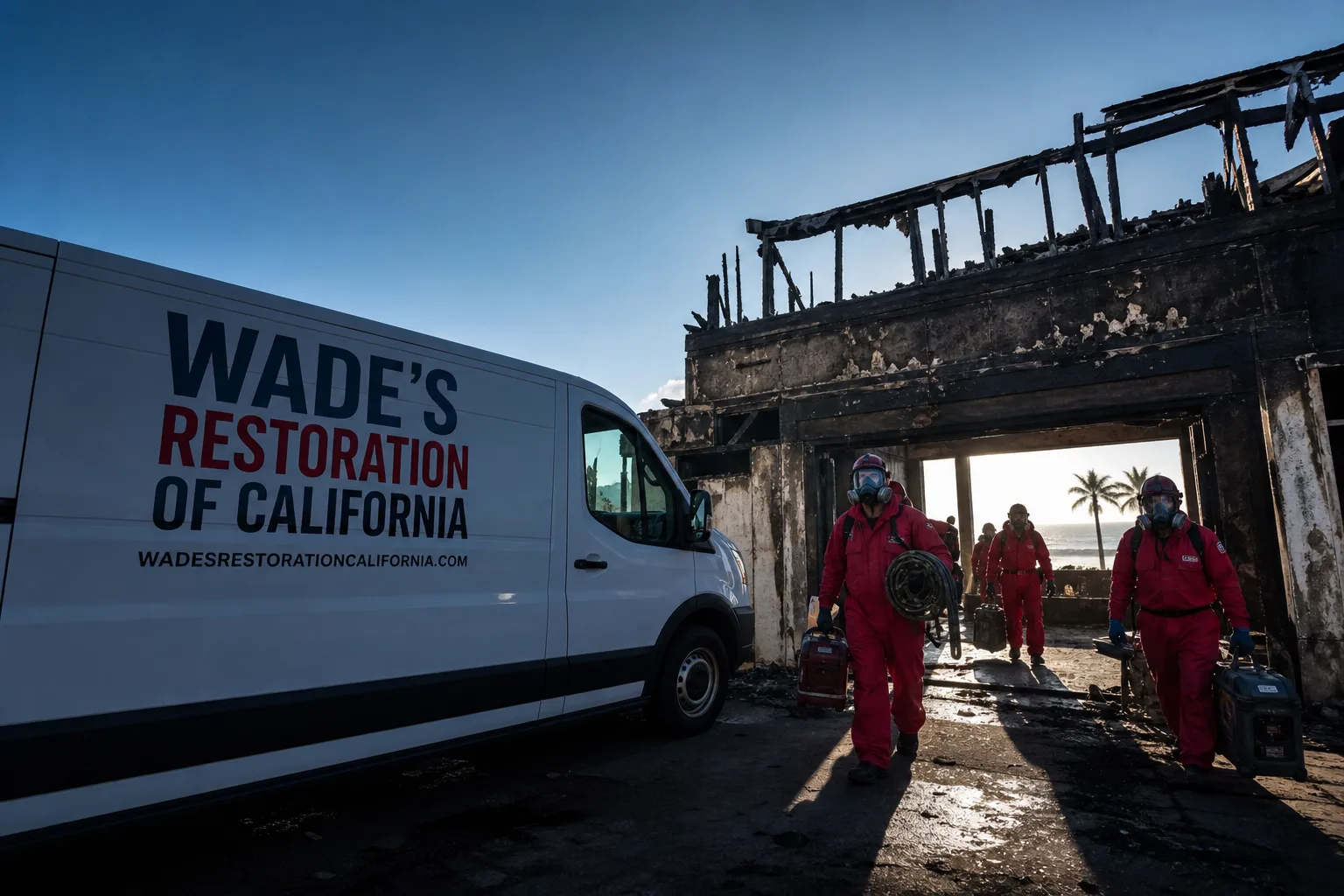
Fast, Reliable Storm & Disaster Restoration Across Selma
When a winter storm or atmospheric river hits Selma, Selma Water Damage Restoration becomes critical because water doesn’t drain away quickly. It pools against foundations. It creeps into crawl spaces. It sits there, feeding moisture into wood framing and drywall for days. That’s the reality of living in the middle of the San Joaquin Valley’s raisin-grape belt, where flat, clay-heavy soil and flood-irrigated vineyard canals surround many homes.
Wade’s Restoration of California has been handling storm damage, flood extraction, emergency board-up, and roof tarping in Selma for years. We know the 93662 ZIP, we know the older raised-foundation homes off Floral and McCall, and we know how long it takes for a house built in 1955 to dry out after a canal overflows. When you call (855) 915-0646, you get Wade or someone from his crew. Not a call center. Not a national hotline. A live person who can be at your door fast.
Key Takeaways
- Storm & Disaster Restoration in Selma typically costs $1,800-$8,500 depending on water volume, structural exposure, and drying time
- Wade answers his own phone, 24/7, and can have extraction running inside the hour
- Selma’s clay soil and flood-irrigated vineyards keep water pooled against foundations longer than neighboring cities
- Every restoration job includes the 90-Day Done Right Promise, in writing
- Direct insurance adjuster coordination and photo-documented moisture logs come standard
Storm & Disaster Restoration in Selma is not a template job. It’s a response shaped by the ground under your house and the canals around it. Here’s what that means for you.
Why Wade’s Restoration of California Is Selma’s Preferred Storm & Disaster Restoration Company
Wade Ferris founded this company in 2007, but he’s been doing restoration work for over 29 years. His name is on the truck, his address is published, and his cell number is the one that rings when you call. That’s not a marketing line. It’s how he has always run things. When you hire a national chain, you get a rotating cast of technicians and a different project manager every week. When you call Wade, you get Wade. He will be there himself.
Selma customers deal with a specific set of problems after a storm: water that won’t drain, crawl spaces that stay damp for weeks, and roofs that were already brittle from a summer of 105-degree heat before the first rain hit. Our crew knows what that looks like. We have walked through enough homes near the Fresno Irrigation District canals to know that the water pooled against your stem wall today might have been drawn there from a mile away. Selma is where we work, not a market we fly into and out of.
Wade deals with your insurance adjuster directly. You don’t relay messages between two parties. He takes moisture readings every single day and hands you the full log at the end. Almost nobody does that. And every water, fire, and mold job comes with the 90-Day Done Right Promise stamped in writing. If it’s not done right, he makes it right. One call brings Wade back.
Calls are answered by a live person, 24/7. No voicemail, no answering service, no runaround. That includes Wade himself, who answers his own phone and can have extraction running inside the hour. Response time to Selma from our Fresno, Central Valley office is quick because we’re close, and because we stock equipment and materials locally.
Our Storm & Disaster Restoration Services in Selma
Flood Damage Restoration
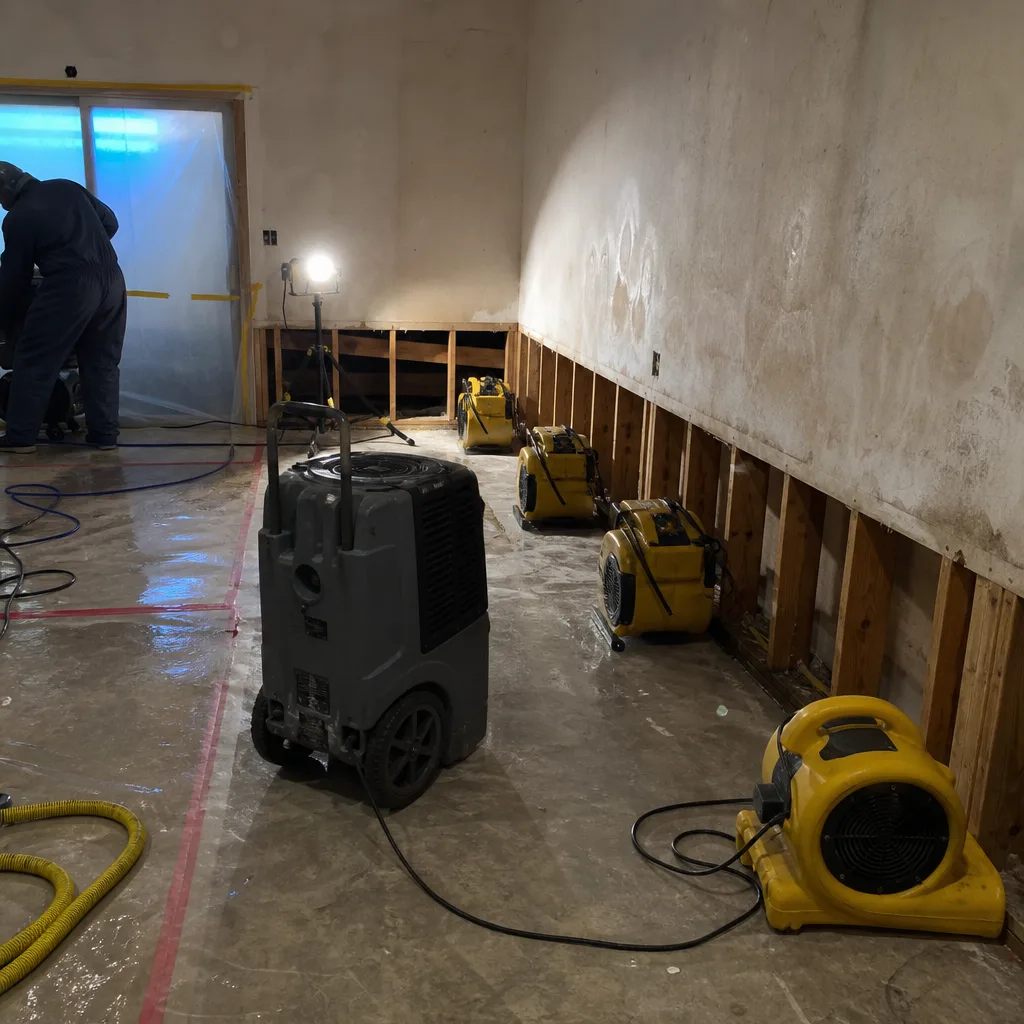
Flooding in Selma is different from flooding in the foothills. The land is flat. The soil is clay. When a storm overwhelms the irrigation canals or saturates the vineyard ground around your property, the water has nowhere to go. It sits against your foundation, wicking through stem walls and into subfloor framing. We start with extraction, then run professional-grade Dri-Eaz dehumidifiers and XPOWER air movers, but in Selma we plan for a longer drying cycle because the moisture doesn’t just come from above. It comes up through the ground, and it keeps coming long after the rain stops.
Emergency Board-Up
When wind tears off a section of your roof or blows a branch through a window, you need that opening sealed before the next storm, before animals get in, before looters notice. Emergency board-up in Selma is something we do fast, because we know that during a storm sequence, a single unsecured opening can turn a manageable repair into a gut job. We use plywood and framing techniques that hold up through wind and rain, and we photograph everything for your insurance file.
Roof Tarping
Roof tarping in Selma has to survive more than the immediate storm. It has to hold through weeks of Tule fog, which pushes moisture against the tarp and whatever lies beneath it. It has to survive Valley wind. We anchor tarps properly, not just nail them at the corners, because a tarp that flaps loose in a January storm can do more damage than the original hole. Our storm response team heads straight to Selma neighborhoods when a storm hits, and we bring enough tarping and board-up material to handle multiple homes in a single day.
Storm Damage Cleanup
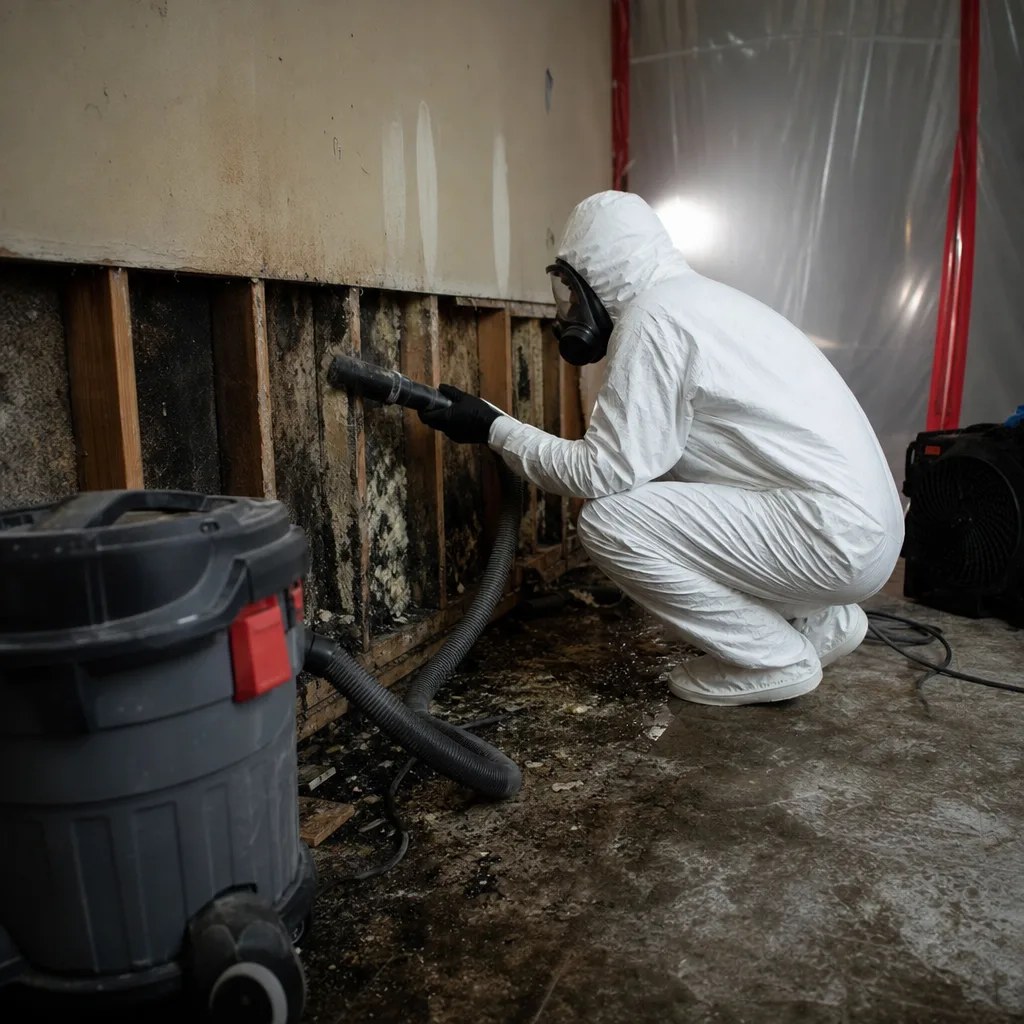
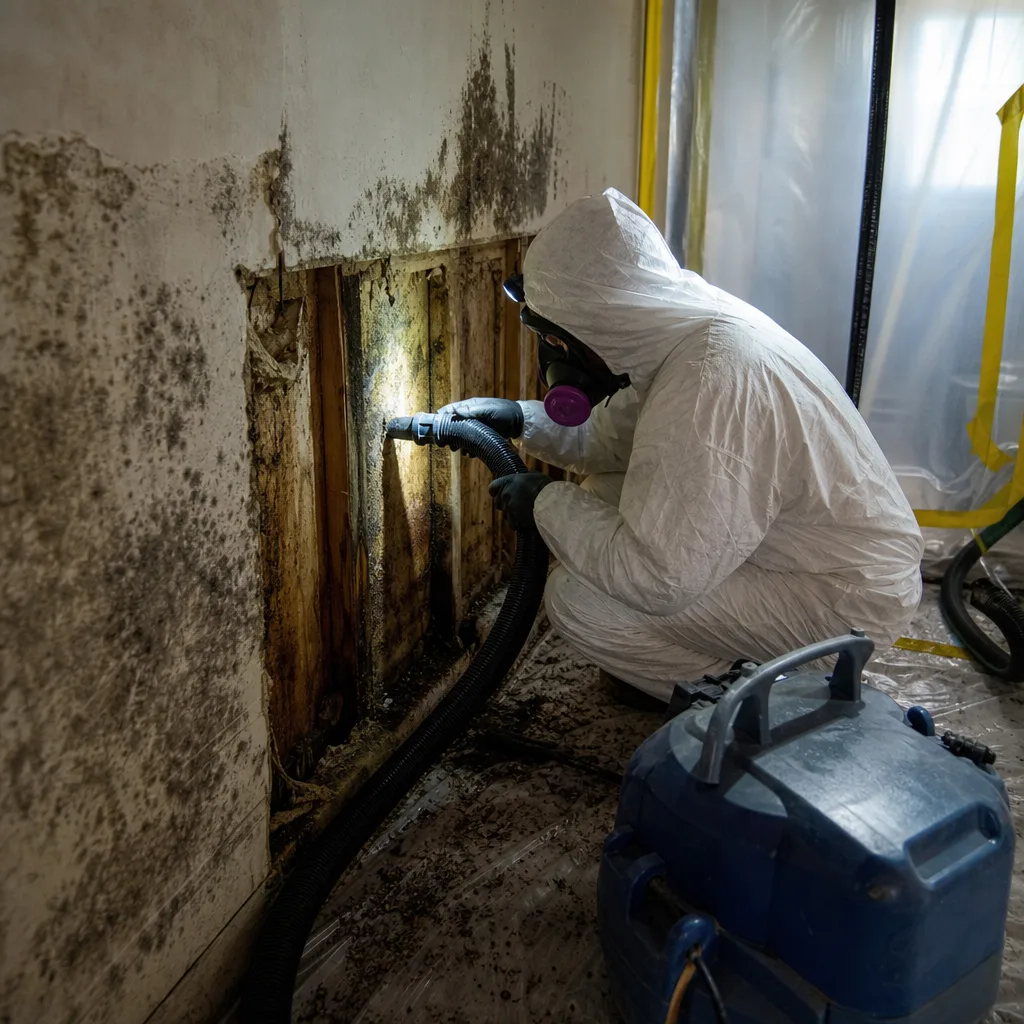
After the storm passes, you’re left with debris, soaked insulation, ruined drywall, and sometimes sewage that backed up into the house when the storm overwhelmed municipal lines. Storm damage cleanup in Selma means getting the wet stuff out, tearing out saturated materials that cannot be saved, and starting the Reconstruction & Cleanup - Selma process before mold takes hold. In a Selma summer, mold can start in 24 to 48 hours. In the fog season, it can start even faster in a closed-up house with no airflow.
What happens when you call
- 1
A real person answersNo phone trees - you reach a local pro.
- 2
You get an upfront price rangeHonest numbers before anyone is dispatched.
- 3
A background-checked tech heads outLicensed & insured, dispatched right away.
- 4
You approve before work beginsNothing starts until you say go.
Trusted Brands We Service in Selma
We work on homes of every age and size in Selma, and we use professional-grade equipment that restoration pros recognize: Dri-Eaz dehumidifiers, XPOWER air movers, Phoenix drying systems, and Injectidry for hard-to-reach cavities. Our technicians are IICRC-certified and RIA-affiliated, and the work reflects it. We stock local replacement parts and drying equipment that gets deployed to Selma quickly, because waiting for an order from out of state is not an option when your floors are wet and your drywall is swelling. Whether your Selma home was built during the agricultural boom of the 1950s or is a 1990s slab-on-grade tract house, we have seen its failure modes before.
Common Storm & Disaster Restoration Problems We See in Selma Homes
- Pooled water from flood-irrigated vineyard canals: On the south and west sides of Selma, flood irrigation in adjacent fields drives moisture laterally through clay soil into crawl spaces every summer. By the time a homeowner calls after a storm, the subfloor framing has often been silently colonizing mold for an entire growing season.
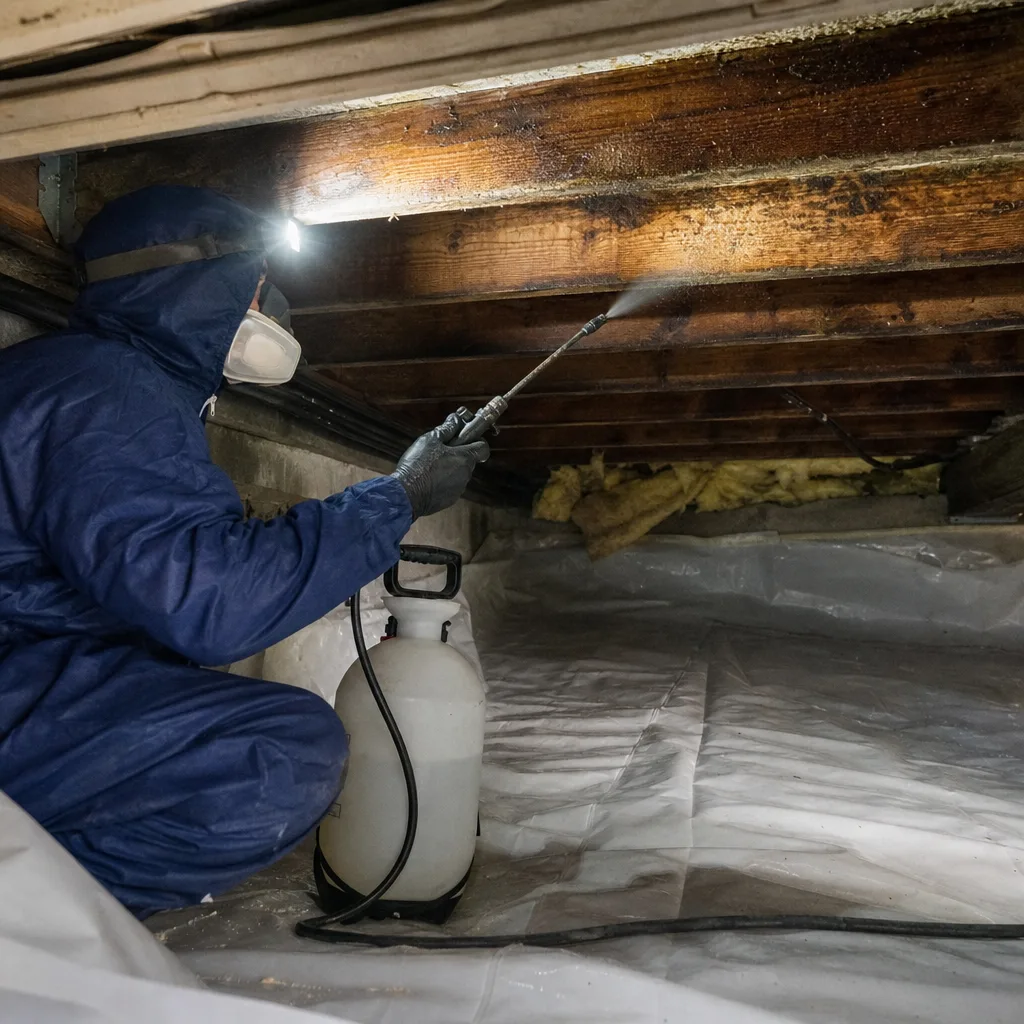
- Crawl spaces that never dry out: Selma’s older raised-foundation homes, especially those built between the 1940s and 1970s, have unventilated or poorly ventilated crawl spaces. When storm water enters, or when irrigation moisture is already present, the space stays damp for weeks, accelerating mold growth on floor joists and subflooring.
- Slab cracks from expansive clay: The extreme summer heat in Selma regularly exceeds 105°F, which dries and shrinks clay soil. That causes slab-on-grade homes from the 1980s and 90s to develop cracks. During a storm, water finds those cracks and wicks upward, soaking flooring and wall bases from below, which complicates moisture mapping and extends drying time.
- Galvanized plumbing failures masked by floodwater: The Valley’s hard water corrodes galvanized steel pipe from the inside. When ground pressure or slab movement forces a pinhole leak during a storm, the visible floodwater hides it. You might think the standing water came from outside, when part of it actually came from your own supply line. We find this all the time in Selma’s older homes.
Pricing for Storm & Disaster Restoration in Selma, CA
Storm and disaster restoration in Selma is priced by the scope of water, the size of the affected area, and how long the structure needs to dry. Here are honest ranges for Selma’s market:
- Emergency roof tarping: $350-$900 depending on roof size, slope, and accessibility
- Board-up services: $250-$700 per opening, including materials and labor
- Flood water extraction and drying: $1,800-$5,500 for a typical single-story Selma home with moderate water damage
- Full storm damage restoration including mold treatment and structural repairs: $4,000-$12,000+ when crawl spaces, subfloors, and drywall are involved
What affects your cost: how long water sat before we arrived, whether you have a crawl space that needs drying and treatment, whether your slab has cracks that wicked moisture into walls, and whether mold has already established. Selma’s clay soil and flood-irrigated surroundings mean that drying cycles here often run longer and require more equipment than identical homes in Kingsburg or Fowler. That’s just the ground truth.
Estimates are free. We provide a written scope before work starts, so you know exactly what you’re paying for. And if you’re a senior or veteran, take 10% off, always. Call (855) 915-0646 for an exact quote on your Selma property.
We Also Serve Cities Near Selma
Our crews work throughout the Selma area, including Fowler, Parlier, Kingsburg, and Reedley. If you’re in one of those communities and you’ve got standing water, a tarp that won’t hold, or a storm-damaged structure, the same response applies. One call, a live person, and a truck headed your way. Storm & Disaster Restoration in Selma is what we do, but we cover the whole surrounding valley.
Serving Selma, CA - Our Local Coverage Area
We’re based in the Selma area and know this community well. Use the map below to see our service coverage - if you’re nearby, we can almost certainly help.
FAQs - Storm & Disaster Restoration in Selma
Selma’s flat terrain and clay-heavy soil mean that water from flood-irrigated vineyards and irrigation canals has almost no natural drainage path. When a storm adds more water on top of already-saturated ground, it pools against foundations and stays there for days, sometimes longer. This is why we run a longer, more aggressive drying cycle in Selma than in neighboring foothill cities. The moisture keeps feeding into your structure long after the visible surface water is gone. If you see pooled water after a storm, call (855) 915-0646. The sooner we start extraction, the less structural damage you’ll have.
First, check for standing water against your stem wall and go under the house if you can safely do so. Look for damp soil, water on top of the vapor barrier, or dark staining on floor joists. Homes in that part of Selma get moisture pushed laterally through clay soil by flood irrigation all summer, so the subfloor may already be compromised before the storm ever hit. Do not try to dry it out with household fans. Call us. We bring commercial dehumidifiers and get moisture readings so we know what is actually wet. Wade heads out fast, and the estimate is free.
Yes, if it’s anchored correctly. Selma’s Tule fog season runs roughly November through February, and fog brings persistent dampness and moisture that can loosen a poorly secured tarp. We anchor tarps with full perimeter fastening, not just corner nails. We also check for areas where fog condensation can run down into the home. A tarp installed by our crew will last through the fog season and into spring, giving you time to schedule proper roof repair or replacement on your own timeline.
Yes. Selma’s expansive clay soil expands when wet and shrinks and cracks during the Valley’s 105-degree summers. That cycle creates and widens slab cracks. When storm water or canal overflow reaches your foundation, those cracks become pathways for moisture to wick upward into your flooring, baseboards, and lower wall cavities. We see this frequently in Selma’s 1980s and 90s tract homes. The fix is targeted drying and moisture mapping before any structural repair, so we can tell exactly where the water traveled under the slab. Call (855) 915-0646 if you suspect water came up through a slab crack.
Because the moisture is coming from below, not above. Selma’s flood-irrigated vineyard terrain saturates the clay soil around your foundation, and that moisture rises into your crawl space as vapor. Even when the surface looks dry, the subfloor framing above can be damp and slowly growing mold. On a street off East Floral Avenue in the 93662 ZIP, our crew responded to a 1960s raised-foundation home where a backed-up irrigation canal had left water standing against the stem wall for three days. The original galvanized supply lines had corroded through in two places from hard-water scaling, and the unventilated crawl space had been silently colonizing mold near the vineyard edge. The homeowner had noticed a musty smell for months but didn’t connect it to the summer flood irrigation next door until the storm made it undeniable and Biohazard & Crime Scene Cleanup - Selma protocols were needed for the mold contamination. If you smell mold in a Selma crawl space, do not wait. Call us. We will find the moisture source, treat the mold, and show you the moisture log at the end.
Call Wade’s Restoration of California for Storm & Disaster Restoration in Selma
When your home is wet, damaged, or opened to the elements, you need a person, not a process. You need Wade. Call (855) 915-0646 today for a free estimate. No trip charge inside our own county. No runaround. No national chain between you and the person doing the work. Just Wade Ferris, his crew, and a truck headed to your Selma home. To wade is what you do through a flooded basement at two in the morning. And it happens to be his name.
Written by Wade Ferris, Owner at Wade’s Restoration of California, serving Selma since 2007.