
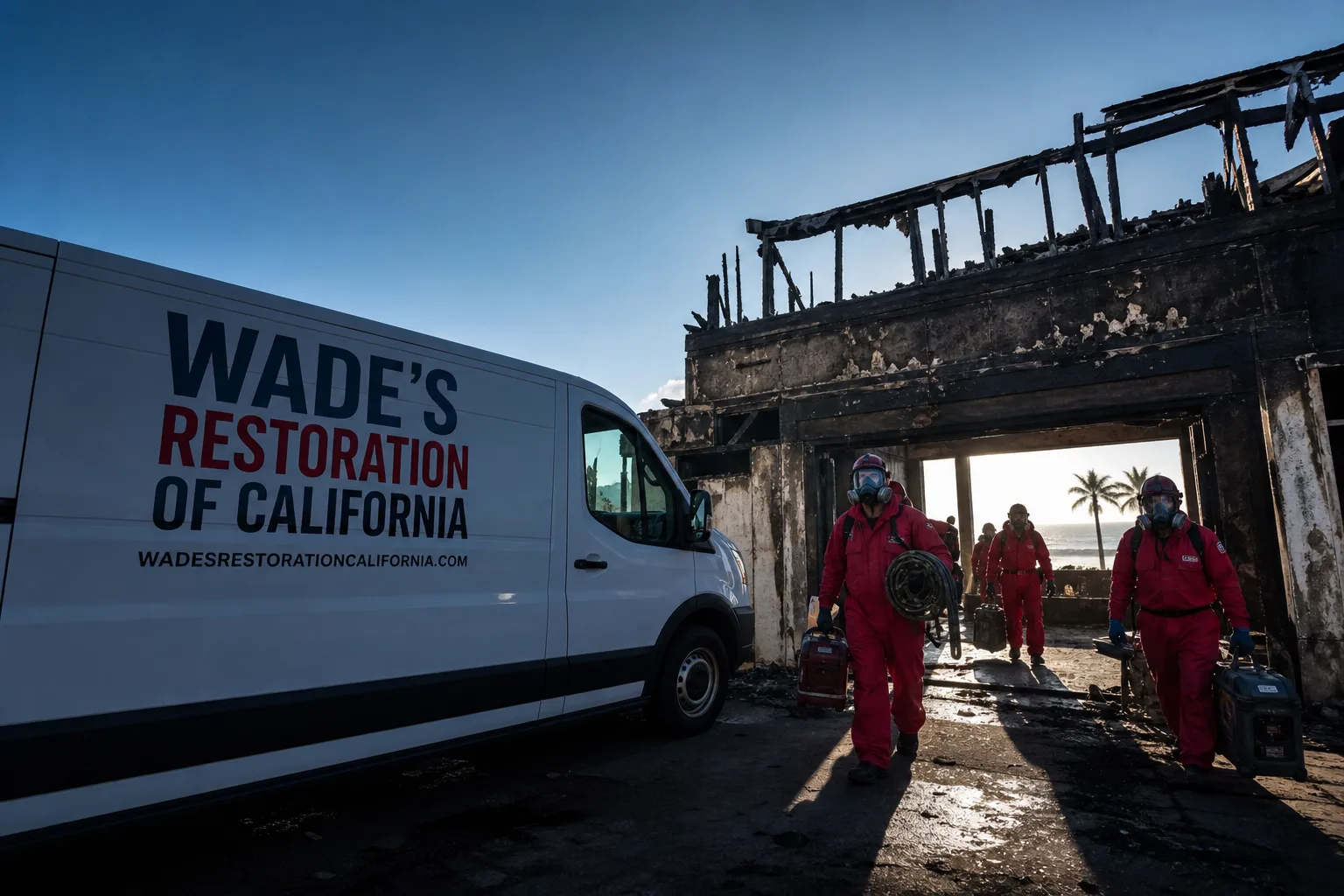
Fast, Reliable Biohazard & Crime Scene Cleanup Across Koreatown
Biohazard cleanup in Koreatown typically costs $1,800-$6,500 depending on scope, and for trauma or unattended death scenes in the neighborhood’s older courtyard buildings, the job almost always involves more than one unit. That’s not a problem for us. Wade Ferris has been running restoration crews through Koreatown’s aging apartment stock since 2007, and he answers his own phone at (855) 915-0646 when you call. If you’re standing in a unit on Wilshire or 6th Street right now dealing with blood, decomposition fluids, or an infectious disease concern, we can have a crew on site the same day.
Why Wade’s Restoration of California Is Koreatown’s Preferred Biohazard & Crime Scene Cleanup Company
Koreatown jobs are different from anything in the Valley or the Westside. We know that before we even walk in the door. The neighborhood is one of the densest urban areas in the country, and its residential core is dominated by 1920s-1940s courtyard buildings and 1960s-70s soft-story walk-ups where a biohazard event in one unit rarely respects property lines. When a third-floor trauma scene weeps into the unit below through a shared wall cavity, you don’t need a crew that treats this like a single-room carpet cleaning. You need someone who understands stacked floor plates, cast-iron waste stacks, and the way old plaster and lath holds organic material.
We’re that crew. Wade publishes his name, his address, and his license number because he’s going to run into you at the market on Western Avenue, and that accountability matters in Koreatown more than a star rating from a stranger ever could. Every biohazard job we run here is handled with the same documentation discipline we use on our Biohazard & Crime Scene Cleanup calls across LA: photo logs before, during, and after; written scope agreed before we open a single wall cavity; and direct communication with your insurance adjuster so you’re not the one stuck relaying information between two sides.
Response time to Koreatown is usually under two hours for emergency scenes. Call (855) 915-0646. A live person answers, day or night. Often that’s Wade himself.
Our Biohazard & Crime Scene Cleanup Services in Koreatown
Trauma & Unattended Death Cleanup
This is the service we run most often in Koreatown’s older apartment buildings, and it’s the one where the neighborhood’s construction makes everything harder. When someone passes alone in a 1930s courtyard unit on Serrano or Ardmore, decomposition fluids don’t stay in that apartment. They travel. Through dry-rotted subflooring, through cracked plaster, through the same wall cavities that have been carrying plumbing leaks for decades. We remediate the primary unit, then we inspect every adjacent tenancy, top and bottom, for secondary contamination. In Koreatown, skipping that step means handing the landlord a mold problem six months from now and a pathogen problem nobody wants to think about.
Blood & Bodily Fluid Cleanup
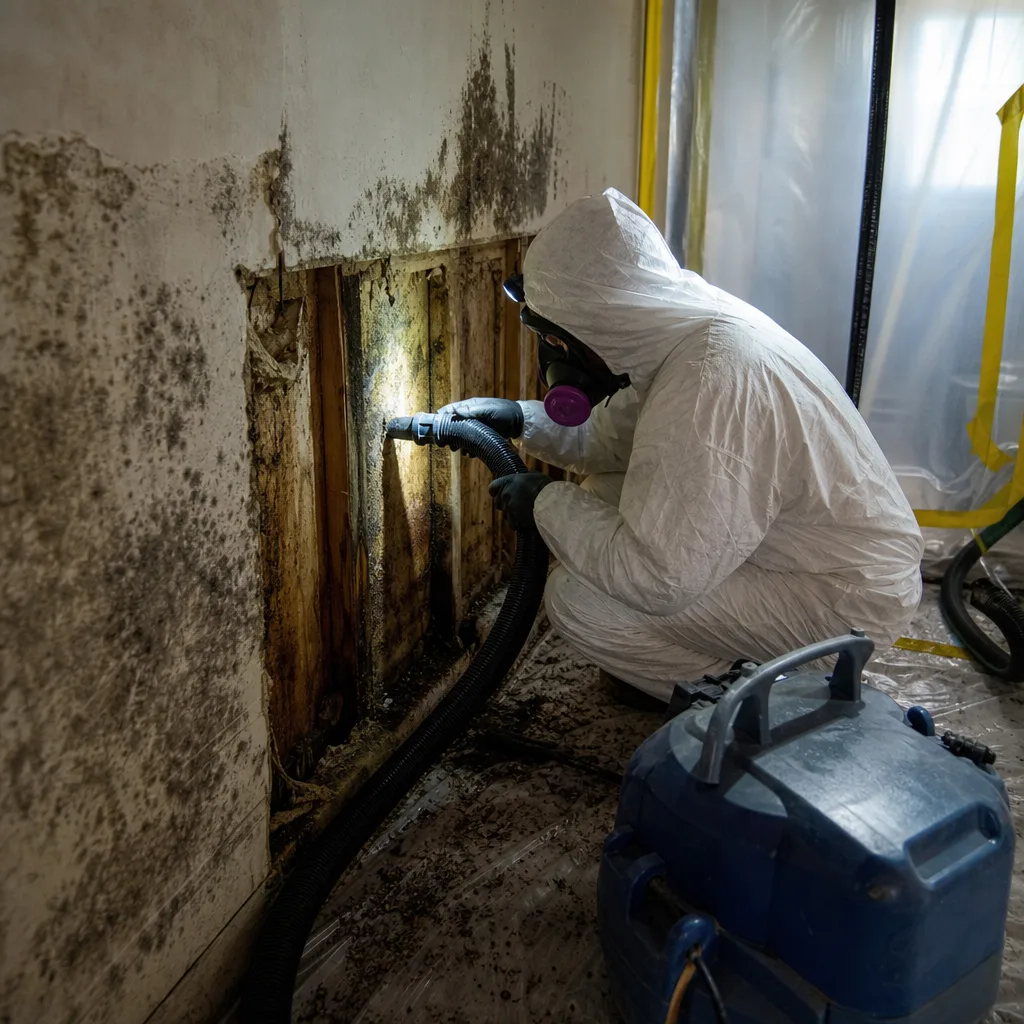
Blood cleanup in a Koreatown dingbat or courtyard building means getting into interstitial spaces most people never see. Original lath-and-plaster walls absorb fluids at the base plate. Old floor assemblies hold blood in the gaps between boards. We remove affected materials to the framing, disinfect with hospital-grade chemistry, and run HEPA air scrubbers until lab or ATP testing confirms the space is safe. When we’re done, the unit doesn’t smell like bleach and regret. It’s clean enough to re-rent.
Infectious Disease Disinfection
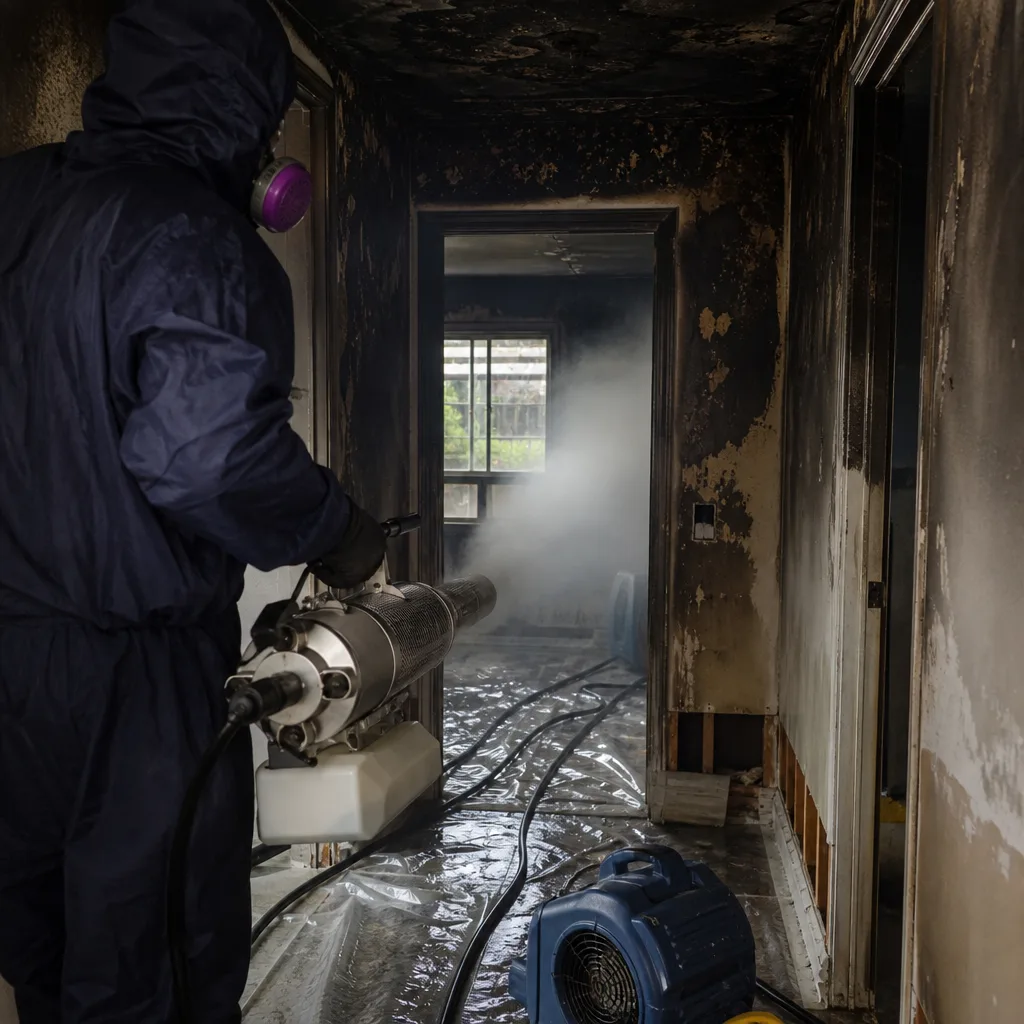
Koreatown’s older apartment blocks are harder to disinfect than newer LA buildings because the space you can see is only half the space you need to treat. Post-retrofit patching on soft-story buildings often seals off ventilation, trapping aerosolized pathogens in interstitial cavities. We open access to those spaces mechanically rather than relying on fogging alone. That’s slower. It’s also the only way to actually finish the job.
Hoarding Cleanup
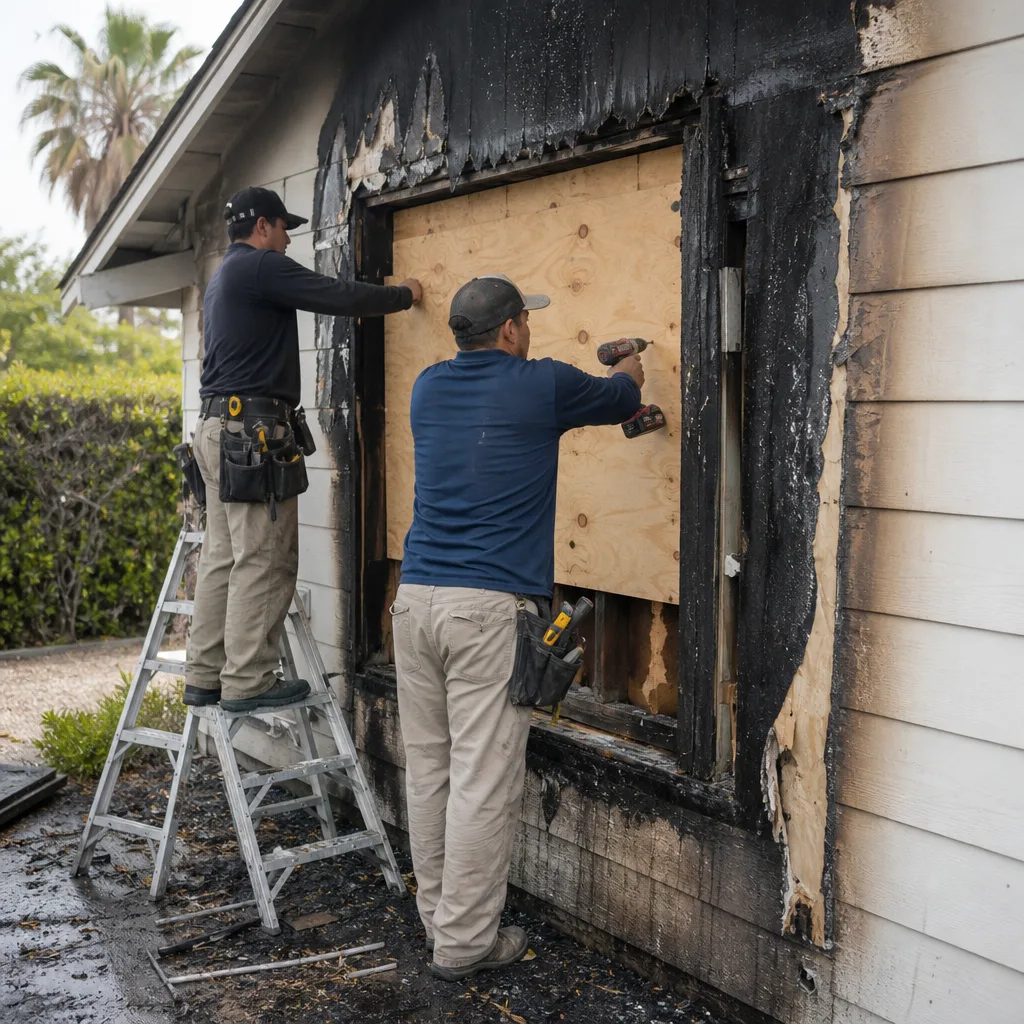
Hoarding remediation in Koreatown’s dingbat-style units carries a specific risk most crews miss: the moment you start removing compacted material from a third-floor apartment, you’re disturbing rodent droppings, dried biological waste, and often unseen structural damage to the original floor assembly. We contain the unit under negative air pressure before removal begins, because the last thing your neighbors need is aerosolized filth drifting down the shared stairwell. We coordinate with building management so hallways stay clean and other tenants stay out of the work zone.
What happens when you call
- 1
A real person answersNo phone trees - you reach a local pro.
- 2
You get an upfront price rangeHonest numbers before anyone is dispatched.
- 3
A background-checked tech heads outLicensed & insured, dispatched right away.
- 4
You approve before work beginsNothing starts until you say go.
Trusted Brands We Service in Koreatown
We bring IICRC-certified protocols and professional-grade equipment to every Koreatown job: Dri-Eaz dehumidifiers and air movers for structural drying, Injectidry systems for the subfloor and wall-cavity drying that older buildings demand, HEPA air scrubbers for airborne pathogen control, and the chemical line our RIA-affiliated training specifies for bloodborne pathogen remediation. We don’t stock local parts for biohazard work the way a garage-door company stocks springs, but we do keep the same equipment calibrated and staged at our LA office so a Koreatown call doesn’t wait on a shipment from Atlanta.
Common Biohazard & Crime Scene Cleanup Problems We See in Koreatown Homes
- Fluid migration through original dry-rotted wall cavities. A third-floor trauma scene weeps downward through the same voids that have carried plumbing leaks for eighty years, and by the time anyone notices the ceiling stain in the unit below, the biohazard has already saturated framing in two stacked tenancies.
- Soft-story retrofit penetrations creating new contamination paths. The mandatory seismic retrofits on many 1960s-70s Koreatown walk-ups added steel framing and anchor plates, but every new bolt hole through an existing floor assembly is a pathway blood and bodily fluids can follow into spaces that used to be sealed.
- Trapped decomposition odor in flat-roofed dingbat complexes. Post-retrofit patching that seals off old ventilation openings means decomp odors can’t escape, forcing us to mechanically open the ceiling and subfloor to find where the fluids settled. Fogging won’t reach it.
- Cast-iron waste stacks that were compromised before the biohazard happened. Decades of LA’s mineral-heavy water have already eaten away at Koreatown’s original stacks, and once decomposition fluids enter that system, the piping itself can be a contamination source that needs replacement, not just cleaning.
Pricing for Biohazard & Crime Scene Cleanup in Koreatown, CA
A standard crime scene or blood cleanup in a single Koreatown unit typically runs $1,800-$3,500. Trauma and unattended death cleanup, where fluids have migrated into subflooring or wall cavities, more often lands between $3,500 and $6,500. Hoarding cleanup in a dingbat unit starts around $2,000 for light clutter and climbs past $8,000 when structural damage, pest remediation, and multi-room material removal are involved. Infectious disease disinfection for a single apartment runs $1,200-$2,800 depending on square footage and whether interstitial access is required. Every job gets a written scope before we start, and you’ll know the number before we touch anything. Call (855) 915-0646 for a free estimate. We’ll come out, assess, and hand you a number you can take to your adjuster.
We Also Serve Cities Near Koreatown
Our crews work throughout Koreatown and the neighborhoods that border it: Los Angeles proper, Echo Park to the east, Silver Lake to the northeast, and Hollywood to the north. If your building sits on the edge of 90005, call us. Odds are we’re already working a job on your block and can be there within the hour.
Serving Koreatown, CA - Our Local Coverage Area
We’re based in the Koreatown area and know this community well. Use the map below to see our service coverage - if you’re nearby, we can almost certainly help.
FAQs - Biohazard & Crime Scene Cleanup in Koreatown
It typically doubles or triples the timeline compared to a single-family home, because fluids that migrate through shared wall cavities and stacked floor plates force us to remediate multiple units, not one. A courtyard building death on the third floor often means two additional tenancies below need inspection, testing, and partial remediation. We plan for that from the first call, and we coordinate with the landlord so tenants aren’t left wondering why work is happening two floors down from the original scene.
They absolutely do. The retrofit work that stiffened those 1960s-70s buildings against earthquakes also drilled hundreds of new bolt holes through existing floor and wall assemblies, and every one of those penetrations is a pathway fluids can follow into interstitial spaces that used to be inaccessible. When we remediate a post-retrofit Koreatown walk-up, we open and inspect those retrofit penetrations specifically. Skipping them means leaving biohazard residue behind a patched wall.
The base plates of original lath-and-plaster walls, the gaps between old floorboards, and any portion of the subfloor where a cast-iron waste stack or galvanized supply line has been leaking for years. Those areas are already compromised by moisture, which means they absorb biohazard fluids quickly and hold them. We remove plaster and lath in affected bays, treat the framing, and dry the subfloor with Injectidry mats before anything gets sealed back up.
Yes, and it does more often than people realize. The moment you start removing compacted hoard material, you aerosolize whatever is trapped in it: rodent waste, dried biological material, mold spores. In a dingbat building with shared stairwells and thin wall assemblies, that air moves into adjacent units fast. We set up negative air containment with HEPA filtration before any material leaves the unit, and we keep the work zone isolated from building common areas for the duration of the job. Call (855) 915-0646 if you’re dealing with this in a Koreatown building. We’ll walk you through the containment plan before we even schedule the crew.
Because the space you need to treat in a 1920s-70s Koreatown building includes cavities, chases, and subfloor assemblies that newer construction doesn’t have, and fogging alone doesn’t reach those spaces. We open access mechanically, treat all affected materials, and verify with ATP testing before we call the job done. In a newer building, a full-unit fog and surface disinfection might suffice. In Koreatown’s stock, that approach leaves pathogen reservoirs in the walls.
One More Thing About Koreatown That Matters
In Koreatown’s 1920s-40s courtyard apartments, the same galvanized supply lines and cast-iron stacks that fail inside shared wall cavities also become conduits for biohazard fluids after a death or violent incident. Because the buildings are concrete-and-wood hybrids with tightly stacked floor plates, a scene that starts in one unit on Serrano or Hobart can saturate subfloor assemblies spanning two or three units below before anyone notices a smell. That means the mold colonies, the pathogen reservoirs, and the structural saturation are already established across multiple tenancies by the time a restoration crew gets called. Generic biohazard companies treat the visible room and leave. We open the walls, trace the migration, and remediate the whole stack. That’s the difference between a cleanup that lasts and a building that’s still sick a year later. Call (855) 915-0646. Wade or one of his crew will answer, and you’ll get a straight answer about what you’re dealing with and what it’s going to cost.
Written by Wade Ferris, Owner at Wade’s Restoration of California, serving Koreatown since 2007.