
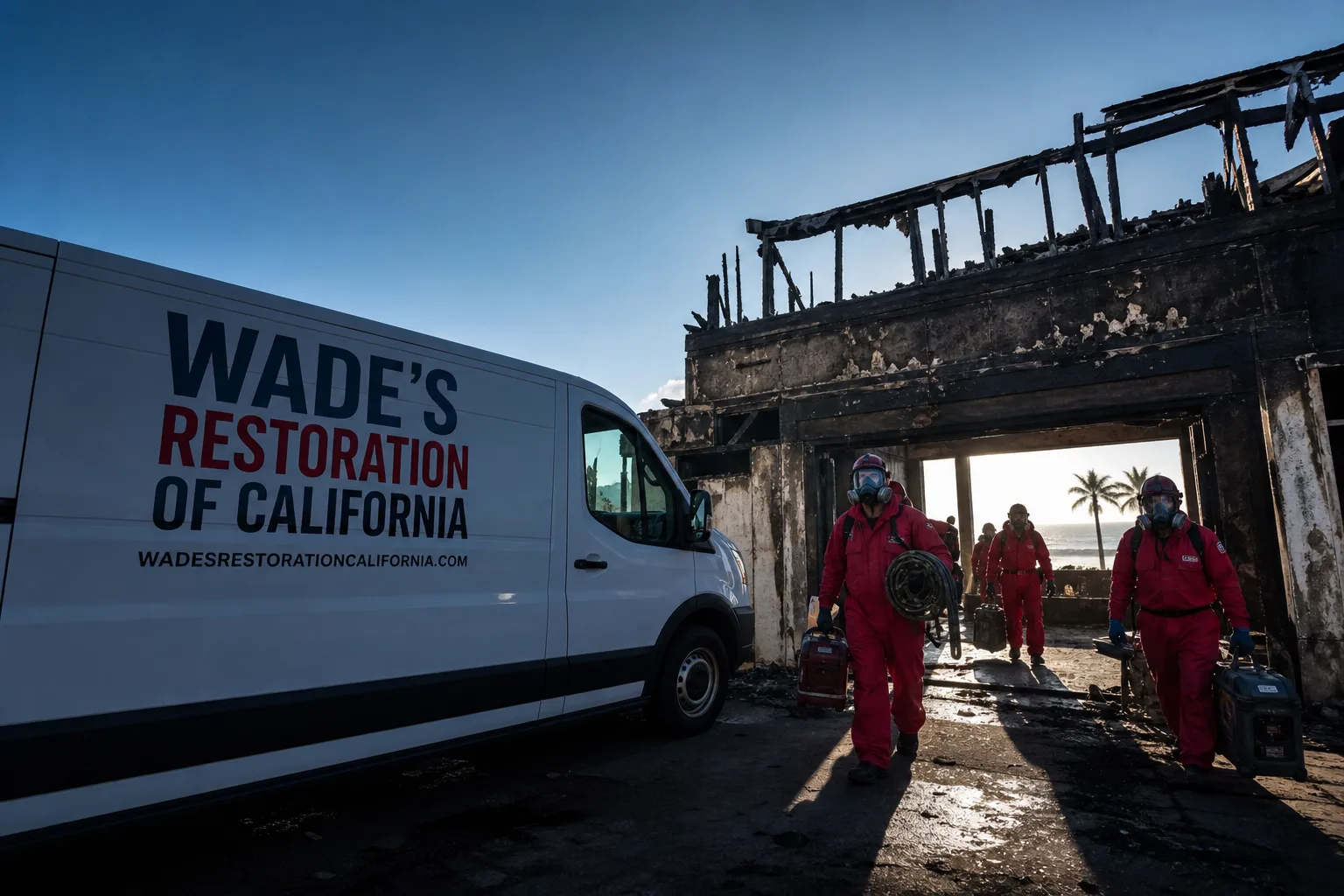
Fast, Reliable Biohazard & Crime Scene Cleanup Across Koreatown
Biohazard and crime scene cleanup in Koreatown requires a crew that understands the neighborhood’s dense, pre-WWII apartment buildings, not one that treats the job like a suburban single-family home. Koreatown’s 1920s-1940s courtyard apartments and 1960s dingbat walk-ups hide contamination inside shared wall cavities, floor assemblies, and crawlspaces, where a trauma scene in one unit can silently migrate into three or four neighboring tenancies before anyone realizes what’s spreading. Wade’s Restoration of California has been handling these exact situations since 2007. We’re the Biohazard & Crime Scene Cleanup team that shows up fast, contains the scene properly, and coordinates with every landlord, tenant, and insurance carrier involved. Call (855) 915-0646 and Wade Ferris himself will answer.
Why Wade’s Restoration of California Is Koreatown’s Preferred Biohazard & Crime Scene Cleanup Company
Koreatown isn’t a place where you can park a trailer out front and pretend the building is empty. Our crews have worked off Wilshire, Western, Normandie, Vermont, and Olympic enough to know that every courtyard apartment has its own quirks: shared drainage stacks, interconnected attic spaces, and wall cavities that run the full height of the building. When a third-floor unit has a trauma scene, the units below and beside it are part of the job, and we treat them that way from the first hour.
Wade Ferris founded this company in 2007 and still answers his own phone at midnight. That matters in Koreatown because a biohazard situation at 2 a.m. on a Saturday doesn’t wait for Monday’s call center. Our response time to Koreatown is measured in minutes, not days: we serve 90005 and the surrounding blocks, and Wade heads out as soon as you call.
Every job gets a written scope before work starts. No surprises, no upselling, no crew you’ve never met walking through your door. Wade’s name is on the truck, his address is published, and he’s going to run into you again at the Korean market on 6th Street. That’s the oldest accountability mechanism there is, and it’s the one we’ve relied on since day one.
Our Biohazard & Crime Scene Cleanup Services in Koreatown
Crime Scene Cleanup
When a violent incident occurs inside a Koreatown apartment, the physical aftermath often extends well beyond the visible scene. Blood and bodily fluids seep into original hardwood floors, plaster walls, and the subfloor assemblies that connect stacked units. We remove contaminated materials, disinfect every affected surface, and run negative air machines with HEPA filtration to keep aerosolized pathogens from moving through shared crawlspaces. In a 1930s courtyard building off South Normandie, a third-floor incident left fluids saturating the wood subfloor; we contained the unit, removed contaminated plaster and lath, and coordinated with the three tenants below who were already reporting odors in their kitchens.
Trauma & Unattended Death Cleanup
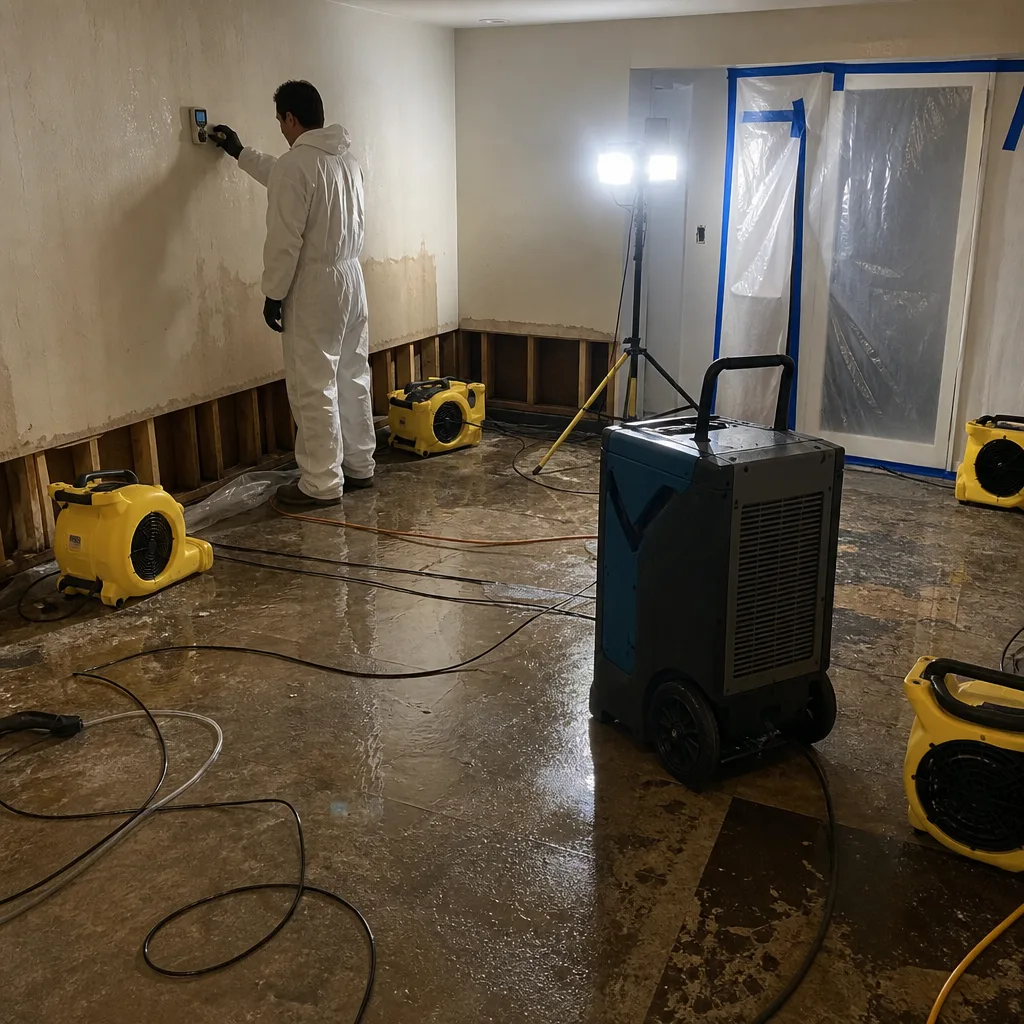
Unattended death cleanup in Koreatown carries a specific risk profile: decomposition fluids travel downward and sideways through old floor systems, and the odor penetrates wall cavities, plaster, and even neighboring units’ cabinets. In a 90005 apartment, days or weeks of decomposition in an upper-floor unit means the tenants below are already living with the smell. We don’t just clean the unit where the death occurred. We inspect adjacent units, test crawlspaces and shared vents, and document everything for the property owner and the insurance carriers involved. This is the work we do most often in Koreatown, and we do it with a level of cross-unit diligence that most restoration companies never attempt.
Hoarding Cleanup
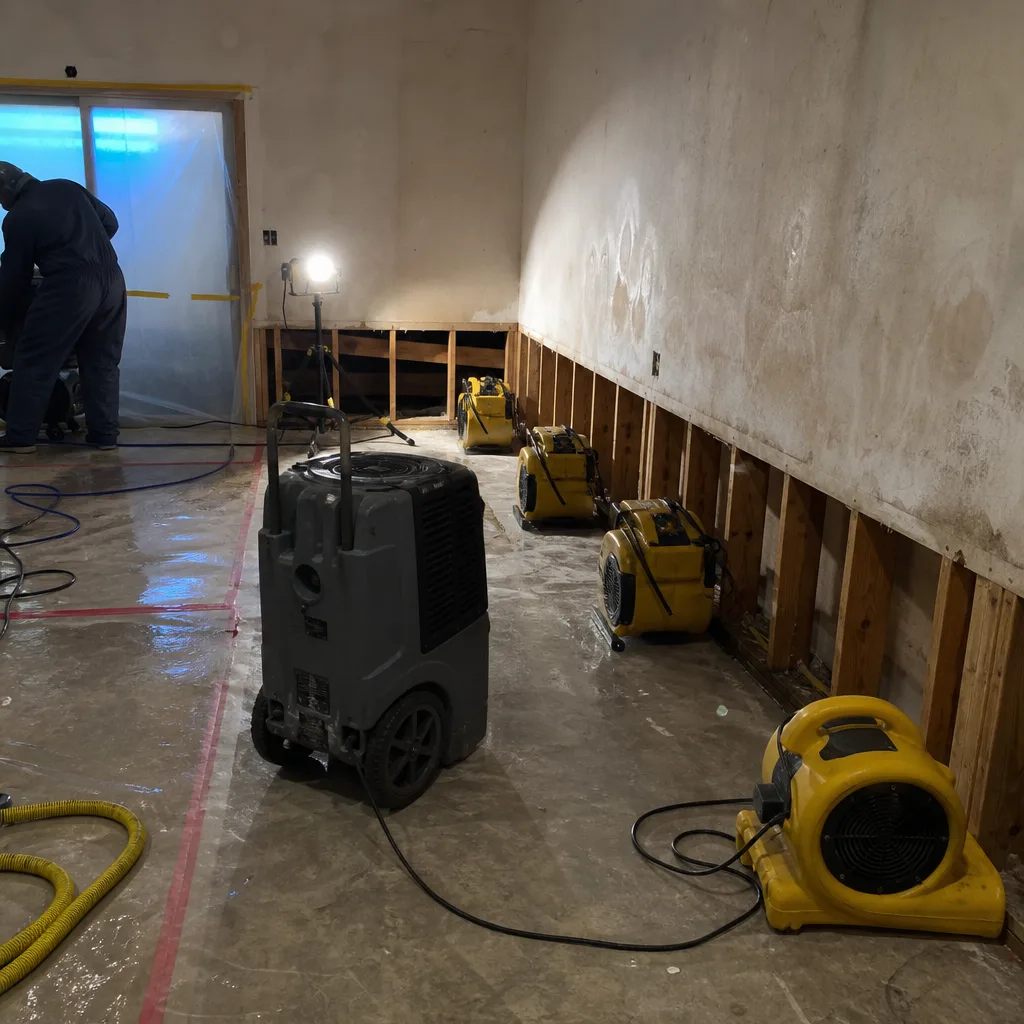
Hoarding situations in Koreatown’s dingbat-style walk-ups and older apartment blocks are different from hoarding in a standalone house. The accumulated material hides structural damage, rodent and pest activity, and biohazardous waste, but it also hides water damage that’s been leaking into the unit below for years. We work with property managers and family members to clear the unit methodically, preserve anything of value, and document the conditions that existed before we touched anything, which is exactly what the insurance adjuster needs. We also coordinate with the building’s other tenants so the hallway isn’t blocked and the whole building doesn’t need to be evacuated.
Blood & Bodily Fluid Cleanup
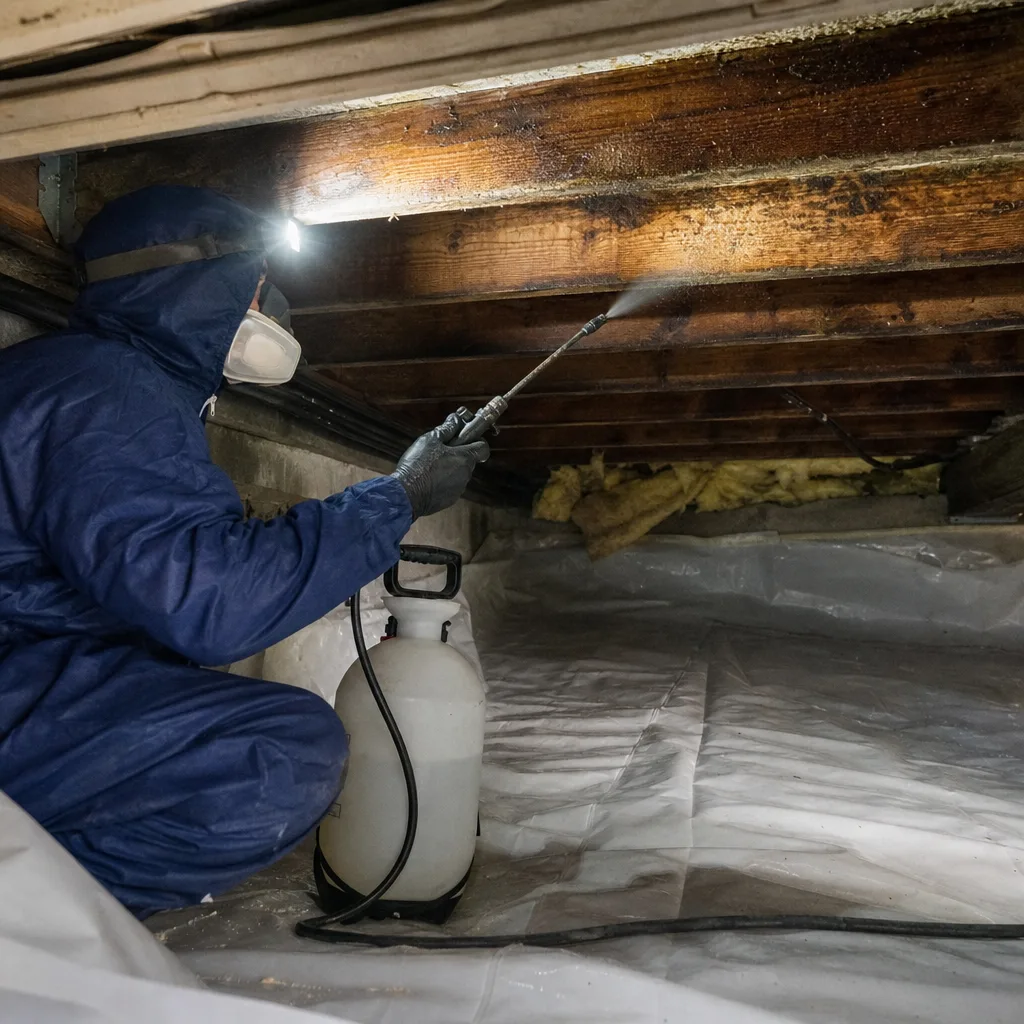
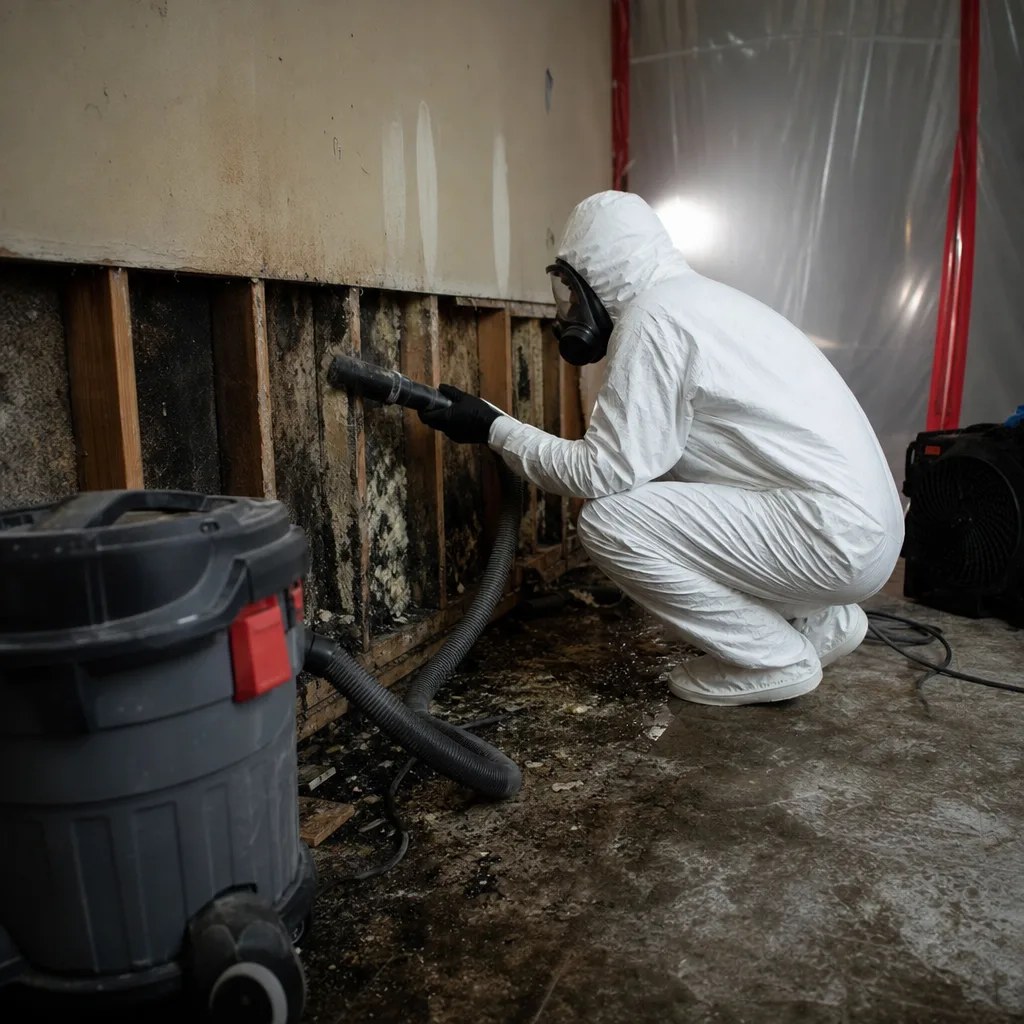
Bloodborne pathogen cleanup isn’t a janitorial task, and in Koreatown’s shared-wall apartments it’s not a single-unit task either. Blood can travel through floorboard gaps, plumbing penetrations, and the framing openings left behind by soft-story seismic retrofits. That means a blood spill in one unit can contaminate the wall cavity shared with the unit next door. Our crew removes affected drywall, lath, and insulation, treats the framing with hospital-grade disinfectants, and verifies that adjacent units are clean before we call the job done. We are IICRC-certified and RIA-affiliated, and we follow the industry’s highest standards on every blood and bodily fluid job.
What happens when you call
- 1
A real person answersNo phone trees - you reach a local pro.
- 2
You get an upfront price rangeHonest numbers before anyone is dispatched.
- 3
A background-checked tech heads outLicensed & insured, dispatched right away.
- 4
You approve before work beginsNothing starts until you say go.
Infectious Disease Disinfection & Tear Gas Cleanup
Infectious disease disinfection in Koreatown’s dense housing stock means treating every shared surface: stairwell railings, elevator buttons, mailroom doors, and the common-area floors where a single infected resident can expose dozens of neighbors. We use EPA-registered disinfectants applied with professional-grade equipment, and we document the entire process for the building owner.
Tear gas and chemical cleanup is a Koreatown-specific issue that we’ve handled after police incidents and civil disturbances near Wilshire and Vermont. Tear gas residue settles into every porous surface, HVAC vent, and fabric in an apartment, and it doesn’t dissipate on its own. We remove and replace contaminated drywall, insulation, and carpeting, run air scrubbers with activated carbon filtration, and treat the entire unit’s air space, not just the visible surfaces.
Trusted Brands We Service in Koreatown
Our crews arrive in Koreatown with professional-grade equipment from Dri-Eaz, Phoenix, and Injectidry, not rental-store gear that’s seen better decades. We stock replacement filters, HEPA cartridges, and containment materials in our Los Angeles office so we don’t have to wait on a parts run when a job in 90005 is already underway. That means faster setup, faster cleanup, and less time that your building’s tenants have to live around plastic sheeting and air scrubbers. Our work is backed by the IICRC, RIA, and IFA standards, and every job gets a written scope before we start.
Common Biohazard & Crime Scene Cleanup Problems We See in Koreatown Homes
- Cross-unit contamination through shared wall cavities. Koreatown’s 1920s-1940s courtyard apartments have interconnected framing and ventilation spaces between units. A decomposition odor or bloodborne pathogen event in one unit can migrate into neighboring tenancies before any remediation begins, and we regularly find contamination two or three units away from the original scene.
- Soft-story retrofit penetrations creating hidden paths. LA’s mandatory soft-story seismic retrofit ordinance left new framing openings in many Koreatown buildings. Those openings become pathways for biohazardous particles to travel between floors, turning a single-unit trauma scene into a multi-dwelling contamination problem.
- Old galvanized supply lines leaking inside walls. Koreatown’s mineral-heavy water corrodes galvanized pipes over decades, and slow leaks inside wall cavities go unnoticed until bloodborne pathogens or decomposition fluids have already seeped into adjacent units. By the time anyone notices, the contamination has spread through the floor assembly.
- Flat roof drains failing during winter storms. Koreatown’s older apartment buildings sit through long dry spells with clogged roof drains and dried-out membrane seams. When El Niño rain arrives, sudden rooftop flooding mixes with sewage backup in old cast-iron stacks and spreads infectious waste across stacked units.
Pricing for Biohazard & Crime Scene Cleanup in Koreatown, CA
Biohazard and crime scene cleanup in Koreatown runs higher than suburban work because the building stock is older, denser, and more interconnected. A contained single-unit blood cleanup in a 90005 apartment typically runs $1,800-$3,500. Trauma and unattended death cleanup, with cross-unit containment and possible subfloor replacement, runs $3,500-$8,000 depending on how far fluids traveled through the floor assembly. Hoarding cleanup in a Koreatown dingbat starts around $2,500 and can reach $10,000+ for severe cases involving multiple rooms and structural concerns. Tear gas remediation in an apartment complex runs $2,000-$6,000 per unit depending on how much porous material must be removed and replaced. Every estimate is free, written, and reviewed with you before any work starts. Call (855) 915-0646 and Wade will walk the property with you himself.
We Also Serve Cities Near Koreatown
Our crews cover all of Koreatown and the surrounding neighborhoods, including Biohazard & Crime Scene Cleanup in Koreatown, Los Angeles, Echo Park, Silver Lake, and Hollywood. If you’re a property owner with buildings in multiple LA neighborhoods, one call covers them all. We know the building types, the retrofit histories, and the insurance carriers involved across this entire part of the city.
Serving Koreatown, CA - Our Local Coverage Area
We’re based in the Koreatown area and know this community well. Use the map below to see our service coverage - if you’re nearby, we can almost certainly help.
FAQs - Biohazard & Crime Scene Cleanup in Koreatown
We treat every biohazard job in a Koreatown courtyard building as a potential multi-unit contamination event. That means we inspect adjacent units above, below, and beside the scene, test shared wall cavities and crawlspaces, and run negative air machines with HEPA filtration throughout the affected area before, during, and after remediation. We also coordinate with the building owner and any affected tenants so everyone knows what we found and what we’re doing about it. Call (855) 915-0646 for a walkthrough of your building and we’ll give you an honest assessment of what’s actually contaminated.
Upper-floor unattended death cleanup in a soft-story retrofitted Koreatown building requires sealing the floor assembly from the units below, because decomposition fluids travel downward through old subflooring and the framing penetrations left by seismic retrofits. We install containment barriers on the ceiling of the unit below, remove contaminated flooring and subflooring from above, and run HEPA air scrubbers continuously to capture aerosolized particles before they spread through the building. We also coordinate with the tenants below, who are usually already smelling the odor by the time we arrive. Call (855) 915-0646 and we’ll be there fast.
Yes. We stage containment inside the unit itself, use the unit’s entry as the only access point, and route our equipment through it so hallways and neighboring units stay clear. We never block fire exits or common areas, and we schedule debris removal in coordinated trips to the building’s service entrance so other tenants aren’t walking past bags of contaminated material. The building stays open, the unit gets cleaned, and we document everything for the property manager and insurance carrier. Call (855) 915-0646 for a free assessment.
Tear gas cleanup in a Koreatown apartment complex means removing and replacing every porous surface the chemical touched: drywall, insulation, carpeting, upholstery, and even some clothing and bedding. Tear gas particles embed themselves in these materials and re-release for months if they’re not removed. We run activated carbon air scrubbers during and after the removal, treat all remaining surfaces with a neutralizing agent, and verify air quality before anyone re-enters the unit. We’ve done this work off Wilshire and Vermont, and we know how to move fast when a whole building has been affected. Call (855) 915-0646 and Wade will head out to assess the building himself.
Yes, they often are. Galvanized supply lines in Koreatown’s 1930s courtyard buildings corrode from decades of LA’s mineral-heavy water, and they fail inside the same wall cavities where biohazard contamination can travel. When a slow leak has been saturating the wall cavity for months, the contaminated area is already larger than the original incident suggests, and we have to open up more of the wall to find the full extent. We document all of it with photos and moisture readings, and every job ends with a full log handed to you. Call (855) 915-0646 for an exact quote, free.
Contact Wade’s Restoration of California in Koreatown
You don’t have to handle a biohazard situation in Koreatown alone, and you don’t have to trust a national outfit that has never seen a 1930s courtyard apartment at midnight. Wade Ferris has been doing this work since 2007 and he answers his own phone. Calls are answered by a live person, 24/7. Background-checked, uniformed crews arrive with professional-grade equipment and a written scope before work starts. We work directly with insurance adjusters so you’re never the one stuck relaying information. The 90-Day Done Right Promise comes in writing on every job: if it’s not done right, we make it right. Call (855) 915-0646 for a free estimate, and Wade will be on the road to Koreatown before you hang up.
Written by Wade Ferris, Owner at Wade’s Restoration of California, serving Koreatown since 2007.