
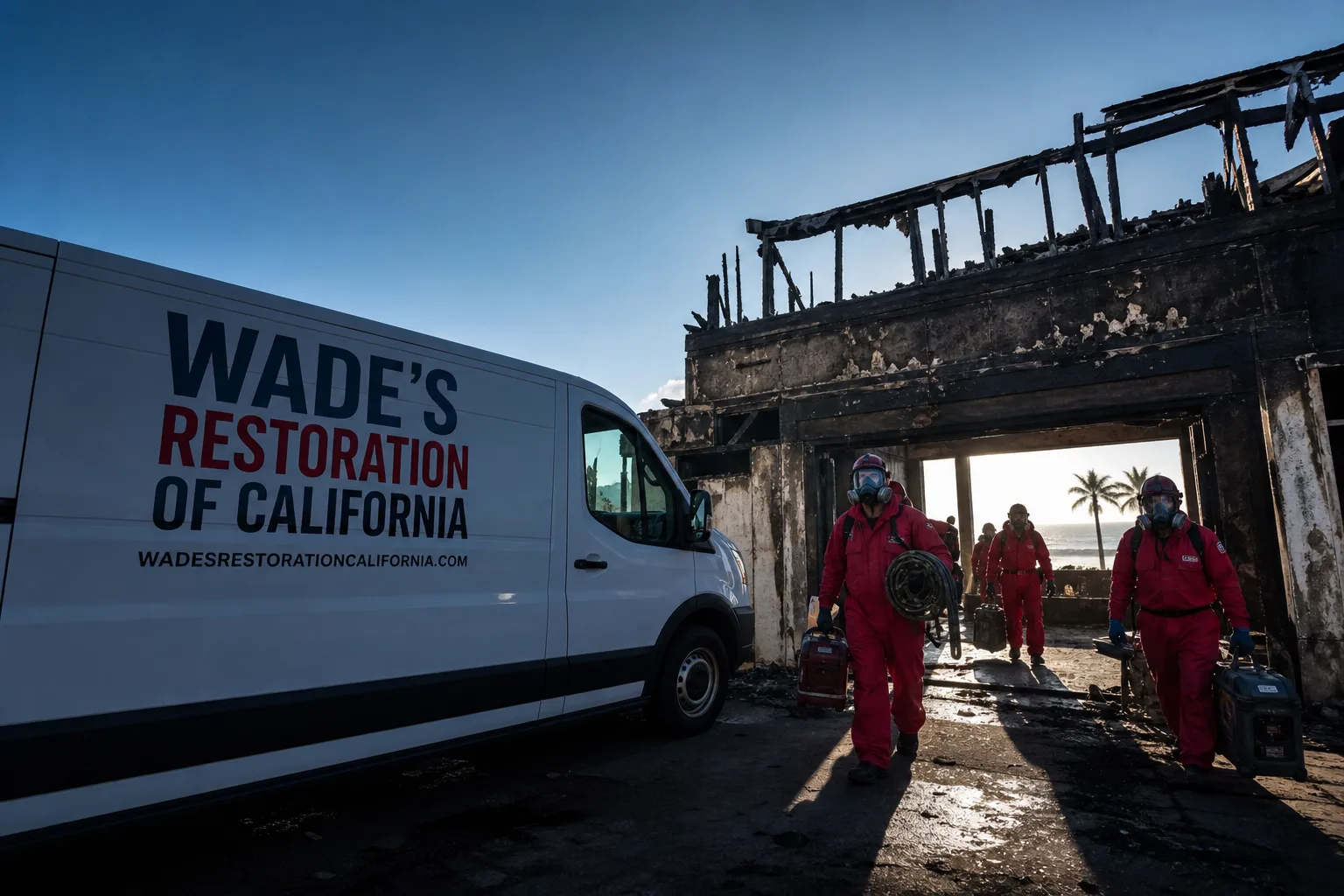
Fast, Reliable Water Damage Restoration Across Sacramento
Water damage restoration in Sacramento typically costs $2,800-$7,500 for a full structural drying project, and emergency extraction crews can be at your door within the hour. That’s not a corporate phone-tree promise. Wade Ferris answers his own phone, and when you call, he’s the one who heads out. If you’re standing in a flooded basement in Midtown or watching water pour through a ceiling in Arden-Arcade right now, call (855) 915-0646 and Wade will have extraction running before the water spreads any further.
Why Wade’s Restoration of California Is Sacramento’s Preferred Water Damage Restoration Company
Wade’s Restoration has been run by Wade Ferris since 2007. His name is on the truck, his address is published, and he’s going to run into you again at the farmers market or the hardware store. That’s the oldest accountability mechanism there is, and it’s why Sacramento homeowners keep calling him back. When a job’s done, Wade hands you the full moisture log. Every reading, every day. Almost nobody in the trade does that.
Sacramento is a city where water damage is never as simple as it looks. Our crews work the same neighborhoods you live in, from the Craftsman bungalows of East Sacramento to the 1950s stucco tract homes south of Fruitridge. We know what’s behind those walls before we open them. Wade deals with your insurance adjuster directly, so you’re never stuck relaying information between two sides. And every water, fire, and mold restoration job carries the 90-Day Done Right Promise, stamped in writing. If it’s not done right, Wade makes it right.
Wade’s crew is background-checked, uniformed, and runs professional-grade equipment: Dri-Eaz and Phoenix dehumidifiers, Injectidry mat systems, XPOWER air movers. IICRC-certified, RIA-affiliated, IFA-recognized. The credentials matter because the equipment matters, and the equipment matters because Sacramento’s clay soil and levee risk create damage patterns most national chains don’t recognize until it’s too late.
Our Water Damage Restoration Services in Sacramento
Here’s what we actually do when water hits a Sacramento home. These aren’t vague service categories. These are the jobs we run every week in this city. For the full scope of what we handle, see our Water Damage Restoration page.
Emergency Water Extraction
When a pipe bursts in a 1950s stucco tract home in south Sacramento at 2 a.m., the first hour determines how much wall comes out. Wade heads out with truck-mounted extraction units and gets standing water off your floors fast. In Sacramento’s older homes, the real danger is water that’s already migrated behind the stucco and into wall cavities where you can’t see it. Extraction is step one. Finding where the water actually went is what prevents a $1,500 job from becoming a $15,000 one.
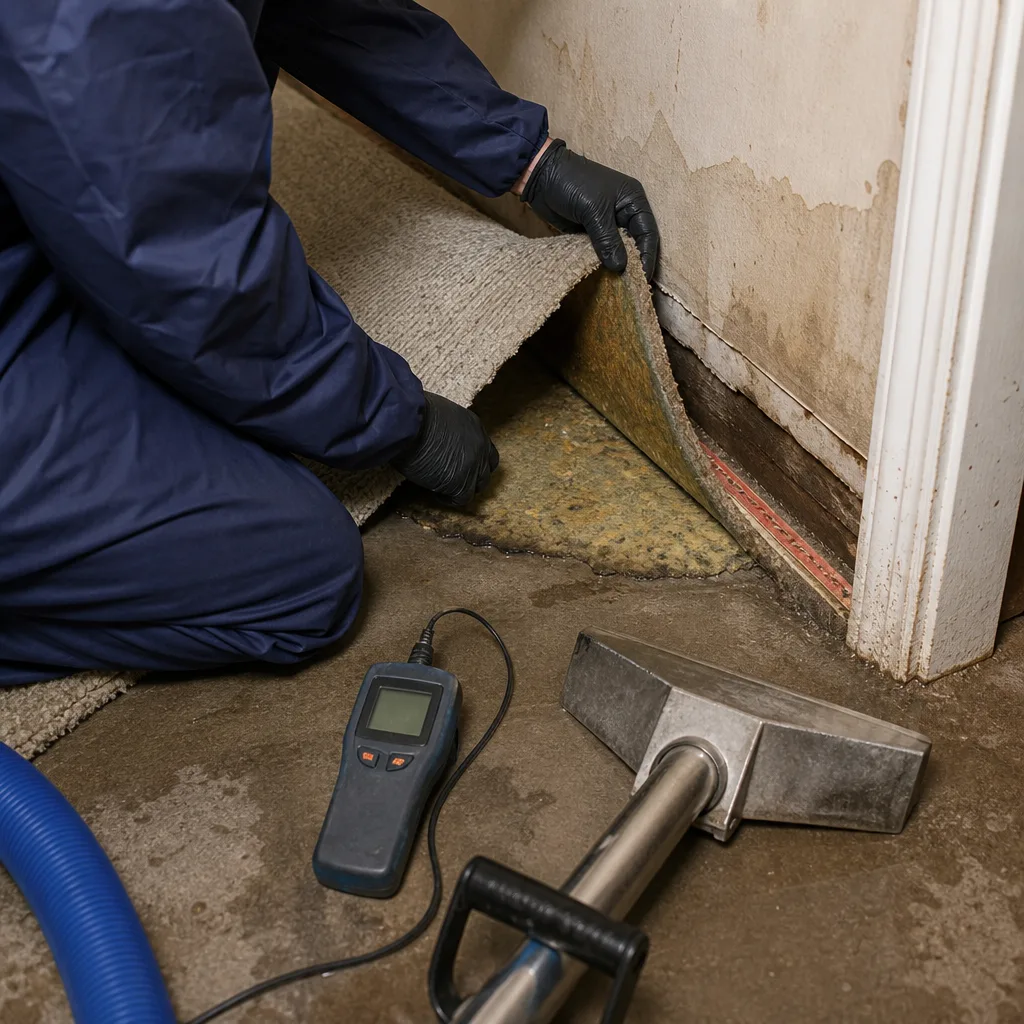
Structural Drying & Dehumidification
This is the part of the job national franchises rush through. In Sacramento, we can’t afford to rush it. The city’s Mediterranean climate means zero rain from May through September, and that’s exactly when expansive Vertisol clay soils dry and shrink, opening cracks in foundations and stucco. When winter atmospheric rivers arrive, water finds its way through those same cracks. Proper structural drying means running Dri-Eaz LGR dehumidifiers and Injectidry mat systems for as long as the moisture readings require, not as long as the insurance estimate allows. Wade takes moisture readings every single day and hands you the full log at the end.
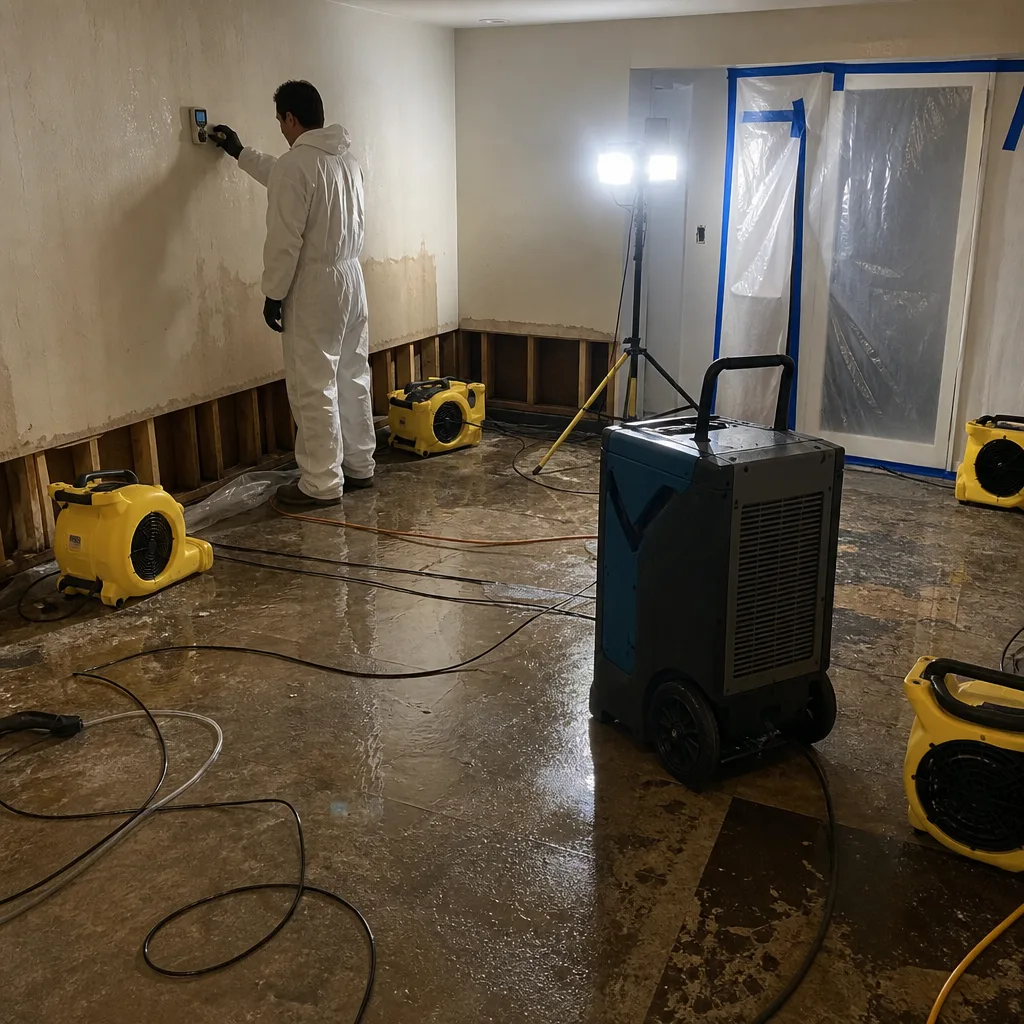
Flood Cleanup
Sacramento sits behind an aging network of levees at the confluence of the Sacramento and American Rivers. FEMA and the Army Corps of Engineers have repeatedly flagged this as one of the most flood-vulnerable major cities in the United States. When floodwater enters a home, it’s not just water. It’s silt, sewage, agricultural runoff, and whatever else the river was carrying. Flood cleanup in Sacramento requires category-three water protocols, antimicrobial treatment, and full containment, not just a wet vac and a fan. Our flood crews handle it the way it needs to be handled, not the way a quick-bid outfit prices it.
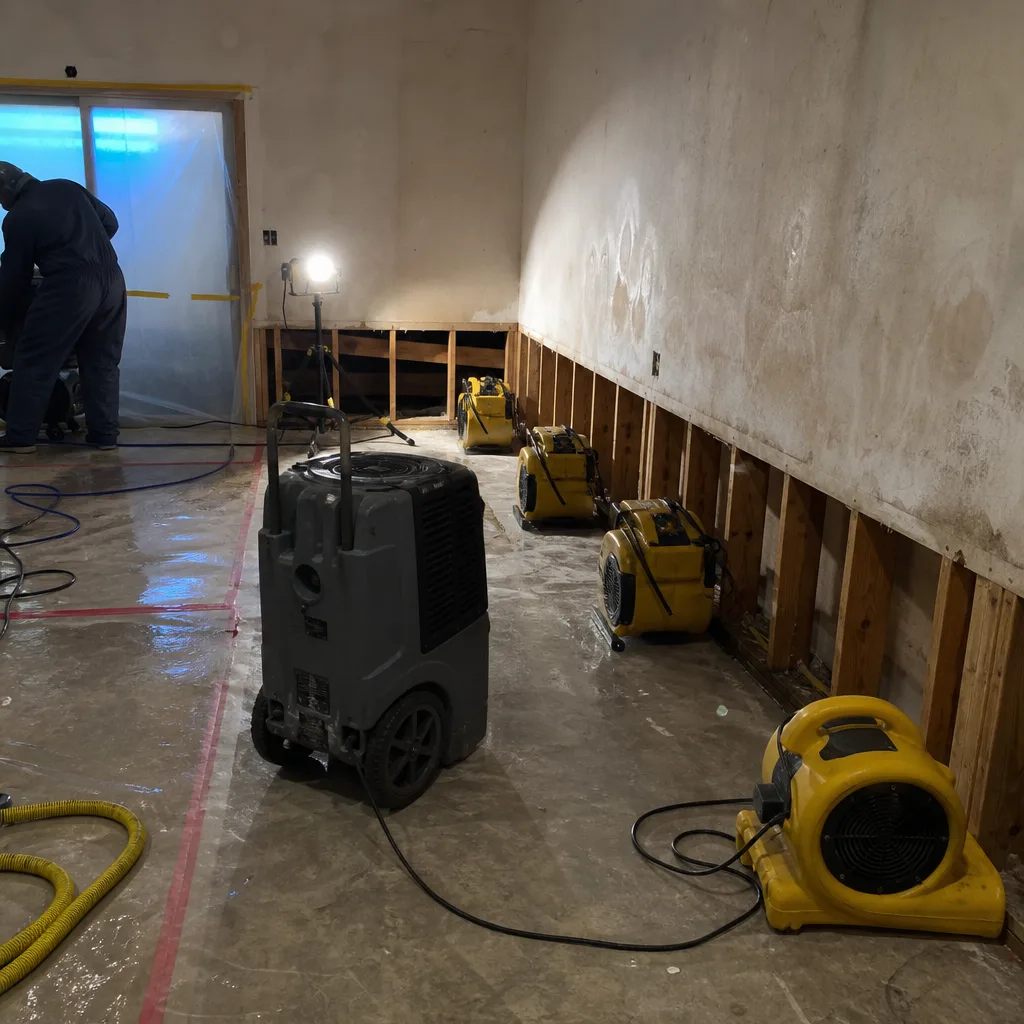
Burst Pipe Restoration
Sacramento’s older housing stock is thick with original galvanized supply lines. In Midtown’s Victorian-era homes and East Sacramento’s pre-war bungalows, those pipes have been corroding for 70 to 100 years. When one finally lets go, the water damage scope is almost always larger than the visible wet patch suggests. Water travels along joists, follows the grade of the floor, and pools in places you won’t find until you pull the baseboards. Burst pipe restoration in Sacramento means opening the wall, tracing the water path, and drying the entire run, not just the spot where the ceiling is sagging.
What happens when you call
- 1
A real person answersNo phone trees - you reach a local pro.
- 2
You get an upfront price rangeHonest numbers before anyone is dispatched.
- 3
A background-checked tech heads outLicensed & insured, dispatched right away.
- 4
You approve before work beginsNothing starts until you say go.
Trusted Brands We Service in Sacramento
Wade’s Restoration runs Dri-Eaz and Phoenix equipment on every job, and we stock replacement parts and filters locally in Sacramento so we’re not waiting on a shipment from Dallas when your home is wet. We’re IICRC-certified and RIA-affiliated, which means the drying standards we follow are the ones the industry’s best actually use, not the ones a franchise manual printed in 2012. When you call us about a flood cleanup or a crawl space that won’t dry out under a Midtown pier-and-beam home, we bring the right equipment the first time. That’s what IFA recognition means in practice: we’re not guessing.
Common Water Damage Restoration Problems We See in Sacramento Homes
- Seasonal clay-shift cracks that re-open every winter: Sacramento’s ZIP codes 94203 through 94211 sit on expansive Vertisol clays that shrink every dry season, reopening stucco and foundation cracks. What looks like a sudden water damage event in winter is often the fifth or sixth season of slow bulk water intrusion through the same compromised shell. Restoration crews that treat only the visible storm event miss these pre-existing cracks, and the same wall cavity gets wet again next winter.
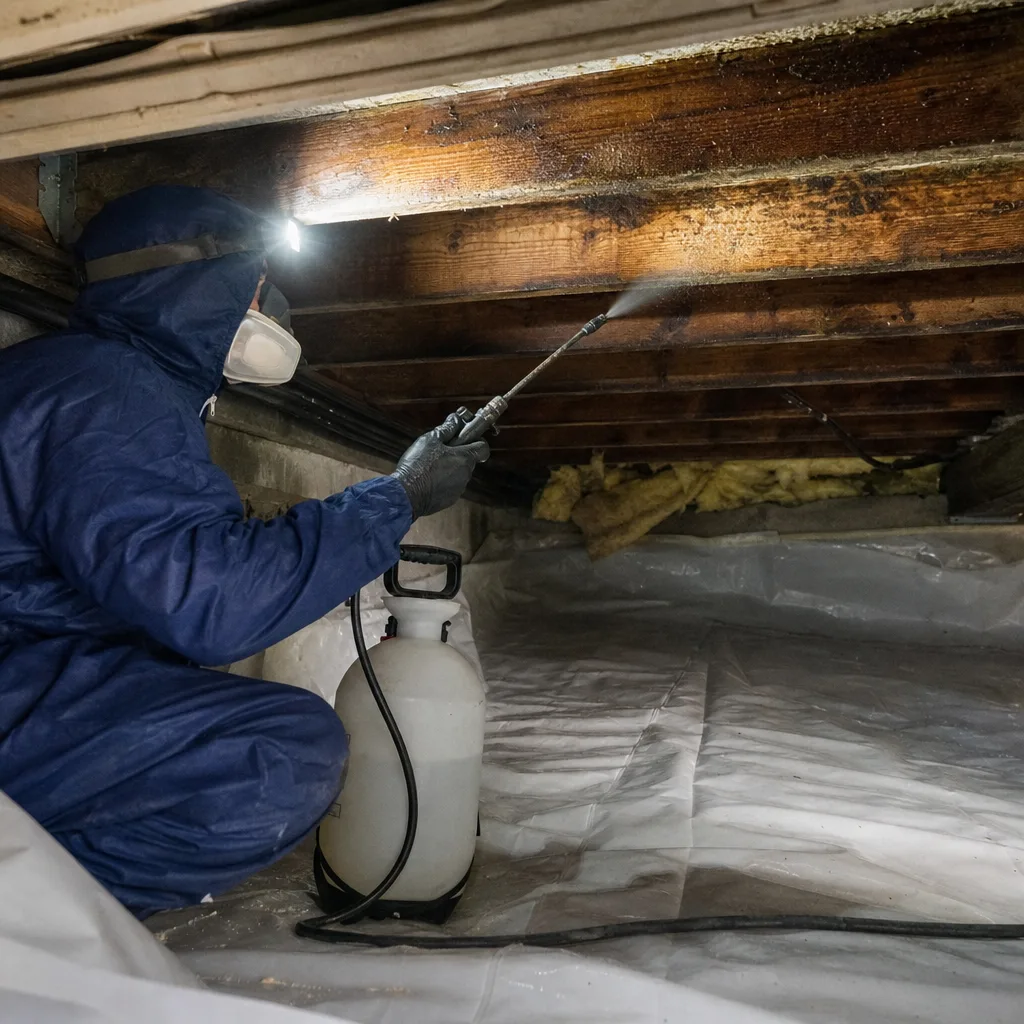
- Crawl spaces under pre-1940 pier-and-beam homes: Midtown and East Sacramento are full of Craftsman bungalows and Victorians with original pier-and-beam crawl spaces. Standing storm water hides beneath fiberglass batts that never fully dry, and most contractors never even check down there. We do. Because in Sacramento, a damp crawl space becomes a mold problem by the time the summer heat hits.
- Water-trapping stucco on 1950s-1970s tract homes: South and central Sacramento ZIP codes are dense with post-war stucco tract homes. That stucco cladding is thin, and when the clay subgrade moves seasonally, it cracks and separates from the lath. Water gets behind it, sits there, and rots the framing from the inside out. A burst pipe scope in these homes gets quoted as a simple extraction, but the real damage is behind the stucco where nobody looked.
- Atmospheric river events overwhelming drainage: Sacramento’s Mediterranean climate delivers essentially zero rain from May through September, then sudden atmospheric river events dump three to five inches in 48 hours onto ground that can’t absorb it fast enough. Driveways, window wells, and foundation perimeters back up, and water pushes under sill plates and into wall assemblies. This is a Sacramento-specific rhythm, and it requires a drying protocol that accounts for the seasonal cycle.
Pricing for Water Damage Restoration in Sacramento, CA
Here’s what Sacramento homeowners can expect to pay. Emergency water extraction alone typically runs $500-$1,800 depending on square footage and how many rooms are involved. Structural drying with dehumidifiers and air movers usually lands between $1,200 and $4,500 for a multi-day protocol. A full flood cleanup with category-three water protocols, containment, and antimicrobial treatment ranges from $3,500 to $12,000. Burst pipe restoration, including drywall removal, drying, and repair, typically runs $4,000-$9,000 when the water path requires opening walls. Crawl space drying under a pier-and-beam Midtown home adds $800-$2,500 depending on access and how long the water has been sitting there. Every job comes with a written scope before work starts, a free estimate, and no trip charge inside our own county. Call (855) 915-0646 and Wade will give you an honest number.
We Also Serve Cities Near Sacramento
Wade’s Restoration handles water damage restoration across the Sacramento metro. We work in West Sacramento, where new riverfront construction meets old levee infrastructure. We serve Fruitridge Pocket and La Riviera, where post-war tract homes deal with the same clay-shift cracking we see in south Sacramento. And we’re in Arden-Arcade regularly, drying out homes after burst pipes and roof leaks. For a full breakdown of our coverage, see Water Damage Restoration in Sacramento.
Serving Sacramento, CA - Our Local Coverage Area
We’re based in the Sacramento area and know this community well. Use the map below to see our service coverage - if you’re nearby, we can almost certainly help.
FAQs - Water Damage Restoration in Sacramento
Yes. Levee floodwater is category-three water: it carries sewage, agricultural runoff, silt, and whatever else the river system picked up. It requires full containment, antimicrobial treatment, and disposal of affected porous materials, not just drying. Standard water damage from a clean pipe break is category one and can often be dried in place. Call (855) 915-0646 and Wade will explain the difference for your specific situation.
Because the real cause was never fixed. Sacramento’s expansive Vertisol clay shrinks every dry season, opening cracks in stucco and foundations. Winter rains drive water through those cracks and into wall cavities. If the restoration crew only dried the visible damage and didn’t address the crack, the same wall gets wet again the next winter. That’s why Wade’s Restoration opens six feet of wall when the moisture readings tell us to, not just the two feet the customer can see.
We use Injectidry mat systems and Dri-Eaz LGR dehumidifiers positioned for targeted airflow through the crawl space access points, without pulling up your hardwood floors. The key is getting air movement across every wet surface, including the underside of the subfloor and the top of any fiberglass batts that have been sitting in standing water. We take moisture readings daily and give you the full log. If the readings don’t come down, then we talk about opening access panels, but most Midtown crawl spaces dry without touching the living space above.
Yes, and it happens more often than you’d think. The 1950s-1970s stucco tract homes across south and central Sacramento have thin cladding that separates from the lath along seasonal crack lines. When an atmospheric river dumps four inches in two days, water runs down the exterior, hits those hairline separations, and gets pulled behind the stucco by capillary action. The exterior looks fine. The wall cavity behind it is soaked. We find this pattern on nearly every older stucco home we open up after a major storm event in Sacramento.
Walk your foundation perimeter after every dry season and mark any new cracks in stucco or foundation walls. Check your crawl space after the first major rain and look for standing water or damp insulation. Make sure downspouts extend at least four to six feet from the foundation, because Sacramento’s clay soils don’t absorb water fast enough when it’s dumped close to the sill plate. And call Wade for a free second opinion on any written estimate you’ve received. If you’ve got a wall that’s been wet more than once, the fix isn’t another drying cycle. It’s finding where the water keeps getting in. (855) 915-0646.
Written by Wade Ferris, Owner at Wade’s Restoration of California, serving Sacramento since 2007.