
Fast, Reliable Water Damage Restoration Across Kensington
Water damage in Kensington usually means one of two things: a supply line or water heater let go inside a 1920s-to-1950s hillside home, or a storm pushed water into a crawl space that was never built to dry quickly. Either way, the clock starts ticking the moment water touches wood framing. In Kensington’s fog-fed climate, visible water is only half the problem. The other half is the humidity that lingers in tight crawl spaces and under tongue-and-groove floors for weeks. Wade’s Restoration has been answering calls in Kensington for years, and we know these streets, these foundations, and the exact way moisture moves through a stucco bungalow on a steep lot. We also know that a full-size extraction truck often cannot get up your street at all, and we plan for that before we ever leave the shop. If you have water where it shouldn’t be right now, call (855) 915-0646. Wade picks up the phone himself, day or night.
Key Takeaways:
- Emergency extraction to Kensington typically runs $1,200-$3,500 depending on square footage, access difficulty, and how far water has wicked into framing.
- Kensington’s narrow, tree-canopied streets often block full-size box trucks. We stage on Colusa Avenue and hand-carry equipment uphill.
- The marine layer keeps crawl spaces damp year-round, which is why structural drying matters as much as extraction here.
- Aging galvanized pipes in 1920s-1950s homes are the most common burst-pipe culprits in Kensington.
- Wade’s crew documents every moisture reading daily and hands you the full log at the end of the job.
Why Wade’s Restoration of California Is Kensington’s Preferred Water Damage Restoration Company
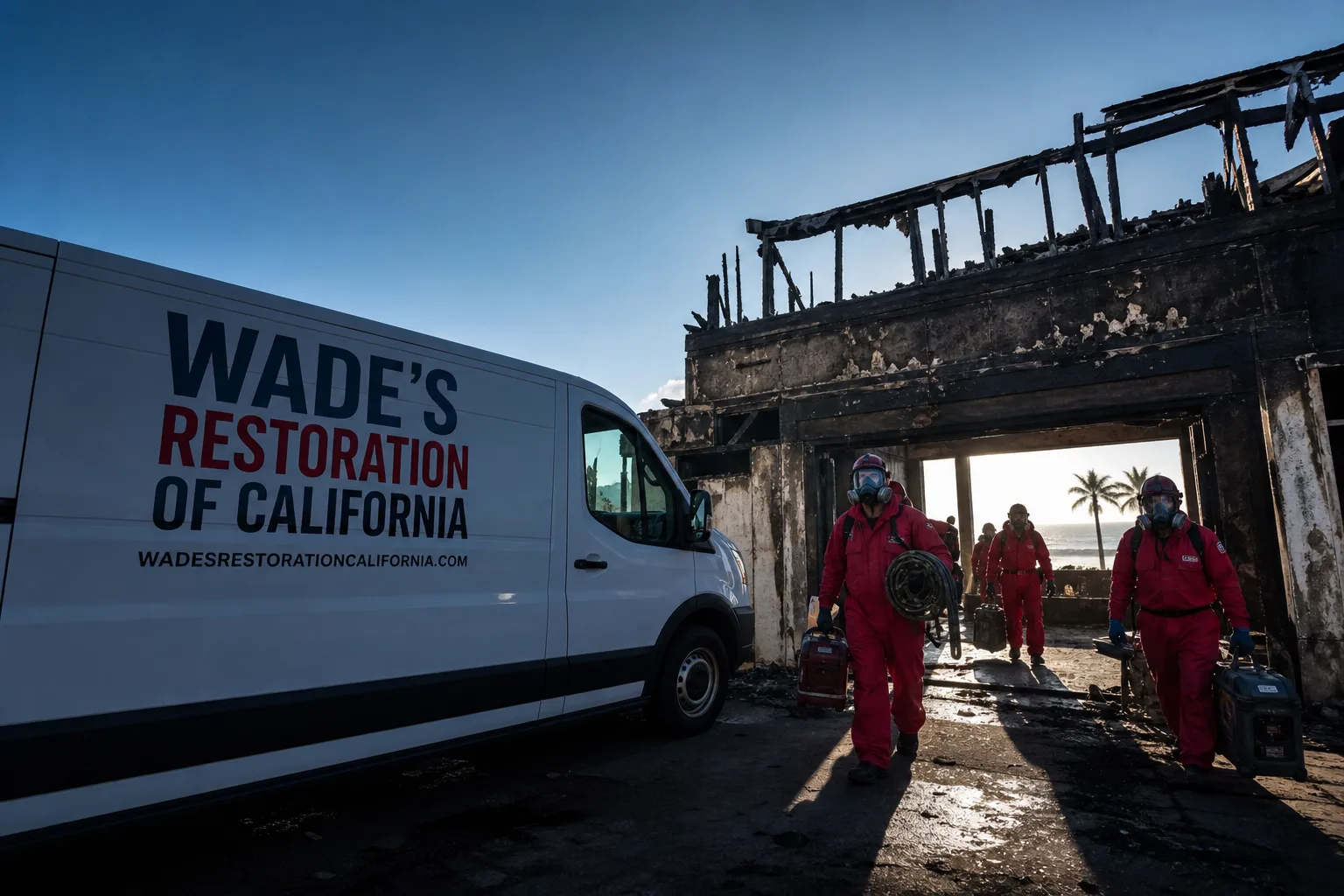
This is a neighborhood where people still know each other. Wade Ferris runs his business the same way: his name is on the truck, his address is published, and he’s going to run into you at the Sunday farmers market or walking Colusa Circle. That’s the oldest accountability mechanism there is, and it’s why Kensington homeowners keep calling us back.
The reviews from Kensington customers mention the same three things: the phone gets answered by a live person, the crew shows up when they say they will, and the moisture log at the end of the job is something no other company offered. Wade takes moisture readings every single day of a drying job and hands you the full log when the equipment comes out. Almost nobody else in this trade does that. If the framing is dry, you’ll see the numbers. If it’s not, Wade will tell you before you find out from a musty smell in April.
Response time to Kensington matters. From our San Francisco Bay Area office, the drive up the hill to Kensington is short, but the real time gets eaten by parking and equipment staging on narrow roads. We plan for that. Wade heads out as soon as he hangs up the phone, and extraction is usually running within the hour on the parts of Kensington that a truck can reach. On streets where it can’t, the crew stages on Colusa Avenue and walks the gear up. That slows things down a little, but skipping that step is how you get a truck blocking a blind curve and a neighbor calling the city.
Local knowledge changes how a drying job runs. Kensington homes sit on steep lots with minimal subfloor ventilation, and the marine layer pushes fog up the hillside most nights of the year. That means a crawl space that gets wet in January may never dry on its own. A flatland crew that treats only the visible water could leave your 1929 timber framing sitting damp for weeks. We don’t. We set drying perimeters that account for the actual humidity inside your home, not the assumption that air will move through it the way it does in Berkeley or Richmond.
Our Water Damage Restoration Services in Kensington
Our Water Damage Restoration team handles the full scope of what a wet Kensington home needs. Here are the services that matter most on these hillside streets.
Emergency Water Extraction
When a supply line bursts in a Kensington home, the water follows gravity and finds the lowest point, which is usually the crawl space or a basement daylighting toward the rear of the lot. Early extraction is the difference between a drying job and a tear-out. We run truck-mounted and portable extraction units based on what can actually reach your door, and we start pumping within minutes of arriving, not after a long equipment shuffle on the street. In Kensington, extraction on a typical three-bedroom bungalow runs $800-$2,200, with the low end for a single room and the high end for water that’s been moving through multiple rooms and into the subfloor for several hours.
Structural Drying & Dehumidification
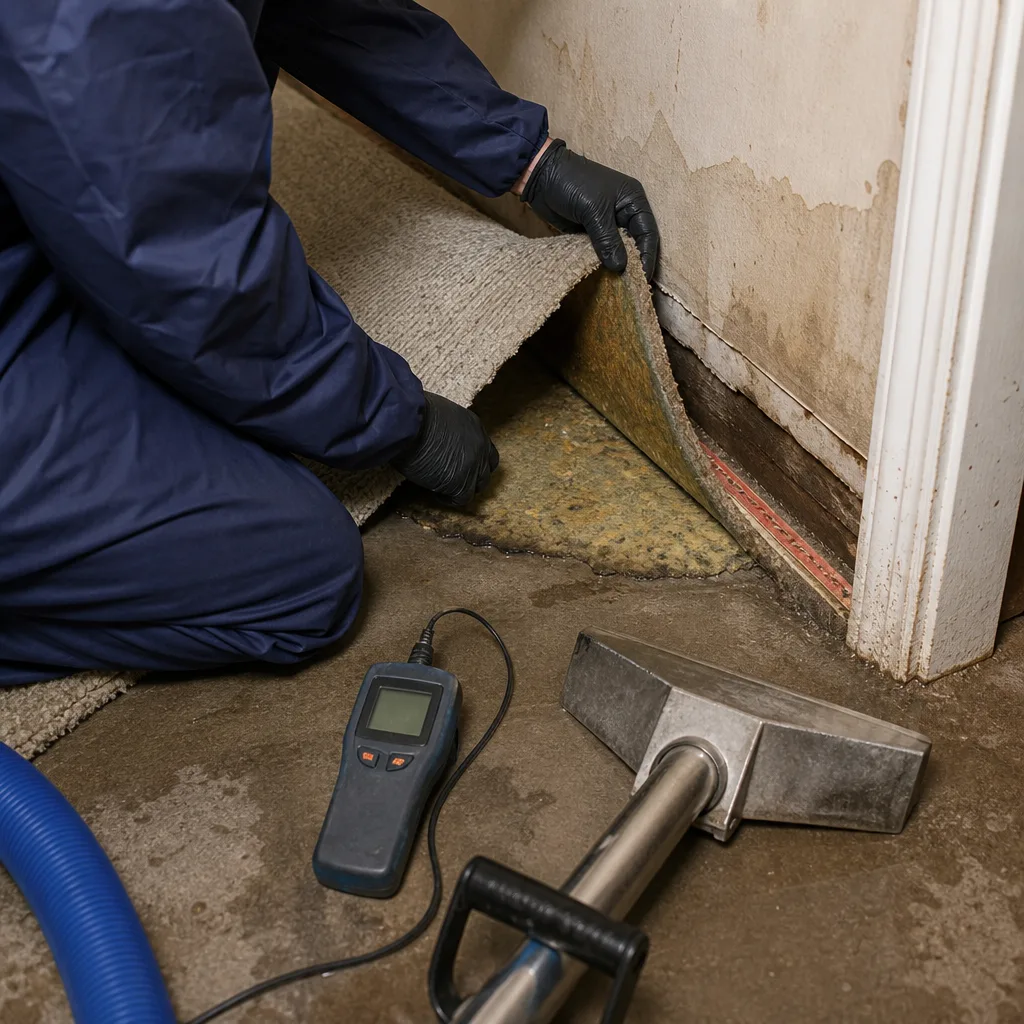
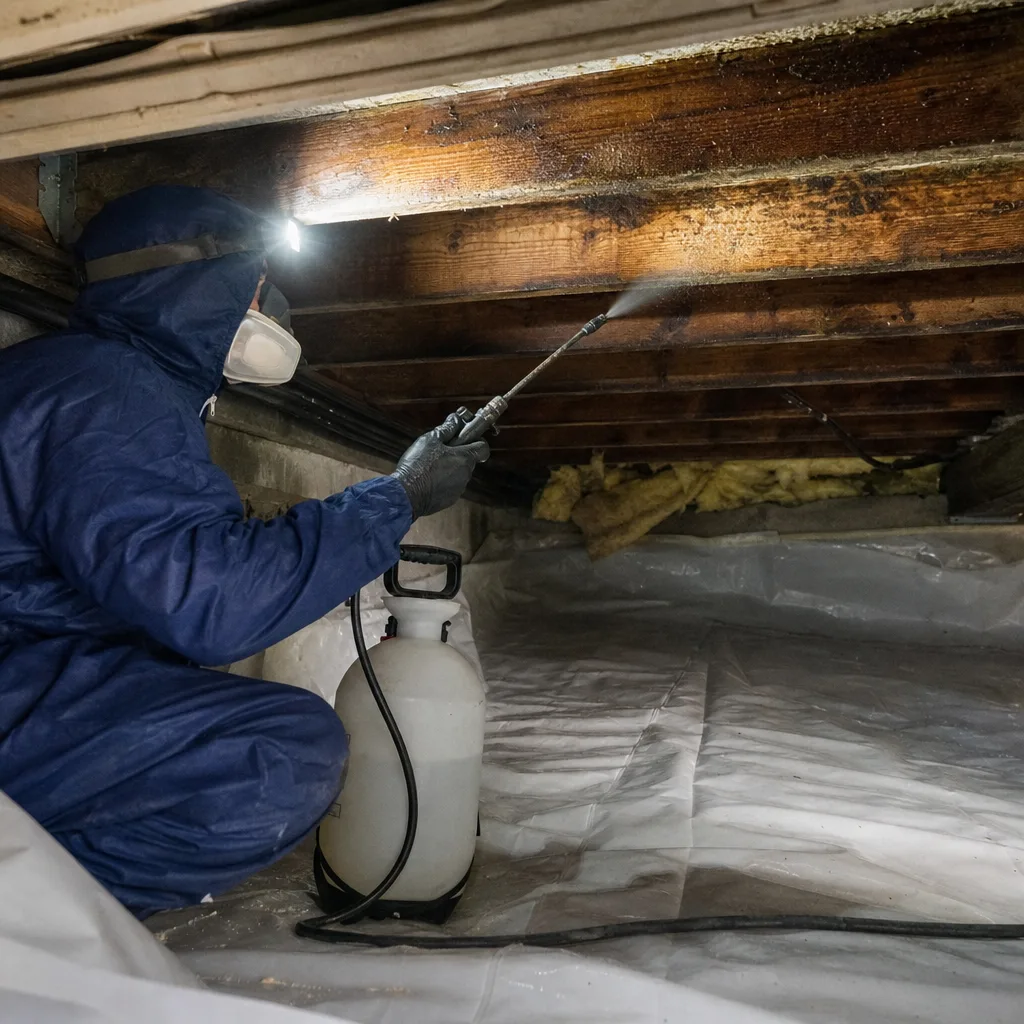
Drying a Kensington home is a different job than drying a flatland rancher. The fog keeps ambient humidity high, and the tight crawl spaces under 1920s-era craftsman bungalows don’t get cross-ventilation. We set up Phoenix and Dri-Eaz dehumidifiers sized for the actual cubic footage of the affected space, then we run the numbers every day until the framing hits its drying standard. Expect structural drying in Kensington to take four to seven days, sometimes longer on lower floors with masonry or stucco walls that hold moisture. This phase typically runs $1,000-$2,800, depending on how many rooms are wet and whether hardwood floors need Injectidry mat treatment.
Flood Cleanup
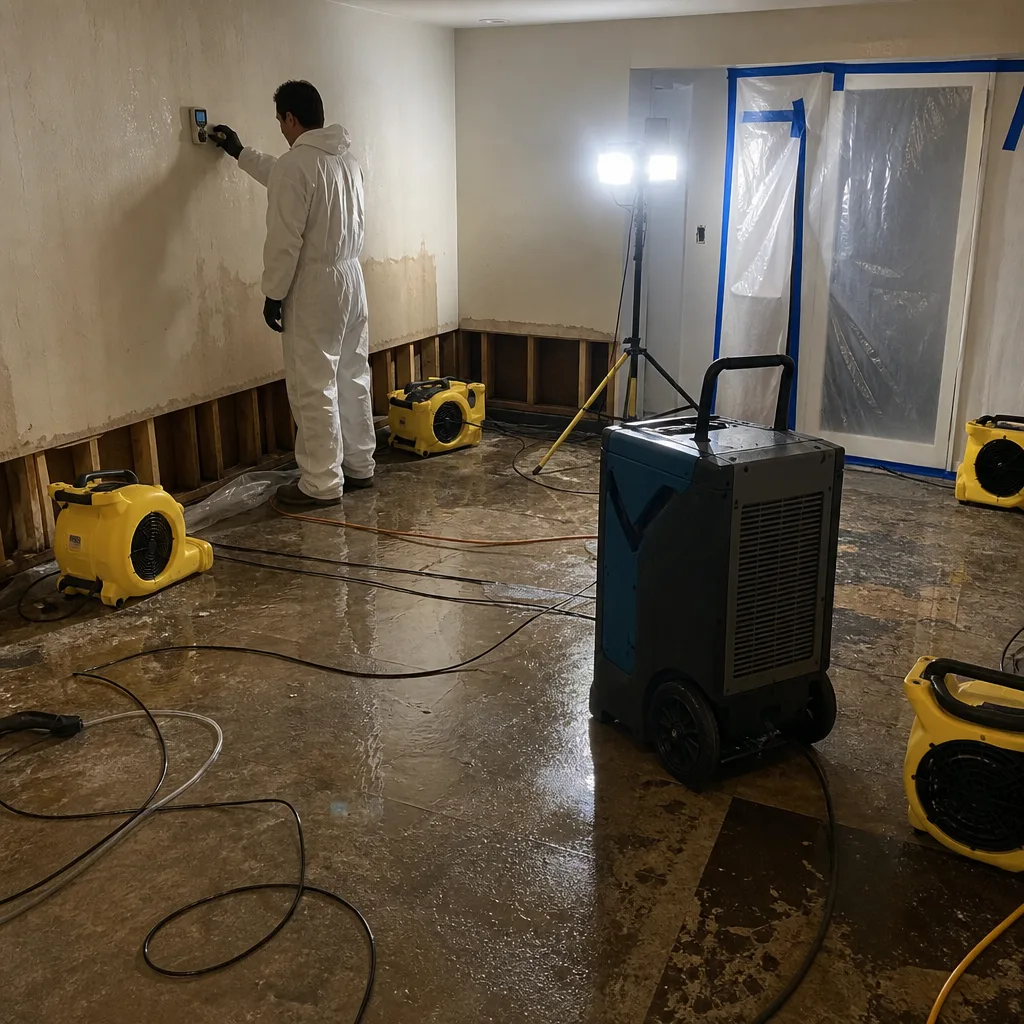
Kensington doesn’t get the kind of street flooding you see in flatland East Bay cities, but storm runoff is a real problem on steep lots. When heavy rain hits, water sheets down driveways and finds every crack in a 1930s foundation. Flood cleanup here means removing standing water, pulling saturated insulation and carpet, and dealing with the silt and debris that rode in with the water. On Kensington’s hillside lots, we’re careful to contain everything so it doesn’t wash farther downhill into a neighbor’s yard. Flood cleanup runs $1,500-$4,000 in Kensington depending on how much of the basement or garage was inundated and whether the water reached finished living space.
Burst Pipe Restoration
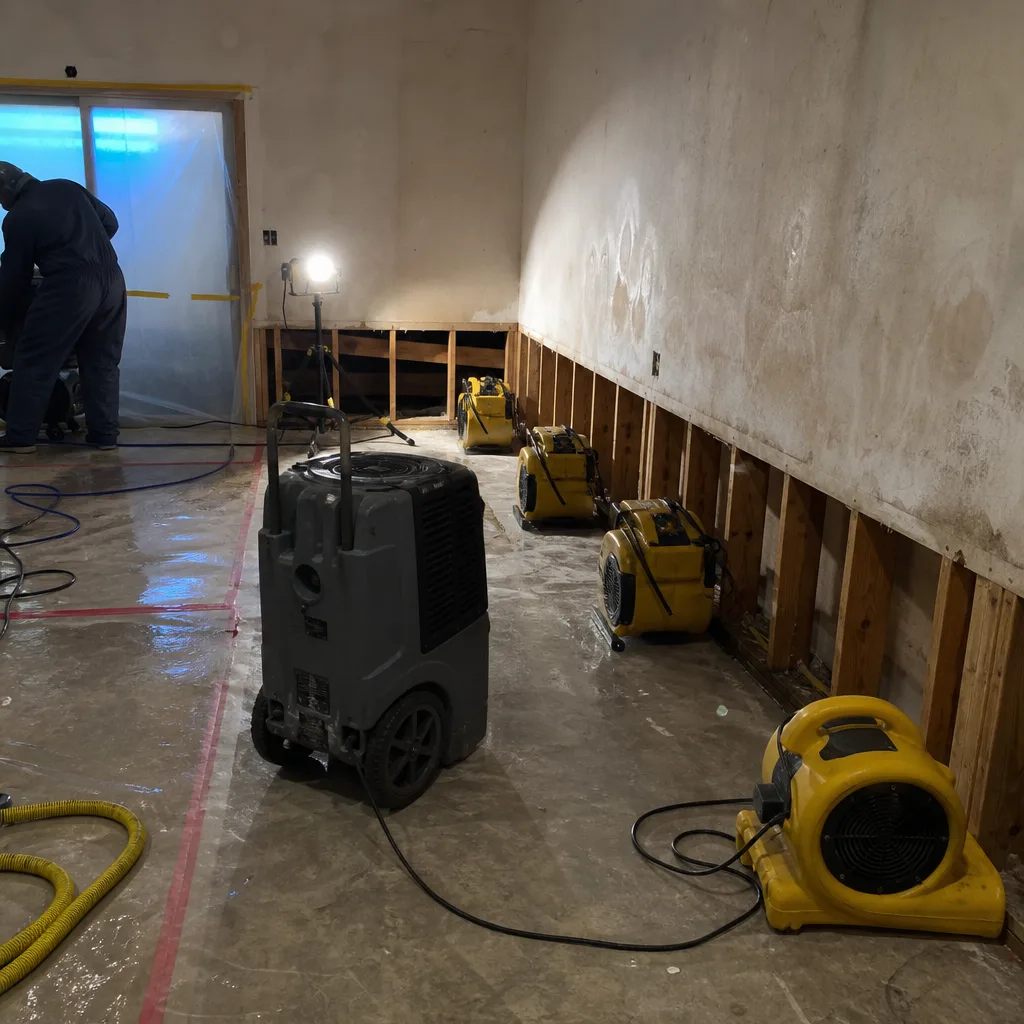
The galvanized supply lines in Kensington’s 1920s-to-1950s homes are well past their expected lifespan. They corrode from the inside, and when one lets go, it can dump water behind a wall or under a floor for hours before anyone notices. Burst pipe restoration means stopping the source, extracting the water, cutting drywall and pulling insulation where it wicked upward, and drying the framing. In Kensington, the complication is usually access: the pipe that burst is often buried in a wall below a hillside addition, which means careful cuts and a drying plan that reaches into dead space. Burst pipe jobs in Kensington usually run $1,800-$5,000, with the higher end for multi-level homes where water ran through finished ceilings on the way down.
What happens when you call
- 1
A real person answersNo phone trees - you reach a local pro.
- 2
You get an upfront price rangeHonest numbers before anyone is dispatched.
- 3
A background-checked tech heads outLicensed & insured, dispatched right away.
- 4
You approve before work beginsNothing starts until you say go.
Trusted Brands We Service in Kensington
Wade’s crew works on all major equipment and materials, and we use professional-grade gear from Dri-Eaz, Phoenix, XPOWER, and Injectidry on every Kensington job. That’s not marketing copy; it’s the difference between a dehumidifier that can pull 40 pints a day and one that can pull 130. The IICRC-certified technicians on Wade’s team know how to size the equipment to the structure, and that matters more on Kensington’s fog-fed lots than almost anywhere else in the East Bay. When the equipment needs a part or a filter mid-job, we stock the common consumables in our own vehicles rather than waiting on a supply house run from a warehouse in Hayward. For Kensington homeowners, that means the drying plan keeps moving instead of stalling for a day while a part shows up in the mail.
Common Water Damage Restoration Problems We See in Kensington Homes
- Fog-fed mold in crawl spaces after “completed” drying jobs. A flatland crew extracts the standing water, sets up one dehumidifier, and calls it done. But in Kensington, the marine layer keeps crawl space humidity at 75% or higher most nights. Three weeks later, the homeowner smells mildew under the 1929 floorboards. We treat the crawl space as part of the drying scope from day one, and we document the humidity levels daily.
- Trucks that can’t reach the house. Kensington’s streets were platted in the 1920s and 30s with no shoulder and mature trees whose canopies form a tunnel over the road. A 26-foot box truck physically cannot turn onto some of these blocks. Crews that don’t plan for this end up blocking Colusa Avenue, and the neighbors notice. We stage equipment where it fits and hand-carry Dri-Eaz dehumidifiers uphill. It costs a little more in labor, but it’s the only way to do the job without making enemies on the block.
- Galvanized supply line failures in aging walls. The housing stock in Kensington was largely built between the 1920s and the 1950s, which means galvanized steel pipes are everywhere. These pipes corrode from the inside and eventually fail at a joint or a pinhole. By the time water shows up on a ceiling, it’s been running inside a wall cavity for hours. The fix requires opening the wall, replacing the failing section with PEX or copper, and drying the cavity before mold gets a toehold.
- Water that wicks into tongue-and-groove flooring on steep lots. Kensington’s hillside homes often have original hardwood floors that have never been refinished, and they’re beautiful. But when water gets under them, the tongue-and-groove joints swell and cup. Without an Injectidry mat system pulling moisture out through the surface, the only fix is a full sand and refinish. We use mat drying to save floors that would otherwise be a tear-out, and that’s the kind of judgment call you want a local crew making and not a call center in another state.
Pricing for Water Damage Restoration in Kensington, CA
Here’s what you can expect to pay in Kensington’s market, with real numbers instead of vague ranges. Emergency water extraction on a single room runs $800-$1,500. A full-basement or crawl space extraction with sump pump work and standing water removal runs $1,500-$3,500. Structural drying with professional dehumidifiers and air movers runs $1,000-$2,800 for a typical three-to-four-day dry. Burst pipe restoration including drywall removal, insulation replacement, framing drying, and repairs runs $1,800-$5,000. Flood cleanup from storm runoff or an overflowing utility sink runs $1,500-$4,000. The biggest factors are how much water volume moved, whether it reached finished living space, and how hard it is to get equipment to the affected area, which in Kensington is often harder than the homeowner expects. Every estimate is free, and Wade gives you a written scope before any work starts. Call (855) 915-0646 and Wade will walk the property himself.
We Also Serve Cities Near Kensington
If you’re in El Cerrito, Albany, Richmond, or Berkeley, the same crew that handles Water Damage Restoration in Kensington covers those streets too. The hillside access issues and older housing stock carry over across the city line, so our equipment staging plan and drying approach translate directly. The drive is short and the phone is the same: (855) 915-0646.
Serving Kensington, CA - Our Local Coverage Area
We’re based in the Kensington area and know this community well. Use the map below to see our service coverage - if you’re nearby, we can almost certainly help.
FAQs - Water Damage Restoration in Kensington
Because the marine layer pushes fog up the hillside nearly year-round, keeping crawl spaces and attics in Kensington homes chronically humid (often 70-90% relative humidity at night), so any moisture left in framing after visible water is removed creates ideal mold conditions within days. A restoration that doesn’t run dehumidifiers long enough, or that skips the crawl space entirely, leaves the wood wet enough for mold spores to colonize. Wade’s crew runs moisture readings daily and hands you the log. We don’t stop until the numbers say the framing is dry, not just the carpet.
Sometimes yes, often no. Kensington’s residential streets were laid out in the 1920s and 30s with no shoulder, and the mature tree canopy over many blocks limits vertical clearance to well under what a box truck needs. If a full-size truck can’t reach your home, our crew stages on a lower arterial like Colusa Avenue and hand-carries Dri-Eaz dehumidifiers, XPOWER extraction units, and Phoenix air movers uphill. It adds labor, but it beats a truck wedged against a tree or blocking a blind curve. Call (855) 915-0646 and Wade will tell you straight what equipment will fit on your street.
Kensington straddles the Hayward Fault, which shifts slowly (tectonic creep) and occasionally produces significant earthquakes, so we look for cracks in foundation walls and displacement in crawl space framing that may be pre-existing and unrelated to your water event, and we document them before drying begins. This matters because a crack that predates the water could get blamed on water damage later, or a water-softened section of framing could be misdiagnosed as earthquake displacement. Wade photographs everything before extraction starts, and those photos go into your file and to your adjuster if needed.
Two things: the age of the plumbing and the slope of the lot. Most Kensington homes were built between the 1920s and the 1950s, meaning the majority still have original galvanized supply lines that have already exceeded their expected service life. On a steep hillside lot, a burst pipe doesn’t pool in one low spot; it runs downhill through wall cavities, under floors, and into the crawl space at the rear of the property, spreading water across multiple levels. That means a pipe that bursts in an upstairs wall can end up in the basement 45 minutes later. Wade’s team traces the full water path, not just the first wet spot you see. The typical galvanized repipe in Kensington runs $900-$2,500 for the section of pipe itself, and that plumbing repair is separate from the drying scope; we’ll quote both before work starts.
Yes. Drying a wood-framed hillside home is different from drying a slab-on-grade rancher because the crawl space is often sloped, the subfloor ventilation is minimal, and the ambient humidity from coastal fog works against you the entire time. A technician who only knows how to set up equipment on flat, dry lots will under-dry a Kensington crawl space. Wade’s crew carries IICRC, RIA, and IFA credentials, and specifically trains on hillside, post-and-beam, and pier-and-curtain-wall construction common in the 94530 ZIP code. That’s why Kensington homeowners who used a national chain the first time often call us for the re-dry. You’re always welcome to call (855) 915-0646 for a free second opinion on any written estimate.
If you’ve got water in your Kensington home right now, don’t wait for the fog to roll in tonight. Call (855) 915-0646. Wade answers his own phone, day or night, and he’ll tell you what’s happening, what it’ll cost, and when he can get there. No voicemail, no answering service, no call center reading from a script. Just the guy whose name is on the truck.
Written by Wade Ferris, Owner at Wade’s Restoration of California, serving the San Francisco Bay Area since 2007.