
Fast, Reliable Water Damage Restoration Across Homeland
Water damage restoration in Homeland, CA typically runs $1,800 to $6,500 for a standard manufactured-home water event, with emergency extraction starting around $400 to $900 when caught in the first few hours. We respond to Homeland calls day or night, and because we understand the housing stock out here, we bring the right equipment the first time. If you’ve got water where it shouldn’t be, call (855) 915-0646 and Wade’s crew heads out fast.
Homeland isn’t a tract-home suburb. It’s a small, rural community on the floor of the San Jacinto Valley, and most of the homes here are manufactured or mobile units built between the 1970s and 1990s. That changes everything about how water damage restoration gets done correctly. We treat this place as its own job site, not an extension of Menifee or Hemet.
Why Wade’s Restoration of California Is Homeland’s Preferred Water Damage Restoration Company
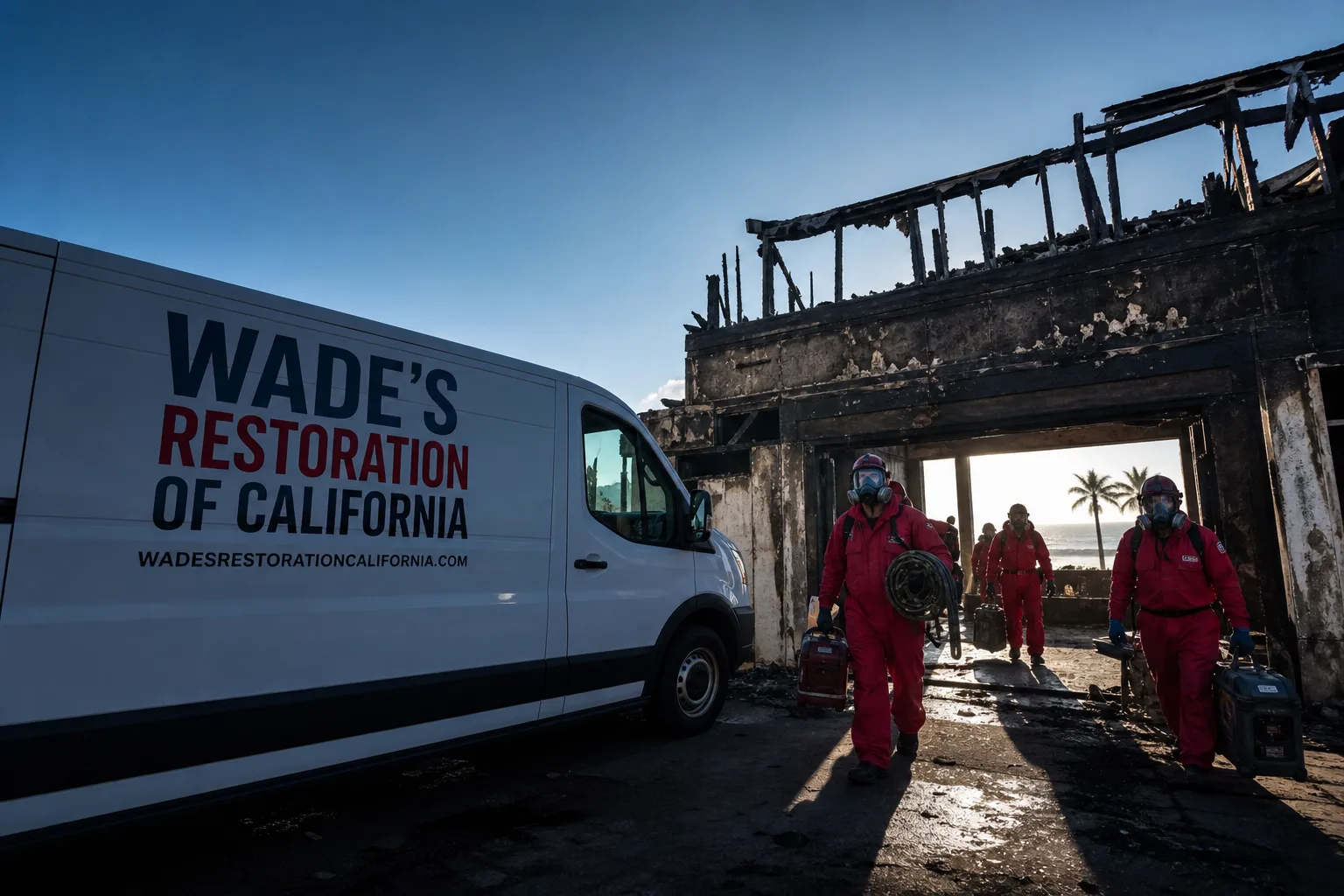
Wade Ferris puts his name on the truck, his address on the paperwork, and his cell phone on the line. That matters in a community like Homeland, where you’re going to see him again at the market or the hardware store. We’ve been doing restoration work since 2007, and the people Wade sends out are background-checked, uniformed, and trained on manufactured-home assemblies specifically, not just stick-built tract houses. The work is backed by the 90-Day Done Right Promise, in writing on every water damage restoration job.
Response time to Homeland matters more than in neighboring cities, and here’s why: the particle-board subfloors and thin wall assemblies in these manufactured homes absorb water fast and hold it. Mold can colonize fully within 24 to 48 hours. When you call, a live person answers. Not a voicemail tree. Wade often answers his own phone, and he can have extraction running inside the hour in 92548.
Ask anyone on your street. The people who’ve had a burst pipe or a flooded pad out here will tell you the same thing: you want someone who knows what a vapor barrier under a 1980s mobile home looks like after a water line lets go. Most national outfits don’t. We do.
Our Water Damage Restoration Services in Homeland
Emergency Water Extraction
When water is pooling on a manufactured home floor in Homeland, every hour counts. Particle-board absorbs water like a sponge and swells. We run truck-mounted and portable extraction units to pull standing water from floors, carpet, and low-lying areas around the pad. For the 92548 area, our goal is to be on site with extraction running inside the hour, because the clock starts the moment the water stops being a puddle and starts being a problem inside the floor assembly.
Structural Drying & Dehumidification
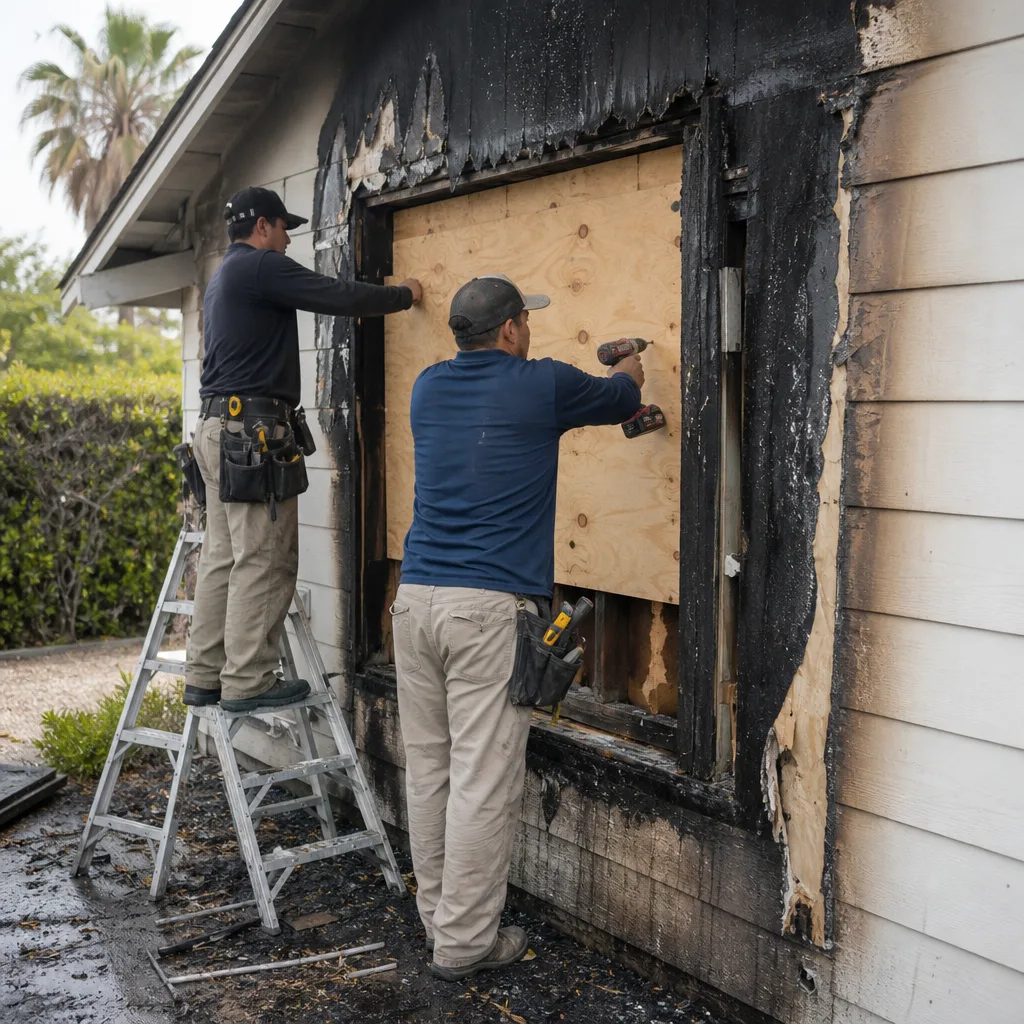
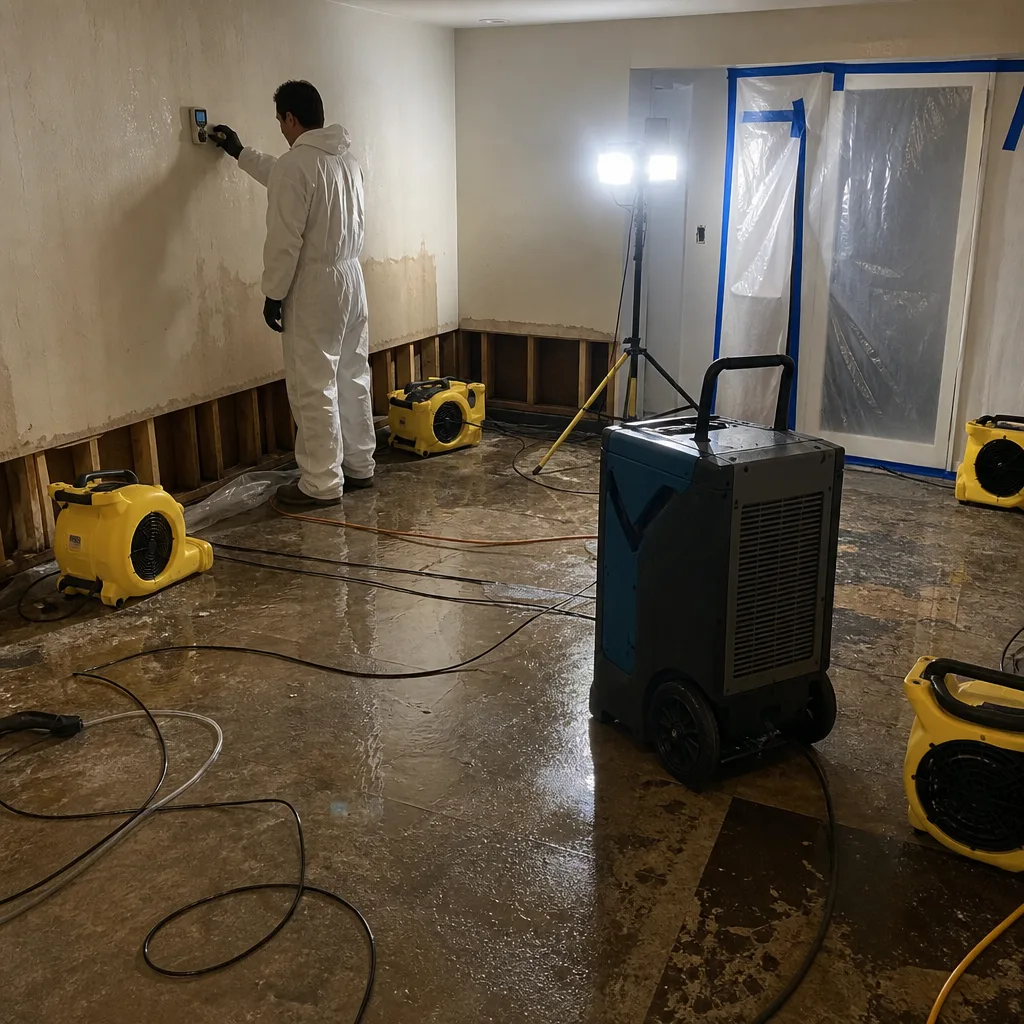
Homeland’s manufactured homes don’t dry like wood-frame tract houses. The wall cavities are narrow, and the vapor barriers trap moisture. We use Dri-Eaz LGR dehumidifiers and Injectidry panel drying systems to pull moisture from non-standard wall and floor assemblies. We take moisture readings every single day and hand you the full log at the end of the job. Almost nobody in this trade does that. It’s how you know the drying is actually done, not just on the surface.
Flood Cleanup
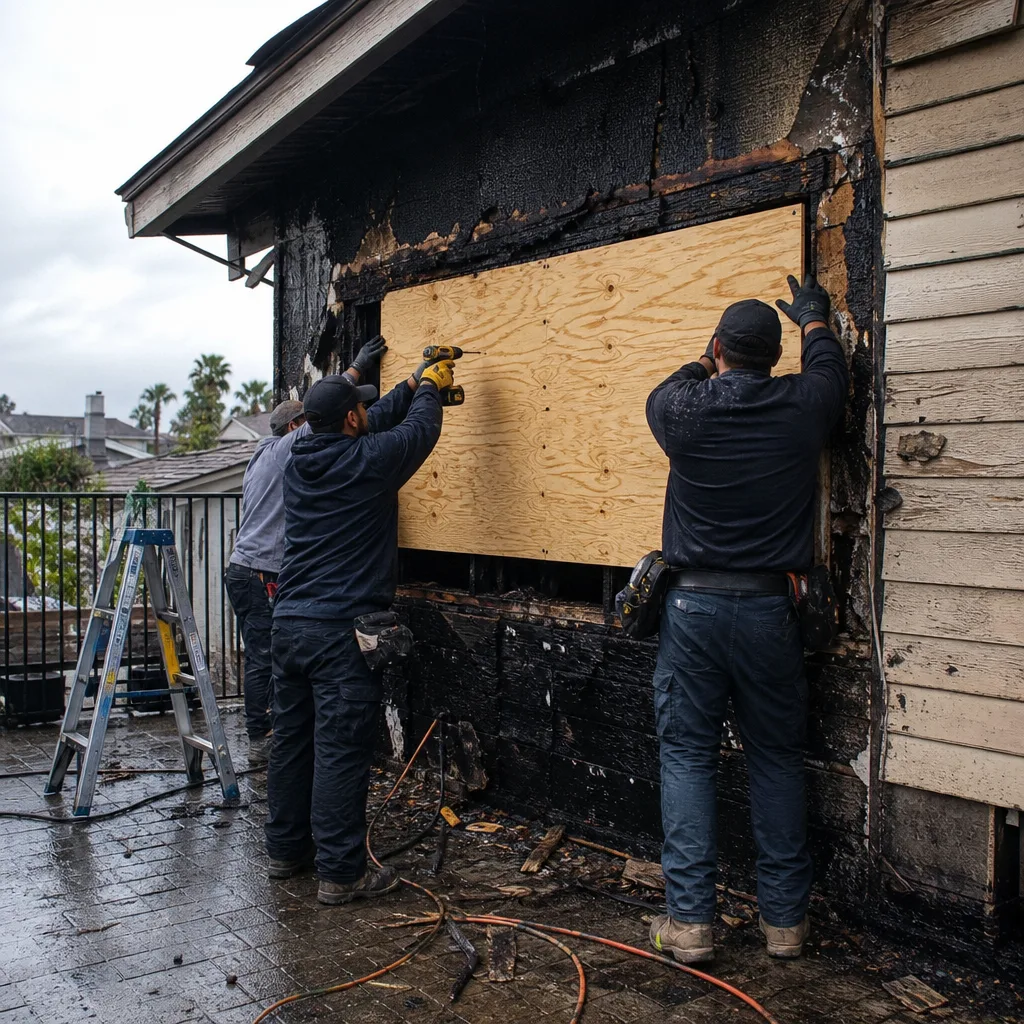
Flood events in Homeland carry their own set of problems. The expansive adobe clay soil under the pads swells when saturated. That means the pad itself can heave, unlevel the home, and buckle interior flooring long after the water is gone. Before we start extraction on any flood job, we document pre-loss pad elevation so the soil movement isn’t mistaken for restoration failure later. We’re one of the few Water Damage Restoration crews that treats soil movement as part of the water damage scope.
Burst Pipe Restoration
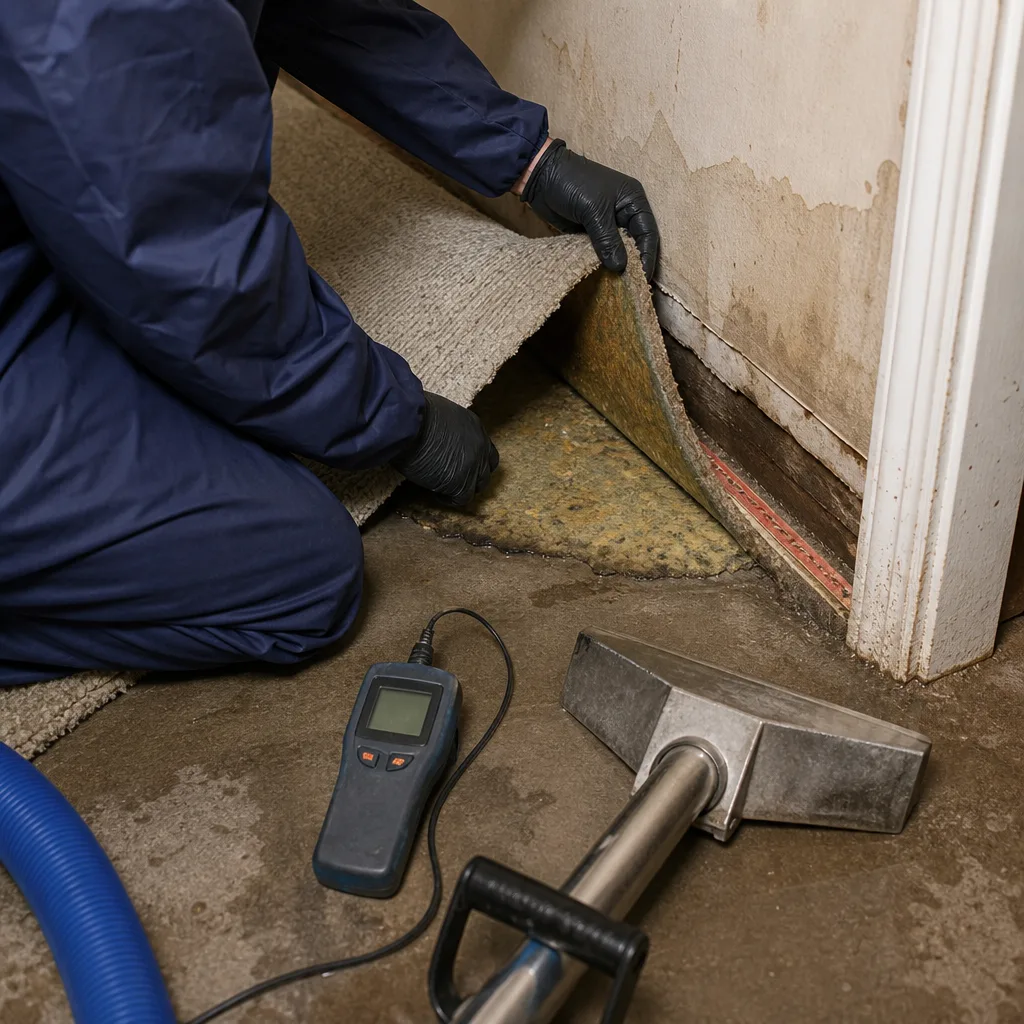
A burst pipe in a Homeland manufactured home rarely stays contained to one room. Water runs along the belly board, wicks into particle-board subfloor, and moves into wall cavities. We isolate the affected area, extract, dry in place where possible, and replace subfloor when the particle board has already begun to crumble. Our crew responded to a burst pipe in a 1980s manufactured home in Homeland’s 92548 area, where water had saturated the particle-board subfloor and begun wicking into the aluminum-wired wall cavities. Because the home sat on expansive adobe clay, we documented preexisting pad elevation before extraction, then used our Dri-Eaz LGR 7000XLi dehumidifiers and Injectidry panel drying system to pull moisture from the non-standard assembly in a single trip, preventing secondary mold and returning the family to a level, dry home.
What happens when you call
- 1
A real person answersNo phone trees - you reach a local pro.
- 2
You get an upfront price rangeHonest numbers before anyone is dispatched.
- 3
A background-checked tech heads outLicensed & insured, dispatched right away.
- 4
You approve before work beginsNothing starts until you say go.
Trusted Brands We Service in Homeland
We service every major brand of manufactured, mobile, and modular home you’ll find in Homeland, including the older Skyline, Fleetwood, and Golden West units that dominate the 92548 zip code. We stock common subfloor panels, thresholds, and drying mats locally so we aren’t waiting on a parts run from the other side of the county. That means one trip for you, not three. We’re IICRC certified and RIA affiliated, and we bring that standard to every floor we walk onto, whether it’s on a concrete slab or a clay pad.
Common Water Damage Restoration Problems We See in Homeland Homes
- Particle-board subfloors that crumble after saturation. Once water sits on particle board for even a few hours, it loses structural integrity. You can’t dry it back to original condition. We replace it, because half-done subfloor work just means mold under your feet six months later.
- Vapor barriers trapping moisture inside wall assemblies. Manufactured homes built with low-grade vapor barriers don’t breathe. A small plumbing leak inside a wall can read dry on the surface while the cavity behind it stays wet. That’s where mold colonizes fully within 48 hours.
- Expansive adobe clay heaving pads after saturation. When the clay soil under a Homeland pad gets soaked, it swells. The home unlevels, interior flooring buckles, and doors stop closing. If the pre-loss elevation wasn’t documented, the homeowner gets blamed for something the soil did. We document it first.
- Aluminum wiring meeting wet wall cavities. A lot of these 1970s and 1980s manufactured homes run aluminum wiring. When water gets into those wall assemblies, the corrosion risk is real. We flag it, confirm the circuit is safe, and bring in an electrician when the wire itself has been compromised. We don’t recommend homeowners open those walls themselves.
Pricing for Water Damage Restoration in Homeland, CA
For Homeland specifically, here’s what you’re looking at. Emergency extraction on a single room in 92548: $400 to $900. Full manufactured-home water event with structural drying, subfloor replacement, and drywall repair: $1,800 to $6,500 depending on how far the water traveled and whether the pad has heaved. Flood cleanup that includes soil displacement documentation and multi-room drying: $2,500 to $8,000. Burst pipe restoration with subfloor replacement: $1,500 to $4,500. Estimates are free. We also honor a free second opinion on any written estimate, and a 10% Senior & Veteran discount always applies. Call (855) 915-0646 for a straight answer on your specific situation.
We Also Serve Cities Near Homeland
Our crews serve Water Damage Restoration in Homeland and the surrounding communities of Nuevo, Sun City, Menifee, and Good Hope. If you’re on the edge of 92548 or just over the line into a neighboring zip code, call anyway. Wade heads out where the water is.
Serving Homeland, CA - Our Local Coverage Area
We’re based in the Homeland area and know this community well. Use the map below to see our service coverage - if you’re nearby, we can almost certainly help.
FAQs - Water Damage Restoration in Homeland
A manufactured home in Homeland needs water extraction faster because the particle-board subfloor and thin wall assemblies absorb and hold moisture far more aggressively than the dimensional lumber used in stick-built tract homes. Mold in these cavities can colonize fully within 24 to 48 hours. In a Menifee or Perris tract home, you might have a day or two before hidden mold becomes a serious problem. In a 1980s Homeland mobile home, you have less than one. That’s why we bring extraction equipment sized for these assemblies and run it inside the hour when we can.
The adobe clay under your pad swells measurably when saturated, and that swelling can heave the pad, unlevel the home, and buckle interior flooring long after the surface water is extracted. We document pre-loss pad elevation before we start extraction so the post-drying condition can be compared honestly. If you don’t document it, you can’t tell the difference between soil heave and a drying job that didn’t work. That documentation also helps when your insurance adjuster wants to know what actually happened.
Yes, and we handle it in the same trip when the damage is in both places. Many Homeland properties are acreage lots with detached workshops, sheds, or washrooms that share a water line with the main home. When a pipe bursts, water runs to both. We scope the outbuilding at the same time as the home, because if you leave a wet workshop to dry on its own, you’re paying for mold remediation in the spring. One trip, all affected structures, done right.
The correct approach for particle-board subfloor is usually replacement, not drying. Particle board swells and loses structural integrity when saturated. You can run dehumidifiers for weeks and it will still crumble under foot traffic. We dry the floor framing and the cavity below, then replace the particle board section with proper subfloor material. Injectidry panel drying can save certain assemblies when the saturation is shallow and caught within hours, but deep saturation in particle board means replacement. We’ll tell you which one you’re facing before we start, and we’ll put it in writing.
Santa Ana winds push wildfire ember and smoke-damage calls into Homeland seasonally, but they also affect water restoration work in a specific way. The winds are hot, dry, and steady, which makes surface moisture evaporate fast and can give a false “dry” reading on a moisture meter. Hidden moisture inside wall cavities and subfloor assemblies is what drives secondary mold growth, and the low relative humidity during Santa Ana events makes that hidden moisture harder to find if you aren’t checking daily with proper meters. Wade takes moisture readings every single day and hands you the full log at the end of the job. That’s how you know the drying is real, not just wind-blown.
If you’ve got water damage in a Homeland manufactured home, on a clay pad, with a detached workshop involved or just a flooded bathroom at midnight, call (855) 915-0646. A live person answers, Wade often picks up himself, and the first estimate is free. No charge for that.
Written by Wade Ferris, Owner at Wade’s Restoration of California, serving Homeland since 2007.